


 Скачать презентацию Captain L L Janes and the Kumamoto
b45ff2c0e611cc97b6ebf08b6c2da977.ppt
- Количество слайдов: 28
 「 Captain L. L. Janes and the Kumamoto Yogakko : Japan’s first Total English Immersion School? 」 カピテーンゼーンズと熊本洋学校 ~ 日本初の英語完全イマージ ョンスクー ル? J U D Y Y O N E O K A 英語教育史研究会 JUNE 4 2008 1 崇城大学
![Katoh Gakuen (Shizuoka)] Japan’s First English Immersion School? ? The first immersion programme in](https://present5.com/presentation/b45ff2c0e611cc97b6ebf08b6c2da977/image-2.jpg "Katoh Gakuen (Shizuoka)] Japan’s First English Immersion School? ? The first immersion programme in") Katoh Gakuen (Shizuoka)] Japan’s First English Immersion School? ? The first immersion programme in a Japanese elementary school (Bostwick 2001) An early partial English immersion programme – the first of its kind in Japan (Katoh 1993)
Katoh Gakuen (Shizuoka)] Japan’s First English Immersion School? ? The first immersion programme in a Japanese elementary school (Bostwick 2001) An early partial English immersion programme – the first of its kind in Japan (Katoh 1993)
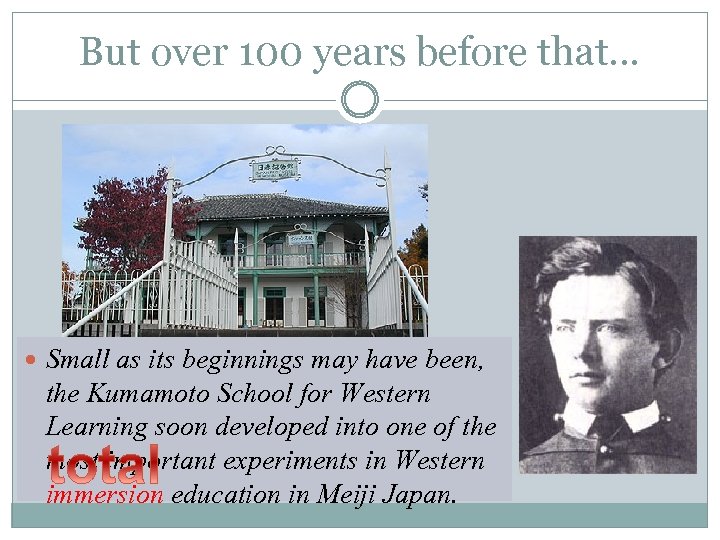 But over 100 years before that… Small as its beginnings may have been, the Kumamoto School for Western Learning soon developed into one of the most important experiments in Western immersion education in Meiji Japan.
 Outline 1. What is immersion (esp. total immersion)? 2. Did the Kumamoto Yogakko provide total immersion? 3. Was the Kumamoto Yogakko immersion education the first of its kind?
 Claims of Immersion Education in the Early Meiji Era Saitoh( 2001) calls early Meiji “seisoku education” a type of immersion. Akashi (2007) identifies the SAC(札幌 農学校 ) curriculum as a type of immersion program Hosaka (2008) claims that the curriculum at Iwakuni English School is immersion education.
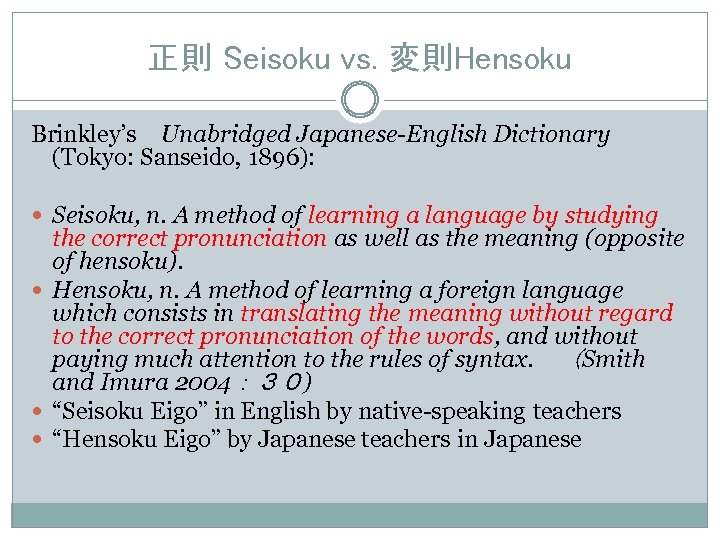 正則 Seisoku vs. 変則Hensoku Brinkley’s Unabridged Japanese-English Dictionary (Tokyo: Sanseido, 1896): Seisoku, n. A method of learning a language by studying the correct pronunciation as well as the meaning (opposite of hensoku). Hensoku, n. A method of learning a foreign language which consists in translating the meaning without regard to the correct pronunciation of the words, and without paying much attention to the rules of syntax. (Smith and Imura 2004:30) “Seisoku Eigo” in English by native-speaking teachers “Hensoku Eigo” by Japanese teachers in Japanese
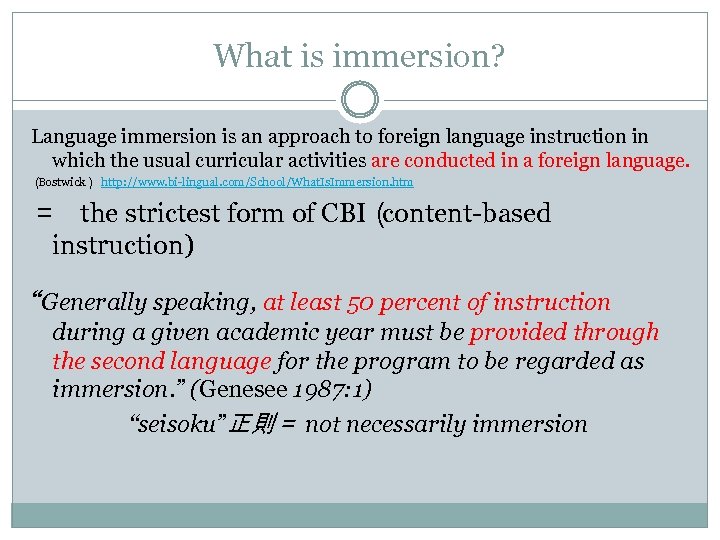 What is immersion? Language immersion is an approach to foreign language instruction in which the usual curricular activities are conducted in a foreign language. ( Bostwick) http: //www. bi-lingual. com/School/What. Is. Immersion. htm = the strictest form of CBI( content-based instruction) “Generally speaking, at least 50 percent of instruction during a given academic year must be provided through the second language for the program to be regarded as immersion. ” (Genesee 1987: 1) “seisoku”正則= not necessarily immersion
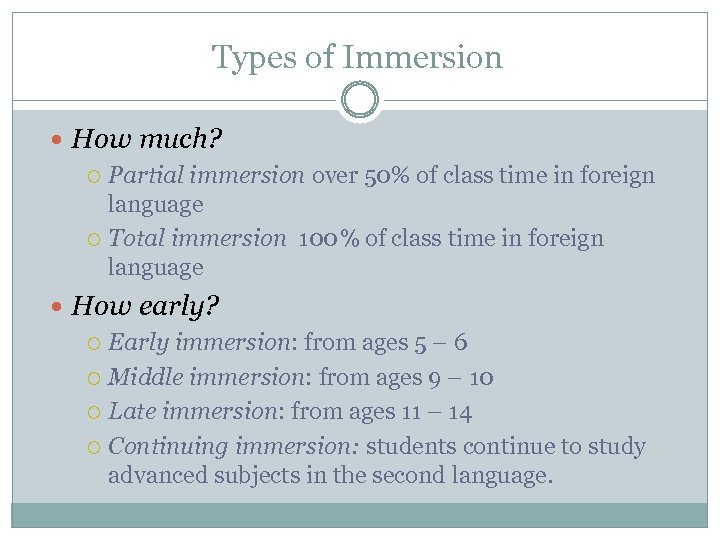 Types of Immersion How much? Partial immersion over 50% of class time in foreign language Total immersion 100% of class time in foreign language How early? Early immersion: from ages 5 – 6 Middle immersion: from ages 9 – 10 Late immersion: from ages 11 – 14 Continuing immersion: students continue to study advanced subjects in the second language.
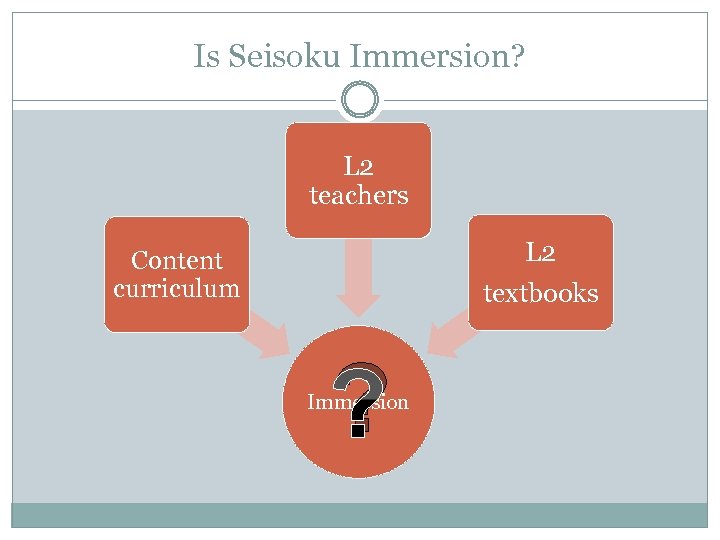 Is Seisoku Immersion? L 2 teachers L 2 textbooks Content curriculum ? Immersion
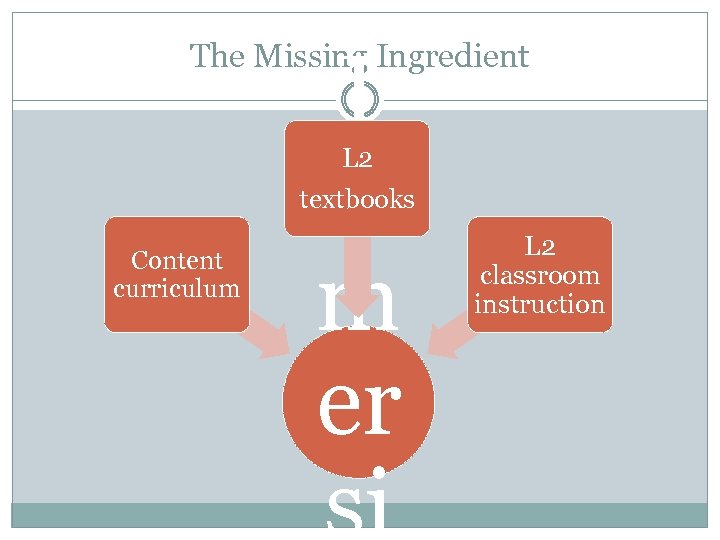 I m m er si The Missing Ingredient L 2 textbooks Content curriculum L 2 classroom instruction
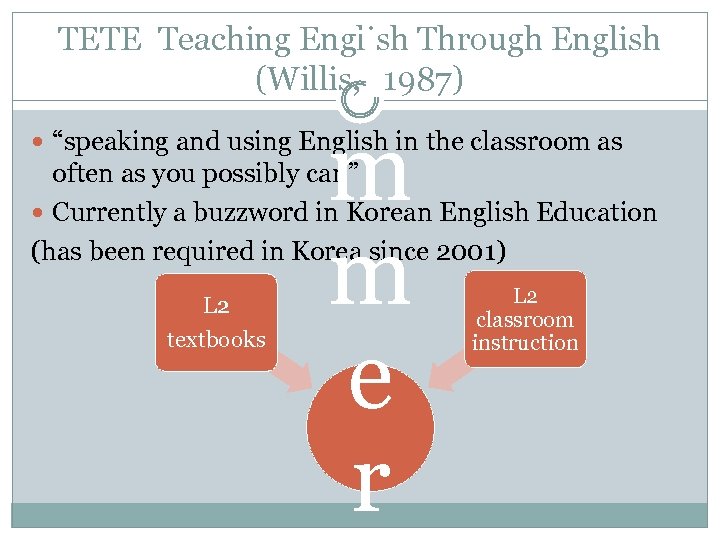 I m m e r TETE Teaching English Through English (Willis, 1987) “speaking and using English in the classroom as often as you possibly can” Currently a buzzword in Korean English Education (has been required in Korea since 2001) L 2 textbooks L 2 classroom instruction
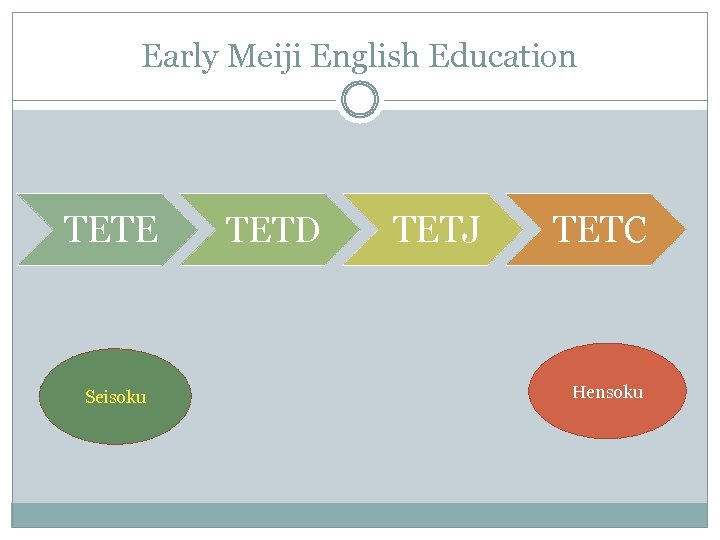 Early Meiji English Education TETE Seisoku TETD TETJ TETC Hensoku
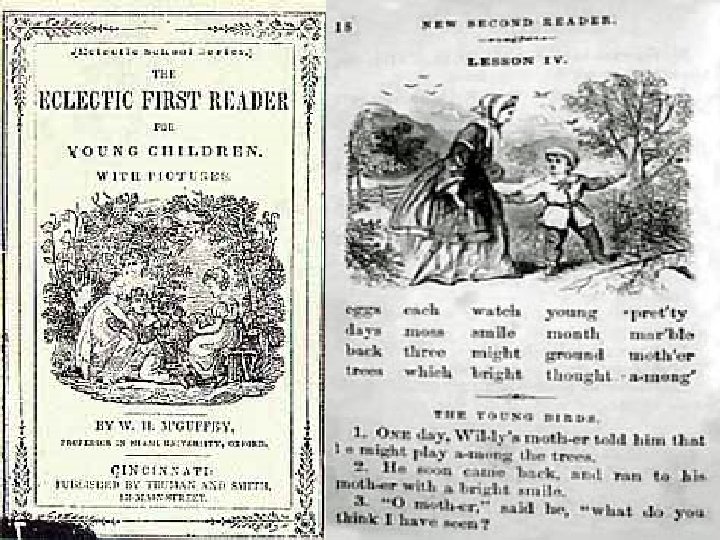
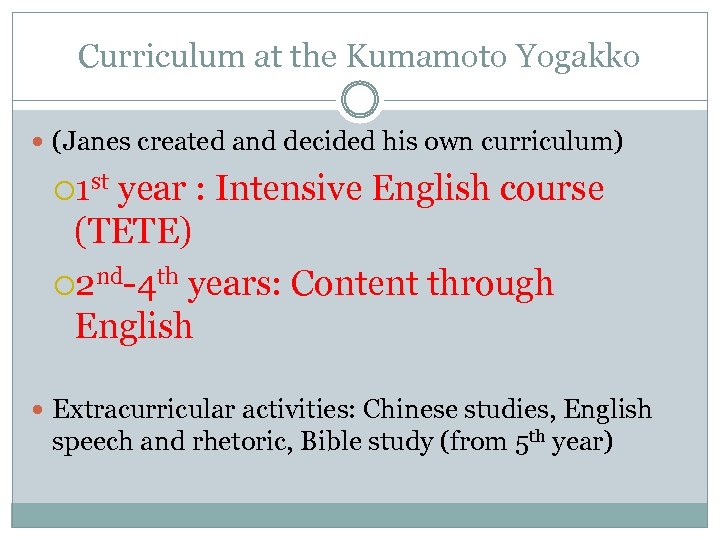 Curriculum at the Kumamoto Yogakko (Janes created and decided his own curriculum) 1 st year : Intensive English course (TETE) 2 nd-4 th years: Content through English Extracurricular activities: Chinese studies, English speech and rhetoric, Bible study (from 5 th year)
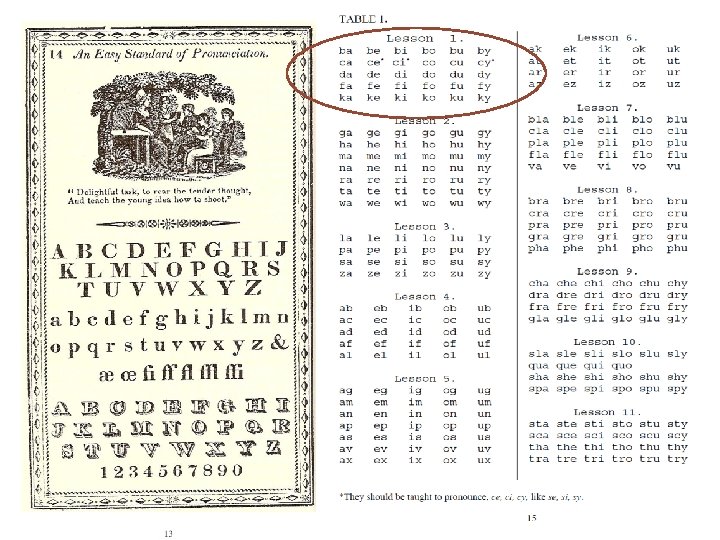
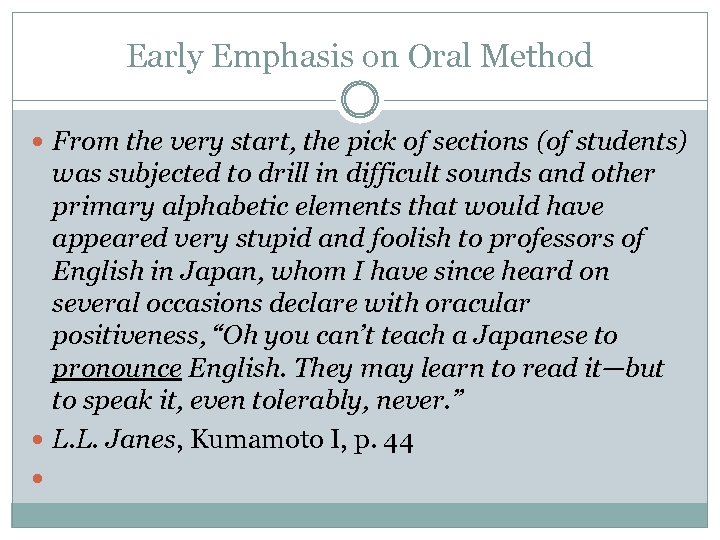 Early Emphasis on Oral Method From the very start, the pick of sections (of students) was subjected to drill in difficult sounds and other primary alphabetic elements that would have appeared very stupid and foolish to professors of English in Japan, whom I have since heard on several occasions declare with oracular positiveness, “Oh you can’t teach a Japanese to pronounce English. They may learn to read it—but to speak it, even tolerably, never. ” L. L. Janes, Kumamoto I, p. 44
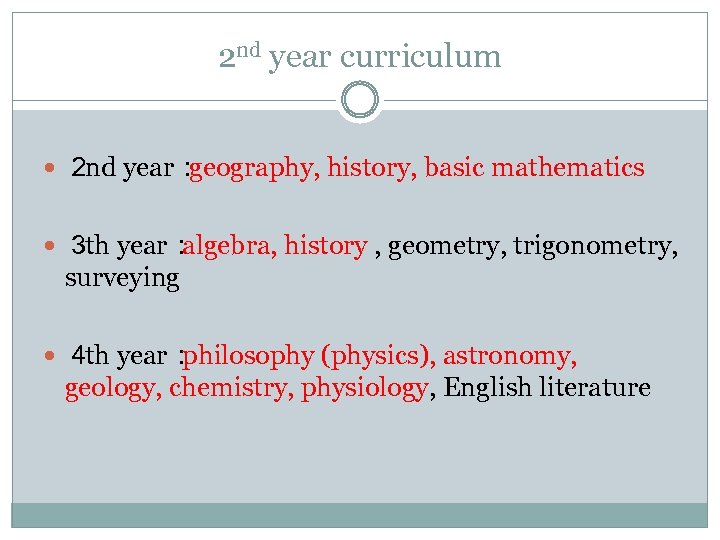 2 nd year curriculum 2 nd year: geography, history, basic mathematics 3 th year: algebra, history , geometry, trigonometry, surveying 4 th year: philosophy (physics), astronomy, geology, chemistry, physiology, English literature
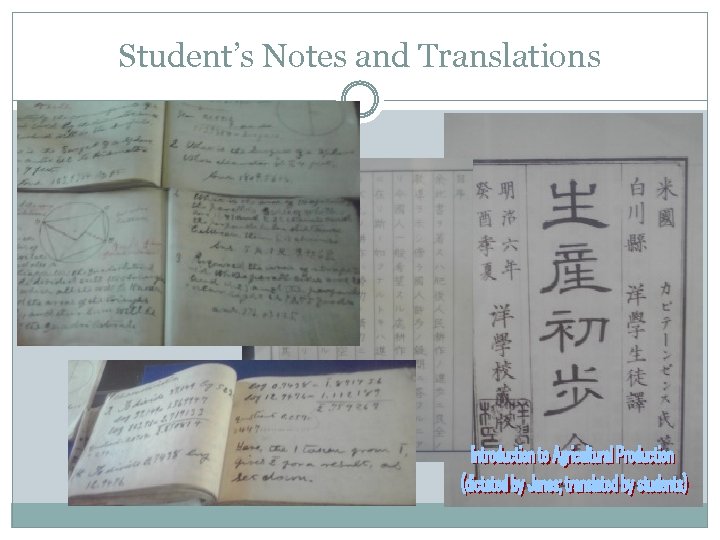 Student’s Notes and Translations
 The Kumamoto Yogakko as an Immersion School Janes was the only instructor Janes never studied or spoke Japanese Janes did not use interpreters All subjects were taught in English Content subjects were taught from the 2 nd year Janes himself called his school the “Kumamoto English School” (as written on graduation certificates) Most of the students were between the ages of 11 -15 = (1 st year) Intensive English TETE program = (2 nd year) late total English immersion program
 Was it the first? Other possibilities: Kaisei Gakko (Daigaku Nanko) (1869~) (現:東京大学) Ferris Academy (1870~) (現:明治学院大学) Yokohama Academy (横浜洋学所) Osaka Yogakko (1870~) Nagasaki School of Western Studies (精得館) Iwakuni English School (岩国洋楽所 ) We can rule out: Sapporo Agricultural College (現北海道大学) 1876 Keio Gijuku (現:京王大学) 変則中心
 “English only? ” The Problem of Proof Hepburn, Brown and Simmons: These three missionaries began to study Japanese immediately in preparation for missionary work in the future. J. H. Ballagh: He learned Japanese from Riuzan Yano who. . had been sent as a Japanese teacher. . from the Japanese government. J. C. Ballagh: They were eager to learn English, and he talked about the Bible in poor Japanese but with fervor. (Missionaries in Yokohama)
 Chinese missionaries: The mission schools actually taught Chinese language and literature and, for the most part, used Chinese as the medium of instruction (Boyle 1997). (Kirkpatrick 2009 in prep) Verbeck: I am now preparing a kind of ‘helps to the Scriptures’ in English…I have a further opportunity to explain by means of English, Dutch and Japanese such points as seem still difficult for them [two Bible students]. (Ferris 1900: 103)
 Seisoku education at the Daigaku Nanko Foreign teachers were employed to teach the seisoku course from 1869 Hommes 91 All courses were taught in English from 1873 At times students who had already completed higher level Chinese studies were frustrated with teachers who taught Quackenbos beginning readers in English, and these sometimes left the school… 外国人教師が初・中等教育カリキュラムを直接教える正則コースでは、場 合によっては左氏春秋や漢書まで仕上げた学生に、クワッケンボスのごとき アメリカの少年向きの文法書を教えるのであるから、年のいった学生の不満 はかなり強かった。そのため、。。。学校を去る例が多かった。 http: //www. lib. utokyo. ac. jp/tenjikai 2005/tenji/index-d. html
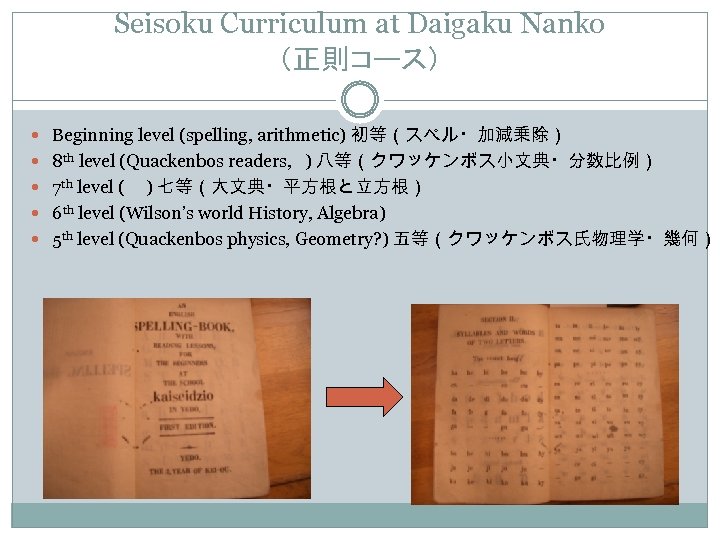 Seisoku Curriculum at Daigaku Nanko (正則コース) Beginning level (spelling, arithmetic) 初等(スペル・加減乗除) 8 th level (Quackenbos readers, ) 八等(クワッケンボス小文典・分数比例) 7 th level ( ) 七等(大文典・平方根と立方根) 6 th level (Wilson’s world History, Algebra) 5 th level (Quackenbos physics, Geometry? ) 五等(クワッケンボス氏物理学・幾何)
 Osaka Yogakko curriculum (1870~) Beginning level 少初級・大初級から始まって 8 th level 八級・七級を九ヶ月、素読 リンニー氏・モ リー氏文典 地・理・史・文学初歩書 伝習 調韵 会話 文典 会話 文典 六級・五級を一ヶ年で修了し、 四級以上はコース別となり、 『 理科 』『 科 』『 科 』 史 政 兵 文 語 六科のうち三科の二級までをマスターすると、その上に らに一級があり、今日の大学院のようなものかと思われ る
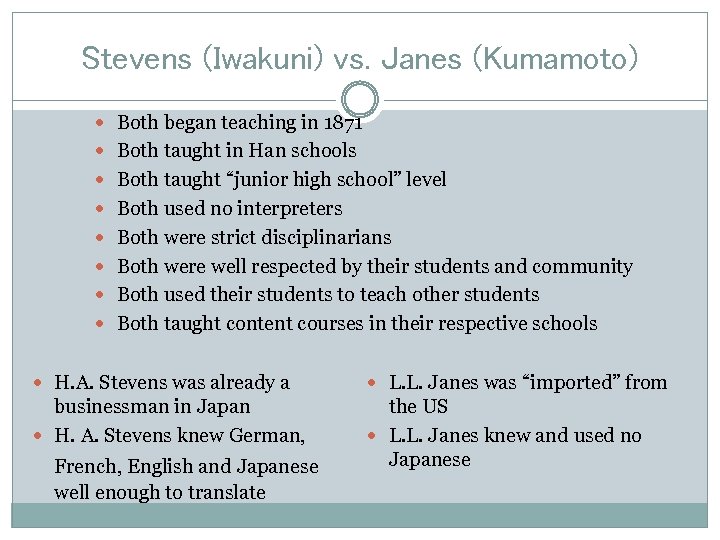 Stevens (Iwakuni) vs. Janes (Kumamoto) Both began teaching in 1871 Both taught in Han schools Both taught “junior high school” level Both used no interpreters Both were strict disciplinarians Both were well respected by their students and community Both used their students to teach other students Both taught content courses in their respective schools H. A. Stevens was already a L. L. Janes was “imported” from businessman in Japan H. A. Stevens knew German, the US L. L. Janes knew and used no Japanese French, English and Japanese well enough to translate
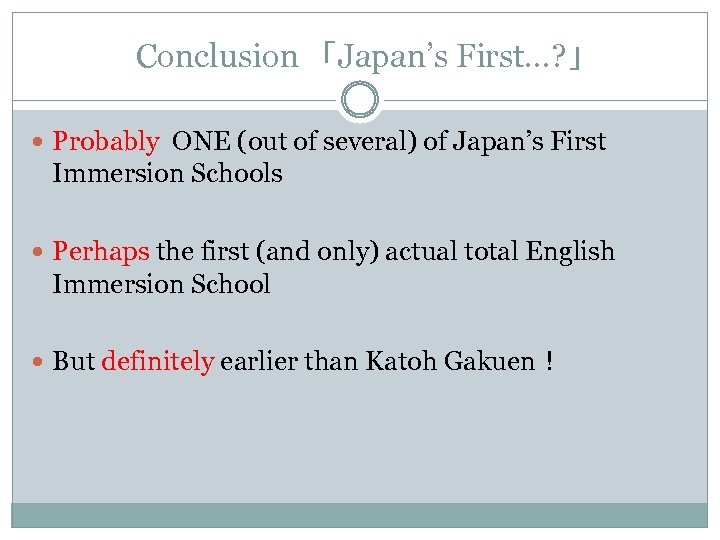 Conclusion 「Japan’s First…? 」 Probably ONE (out of several) of Japan’s First Immersion Schools Perhaps the first (and only) actual total English Immersion School But definitely earlier than Katoh Gakuen!
 References 赤石 恵一 (2007)札幌農学校のイマージョン・プログラム ― 1・ 2 期卒業生英語学習の軌跡 ―日本大学大 学院総合社会情報研究科紀要 No. 8, 125 -136(2007) Bostwick, Michael (2001) in M. Noguchi and S. Fotos eds STUDIES IN JAPANESE BILINGUALISM, Clevedon, England ; Buffalo, N. Y. : Multilingual Matters, p. Genesee, Fred ( 1987) Learning Through Two Languages: Studies in Immersion and Bilingual Education (Newbury House) Hommes, James M. (2004) THE BANSHO SHIRABESHO: A TRANSITIONAL INSTITUTION IN BAKUMATSU JAPAN Unp. MA, available online at http: //etd. library. pitt. edu/ETD/available/etd 12082004 -214034/unrestricted/jmhbansho. MA. pdf Iwamatsu (2003) 130 Years after Kumamoto Band (in Japanese), Kumamoto: Yogakko. Kozaki, Hiromichi Reminiscences of Seventy Years (Tokyo, 1933) Notehelfer, F. G. (1985) American Samurai: Captain L. L. Janes and Japan, Princeton University Press. Scheiner, Irwin. (1970) Christian Converts and Social Protest in Meiji Japan. Berkeley and Los Angeles: University of California Press. Smith and Imura (2004) “LESSONS FROM THE PAST: TRADITIONS AND REFORMS” in Makarova, V. and T. Rodgers (eds) (2004), English Language Teaching: The Case Japan, of Munich: Lincom-Europa, pp. 29 -48. 斎藤兆史 (2001 英語襲来と日本人:えげれす語事始』 ) 『 東京:講談社 保坂芳男 2008. 「岩国英国語学所に関する研究 - 教育内容と教授法の解明を中心として」 日本英語教育史研究 代23号 東京:日本英語教育史学会 pp. 101 -122.