


 Скачать презентацию Capstone Project GI Analysis C Team Leadership
07b600ca425fd52403e382d05afdd0db.ppt
- Количество слайдов: 8
 Capstone Project GI Analysis C Team
 Leadership Forum Local/State GIS planners Planning/Zoning Utilities Citizen Groups USACo. E Local Developers Parks & Recreation Dept. Do. T County Commissioners Local Elected EPA Conservation Fund Historic Districts NOAA NCDNR Larger Watershed Partners US Forest Service Land Acquisition Groups Forest Industries Agriculture Groups HOAs Fish and Wildlife Universities
 GI Design Objectives § § § Identify existing high priority wetland areas Include RTE species, flood areas, pristine areas Allow for continued economic and general growth in the county Must be able to be integrated into County Master Plan Protect existing wetlands through acquisition or easment over time Include public education and ecotourism goals into rollout to get buyin § Overlay RTE habitat with wetlands to target species-based protection
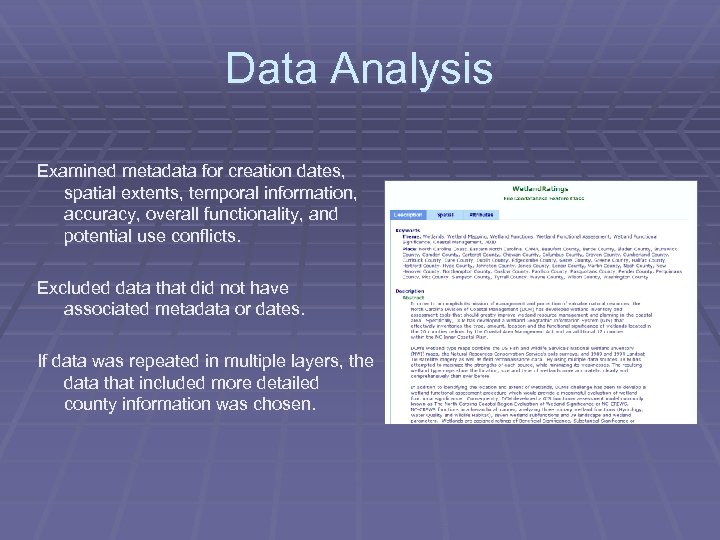 Data Analysis Examined metadata for creation dates, spatial extents, temporal information, accuracy, overall functionality, and potential use conflicts. Excluded data that did not have associated metadata or dates. If data was repeated in multiple layers, the data that included more detailed county information was chosen.
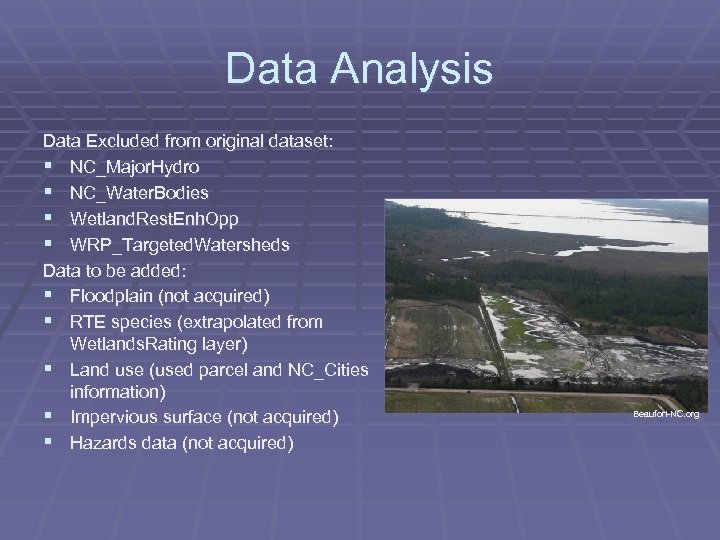 Data Analysis Data Excluded from original dataset: § NC_Major. Hydro § NC_Water. Bodies § Wetland. Rest. Enh. Opp § WRP_Targeted. Watersheds Data to be added: § Floodplain (not acquired) § RTE species (extrapolated from Wetlands. Rating layer) § Land use (used parcel and NC_Cities information) § Impervious surface (not acquired) § Hazards data (not acquired) Beaufort-NC. org
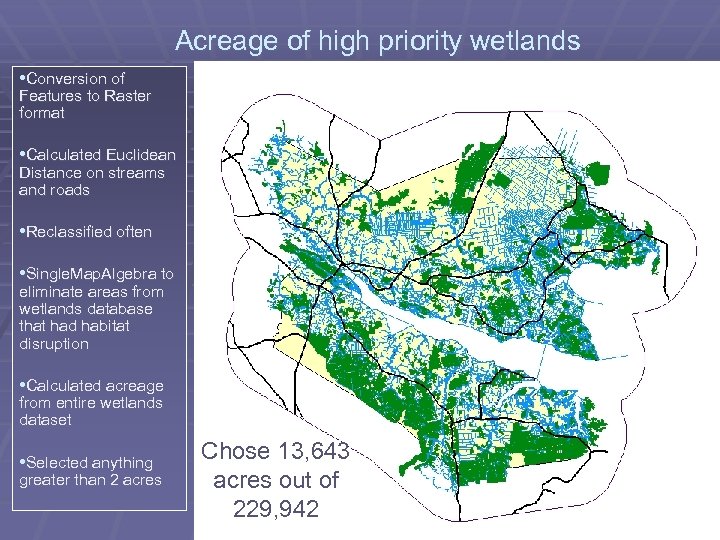 Acreage of high priority wetlands • Conversion of Features to Raster format • Calculated Euclidean Distance on streams and roads • Reclassified often • Single. Map. Algebra to eliminate areas from wetlands database that had habitat disruption • Calculated acreage from entire wetlands dataset • Selected anything greater than 2 acres Chose 13, 643 acres out of 229, 942
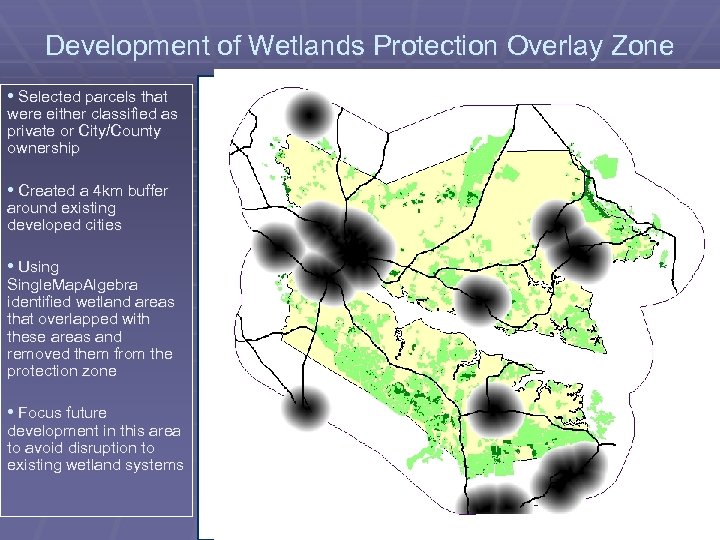 Development of Wetlands Protection Overlay Zone • Selected parcels that were either classified as private or City/County ownership • Created a 4 km buffer around existing developed cities • Using Single. Map. Algebra identified wetland areas that overlapped with these areas and removed them from the protection zone • Focus future development in this area to avoid disruption to existing wetland systems
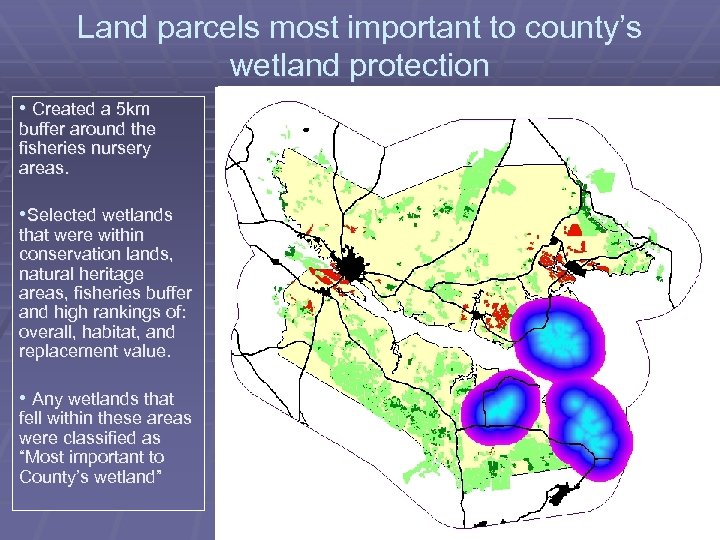 Land parcels most important to county’s wetland protection • Created a 5 km buffer around the fisheries nursery areas. • Selected wetlands that were within conservation lands, natural heritage areas, fisheries buffer and high rankings of: overall, habitat, and replacement value. • Any wetlands that fell within these areas were classified as “Most important to County’s wetland”