 Скачать презентацию Capstone Design — Robotics Historical Development of Robotics
bae99e1735fa9f34845845fd679a8bb3.ppt
- Количество слайдов: 49



Capstone Design --- Robotics Historical Development of Robotics John (Jizhong) Xiao Department of Electrical Engineering City College of New York jxiao@ccny. cuny. edu City College of New York 1
Outline What is a Robot? Why use Robots? Robot History Robot Applications City College of New York 2
What is a robot? • Definition: (no precise definition yet) – Webster’s Dictionary • An automatic device that performs functions ordinarily ascribed to human beings washing machine = robot? – Robotics Institute of American • A robot (industrial robot) is a reprogrammable, multifunctional manipulator designed to move materials, parts, tools, or specialized devices, through variable programmed motions for the performance of a variety of tasks. City College of New York 3
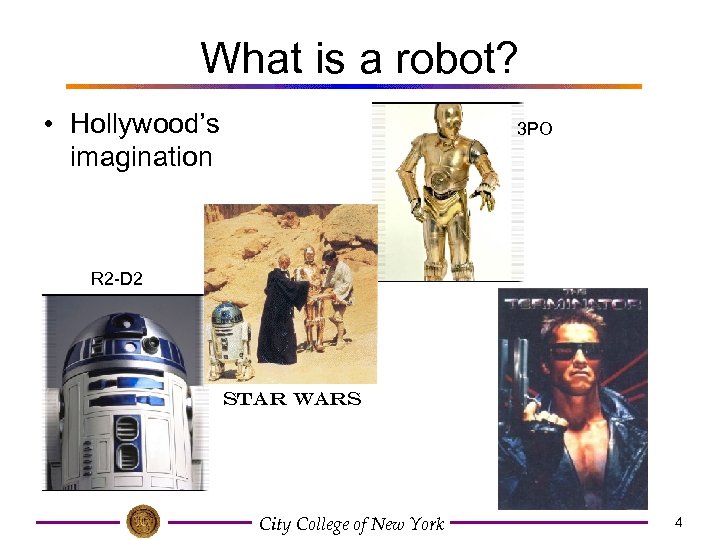
What is a robot? • Hollywood’s imagination 3 PO R 2 -D 2 Star Wars City College of New York 4
What is a robot? • By general agreement, a robot is: A programmable machine that imitates the actions or appearance of an intelligent creature–usually a human. • To qualify as a robot, a machine must be able to: 1) Sensing and perception: get information from its surroundings 2) Carry out different tasks: Locomotion or manipulation, do something physical–such as move or manipulate objects 3) Re-programmable: can do different things 4) Function autonomously and/or interact with human beings City College of New York 5
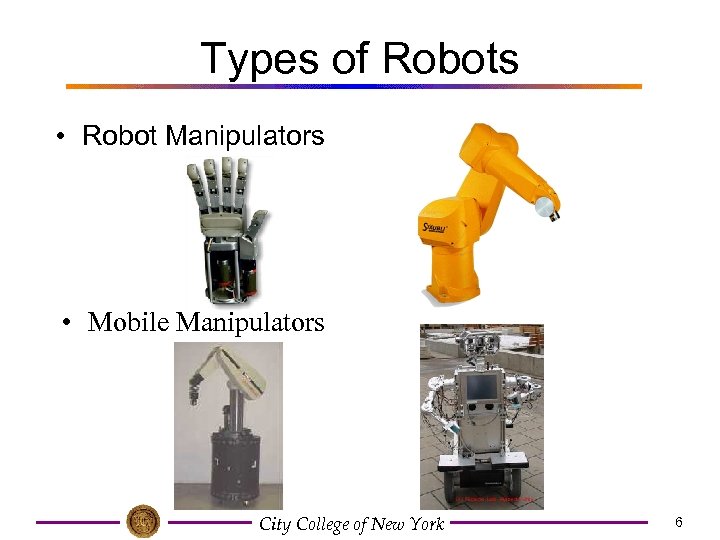
Types of Robots • Robot Manipulators • Mobile Manipulators City College of New York 6
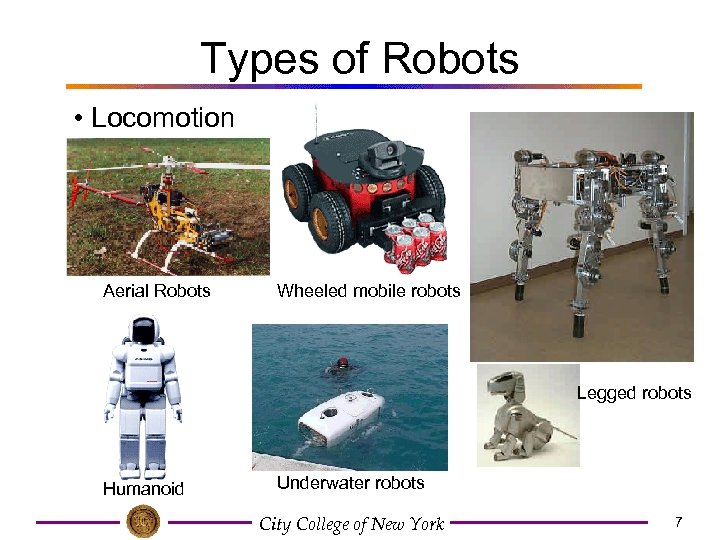
Types of Robots • Locomotion Aerial Robots Wheeled mobile robots Legged robots Humanoid Underwater robots City College of New York 7
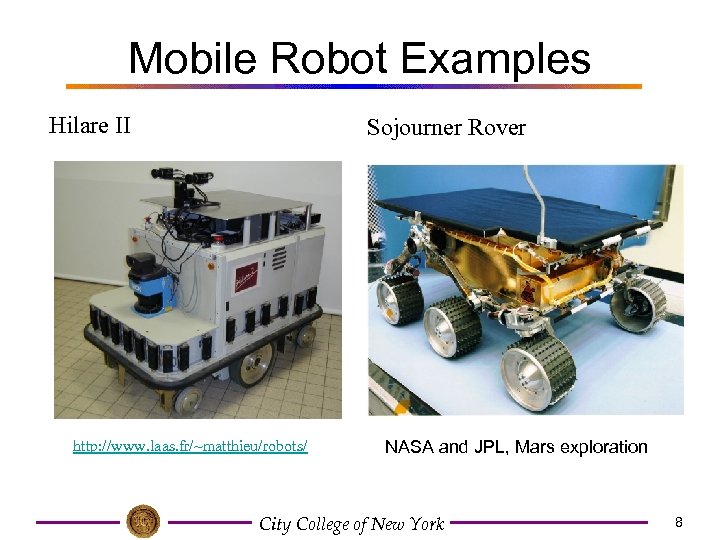
Mobile Robot Examples Hilare II Sojourner Rover http: //www. laas. fr/~matthieu/robots/ NASA and JPL, Mars exploration City College of New York 8
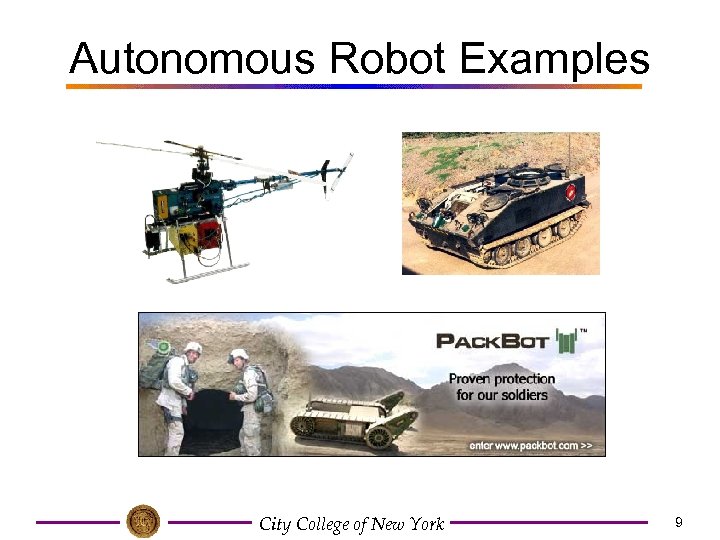
Autonomous Robot Examples City College of New York 9
Why Use Robots? • Application in 4 D environments – – Dangerous Dirty Dull Difficult • 4 A tasks – – Automation Augmentation Assistance Autonomous City College of New York 10
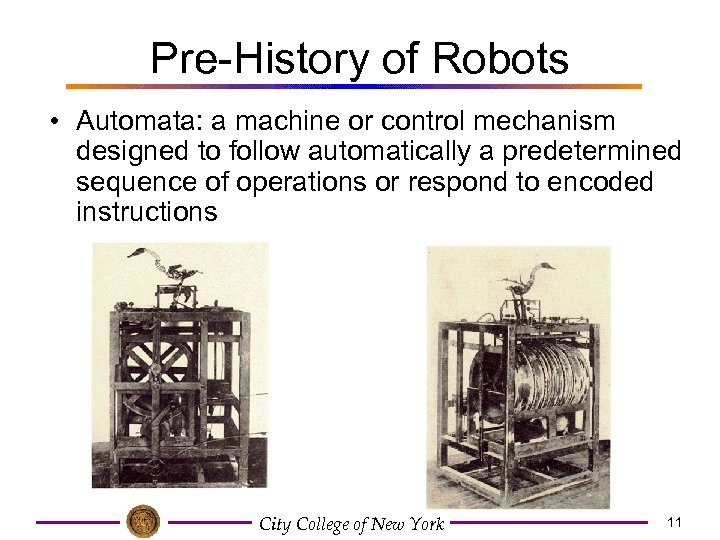
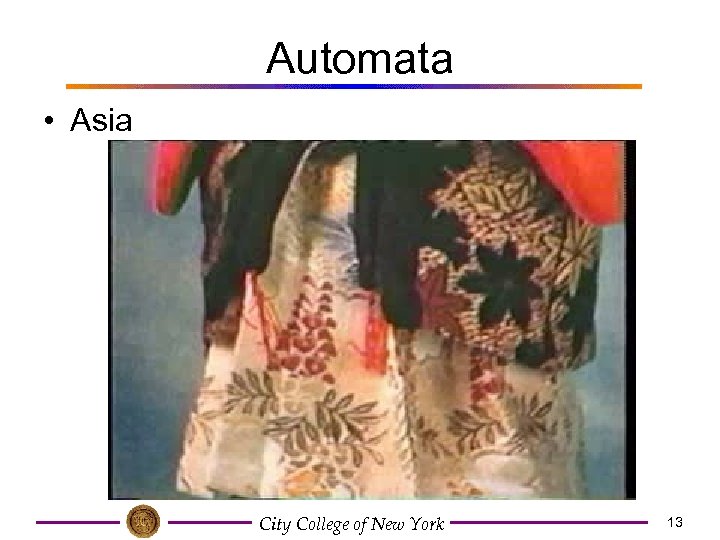
Pre-History of Robots • Automata: a machine or control mechanism designed to follow automatically a predetermined sequence of operations or respond to encoded instructions City College of New York 11
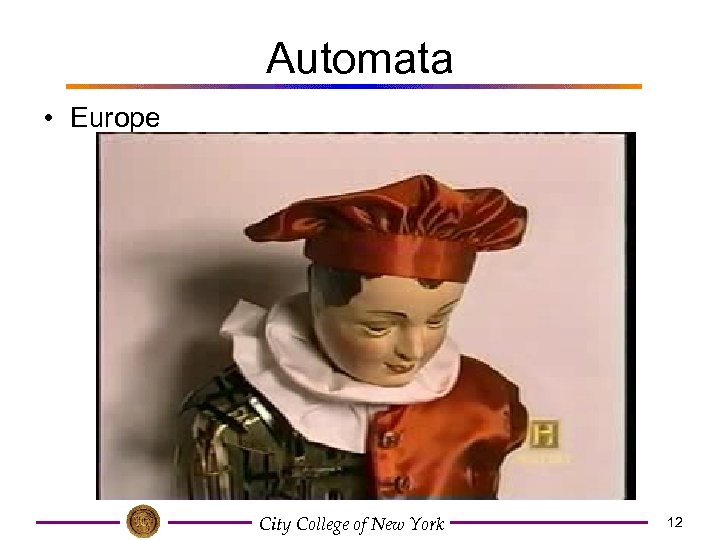
Automata • Europe City College of New York 12
Automata • Asia City College of New York 13
Robot History • 1961 – George C. Devol obtains the first U. S. robot patent, No. 2, 998, 237. – Joe Engelberger formed Unimation and was the first to market robots – First production version Unimate industrial robot is installed in a die-casting machine • 1962 – Unimation, Inc. was formed, (Unimation stood for "Universal Automation") City College of New York 14
Robot History • The patent and industrial robot City College of New York 15
Robot History • What an industrial robot must have? – – – • 1968 – Unimation takes its first multi-robot order from General Motors. • 1966 -1972 – "Shakey, " the first intelligent mobile robot system was built at Stanford Research Institute, California. City College of New York 16
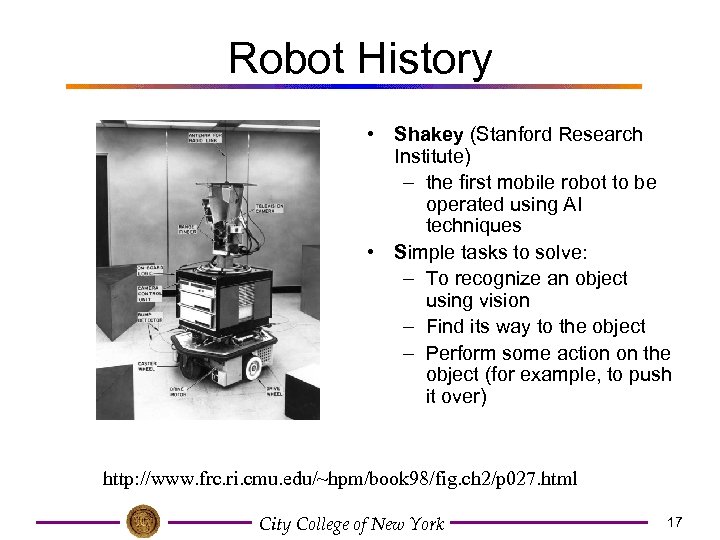
Robot History • Shakey (Stanford Research Institute) – the first mobile robot to be operated using AI techniques • Simple tasks to solve: – To recognize an object using vision – Find its way to the object – Perform some action on the object (for example, to push it over) http: //www. frc. ri. cmu. edu/~hpm/book 98/fig. ch 2/p 027. html City College of New York 17
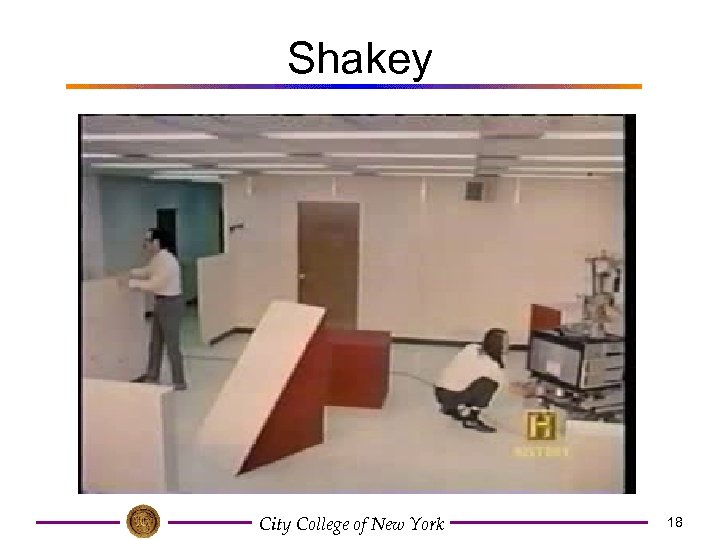
Shakey City College of New York 18
Robot History • 1969 – Robot vision, for mobile robot guidance, is demonstrated at the Stanford Research Institute. – Unimate robots assemble Chevrolet Vega automobile bodies for General Motors. • 1970 – General Motors becomes the first company to use machine vision in an industrial application The Consight system is installed at a foundry in St. Catherines, Ontario, Canada. City College of New York 19
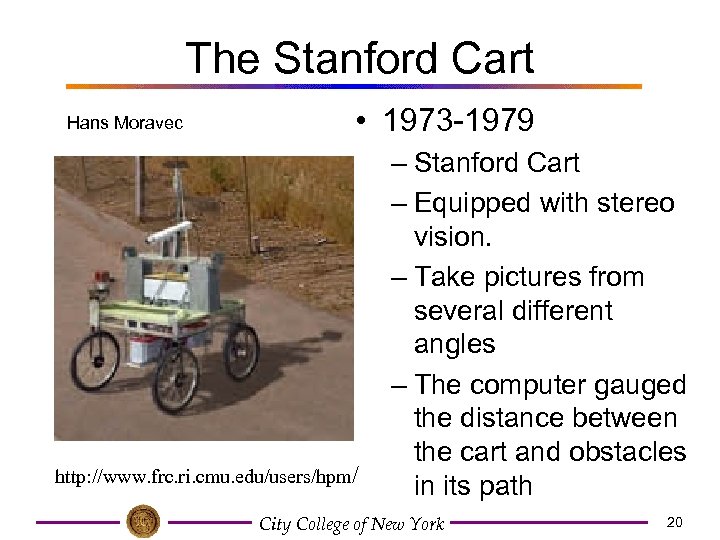
The Stanford Cart Hans Moravec • 1973 -1979 http: //www. frc. ri. cmu. edu/users/hpm/ – Stanford Cart – Equipped with stereo vision. – Take pictures from several different angles – The computer gauged the distance between the cart and obstacles in its path City College of New York 20
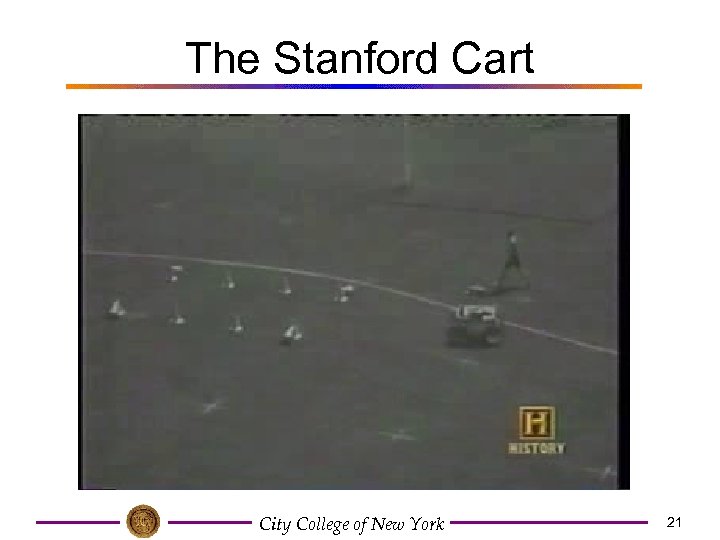
The Stanford Cart City College of New York 21
Robot History • 1978 – The first PUMA (Programmable Universal Machine for Assembly) robot is developed by Unimation for General Motors. • 1981 – IBM enters the robotics field with its 7535 and 7565 Manufacturing Systems. • 1983 – Westinghouse Electric Corporation bought Unimation, Inc. , which became part of its factory automation enterprise. Westinghouse later sold Unimation to Staubli of Switzerland. City College of New York 22
Industrial Robot --- PUMA City College of New York 23
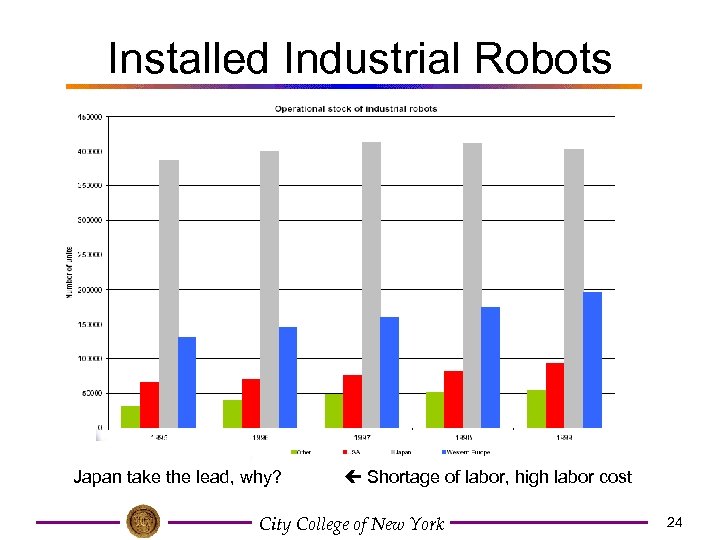
Installed Industrial Robots Japan take the lead, why? Shortage of labor, high labor cost City College of New York 24
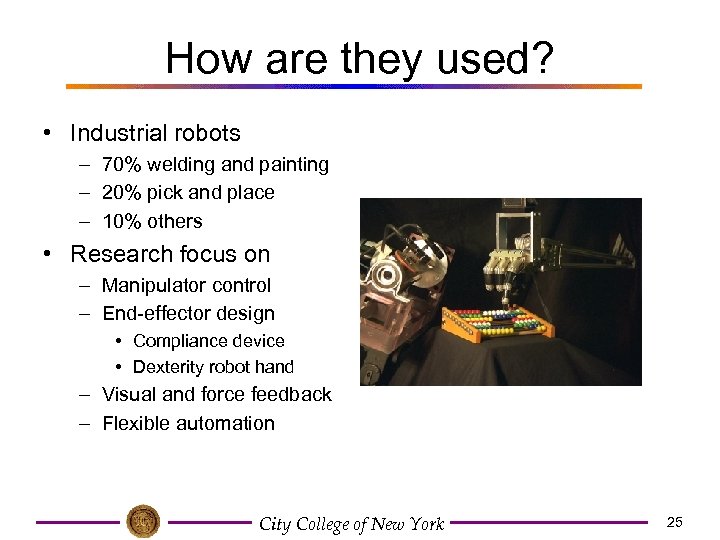
How are they used? • Industrial robots – 70% welding and painting – 20% pick and place – 10% others • Research focus on – Manipulator control – End-effector design • Compliance device • Dexterity robot hand – Visual and force feedback – Flexible automation City College of New York 25
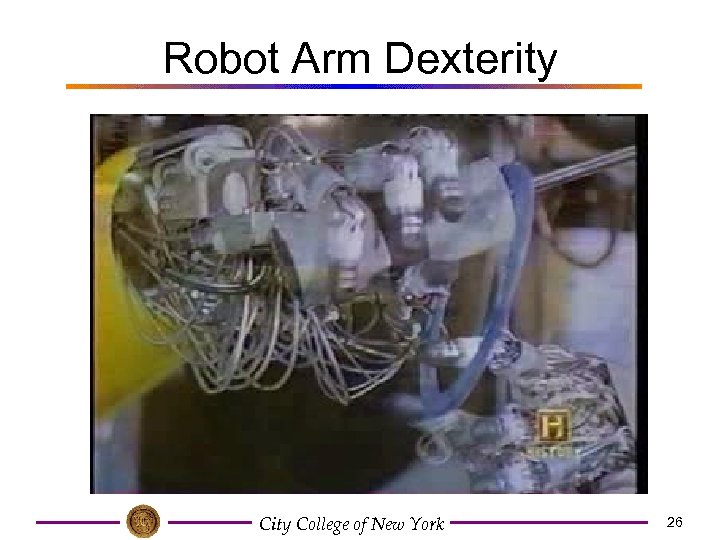
Robot Arm Dexterity College of New York 26
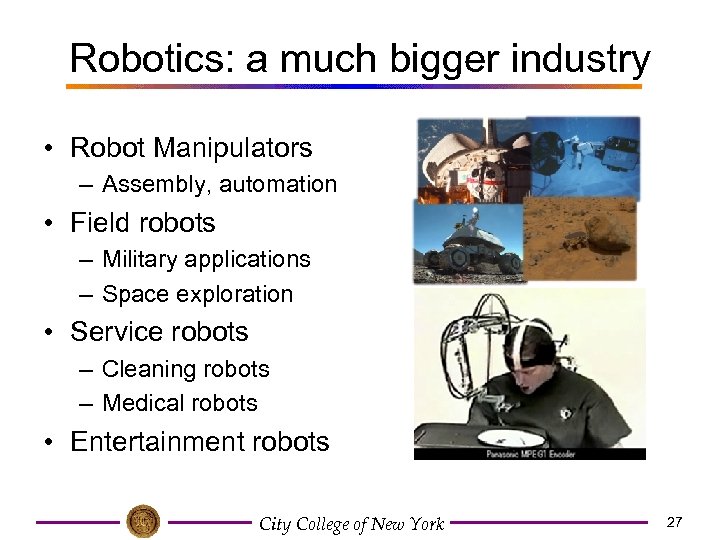
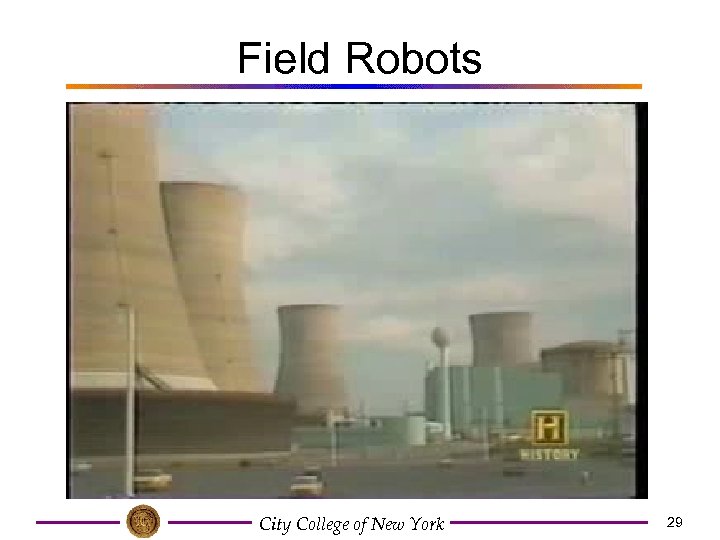
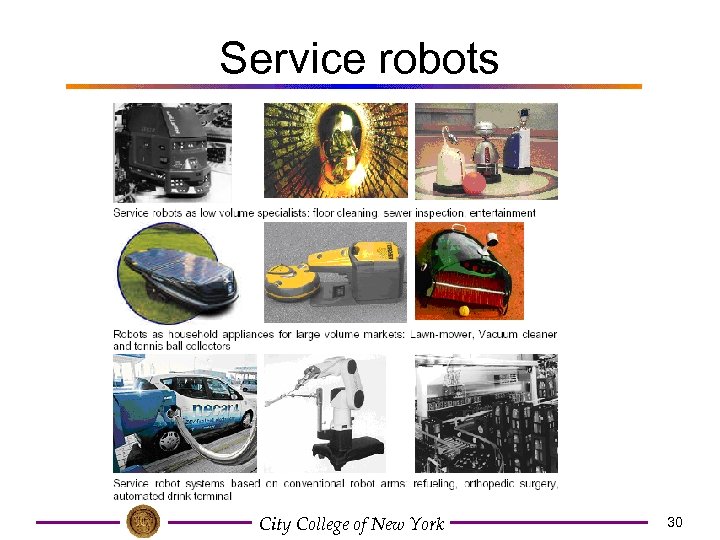
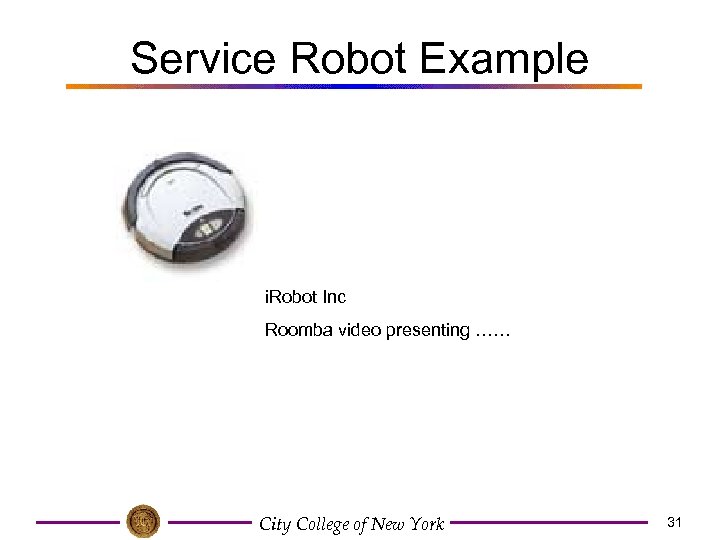
Robotics: a much bigger industry • Robot Manipulators – Assembly, automation • Field robots – Military applications – Space exploration • Service robots – Cleaning robots – Medical robots • Entertainment robots City College of New York 27
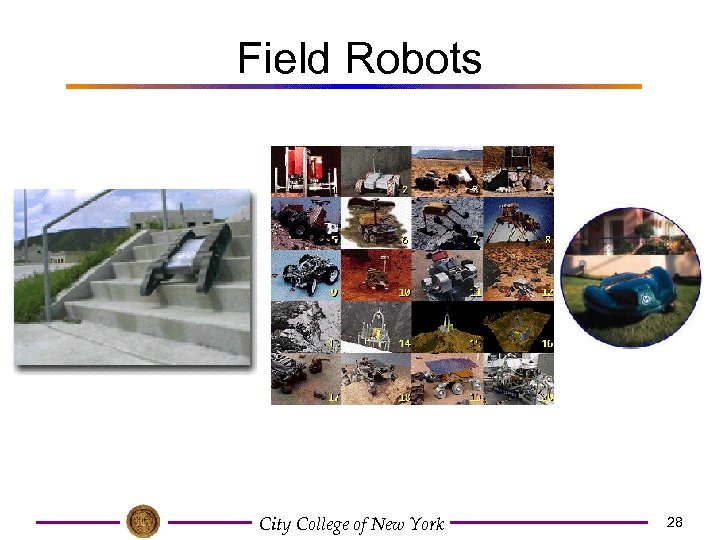
Field Robots City College of New York 28
Field Robots City College of New York 29
Service robots City College of New York 30
Service Robot Example i. Robot Inc Roomba video presenting …… City College of New York 31
The early stage of AI City College of New York 32
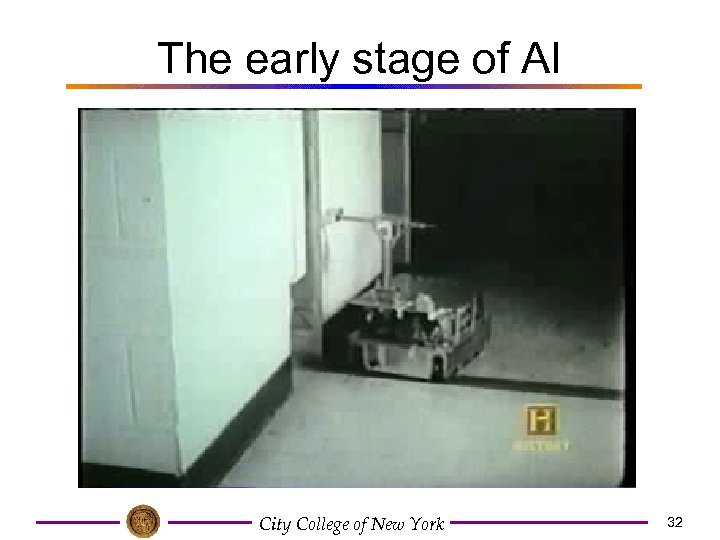
The start of AI City College of New York 33
Autonomous and Intelligence City College of New York 34
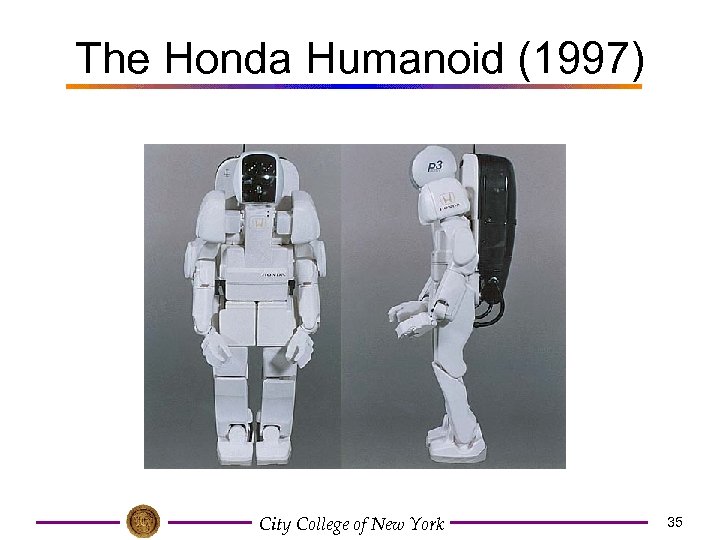
The Honda Humanoid (1997) City College of New York 35
Humanoid City College of New York 36
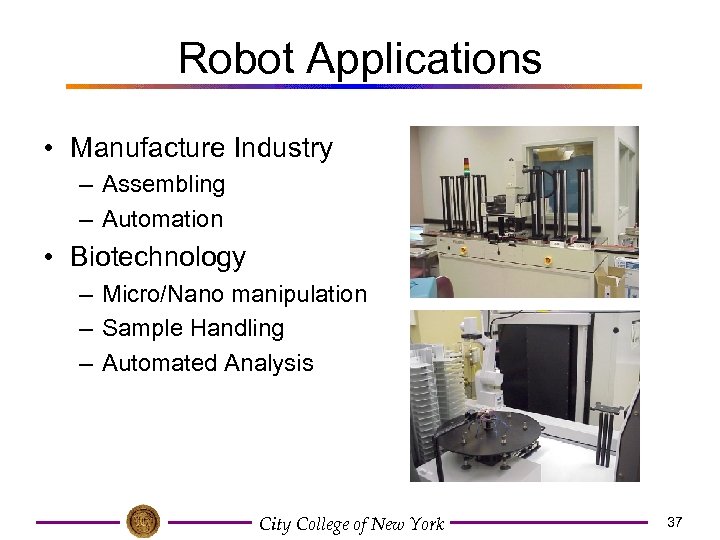
Robot Applications • Manufacture Industry – Assembling – Automation • Biotechnology – Micro/Nano manipulation – Sample Handling – Automated Analysis City College of New York 37
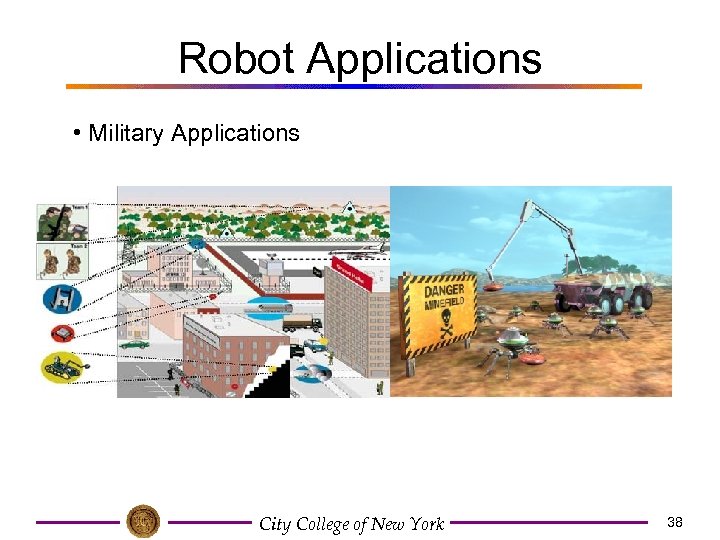
Robot Applications • Military Applications City College of New York 38
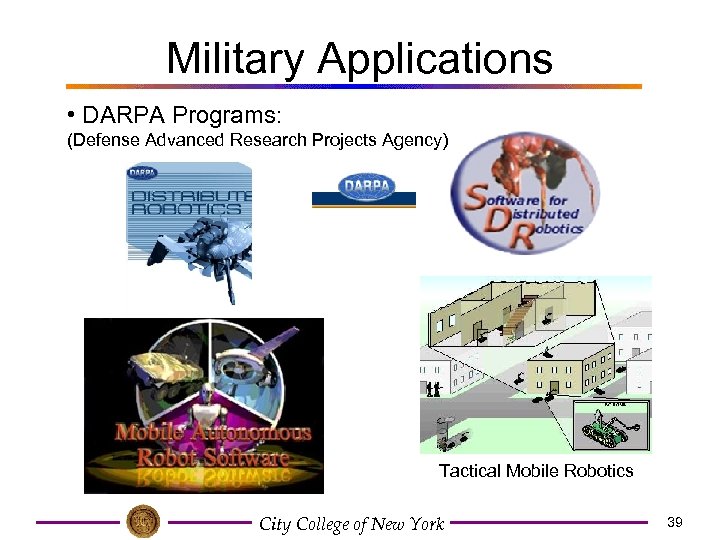
Military Applications • DARPA Programs: (Defense Advanced Research Projects Agency) Tactical Mobile Robotics City College of New York 39
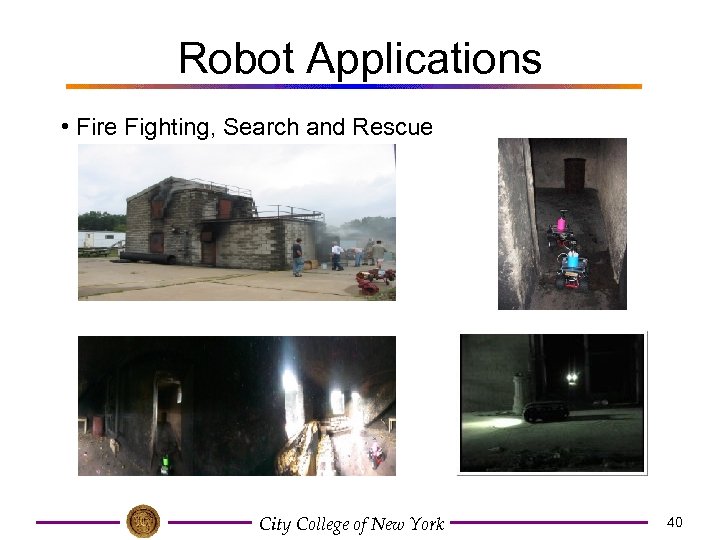
Robot Applications • Fire Fighting, Search and Rescue City College of New York 40
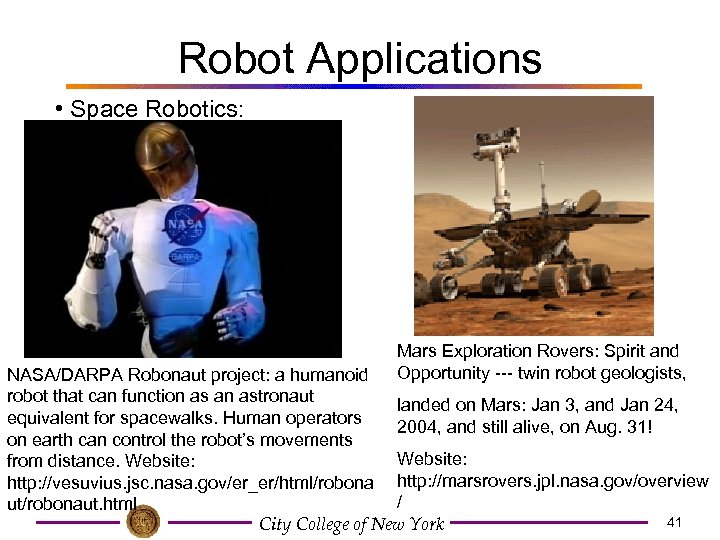
Robot Applications • Space Robotics: Mars Exploration Rovers: Spirit and Opportunity --- twin robot geologists, NASA/DARPA Robonaut project: a humanoid robot that can function as an astronaut landed on Mars: Jan 3, and Jan 24, equivalent for spacewalks. Human operators 2004, and still alive, on Aug. 31! on earth can control the robot’s movements Website: from distance. Website: http: //vesuvius. jsc. nasa. gov/er_er/html/robona http: //marsrovers. jpl. nasa. gov/overview / ut/robonaut. html 41 City College of New York
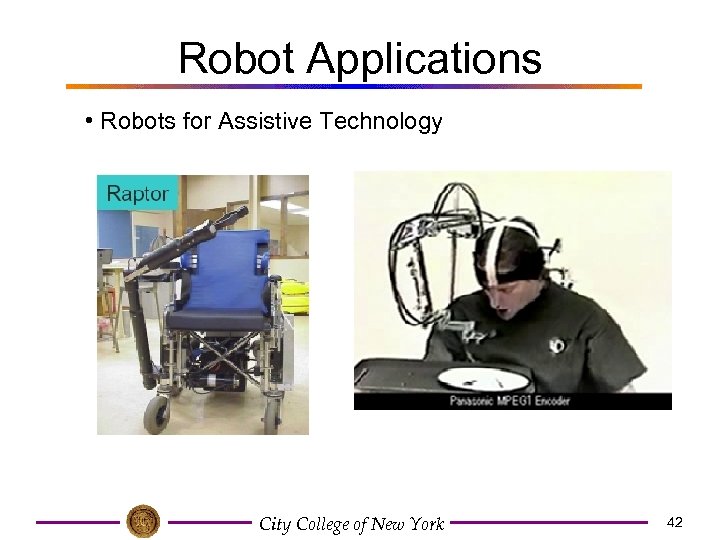
Robot Applications • Robots for Assistive Technology City College of New York 42
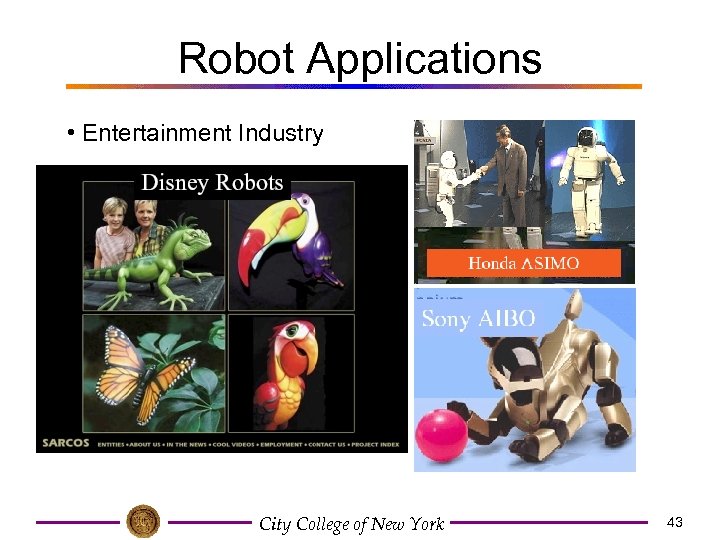
Robot Applications • Entertainment Industry City College of New York 43
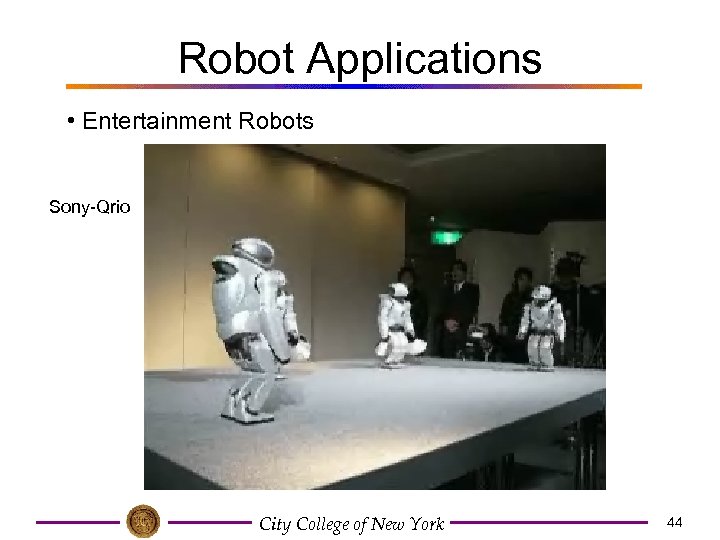
Robot Applications • Entertainment Robots Sony-Qrio City College of New York 44
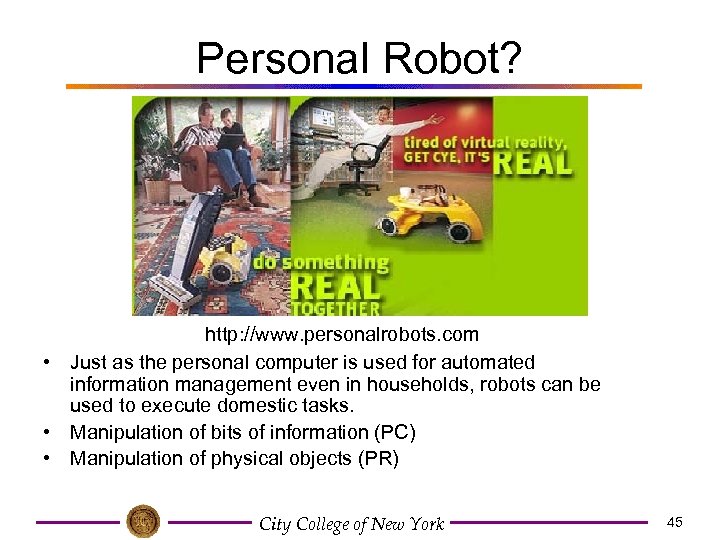
Personal Robot? http: //www. personalrobots. com • Just as the personal computer is used for automated information management even in households, robots can be used to execute domestic tasks. • Manipulation of bits of information (PC) • Manipulation of physical objects (PR) City College of New York 45
Previous Projects Video Presenting …… City College of New York 46
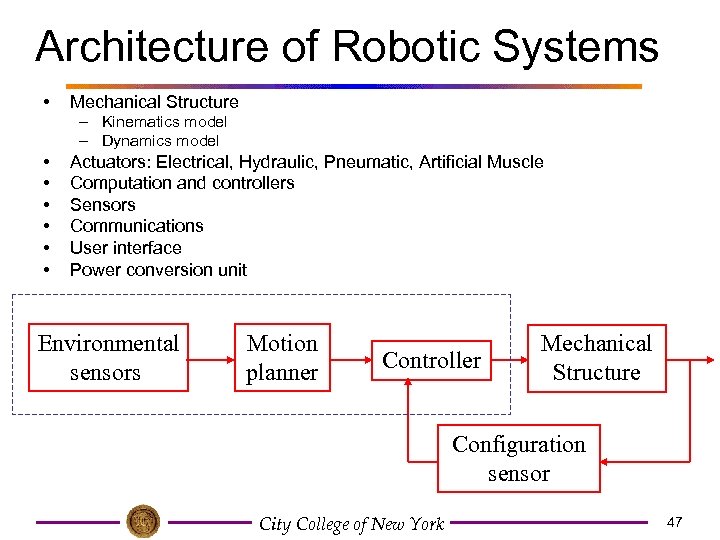
Architecture of Robotic Systems • Mechanical Structure – Kinematics model – Dynamics model • • • Actuators: Electrical, Hydraulic, Pneumatic, Artificial Muscle Computation and controllers Sensors Communications User interface Power conversion unit Environmental sensors Motion planner Controller Mechanical Structure Configuration sensor City College of New York 47
Summary • Robotics--interdisciplinary research – Mechanical design – Computer science and engineering – Electrical engineering – Cognitive psychology, perception and neuroscience • Research open problems – – Manipulation, Locomotion Control, Navigation Human-Robot Interaction Learning & Adaptation (AI) City College of New York 48
Thank you, enjoy the design! City College of New York 49
Скачать презентацию Capstone Design — Robotics Historical Development of Robotics
bae99e1735fa9f34845845fd679a8bb3.ppt