 Скачать презентацию Capitalizing on Untapped Potential An Effective Collaboration Strategy
864dd0bcb5ec14b06ba7da5a5c090594.ppt
- Количество слайдов: 19



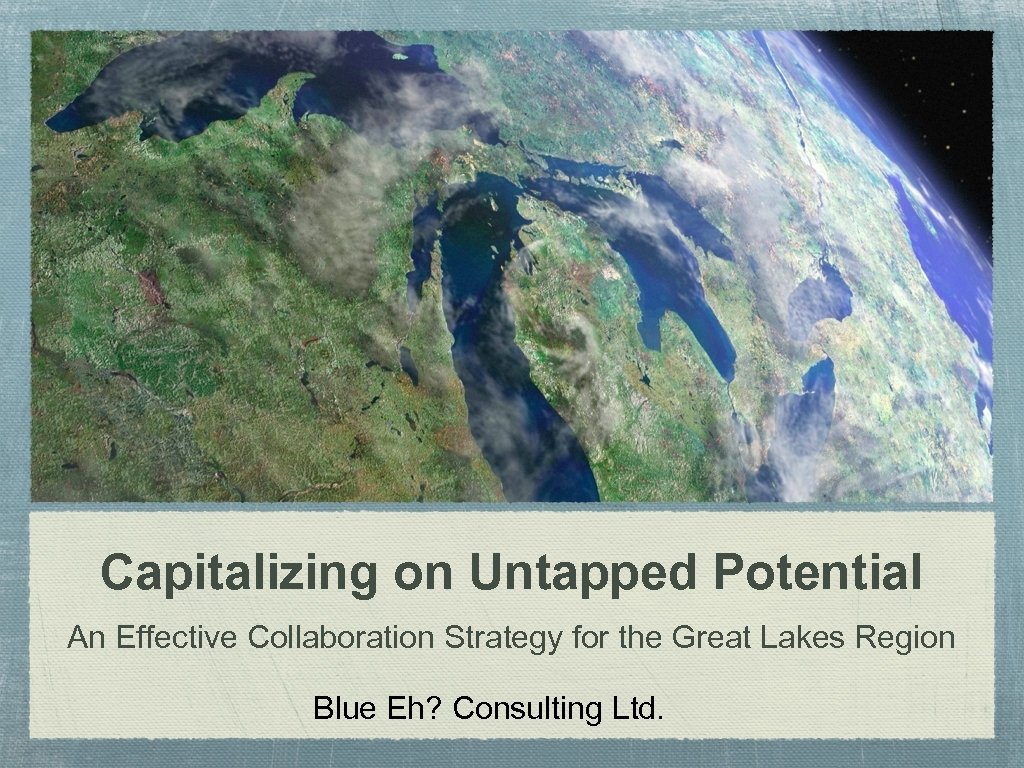
Capitalizing on Untapped Potential An Effective Collaboration Strategy for the Great Lakes Region Blue Eh? Consulting Ltd.
Agenda • Introduction • Strategic Context • Viable Options • Recommended Option • Conclusion & Questions
What is the Great Lakes Region? Two provinces: Ontario & Quebec Eight States: Illinois, Indiana, Minnesota, Michigan, New York, Ohio, Pennsylvania, Wisconsin Five Great Lakes
What is the Great Lakes Region? Economic Powerhouse $4. 6 trillion USD in economic output Cross-border trade in this region sustains 2 million jobs Rich in Human Capital Population of 105 million 20/100 of world’s top research universities Diverse Ecosystem 21% of world’s freshwater stores 84% of North American
Strategic Context The presence of an international border creates a competitive disadvantage with respect to economic growth and environmental stewardship in the Great Lakes-St. Lawrence Region. We propose a model of mature collaboration through the creation of a Great Lakes Partnership Council (GLPC) to strengthen prosperity and partnerships in the Great Lakes Region.
Untapped Potential Gap in leadership, knowledge sharing and advocacy 400 separate regulations affecting cross-border trade and 5, 000 annual changes Lack of partnership facilitation and ongoing support in variety of economic sectors, including manufacturing Ineffective cross-border advocacy and collaboration on blue economy, water stewardship and conservation Weak and uncoordinated voice
Policy Need Key Requirements To improve region's social, economic, and environmental future by addressing collaboration gaps in leadership, advocacy, and knowledge sharing. Develop and champion short-term initiatives/projects; develop a long-term vision. Assumptions The region is ready for a model of government-led regional collaboration. Current and Potential Constraints No binding authority for legislative decision-making Cross-border trade in this region sustains 2 million jobs
Function of GLPC To foster a mature collaborative region, the GLPC will: • Create and maintain inventory of regional work • Turn bigger goals into smaller, more manageable goals • Create opportunities for interactions among leaders • Find resources/redistribute resources • Report outcomes
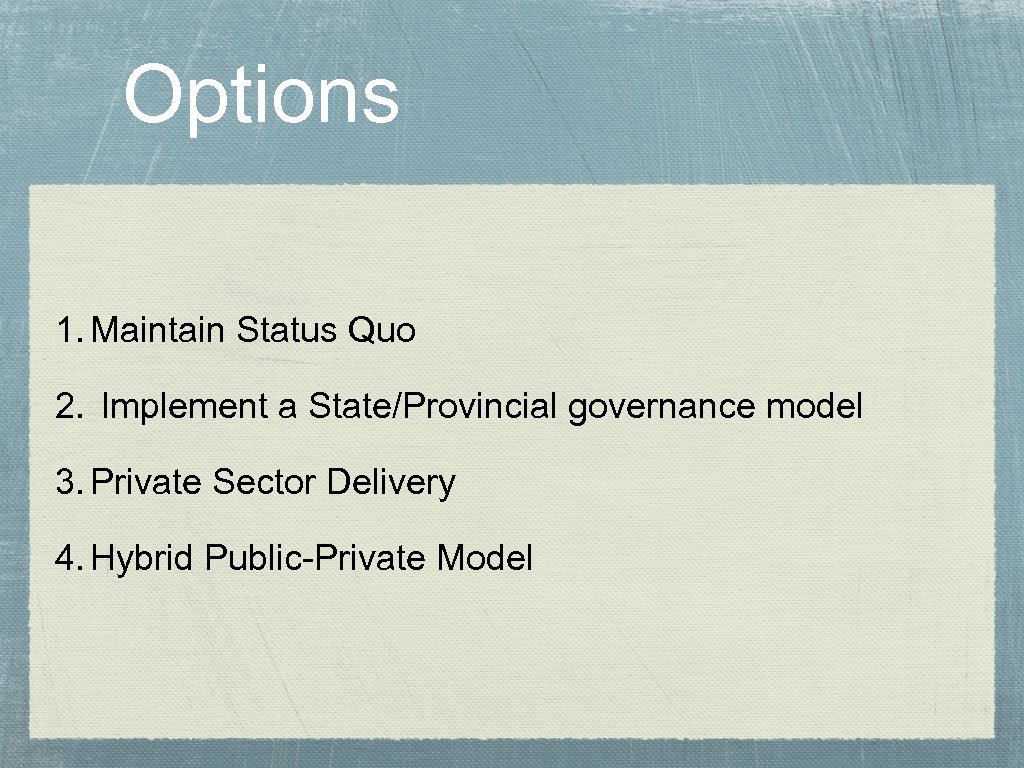
Options 1. Maintain Status Quo 2. Implement a State/Provincial governance model 3. Private Sector Delivery 4. Hybrid Public-Private Model
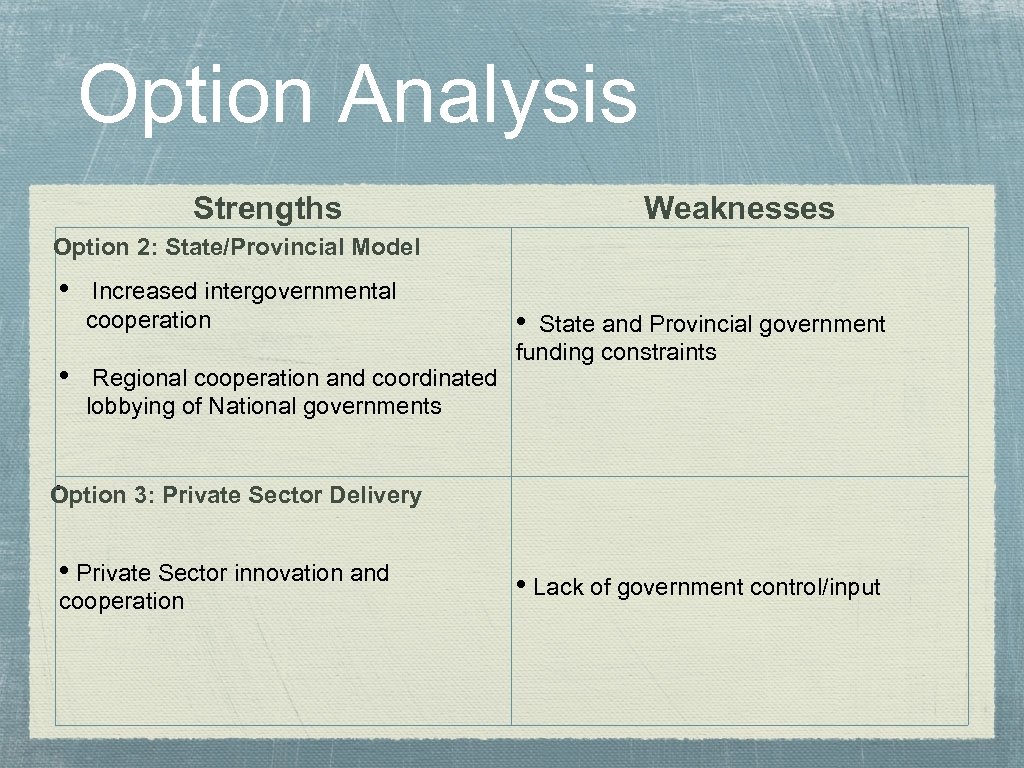
Option Analysis Strengths Option 2: State/Provincial Model • Increased intergovernmental cooperation • Regional cooperation and coordinated lobbying of National governments Weaknesses • State and Provincial government funding constraints • Option 3: Private Sector Delivery • Private Sector innovation and cooperation • Lack of government control/input
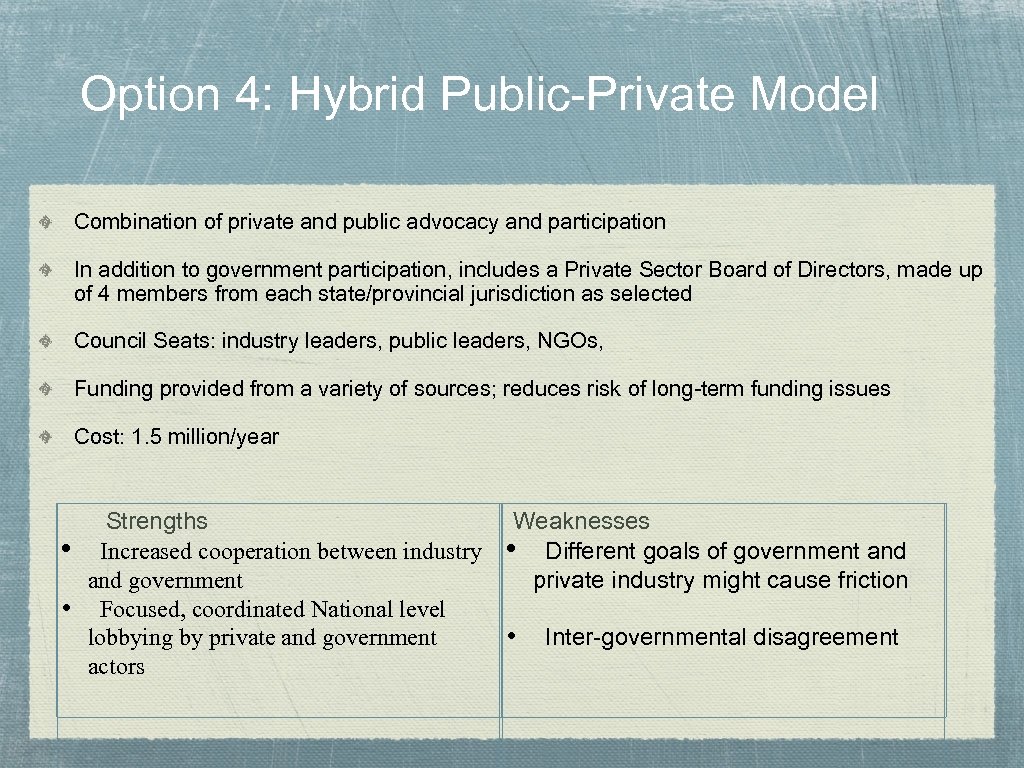
Option 4: Hybrid Public-Private Model Combination of private and public advocacy and participation In addition to government participation, includes a Private Sector Board of Directors, made up of 4 members from each state/provincial jurisdiction as selected Council Seats: industry leaders, public leaders, NGOs, Funding provided from a variety of sources; reduces risk of long-term funding issues Cost: 1. 5 million/year • • Strengths Increased cooperation between industry and government Focused, coordinated National level lobbying by private and government actors Weaknesses • Different goals of government and private industry might cause friction • Inter-governmental disagreement
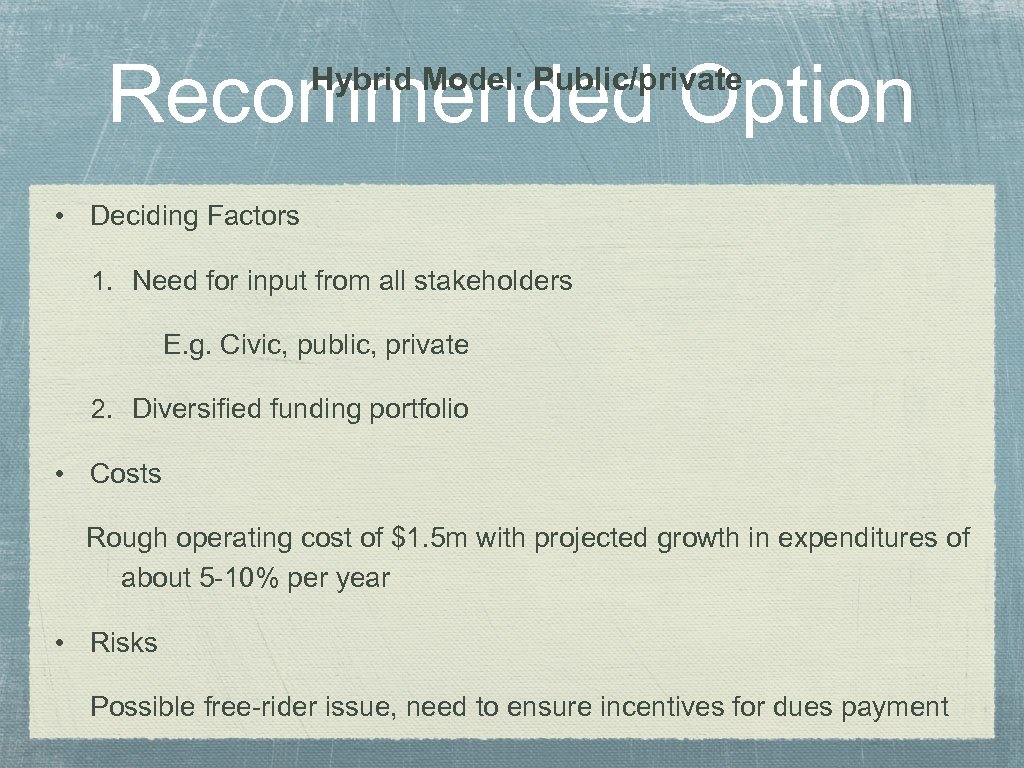
Recommended Option Hybrid Model: Public/private • Deciding Factors 1. Need for input from all stakeholders E. g. Civic, public, private 2. Diversified funding portfolio • Costs Rough operating cost of $1. 5 m with projected growth in expenditures of about 5 -10% per year • Risks Possible free-rider issue, need to ensure incentives for dues payment
Implementation • Organization: • Issues-based Working groups • Steering Committee • Accountability: Annual Report financial analysis, successes, lessons learned, improvement • Membership: Cross-stakeholder council seats • • • Public (multi-level - state/provincial, local, etc. ); private (cross-industry); civic Management: Annual business plans; long-term strategic plan Evaluation: Neutral third party evaluation team
Evaluation Outcomes Organization: Economic Employment / Jobs • Issues-based Working groups Number of jobs created Success rate of businesses • Steering Committee engaged in cross-border trade Production • Accountability: Annual Report Manufacturing output financial analysis, successes, lessons Regional GDP learned, improvement SMEs surveys of businesses regarding • Membership: Cross-stakeholder council ongoing cross border issues seats Environment • Public (multi-level - state/provincial, Water quality local, etc. ); private (cross-industry); Air quality civic Public health indicators access to primary care • Management: Annual business plans; nutritional needs/food costs long-term strategic plan
Cost-Benefit Analysis
Cost/Benefit analysis Costs: Approximately $1. 5 m per year in operating costs, projected to increase by approximately 5 -10% per year Benefits: Regional GDP is $4. 6 tn – an increase of even. 1% results in benefits of hundreds of millions of dollars
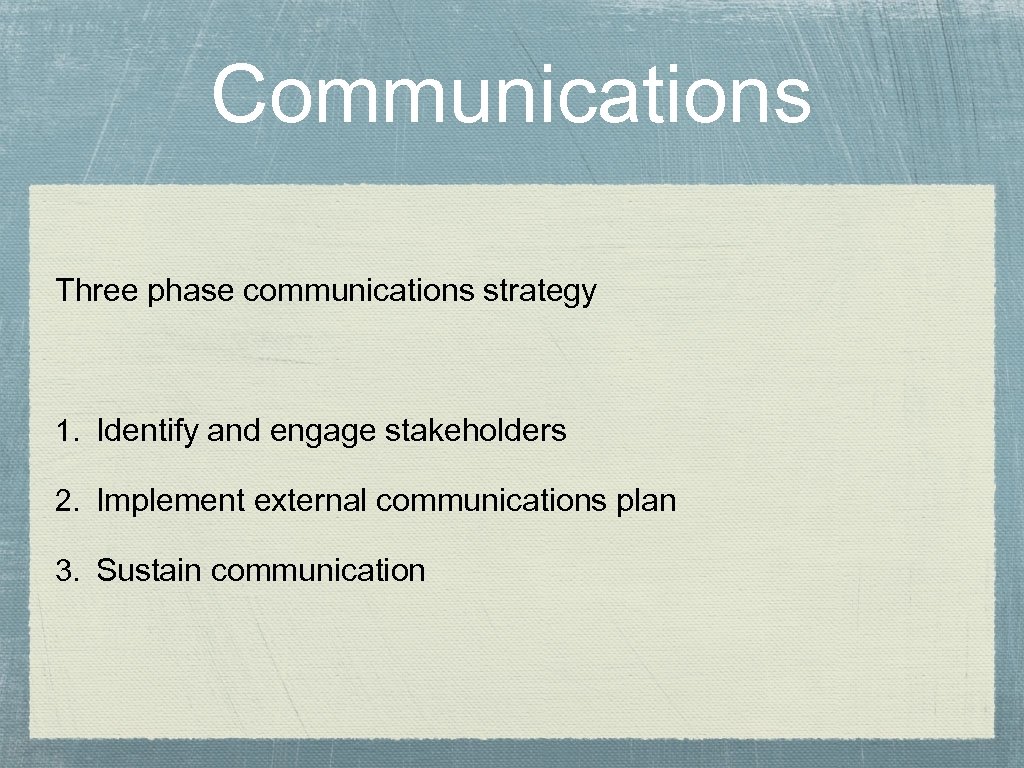
Communications Three phase communications strategy 1. Identify and engage stakeholders 2. Implement external communications plan 3. Sustain communication
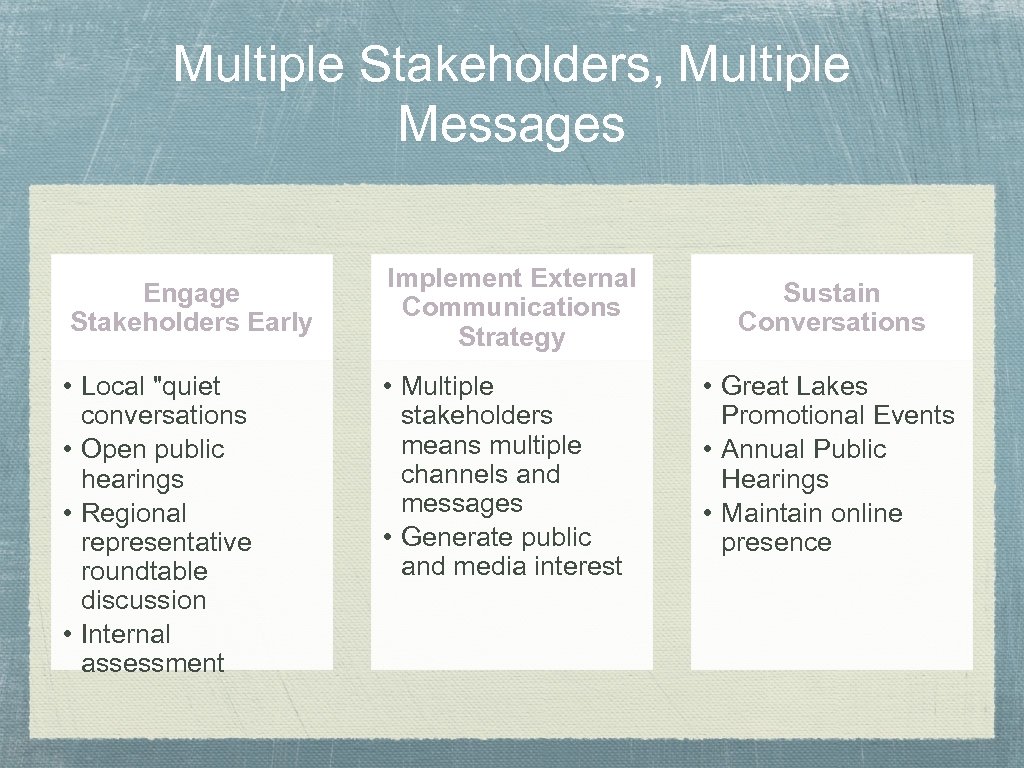
Multiple Stakeholders, Multiple Messages Engage Stakeholders Early • Local "quiet conversations • Open public hearings • Regional representative roundtable discussion • Internal assessment Implement External Communications Strategy • Multiple stakeholders means multiple channels and messages • Generate public and media interest Sustain Conversations • Great Lakes Promotional Events • Annual Public Hearings • Maintain online presence
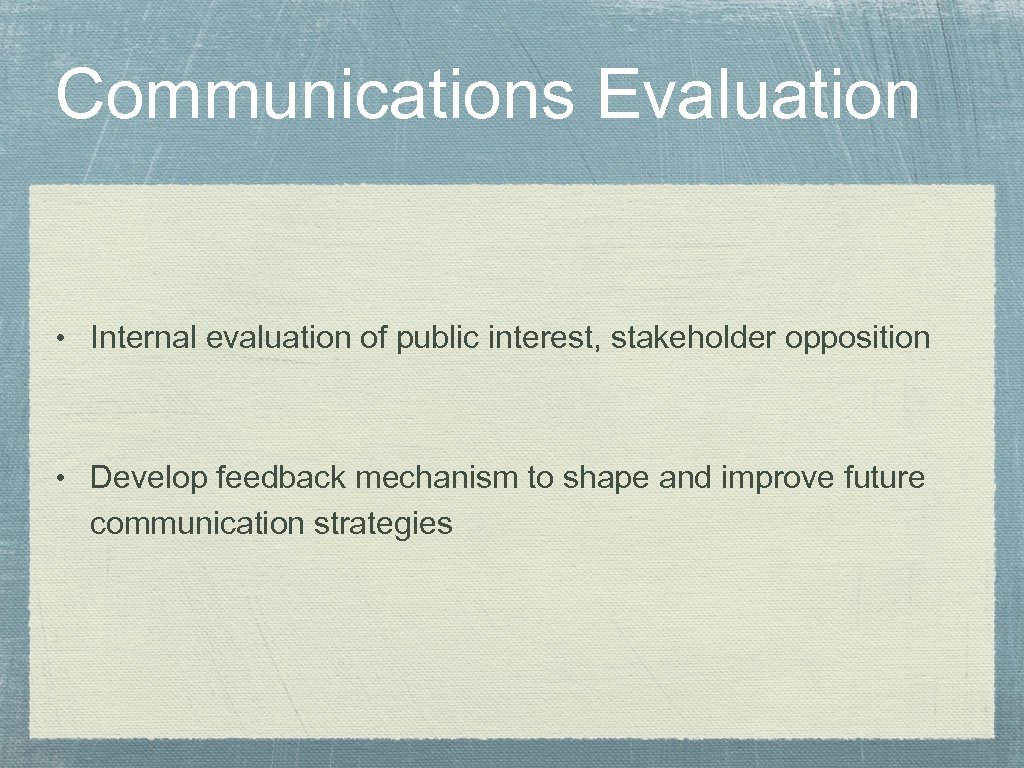
Communications Evaluation • Internal evaluation of public interest, stakeholder opposition • Develop feedback mechanism to shape and improve future communication strategies
Скачать презентацию Capitalizing on Untapped Potential An Effective Collaboration Strategy
864dd0bcb5ec14b06ba7da5a5c090594.ppt