 Скачать презентацию Capitalism is identified by its characteristic institutions Institutions
52afc2bd89be3b9976a7ad18b43827cf.ppt
- Количество слайдов: 28




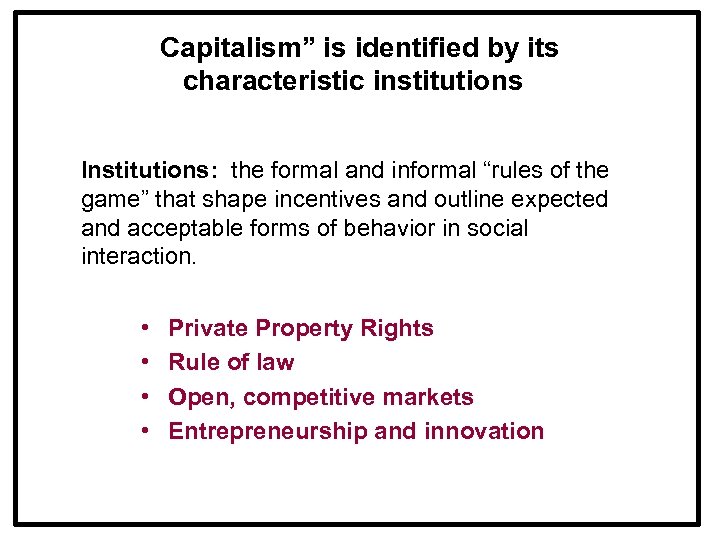
“Capitalism” is identified by its characteristic institutions Institutions: the formal and informal “rules of the game” that shape incentives and outline expected and acceptable forms of behavior in social interaction. • • Private Property Rights Rule of law Open, competitive markets Entrepreneurship and innovation
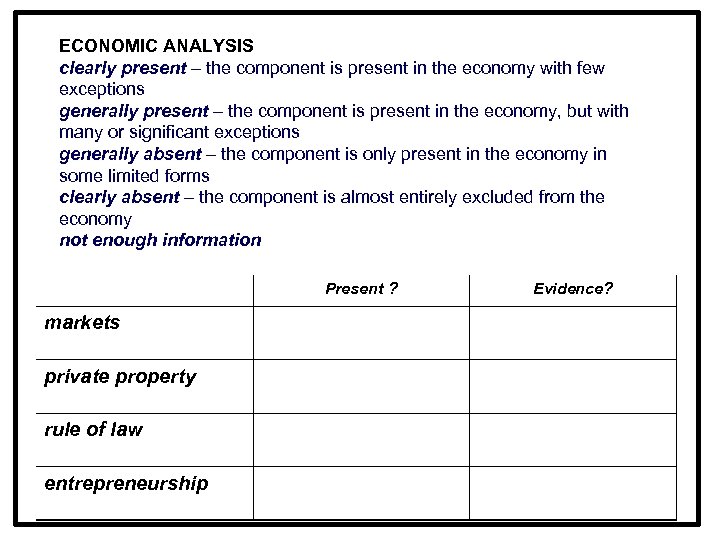
ECONOMIC ANALYSIS clearly present – the component is present in the economy with few exceptions generally present – the component is present in the economy, but with many or significant exceptions generally absent – the component is only present in the economy in some limited forms clearly absent – the component is almost entirely excluded from the economy not enough information Present ? markets private property rule of law entrepreneurship Evidence?
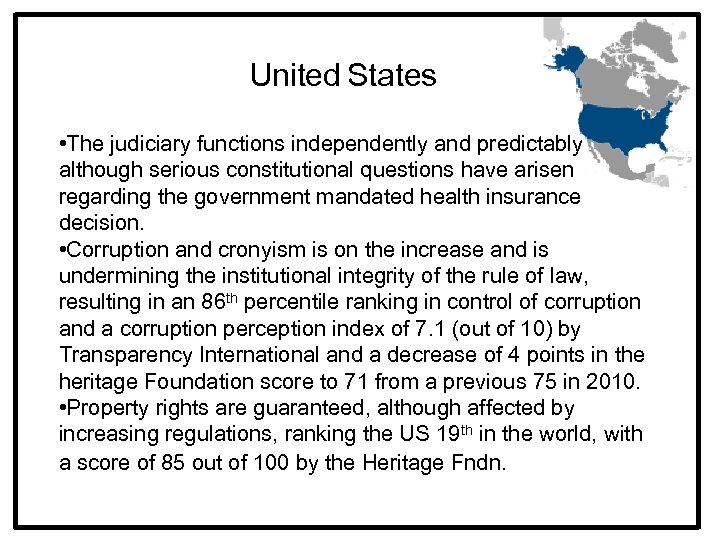
United States • The judiciary functions independently and predictably although serious constitutional questions have arisen regarding the government mandated health insurance decision. • Corruption and cronyism is on the increase and is undermining the institutional integrity of the rule of law, resulting in an 86 th percentile ranking in control of corruption and a corruption perception index of 7. 1 (out of 10) by Transparency International and a decrease of 4 points in the heritage Foundation score to 71 from a previous 75 in 2010. • Property rights are guaranteed, although affected by increasing regulations, ranking the US 19 th in the world, with a score of 85 out of 100 by the Heritage Fndn.
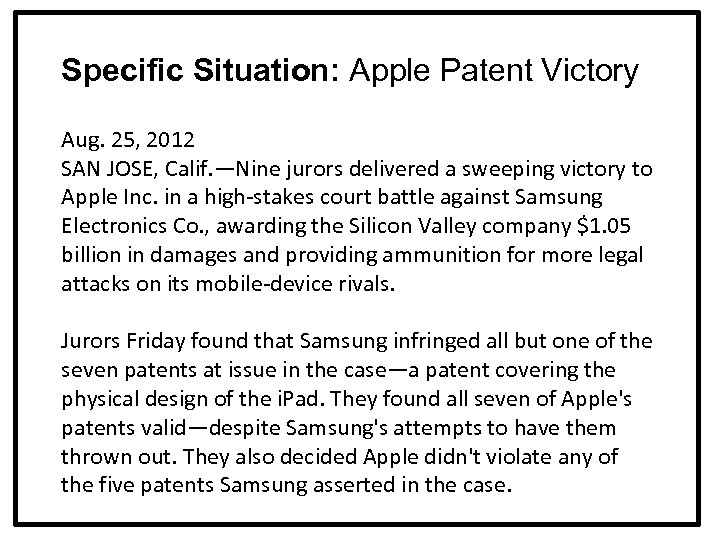
Specific Situation: Apple Patent Victory Aug. 25, 2012 SAN JOSE, Calif. —Nine jurors delivered a sweeping victory to Apple Inc. in a high-stakes court battle against Samsung Electronics Co. , awarding the Silicon Valley company $1. 05 billion in damages and providing ammunition for more legal attacks on its mobile-device rivals. Jurors Friday found that Samsung infringed all but one of the seven patents at issue in the case—a patent covering the physical design of the i. Pad. They found all seven of Apple's patents valid—despite Samsung's attempts to have them thrown out. They also decided Apple didn't violate any of the five patents Samsung asserted in the case.
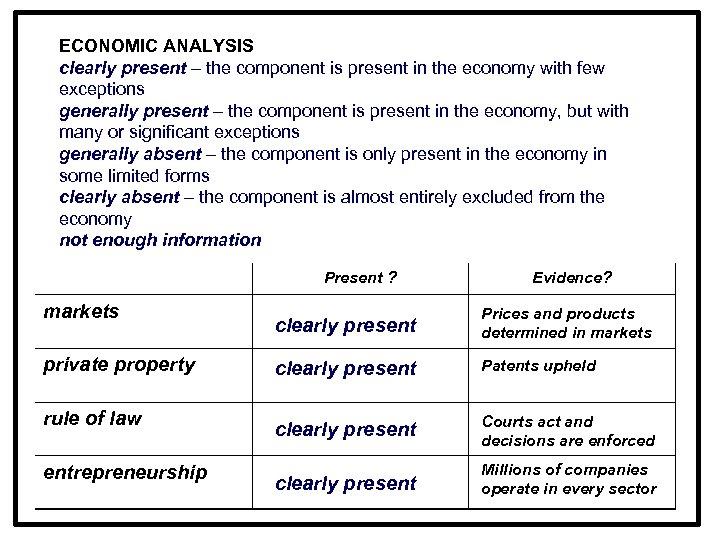
ECONOMIC ANALYSIS clearly present – the component is present in the economy with few exceptions generally present – the component is present in the economy, but with many or significant exceptions generally absent – the component is only present in the economy in some limited forms clearly absent – the component is almost entirely excluded from the economy not enough information Present ? markets private property rule of law entrepreneurship Evidence? clearly present Prices and products determined in markets clearly present Patents upheld clearly present Courts act and decisions are enforced clearly present Millions of companies operate in every sector
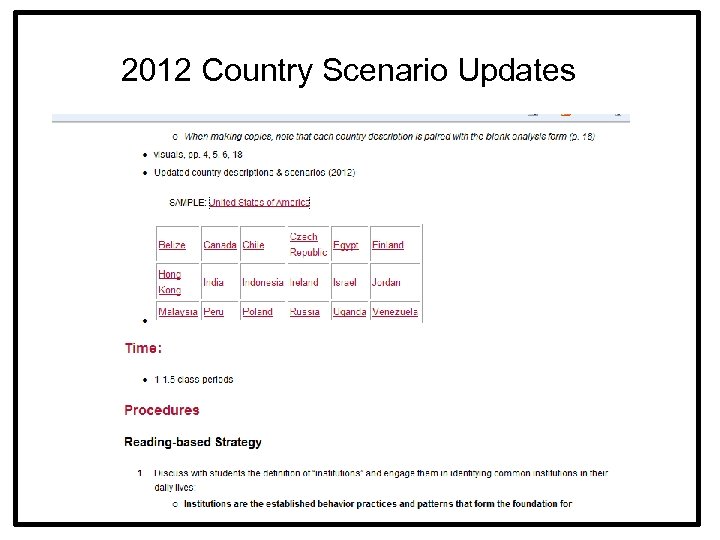
2012 Country Scenario Updates
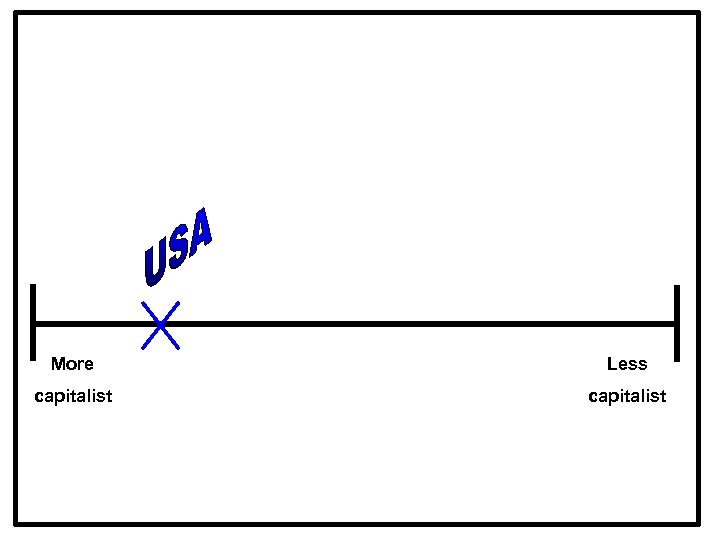
Capitalism is best thought of not as “a system, ” but as a continuum of institutional combinations. . More Less capitalist
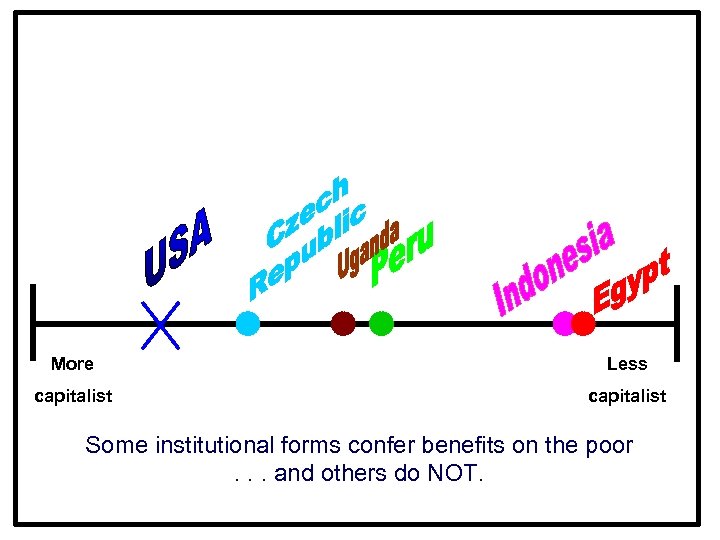
Capitalism is best thought of not as “a system, ” but as a continuum of institutional combinations. . More Less capitalist Some institutional forms confer benefits on the poor. . . and others do NOT.
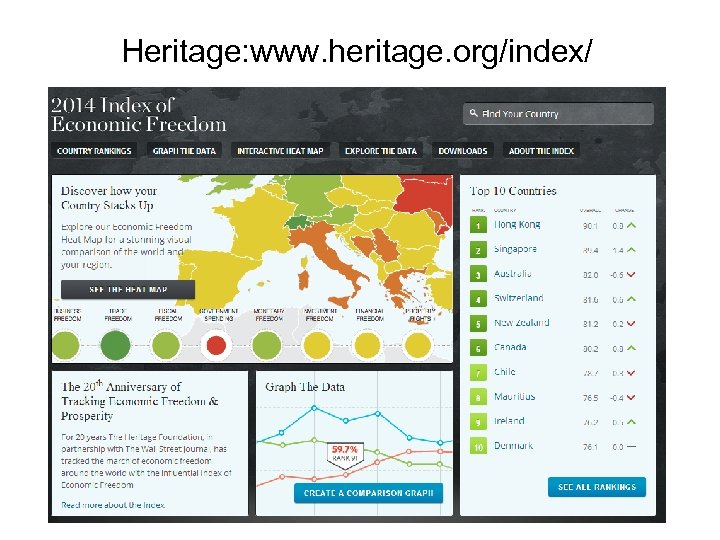
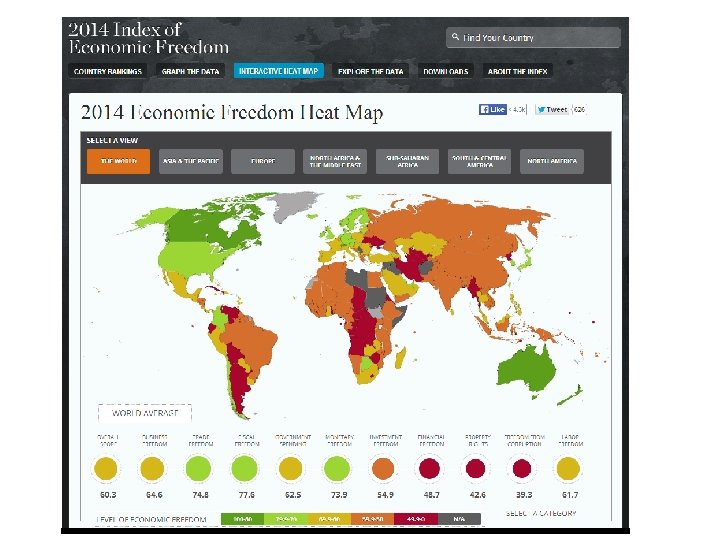
Heritage: www. heritage. org/index/
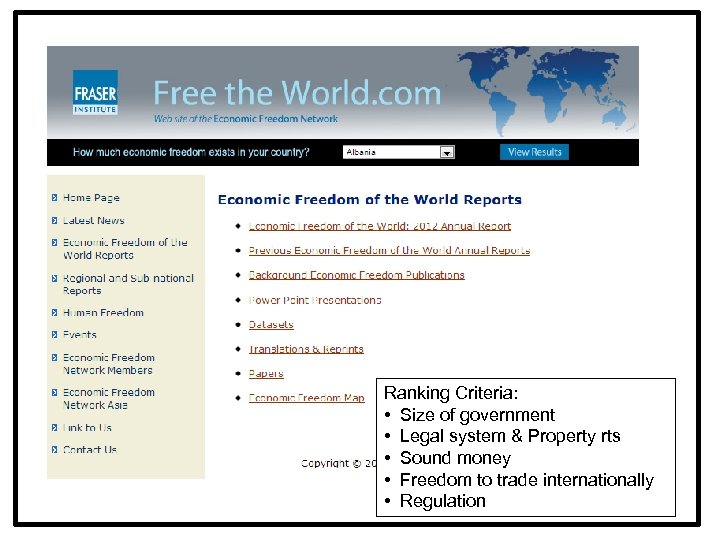
Ranking Criteria: • Size of government • Legal system & Property rts • Sound money • Freedom to trade internationally • Regulation
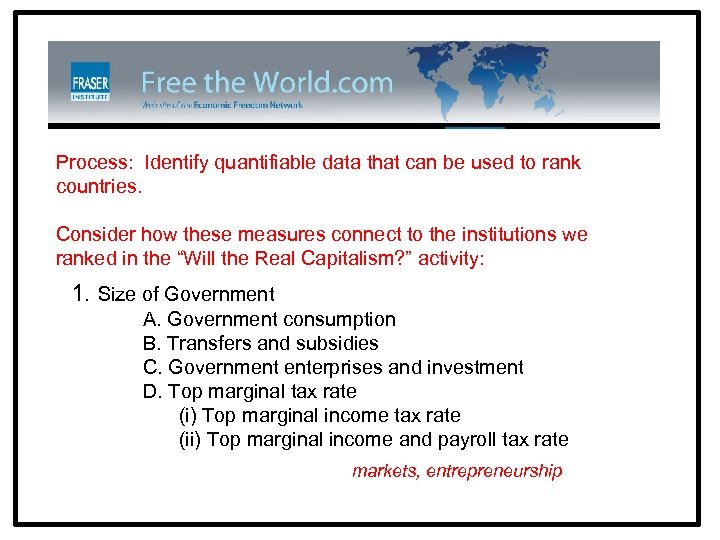
Process: Identify quantifiable data that can be used to rank countries. Consider how these measures connect to the institutions we ranked in the “Will the Real Capitalism? ” activity: 1. Size of Government A. Government consumption B. Transfers and subsidies C. Government enterprises and investment D. Top marginal tax rate (i) Top marginal income tax rate (ii) Top marginal income and payroll tax rate markets, entrepreneurship
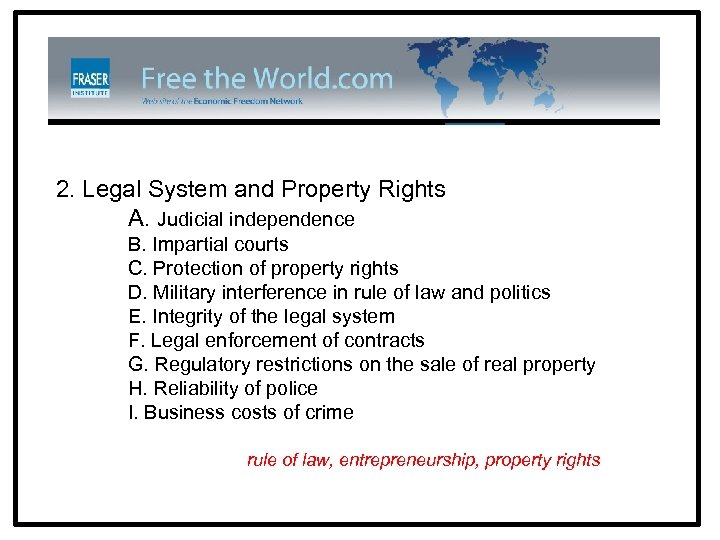
2. Legal System and Property Rights A. Judicial independence B. Impartial courts C. Protection of property rights D. Military interference in rule of law and politics E. Integrity of the legal system F. Legal enforcement of contracts G. Regulatory restrictions on the sale of real property H. Reliability of police I. Business costs of crime rule of law, entrepreneurship, property rights
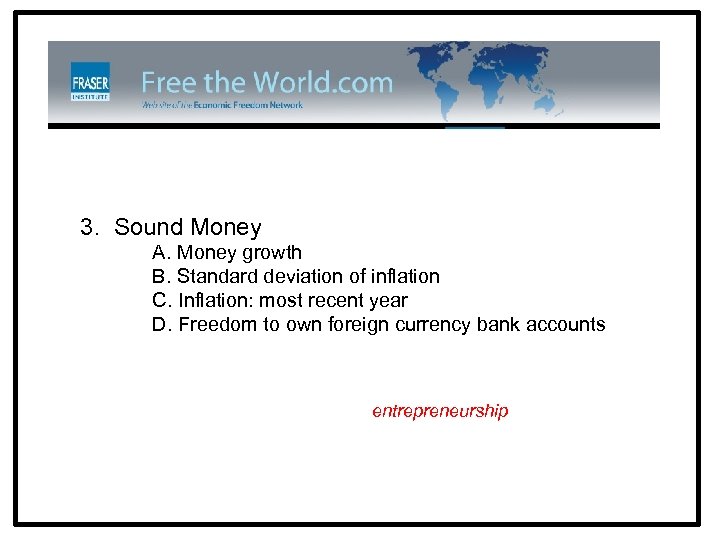
3. Sound Money A. Money growth B. Standard deviation of inflation C. Inflation: most recent year D. Freedom to own foreign currency bank accounts entrepreneurship
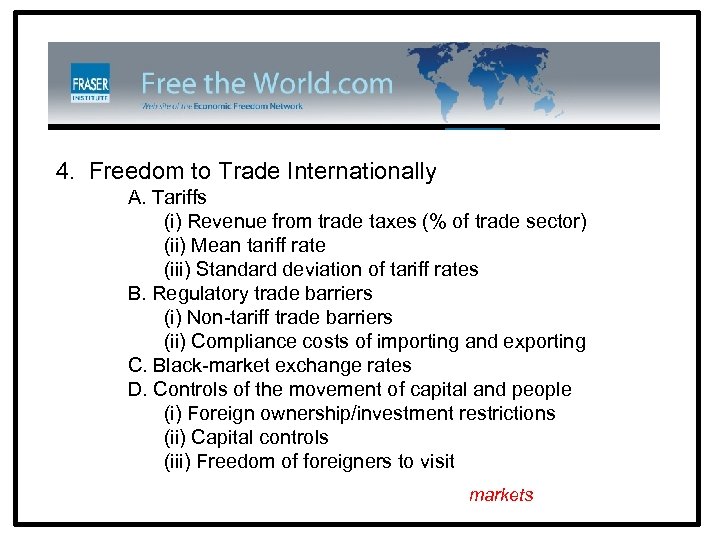
4. Freedom to Trade Internationally A. Tariffs (i) Revenue from trade taxes (% of trade sector) (ii) Mean tariff rate (iii) Standard deviation of tariff rates B. Regulatory trade barriers (i) Non-tariff trade barriers (ii) Compliance costs of importing and exporting C. Black-market exchange rates D. Controls of the movement of capital and people (i) Foreign ownership/investment restrictions (ii) Capital controls (iii) Freedom of foreigners to visit markets
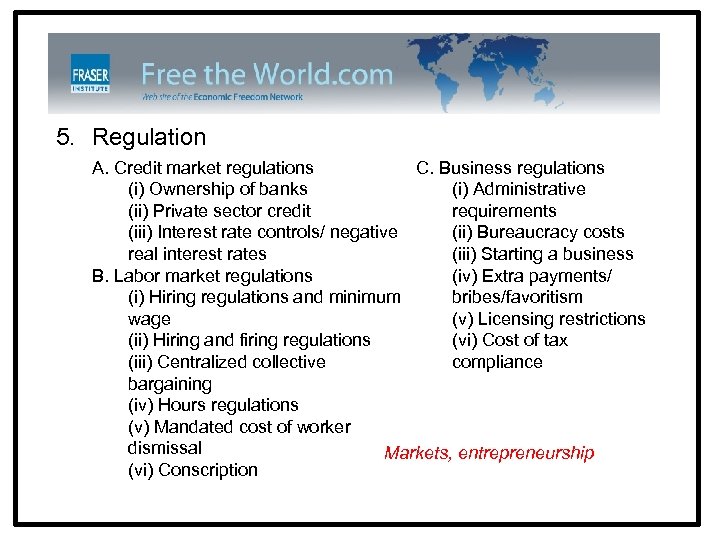
5. Regulation A. Credit market regulations C. Business regulations (i) Ownership of banks (i) Administrative (ii) Private sector credit requirements (iii) Interest rate controls/ negative (ii) Bureaucracy costs real interest rates (iii) Starting a business B. Labor market regulations (iv) Extra payments/ (i) Hiring regulations and minimum bribes/favoritism wage (v) Licensing restrictions (ii) Hiring and firing regulations (vi) Cost of tax (iii) Centralized collective compliance bargaining (iv) Hours regulations (v) Mandated cost of worker dismissal Markets, entrepreneurship (vi) Conscription
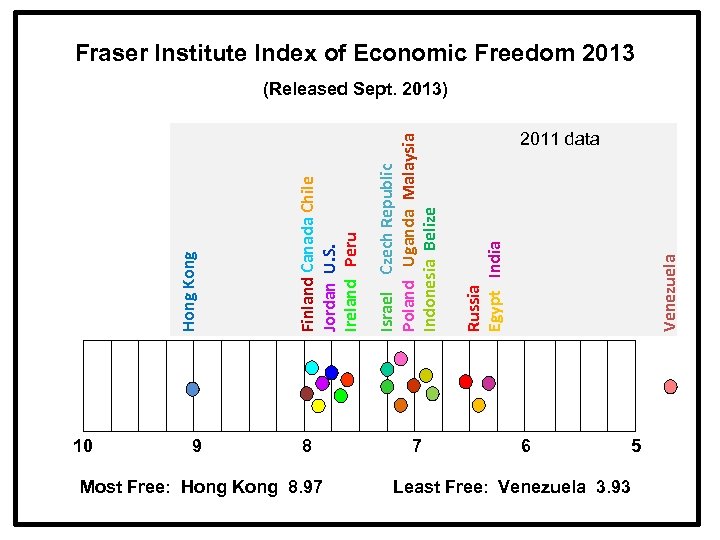
10 9 8 Most Free: Hong Kong 8. 97 7 Venezuela Russia Egypt India Israel Czech Republic Poland Uganda Malaysia Indonesia Belize Finland Canada Chile Jordan U. S. Ireland Peru Hong Kong Fraser Institute Index of Economic Freedom 2013 (Released Sept. 2013) 2011 data 6 5 Least Free: Venezuela 3. 93
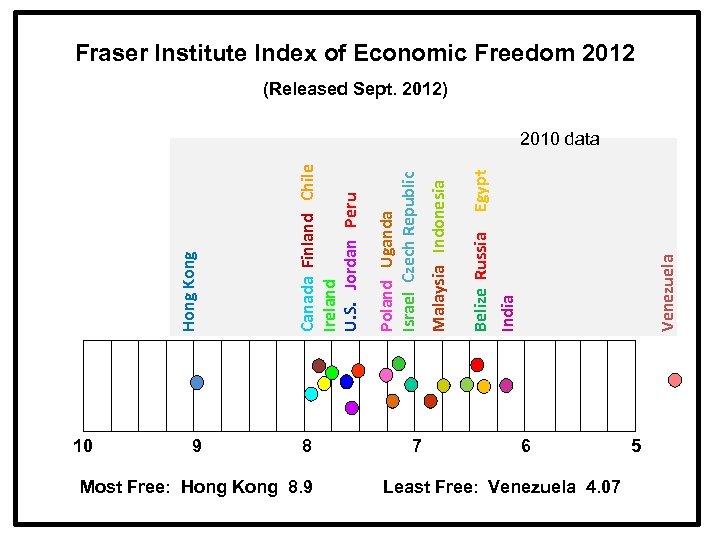
10 9 8 Most Free: Hong Kong 8. 9 7 Venezuela Belize Russia India Egypt Malaysia Indonesia Poland Uganda Israel Czech Republic Canada Finland Chile Ireland U. S. Jordan Peru Hong Kong Fraser Institute Index of Economic Freedom 2012 (Released Sept. 2012) 2010 data 6 Least Free: Venezuela 4. 07 5
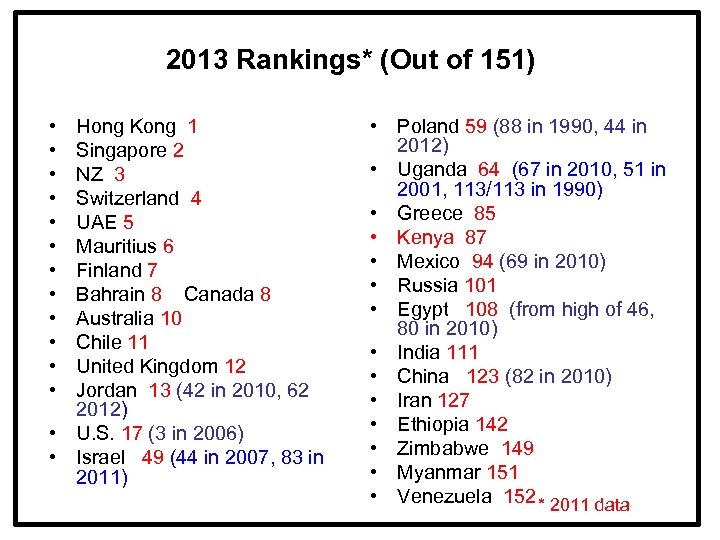
2013 Rankings* (Out of 151) • • • Hong Kong 1 Singapore 2 NZ 3 Switzerland 4 UAE 5 Mauritius 6 Finland 7 Bahrain 8 Canada 8 Australia 10 Chile 11 United Kingdom 12 Jordan 13 (42 in 2010, 62 2012) • U. S. 17 (3 in 2006) • Israel 49 (44 in 2007, 83 in 2011) • Poland 59 (88 in 1990, 44 in 2012) • Uganda 64 (67 in 2010, 51 in 2001, 113/113 in 1990) • Greece 85 • Kenya 87 • Mexico 94 (69 in 2010) • Russia 101 • Egypt 108 (from high of 46, 80 in 2010) • India 111 • China 123 (82 in 2010) • Iran 127 • Ethiopia 142 • Zimbabwe 149 • Myanmar 151 • Venezuela 152 * 2011 data
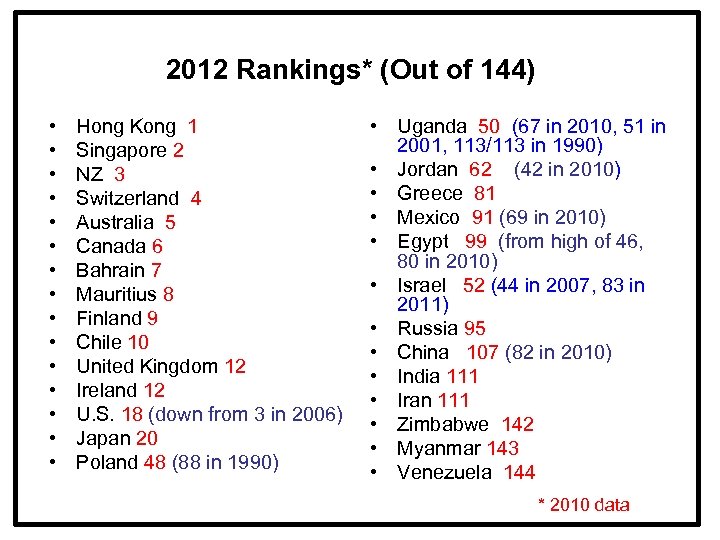
2012 Rankings* (Out of 144) • • • • Hong Kong 1 Singapore 2 NZ 3 Switzerland 4 Australia 5 Canada 6 Bahrain 7 Mauritius 8 Finland 9 Chile 10 United Kingdom 12 Ireland 12 U. S. 18 (down from 3 in 2006) Japan 20 Poland 48 (88 in 1990) • Uganda 50 (67 in 2010, 51 in 2001, 113/113 in 1990) • Jordan 62 (42 in 2010) • Greece 81 • Mexico 91 (69 in 2010) • Egypt 99 (from high of 46, 80 in 2010) • Israel 52 (44 in 2007, 83 in 2011) • Russia 95 • China 107 (82 in 2010) • India 111 • Iran 111 • Zimbabwe 142 • Myanmar 143 • Venezuela 144 * 2010 data
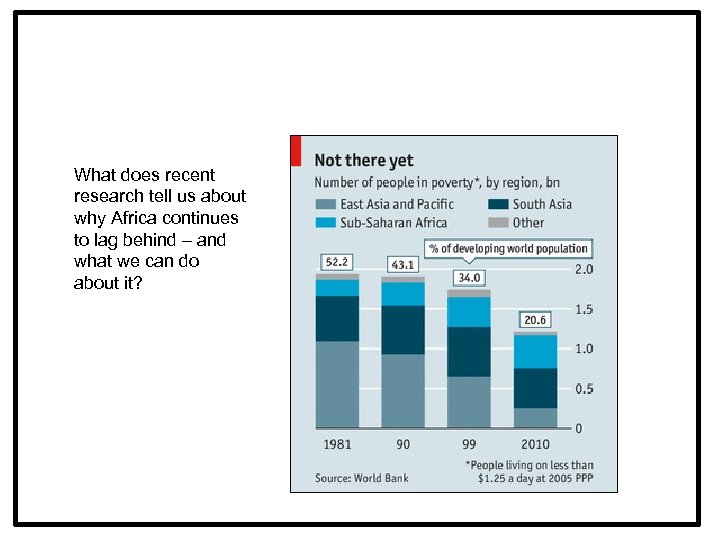
Africa Continues to Lag Behind: 1/3 of the world’s “extremely poor” What does recent research tell us about why Africa continues to lag behind – and what we can do about it?
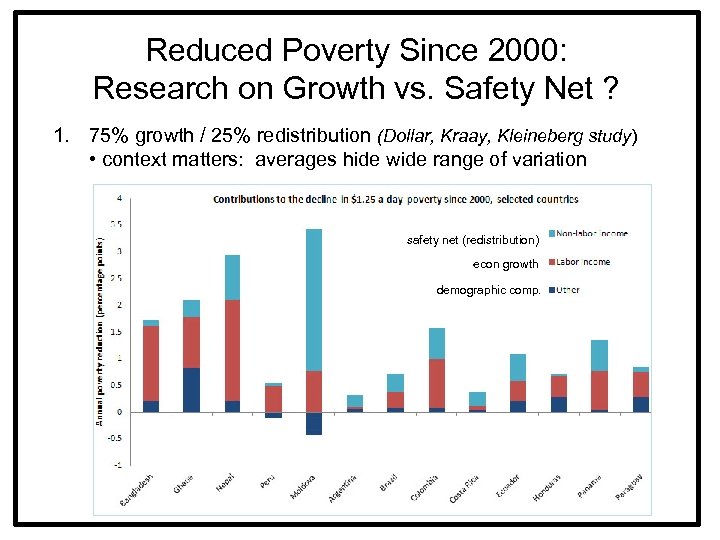
Reduced Poverty Since 2000: Research on Growth vs. Safety Net ? 1. 75% growth / 25% redistribution (Dollar, Kraay, Kleineberg study) • context matters: averages hide wide range of variation safety net (redistribution) econ growth demographic comp.
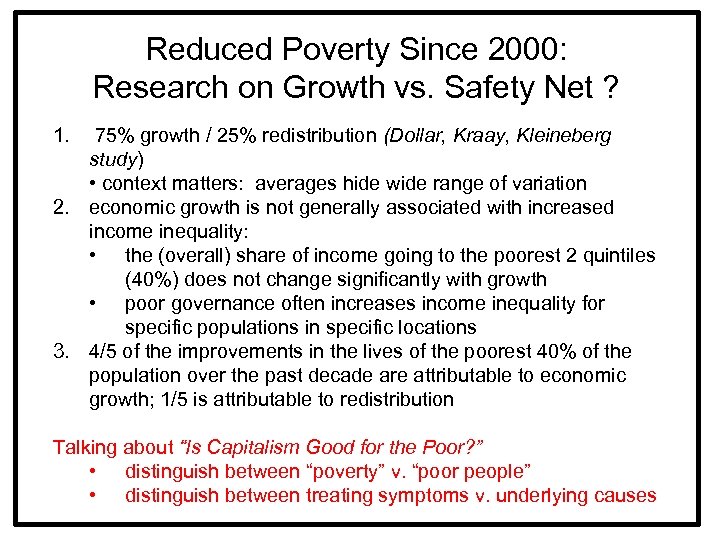
Reduced Poverty Since 2000: Research on Growth vs. Safety Net ? 1. 75% growth / 25% redistribution (Dollar, Kraay, Kleineberg study) • context matters: averages hide wide range of variation 2. economic growth is not generally associated with increased income inequality: • the (overall) share of income going to the poorest 2 quintiles (40%) does not change significantly with growth • poor governance often increases income inequality for specific populations in specific locations 3. 4/5 of the improvements in the lives of the poorest 40% of the population over the past decade are attributable to economic growth; 1/5 is attributable to redistribution Talking about “Is Capitalism Good for the Poor? ” • distinguish between “poverty” v. “poor people” • distinguish between treating symptoms v. underlying causes
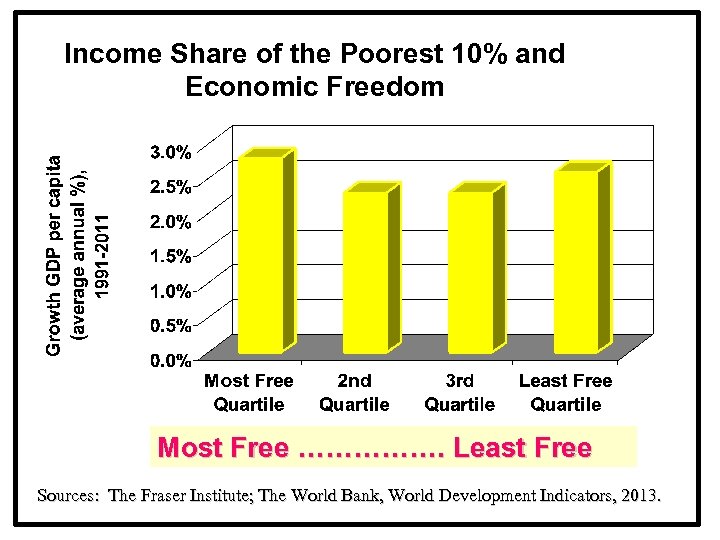
Income Share of the Poorest 10% and Economic Freedom Most Free ……………. Least Free Sources: The Fraser Institute; The World Bank, World Development Indicators, 2013.
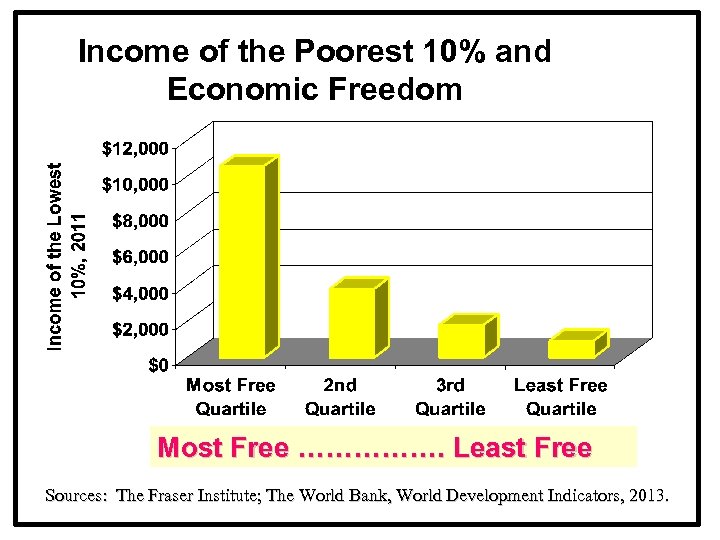
Income of the Poorest 10% and Economic Freedom Most Free ……………. Least Free Sources: The Fraser Institute; The World Bank, World Development Indicators, 2013.
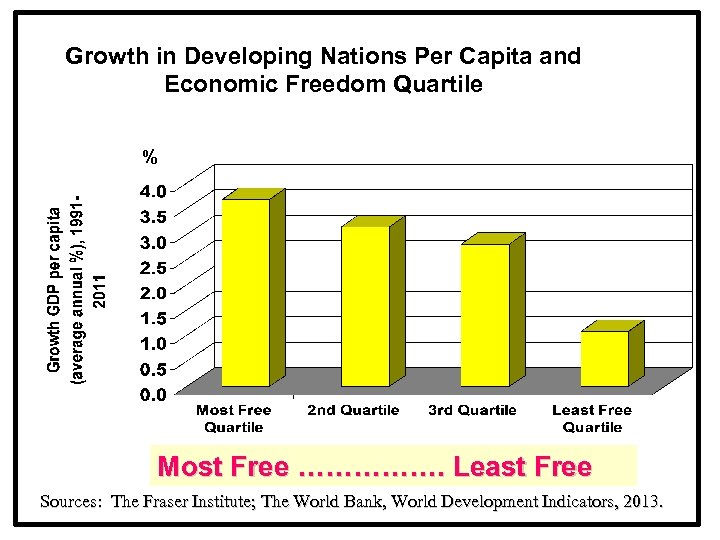
Growth in Developing Nations Per Capita and Economic Freedom Quartile % Most Free ……………. Least Free Sources: The Fraser Institute; The World Bank, World Development Indicators, 2013.
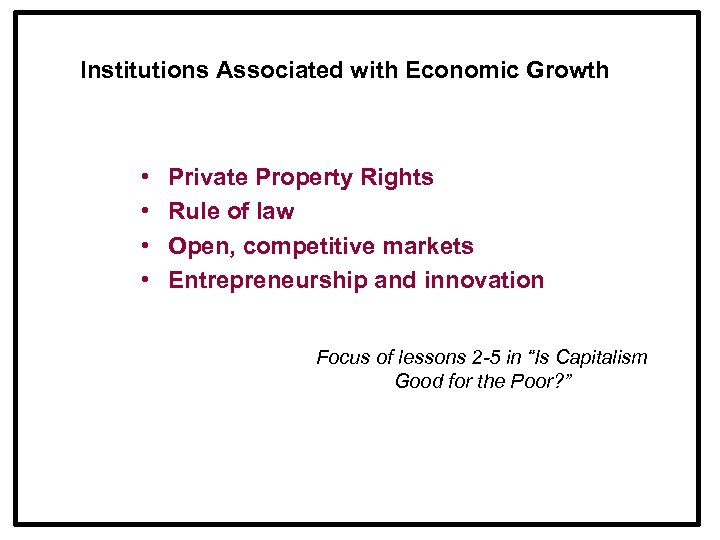
Institutions Associated with Economic Growth • • Private Property Rights Rule of law Open, competitive markets Entrepreneurship and innovation Focus of lessons 2 -5 in “Is Capitalism Good for the Poor? ”
Скачать презентацию Capitalism is identified by its characteristic institutions Institutions
52afc2bd89be3b9976a7ad18b43827cf.ppt