


 Скачать презентацию Capacity Development in GIS Rajeev Shorey Ph D
6a0844767da68d46e74cd59d2d829ec4.ppt
- Количество слайдов: 41
 Capacity Development in GIS Rajeev Shorey (Ph. D, FNAE) President, NIIT University India 8 February 2012
 Agenda • • • GIS: A Multidisciplinary Space Approaches to Capacity Building in GIS Need for a Research Driven Culture Industry Interface NU 4 Core Principles Conclusion 2
 What is GIS? • Integrates hardware, software, and data for capturing, managing, analyzing, and displaying all forms of geographically referenced information • GIS allows us to view, understand, question, interpret, and visualize data in many ways that reveal relationships, patterns, and trends in the form of maps, globes, reports, and charts • GIS technology can be integrated into any enterprise information system framework http: //www. esri. com/what-is-gis/overview. html#overview_panel 3
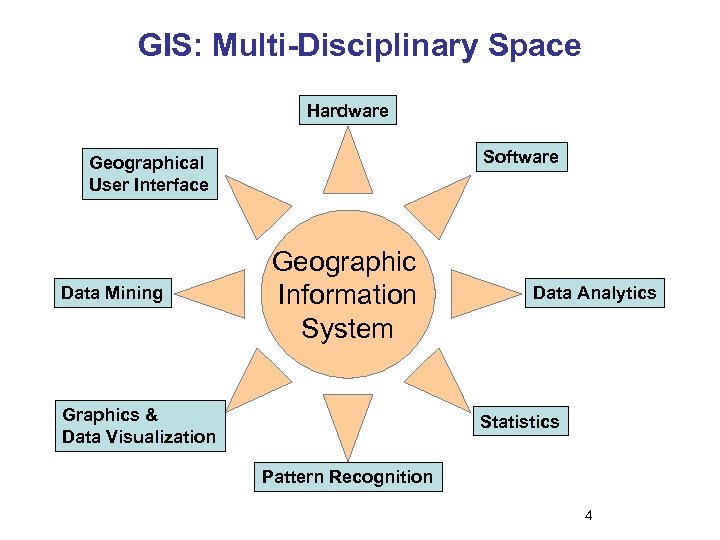 GIS: Multi-Disciplinary Space Hardware Software Geographical User Interface Data Mining Geographic Information System Graphics & Data Visualization Data Analytics Statistics Pattern Recognition 4
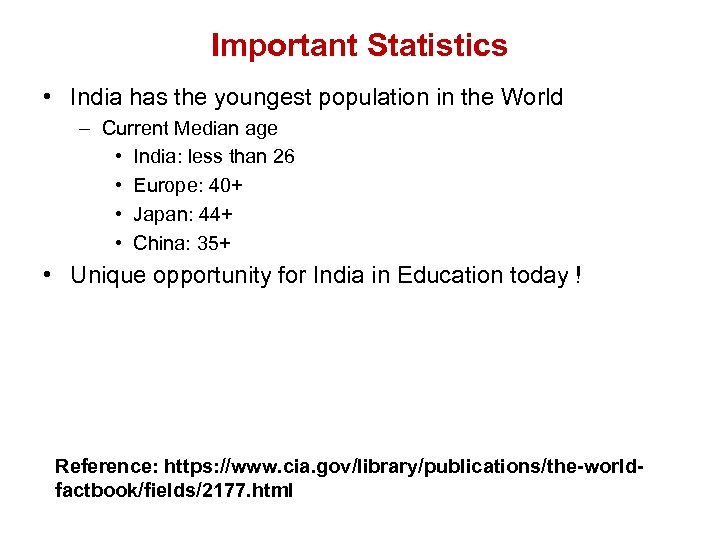 Important Statistics • India has the youngest population in the World – Current Median age • India: less than 26 • Europe: 40+ • Japan: 44+ • China: 35+ • Unique opportunity for India in Education today ! Reference: https: //www. cia. gov/library/publications/the-worldfactbook/fields/2177. html
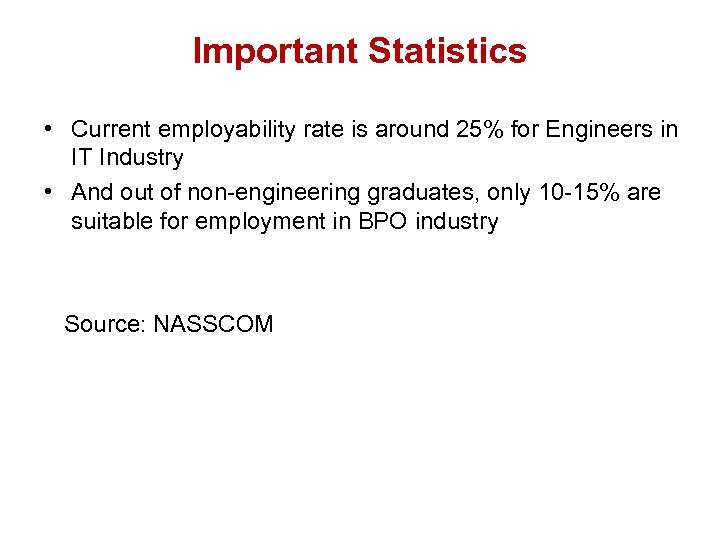 Important Statistics • Current employability rate is around 25% for Engineers in IT Industry • And out of non-engineering graduates, only 10 -15% are suitable for employment in BPO industry Source: NASSCOM
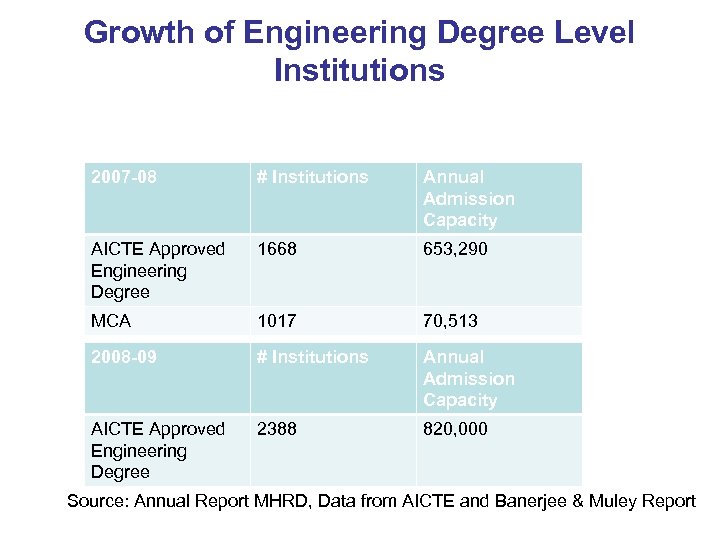 Growth of Engineering Degree Level Institutions 2007 -08 # Institutions Annual Admission Capacity AICTE Approved Engineering Degree 1668 653, 290 MCA 1017 70, 513 2008 -09 # Institutions Annual Admission Capacity AICTE Approved Engineering Degree 2388 820, 000 Source: Annual Report MHRD, Data from AICTE and Banerjee & Muley Report
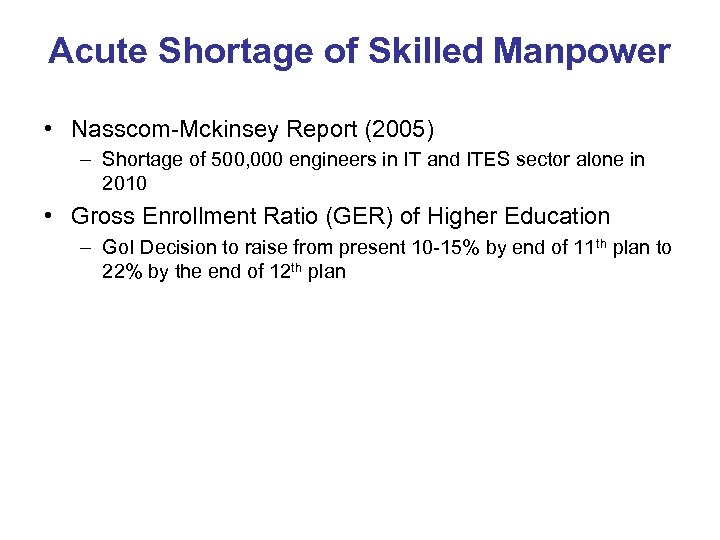 Acute Shortage of Skilled Manpower • Nasscom-Mckinsey Report (2005) – Shortage of 500, 000 engineers in IT and ITES sector alone in 2010 • Gross Enrollment Ratio (GER) of Higher Education – Go. I Decision to raise from present 10 -15% by end of 11 th plan to 22% by the end of 12 th plan
 Alarming Statistics • More than 1500 Technical Institutions • Total intake of nearly 5, 70, 000 • Research is non-existent in all but about 15 -20 of these 1500 colleges • Poor quality of Engineering Education • August 2010, HRD Minister – – 35 percent posts are vacant in the central universities 25 percent in the IIMs 33. 33 percent in the National Institute of Technology 35. 1 percent in other central education institutions coming up under the Human Resource Development (HRD) Ministry • Serious crisis of talent pool in India ! 9
 Talent Crunch in the Corporate Sector • India is finding it hard to fill in key positions in research, sales and IT – Lack of training and experience • “ 67% of employers in India are experiencing difficulty filling mission-critical positions within their organizations such as R&D, sales and information technology (IT) staff” • 6 th annual talent shortage survey by global human resource, consultancy and staffing firm Manpower. Group – http: //www. siliconindia. com/shownews/India_Inc_faces_talent_cr unch_in_RD_sales_and_IT-nid-83716 -cid-3. html 10
 Example: China • China tries to lure overseas talent – http: //www. chinadaily. com. cn/china/200903/20/content_7601875. htm • Under a new program to hire 1, 000 overseas specialists, the central government will offer each 1 million yuan (US$146, 000) in subsidies – 65 Lakhs an year ! • If employed, they will also be able to enjoy fundamental social security policies including medical care and pensions 11
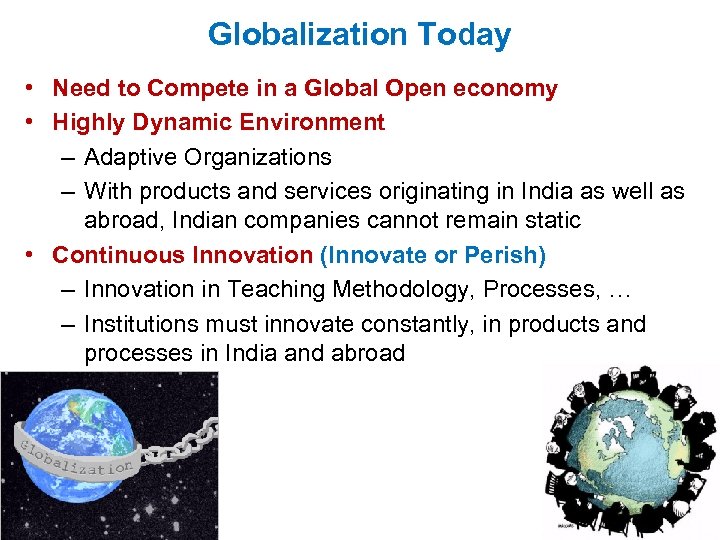 Globalization Today • Need to Compete in a Global Open economy • Highly Dynamic Environment – Adaptive Organizations – With products and services originating in India as well as abroad, Indian companies cannot remain static • Continuous Innovation (Innovate or Perish) – Innovation in Teaching Methodology, Processes, … – Institutions must innovate constantly, in products and processes in India and abroad
 What is the Approach to Capacity Development?
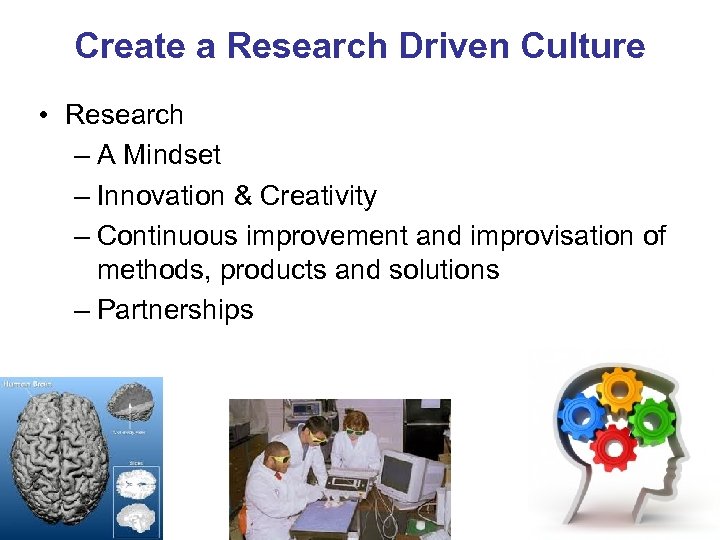 Create a Research Driven Culture • Research – A Mindset – Innovation & Creativity – Continuous improvement and improvisation of methods, products and solutions – Partnerships 14
 Focus on Innovation, Creativity, IP • Complete lack of understanding of IP in India in comparison to USA, Europe and China • Example – 2004 – Number of Patent Applications in USA: 181, 299 • http: //www. uspto. gov/web/offices/ac/ido/oeip/taf/us_stat. htm – Number of Patent Applications in India: 3630 • http: //www. rkdewan. com/pdfs/other/applicants. Survey. pdf • In today’s Knowledge Society, Intellectual Property will be a Key Differentiator towards providing Quality in Engineering Education • Need to seriously focus on Innovation that leads to IP 15
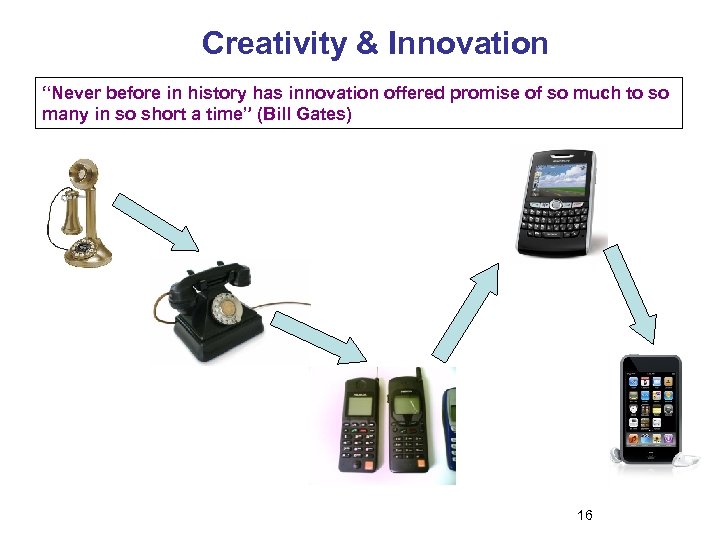 Creativity & Innovation “Never before in history has innovation offered promise of so much to so many in so short a time” (Bill Gates) 16
 Create Industry-Linked Culture
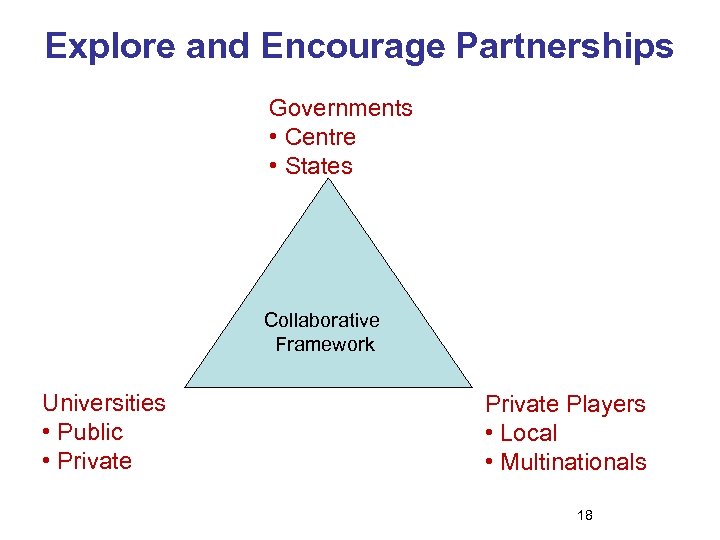 Explore and Encourage Partnerships Governments • Centre • States Collaborative Framework Universities • Public • Private Players • Local • Multinationals 18
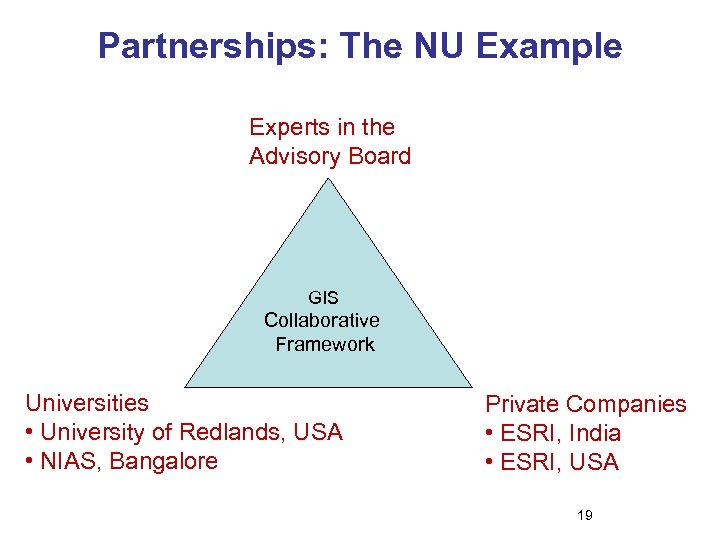 Partnerships: The NU Example Experts in the Advisory Board GIS Collaborative Framework Universities • University of Redlands, USA • NIAS, Bangalore Private Companies • ESRI, India • ESRI, USA 19
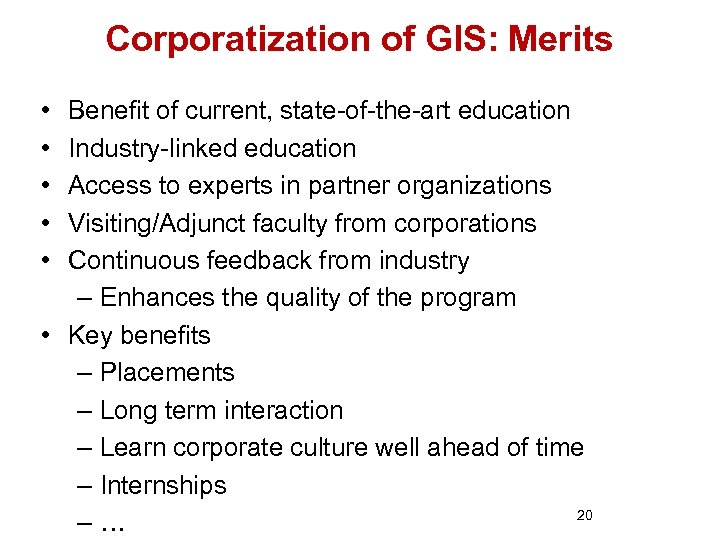 Corporatization of GIS: Merits • • • Benefit of current, state-of-the-art education Industry-linked education Access to experts in partner organizations Visiting/Adjunct faculty from corporations Continuous feedback from industry – Enhances the quality of the program • Key benefits – Placements – Long term interaction – Learn corporate culture well ahead of time – Internships 20 –…
 Focus on Quality, Quantity will Follow
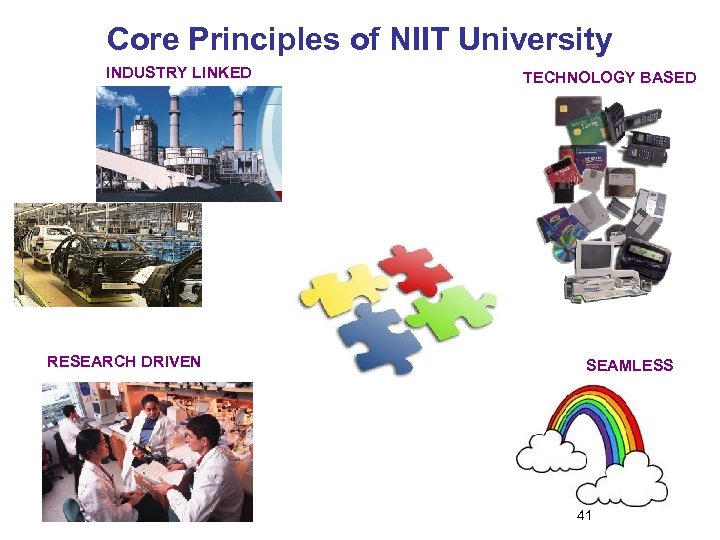
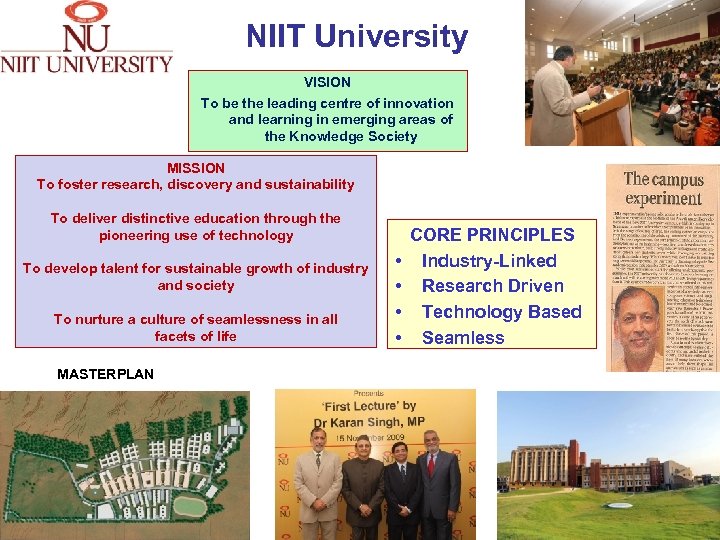 NIIT University VISION To be the leading centre of innovation and learning in emerging areas of the Knowledge Society MISSION To foster research, discovery and sustainability To deliver distinctive education through the pioneering use of technology To develop talent for sustainable growth of industry and society To nurture a culture of seamlessness in all facets of life MASTERPLAN • • CORE PRINCIPLES Industry-Linked Research Driven Technology Based Seamless
 Conclusion • Organizations and Academic Institutions need to stretch to hire the best talent and more importantly “retain” the talent • We need to leave No Stone Unturned to ensure high quality talent • The challenges are herculean and need to be solved through Incentives, Partnerships & Collaborations
 Thank You rajeev. shorey@niituniversity. in rajeevshorey@gmail. com
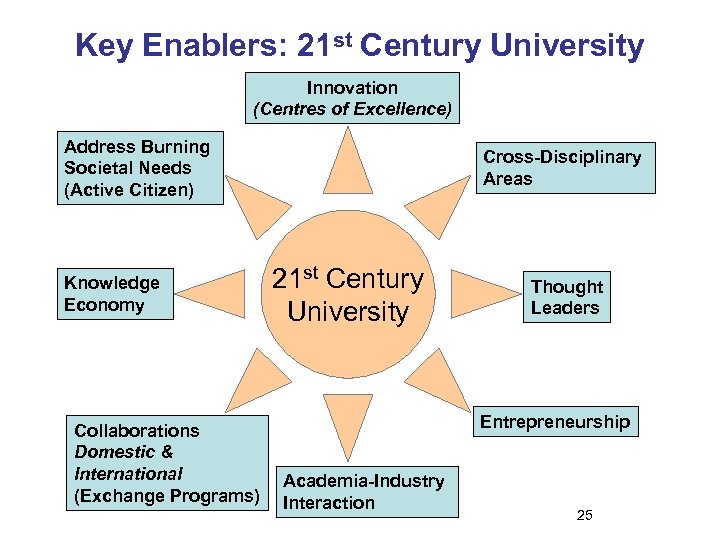 Key Enablers: 21 st Century University Innovation (Centres of Excellence) Address Burning Societal Needs (Active Citizen) Knowledge Economy Collaborations Domestic & International (Exchange Programs) Cross-Disciplinary Areas 21 st Century University Thought Leaders Entrepreneurship Academia-Industry Interaction 25
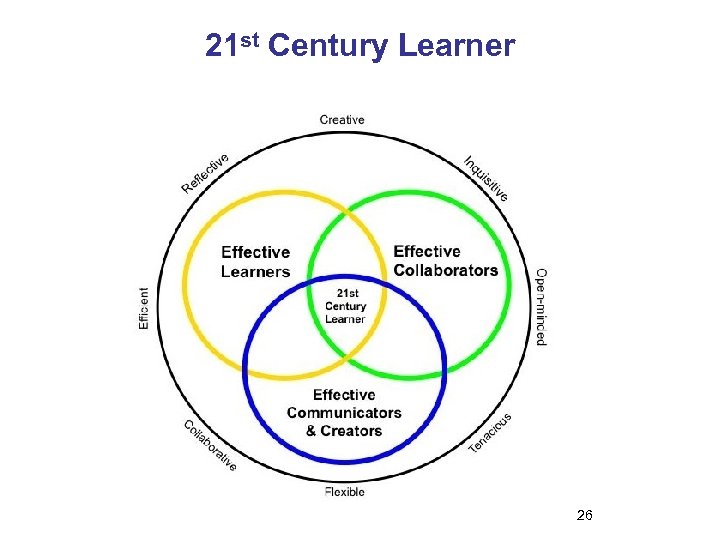 21 st Century Learner 26
 Globalization Today • Need to Compete in a Global Open economy • Highly Dynamic Environment – Adaptive Organizations – With products and services originating in India as well as abroad, Indian companies cannot remain static • Continuous Innovation (Innovate or Perish) – Innovation in Teaching Methodology, Processes, … – B-Schools must innovate constantly, in products and processes in India and abroad – Has a potential to become a ‘Key Differentiator’ • Create meaningful Partnerships with organizations and academic institutions in India and abroad • Need to nurture Managers with Global Mindset
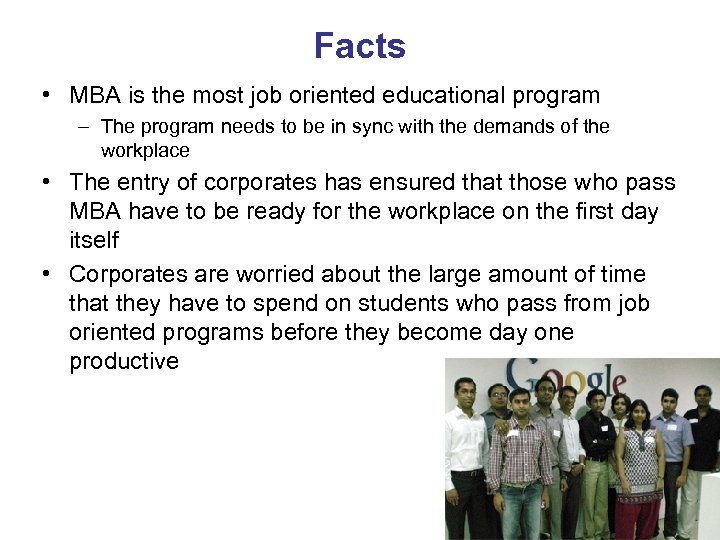 Facts • MBA is the most job oriented educational program – The program needs to be in sync with the demands of the workplace • The entry of corporates has ensured that those who pass MBA have to be ready for the workplace on the first day itself • Corporates are worried about the large amount of time that they have to spend on students who pass from job oriented programs before they become day one productive 28
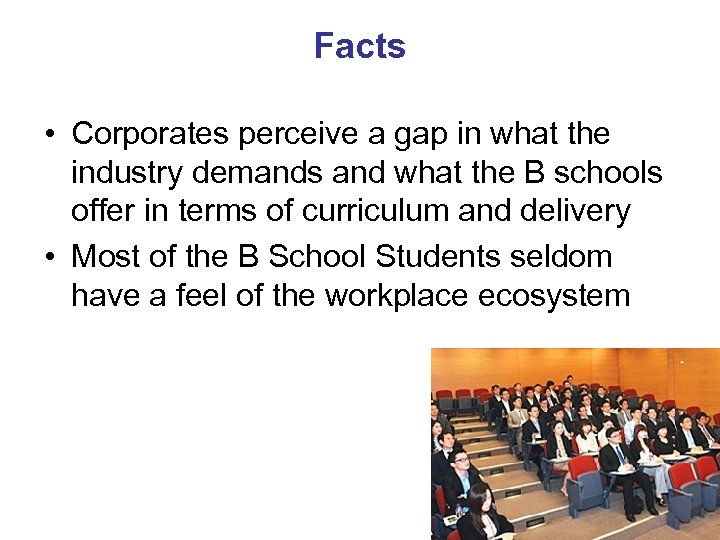 Facts • Corporates perceive a gap in what the industry demands and what the B schools offer in terms of curriculum and delivery • Most of the B School Students seldom have a feel of the workplace ecosystem 29
 Challenges • The phrase “Corporatization of MBA Education” leads to a conclusion that corporates may have an interest in controlling higher education – This is a misconception • The objective should not be to affect academic freedom in any way • The core issue is to do away with the disconnect between job oriented technology & management programs and the real workplace 30
 Merits • Entry of corporates is likely to bring about the much needed capital infusion in higher education segment • Entry of corporates will also support lifelong learning that is accessible to everyone • Education is a rewarding experience that should not be restricted to a certain timeframe, place, or a rigid format, as it is happening now 31
 Road Ahead • We all need to focus on ‘Quality’ • Need to be selective about new programs – Choose the area/s carefully • Need to ensure a Win-Win between Academic Institution and Corporate world • Key Challenges – Frequent open communication and exchange of ideas – How to continuously innovate in an ever changing world ! 32
 Solution to the Knowledge Divide • What should the Government do? – Fund the Tier 2 and Tier 3 institutions that show promise • Established institutions are already well funded and have an excellent infrastructure – Mandate that all funded institutes contribute towards nation building • Use the funded institutes as test-bed for innovation/research/experiments – Research should be used to solve practical and current problems being faced in society – Crate an environment for ‘Innovation’ – Encourage start-ups with the help from Industry and NGOs 33
 Knowledge Divide • Leverage Communication Technologies – Lessons from Cell Phone Penetration in India – The next wave of growth in subscriptions will come from semi—urban and rural areas – Emergence of Utility Mobile Value Added Services (MVAS) • Learn from the success of ‘Educational Technology’ • Need of the Hour – Cost-effective, efficient solutions for the masses 34
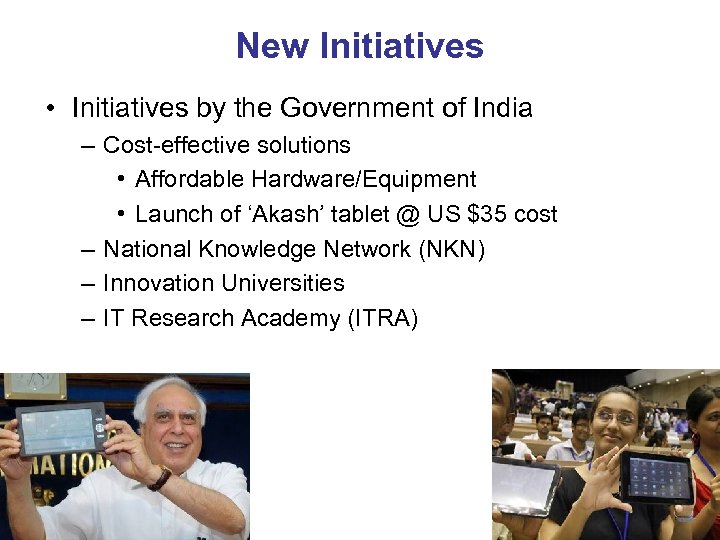 New Initiatives • Initiatives by the Government of India – Cost-effective solutions • Affordable Hardware/Equipment • Launch of ‘Akash’ tablet @ US $35 cost – National Knowledge Network (NKN) – Innovation Universities – IT Research Academy (ITRA) 35
 Government – Private Partnership • Vyapaar Sewa (A New Value Added Service) – SASKEN – Department of Telecom Partnership • Sanchaar Shakti Scheme of Department of Telecom – Financial assistance provided to women in rural areas – The services enables Livelihood 36
 What do Private Players need to do to get on to the Knowledge Highway? • Build Partnerships with like-minded organizations • Provide expertise and work with Go. I in providing an environment of ‘Excellence’ • Spawn ‘start-up’ companies to create neat costeffective solutions • Encourage existing ‘start-up’ companies • Provide Incentives ! 37
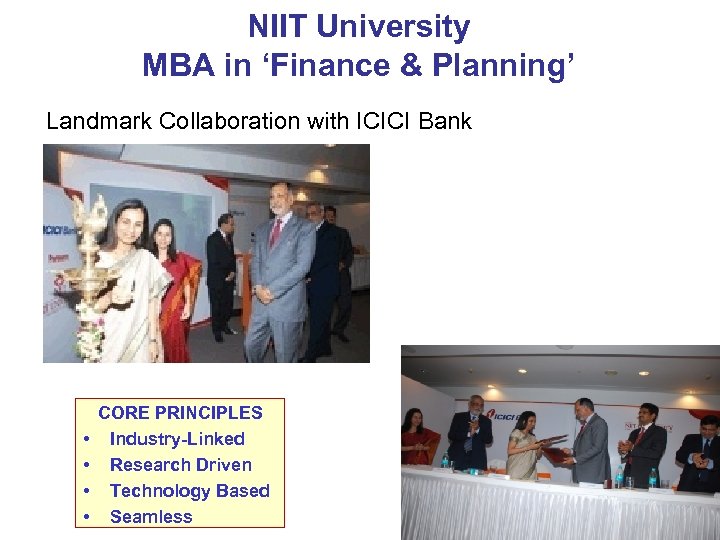 NIIT University MBA in ‘Finance & Planning’ Landmark Collaboration with ICICI Bank • • CORE PRINCIPLES Industry-Linked Research Driven Technology Based Seamless
 “Scientists investigate that which already is; Engineers create that which has never been” Albert Einstein
 Core Principles of NIIT University INDUSTRY LINKED RESEARCH DRIVEN TECHNOLOGY BASED SEAMLESS 41