


 Скачать презентацию Canopy Roots Forest Floor What is forest
9275aae5713b6477cde60f2df2f0af11.ppt
- Количество слайдов: 33
 Canopy Roots Forest Floor
 What is forest hydrology? Forest hydrology is the study of the interactions between the hydrological cycle and forest ecosystems. Combines aspects of two separate disciplines: • Hydrology is the study of the movement, distribution, and quality of water throughout Earth, and thus addresses both the hydrologic cycle and water resources. (http: //en. wikipedia. org/wiki/Hydrology) • Forestry is the science that seeks to understand the nature of forests and the interactions among the parts comprising the forest.
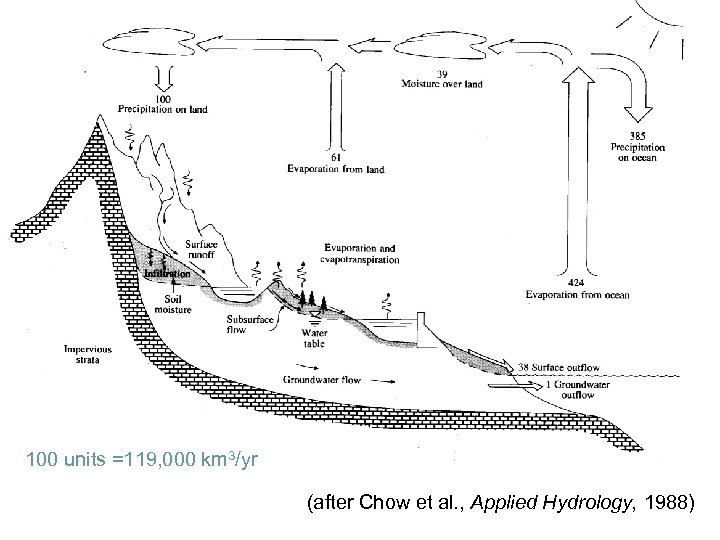
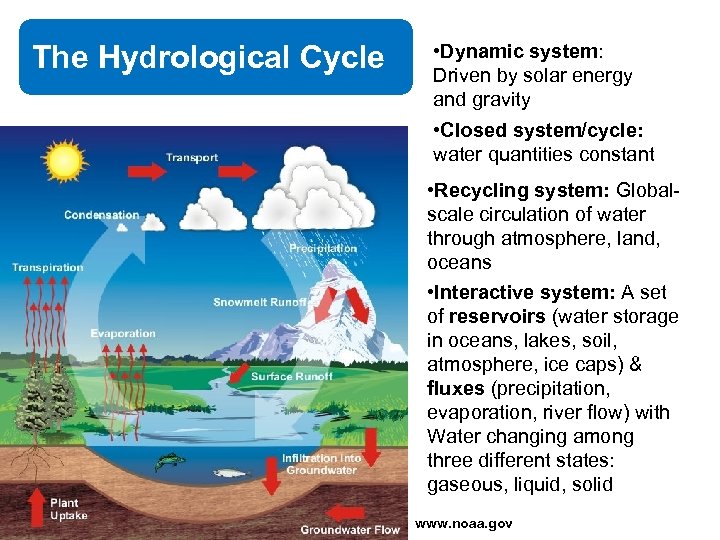 The Hydrological Cycle • Dynamic system: Driven by solar energy and gravity • Closed system/cycle: water quantities constant • Recycling system: Globalscale circulation of water through atmosphere, land, oceans • Interactive system: A set of reservoirs (water storage in oceans, lakes, soil, atmosphere, ice caps) & fluxes (precipitation, evaporation, river flow) with Water changing among three different states: gaseous, liquid, solid www. noaa. gov
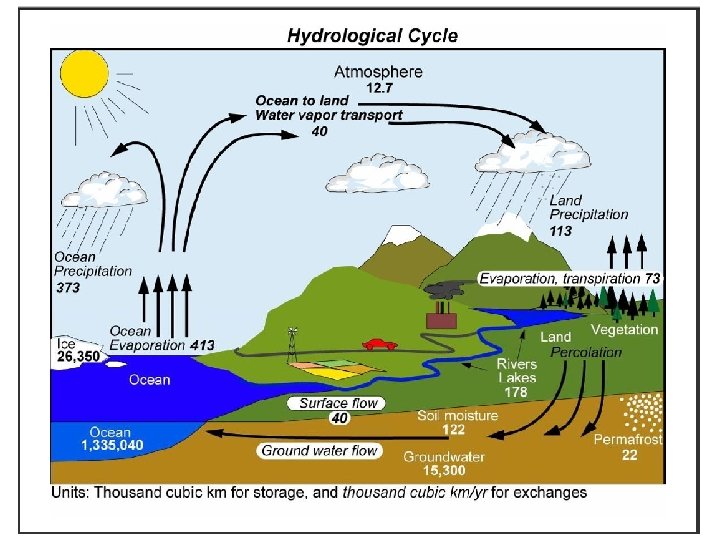
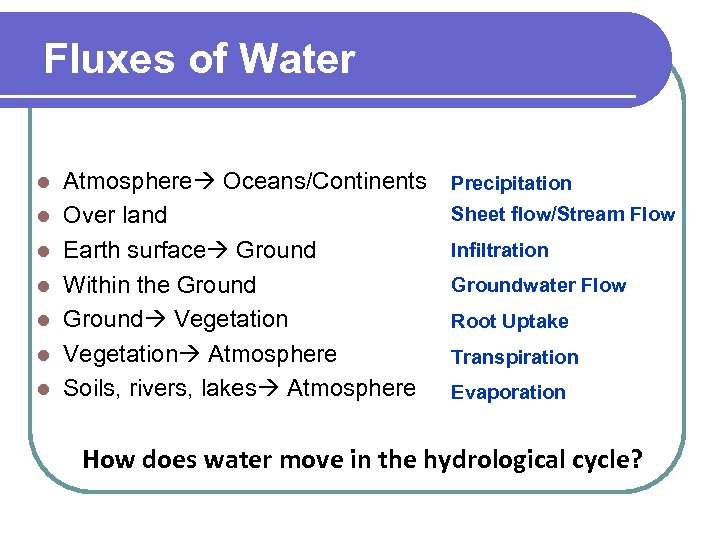 Fluxes of Water l l l l Atmosphere Oceans/Continents Over land Earth surface Ground Within the Ground Vegetation Atmosphere Soils, rivers, lakes Atmosphere Precipitation Sheet flow/Stream Flow Infiltration Groundwater Flow Root Uptake Transpiration Evaporation How does water move in the hydrological cycle?
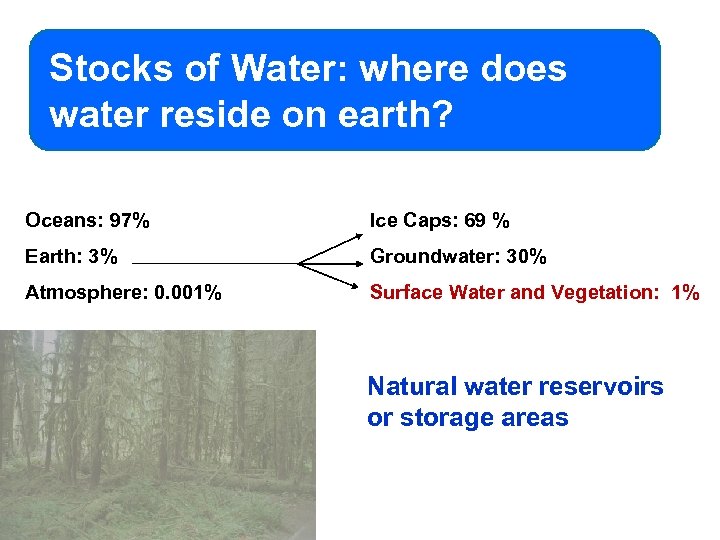 Stocks of Water: where does water reside on earth? Oceans: 97% Ice Caps: 69 % Earth: 3% Groundwater: 30% Atmosphere: 0. 001% Surface Water and Vegetation: 1% Natural water reservoirs or storage areas
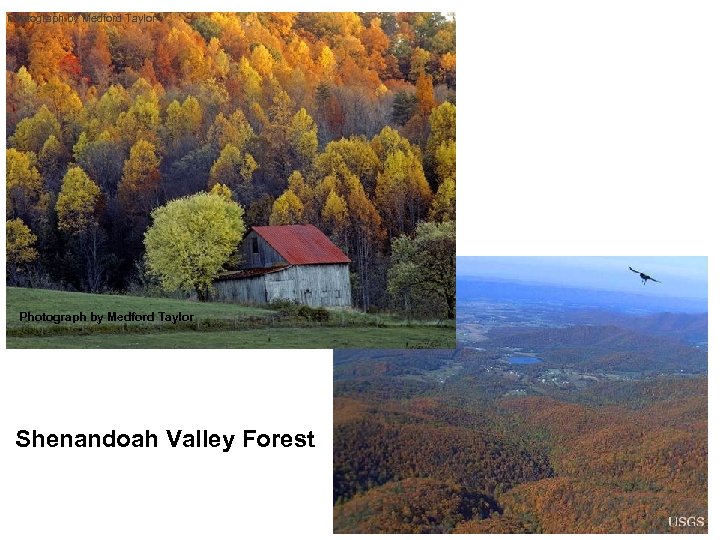 Photograph by Medford Taylor Shenandoah Valley Forest
 Clean water dreamstime. com
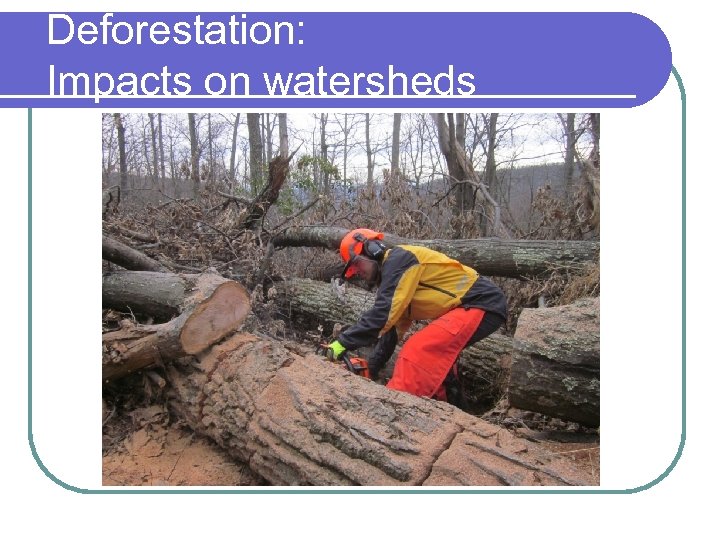 Deforestation: Impacts on watersheds
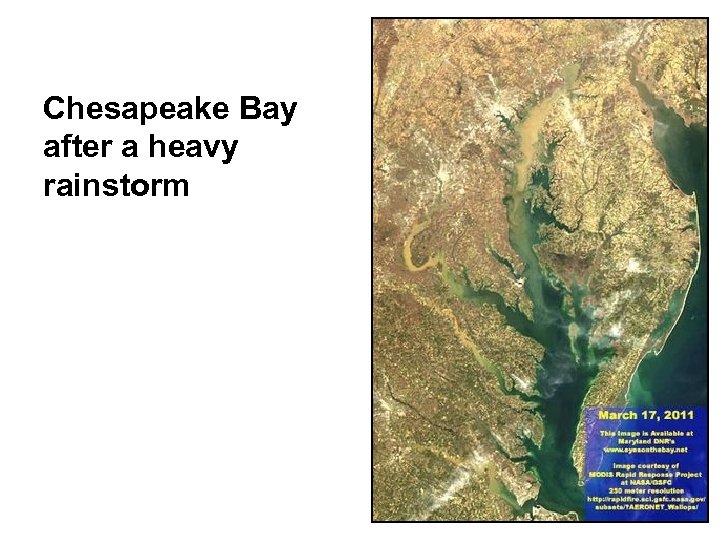 Chesapeake Bay after a heavy rainstorm
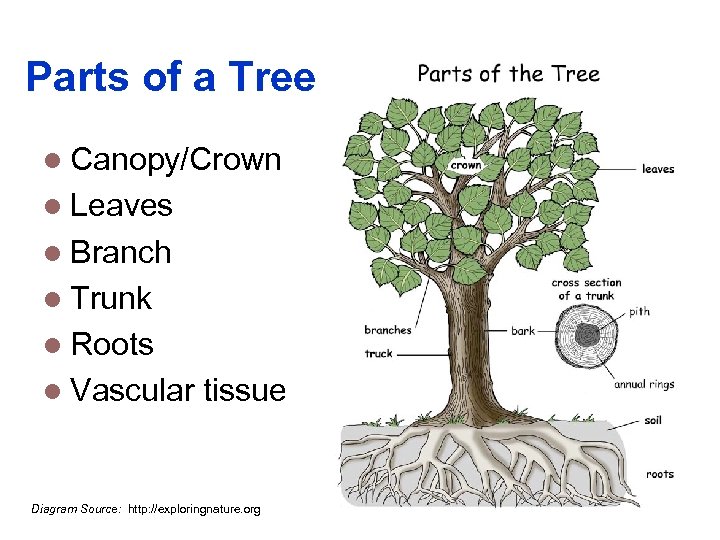 Parts of a Tree l Canopy/Crown l Leaves l Branch l Trunk l Roots l Vascular tissue Diagram Source: http: //exploringnature. org
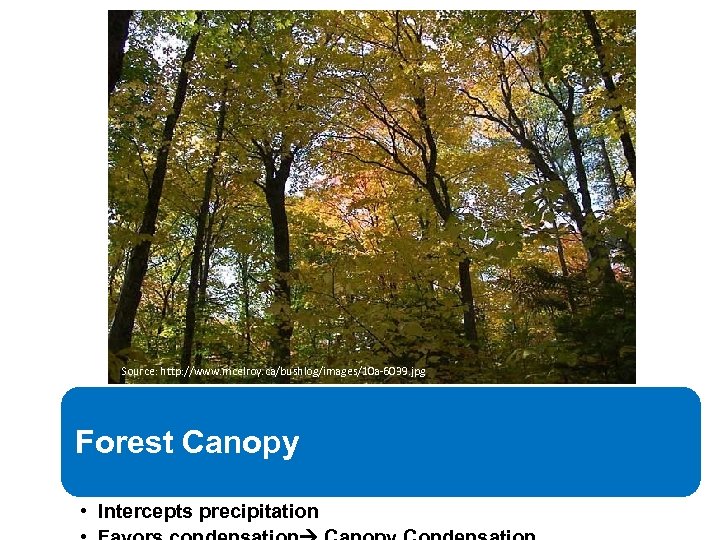 Source: http: //www. mcelroy. ca/bushlog/images/10 a-6039. jpg Forest Canopy • Intercepts precipitation
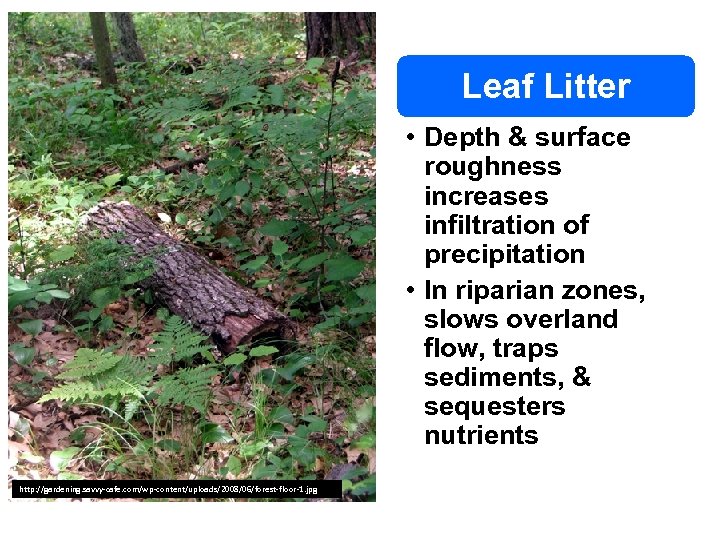 Leaf Litter • Depth & surface roughness increases infiltration of precipitation • In riparian zones, slows overland flow, traps sediments, & sequesters nutrients http: //gardening. savvy-cafe. com/wp-content/uploads/2008/06/forest-floor-1. jpg
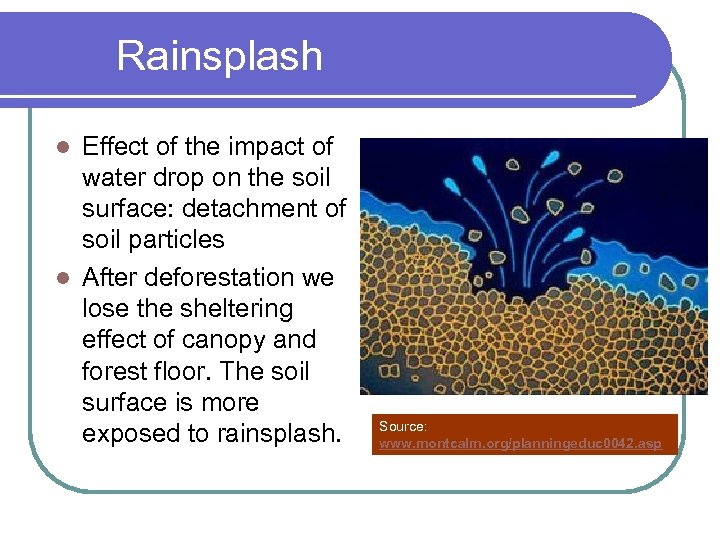 Rainsplash Effect of the impact of water drop on the soil surface: detachment of soil particles l After deforestation we lose the sheltering effect of canopy and forest floor. The soil surface is more exposed to rainsplash. l Source: www. montcalm. org/planningeduc 0042. asp
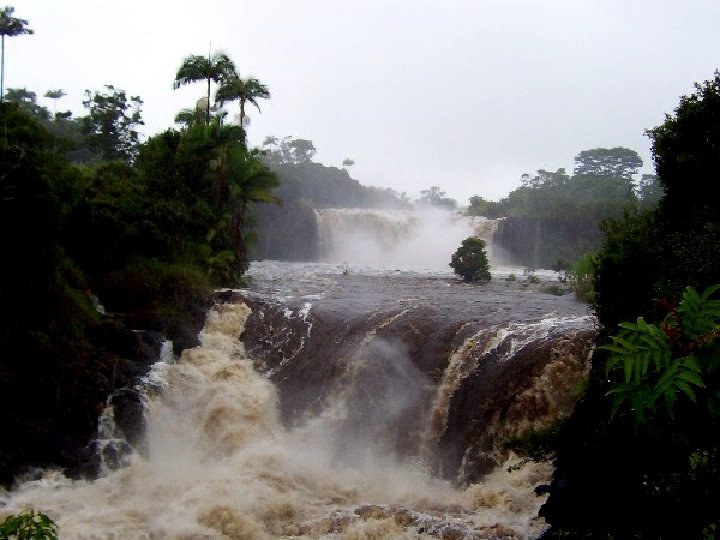
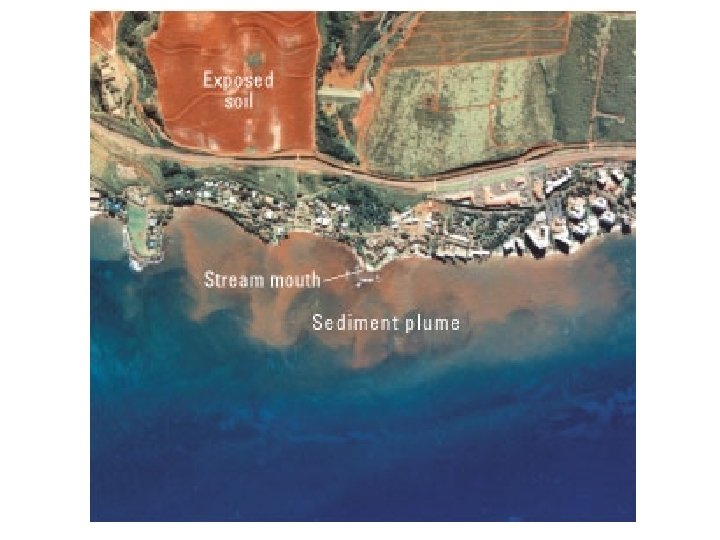
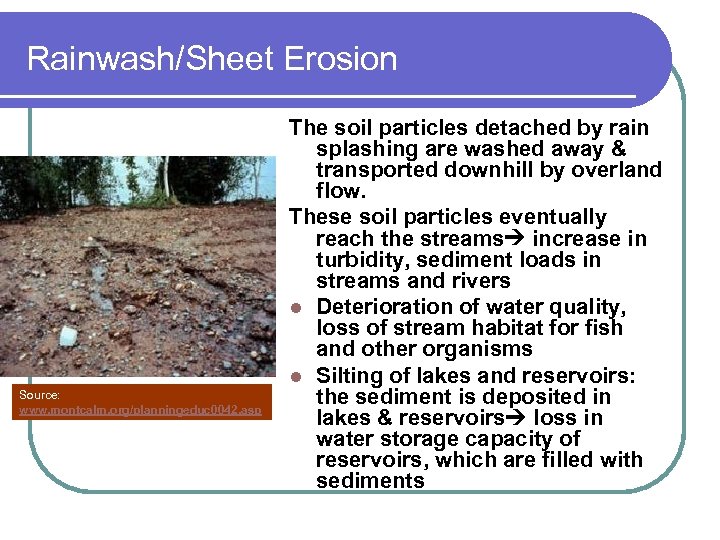 Rainwash/Sheet Erosion Source: www. montcalm. org/planningeduc 0042. asp The soil particles detached by rain splashing are washed away & transported downhill by overland flow. These soil particles eventually reach the streams increase in turbidity, sediment loads in streams and rivers l Deterioration of water quality, loss of stream habitat for fish and other organisms l Silting of lakes and reservoirs: the sediment is deposited in lakes & reservoirs loss in water storage capacity of reservoirs, which are filled with sediments
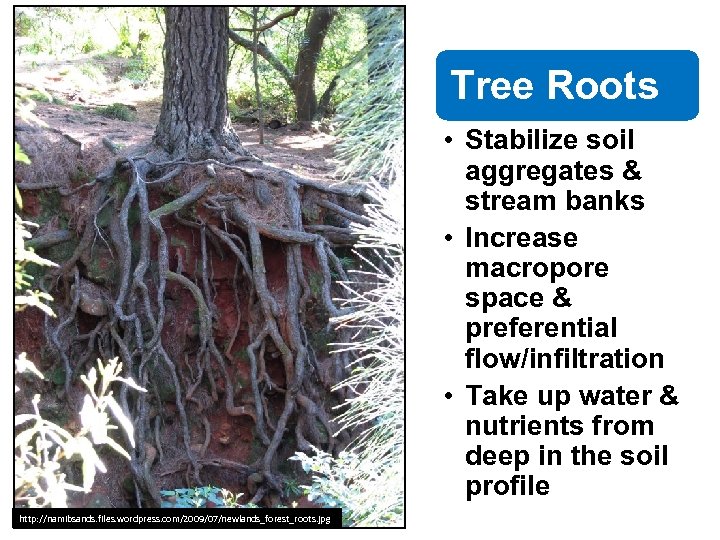 Tree Roots • Stabilize soil aggregates & stream banks • Increase macropore space & preferential flow/infiltration • Take up water & nutrients from deep in the soil profile http: //namibsands. files. wordpress. com/2009/07/newlands_forest_roots. jpg
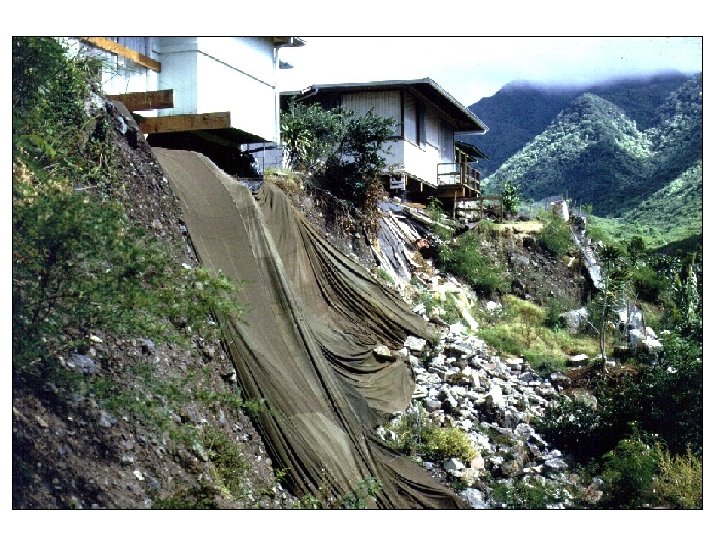
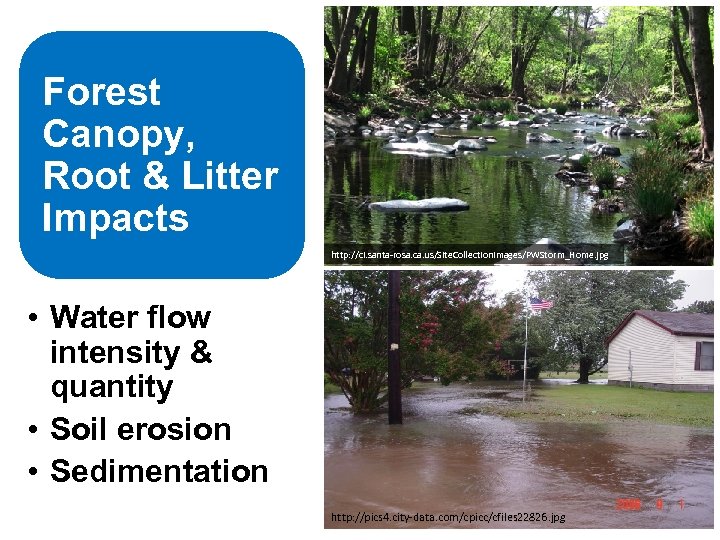 Forest Canopy, Root & Litter Impacts http: //ci. santa-rosa. ca. us/Site. Collection. Images/PWStorm_Home. jpg • Water flow intensity & quantity • Soil erosion • Sedimentation http: //pics 4. city-data. com/cpicc/cfiles 22826. jpg
 Summary: Forests Contribution to the Water Cycle Effect amount of water reaching the ground (throughfall) l Forests favor infiltration & reduce runoff & stream flow l Effect evapotranspiration l Effect precipitation l More rainfall, more evapotranspiration more intense regional water cycle l Less soil erosion & suspended sediments better water quality l
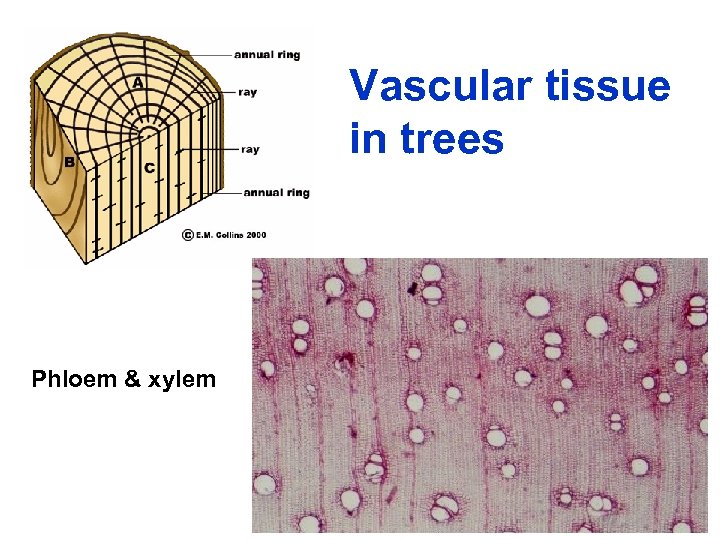 Vascular tissue in trees Phloem & xylem
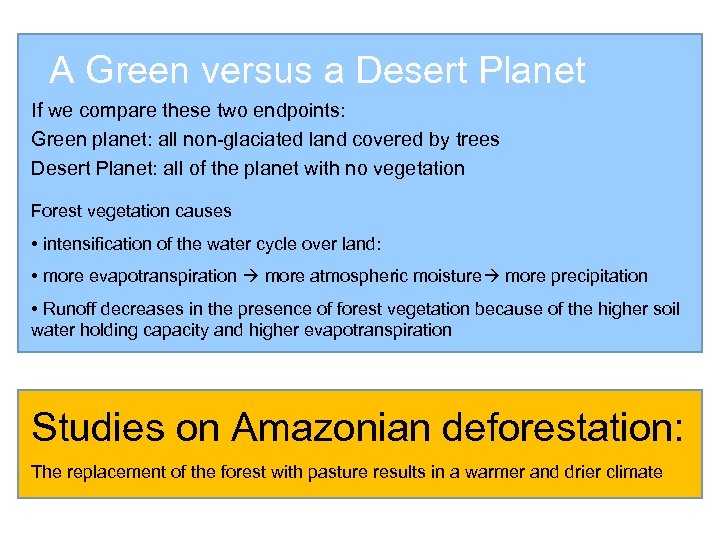 A Green versus a Desert Planet If we compare these two endpoints: Green planet: all non-glaciated land covered by trees Desert Planet: all of the planet with no vegetation Forest vegetation causes • intensification of the water cycle over land: • more evapotranspiration more atmospheric moisture more precipitation • Runoff decreases in the presence of forest vegetation because of the higher soil water holding capacity and higher evapotranspiration Studies on Amazonian deforestation: The replacement of the forest with pasture results in a warmer and drier climate
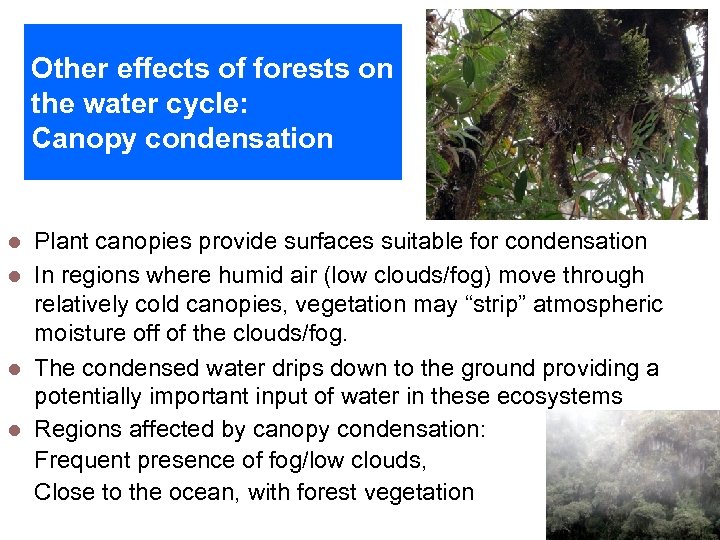 Other effects of forests on the water cycle: Canopy condensation (M. Scholl, U. S. Geological Survey) Plant canopies provide surfaces suitable for condensation l In regions where humid air (low clouds/fog) move through relatively cold canopies, vegetation may “strip” atmospheric moisture off of the clouds/fog. l The condensed water drips down to the ground providing a potentially important input of water in these ecosystems l Regions affected by canopy condensation: Frequent presence of fog/low clouds, Close to the ocean, with forest vegetation l
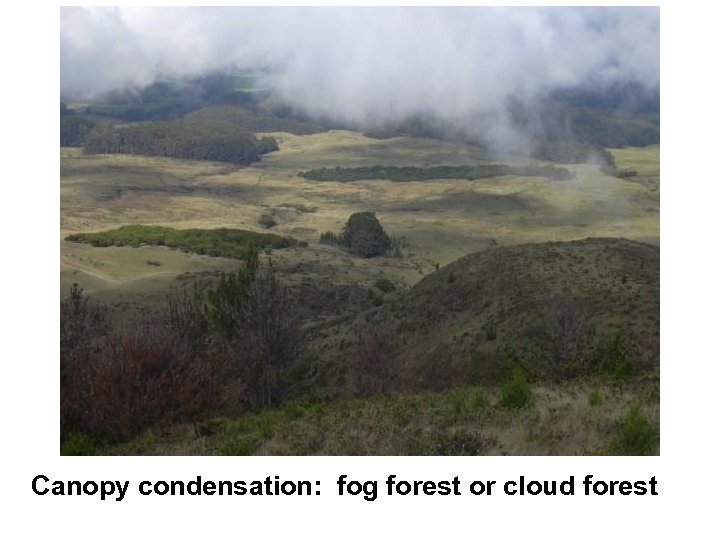 Canopy condensation: fog forest or cloud forest
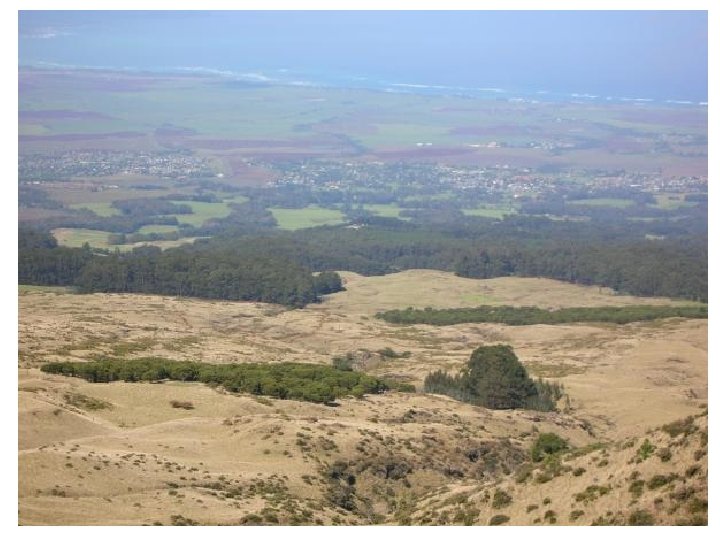
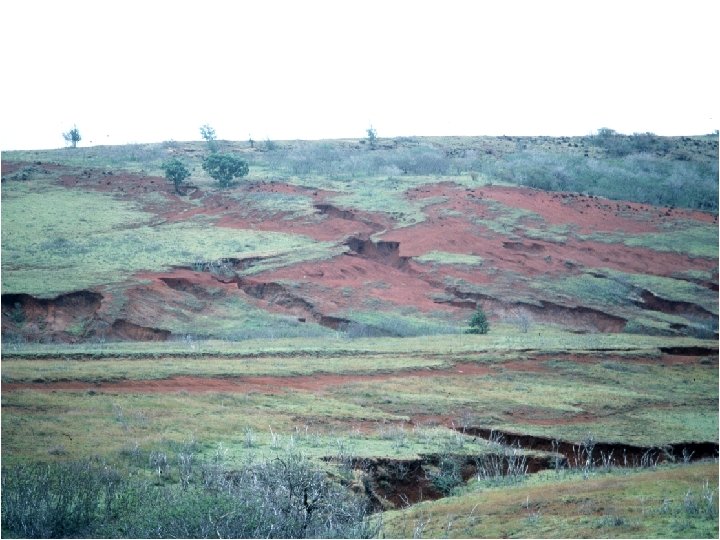
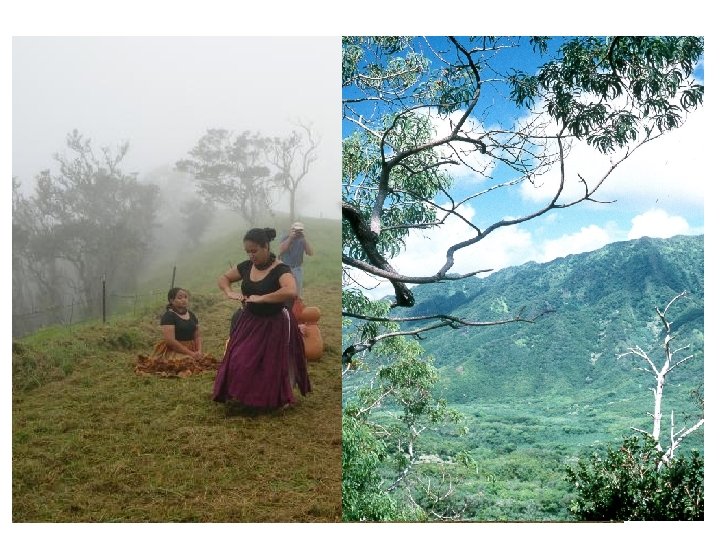
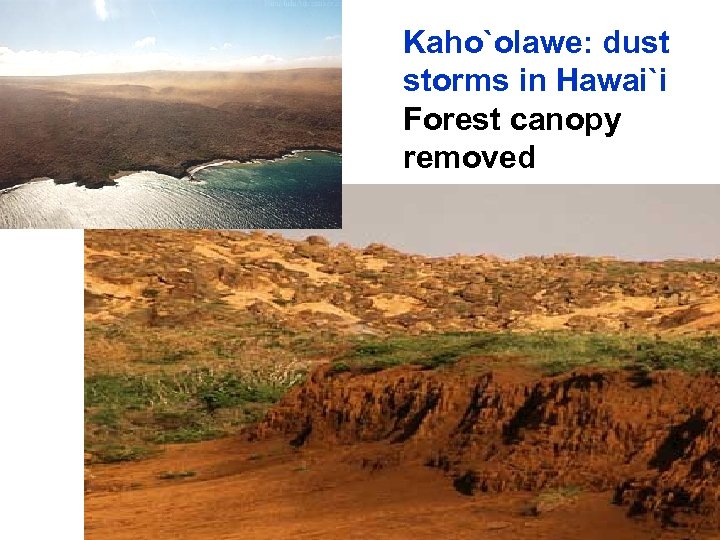 Kaho`olawe: dust storms in Hawai`i Forest canopy removed
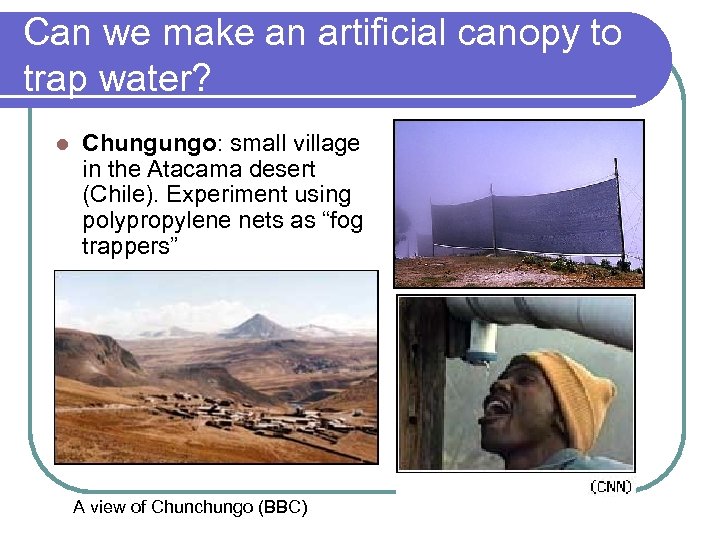 Can we make an artificial canopy to trap water? l Chungungo: small village in the Atacama desert (Chile). Experiment using polypropylene nets as “fog trappers” A view of Chunchungo (BBC)
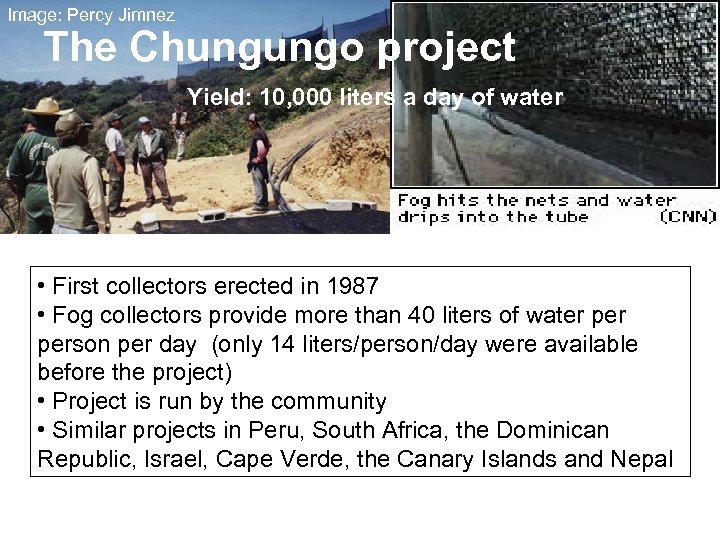 Image: Percy Jimnez The Chungungo project Yield: 10, 000 liters a day of water • First collectors erected in 1987 • Fog collectors provide more than 40 liters of water person per day (only 14 liters/person/day were available before the project) • Project is run by the community • Similar projects in Peru, South Africa, the Dominican Republic, Israel, Cape Verde, the Canary Islands and Nepal
 100 units =119, 000 km 3/yr (after Chow et al. , Applied Hydrology, 1988)