


 Скачать презентацию Cancer Clinical Trials at Sa TH Helen
805c7490734835629273c645dd98fc44.ppt
- Количество слайдов: 41
 Cancer Clinical Trials at Sa. TH ¡ Helen Moore - Lead Research Nurse ¡ 9 th JULY 2103 1
 ¡ Year 2000 For every 1000 patients diagnosed with cancer in the UK, only 38 were entered into a well-designed peer-reviewed clinical study NCRI and NCRN were established 2
 2010/11 Recruitment: ¡ 45, 783 cancer (& pre-malignant) patients entered into trials (19. 8% of incident cases) 5 fold ¡ For every 1000 patients diagnosed with cancer in the UK, 198 entered a well designed trials 3
 ¡ Recruitment Targets: - l 399 cancer patients 2012 -2013 172 into randomised controlled trials l 1600 in total (cancer and non-cancer) l 4
 ¡ Why Do We Need Clinical Research? 5
 Society needs clinical research…………. . ¡ Identify unnecessary/ineffective treatments to better utilise resources v Develop targeted screening and treatment programmes from pathological and genetics studies v Healthier population v Attract/retain pharmaceutical industry in the UK 6
 Patients need clinical research ……… ¡ Evidence base for best treatment ¡ Reduce deaths ¡ Increase disease-free survival ¡ Improve quality of life/relieve symptoms ¡ Enhance quality of care ¡ More in-depth investigations ¡ Patient choice – should be offered available trial ¡ Patients in trials do better even on standard treatment. (Stiller 1994) 7
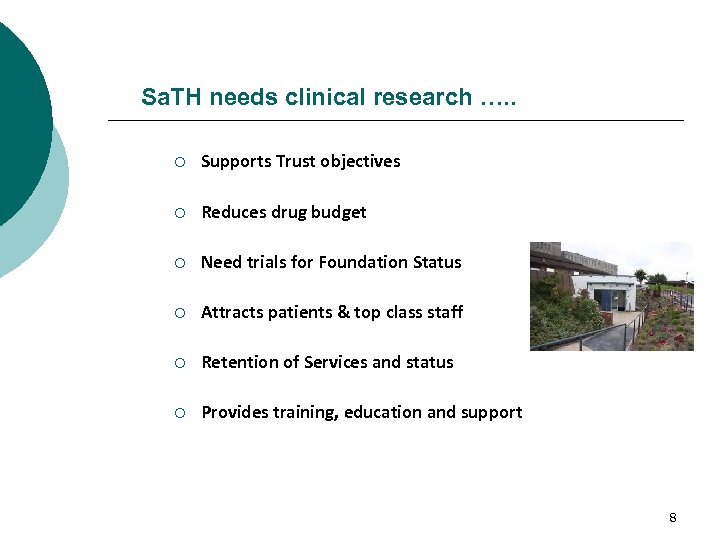 Sa. TH needs clinical research …. . ¡ Supports Trust objectives ¡ Reduces drug budget ¡ Need trials for Foundation Status ¡ Attracts patients & top class staff ¡ Retention of Services and status ¡ Provides training, education and support 8
 Staff need clinical research … ¡ Opportunity to be involved in ‘newer’ drugs/techniques ¡ Support of Clinical Trial staff ¡ Adhere to protocols – safety ¡ Interesting………. . stimulating…. . challenging ¡ Educational opportunities 9
 10
10
 Ethical Principles ¡ ¡ ¡ Declaration of Helsinki 1964 (2000) MREC & R&D approval Based on sound scientific principles Patient’s rights, health and wellbeing paramount Ethically conducted Appropriate resources and skills 11
 What is Good Clinical Practice (GCP)? ¡A standard for Clinical Trials ¡ Ensure the rights, safety and well-being of trial subjects ¡ Ensure the integrity of clinical data ¡ GCP concerns everyone working on any aspect of clinical research! 12
 ¡ ¡ Required to inform study centre within 24 hrs of knowing if a trial patient has been admitted Serious Adverse Event (SAE) Serious Unexpected Suspected Adverse Reaction (SUSAR) MHRA Inspection 13
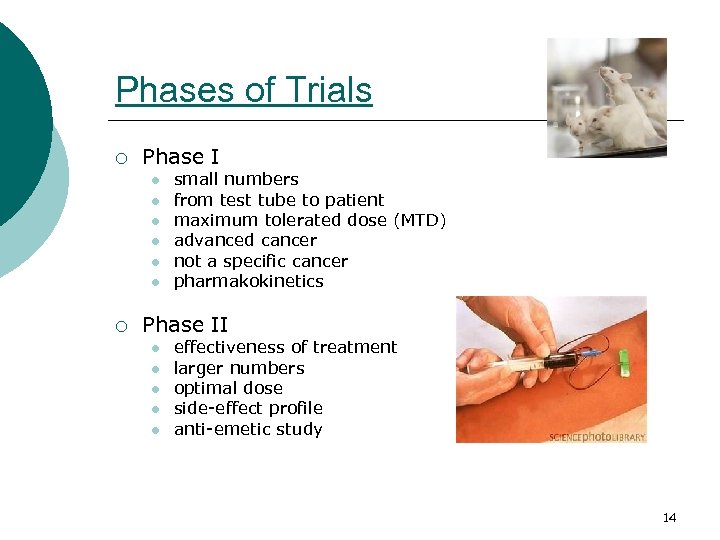 Phases of Trials ¡ Phase I l l l ¡ small numbers from test tube to patient maximum tolerated dose (MTD) advanced cancer not a specific cancer pharmakokinetics Phase II l l l effectiveness of treatment larger numbers optimal dose side-effect profile anti-emetic study 14
 ¡ Phase l l l III test new drug against standard treatment larger numbers (1000’s) RCTs (randomised controlled trials) Quality Of Life component Health Economics - costings 15
 Different Types of Trials Randomised Controlled Trials (RCTs) ¡ Comparing new treatment (study arm) with standard treatment (control arm) -5/6 arms ¡ Treatment randomly allocated ¡ Each group has a similar mix of patients (age, stage of disease, sex) ¡ Reduce bias ¡ Most reliable results 16
 Placebo-Controlled Trials ¡ Control group receive inactive treatment ¡ Where there is no standard to compare with ¡ Can unblind if required ¡ COG trial l Cancer of the oesophagus -Gefitinib vs placebo ¡ REACT trial l Celecoxib 17
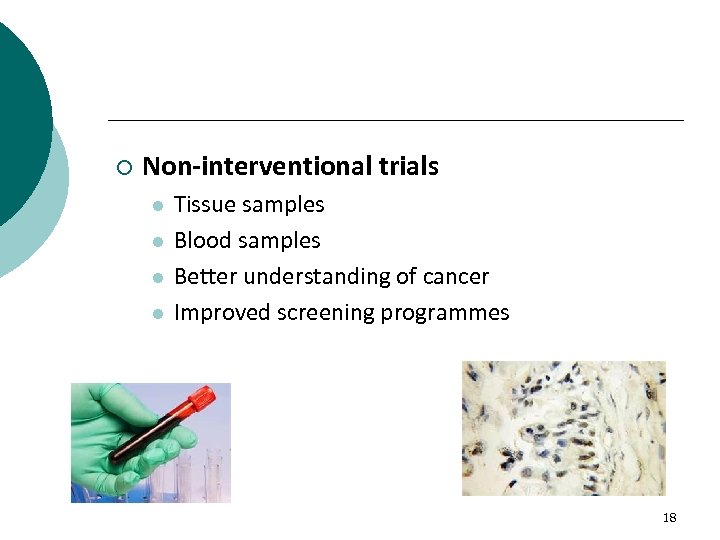 ¡ Non-interventional trials l l Tissue samples Blood samples Better understanding of cancer Improved screening programmes 18
 ¡ Patient Preference Trials l PISCES 19
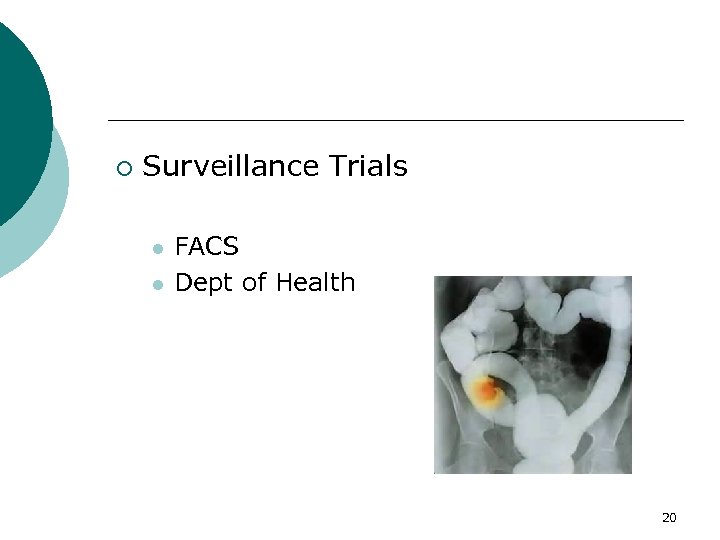 ¡ Surveillance Trials l l FACS Dept of Health 20
 Cancer Clinical Trials ¡ ¡ ¡ 20 open currently recruiting studies 30 closed studies with patients in follow-up More than 2000 patients recruited into cancer trials over last 15 yrs @ Sa. TH 21
 Cancer Clinical Trials at Sa. TH ¡ Broad Portfolio l Chemotherapy l Radiotherapy l Targeted Therapies l Supportive therapies (anti-emetics/bisphonates) l Genetics/Epidemiology l Surveillance l Patient Preference 22
 Breast Trials PERSEPHONE STUDY - (6 mths vs 12 mths Herceptin) Safe. Her - subcutaneous delivery of Herceptin T-DM 1 - novel antibody drug conjugate Fast. Forward – 15# vs 5# radiotherapy SEARCH – genetic study in male breast cancer 23
 Colorectal Trials Short Course Oncology Therapy study (SCOT) – 4 cycles vs 8 cycles chemotherapy NSCCG – patients with family history of colorectal cancer – genetics study 24
 Urology Trials STAMPEDE – Androgen-Deprivation Therapy alone or with Abiraterone or radiotherapy to the prostate Radicals - Radiotherapy and Androgen Deprivation in combination after a radical prostatectomy POUT – role of chemotherapy after a radical nephro-uretectomy PROMPTS – whether a pre-emptive MRI spine may be beneficial in preventing spinal cord compression in patients with spinal metastases Familial Prostate – genetics study of men diagnosed under 60 yrs 25
 Gynaecology Trials ICON 8 – role of fractionated chemotherapy in women with newly diagnosed epithelial ovarian, fallopian tube or primary peritoneal cancer SEARCH – genetics study looking at ovarian and endometrial cancers PORTEC 3 – role of chemotherapy in High Risk and Advanced Stage Endometrial Carcinoma 26
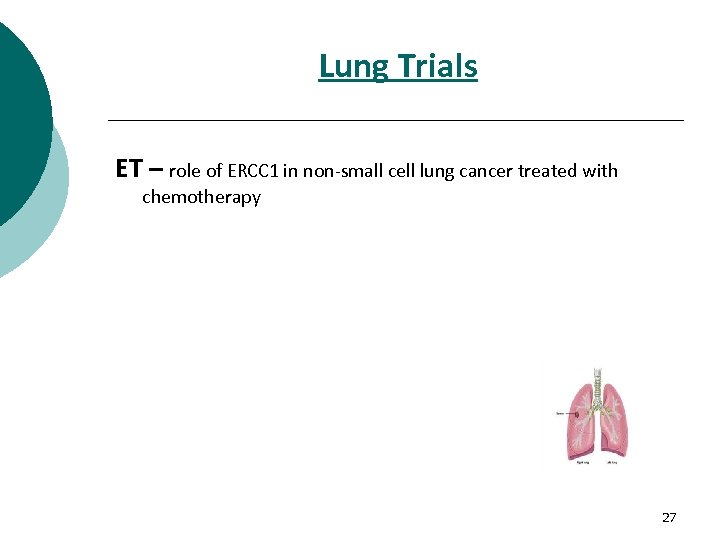 Lung Trials ET – role of ERCC 1 in non-small cell lung cancer treated with chemotherapy 27
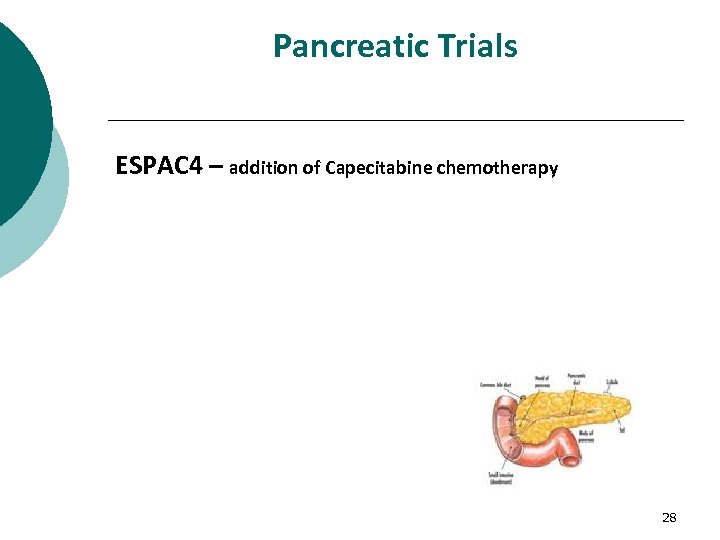 Pancreatic Trials ESPAC 4 – addition of Capecitabine chemotherapy 28
 Haematology Trials NSHLG – genetics study 29
 Head and Neck Trials H&N 5000 – genetics study 30
 Dermatology Trials SEARCH – genetics of melanoma 31
 How do we decide which studies to do at Sa. TH? UKCRN Portfolio ¡ Academic links ¡ Pharmaceutical links ¡ Attend national meetings ¡ Attend Network meetings ¡ Consultants/Sp. Rs ¡ 32
 How do we identify patients? Screen every oncology clinic ¡ Attend MDM ¡ Attend non-oncology clinics if required ¡ Check basic eligibility ¡ Starter pack ¡ Attend consultation ¡ Contact patient after consultation ¡ 33
 ¡ Patients should always be offered a trial if eligible ¡ Better outcomes for patients in clinical trials, even on standard treatment (Stiller 1994) 34
 35
35
 ¡ Reduced Treatments l SCOT (4# vs 8#) l Persephone (6 mths vs 12 mths) l 142 saved CDC slots 2011 – 2012 ¡ Cost savings l Free drugs l Free anti-emetics and chemotherapy in ET (£ 11, 000) 36
 IPSOS MORI poll in June 2011 ¡ 97% of the public believe it’s important for the NHS to support research into new treatments ¡ 93% want their local NHS to be encouraged or required to support research ¡ 72% would like to be offered opportunities to be involved in trials of new medicines or treatments, if they suffered from a health condition that affects their day-to-day 37
 Mystery shopper campaign Results showed that: • 91% of the NHS sites visited did not have information on clinical research opportunities in the obvious places for patients • Only 34% of the sites visited had information about clinical research on their websites that was useful to patients • 46% of reception desks told the mystery shopper that they did not do research, or failed to offer any suggestions about what to do next • More than half of the sites (55%) were unable to provide useful information about clinical research through their Patient Advice and Liaison Service 38
 International Clinical Trials Day ¡ Radio Shropshire ¡ PPI ¡ l ¡ R&D Committee Raising profile in Trust 39
 40
40
 Any questions? 41