


 Скачать презентацию Cancer Care in Pets Veterinary Oncology Orna Kristal
9a8d2f77a27fe3641e51aa1ea2e2182c.ppt
- Количество слайдов: 35
 Cancer Care in Pets (Veterinary Oncology) Orna Kristal, DVM Dip. American College of Vet Internal Medicine (oncology) Chavat Daat, Beit Berl
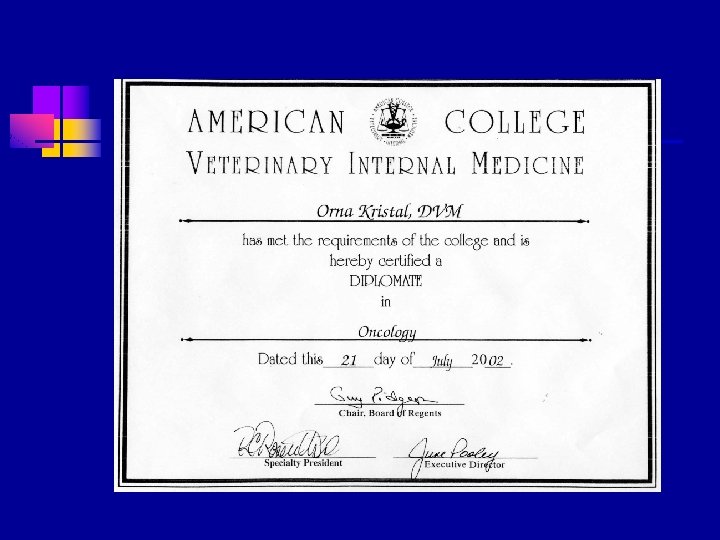
 Veterinary Specialty Training n n n n Requirements: DVM degree and internship Began in the US Today in Europe as well 3 yrs of working under supervision of specialists in different fields Tumor biology studies Publication, presentations Specialty examination
 Specialty in Veterinary Medicine n Large Animals (horses, ruminants) n n Internal medicine, Surgery, reproduction Small Animals n n n n Internal Medicine, oncology, cardiology, neurology Surgery Imaging Emergency medicine Ophthalmology, Dermatology, anesthesia Exotic animals (birds, reptiles, ferrets, rodents) Pathology – clinical and histopathology
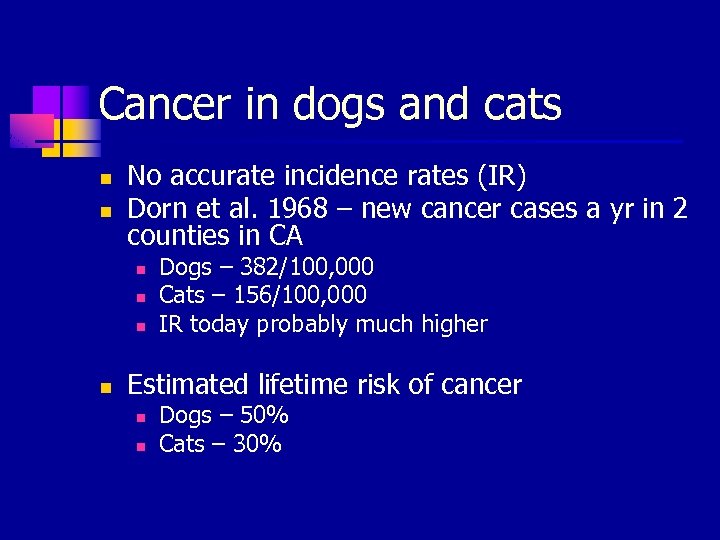 Cancer in dogs and cats n n No accurate incidence rates (IR) Dorn et al. 1968 – new cancer cases a yr in 2 counties in CA n n Dogs – 382/100, 000 Cats – 156/100, 000 IR today probably much higher Estimated lifetime risk of cancer n n Dogs – 50% Cats – 30%
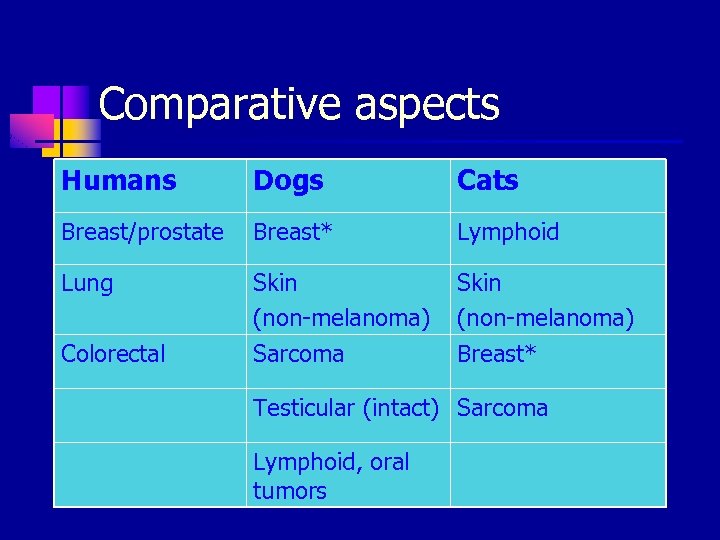 Comparative aspects Humans Dogs Cats Breast/prostate Breast* Lymphoid Lung Skin (non-melanoma) Colorectal Sarcoma Breast* Testicular (intact) Sarcoma Lymphoid, oral tumors
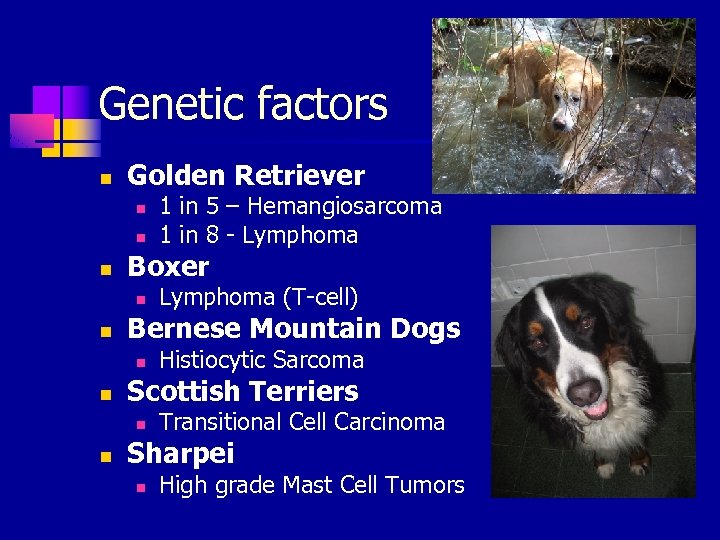 Genetic factors n Golden Retriever n n n Boxer n n Histiocytic Sarcoma Scottish Terriers n n Lymphoma (T-cell) Bernese Mountain Dogs n n 1 in 5 – Hemangiosarcoma 1 in 8 - Lymphoma Transitional Cell Carcinoma Sharpei n High grade Mast Cell Tumors
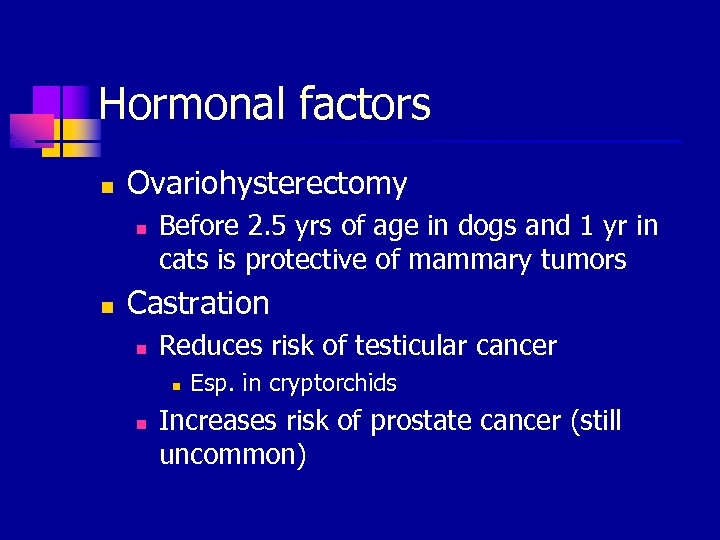 Hormonal factors n Ovariohysterectomy n n Before 2. 5 yrs of age in dogs and 1 yr in cats is protective of mammary tumors Castration n Reduces risk of testicular cancer n n Esp. in cryptorchids Increases risk of prostate cancer (still uncommon)
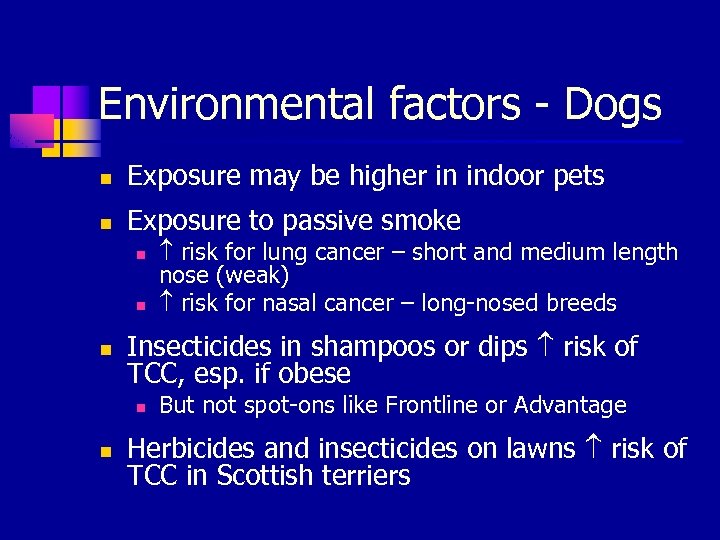 Environmental factors - Dogs n Exposure may be higher in indoor pets n Exposure to passive smoke n n n Insecticides in shampoos or dips risk of TCC, esp. if obese n n risk for lung cancer – short and medium length nose (weak) risk for nasal cancer – long-nosed breeds But not spot-ons like Frontline or Advantage Herbicides and insecticides on lawns risk of TCC in Scottish terriers
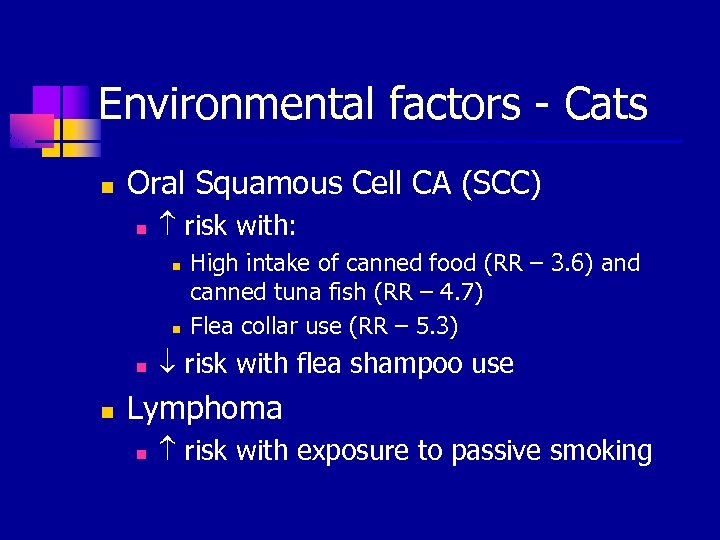 Environmental factors - Cats n Oral Squamous Cell CA (SCC) n risk with: n n High intake of canned food (RR – 3. 6) and canned tuna fish (RR – 4. 7) Flea collar use (RR – 5. 3) risk with flea shampoo use Lymphoma n risk with exposure to passive smoking
 Why treat pets with cancer? n n n Cancer is perceived by many to be a serious and often fatal disease Treatment in people is commonly associated with side effects leading to poor QOL Therefore treating pets with similar treatment is perceived as cruel and selfish This perception represents total misunderstanding of the treatment of cancer in animals The main goal of treating animals with cancer is to extend a good quality of life for the patient (and family) for as long as possible.
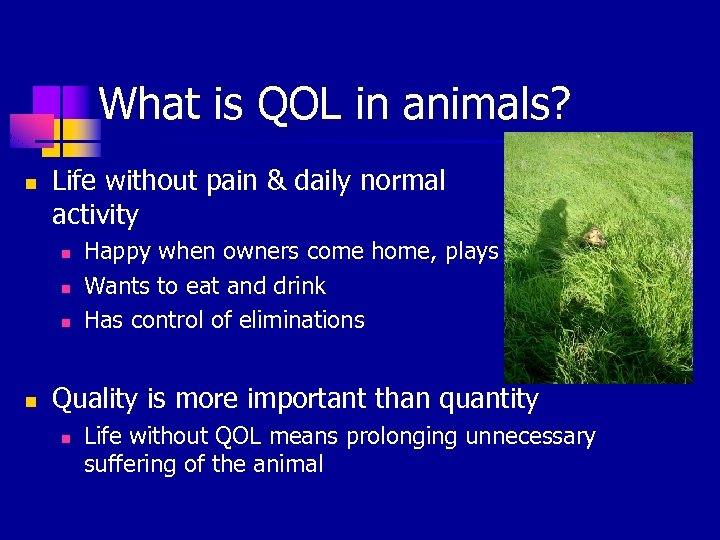 What is QOL in animals? n Life without pain & daily normal activity n n Happy when owners come home, plays Wants to eat and drink Has control of eliminations Quality is more important than quantity n Life without QOL means prolonging unnecessary suffering of the animal
 How do we maintain QOL? n n n We try to prevent treatment’s side effects Before treatment is begun risk vs. benefit is considered Often animals treated for cancer live longer and better than animals treated for other chronic disease (i. e - diabetes, chronic renal or heart disease)
 Maintaining QOL n If the animal develops significant treatment toxicity n n n We can lower drug dosages Use other drugs Consider stopping treatment Treatment can be with a curative intent or palliative Know when to quit
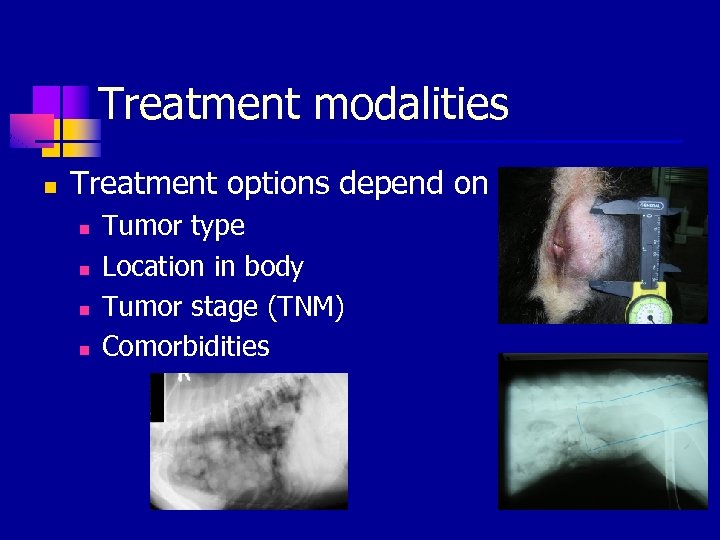 Treatment modalities n Treatment options depend on n n Tumor type Location in body Tumor stage (TNM) Comorbidities
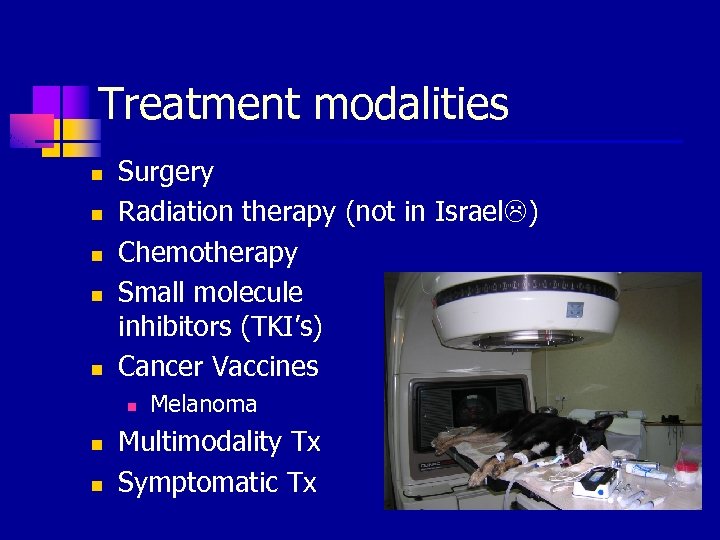 Treatment modalities n n n Surgery Radiation therapy (not in Israel ) Chemotherapy Small molecule inhibitors (TKI’s) Cancer Vaccines n n n Melanoma Multimodality Tx Symptomatic Tx
 Choosing the treatment n Owners ultimately choose the treatment after hearing n n n Different options Prognosis for each option Possible side effects Cost Should they choose not to treat, they are making an educated decision
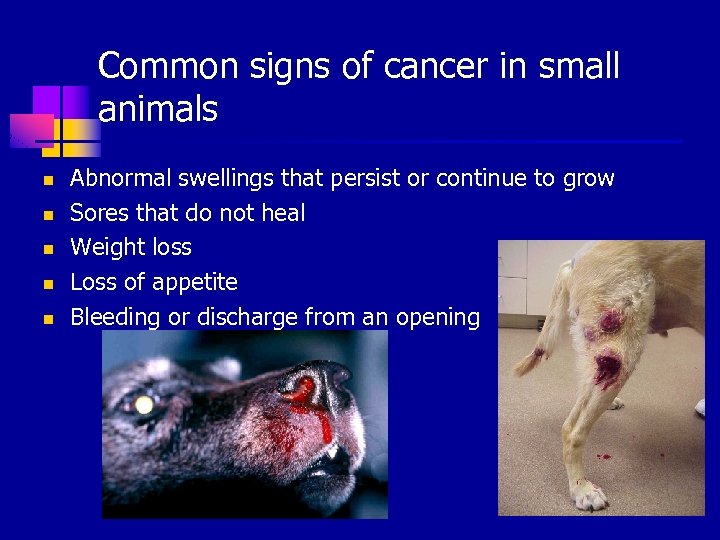 Common signs of cancer in small animals n n n Abnormal swellings that persist or continue to grow Sores that do not heal Weight loss Loss of appetite Bleeding or discharge from an opening
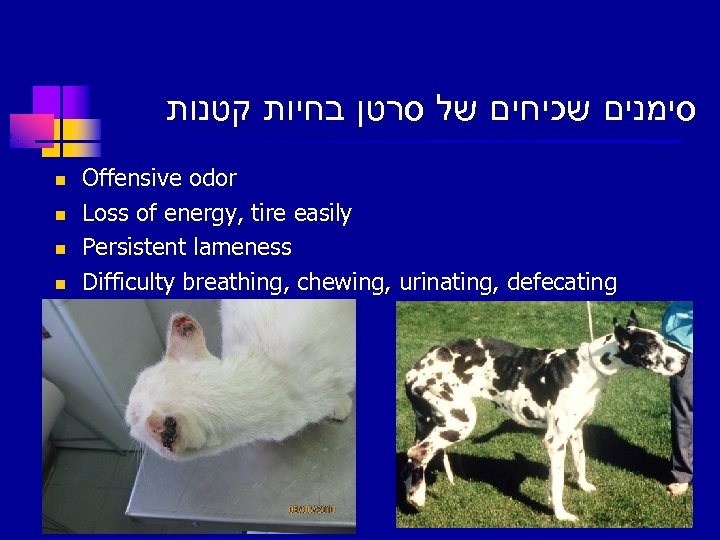 סימנים שכיחים של סרטן בחיות קטנות n n Offensive odor Loss of energy, tire easily Persistent lameness Difficulty breathing, chewing, urinating, defecating
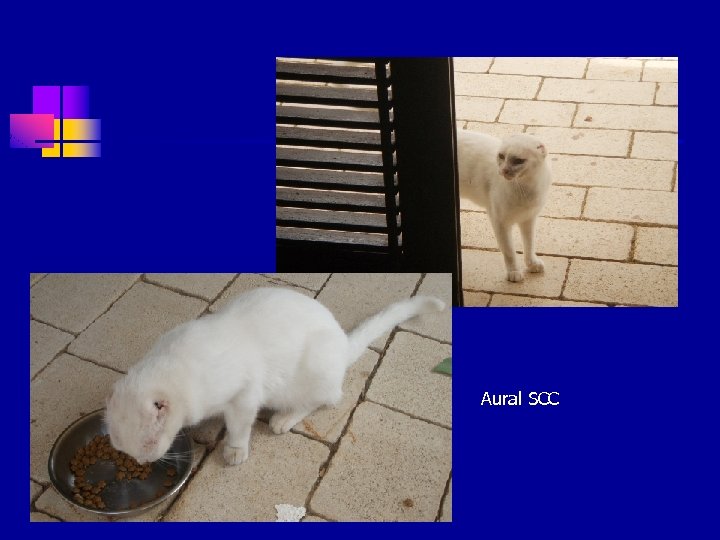 Aural SCC
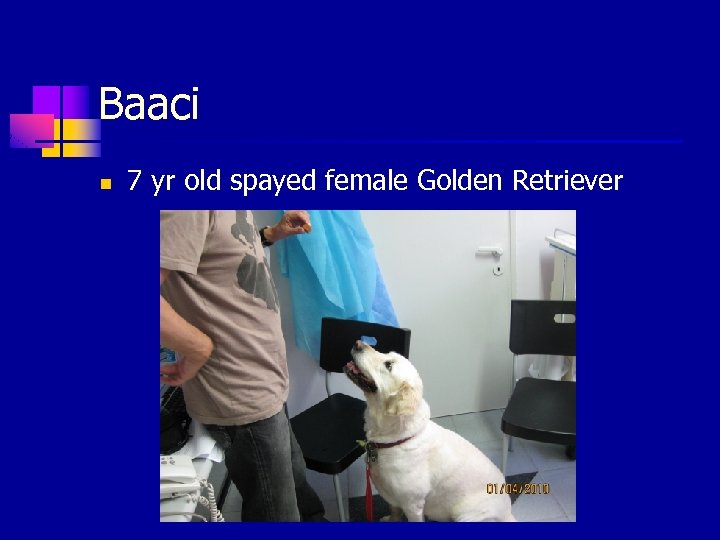 Baaci n 7 yr old spayed female Golden Retriever
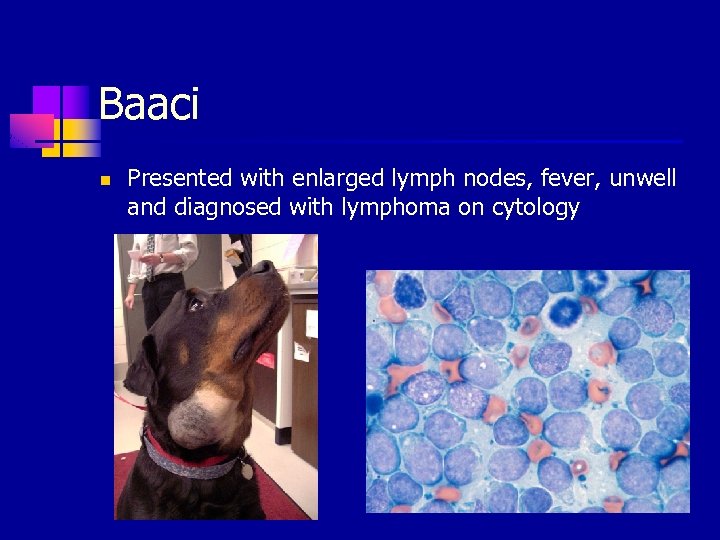 Baaci n Presented with enlarged lymph nodes, fever, unwell and diagnosed with lymphoma on cytology
 Baaci n n With no treatment median survival is 4 -6 weeks and QOL is poor most of this time. With CHOP based chemotherapy median survival is extended to 12 months and about 25% are alive @ 2 yrs. Drug dosages is lower than in humans. Only 20% develop grade 3 -4 toxicity. Baaci’s owner chose to treat with chemo.
 Baaci n Achieved complete remission n Treatment continued for one yr n n One episode of vomiting & diarrhea requiring supportive care. Still alive and happy today > 4 yrs from diagnosis.
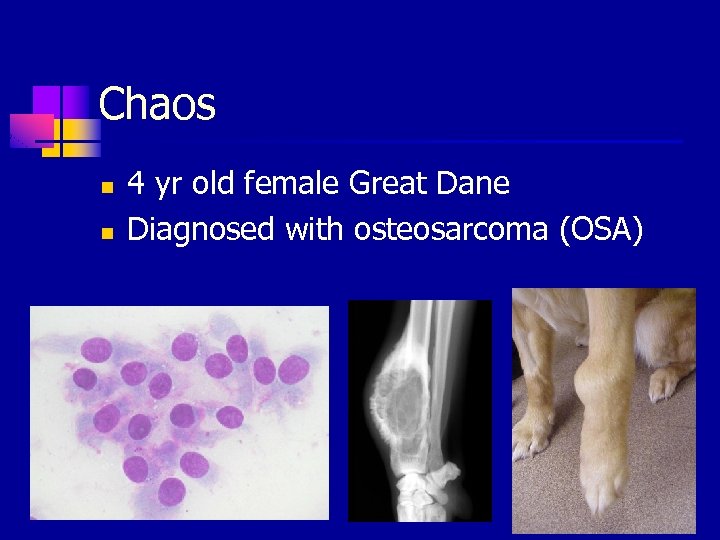 Chaos n n 4 yr old female Great Dane Diagnosed with osteosarcoma (OSA)
 Osteosarcoma n Many similarities to human OSA n n n Affects large to giant breed dogs Metaphyses of long bones most affected Most stage negative at presentation 90% are high grade Common hematogenous lung metastases Two main differences n n 10 times more prevalent in dogs Mean age n Dog – 7 rs human – 14 yrs
 Osteosarcoma n Dogs n n n Are an outbred species Have innate immune system Their cancer progresses more rapidly Combined with similarities in tumor behavior they can serve as an excellent model for research of this disease Dr. Steve Withrow - pioneer in the field Clinical trials in dogs serve a dual purpose
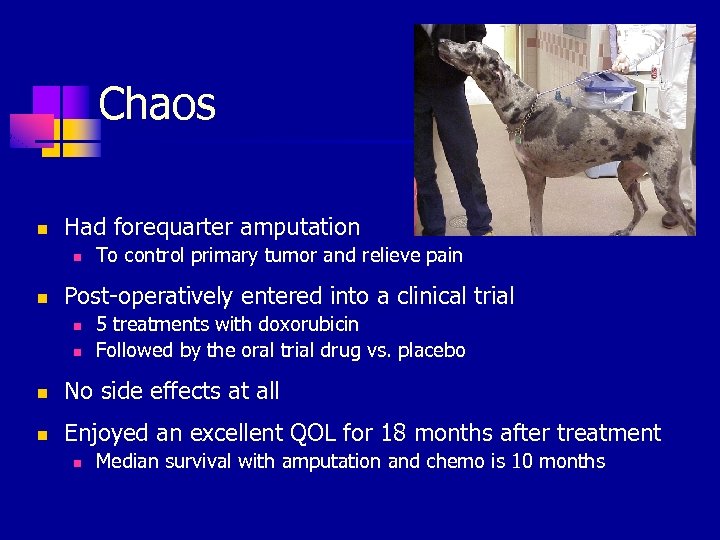 Chaos n Had forequarter amputation n n To control primary tumor and relieve pain Post-operatively entered into a clinical trial n n 5 treatments with doxorubicin Followed by the oral trial drug vs. placebo n No side effects at all n Enjoyed an excellent QOL for 18 months after treatment n Median survival with amputation and chemo is 10 months
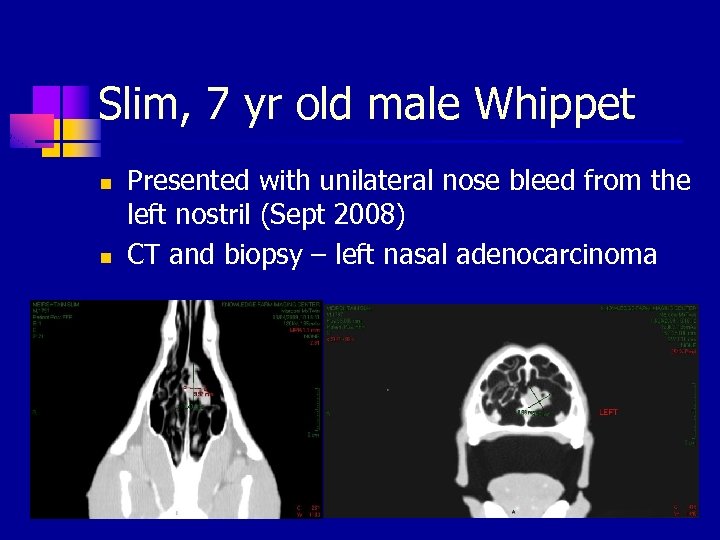 Slim, 7 yr old male Whippet n n Presented with unilateral nose bleed from the left nostril (Sept 2008) CT and biopsy – left nasal adenocarcinoma
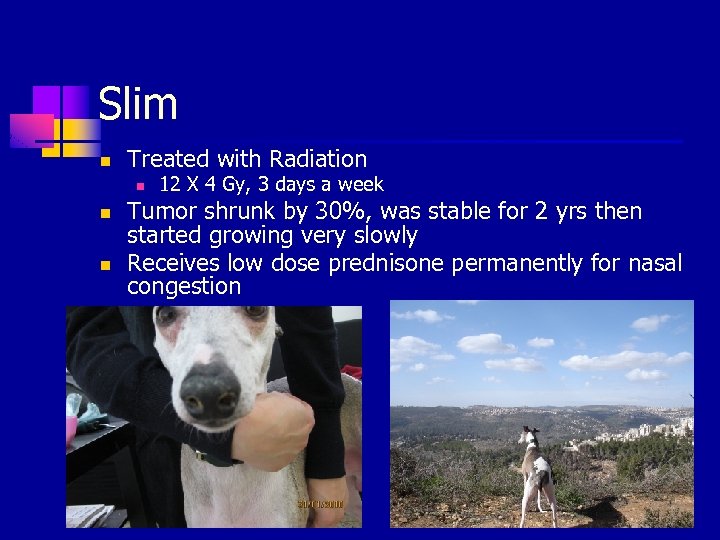 Slim n Treated with Radiation n 12 X 4 Gy, 3 days a week Tumor shrunk by 30%, was stable for 2 yrs then started growing very slowly Receives low dose prednisone permanently for nasal congestion
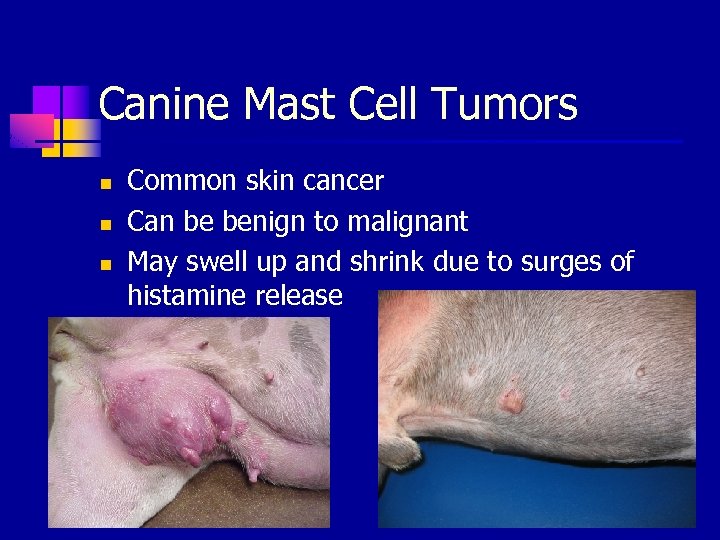 Canine Mast Cell Tumors n n n Common skin cancer Can be benign to malignant May swell up and shrink due to surges of histamine release
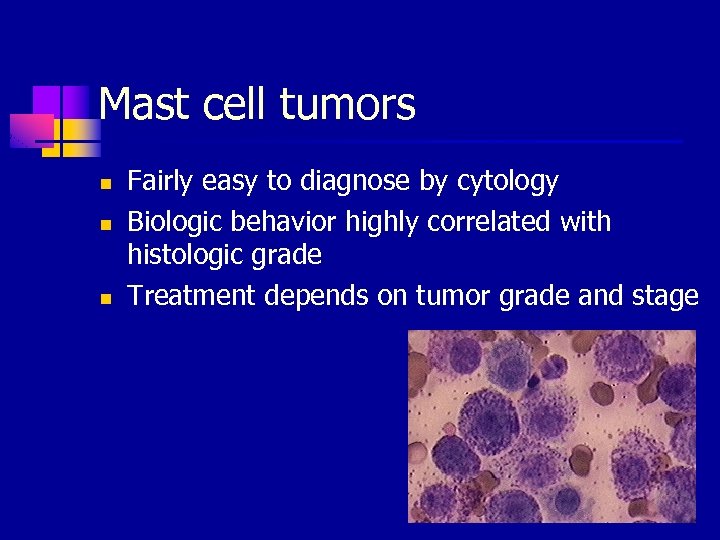 Mast cell tumors n n n Fairly easy to diagnose by cytology Biologic behavior highly correlated with histologic grade Treatment depends on tumor grade and stage
 Targeted therapy for canine MCT n 33% of MCT express mutation in c-kit Toceranib Phosphate (Palladia™) Masitinib Mesylate (Masivet®) KIT PDGFRβ VEGFR 2 Flt 3 KIT PDGFR FGFR 3 FAK (focal adhesion kinase)
 In summary n The main goal in treating animals with cancer is good QOL for as long as possible n Every case should be evaluated individually n Owners should be given all options n The decision is theirs to make after weighing risk vs. benefit and cost