


 Скачать презентацию Cancer Cancer A group of over 100
3d3d69f409c8584c0cb1b7cf7577011c.ppt
- Количество слайдов: 34
 Cancer
 Cancer A group of over 100 diseases Second leading cause of death in the US
 Characteristics of Cancer cells do not engulf healthy cells Cancer cells outcompete healthy cells for nutrients Cancer cells multiply uncontrollably Cancer cells often shaped irregularly
 Characteristics of Cancer cells generally live longer than healthy cells Cancer cells typically lack useful functions How Cancer Develops (Bupa, UK, via Youtube) Image Source: Public domain (NIH), licensed by Jeanne Kelly of Aaardvark Inc.
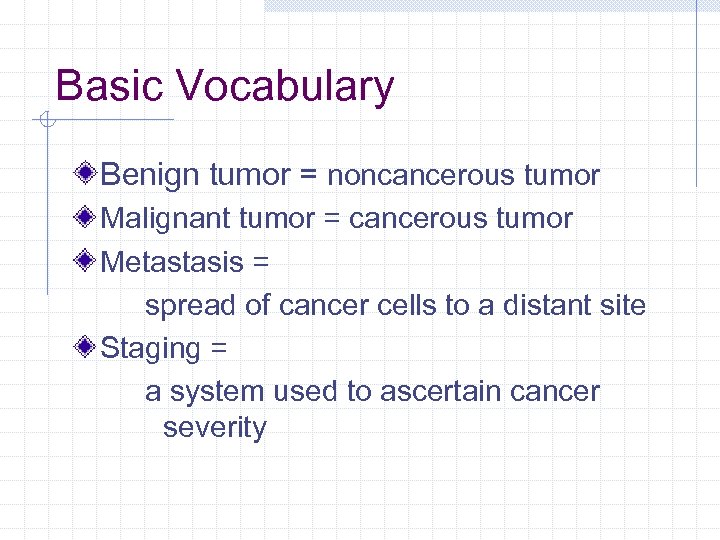 Basic Vocabulary Benign tumor = noncancerous tumor Malignant tumor = cancerous tumor Metastasis = spread of cancer cells to a distant site Staging = a system used to ascertain cancer severity
 Benign Tumors: Examples Syringoma (skinsight. com) Cherry hemangioma (skinsight. com) Pyogenic granuloma (skinsight. com)
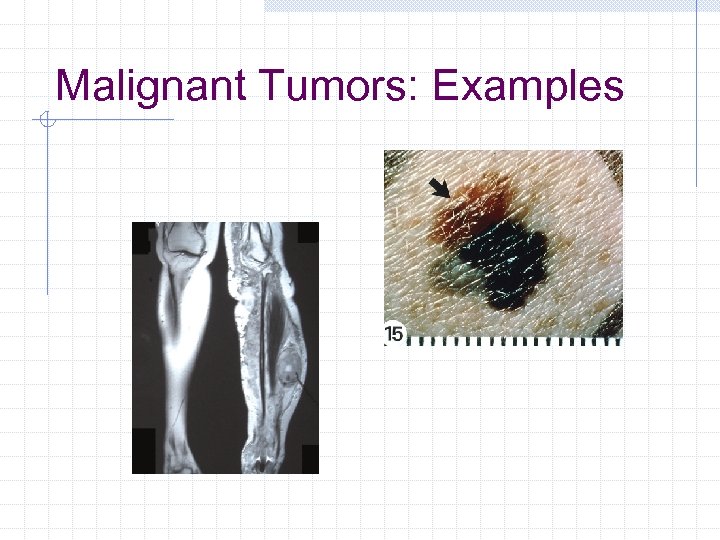 Malignant Tumors: Examples
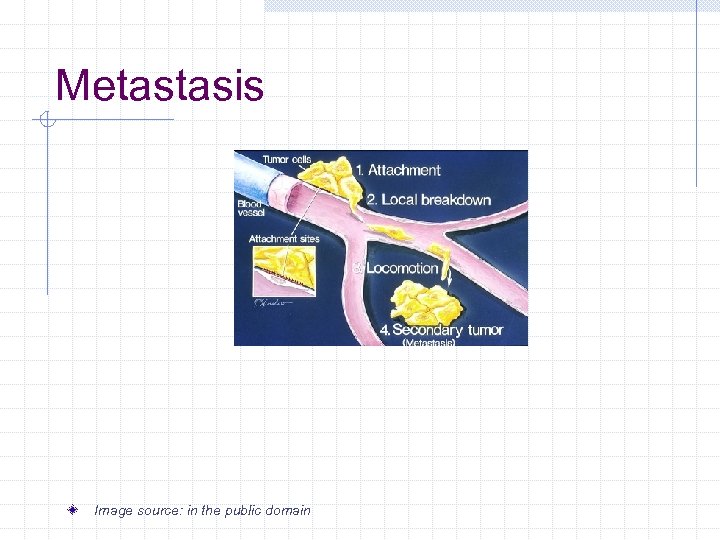 Metastasis Image source: in the public domain
 Staging Size/state of tumor, if applicable If metastasis has occurred, to what degree If lymph tissue is involved, to what degree Example: TNM Staging (tumor - lymph node metastasis)
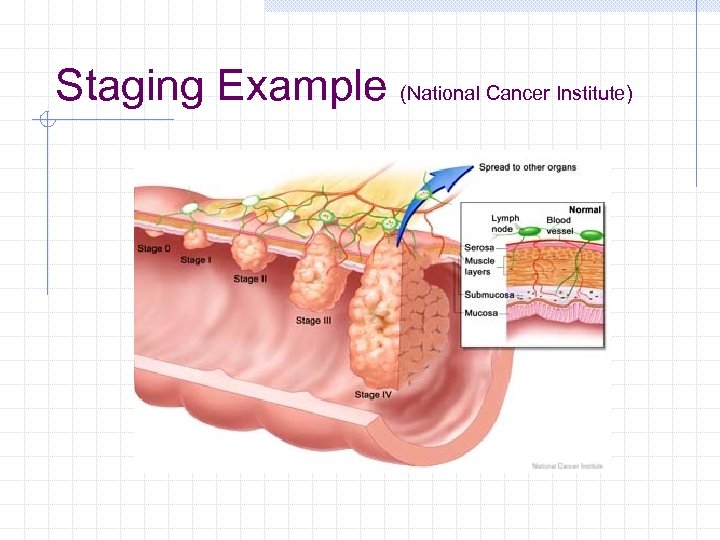 Staging Example (National Cancer Institute)
 About Cancer classification: n n Type of tissue from where cancer originates Where cancer first develops Cancer name: n n Named after body tissue of origin e. g. lung cancer When cancer metastasizes, the name remains the same e. g. cancer beginning in the breast and spreading to another site is known as breast cancer
 Classifications of Cancer Carcinoma n Cancer of epithelial tissue w Covers organs, glands, mucous membranes w Examples: lung, skin, colon w Most cancers are carcinomas Sarcoma n Cancer of connective tissues w Examples: fat, bones, tendons, muscles
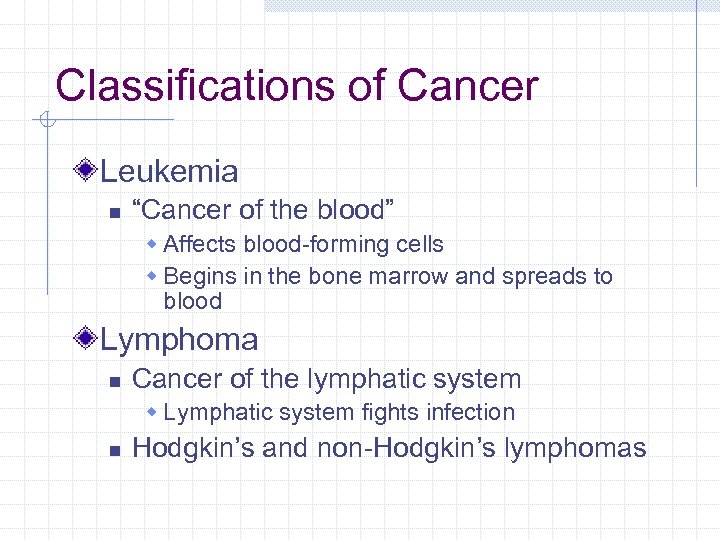 Classifications of Cancer Leukemia n “Cancer of the blood” w Affects blood-forming cells w Begins in the bone marrow and spreads to blood Lymphoma n Cancer of the lymphatic system w Lymphatic system fights infection n Hodgkin’s and non-Hodgkin’s lymphomas
 Examples of Cancer Skin cancer (sensitive photo) Breast cancer (sensitive photo) Testicular cancer (sensitive photo) Bone cancer (sensitive photo) Colon cancer (sensitive photo or illustration) Lung cancer (sensitive photo) Leukemia
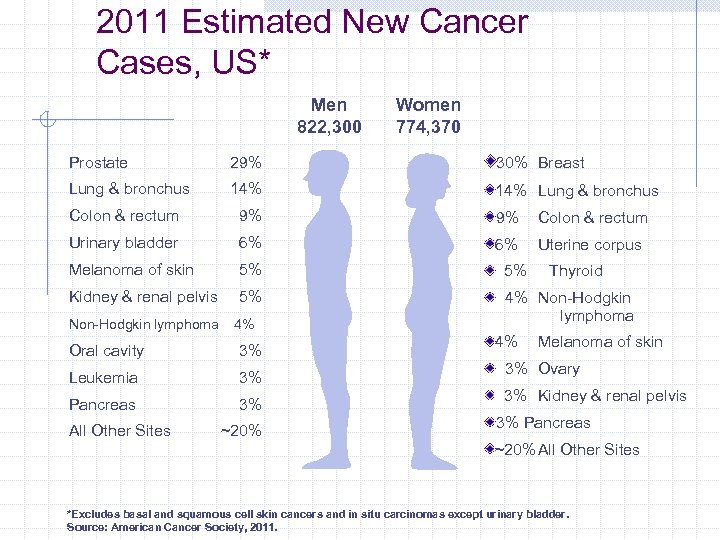 2011 Estimated New Cancer Cases, US* Men 822, 300 Women 774, 370 Prostate 29% 30% Breast Lung & bronchus 14% Lung & bronchus Colon & rectum 9% 9% Colon & rectum Urinary bladder 6% 6% Uterine corpus Melanoma of skin 5% 5% Kidney & renal pelvis 5% 4% Non-Hodgkin lymphoma 4% Oral cavity 3% Leukemia 3% Pancreas 3% All Other Sites ~20% 4% Thyroid Melanoma of skin 3% Ovary 3% Kidney & renal pelvis 3% Pancreas ~20%All Other Sites *Excludes basal and squamous cell skin cancers and in situ carcinomas except urinary bladder. Source: American Cancer Society, 2011.
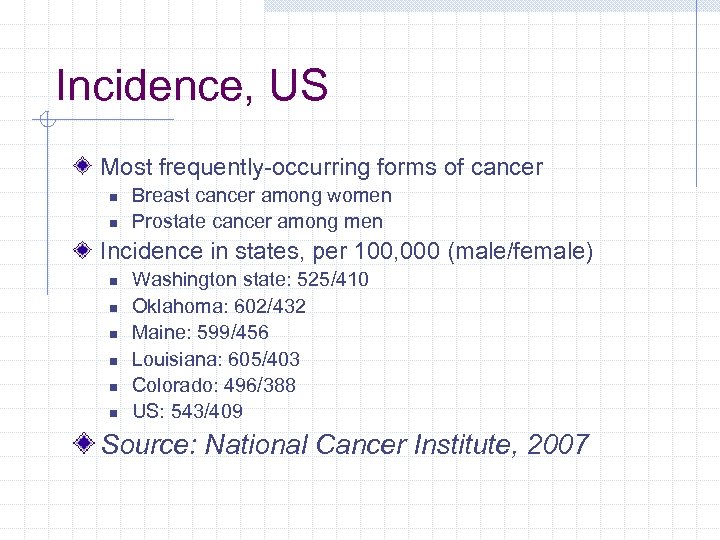 Incidence, US Most frequently-occurring forms of cancer n n Breast cancer among women Prostate cancer among men Incidence in states, per 100, 000 (male/female) n n n Washington state: 525/410 Oklahoma: 602/432 Maine: 599/456 Louisiana: 605/403 Colorado: 496/388 US: 543/409 Source: National Cancer Institute, 2007
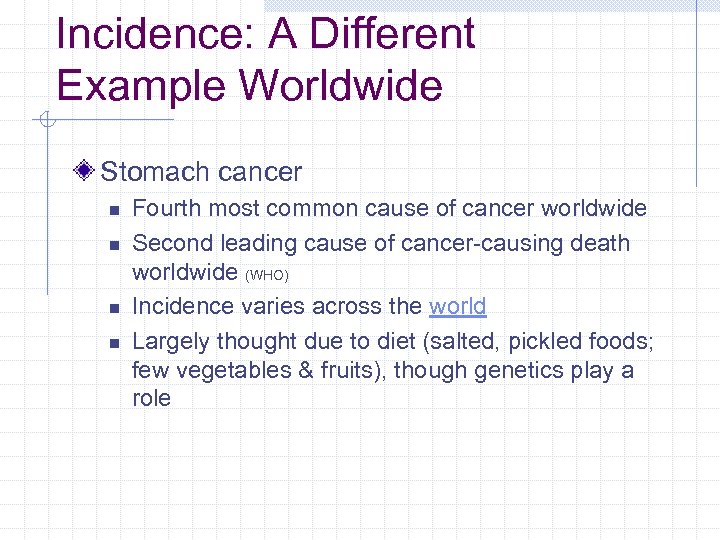 Incidence: A Different Example Worldwide Stomach cancer n n Fourth most common cause of cancer worldwide Second leading cause of cancer-causing death worldwide (WHO) Incidence varies across the world Largely thought due to diet (salted, pickled foods; few vegetables & fruits), though genetics play a role
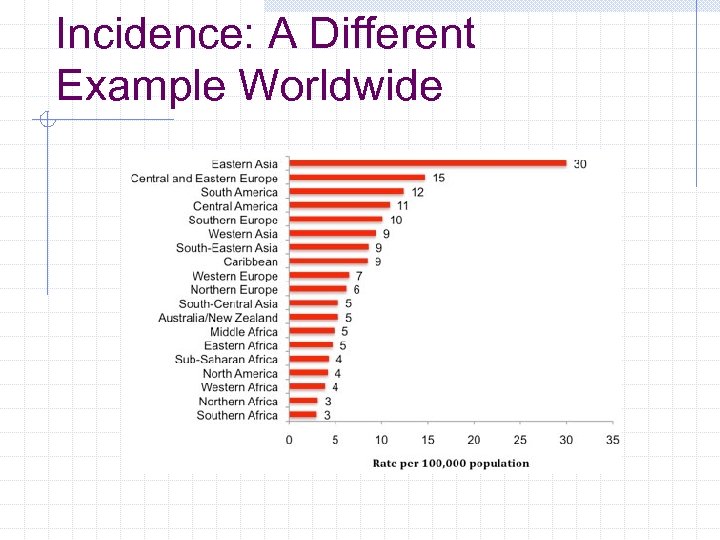 Incidence: A Different Example Worldwide
 New Cancer Cases By Site, US Dependent upon site, area population, regional culture Source: CDC
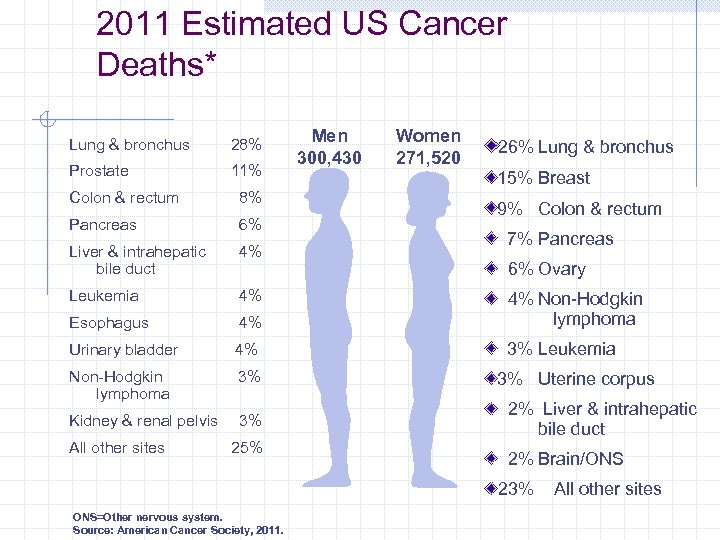 2011 Estimated US Cancer Deaths* Lung & bronchus 28% Prostate 11% Men 300, 430 Women 271, 520 26% Lung & bronchus 15% Breast Colon & rectum 8% Pancreas 6% Liver & intrahepatic bile duct 4% Leukemia 4% Esophagus 4% 4% Non-Hodgkin lymphoma Urinary bladder 4% 3% Leukemia Non-Hodgkin lymphoma 3% Kidney & renal pelvis 3% All other sites 25% 9% Colon & rectum 7% Pancreas 6% Ovary 3% Uterine corpus 2% Liver & intrahepatic bile duct 2% Brain/ONS 23% ONS=Other nervous system. Source: American Cancer Society, 2011. All other sites
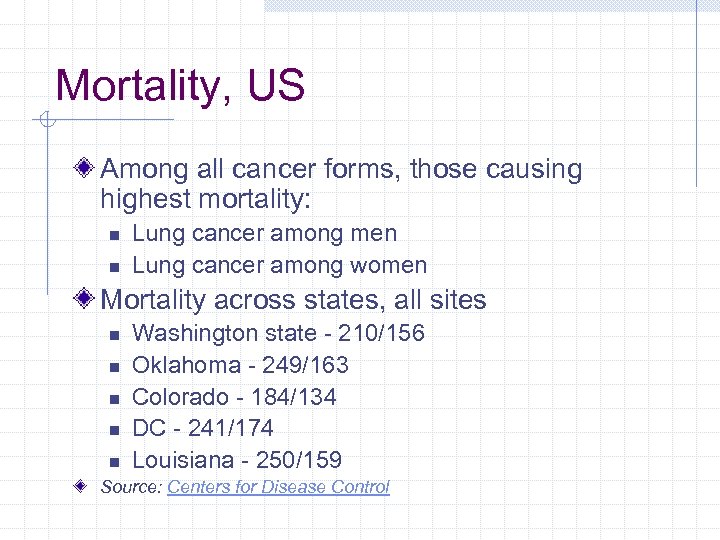 Mortality, US Among all cancer forms, those causing highest mortality: n n Lung cancer among men Lung cancer among women Mortality across states, all sites n n n Washington state - 210/156 Oklahoma - 249/163 Colorado - 184/134 DC - 241/174 Louisiana - 250/159 Source: Centers for Disease Control
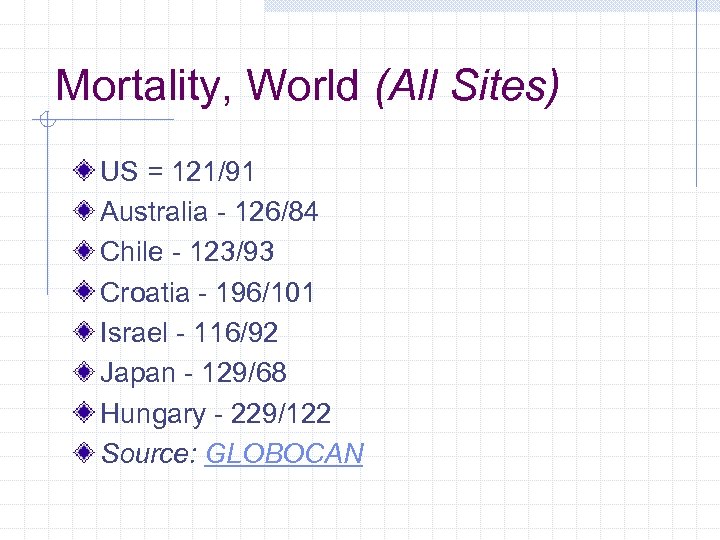 Mortality, World (All Sites) US = 121/91 Australia - 126/84 Chile - 123/93 Croatia - 196/101 Israel - 116/92 Japan - 129/68 Hungary - 229/122 Source: GLOBOCAN
 Cancer Survival*(%) by Race 1999 -2006
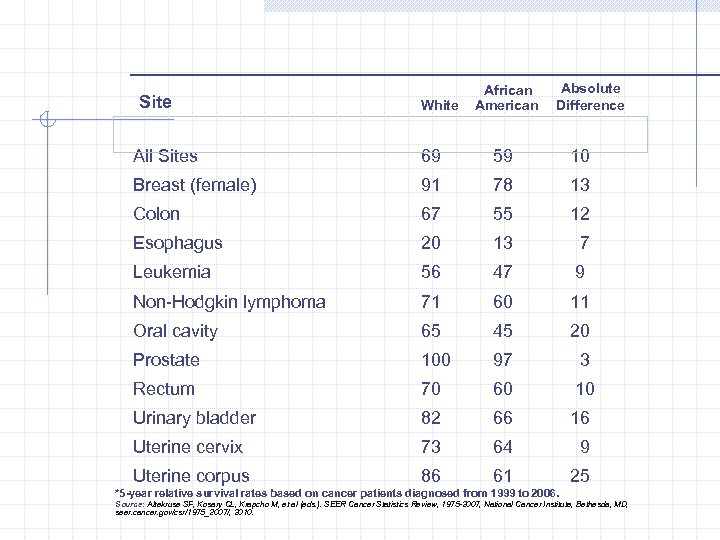 Site White African American Absolute Difference All Sites 69 59 10 Breast (female) 91 78 13 Colon 67 55 12 Esophagus 20 13 7 Leukemia 56 47 9 Non-Hodgkin lymphoma 71 60 11 Oral cavity 65 45 20 Prostate 100 97 3 Rectum 70 60 10 Urinary bladder 82 66 16 Uterine cervix 73 64 9 Uterine corpus 86 61 25 *5 -year relative survival rates based on cancer patients diagnosed from 1999 to 2006. Source: Altekruse SF, Kosary CL, Krapcho M, et al (eds. ). SEER Cancer Statistics Review, 1975 -2007, National Cancer Institute, Bethesda, MD, seer. cancer. gov/csr/1975_2007/, 2010.
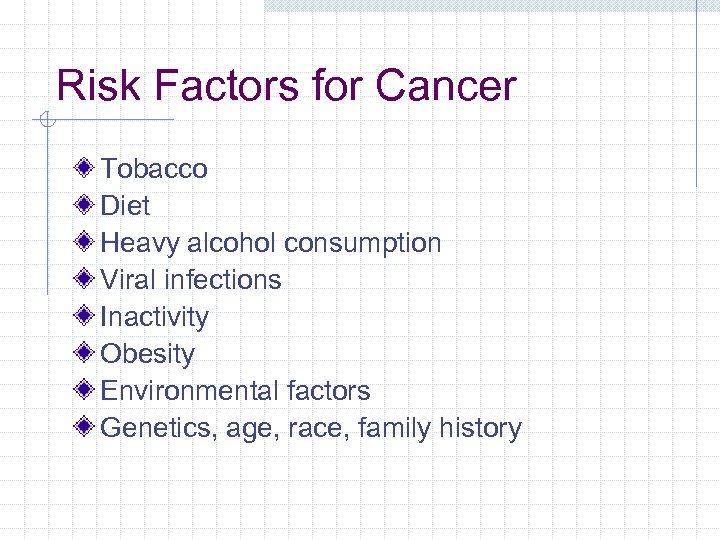 Risk Factors for Cancer Tobacco Diet Heavy alcohol consumption Viral infections Inactivity Obesity Environmental factors Genetics, age, race, family history
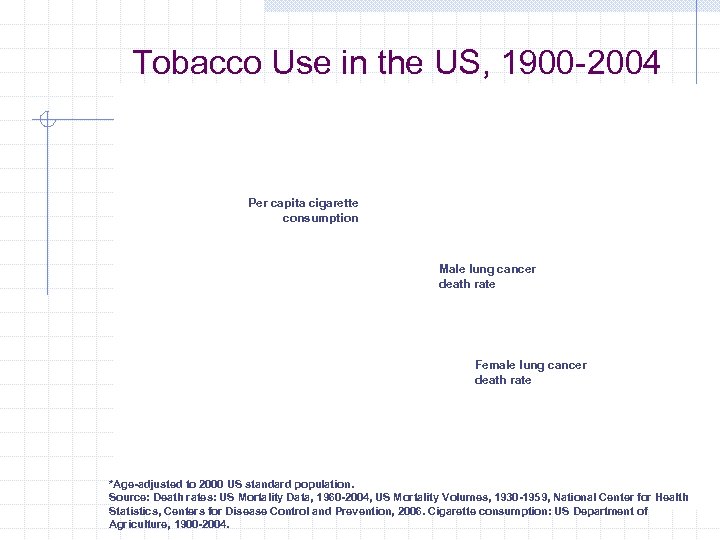 Tobacco Use in the US, 1900 -2004 Per capita cigarette consumption Male lung cancer death rate Female lung cancer death rate *Age-adjusted to 2000 US standard population. Source: Death rates: US Mortality Data, 1960 -2004, US Mortality Volumes, 1930 -1959, National Center for Health Statistics, Centers for Disease Control and Prevention, 2006. Cigarette consumption: US Department of Agriculture, 1900 -2004.
 Trends in Consumption of Five or More Recommended Vegetable and Fruit Servings for Cancer Prevention, Adults 18 and Older, US, 1994 -2005 Note: Data from participating states and the District of Columbia were aggregated to represent the United States. Source: Behavioral Risk Factor Surveillance System CD-ROM (1984 -1995, 1996, 1998) and Public Use Data Tape (2000, 2003, 2005), National Center for Chronic Disease Prevention and Health Promotion, Centers for Disease Control and Prevention, 1997, 1999, 2000, 2001, 2004, 2006.
 Trends in Prevalence (%) of High School Students Attending PE Class Daily, by Grade, US, 1991 -2005 Source: Youth Risk Behavior Surveillance System, 1991 -2003, National Center for Chronic Disease Prevention and Health Promotion, Centers for Disease Control and Prevention, 2004. MMWR 2004; 53(36): 844 -847. 2005: Youth Risk Behavior Surveillance System, 2005. MMWR Morb Mortal Wkly Rep. 2006; 55(SS-5).
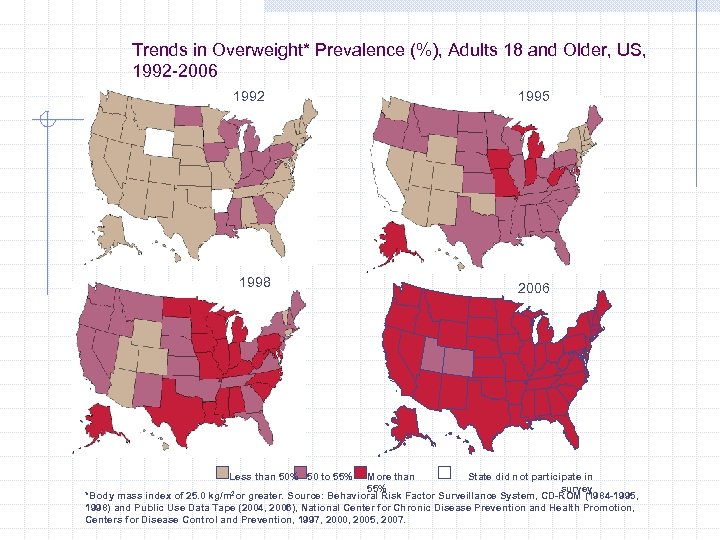 Trends in Overweight* Prevalence (%), Adults 18 and Older, US, 1992 -2006 1992 1998 Less than 50% 50 to 55% 1995 2006 More than State did not participate in 55% survey *Body mass index of 25. 0 kg/m 2 or greater. Source: Behavioral Risk Factor Surveillance System, CD-ROM (1984 -1995, 1998) and Public Use Data Tape (2004, 2006), National Center for Chronic Disease Prevention and Health Promotion, Centers for Disease Control and Prevention, 1997, 2000, 2005, 2007.
 Obesity and Cancer Hormones n n Fat cells secrete estrogen; greater fat = greater risk Greater fat in midsection disrupts insulin metabolism Mechanics n Obesity leads to acid reflux, increasing risk of esophageal cancer Nutrition n Lack of proper nutrients reduces protection
 Obesity and Cancer Some forms of cancer show stronger link n n n Breast Uterus Colon (men) Gall bladder NEJM Study: ovarian, stomach, prostate, liver, pancreas, cervix 2001 Swedish study: lymphoma, larynx
 Environment and Cancer Pollution Pesticides Prescription medication in the ground water Radiation BPA 2010 President’s Panel: risk is underestimated
 Environment and Cancer CA: In July 2011 set limit for hexavalent chromium (chromium-6) in water (Brockovich) Environmental Working Group: 2010 report on 35 cities: 31 tested positive for chromium-6 Issues: carcinogen combination, timing, amount of exposure
 General Warning Signs C - Change in bowel/bladder habits A - A sore that won’t heal U - Unusual bleeding or discharge T - Thickness or lump I - Indigestion or difficulty swallowing O - Obvious change in wart or mole N - Nagging cough or hoarseness