


 Скачать презентацию Canadian Food Inspection Agency Invasive Alien Species Program
d991cde7466462f8feeec9f2c7a8df86.ppt
- Количество слайдов: 10
 Canadian Food Inspection Agency: Invasive Alien Species Program Overview North American Invasive Species Forum Darlene Blair Chief Plant Health Officer Canadian Food Inspection Agency May 9, 2017 © 2017 Her Majesty the Queen in Right of Canada (Canadian Food Inspection Agency), all rights reserved. Use without permission is prohibited.
 Outline The CFIA’s Invasive Alien Species (IAS) Program How it fits within the CFIA and the Plant Health Program • Challenges and opportunities • Activities and accomplishments • Future •
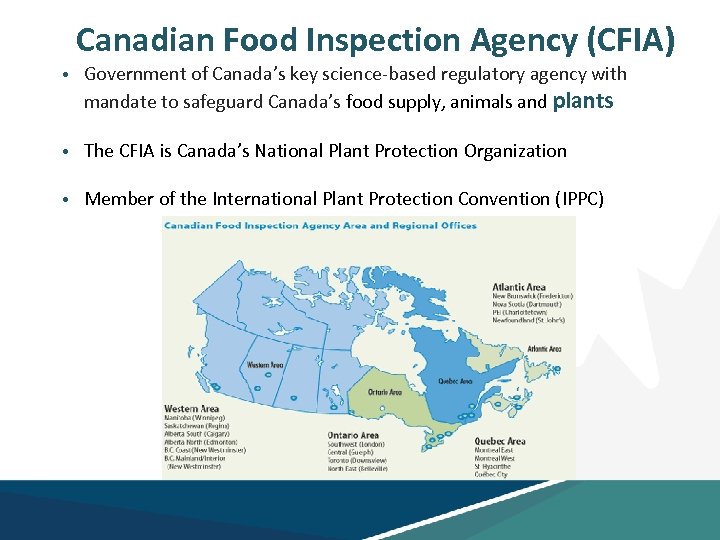 Canadian Food Inspection Agency (CFIA) • Government of Canada’s key science-based regulatory agency with mandate to safeguard Canada’s food supply, animals and plants • The CFIA is Canada’s National Plant Protection Organization • Member of the International Plant Protection Convention (IPPC)
 The CFIA’s Plant Protection Mandate • Protect Canada’s agriculture and forestry sectors and natural resources from the economic and environmental impact of introduced pests • Prevent import, export and spread of pests • Regulate the import, export and domestic movement of agricultural and forest products and other things • Facilitate access to foreign markets - phytosanitary perspective • Commodity focus: Forestry, Horticulture, Potatoes, Grains and Oilseeds • Cross-sector: International Phytosanitary Standards, Invasive Alien Species and Domestic Plant Health Programs
 Invasive Alien Species Program • Contributes to the on-going implementation of the National Invasive Alien Species Strategy • Dedicated section that manages horizontal issues and coordinates activities within the Agency and with domestic and international partners • Focus on prevention, early detection and early response to invasive alien species and pathways by which they may arrive in Canada • Partnerships: Shared Risk - Shared Responsibility concept
 Invasive Alien Species Program Aligned with the National IAS Strategy, the CFIA is committed to prevent or limit the introduction, spread and impact of invasive plants and other plant pests by such activities as: • pest risk analyses • import and domestic policies and programs • emergency response plans • surveys • diagnostic tests and identification tools • education, awareness and compliance promotion • international engagement • partnerships • National Plant Health Strategy
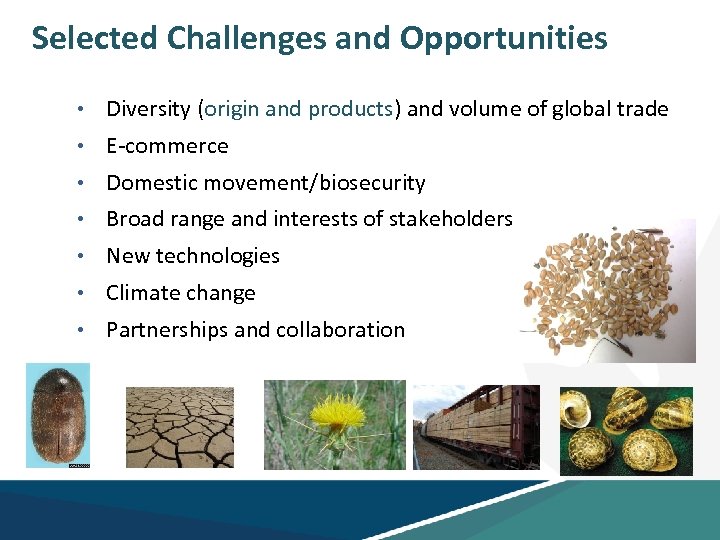 Selected Challenges and Opportunities • Diversity (origin and products) and volume of global trade • E-commerce • Domestic movement/biosecurity • Broad range and interests of stakeholders • New technologies • Climate change • Partnerships and collaboration
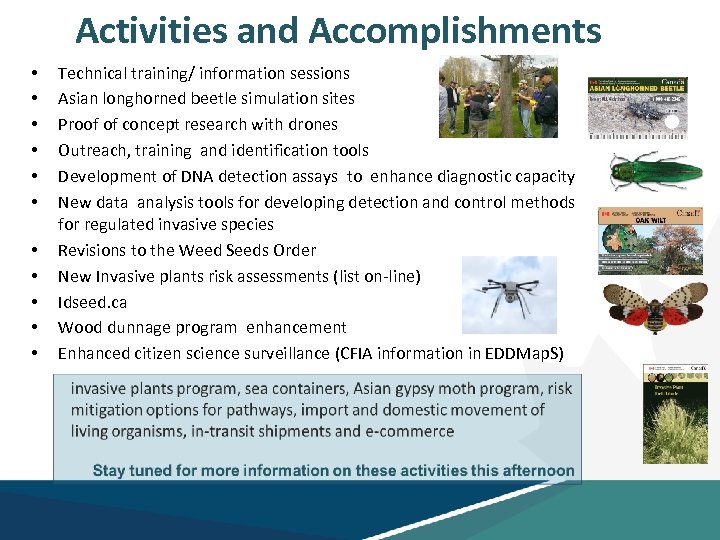 Activities and Accomplishments • • • Technical training/ information sessions Asian longhorned beetle simulation sites Proof of concept research with drones Outreach, training and identification tools Development of DNA detection assays to enhance diagnostic capacity New data analysis tools for developing detection and control methods for regulated invasive species Revisions to the Weed Seeds Order New Invasive plants risk assessments (list on-line) Idseed. ca Wood dunnage program enhancement Enhanced citizen science surveillance (CFIA information in EDDMap. S)
 What’s Next ? • Continue to identify new plant health risks, develop and implement risk-based solutions • Continue to focus on high risk pathways and proactive approaches to risk mitigation • Systems approaches and alternative service delivery • Establishing a Canadian Plant ‘Network of Experts’ will connect stakeholders and expertise within the Plant Health Science Community • Promoting citizen science and new diagnostic tools (e. g. drones, genomics and sniffer dogs) • Plant and Animal Health Strategy
 Thank you. Comments, Questions? visit our web site: www. inspection. gc. ca For Survey Reports, Protocols, Pest Info and more please visit: http: //www. inspection. gc. ca/plantsurvey https: //twitter. com/CFIA_Canada https: //www. pinterest. com/CFIACanada/plant-pests/