



 Canada The 1950 s and 1960 s
 7. 1 Return to Peacetime u Veterans Come Home • Veterans could buy building lots at good prices • Many Canadians could get financing to buy houses under the National Housing Act (1944)
 7. 1 Return to Peacetime u Canada’s Postwar Economic Position • The GNP doubled during WW 2 • Wages, savings and tax revenues rose • Europeans and Americans were buying Canadian goods
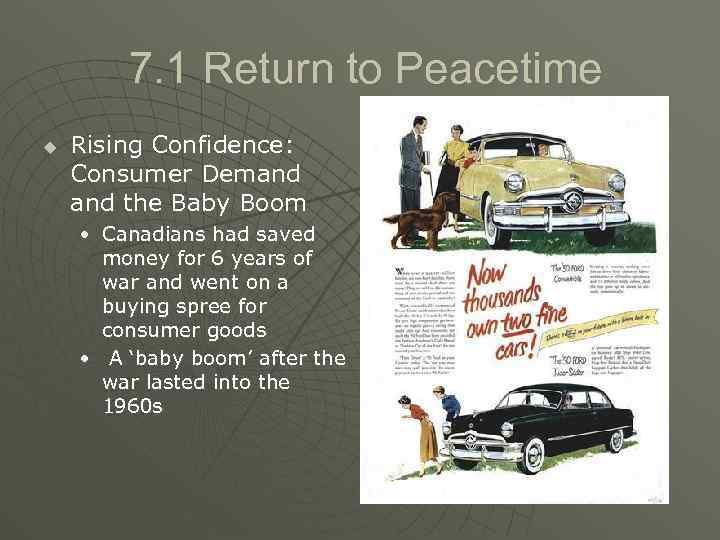 7. 1 Return to Peacetime u Rising Confidence: Consumer Demand the Baby Boom • Canadians had saved money for 6 years of war and went on a buying spree for consumer goods • A ‘baby boom’ after the war lasted into the 1960 s
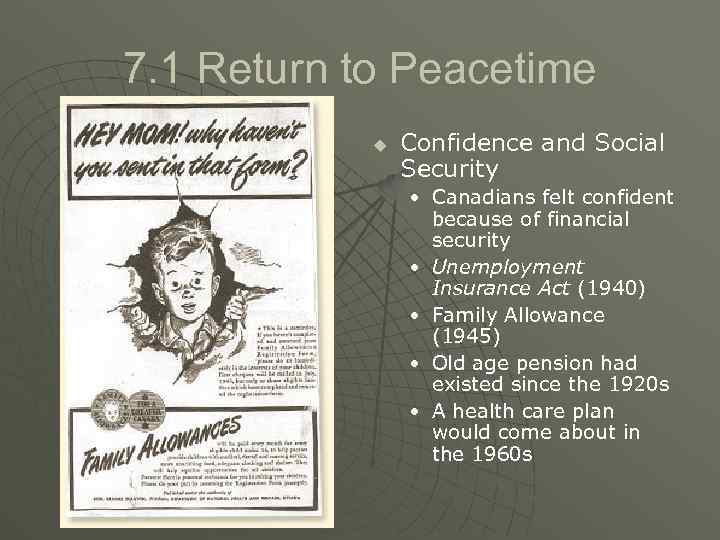 7. 1 Return to Peacetime u Confidence and Social Security • Canadians felt confident because of financial security • Unemployment Insurance Act (1940) • Family Allowance (1945) • Old age pension had existed since the 1920 s • A health care plan would come about in the 1960 s
 7. 2 A Changing Canada: Immigration & Urbanization u Immigration • Increased greatly after the war • Selective-preference was given to British, American and French citizens • 1950 es-Canada let in people from other parts of Europe, China and India • The demand for immigrant labour led to even more immigration in the 1950 s
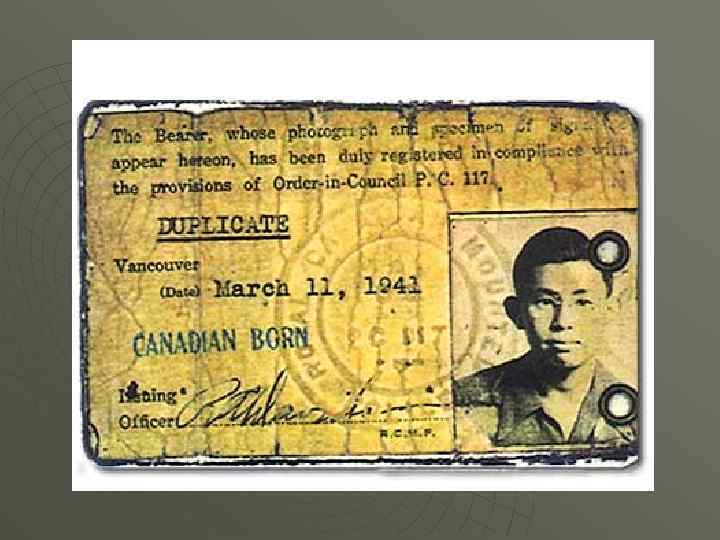
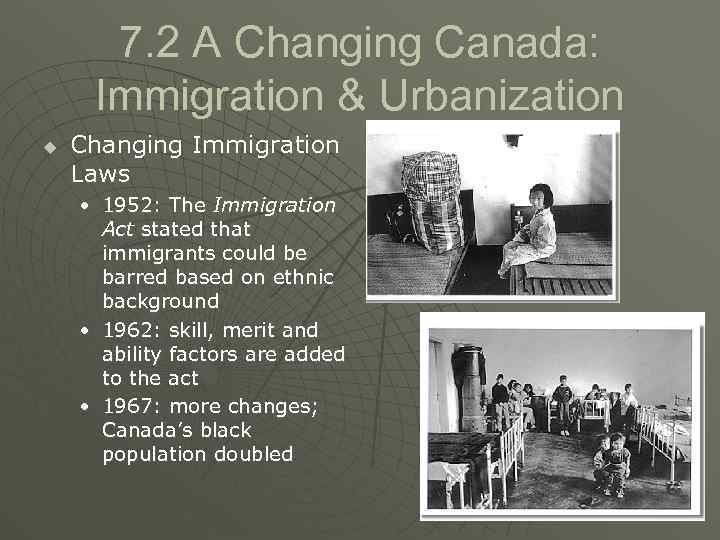 7. 2 A Changing Canada: Immigration & Urbanization u Changing Immigration Laws • 1952: The Immigration Act stated that immigrants could be barred based on ethnic background • 1962: skill, merit and ability factors are added to the act • 1967: more changes; Canada’s black population doubled
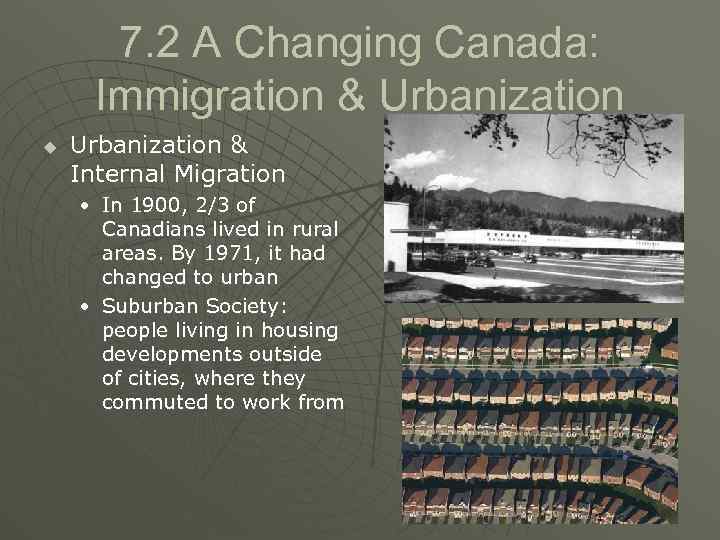 7. 2 A Changing Canada: Immigration & Urbanization u Urbanization & Internal Migration • In 1900, 2/3 of Canadians lived in rural areas. By 1971, it had changed to urban • Suburban Society: people living in housing developments outside of cities, where they commuted to work from
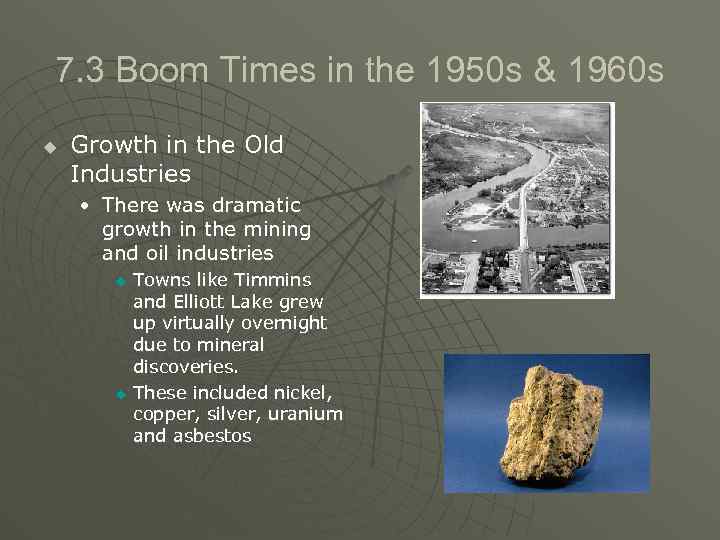 7. 3 Boom Times in the 1950 s & 1960 s u Growth in the Old Industries • There was dramatic growth in the mining and oil industries u u Towns like Timmins and Elliott Lake grew up virtually overnight due to mineral discoveries. These included nickel, copper, silver, uranium and asbestos
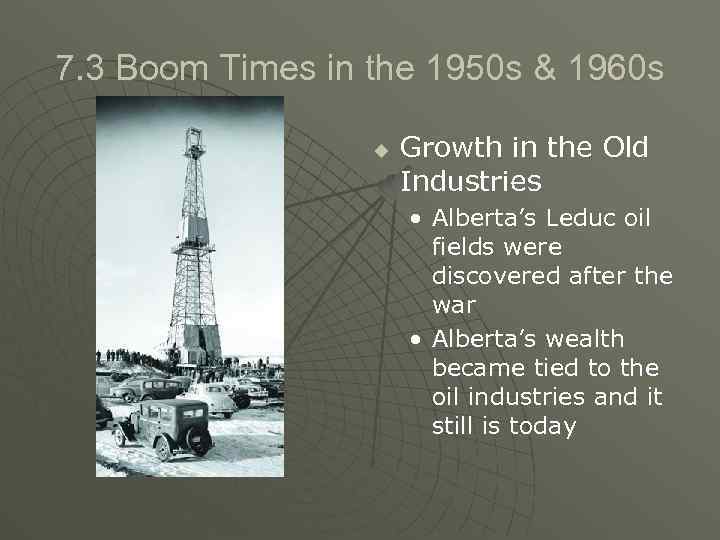 7. 3 Boom Times in the 1950 s & 1960 s u Growth in the Old Industries • Alberta’s Leduc oil fields were discovered after the war • Alberta’s wealth became tied to the oil industries and it still is today
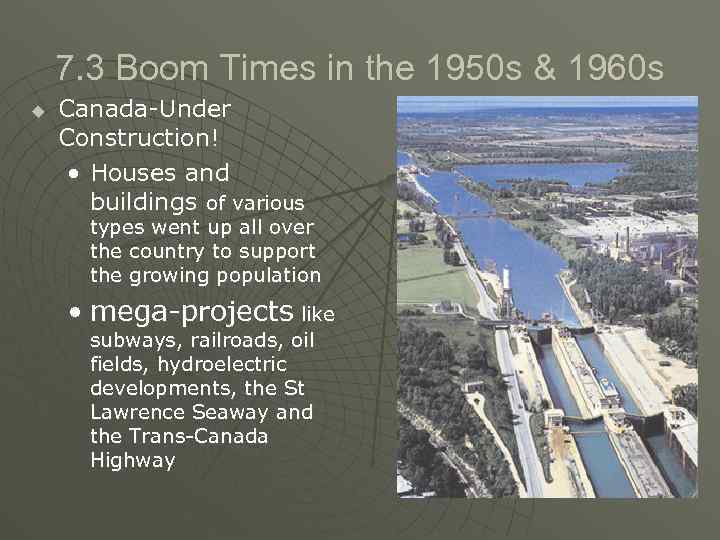 7. 3 Boom Times in the 1950 s & 1960 s u Canada-Under Construction! • Houses and buildings of various types went up all over the country to support the growing population • mega-projects like subways, railroads, oil fields, hydroelectric developments, the St Lawrence Seaway and the Trans-Canada Highway
 7. 3 Boom Times in the 1950 s & 1960 s u The Canada-US Automotive Products Agreement (Autopact) • Many small auto manufacturers went out of business in this period; by the 1960 s only Ford, GM and Chrysler were left • These three signed the Autopact in 1965 to allow limited free trade of autos and parts • It lowered costs, but also eliminated the practice of individual factories producing a full range of models; today they specialize
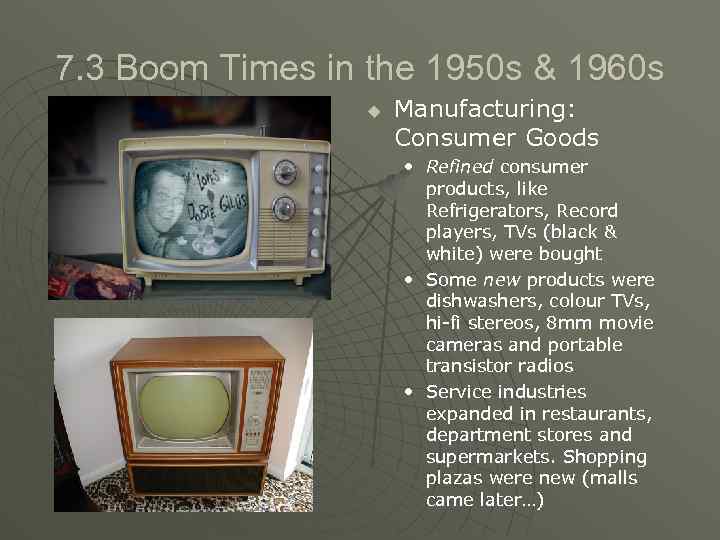 7. 3 Boom Times in the 1950 s & 1960 s u Manufacturing: Consumer Goods • Refined consumer products, like Refrigerators, Record players, TVs (black & white) were bought • Some new products were dishwashers, colour TVs, hi-fi stereos, 8 mm movie cameras and portable transistor radios • Service industries expanded in restaurants, department stores and supermarkets. Shopping plazas were new (malls came later…)
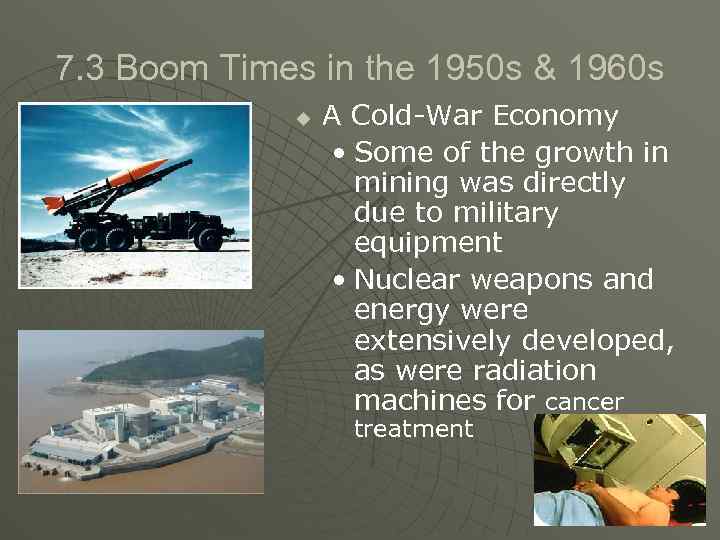 7. 3 Boom Times in the 1950 s & 1960 s u A Cold-War Economy • Some of the growth in mining was directly due to military equipment • Nuclear weapons and energy were extensively developed, as were radiation machines for cancer treatment
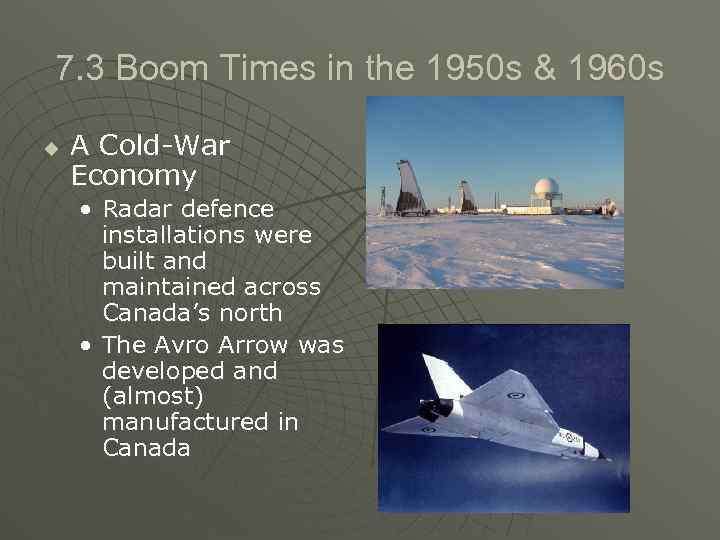 7. 3 Boom Times in the 1950 s & 1960 s u A Cold-War Economy • Radar defence installations were built and maintained across Canada’s north • The Avro Arrow was developed and (almost) manufactured in Canada
 7. 4 Economic Problems u Economic Downturn • The boom times lasted until about 1957. Why did things change? The economies of Europe and Japan finally revived after WW 2 u The European Common Market (ECM) raised tariffs on Canadian products u American wheat surpluses drove prices down u
 7. 4 Economic Problems u Economic Downturn • Why did things change? … continued Unemployment rose u Immigration rose u Migration to cities from rural areas u More women entering full-time employment u
 7. 4 Economic Problems u Economic Downturn • What did the government do? Set up a number of ‘make work’ projects u The Governor of the Bank of Canada said Canada was entering a recession and raised interest rates. PM Diefenbaker disagreed and he was dismissed. u
 7. 4 Economic Problems u Economic Downturn • Other Problems: The balance of trade wasn’t in Canada’s favour; she bought more imported products than those exported. u PM Diefenbaker devalued the Canadian dollar to 92. 5 cents, which shook Canadians’ confidence. u
 7. 4 Economic Problems u Labour Relations in the 1950 s-1960 s • ‘Blue collar’ workers’ wages increased 30% between 1945 -1950, after a series of strikes • Legislation in the 1950 s-1960 s severely restricted unions • By the late 1960 s, unions had spread to many more industries and they were more militant
 7. 4 Economic Problems u American Investment • The Canadian economy’s recovery in 1962 was partly due to American investment • American companies owned 90% of Canadian petroleum and automobile production
 7. 4 Economic Problems u American Investment • Many Canadian factories were American branch plants • All of this investment was good, but there were problems as well…
 7. 4 Economic Problems u American Investment • Many Canadians feared losing control of their economy to Americans • The government introduced tax incentives which favoured Canadian companies • It also opened trade with other countries like Cuba and the Soviet Union
 7. 4 Economic Problems u Economic Change: The Human Impact • Family farms began to disappear • East coast inshore fishing declined in favour of large-scale offshore fishing. Foreign overfishing was hard to control • Traditional northern aboriginal lifestyles changed with the development of Canada’s North
 7. 6 The Rights of the People u Advances in Civil Rights • Civil rights legislation was intended to fight discrimination based on colour, religion and ethnic background
 7. 6 The Rights of the People u Native Rights • Aboriginal Canadians earned less money and had worse living conditions than other Canadians, which resulted in lower health standards • Some changes were made to the Indian Act in 1951, allowing more aboriginal rights
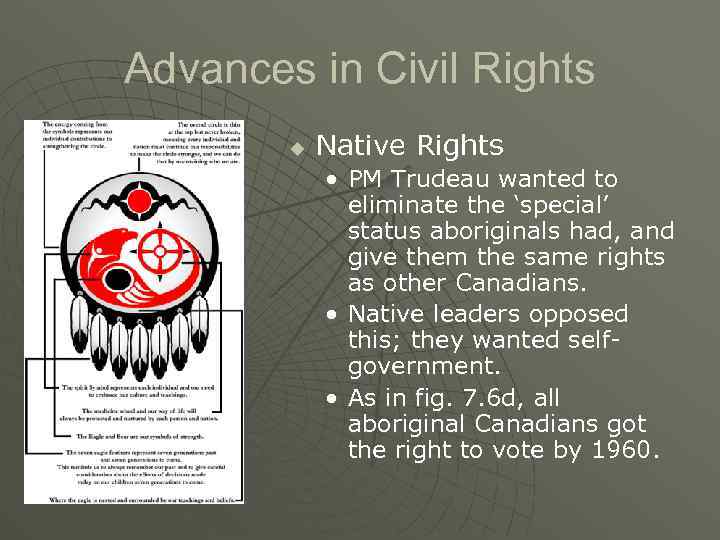 Advances in Civil Rights u Native Rights • PM Trudeau wanted to eliminate the ‘special’ status aboriginals had, and give them the same rights as other Canadians. • Native leaders opposed this; they wanted selfgovernment. • As in fig. 7. 6 d, all aboriginal Canadians got the right to vote by 1960.
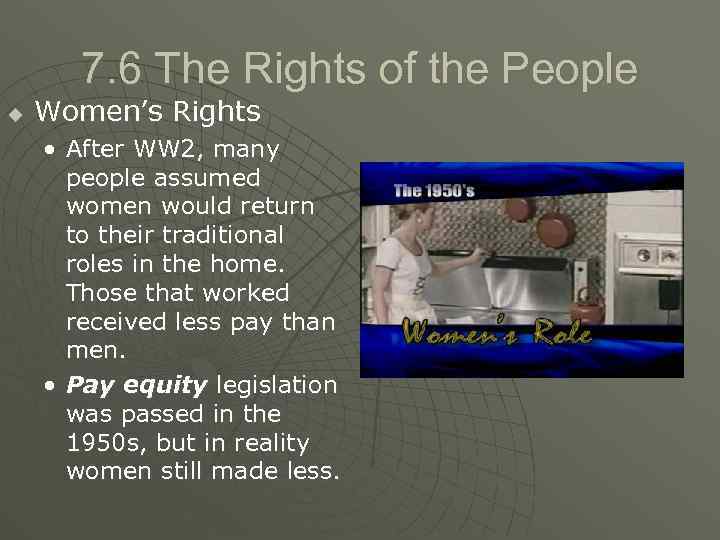 7. 6 The Rights of the People u Women’s Rights • After WW 2, many people assumed women would return to their traditional roles in the home. Those that worked received less pay than men. • Pay equity legislation was passed in the 1950 s, but in reality women still made less.
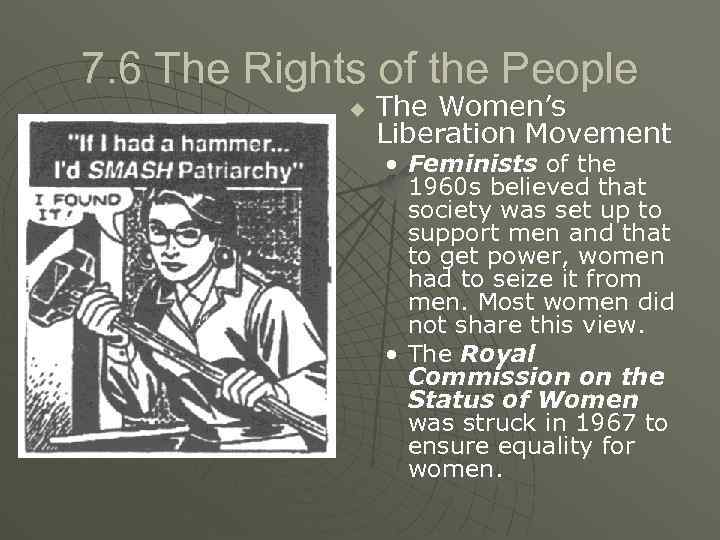 7. 6 The Rights of the People u The Women’s Liberation Movement • Feminists of the 1960 s believed that society was set up to support men and that to get power, women had to seize it from men. Most women did not share this view. • The Royal Commission on the Status of Women was struck in 1967 to ensure equality for women.
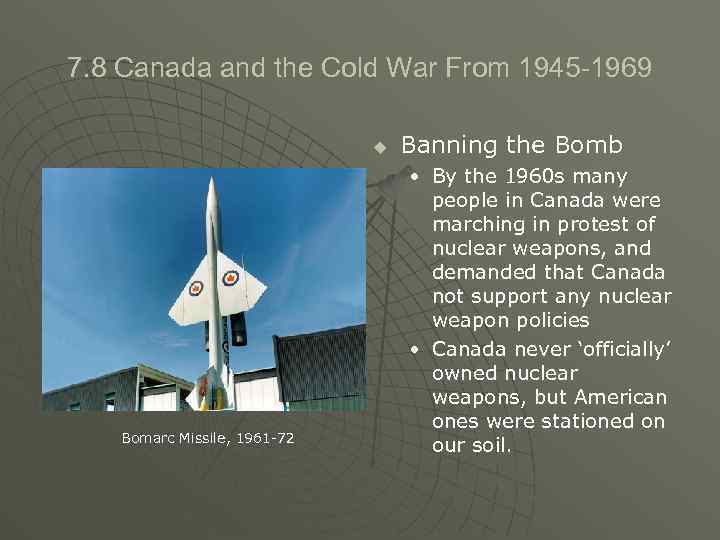 7. 8 Canada and the Cold War From 1945 -1969 u Bomarc Missile, 1961 -72 Banning the Bomb • By the 1960 s many people in Canada were marching in protest of nuclear weapons, and demanded that Canada not support any nuclear weapon policies • Canada never ‘officially’ owned nuclear weapons, but American ones were stationed on our soil.
 Peacekeeping (a Canadian 'invention', thanks to Lester B. Pearson): u any UN military action to separate hostile forces, maintain truces and get food to hungry people
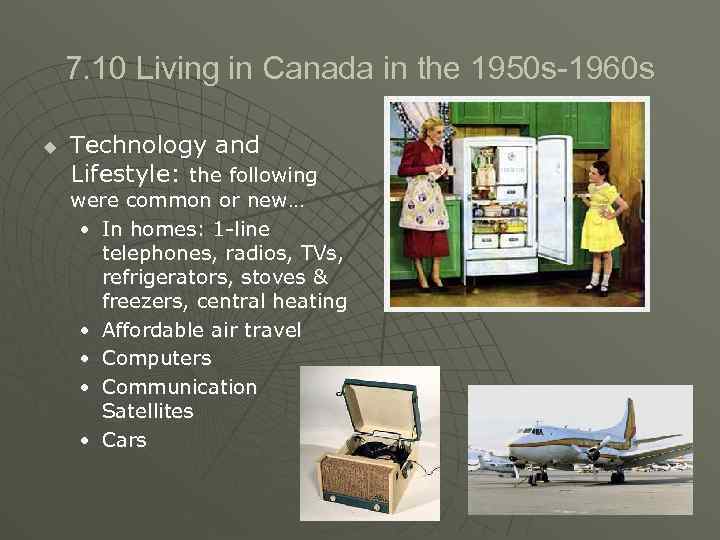 7. 10 Living in Canada in the 1950 s-1960 s u Technology and Lifestyle: the following were common or new… • In homes: 1 -line telephones, radios, TVs, refrigerators, stoves & freezers, central heating • Affordable air travel • Computers • Communication Satellites • Cars
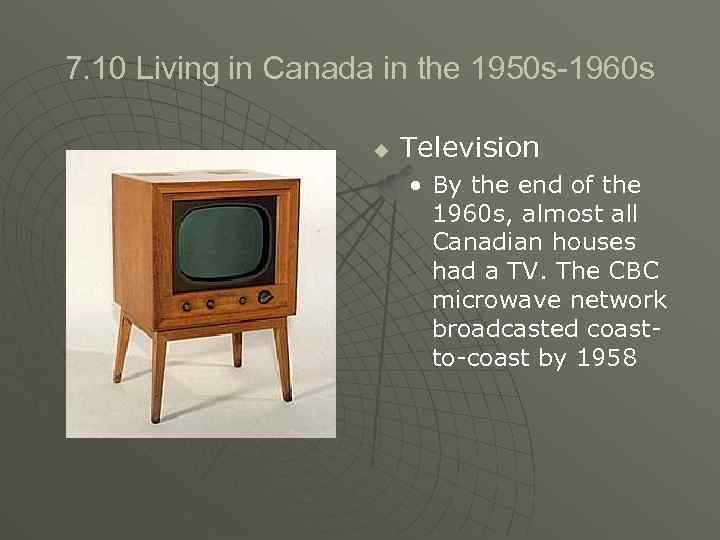 7. 10 Living in Canada in the 1950 s-1960 s u Television • By the end of the 1960 s, almost all Canadian houses had a TV. The CBC microwave network broadcasted coastto-coast by 1958
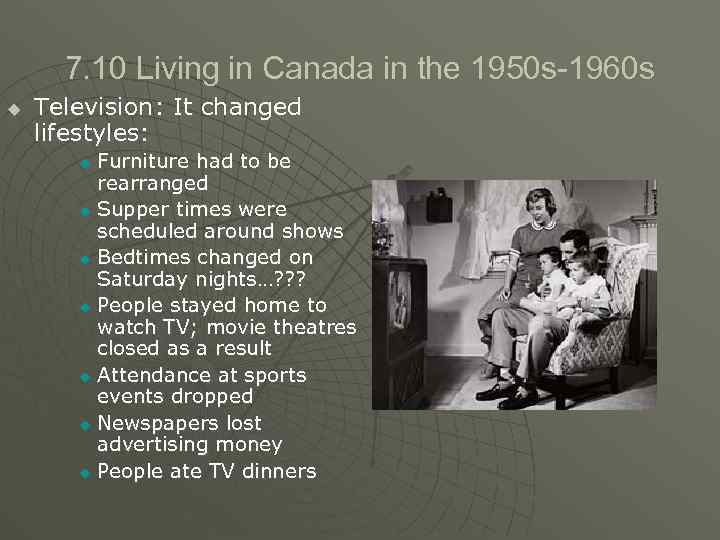 7. 10 Living in Canada in the 1950 s-1960 s u Television: It changed lifestyles: Furniture had to be rearranged u Supper times were scheduled around shows u Bedtimes changed on Saturday nights…? ? ? u People stayed home to watch TV; movie theatres closed as a result u Attendance at sports events dropped u Newspapers lost advertising money u People ate TV dinners u
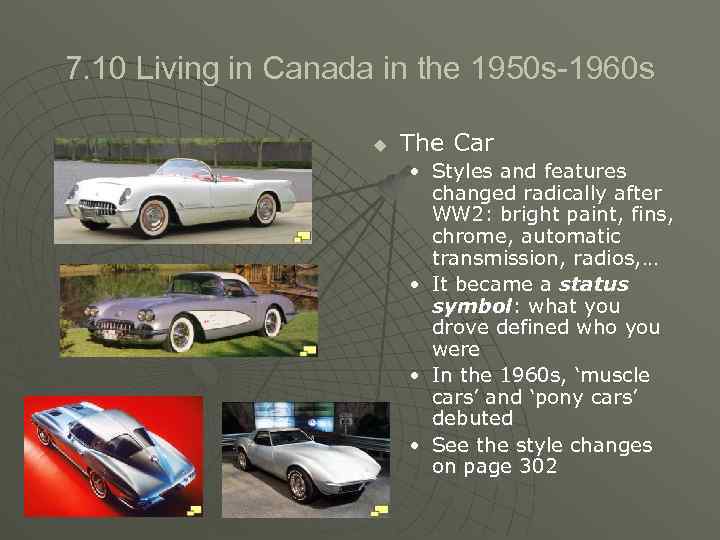 7. 10 Living in Canada in the 1950 s-1960 s u The Car • Styles and features changed radically after WW 2: bright paint, fins, chrome, automatic transmission, radios, … • It became a status symbol: what you drove defined who you were • In the 1960 s, ‘muscle cars’ and ‘pony cars’ debuted • See the style changes on page 302
 7. 10 Living in Canada in the 1950 s-1960 s u Youth Culture • For the first time, youth subculture became a major influence in society • Young people adopted their own styles of clothing, not just being miniature versions of their parents
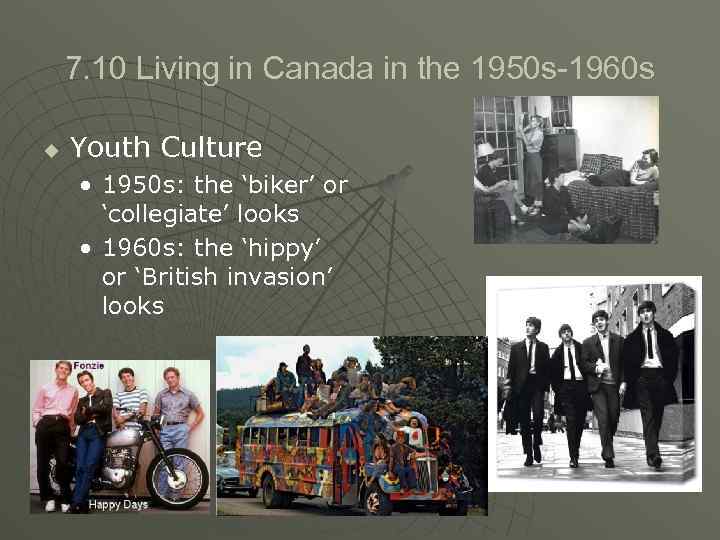 7. 10 Living in Canada in the 1950 s-1960 s u Youth Culture • 1950 s: the ‘biker’ or ‘collegiate’ looks • 1960 s: the ‘hippy’ or ‘British invasion’ looks
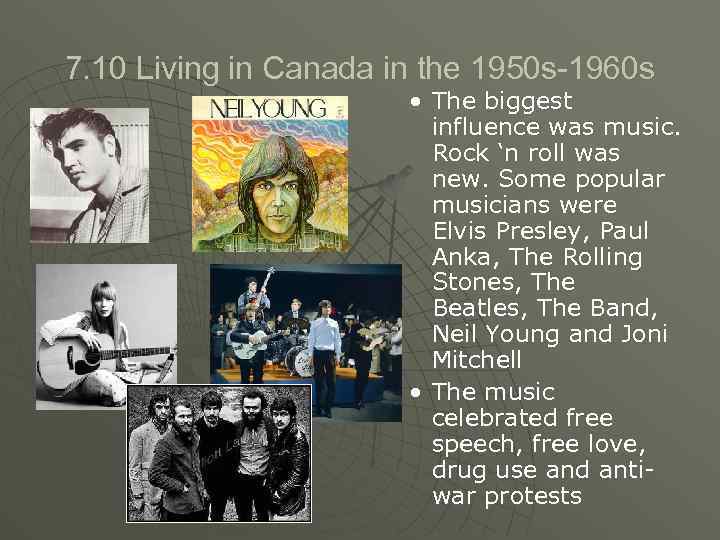 7. 10 Living in Canada in the 1950 s-1960 s • The biggest influence was music. Rock ‘n roll was new. Some popular musicians were Elvis Presley, Paul Anka, The Rolling Stones, The Beatles, The Band, Neil Young and Joni Mitchell • The music celebrated free speech, free love, drug use and antiwar protests
 7. 10 Living in Canada in the 1950 s-1960 s u New Attitudes and Values • After the depression and WW 2, Canadians wanted to relax and have fun. The following became common: Car travel for leisure u TV entertainment u Portable radios u More liberal values & attitudes towards drinking, hairstyles, clothing and music u Protesting civil rights abuses and against the arms race u
 7. 10 Living in Canada in the 1950 s-1960 s u A Changed Society…things changed in a variety of areas: • • Privacy Obscenity Abortion: made legal…sometimes Homosexuality: made legal Birth Control: the pill became available Marriage…or not Fast food restaurants Credit Cards