 Скачать презентацию Can the library be a publisher Leo Waaijers
5d5989667ff4b52976d4df81d1295689.ppt
- Количество слайдов: 19



Can the library be a publisher? Leo Waaijers Disciple of Eve ELAG 2008 Rethinking the Library Wageningen, 16 April 2008
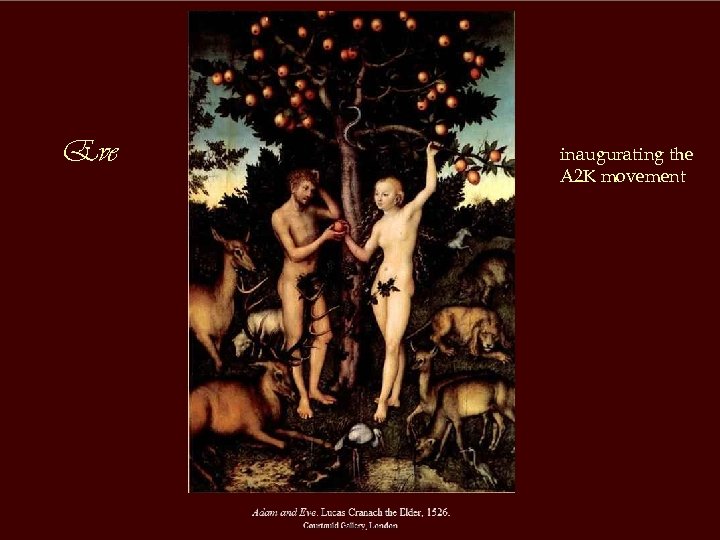
Eve inaugurating the A 2 K movement
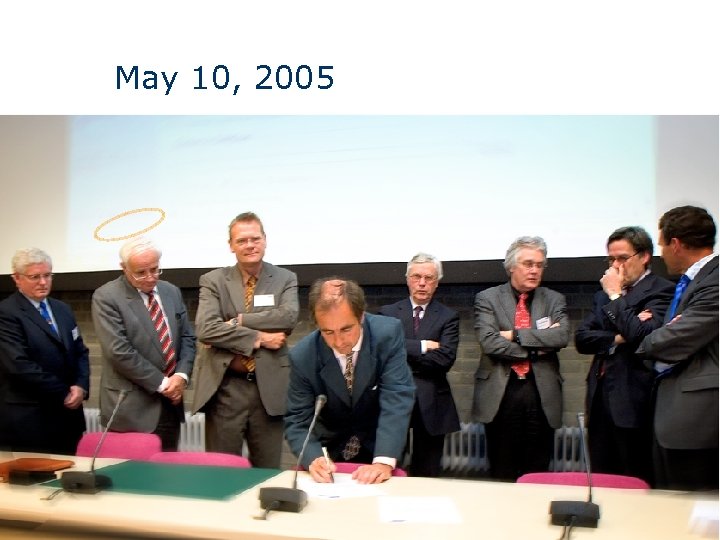
May 10, 2005
Berlin Declaration, October 2003 “Our mission of disseminating knowledge is only half complete if the information is not made widely and readily available to society. ” European University Association, January 2008 “Universities should develop institutional policies and strategies that foster the availability of their quality controlled research results for the broadest possible range of users, maximizing their visibility, accessibility and scientific impact. ”
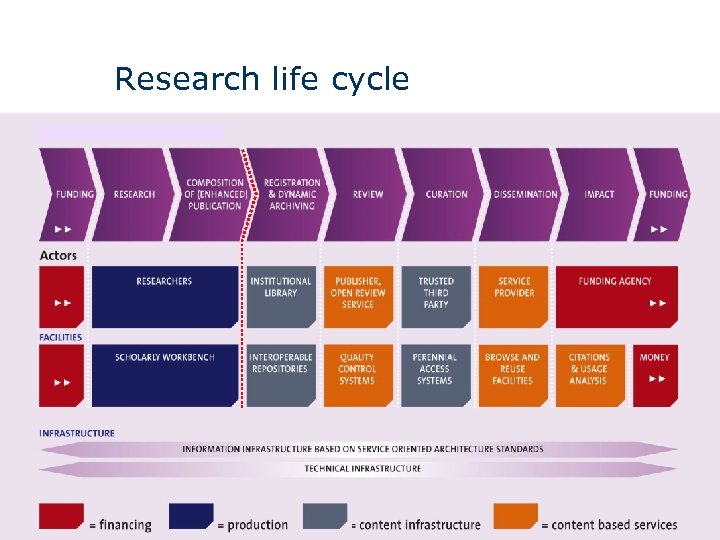
Research life cycle
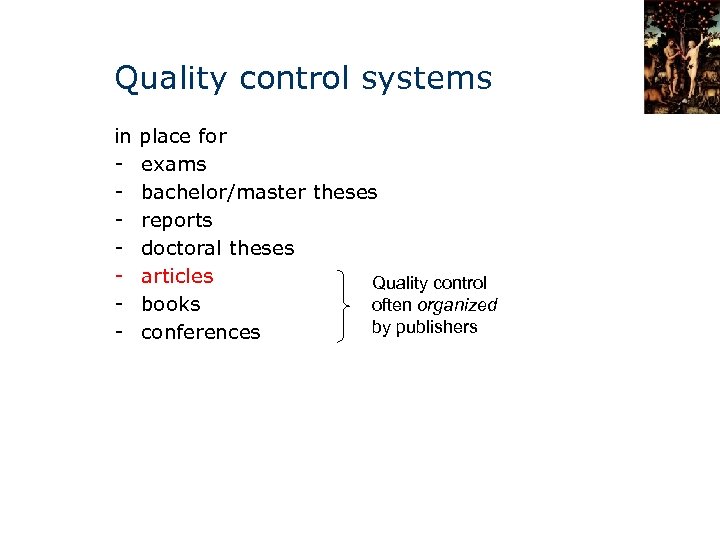
Quality control systems in - place for exams bachelor/master theses reports doctoral theses articles Quality control often organized books by publishers conferences
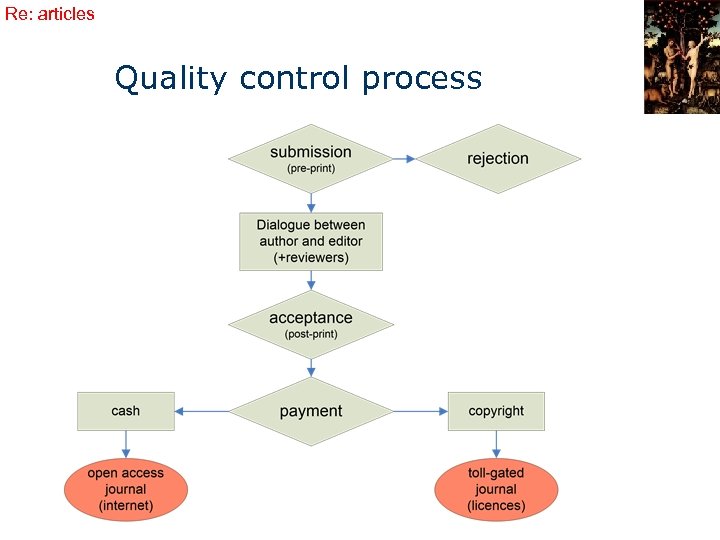
Re: articles Quality control process
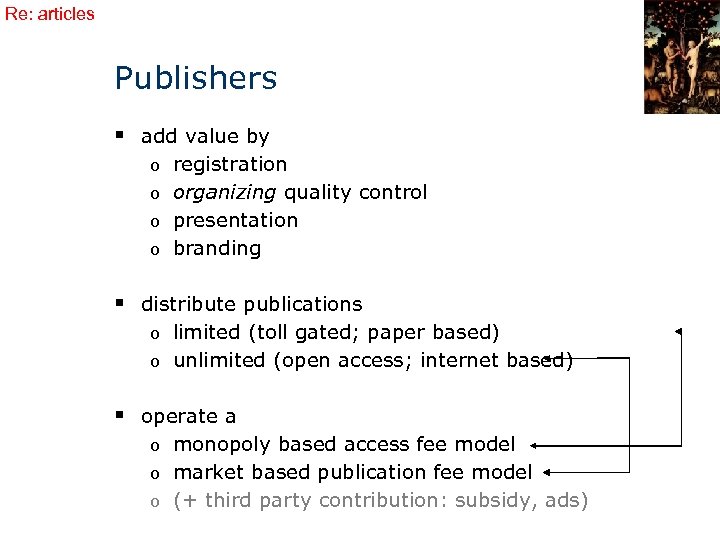
Re: articles Publishers § add value by registration o organizing quality control o presentation o branding o § distribute publications limited (toll gated; paper based) o unlimited (open access; internet based) o § operate a monopoly based access fee model o market based publication fee model o (+ third party contribution: subsidy, ads) o
Re: articles The quality construct Impactology: managers believe that journal impact is a measure of journal and author quality. Impact = # all citations over a period of time # ‘real articles’ # citations = f (article age, # authors, discipline, journal type & size, item type, accessibility, citation cartels, but not self citations, ornamental citations and … quality) ‘real articles’ = articles, reviews, proceedings, but no news items, letters to editor, editorials. ( -> ‘impact officers’ ) period: typically 2 years, but also 4 or 5 years.
Michael Mabe, then Elsevier’s Director of Academic Relations: “ Extending the use of the journal impact factor from the journal to the authors of papers in the journal is highly suspect; . . . [impact factors] are not a direct measure of quality and must be used with considerable care. ” If this was said in the instruction of a product, would you buy it? Research managers do. Why?
Re: articles Does it ring a bell? What, in the stem cell research fraud case, is the name of - the author? Hwang Woo-Suk - his university? National University of Seoul - the journal? Science - the publisher? American Association for the Advancement of Science, AAAS - the reviewers? Anonymous Who is responsible?
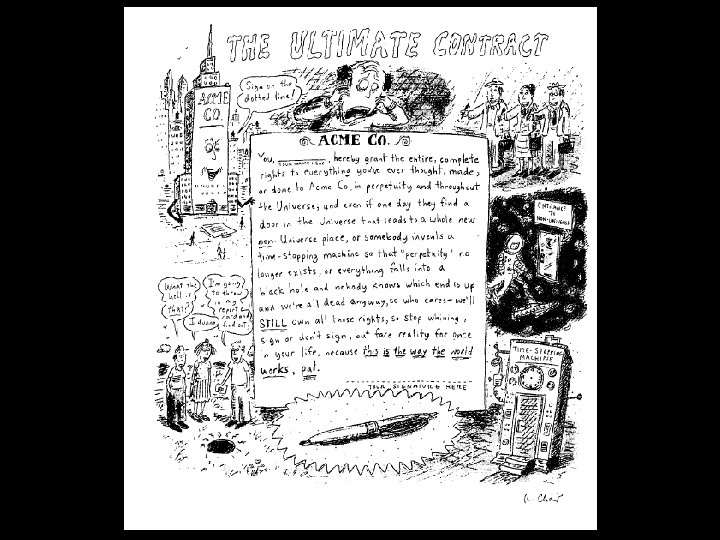
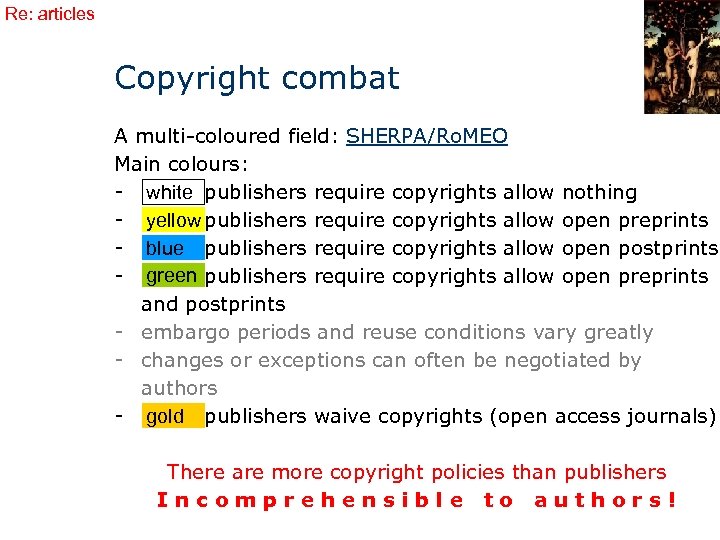
Re: articles Copyright combat A multi-coloured field: SHERPA/Ro. MEO Main colours: - white publishers require copyrights allow nothing - yellow publishers require copyrights allow open preprints - blue publishers require copyrights allow open postprints - green publishers require copyrights allow open preprints and postprints - embargo periods and reuse conditions vary greatly - changes or exceptions can often be negotiated by authors - gold publishers waive copyrights (open access journals) There are more copyright policies than publishers Incomprehensible to authors!
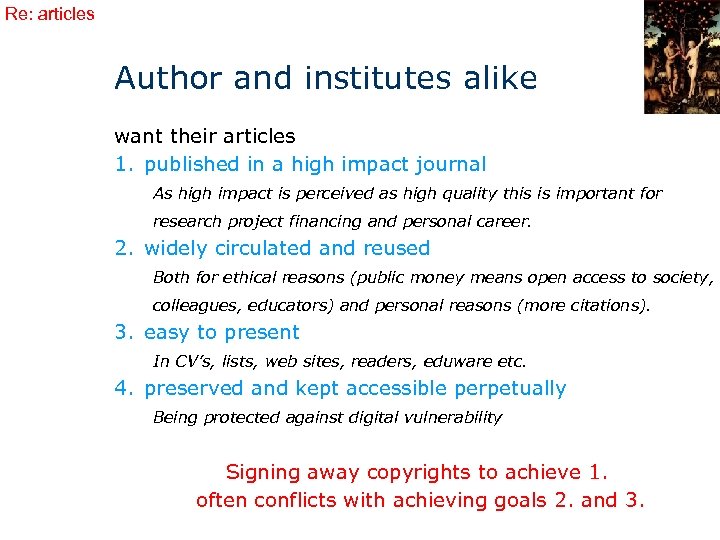
Re: articles Author and institutes alike want their articles 1. published in a high impact journal As high impact is perceived as high quality this is important for research project financing and personal career. 2. widely circulated and reused Both for ethical reasons (public money means open access to society, colleagues, educators) and personal reasons (more citations). 3. easy to present In CV’s, lists, web sites, readers, eduware etc. 4. preserved and kept accessible perpetually Being protected against digital vulnerability Signing away copyrights to achieve 1. often conflicts with achieving goals 2. and 3.
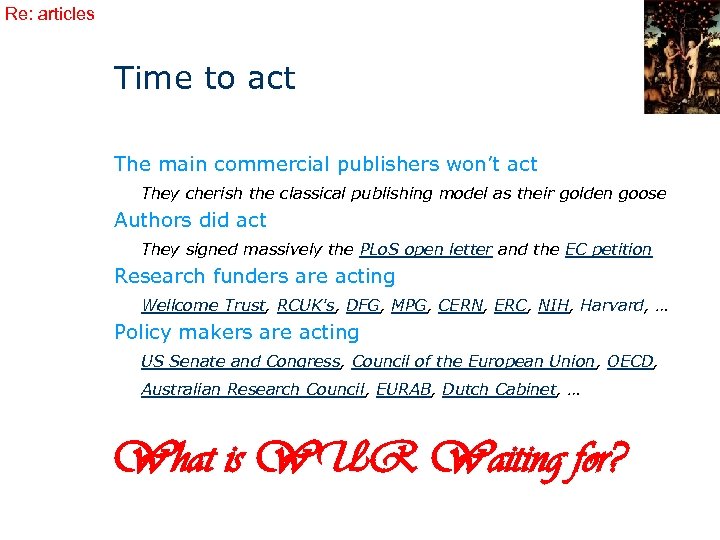
Re: articles Time to act The main commercial publishers won’t act They cherish the classical publishing model as their golden goose Authors did act They signed massively the PLo. S open letter and the EC petition Research funders are acting Wellcome Trust, RCUK's, DFG, MPG, CERN, ERC, NIH, Harvard, … Policy makers are acting US Senate and Congress, Council of the European Union, OECD, Australian Research Council, EURAB, Dutch Cabinet, … What is WUR Waiting for?
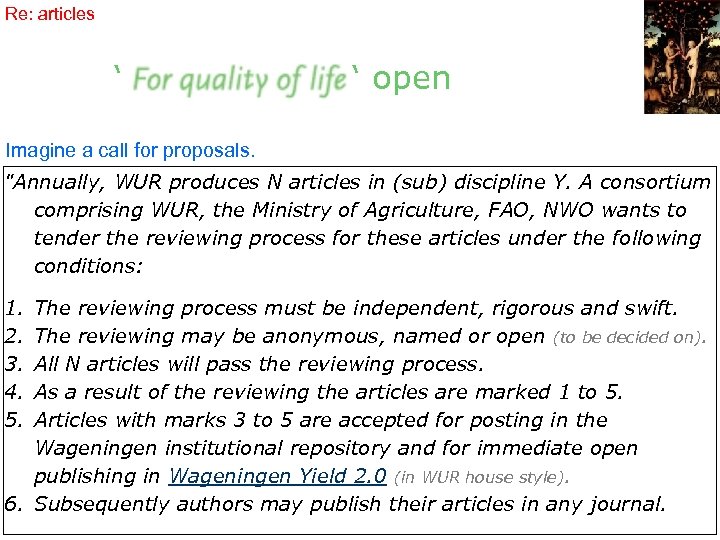
Re: articles ‘ ‘ open Imagine a call for proposals. "Annually, WUR produces N articles in (sub) discipline Y. A consortium comprising WUR, the Ministry of Agriculture, FAO, NWO wants to tender the reviewing process for these articles under the following conditions: 1. 2. 3. 4. 5. The reviewing process must be independent, rigorous and swift. The reviewing may be anonymous, named or open (to be decided on). All N articles will pass the reviewing process. As a result of the reviewing the articles are marked 1 to 5. Articles with marks 3 to 5 are accepted for posting in the Wageningen institutional repository and for immediate open publishing in Wageningen Yield 2. 0 (in WUR house style). 6. Subsequently authors may publish their articles in any journal.
Re: articles ‘ ‘ open (cont’d) Imagine a call for proposals. 7. In their appraisal procedures for staff and research projects members of the consortium will weigh articles with marks 3, 4 and 5 as if they were published in journals with impact factors 3, 8 and 15 respectively (figures are nominal and subject to disciplinary calibration). 8. The national library of the Netherlands will take care of the long term curation of the accepted articles. Proposals for a three year contract should be sent to ……The allocation of the contract will be based on the best price-performance ratio. "
Re: articles Fantasizing about: - potential other consortium partners like Purdue, Chinese Academy, Pretoria, …… - the position of publishers like Bio. Med Central, Springer, learned societies, …… will there be a deal at the end of the day? - an answer to the question Can the library be a publisher? i. e. at which side of the table Wageningen UR Library might sit: proposal (co-)submitter or (co-)reviewer
What do you think? leowaa@xs 4 all. nl
Скачать презентацию Can the library be a publisher Leo Waaijers
5d5989667ff4b52976d4df81d1295689.ppt