 Скачать презентацию Campaigning in Parliament Inclusion London February 2014
be90a0f9bb6c15a76e6e08592f00e44c.ppt
- Количество слайдов: 39



Campaigning in Parliament Inclusion London February 2014
What we will talk about today: Ø The difference between Parliament and Government Ø What Parliament is supposed to do Ø MPs and Members of the House of Lords Ø What MPs and Lords can do in Parliament Ø How Parliament makes laws, and the different kinds of laws
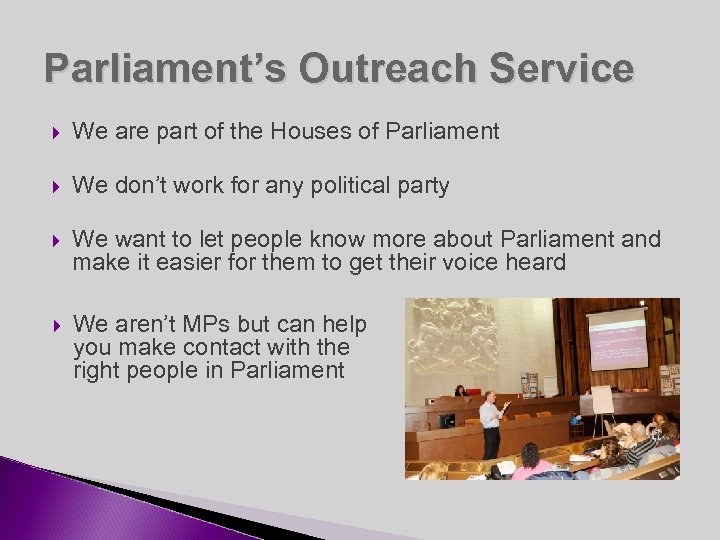
Parliament’s Outreach Service We are part of the Houses of Parliament We don’t work for any political party We want to let people know more about Parliament and make it easier for them to get their voice heard We aren’t MPs but can help you make contact with the right people in Parliament
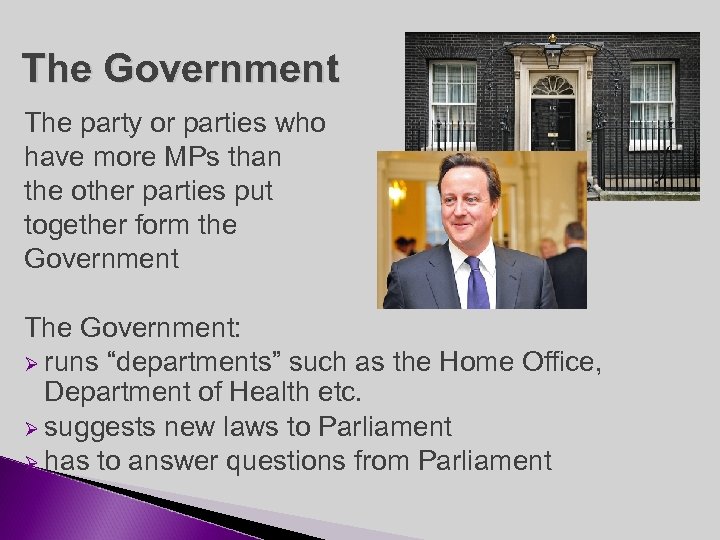
The Government The party or parties who have more MPs than the other parties put together form the Government The Government: Ø runs “departments” such as the Home Office, Department of Health etc. Ø suggests new laws to Parliament Ø has to answer questions from Parliament
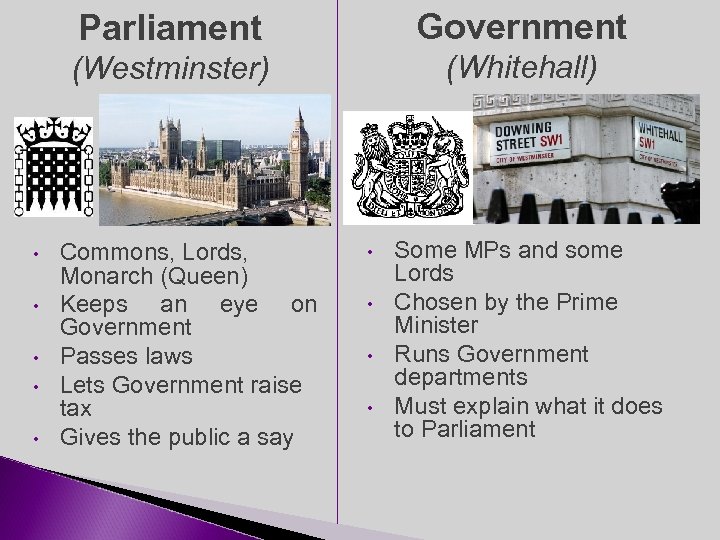
Parliament (Westminster) • • • Government (Whitehall) Commons, Lords, Monarch (Queen) Keeps an eye on Government Passes laws Lets Government raise tax Gives the public a say • • Some MPs and some Lords Chosen by the Prime Minister Runs Government departments Must explain what it does to Parliament
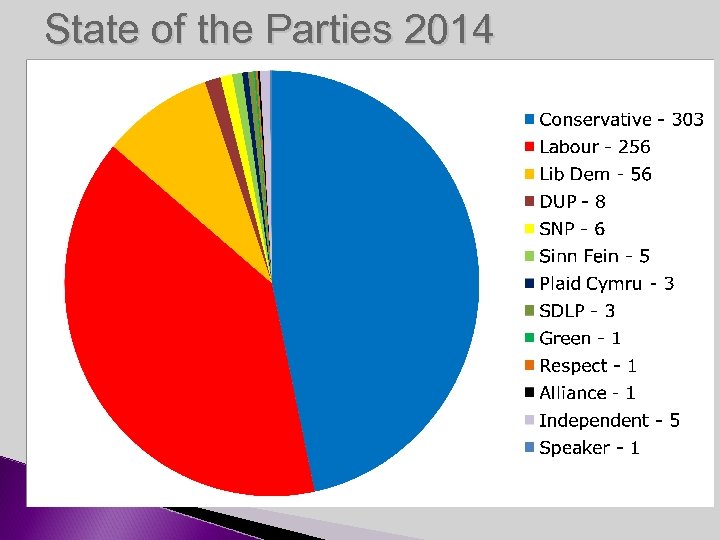
State of the Parties 2014
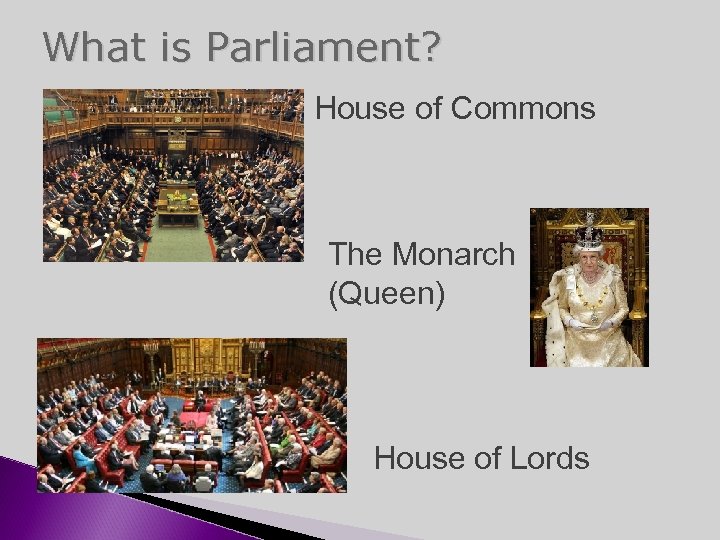
What is Parliament? House of Commons The Monarch (Queen) House of Lords
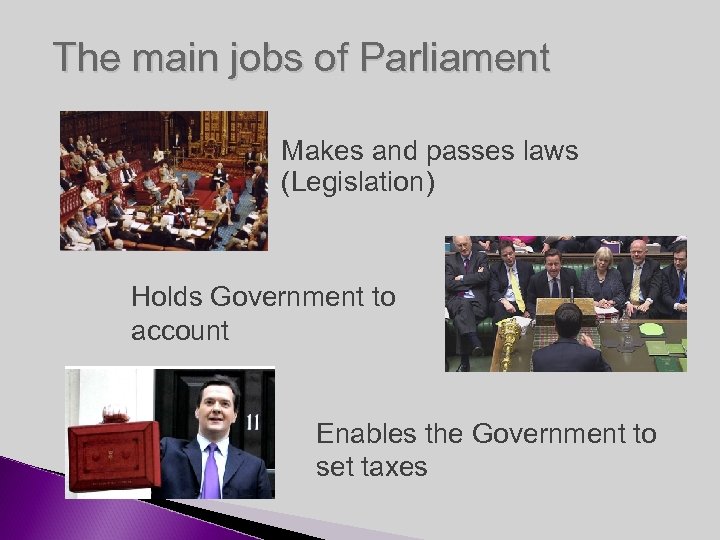
The main jobs of Parliament Makes and passes laws (Legislation) Holds Government to account Enables the Government to set taxes
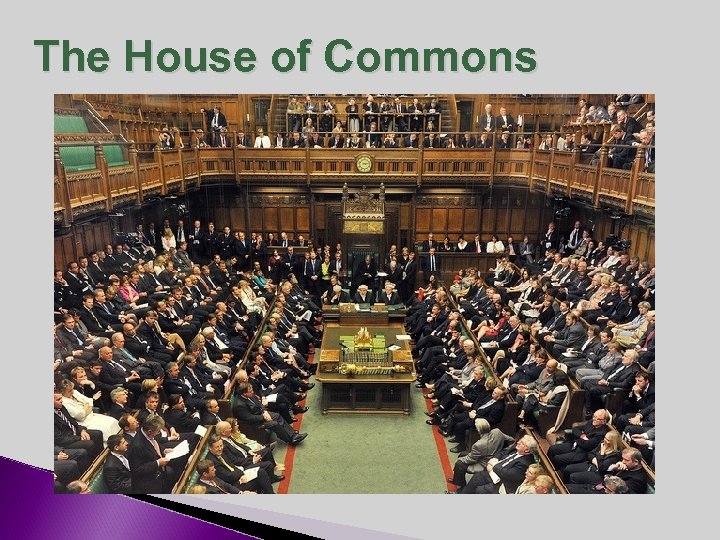
The House of Commons
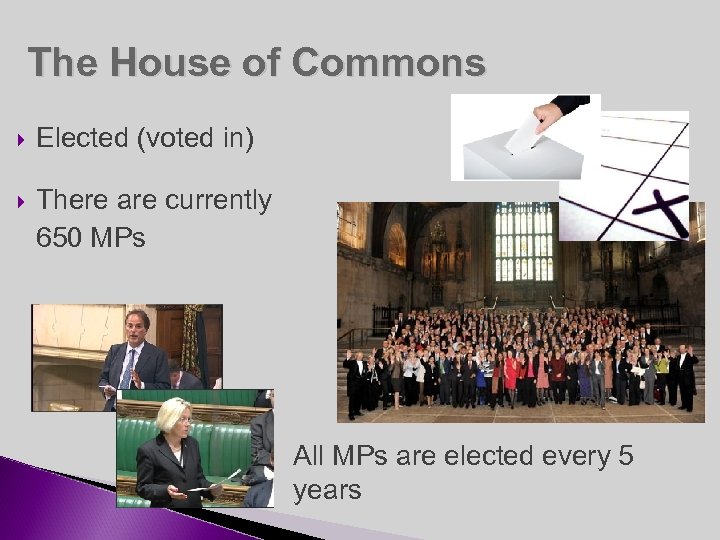
The House of Commons Elected (voted in) There are currently 650 MPs All MPs are elected every 5 years
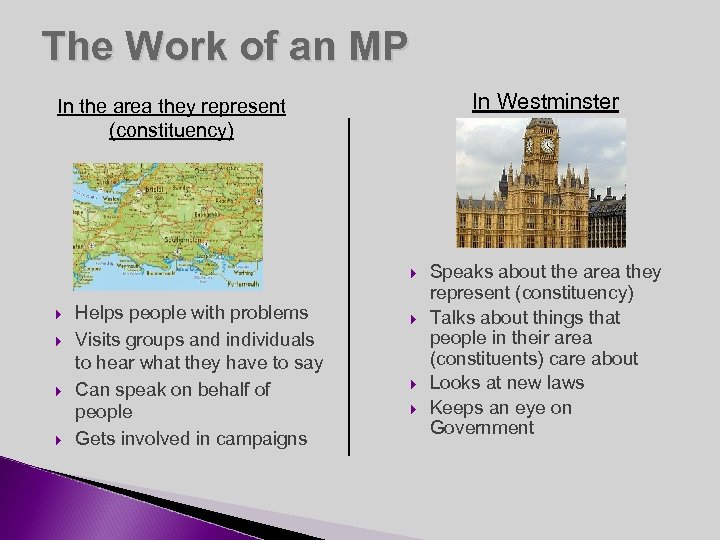
The Work of an MP In Westminster In the area they represent (constituency) Helps people with problems Visits groups and individuals to hear what they have to say Can speak on behalf of people Gets involved in campaigns Speaks about the area they represent (constituency) Talks about things that people in their area (constituents) care about Looks at new laws Keeps an eye on Government
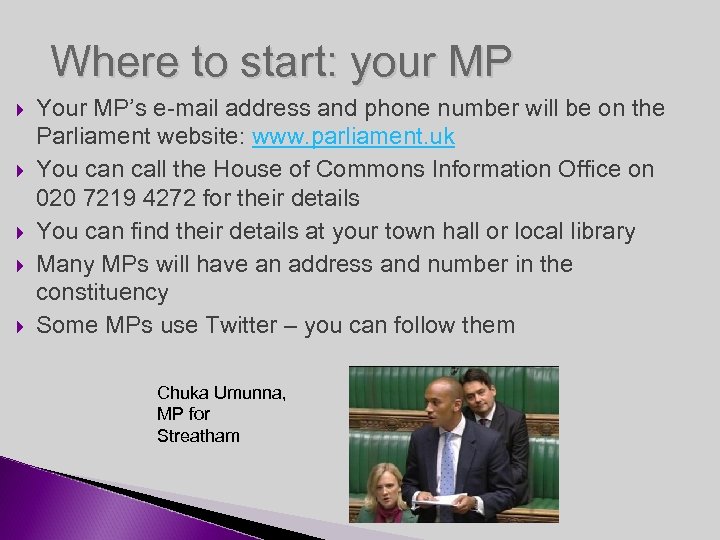
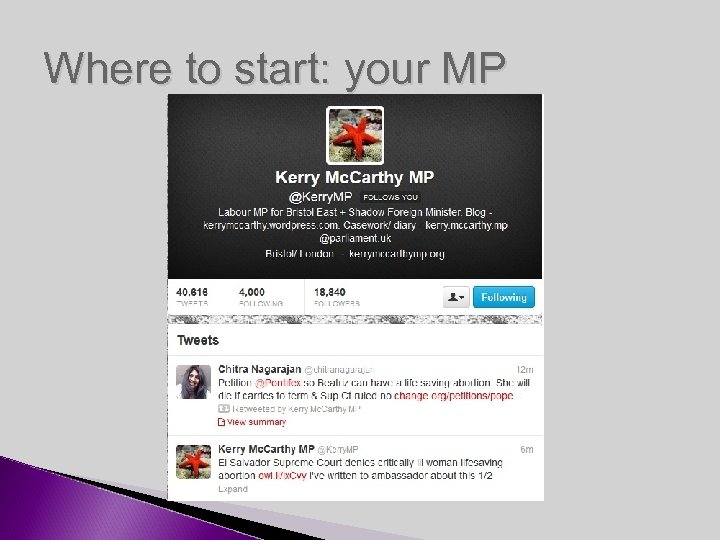
Where to start: your MP Your MP’s e-mail address and phone number will be on the Parliament website: www. parliament. uk You can call the House of Commons Information Office on 020 7219 4272 for their details You can find their details at your town hall or local library Many MPs will have an address and number in the constituency Some MPs use Twitter – you can follow them Chuka Umunna, MP for Streatham
Where to start: your MP
The House of Lords
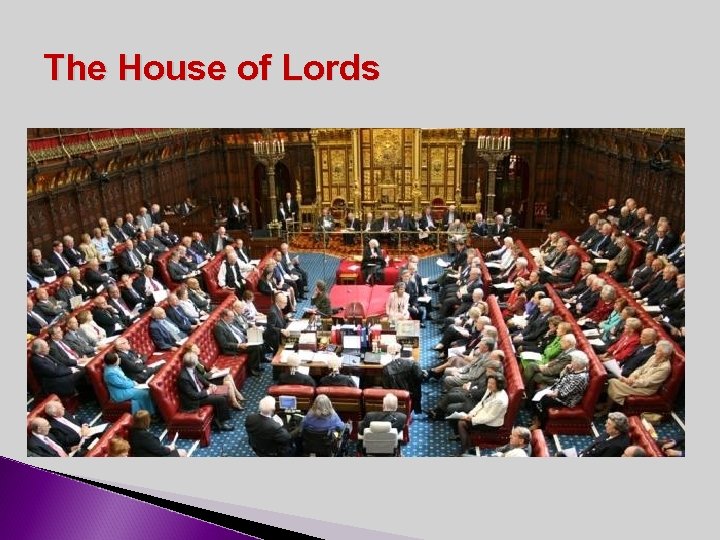
The House of Lords spends a lot of time looking at laws The Government do not have a majority in the House of Lords so they can’t always get their own way There are 181 Cross-Benchers in the Lords, who don’t belong to a party There are 780 active members, including 26 Bishops
The House of Lords Members of the House of Lords do not represent a particular bit of the country, like MPs do You can find Members of the Lords who will support your campaign You can read about all Members of the Lords at www. parliament. uk Hansard – the official record of what is said in Parliament– is a good place to look for Lords who are interested in particular issues
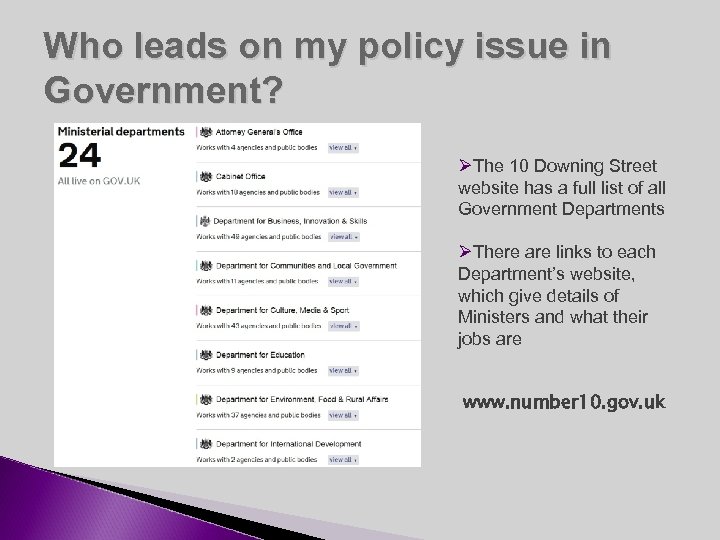
Who leads on my policy issue in Government? ØThe 10 Downing Street website has a full list of all Government Departments ØThere are links to each Department’s website, which give details of Ministers and what their jobs are www. number 10. gov. uk
How MPs and Lords in Parliament keep an eye on what Government is doing
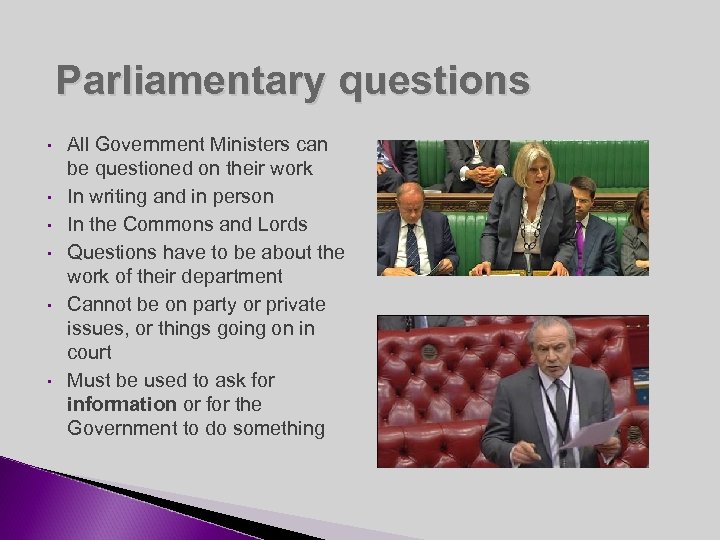
Parliamentary questions • • • All Government Ministers can be questioned on their work In writing and in person In the Commons and Lords Questions have to be about the work of their department Cannot be on party or private issues, or things going on in court Must be used to ask for information or for the Government to do something
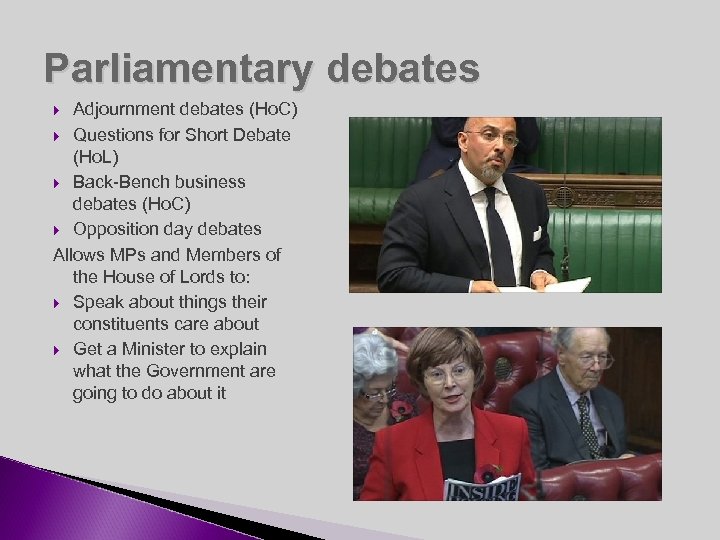
Parliamentary debates Adjournment debates (Ho. C) Questions for Short Debate (Ho. L) Back-Bench business debates (Ho. C) Opposition day debates Allows MPs and Members of the House of Lords to: Speak about things their constituents care about Get a Minister to explain what the Government are going to do about it
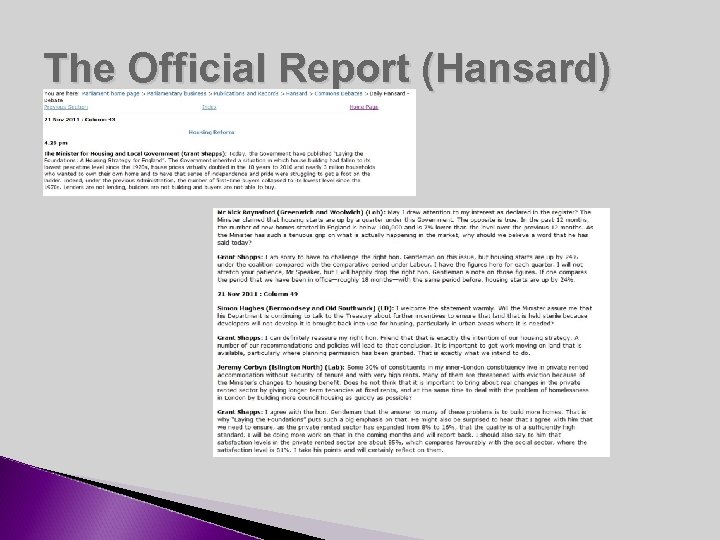
The Official Report (Hansard)
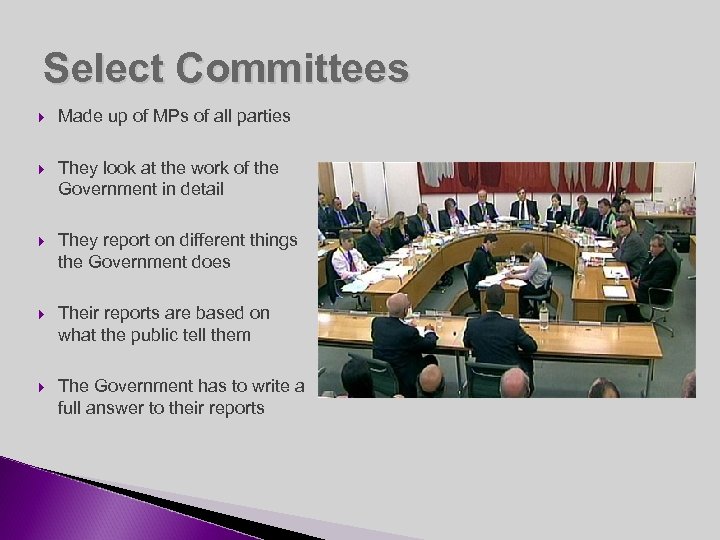
Select Committees Made up of MPs of all parties They look at the work of the Government in detail They report on different things the Government does Their reports are based on what the public tell them The Government has to write a full answer to their reports
Select Committees You can contact the staff of Select Committees You can ask them about Committee inquiries (things they are looking into) You can suggest things that the Committee might look at If an inquiry is taking place, you can contact Committee staff for advice on giving written evidence If you are called to give evidence in person, Committee staff can help you to prepare Select Committees can do follow-up inquiries after the Government have answered their reports
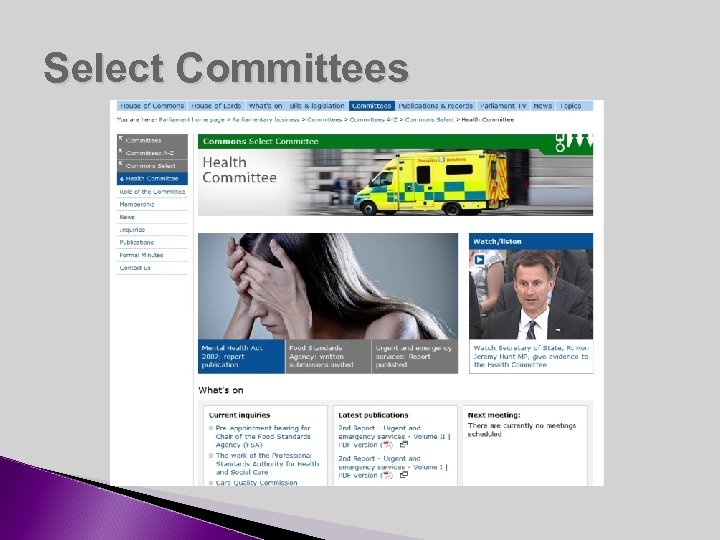
Select Committees
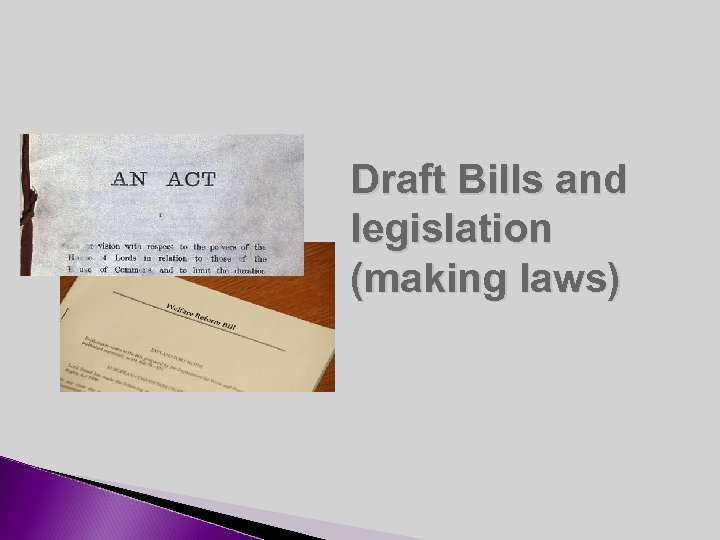
Draft Bills and legislation (making laws)
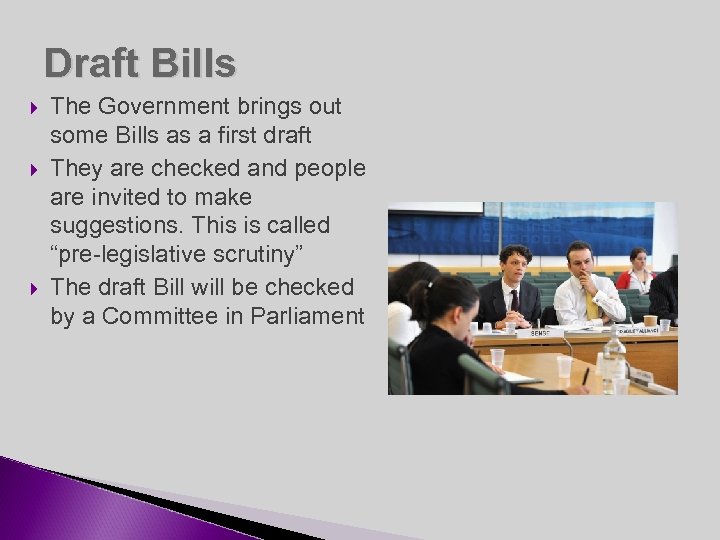
Draft Bills The Government brings out some Bills as a first draft They are checked and people are invited to make suggestions. This is called “pre-legislative scrutiny” The draft Bill will be checked by a Committee in Parliament
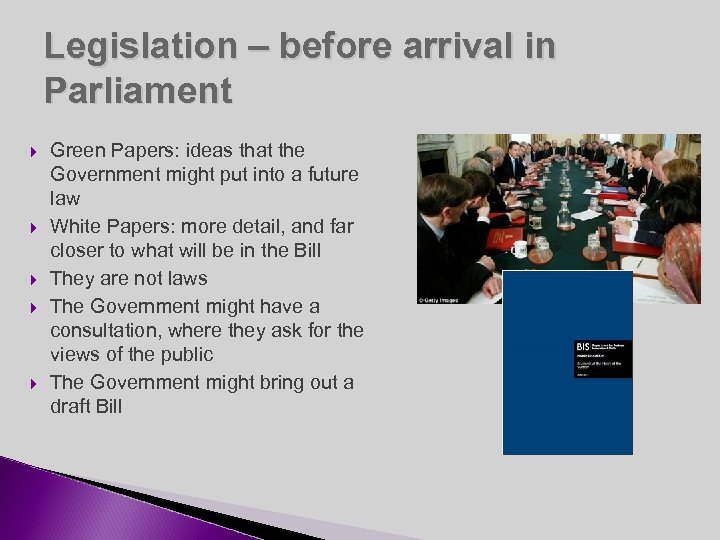
Legislation – before arrival in Parliament Green Papers: ideas that the Government might put into a future law White Papers: more detail, and far closer to what will be in the Bill They are not laws The Government might have a consultation, where they ask for the views of the public The Government might bring out a draft Bill
Private Members’ Bills MPs and Lords can introduce their own Bills In the Commons, MPs can bring in a Bill through the “ 10 minute rule” MPs can also enter the Private Members Bill ballot every session If they are in the first 20 or so names, their Bill we be given debating time on a sitting Friday Members of both Houses can also present new Bills, but they probably will not get time to debate them
Legislation (laws) If the Government want to make a new law, both Houses of Parliament have to agree The Government’s suggestions for new laws are called Bills To become law they have to go through the same stages in both the House of Commons and the House of Lords. The stages are called “First Reading”, “Second Reading”, “Committee”, “Report”, “Third Reading” Members can suggest changes called “amendments”
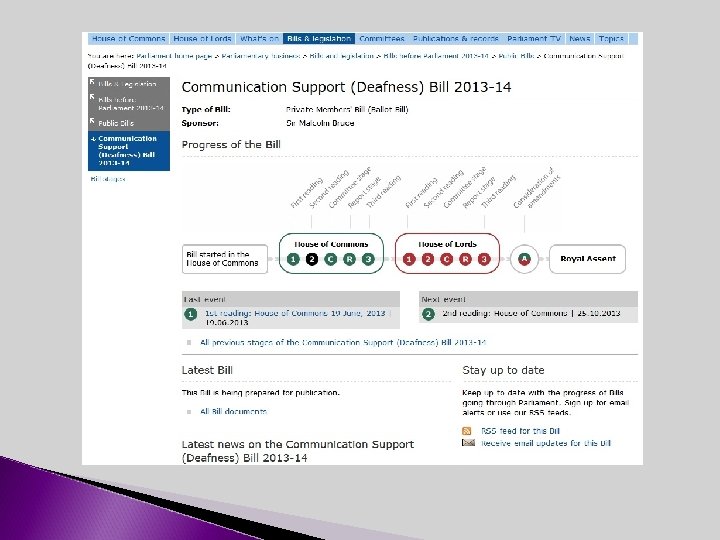
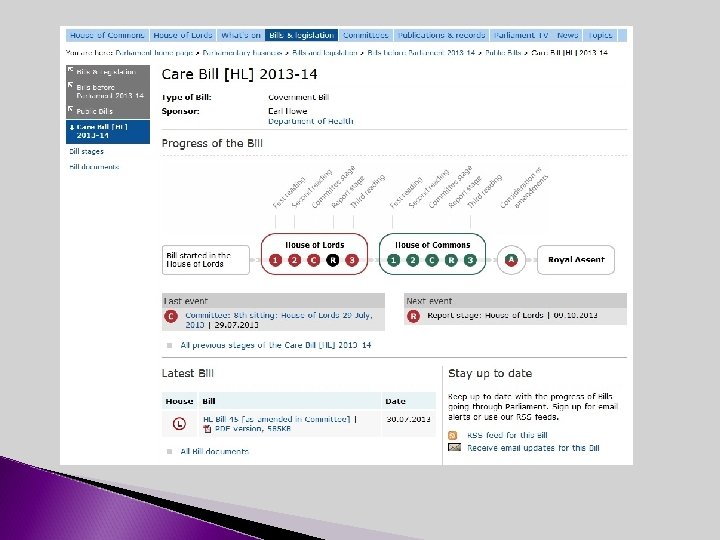
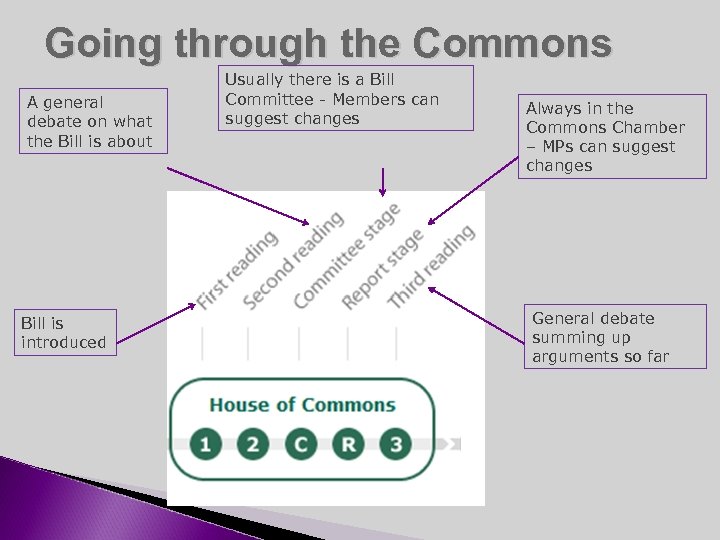
Going through the Commons A general debate on what the Bill is about Bill is introduced Usually there is a Bill Committee - Members can suggest changes Always in the Commons Chamber – MPs can suggest changes General debate summing up arguments so far
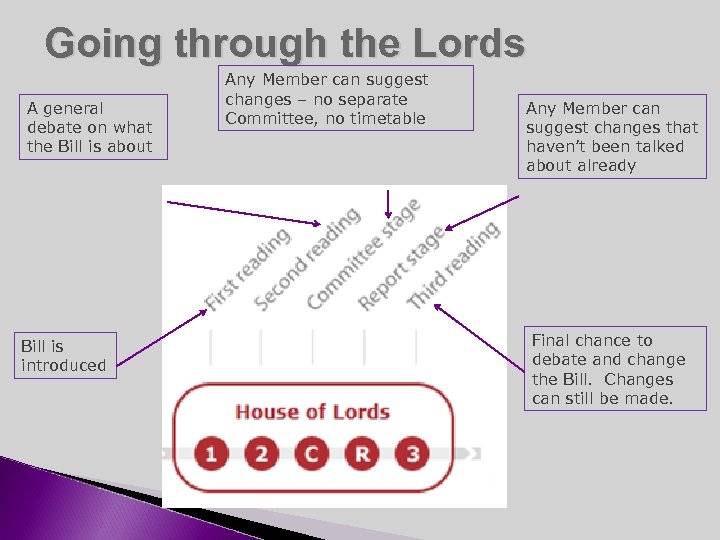
Going through the Lords A general debate on what the Bill is about Bill is introduced Any Member can suggest changes – no separate Committee, no timetable Any Member can suggest changes that haven’t been talked about already Final chance to debate and change the Bill. Changes can still be made.
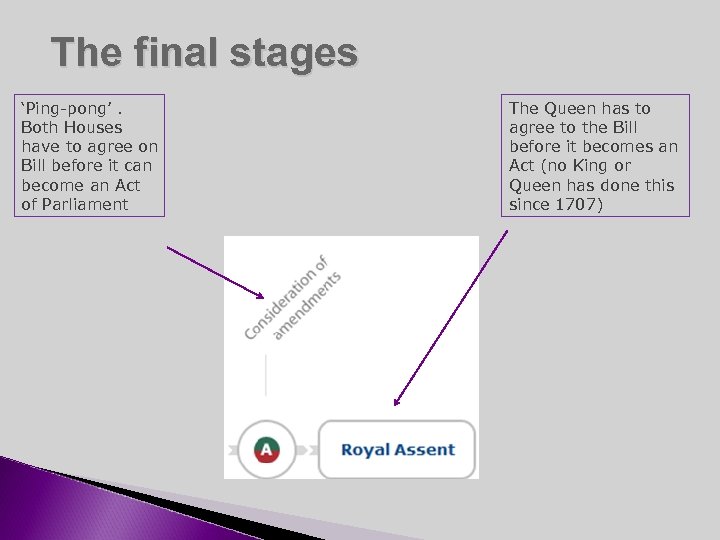
The final stages ‘Ping-pong’. Both Houses have to agree on Bill before it can become an Act of Parliament The Queen has to agree to the Bill before it becomes an Act (no King or Queen has done this since 1707)
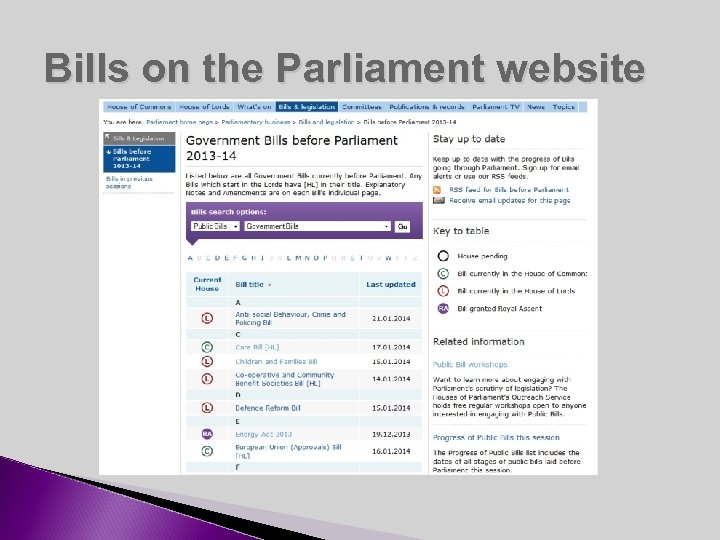
Bills on the Parliament website
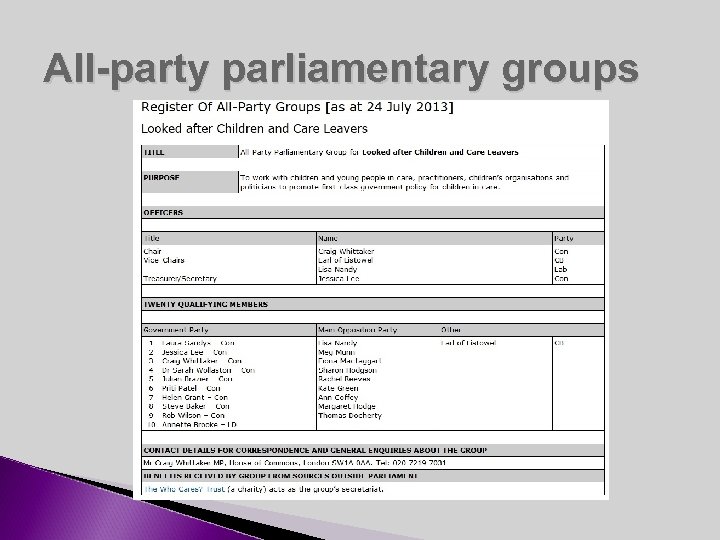
All-party parliamentary groups Members of all parties Both MPs and Members of the House of Lords Based around areas of interest (e. g. Housing and care for older people, motor neurone disease, football) or countries of the world Not official and don’t have powers, but good way of making contact with MPs
All-party parliamentary groups
Questions?
Where can I get information? www. parliament. uk 020 7219 4272 – Commons information 020 7219 3107 – Lords information
Скачать презентацию Campaigning in Parliament Inclusion London February 2014
be90a0f9bb6c15a76e6e08592f00e44c.ppt