


 Скачать презентацию California s Electricity Crisis What Happened and Why Joe
79c70df1578d111bef9b65cd31e7297b.ppt
- Количество слайдов: 27
 California’s Electricity Crisis: What Happened and Why? Joe Eto and Chris Marnay Electricity Markets and Policy Group JHEto@lbl. gov C_Marnay@lbl. gov EETD’s California Energy Seminar: January 26, 2001
 Outline of Today’s Talk o How Did We Get Here? o What Has Happened? o Why?
 Investor-Owned Utility Investment in Generation Declined in the 1980’s
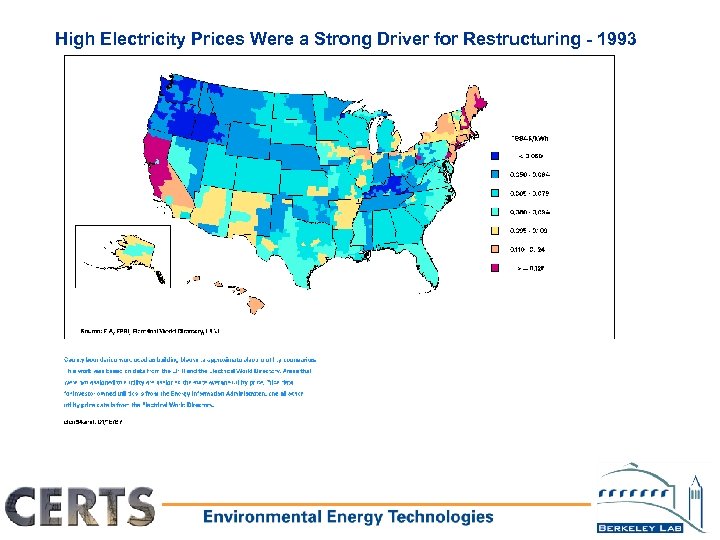 High Electricity Prices Were a Strong Driver for Restructuring - 1993
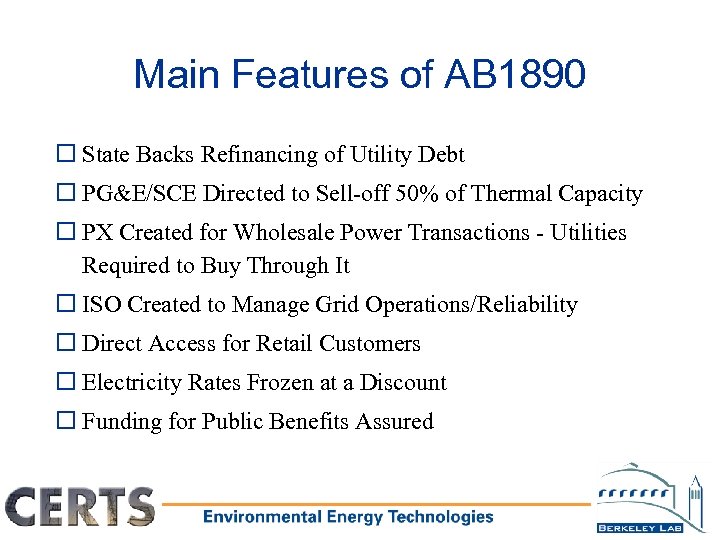 Main Features of AB 1890 o State Backs Refinancing of Utility Debt o PG&E/SCE Directed to Sell-off 50% of Thermal Capacity o PX Created for Wholesale Power Transactions - Utilities Required to Buy Through It o ISO Created to Manage Grid Operations/Reliability o Direct Access for Retail Customers o Electricity Rates Frozen at a Discount o Funding for Public Benefits Assured
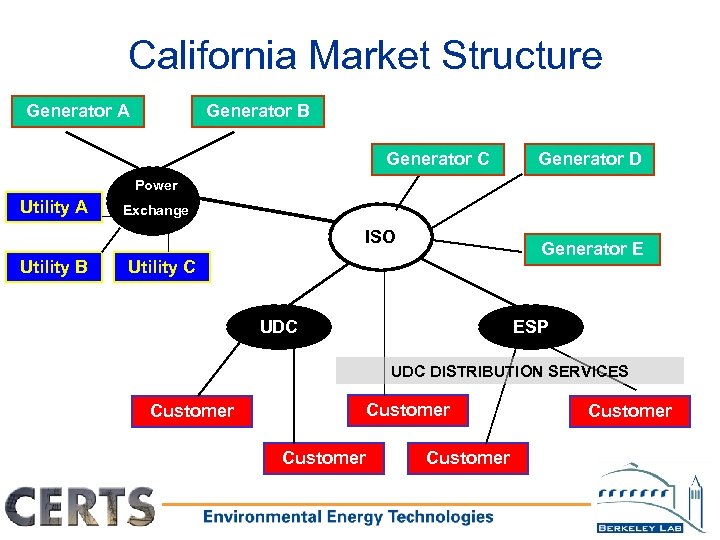 California Market Structure Generator A Generator B Generator C Generator D Power Utility A Exchange ISO Utility B Generator E Utility C UDC ESP UDC DISTRIBUTION SERVICES Customer Customer
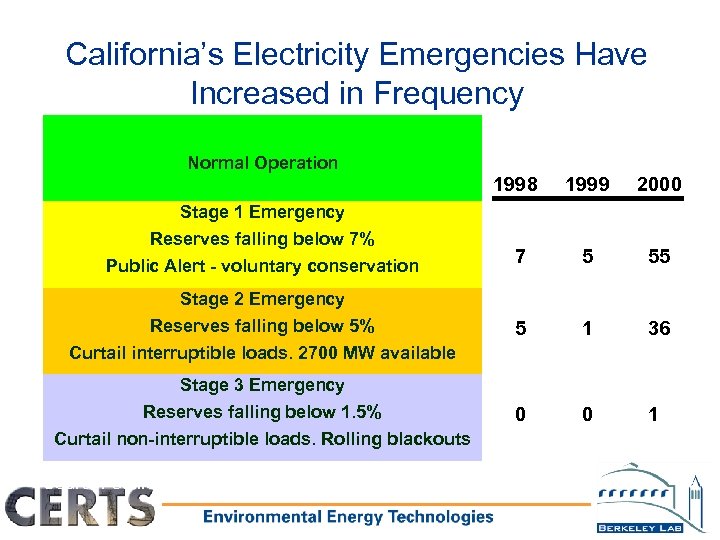 California’s Electricity Emergencies Have Increased in Frequency Number of Events Normal Operation 1998 1999 2000 7 5 55 Stage 2 Emergency Reserves falling below 5% Curtail interruptible loads. 2700 MW available 5 1 36 Stage 3 Emergency Reserves falling below 1. 5% Curtail non-interruptible loads. Rolling blackouts 0 0 1 Stage 1 Emergency Reserves falling below 7% Public Alert - voluntary conservation Source: California Independent System Operator: http: //www. caiso. com
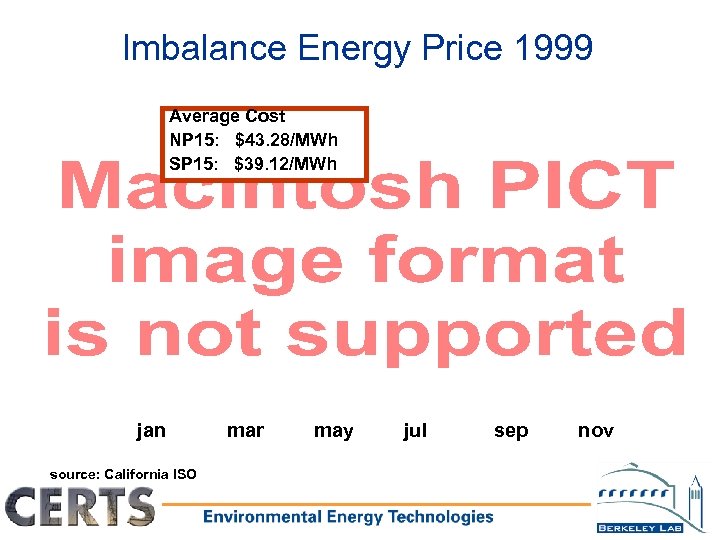 Imbalance Energy Price 1999 Average Cost NP 15: $43. 28/MWh SP 15: $39. 12/MWh jan source: California ISO mar may jul sep nov
 Imbalance Energy Price 2000 Average Cost NP 15: $181. 92/MWh SP 15: $167. 61/MWh jan source: California ISO mar may jul sep nov
 Effect of Inelastic Electricity Demand
 Ownership of Major Generation Plants
 CEC Applications For New Generating Capacity
 CA Citygate Weighted Natural Gas Price and Generation Costs source: Energy Information Administration
 Gas Spot Price at PG&E Citygate for 2000
 SCAQMD RECLAIM Trading Credit (RTC) Price for NOx
 Federal Ozone Exceedance Days
 California Electricity Demand Growth o Internet Economy is a reliability problem o Average Electricity Demand Growth 91 -00 Was 1. 4 %/a o but 2. 5 %/a over last 5 years o growth in 1980’s was 3. 2 %/a o Pockets of Growth Were Much higher (Santa Clara 9%? ) o All Office, Telecom, and Networking equipment accounts for only about 3 % of Electricity Consumption o Minimal Evidence of Major Structural Change in Energy Usage Patterns
 Electricity Consumption Per CA GDP and Per Capita source: California Energy Commission
 Other Market Problems o California Assumed Constant Import Capability o Customer Growth & Dry Pacific Northwest Weather o Slowness to Adopt Contracting and Hedging o Failed Retail Market o Lack of Price Information for Customer Investment
 Conclusion o Electricity Supply has a Long History of Difficulties o Fundamental IMMEDIATE Problem is Supply-Demand Imbalance o Ultimately Only Fix is by Pricing o CA Environmental Rules Effective o Opportunity for a Smooth “Transition” has been lost o Political and Financial Constraints Dominate Public Policy o Research Challenges to Creating a Viable Electricity Market o system control, market design and monitoring, DER, etc.
 Web Sites of Interest o http: //Home. Energy. Saver. lbl. gov/ o http: //enduse. lbl. gov/Projects/Info. Tech. html o http: //dailynews. yahoo. com/fc/Business/Utility_Industry_Deregulation/ o http: //www. caiso. com/ o http: //certs. lbl. gov/ o http: //kanga-1. lbl. gov/WEBDB_CERTS. home o http: //www. pserc. wisc. edu/index_home. html o http: //www. ucei. org/
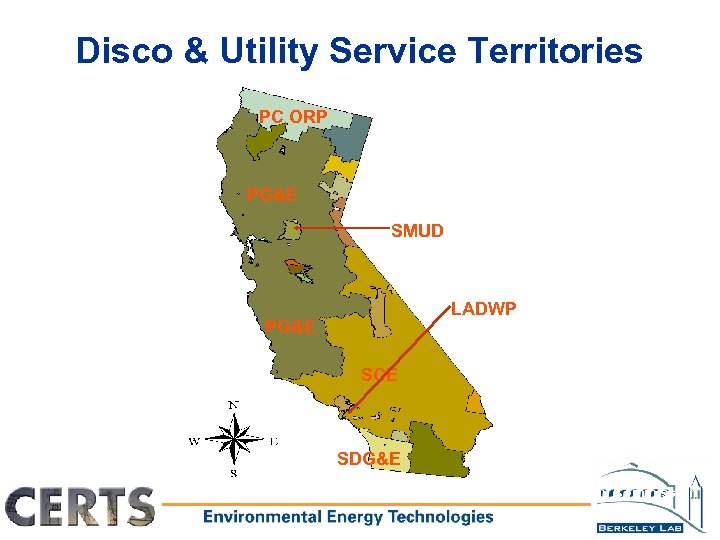 Disco & Utility Service Territories PC ORP PG&E SMUD LADWP PG&E SCE SDG&E source: California Energy Commission
 Stranded Costs original stranded cost estimates $28 -30 e 9
 CERTS Mission Statement “To research, develop, and commercialize new methods, tools, and technologies to protect and enhance the reliability of the U. S. electric power system under the emerging competitive electricity market structure”
 Competitive Electricity Markets Set Prices Based on Supplier's Offers PJM Aggregate Supplier Offer Curves April - August 2000 5 p. m.
 EETD Webpage
 California’s Booming Economy NOT the Problem Non Residential Electricity Consumption Annual Demand Growth Total Non-Res 0. 9% / yr So. Cal 0. 5% / yr Bay Area: 3. 3% / yr Santa Clara County: 8. 7% / yr Source: CEC, California Department of Finance