


 Скачать презентацию California Energy Commission 2016 Integrated Energy Policy Report
c369577f23e6bfec6d7bd67093ce83a9.ppt
- Количество слайдов: 17
 California Energy Commission 2016 Integrated Energy Policy Report Update October 24, 2016 Presented by Heather Raitt Assistant Executive Director for Policy Development heather. raitt@energy. ca. gov / 916 -654 -4735
 California Energy Commission Background • The Energy Commission prepares an IEPR every two years, an update in intervening years. The Energy Commission: – Issued 2016 IEPR Update Scoping Order on March 28, 2016 – Adopted Order Instituting Information Proceeding for 2016 IEPR Update April 13, 2016 – Held 10 workshops on Scoping Order topics • Report, workshop materials, and transcripts available at: http: //www. energy. ca. gov/2016_energypolicy/ 2
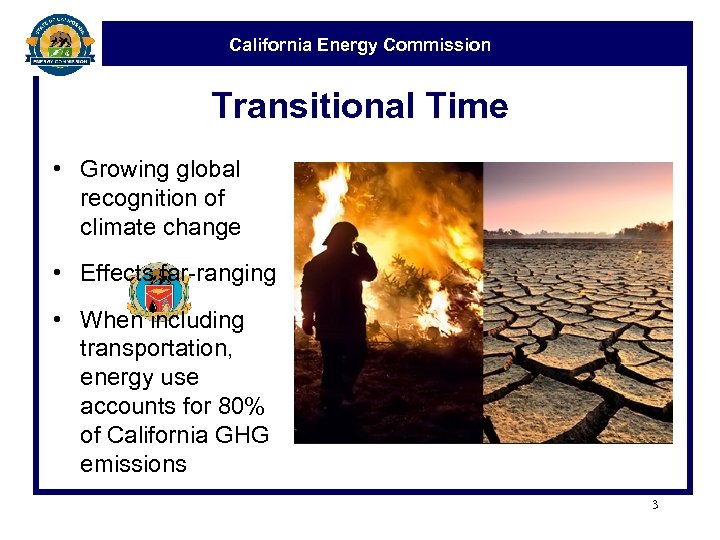 California Energy Commission Transitional Time • Growing global recognition of climate change • Effects far-ranging • When including transportation, energy use accounts for 80% of California GHG emissions 3
 California Energy Commission California Leadership • Senate Bill 32 (2016) enacts Governor Brown’s goal to reduce greenhouse gas emissions 40% below 1990 levels by 2030. • California accounts for 1% of global emissions. • Governor Brown is spearheading Under 2 MOU. Signatories represent: – 136 jurisdictions – 32 countries – 30% of global economy • Governor Brown signed accords with leaders from Mexico, China, Canada, Japan, Israel, and Peru 4
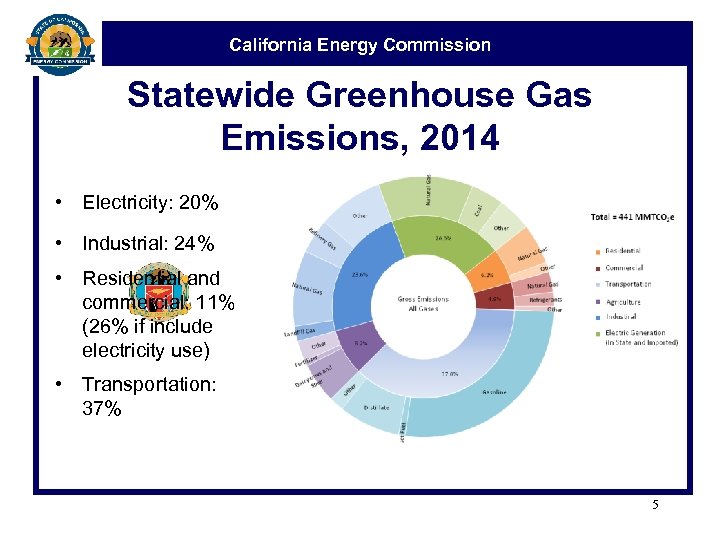 California Energy Commission Statewide Greenhouse Gas Emissions, 2014 • Electricity: 20% • Industrial: 24% • Residential and commercial: 11% (26% if include electricity use) • Transportation: 37% 5
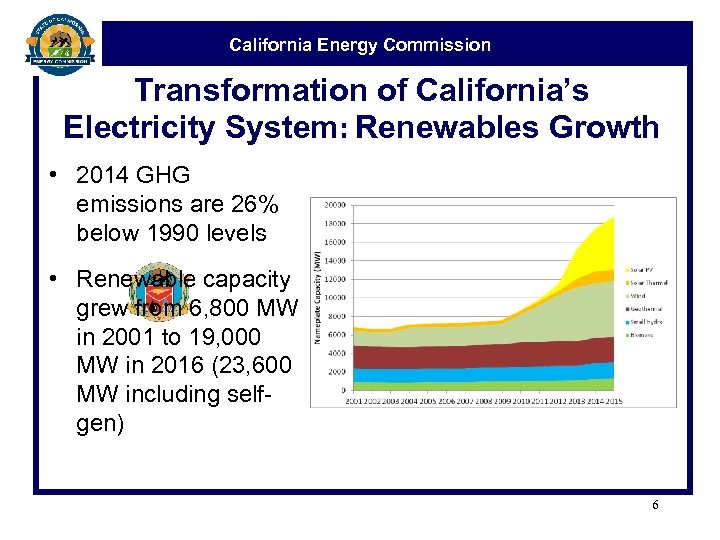 California Energy Commission Transformation of California’s Electricity System: Renewables Growth • 2014 GHG emissions are 26% below 1990 levels • Renewable capacity grew from 6, 800 MW in 2001 to 19, 000 MW in 2016 (23, 600 MW including selfgen) 6
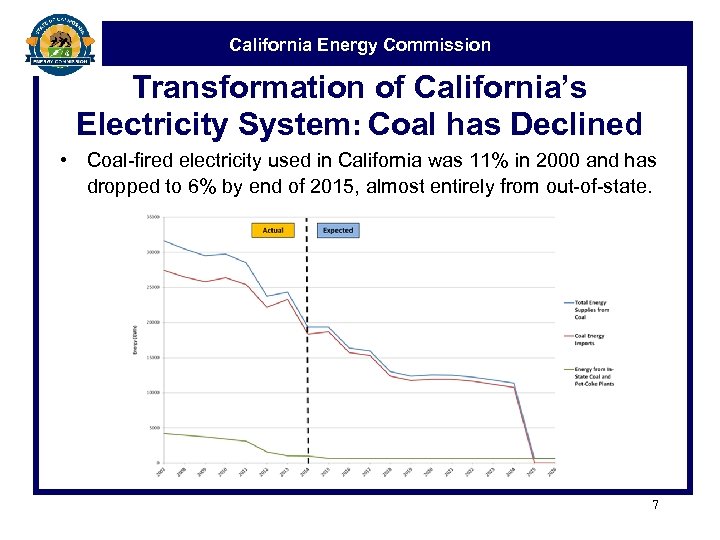 California Energy Commission Transformation of California’s Electricity System: Coal has Declined • Coal-fired electricity used in California was 11% in 2000 and has dropped to 6% by end of 2015, almost entirely from out-of-state. 7
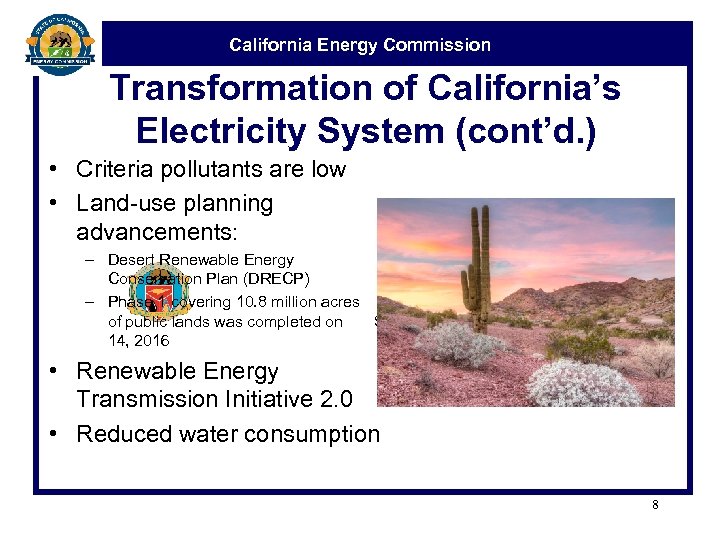 California Energy Commission Transformation of California’s Electricity System (cont’d. ) • Criteria pollutants are low • Land-use planning advancements: – Desert Renewable Energy Conservation Plan (DRECP) – Phase 1 covering 10. 8 million acres of public lands was completed on Sept 14, 2016 • Renewable Energy Transmission Initiative 2. 0 • Reduced water consumption 8
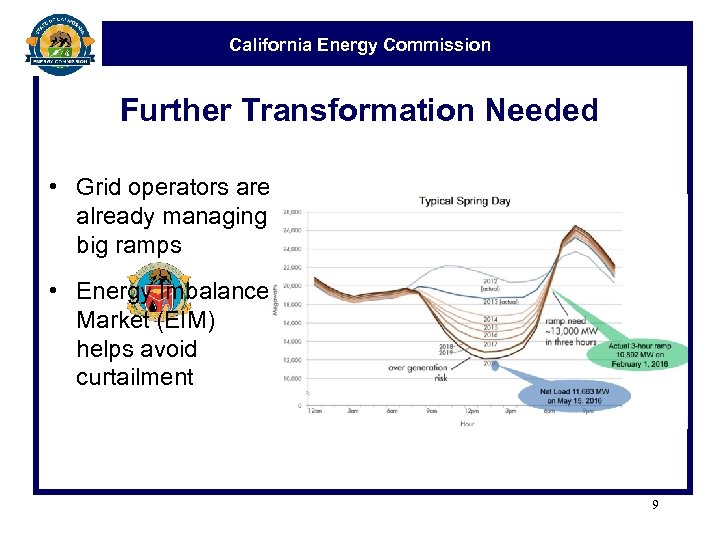 California Energy Commission Further Transformation Needed • Grid operators are already managing big ramps • Energy Imbalance Market (EIM) helps avoid curtailment 9
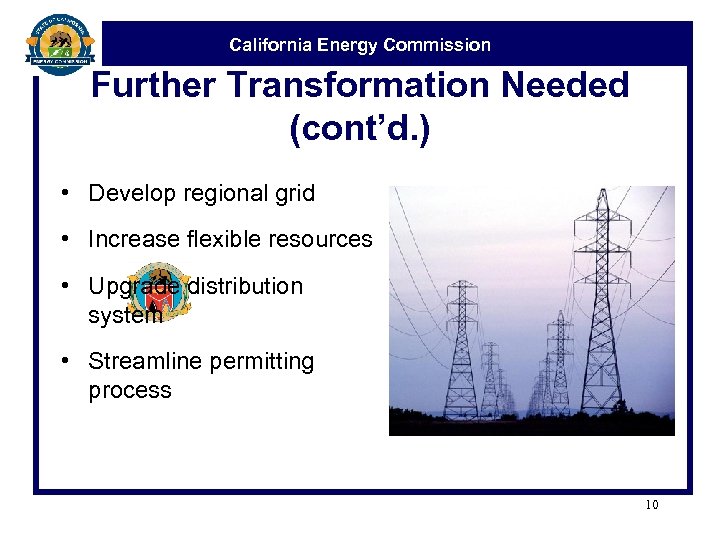 California Energy Commission Further Transformation Needed (cont’d. ) • Develop regional grid • Increase flexible resources • Upgrade distribution system • Streamline permitting process 10
 California Energy Commission Decarbonizing Energy System • Increased energy efficiency • Transform transportation • Expand access to clean energy technologies • Advance R&D on emerging technologies 11
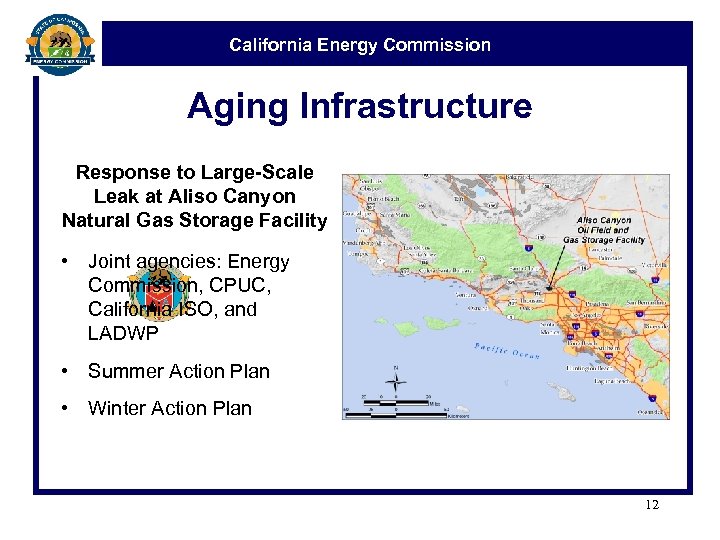 California Energy Commission Aging Infrastructure Response to Large-Scale Leak at Aliso Canyon Natural Gas Storage Facility • Joint agencies: Energy Commission, CPUC, California ISO, and LADWP • Summer Action Plan • Winter Action Plan 12
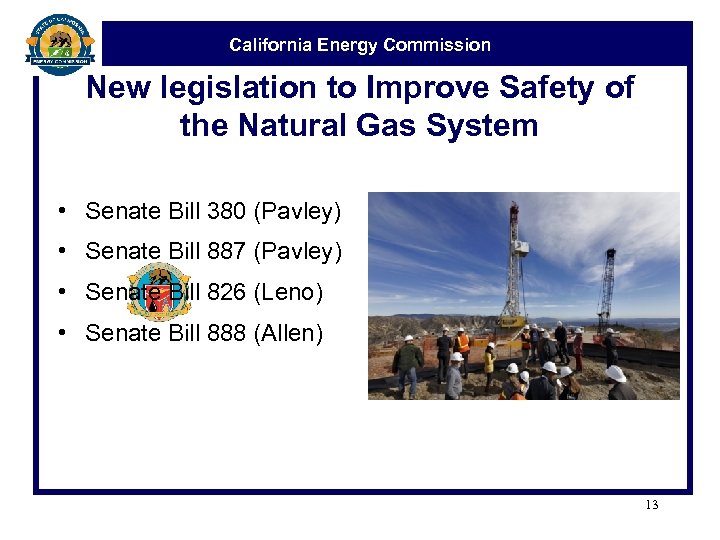 California Energy Commission New legislation to Improve Safety of the Natural Gas System • Senate Bill 380 (Pavley) • Senate Bill 887 (Pavley) • Senate Bill 826 (Leno) • Senate Bill 888 (Allen) 13
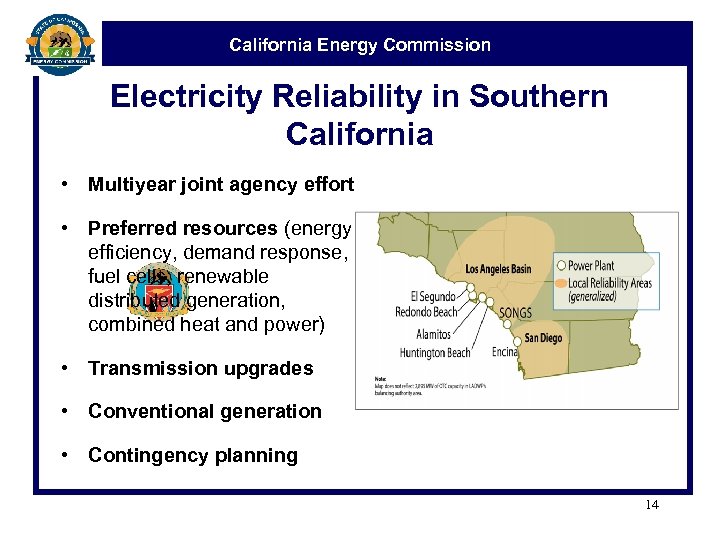 California Energy Commission Electricity Reliability in Southern California • Multiyear joint agency effort • Preferred resources (energy efficiency, demand response, fuel cells, renewable distributed generation, combined heat and power) • Transmission upgrades • Conventional generation • Contingency planning 14
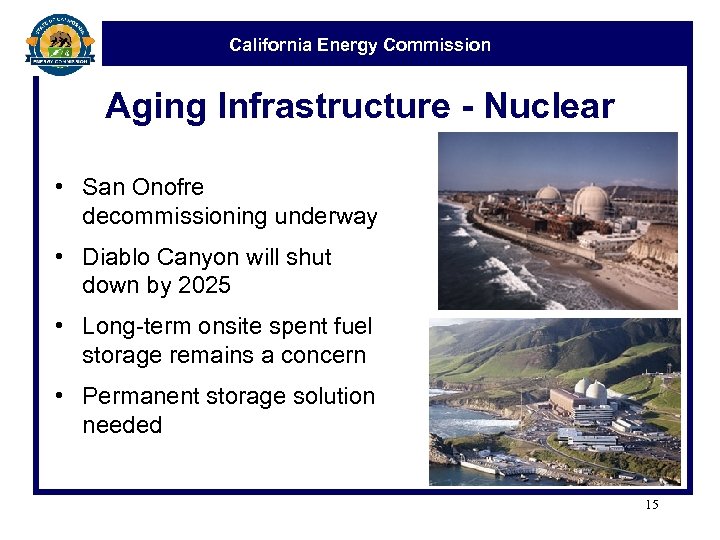 California Energy Commission Aging Infrastructure - Nuclear • San Onofre decommissioning underway • Diablo Canyon will shut down by 2025 • Long-term onsite spent fuel storage remains a concern • Permanent storage solution needed 15
 California Energy Commission Planning for the Future • Integrated resource plans • Transform transportation • Enhanced analytical capability forecasting • Landscape-scale planning • Climate adaptation 16
 California Energy Commission Comments Welcome Written Comments Due November 7 Thank you 17