


 Скачать презентацию CAGLIARI 23 24 giugno 2005 CHEMIO-IPERTERMIA primi risultati
82d6278fefa1348fe44ad4d25e4a24f1.ppt
- Количество слайдов: 50


 CAGLIARI – 23/24 giugno 2005 CHEMIO-IPERTERMIA: primi risultati clinici su 100 casi con lesioni epatiche avanzate GIAMMARIA FIORENTINI, DIPARTIMENTO ONCOLOGICO OSPEDALE S. GIUSEPPE – ANTICA SEDE EMPOLI (ITALY)
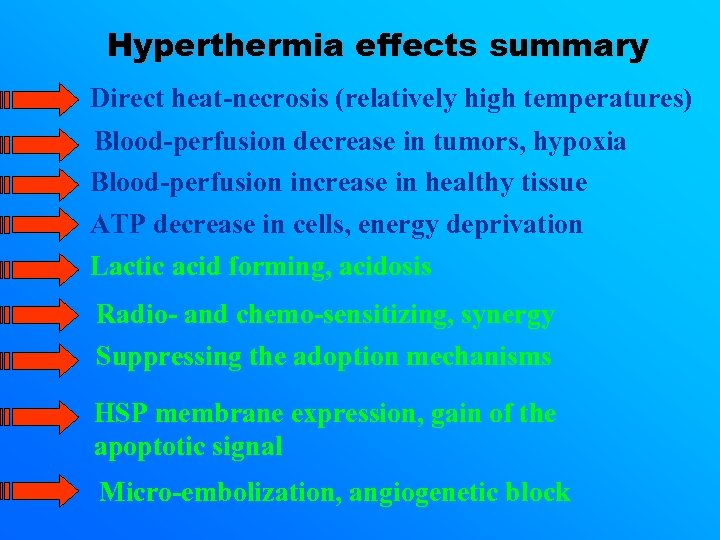 Hyperthermia effects summary Direct heat-necrosis (relatively high temperatures) Blood-perfusion decrease in tumors, hypoxia Blood-perfusion increase in healthy tissue ATP decrease in cells, energy deprivation Lactic acid forming, acidosis Radio- and chemo-sensitizing, synergy Suppressing the adoption mechanisms HSP membrane expression, gain of the apoptotic signal Micro-embolization, angiogenetic block
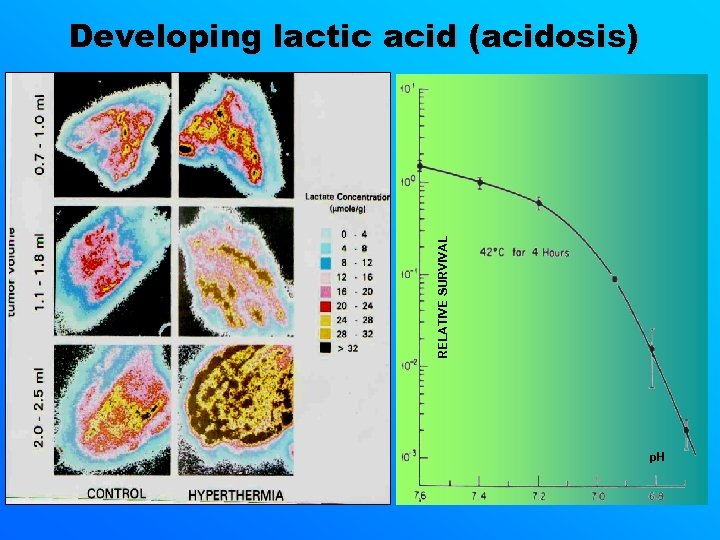 RELATIVE SURVIVAL Developing lactic acid (acidosis) p. H
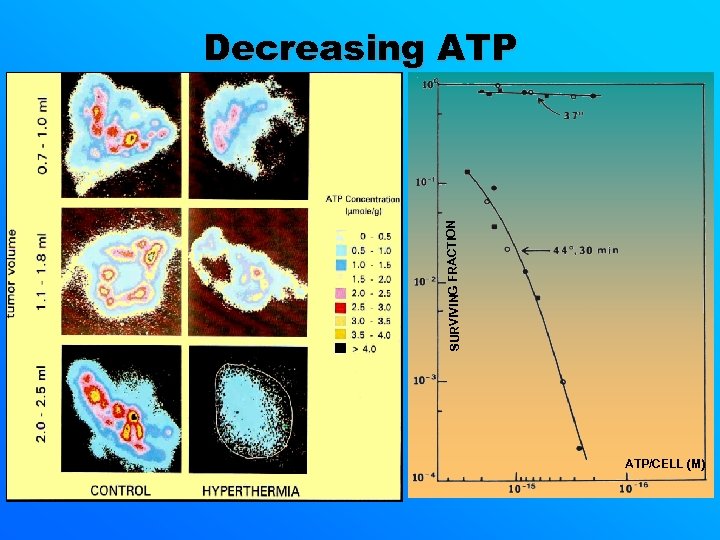 SURVIVING FRACTION Decreasing ATP/CELL (M)
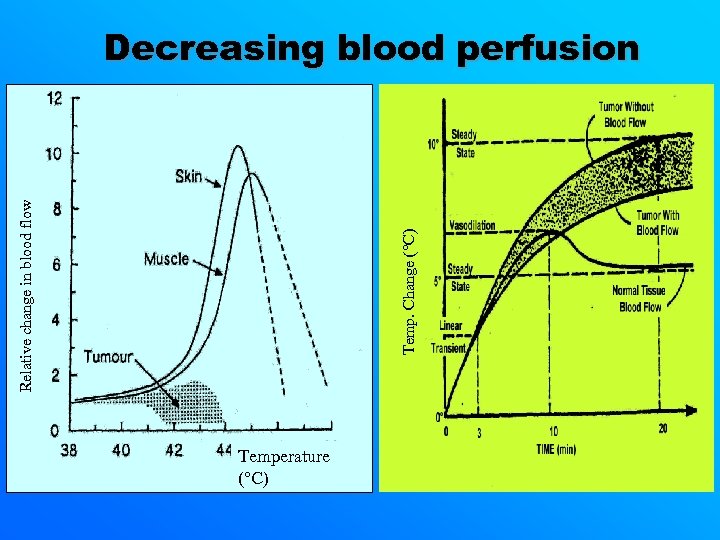 Temp. Change (°C) Relative change in blood flow Decreasing blood perfusion Temperature (°C)
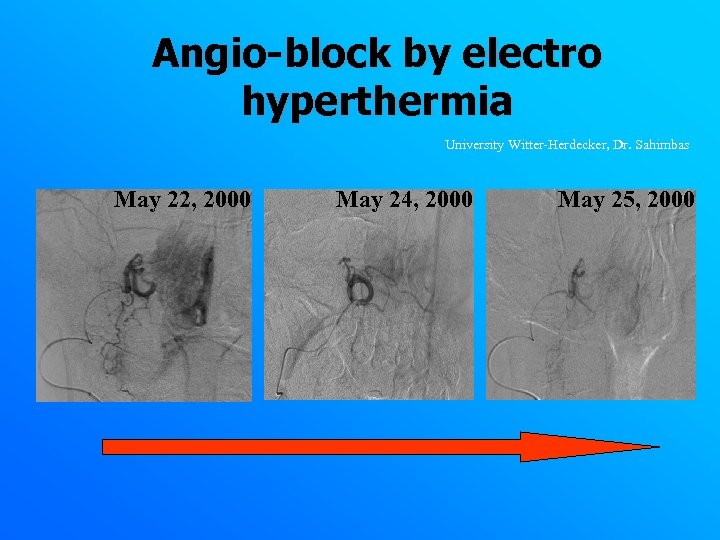 Angio-block by electro hyperthermia University Witter-Herdecker, Dr. Sahimbas May 22, 2000 May 24, 2000 May 25, 2000
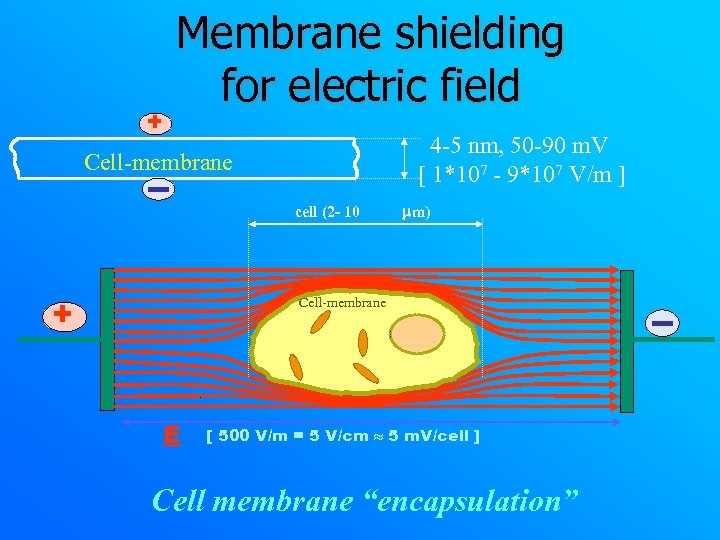 + Membrane shielding for electric field 4 -5 nm, 50 -90 m. V [ 1*107 - 9*107 V/m ] Cell-membrane cell (2 - 10 + m) Cell-membrane E [ 500 V/m = 5 V/cm 5 m. V/cell ] Cell membrane “encapsulation”
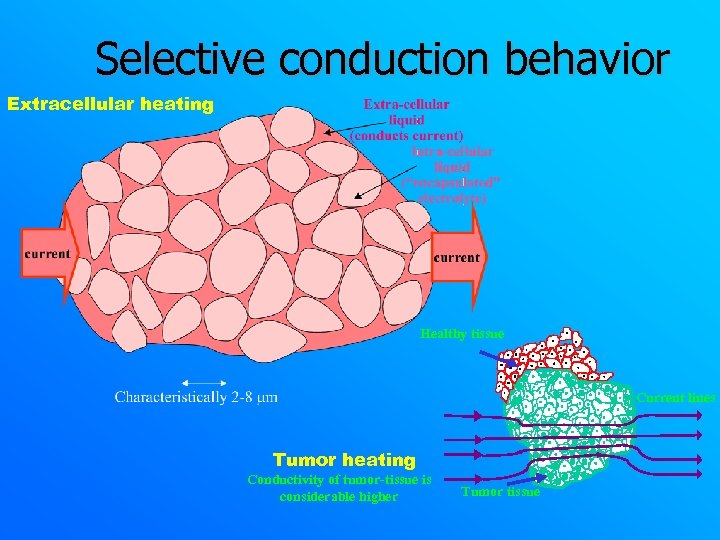 Selective conduction behavior Extracellular heating Healthy tissue Current lines Tumor heating Conductivity of tumor-tissue is considerable higher Tumor tissue
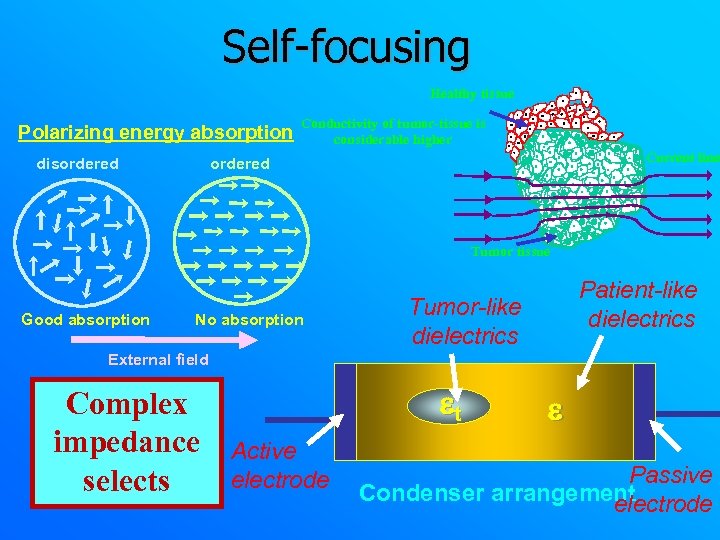 Self-focusing Healthy tissue Polarizing energy absorption disordered Conductivity of tumor-tissue is considerable higher Current lines ordered Tumor tissue Good absorption No absorption Patient-like dielectrics Tumor-like dielectrics External field Complex impedance selects et Active electrode e Passive Condenser arrangement electrode
![Electro-hyperthermia effects 120. 00 Tumor-cell activity [%] 100. 00 80. 00 60. 00 no](https://present5.com/presentation/82d6278fefa1348fe44ad4d25e4a24f1/image-12.jpg "Electro-hyperthermia effects 120. 00 Tumor-cell activity [%] 100. 00 80. 00 60. 00 no") Electro-hyperthermia effects 120. 00 Tumor-cell activity [%] 100. 00 80. 00 60. 00 no electrohyperthermia no chemo 40. 00 CDDP alone electrohyperthemia alone no chemo CDDP with electrohyperthermia 20. 00 2. 00 4. 00 6. 00 8. 00 10. 00 time [h] 12. 00 14. 00 16. 00 18. 00
Electro-hyperthermia effects 120. 00 Tumor-cell activity [%] 100. 00 80. 00 60. 00 no electrohyperthermia no chemo 40. 00 CDDP alone electrohyperthemia alone no chemo CDDP with electrohyperthermia 20. 00 2. 00 4. 00 6. 00 8. 00 10. 00 time [h] 12. 00 14. 00 16. 00 18. 00
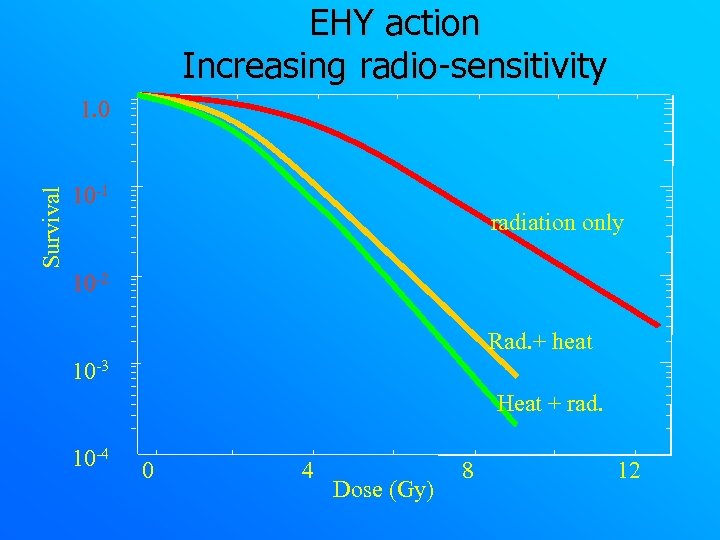 EHY action Increasing radio-sensitivity Survival 1. 0 10 -1 radiation only 10 -2 Rad. + heat 10 -3 Heat + rad. 10 -4 0 4 Dose (Gy) 8 12
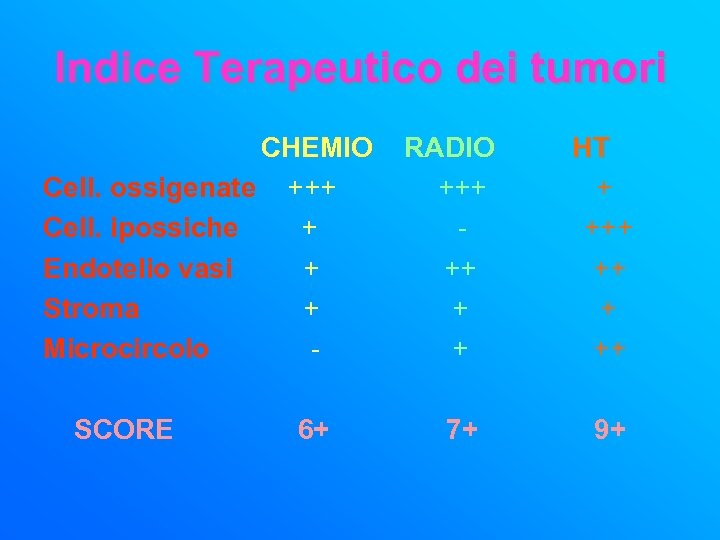 Indice Terapeutico dei tumori CHEMIO Cell. ossigenate +++ Cell. ipossiche + Endotelio vasi + Stroma + Microcircolo SCORE 6+ RADIO +++ ++ + + 7+ HT + ++ 9+
 IPERTERMIA DIELETTRICA SECONDO LE VEEN Un generatore di radiofrequenze a 13. 56 Mhz produce ipertermia selettiva dei tumori profondi fra i 46 e i 50°C mentre la T° dei tessuti sani rimane 40°C. le frequenze vengono inviate all’organismo mediante applicatori e piastre parallele applicate sulla cute.
 IPERTERMIA DIELETTRICA SECONDO LE VEEN 2 Il fascio di radiofrequenza è perpendicolare alla superficie dell’elettrodo/applicatore. Il tessuto adiposo, muscolare, osseo e tumorale si riscaldano diversamente a seconda del contenuto in acqua, sali minerali e intrinseche proprietà elettriche e vascolari del tessuto.
 IPERTERMIA DIELETTRICA SECONDO LE VEEN 3 La penetrazione del fascio si correla alla superficie cutanea riscaldata: Più questa è ampia più in profondità giunge il fascio. Collegando il generatore ad un amplificatore della potenza di 1 Kilowatt si raggiunge una profondità maggiore.
 IPERTERMIA DIELETTRICA SECONDO LE VEEN 4 Gli elettrodi sono modificati mediante serpentina di rame o sacche di plastica raffreddate con circolazione ad acqua. Questo accorgimento permette di elevare del 2030% l’emissione del generatore con innalzamento della T° nei tessuti sottostanti lo strato adiposo evitando ustioni. L’energia necessaria alla distruzione cellulare per azione diretta del calore è di 120 -145 Kcal/mole. In associazione con farmaci e/o radioterapia questa energia si riduce a 20 -40 kcal/mole (TER: Thermal Enhancenment Ratio)
 COMPARISON OF RT ALONE WITH RT PLUS HYPERTHERMIA IN PELVIC TUMORS: A PROSPECTIVE, RANDOMIZED, MULTICENTRE TRIAL Jacoba van der Zee, Dionisio Gonzalez, Gerard C van Rhoon, Jan D P van Dijk, Wim L J van Putten, Augustinus A M Hart. On behalf of the Dutch Deep Hyperthermia Group THE LANCET • Vol 355 • April 1, 2000
 METHODS 358 pts included in a prospective randomized trial from 1990 to 1996. Bladder ca. stages T 2, T 3 or T 4 N 0 M 0 Cervical ca. FIGO IIB, IV Rectal ca. stages M 0 – 1
 METHODS 2 Pts randomly assigned to RT alone (n=176) or RT plus Hyperthermia (n=182). Primary endpoints: complete response and duration to local control.
 FINDINGS CR rates were 39% after RT and 55% after RT plus Hyperthermia (p<0. 001). The duration of local control was longer with RT+HT than with RT alone (p=0. 04)
 FINDINGS 2 The addition of HT seemed to be most important for cervical ca. , for wich CR rate with RT+ HT was 83% compared with 57% after RT alone (p=0. 003). 3 -year overall survival was 27% in RT group and 51% in RT+HT group.
 INTERPRETATION HT in addition to RT may be useful in advanced cervical tumors. In our istitutions RT+HT is now the treatment of choice in cervical ca. FIGO stage IIB-IVA. For the other tumor sites, evidence is required from trials with more patients before practical recommendations can be made
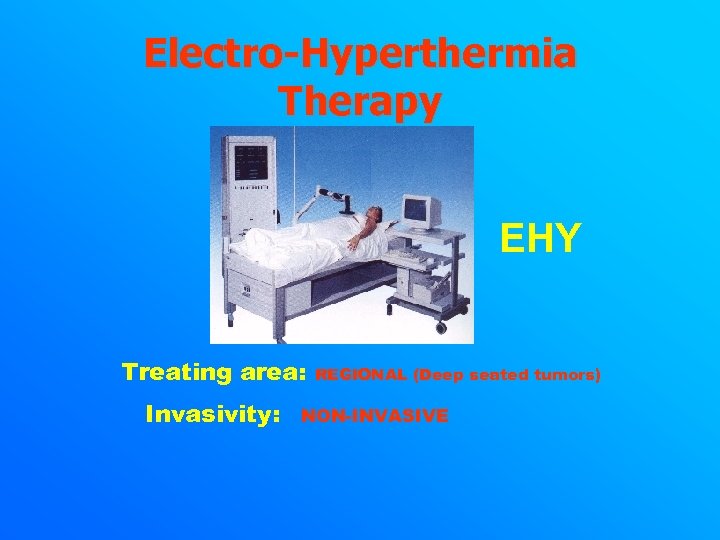 Electro-Hyperthermia Therapy EHY Treating area: Invasivity: REGIONAL (Deep seated tumors) NON-INVASIVE
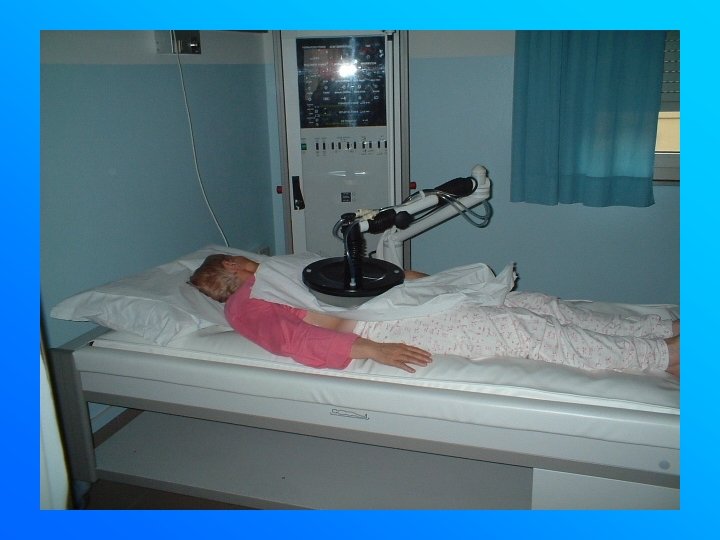
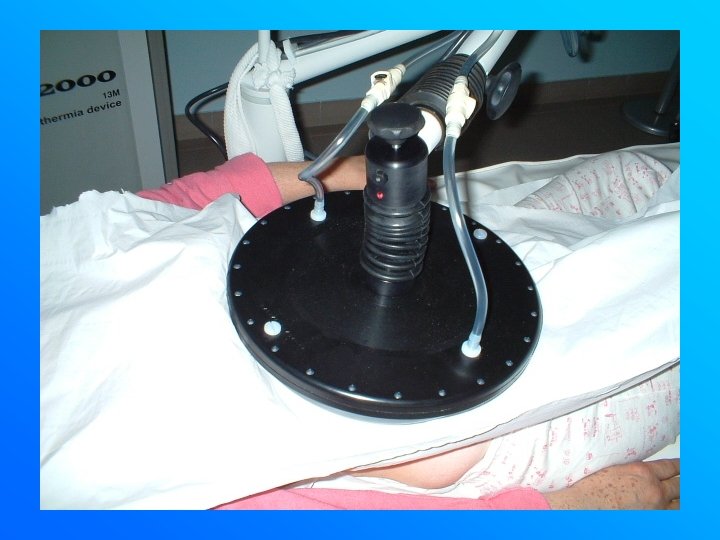
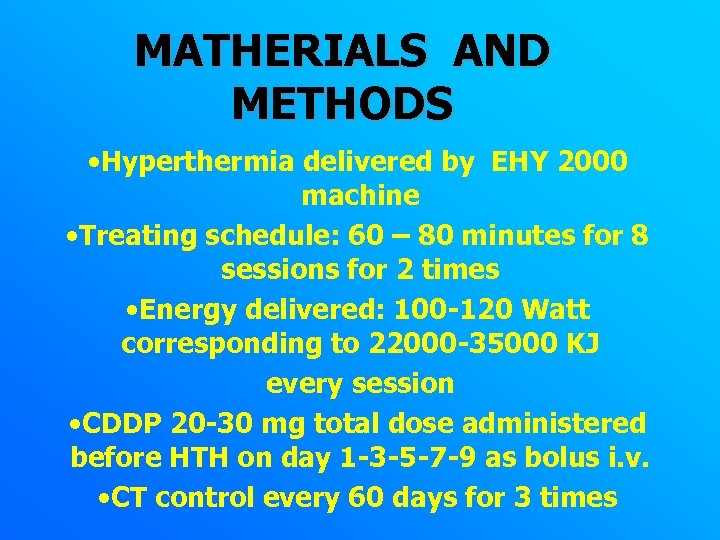 MATHERIALS AND METHODS • Hyperthermia delivered by EHY 2000 machine • Treating schedule: 60 – 80 minutes for 8 sessions for 2 times • Energy delivered: 100 -120 Watt corresponding to 22000 -35000 KJ every session • CDDP 20 -30 mg total dose administered before HTH on day 1 -3 -5 -7 -9 as bolus i. v. • CT control every 60 days for 3 times
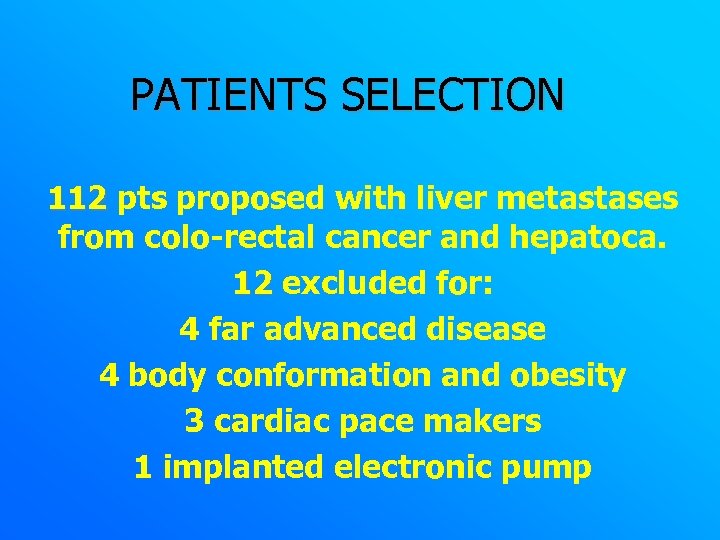 PATIENTS SELECTION 112 pts proposed with liver metastases from colo-rectal cancer and hepatoca. 12 excluded for: 4 far advanced disease 4 body conformation and obesity 3 cardiac pace makers 1 implanted electronic pump
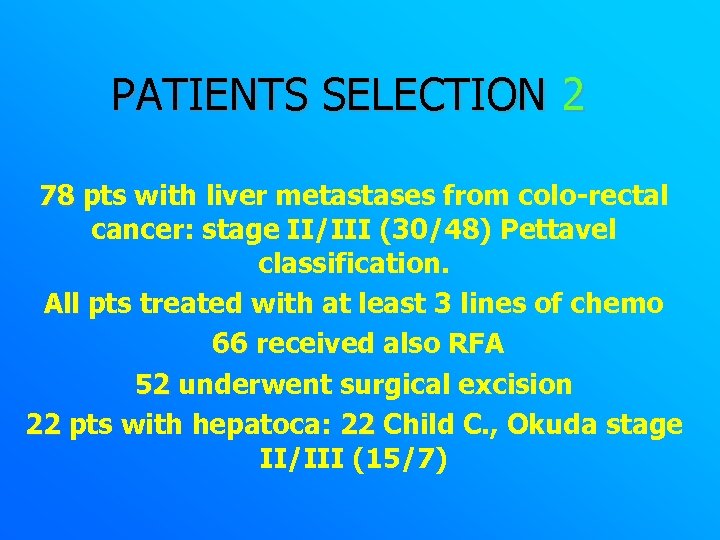 PATIENTS SELECTION 2 78 pts with liver metastases from colo-rectal cancer: stage II/III (30/48) Pettavel classification. All pts treated with at least 3 lines of chemo 66 received also RFA 52 underwent surgical excision 22 pts with hepatoca: 22 Child C. , Okuda stage II/III (15/7)
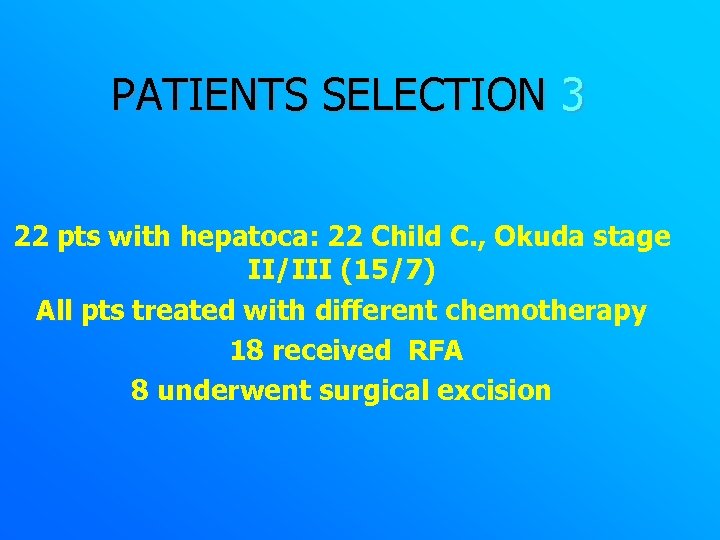 PATIENTS SELECTION 3 22 pts with hepatoca: 22 Child C. , Okuda stage II/III (15/7) All pts treated with different chemotherapy 18 received RFA 8 underwent surgical excision
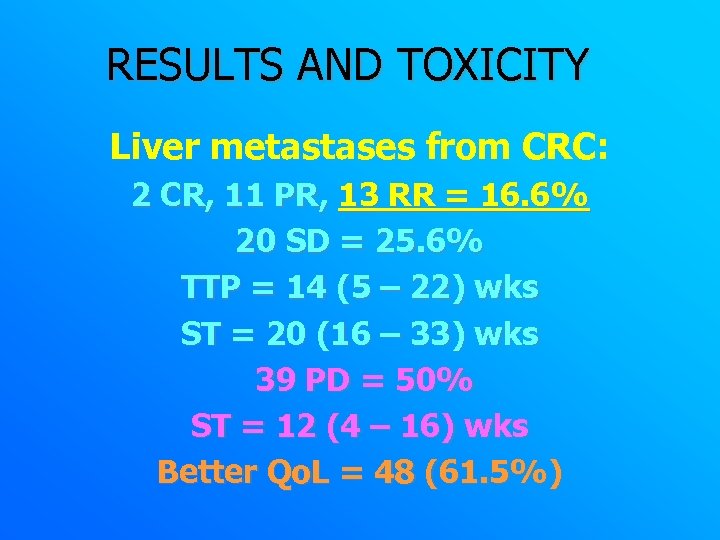 RESULTS AND TOXICITY Liver metastases from CRC: 2 CR, 11 PR, 13 RR = 16. 6% 20 SD = 25. 6% TTP = 14 (5 – 22) wks ST = 20 (16 – 33) wks 39 PD = 50% ST = 12 (4 – 16) wks Better Qo. L = 48 (61. 5%)
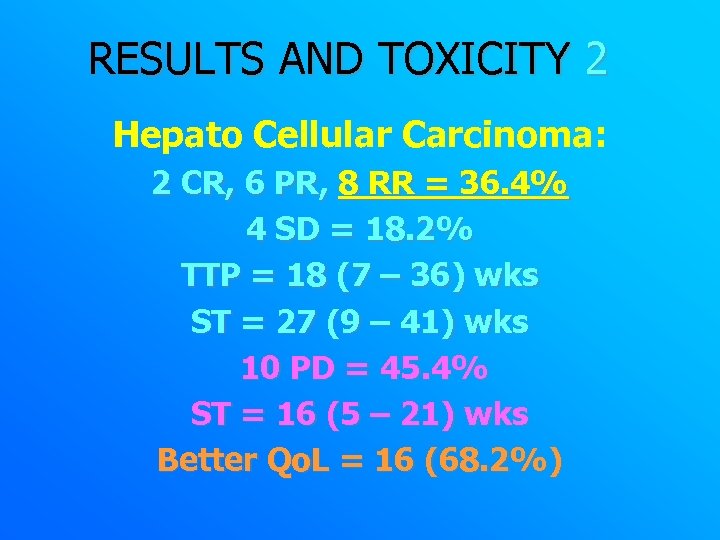 RESULTS AND TOXICITY 2 Hepato Cellular Carcinoma: 2 CR, 6 PR, 8 RR = 36. 4% 4 SD = 18. 2% TTP = 18 (7 – 36) wks ST = 27 (9 – 41) wks 10 PD = 45. 4% ST = 16 (5 – 21) wks Better Qo. L = 16 (68. 2%)
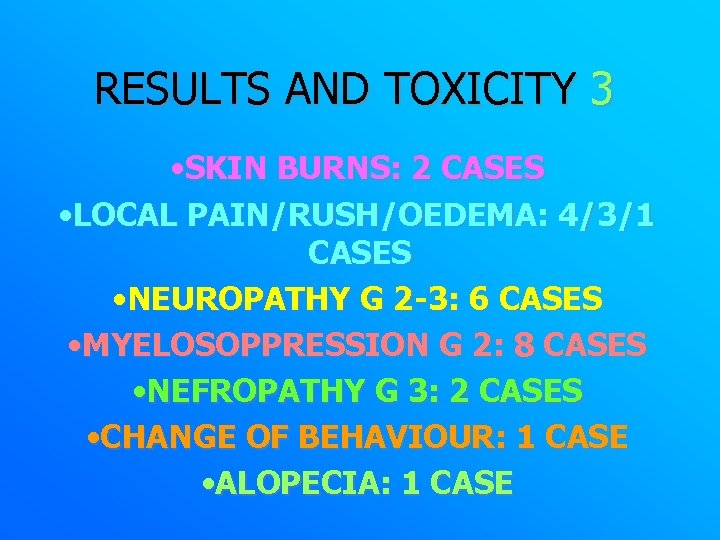 RESULTS AND TOXICITY 3 • SKIN BURNS: 2 CASES • LOCAL PAIN/RUSH/OEDEMA: 4/3/1 CASES • NEUROPATHY G 2 -3: 6 CASES • MYELOSOPPRESSION G 2: 8 CASES • NEFROPATHY G 3: 2 CASES • CHANGE OF BEHAVIOUR: 1 CASE • ALOPECIA: 1 CASE
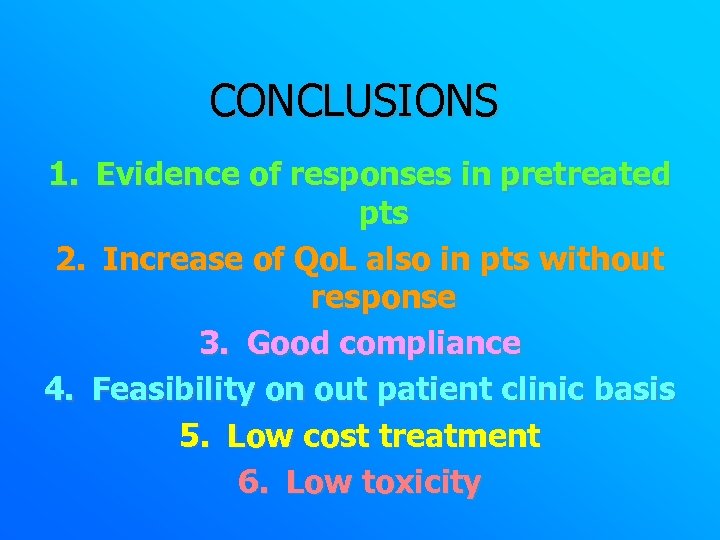 CONCLUSIONS 1. Evidence of responses in pretreated pts 2. Increase of Qo. L also in pts without response 3. Good compliance 4. Feasibility on out patient clinic basis 5. Low cost treatment 6. Low toxicity
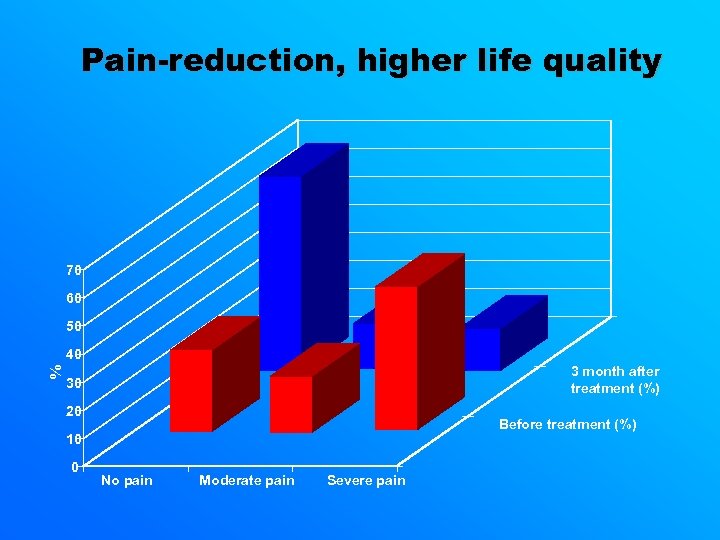 Pain-reduction, higher life quality 70 60 50 % 40 3 month after treatment (%) 30 20 Before treatment (%) 10 0 No pain Moderate pain Severe pain
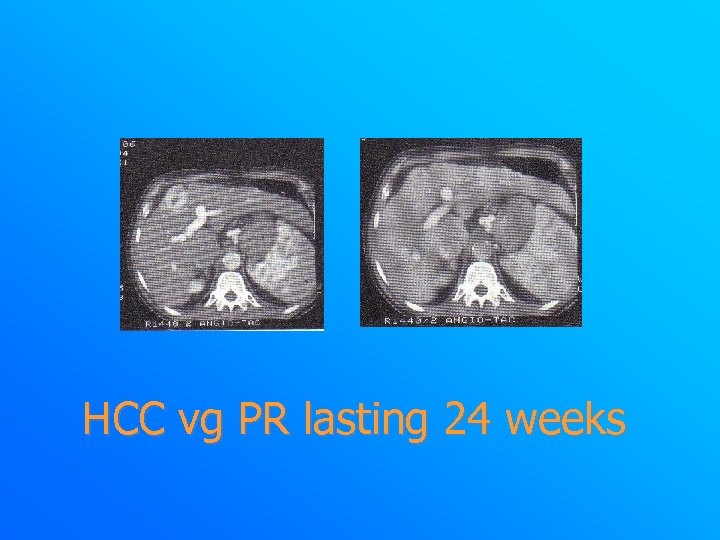 HCC vg PR lasting 24 weeks
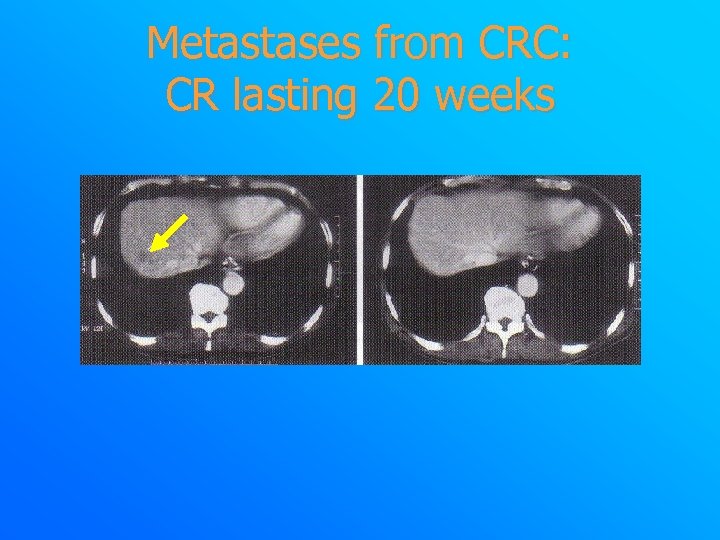 Metastases from CRC: CR lasting 20 weeks
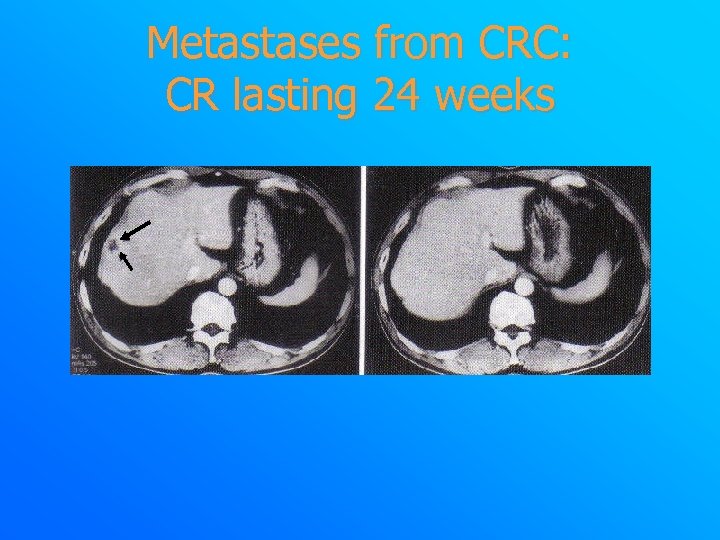 Metastases from CRC: CR lasting 24 weeks
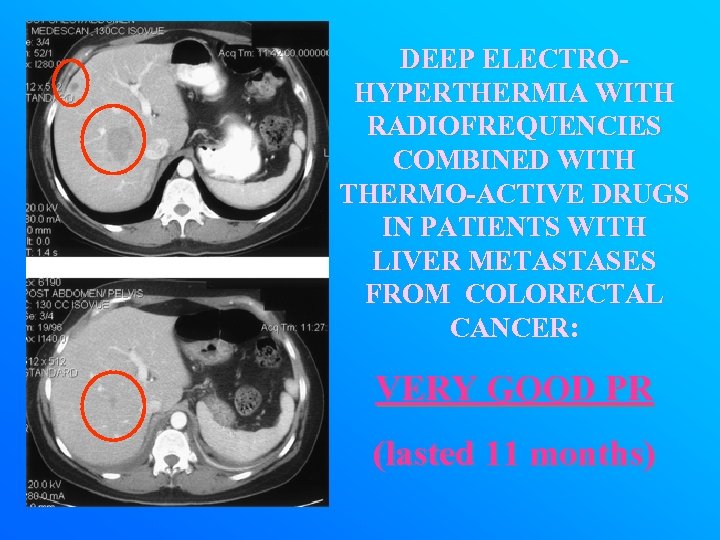 DEEP ELECTROHYPERTHERMIA WITH RADIOFREQUENCIES COMBINED WITH THERMO-ACTIVE DRUGS IN PATIENTS WITH LIVER METASTASES FROM COLORECTAL CANCER: VERY GOOD PR (lasted 11 months)
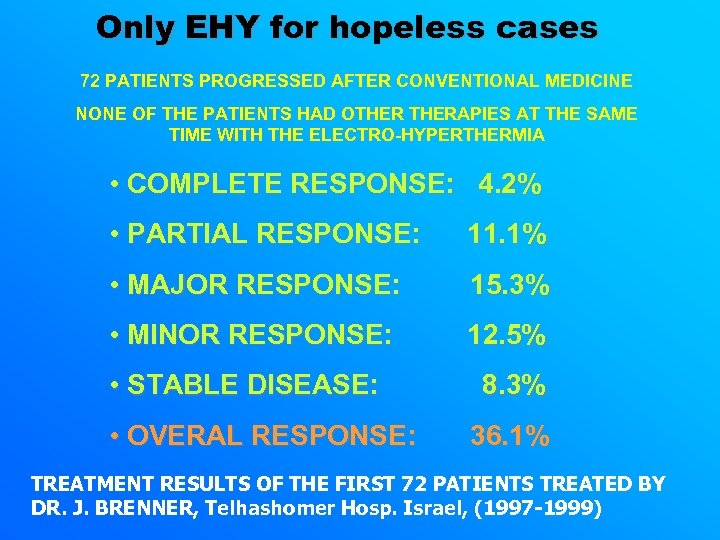 Only EHY for hopeless cases 72 PATIENTS PROGRESSED AFTER CONVENTIONAL MEDICINE NONE OF THE PATIENTS HAD OTHERAPIES AT THE SAME TIME WITH THE ELECTRO-HYPERTHERMIA • COMPLETE RESPONSE: 4. 2% • PARTIAL RESPONSE: 11. 1% • MAJOR RESPONSE: 15. 3% • MINOR RESPONSE: 12. 5% • STABLE DISEASE: 8. 3% • OVERAL RESPONSE: 36. 1% TREATMENT RESULTS OF THE FIRST 72 PATIENTS TREATED BY DR. J. BRENNER, Telhashomer Hosp. Israel, (1997 -1999)
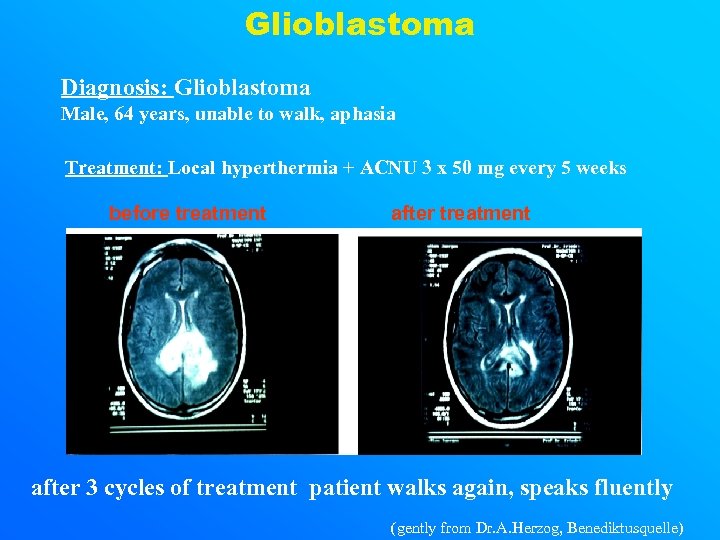 Glioblastoma Diagnosis: Glioblastoma Male, 64 years, unable to walk, aphasia Treatment: Local hyperthermia + ACNU 3 x 50 mg every 5 weeks before treatment after 3 cycles of treatment patient walks again, speaks fluently (gently from Dr. A. Herzog, Benediktusquelle)
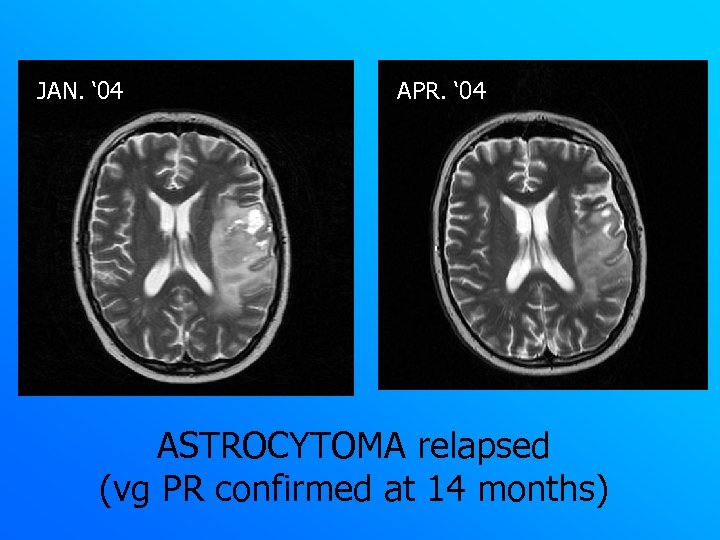 JAN. ‘ 04 APR. ‘ 04 ASTROCYTOMA relapsed (vg PR confirmed at 14 months)
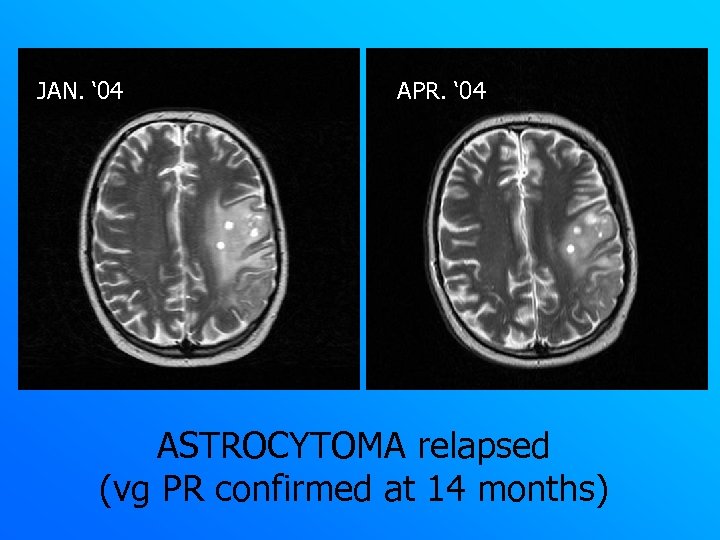 JAN. ‘ 04 APR. ‘ 04 ASTROCYTOMA relapsed (vg PR confirmed at 14 months)
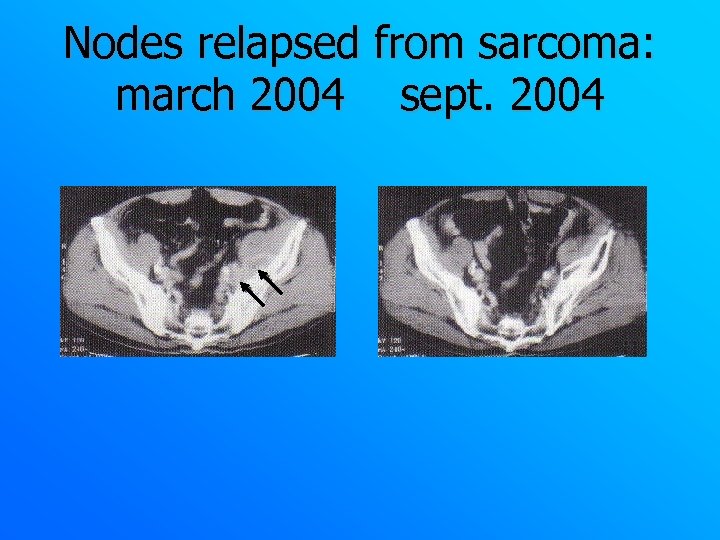 Nodes relapsed from sarcoma: march 2004 sept. 2004
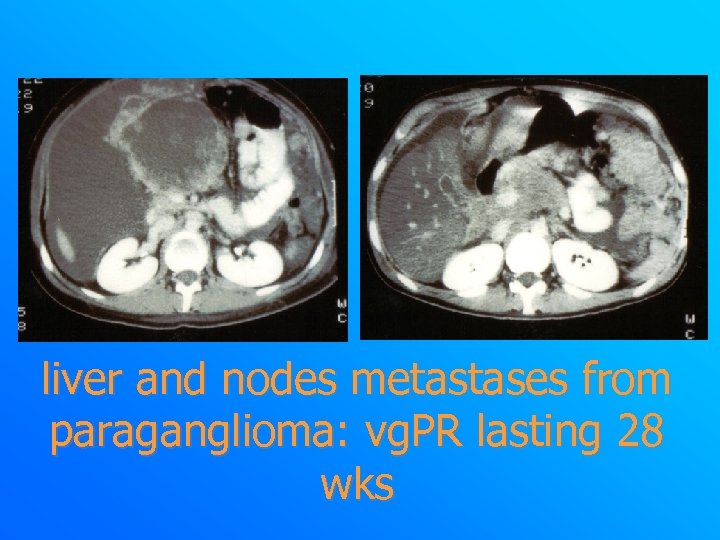 liver and nodes metastases from paraganglioma: vg. PR lasting 28 wks
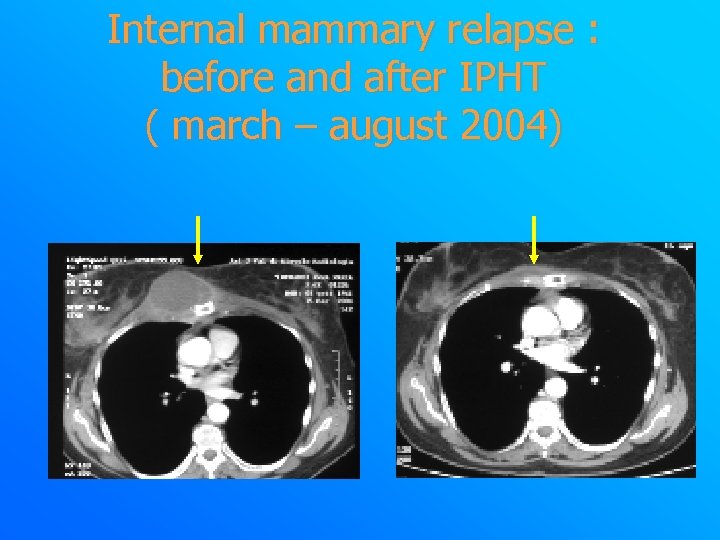 Internal mammary relapse : before and after IPHT ( march – august 2004)
 Hyperthermia conclusions 1 The electro-hyperthermia is a new treatment modality for primary and secondary liver tumors The combination of electro-hypertermia and CDDP is feasible on out-patient basis HPT permits new applications in palliative fields The hyperthermia methods are cost-effective Pain reduction, improving life quality Warrant further well planned studies.
 Hyperthermia conclusions 2 ESHO European Society Hyperthermia Oncology SITILO Società Italiana Terapie Integrate Locoregionali in Oncologia AIRO Associazione Italiana Radioterapia Oncologica ICHS International Clinical Hyperthermia Society
 International Clinical Hyperthermia Society XXVII ICHS CONFERENCE r FLORENCE ou ! y !! n r o a 27/28 Oct. rk end a l 2005 M ca