


 Скачать презентацию Ca 2 — independent Positive Inotropy for Failing Cardiac
84c620b23b50888b8aecc3777424b07b.ppt
- Количество слайдов: 18
 Ca 2+- independent Positive Inotropy for Failing Cardiac Muscle by α-myosin motor gene transfer Presentation by Les Sprague
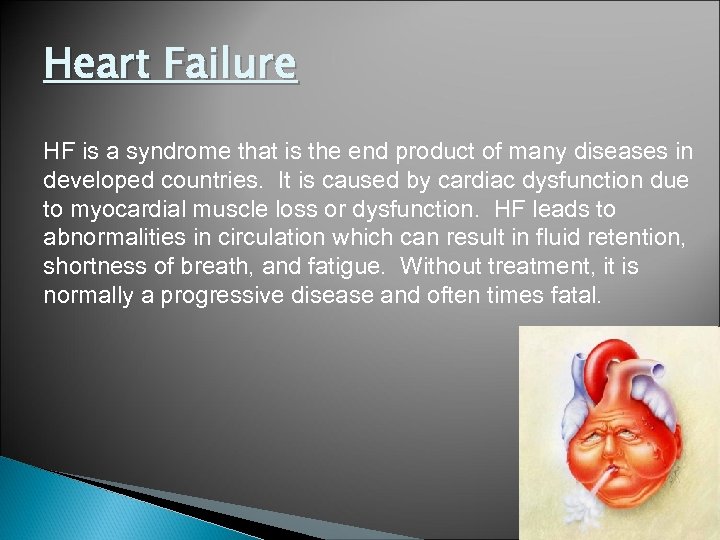 Heart Failure HF is a syndrome that is the end product of many diseases in developed countries. It is caused by cardiac dysfunction due to myocardial muscle loss or dysfunction. HF leads to abnormalities in circulation which can result in fluid retention, shortness of breath, and fatigue. Without treatment, it is normally a progressive disease and often times fatal.
 Heart Failure HF is very common, and is also extremely expensive to treat. HF is estimated to cause the suffering of about 2% of the adult population in developing countries. Also, it is estimated that its treatment in the US alone costs about $35 billion/year! That is enough money to buy every person in America about 114 Mc. Chickens…
 Terminology Inotrope – An agent that mediates an alteration in the force of muscular contraction. Negative agents weaken force, while positive inotropic agents increase force of contraction. Ischemia – a lack of blood supply which causes the death or dysfunction of tissue
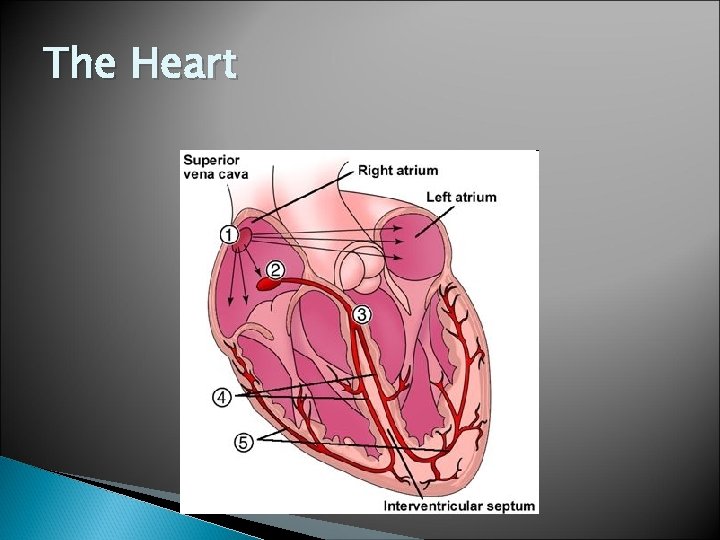 The Heart
 The Heart The functional heart provides the body with essential oxygen and waste removal from tissues throughout the body. Intercalated disks in cardiac muscle propagate a rapid depolarization to adjacent cells which stimulates the heart muscle to contract. “functional syncytium” – the myocardium acts as one contractile unit
 Electrochemical mechanism Myocardial cells have a negative membrane potential at rest. Stimulation induces voltage gated channels to open, causing cations to move into the cell. The cations entering the cell cause an action potential. Depolarization causes voltage gated calcium channels to open, releasing Ca 2+from the t-tubules. Calcium influx causes calcium to be released from the sarcoplasmic reticulum. Extracellular calcium is required for contraction to occur in myocardium
 Traditional Treatments for HF Many of the traditional methods for the treatment of HF focus on up-regulating the amount of calcium available in cardiac muscle This increase in calcium induces positive inotropy of the heart muscle, thus increasing cardiac muscle contraction strength Calcium modification has been shown to increase the likelihood of fatal arrhythmias over long term use
 Calcium Free Positive Inotropy The method to increase cardiac output in ischemic failing hearts without modification of calcium could prove extremely beneficial to the treatment of HF patients. Myosin is a key motor protein in cardiac muscle α-myosin motor gene transfer could prove to be a method for calcium free positive inotropy
 α-myosin The gene that encodes the heart’s fast motor protein (α-My. HC) is MYH 6 The c. DNA for α-My. HC is ~5820 bp and was cloned using PCR and isolated from a human heart c. DNA library
 Myosin and the heart Healthy hearts normally have ~10% α-My. HC comprising the total cardiac myosin, with the remaining 90% being β-My. HC. HF cases with ischemic failing hearts have shown a reduction of α-My. HC to undetectable levels in cardiac myosin This supports a link between cardiac myosin isoform expression and heart performance and is the target of this study
 In vitro α-My. HC delivery New Zealand White rabbit myocytes were isolated for study Human myocytes were also isolated from the explanted heart of a HF patient To deliver the gene to cardiac myocytes, a recombinant adenoviral vector (Ad. MYH 6) was made for gene transfer of the full MYH 6 gene in vitro
 Adenoviruses Double stranded DNA viruses Are NOT incorporated into host DNA Adeno DNA is free in the nucleus, where it is transcribed Are not replicated during cell division Often require repeated administration
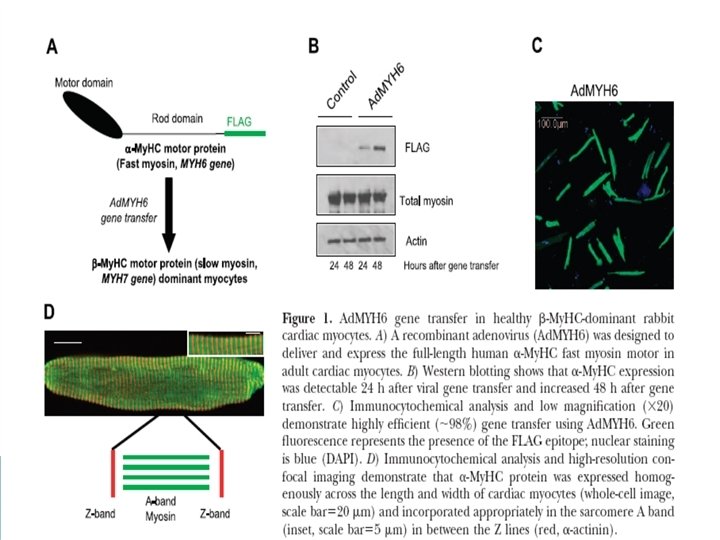
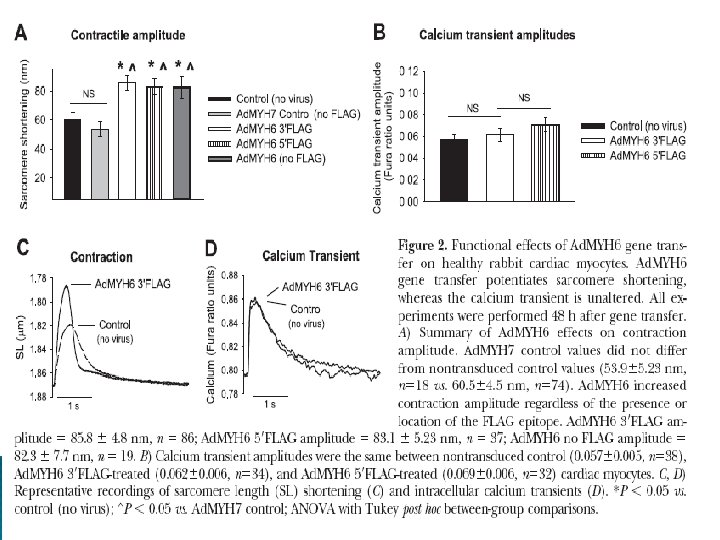
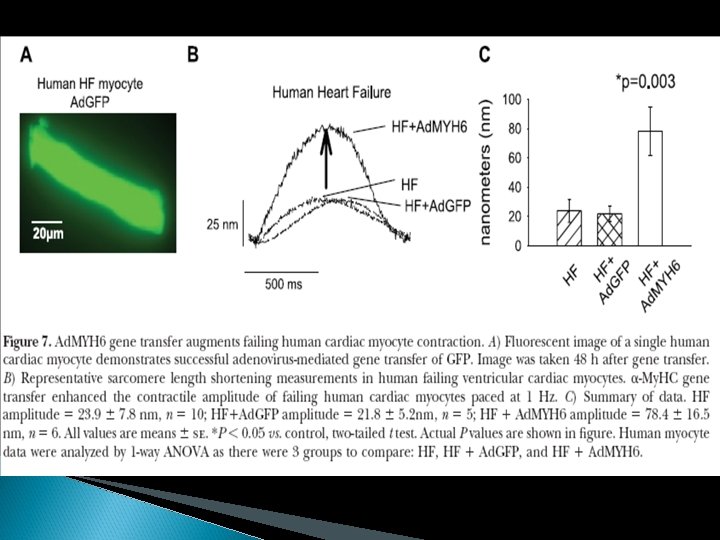
 Results There is evidence that the transduction of αMy. HC into a failing heart can increase the cardiac output of the heart muscle while not affecting the calcium concentrations in the myocytes It is also clear that the Ad. MYH 6 is an effective and efficient method for gene delivery in vitro
. Freeman, Scott. Biological" src="https://present5.com/presentation/84c620b23b50888b8aecc3777424b07b/image-18.jpg" alt="References "Cardiac action potential. " Wikipedia. Web.