



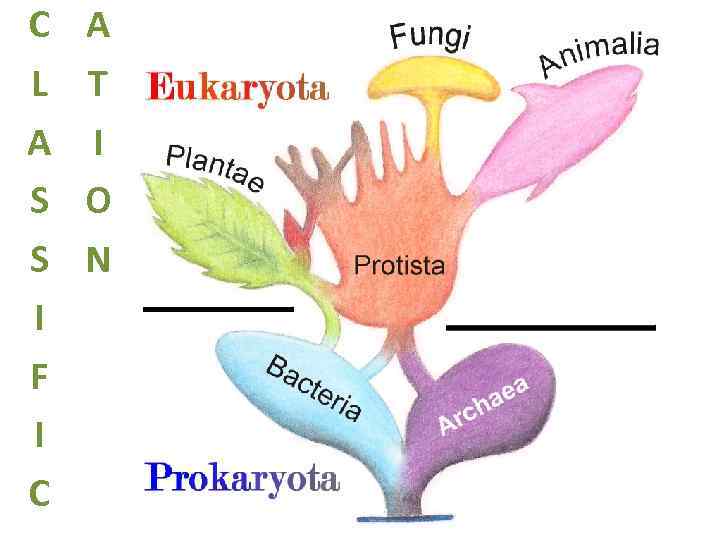
 C L A S S I F I C A T I O N
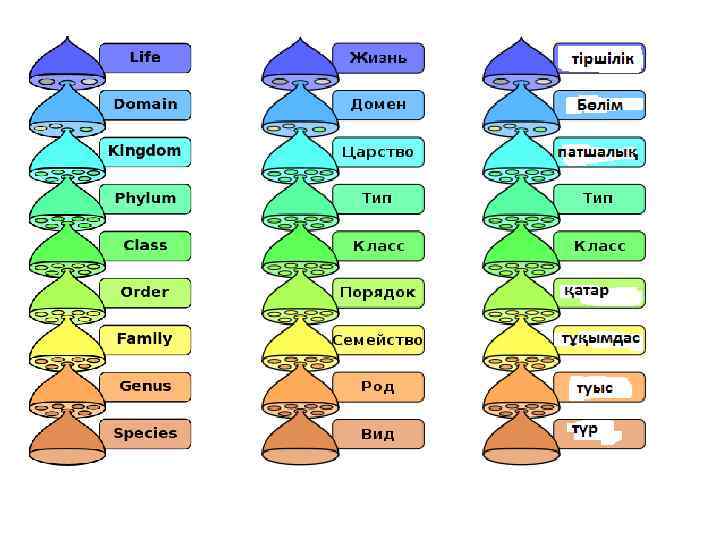
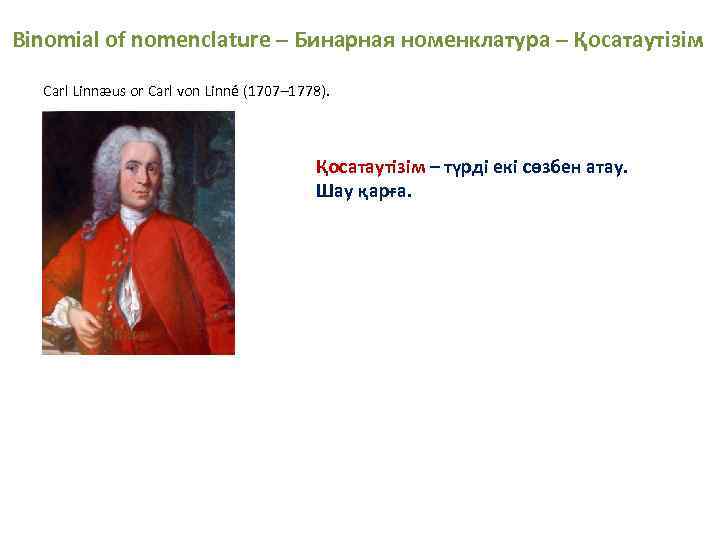 Binomial of nomenclature – Бинарная номенклатура – Қосатаутізім Carl Linnæus or Carl von Linné (1707– 1778). Қосатаутізім – түрді екі сөзбен атау. Шау қарға.
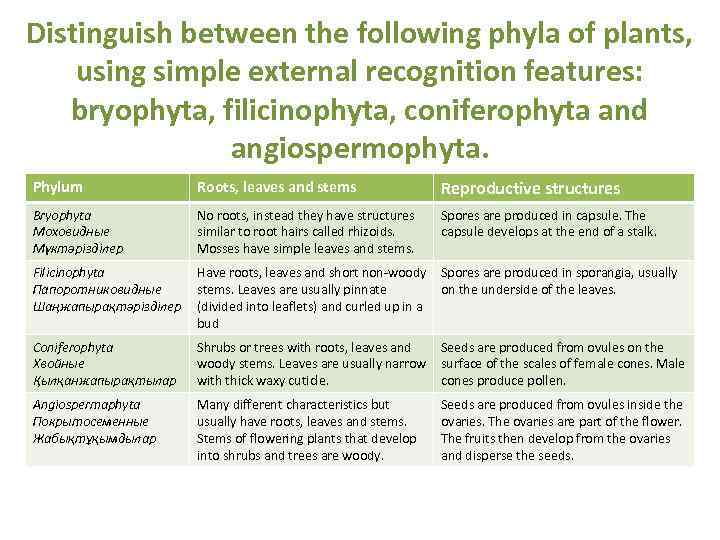 Distinguish between the following phyla of plants, using simple external recognition features: bryophyta, filicinophyta, coniferophyta and angiospermophyta. Phylum Roots, leaves and stems Reproductive structures Bryophyta Моховидные Мүктәрізділер No roots, instead they have structures similar to root hairs called rhizoids. Mosses have simple leaves and stems. Spores are produced in capsule. The capsule develops at the end of a stalk. Filicinophyta Папоротниковидные Шаңжапырақтәрізділер Have roots, leaves and short non-woody stems. Leaves are usually pinnate (divided into leaflets) and curled up in a bud Spores are produced in sporangia, usually on the underside of the leaves. Coniferophyta Хвойные Қылқанжапырақтылар Shrubs or trees with roots, leaves and woody stems. Leaves are usually narrow with thick waxy cuticle. Seeds are produced from ovules on the surface of the scales of female cones. Male cones produce pollen. Angiospermaphyta Покрытосеменные Жабықтұқымдылар Many different characteristics but usually have roots, leaves and stems. Stems of flowering plants that develop into shrubs and trees are woody. Seeds are produced from ovules inside the ovaries. The ovaries are part of the flower. The fruits then develop from the ovaries and disperse the seeds.
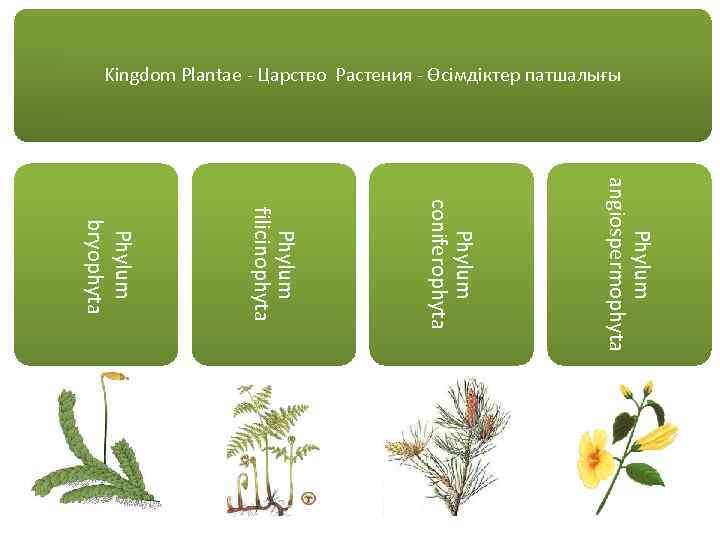 Kingdom Plantae - Царство Растения - Өсімдіктер патшалығы Phylum angiospermophyta Phylum coniferophyta Phylum filicinophyta Phylum bryophyta
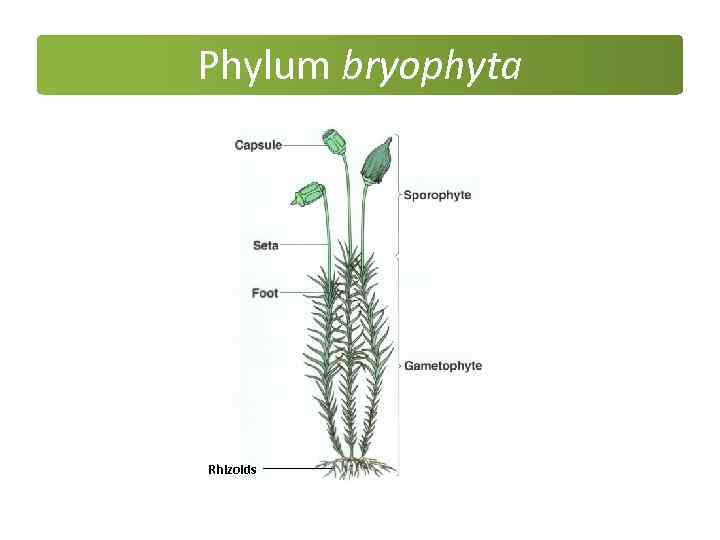 Phylum bryophyta Rhizoids
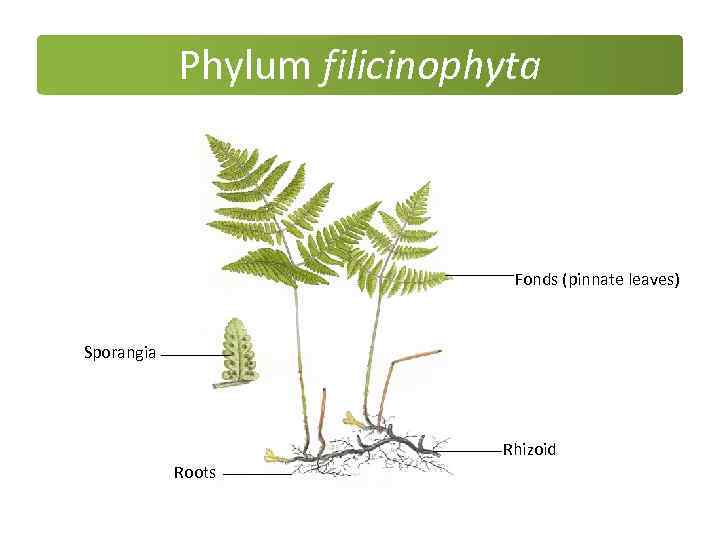 Phylum filicinophyta Fonds (pinnate leaves) Sporangia Rhizoid Roots
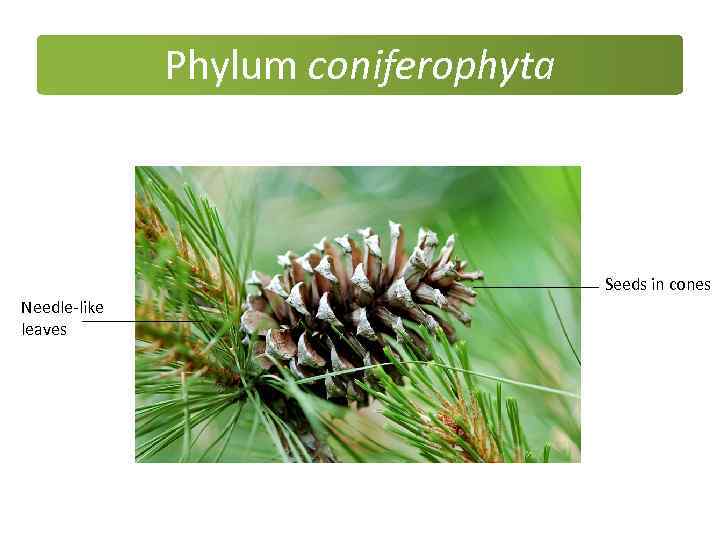 Phylum coniferophyta Seeds in cones Needle-like leaves
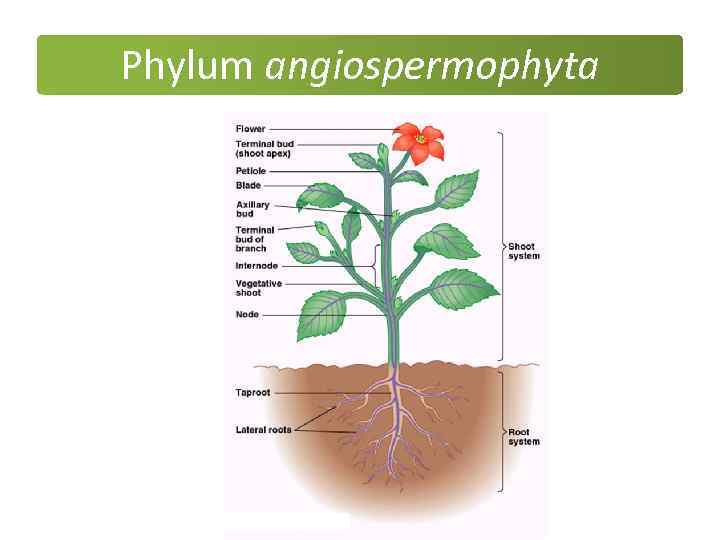 Phylum angiospermophyta
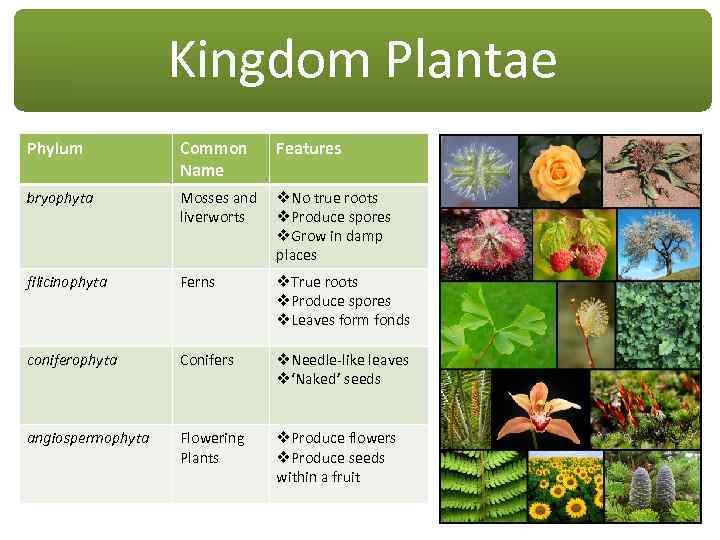 Kingdom Plantae Phylum Common Name Features bryophyta Mosses and liverworts v. No true roots v. Produce spores v. Grow in damp places filicinophyta Ferns v. True roots v. Produce spores v. Leaves form fonds coniferophyta Conifers v. Needle-like leaves v‘Naked’ seeds angiospermophyta Flowering Plants v. Produce flowers v. Produce seeds within a fruit
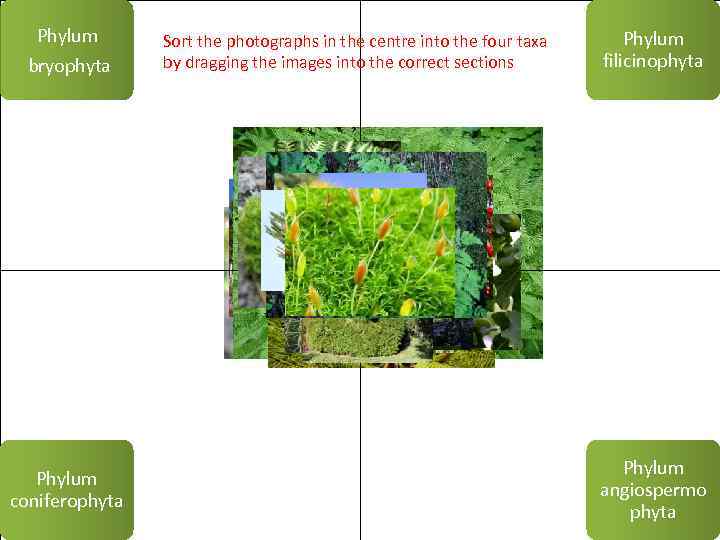 Phylum bryophyta Phylum coniferophyta Sort the photographs in the centre into the four taxa by dragging the images into the correct sections Phylum filicinophyta Phylum angiospermo phyta
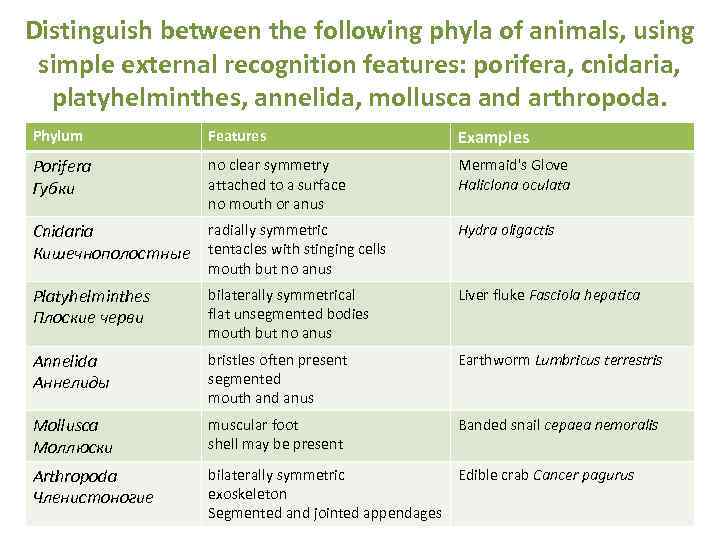 Distinguish between the following phyla of animals, using simple external recognition features: porifera, cnidaria, platyhelminthes, annelida, mollusca and arthropoda. Phylum Features Examples Porifera Губки no clear symmetry attached to a surface no mouth or anus Mermaid's Glove Haliclona oculata Cnidaria Кишечнополостные radially symmetric tentacles with stinging cells mouth but no anus Hydra oligactis Platyhelminthes Плоские черви bilaterally symmetrical flat unsegmented bodies mouth but no anus Liver fluke Fasciola hepatica Annelida Аннелиды bristles often present segmented mouth and anus Earthworm Lumbricus terrestris Mollusca Моллюски muscular foot shell may be present Banded snail cepaea nemoralis Arthropoda Членистоногие bilaterally symmetric Edible crab Cancer pagurus exoskeleton Segmented and jointed appendages
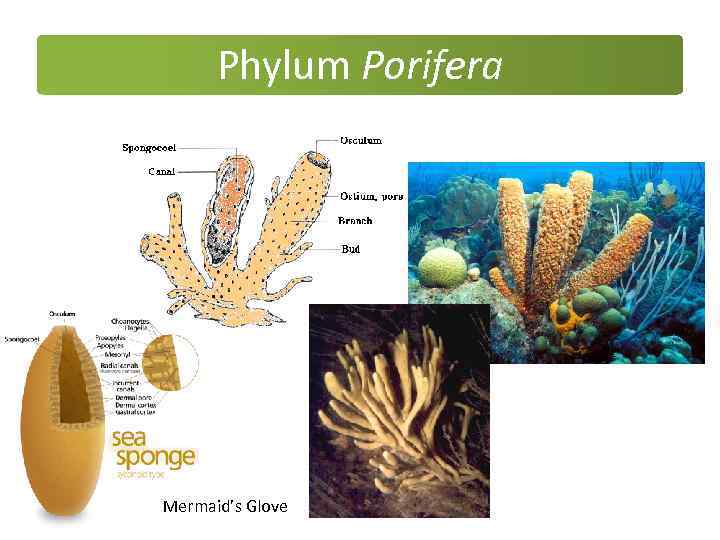 Phylum Porifera Mermaid’s Glove
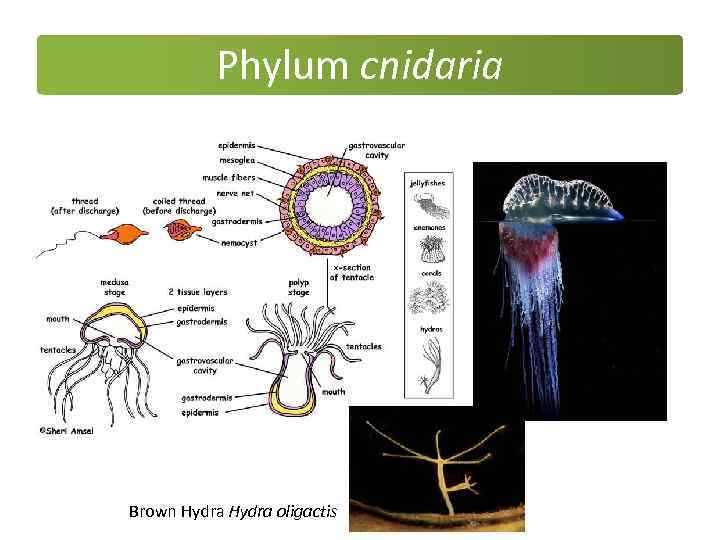 Phylum cnidaria Brown Hydra oligactis
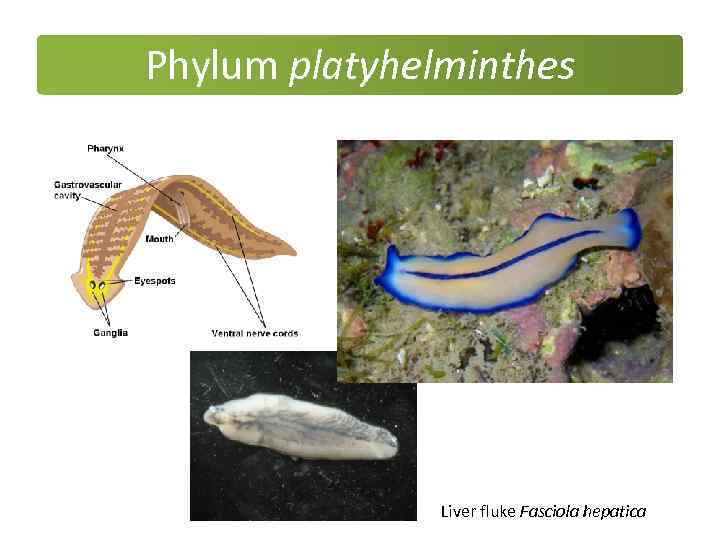 Phylum platyhelminthes Liver fluke Fasciola hepatica
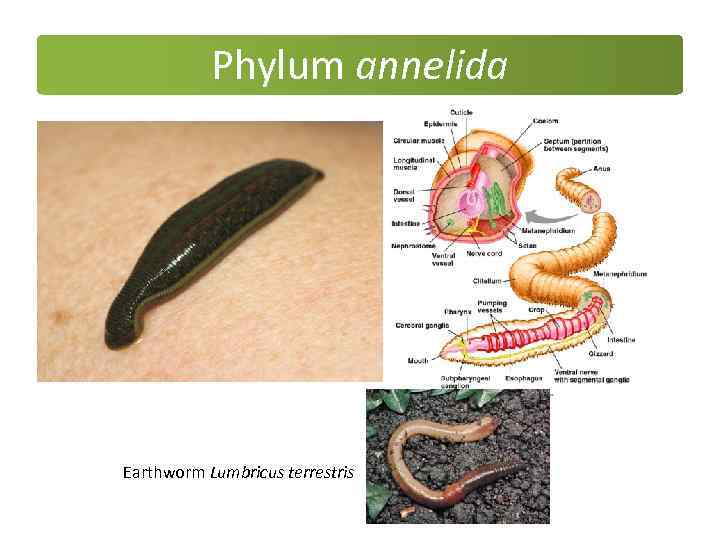 Phylum annelida Earthworm Lumbricus terrestris
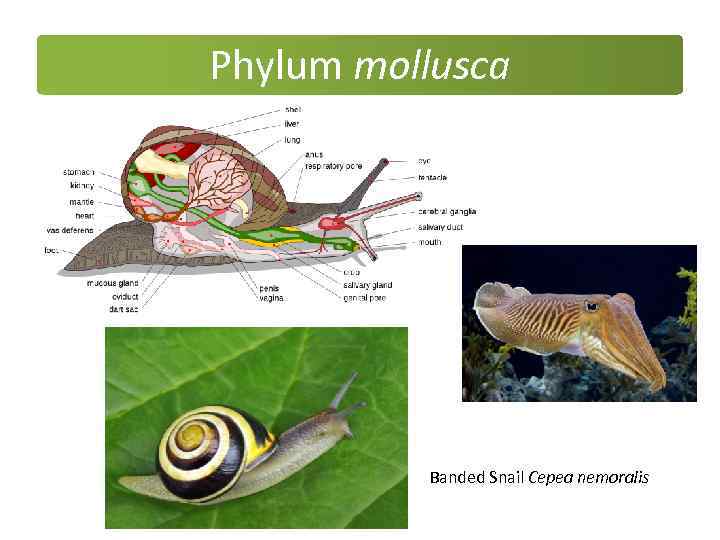 Phylum mollusca Banded Snail Cepea nemoralis
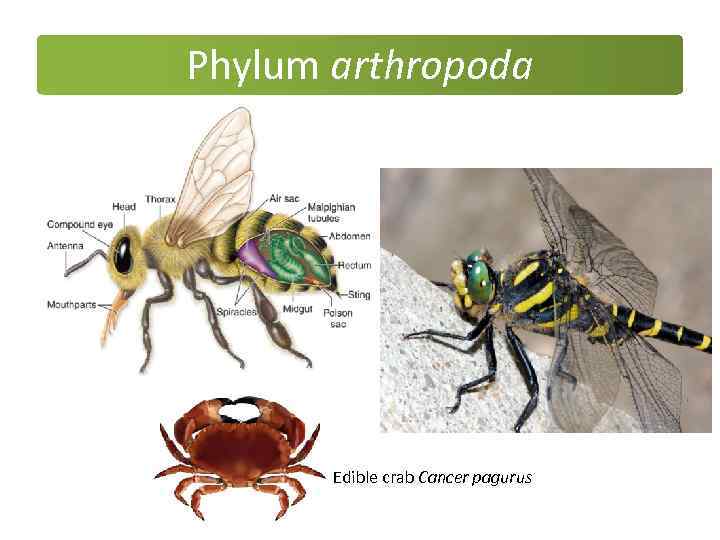 Phylum arthropoda Edible crab Cancer pagurus
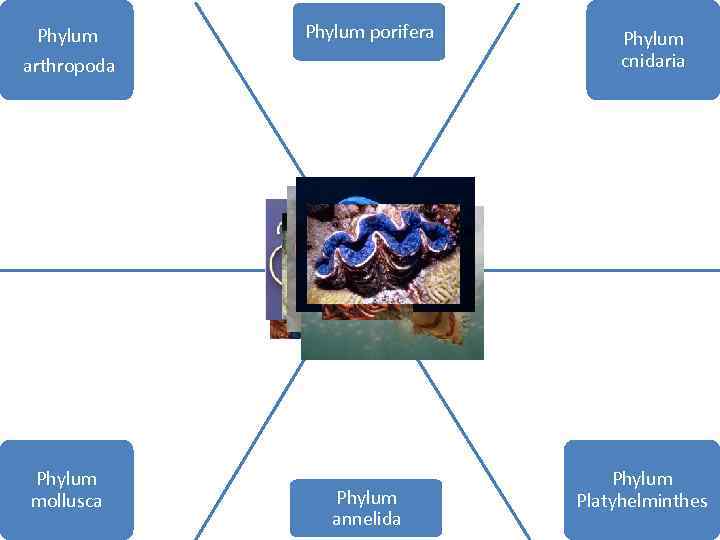 Phylum porifera arthropoda Phylum mollusca Phylum annelida Phylum cnidaria Phylum Platyhelminthes