


 Скачать презентацию C HAPTER Elasticity of Demand Supply price elasticities
97085bdf61d1cfbc440fbf7b3e8c0387.ppt
- Количество слайдов: 30
 C HAPTER Elasticity of Demand Supply price elasticities of demand supply, income and cross elasticities of demand, and using elasticity to forecast the impact of taxes on prices Copyright © 2010 Pearson Education, Inc. All rights reserved. 1
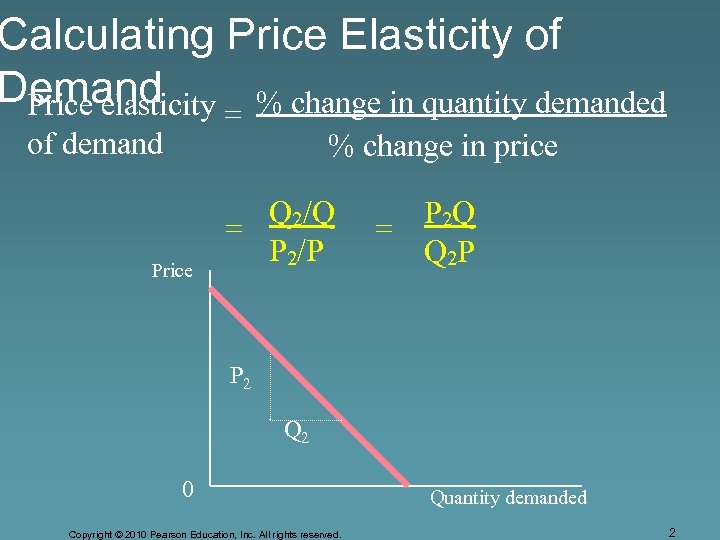 Calculating Price Elasticity of Demand Price elasticity % change in quantity demanded = of demand Price % change in price Q 2/Q = P 2/P P 2 Q = Q 2 P P 2 Q 2 0 Copyright © 2010 Pearson Education, Inc. All rights reserved. Quantity demanded 2
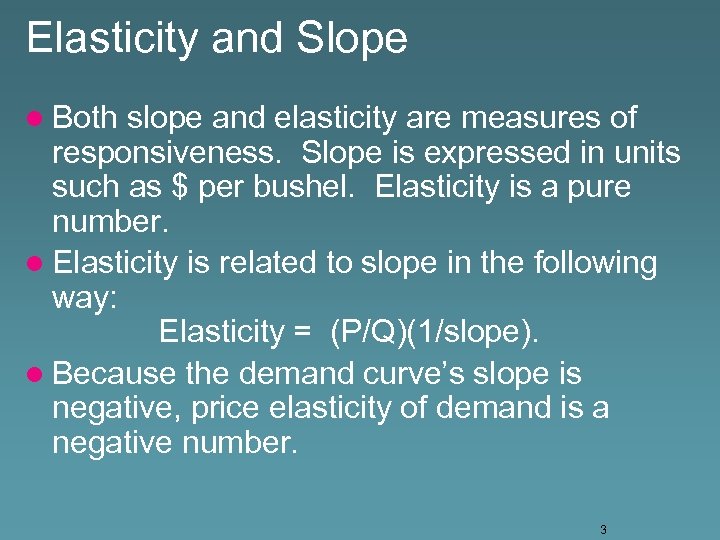 Elasticity and Slope l Both slope and elasticity are measures of responsiveness. Slope is expressed in units such as $ per bushel. Elasticity is a pure number. l Elasticity is related to slope in the following way: Elasticity = (P/Q)(1/slope). l Because the demand curve’s slope is negative, price elasticity of demand is a negative number. 3
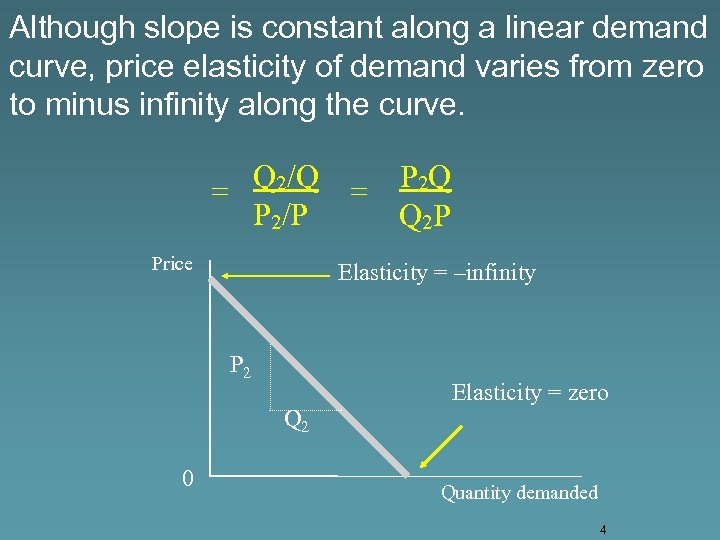 Although slope is constant along a linear demand curve, price elasticity of demand varies from zero to minus infinity along the curve. Q 2/Q = P 2/P Q 2 P Price Elasticity = –infinity P 2 Q 2 0 Elasticity = zero Quantity demanded 4
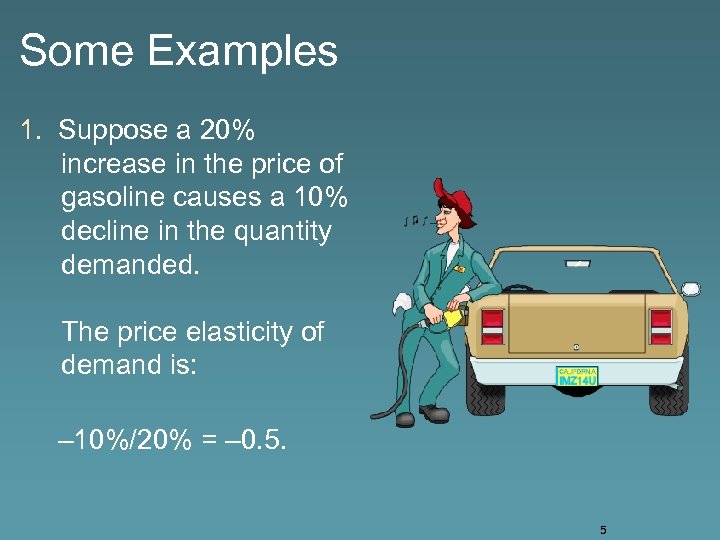 Some Examples 1. Suppose a 20% increase in the price of gasoline causes a 10% decline in the quantity demanded. The price elasticity of demand is: – 10%/20% = – 0. 5. 5
 Some Examples 2. Suppose the price elasticity of demand for men’s suits is – 3. How much of a price cut will result in a 30% increase in quantity demanded? The answer is – 10%, because: 30%/10% = – 3. 6
 A Real World Example l In 1991, Apple computer lowered the prices of its Macintosh machines by an average of 50%. l The resulting increase in quantity demanded amounted to 85%. l The price elasticity of demand for Macs at that time was, therefore, 85%/-50% = – 1. 7. 7
 Categorizing Elasticity of Demand l Demand is inelastic if the value of price elasticity of demand (ignoring the sign) is between zero and 1. l Demand is unit elastic if the value of price elasticity of demand (ignoring the sign) is 1. l Demand is elastic if the value of price elasticity of demand (ignoring the sign) exceeds 1. 8
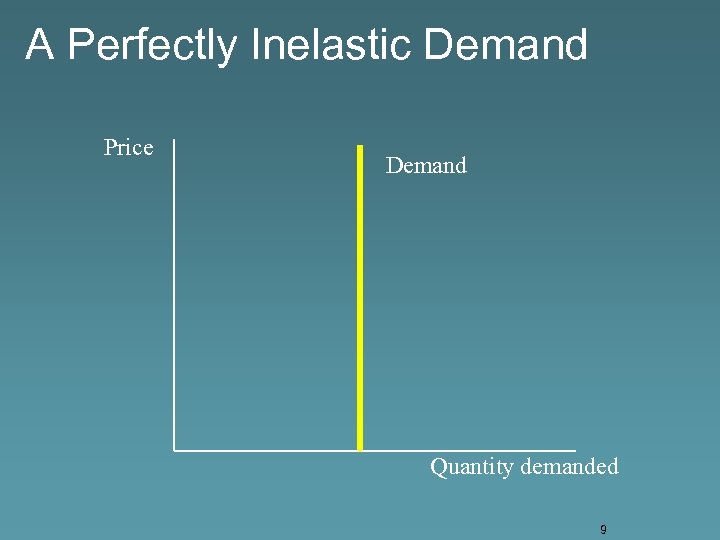 A Perfectly Inelastic Demand Price Demand Quantity demanded 9
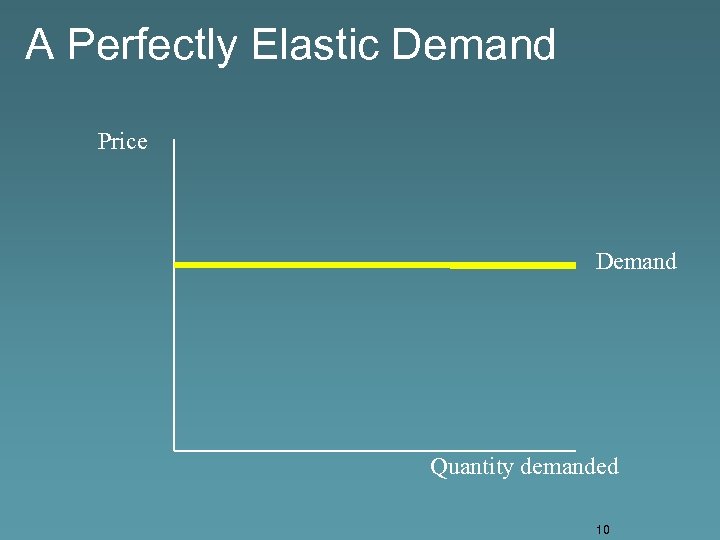 A Perfectly Elastic Demand Price Demand Quantity demanded 10
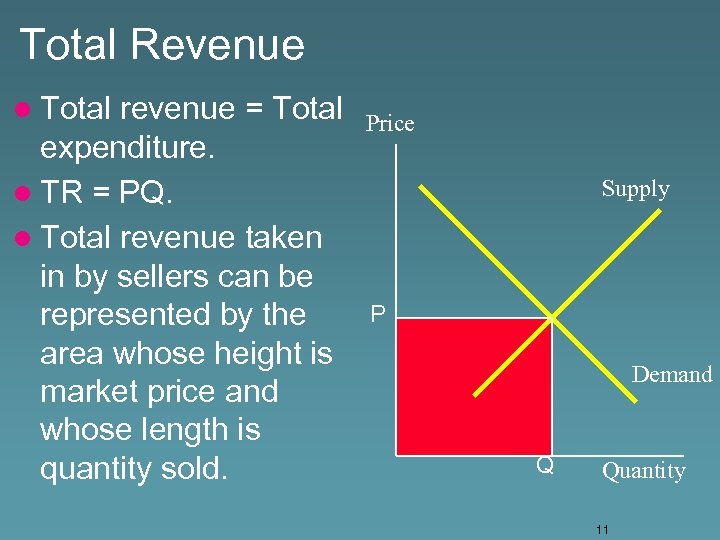 Total Revenue l Total revenue = Total expenditure. l TR = PQ. l Total revenue taken in by sellers can be represented by the area whose height is market price and whose length is quantity sold. Price Supply P Demand Q Quantity 11
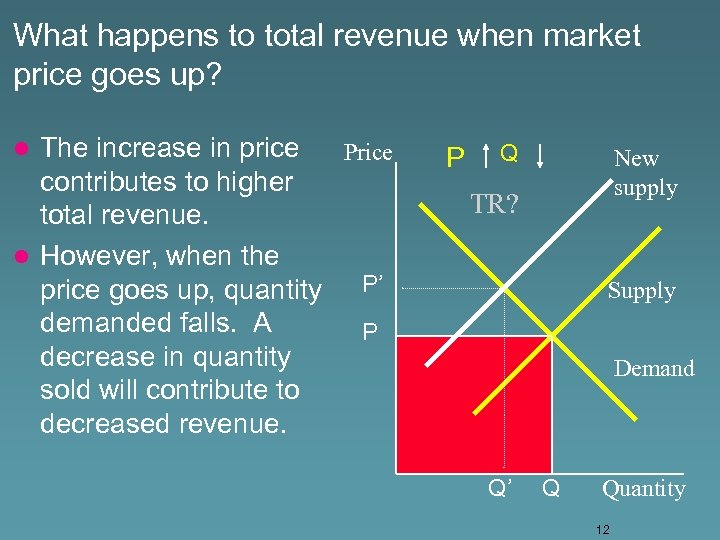 What happens to total revenue when market price goes up? The increase in price Price contributes to higher total revenue. l However, when the price goes up, quantity P’ demanded falls. A P decrease in quantity sold will contribute to decreased revenue. l P Q New supply TR? Supply Demand Q’ Q Quantity 12
 Price Elasticity of Demand Total Revenue If you know the price elasticity of demand of a product, you can forecast the effects of price changes on total revenue. l If demand is elastic, the percentage change in quantity demanded will exceed the percentage change in price that caused it (ignoring direction of change). l If demand is elastic, the positive effect of a price increase on revenue will be offset by the negative effect of the fall in quantity demanded. Total revenue will, therefore, fall. l 13
 Price Elasticity of Demand Total Revenue If demand is inelastic, a price increase will cause total revenue to rise. l If demand is unit elastic, any change in price will have no effect on total revenue. l To test your understanding of the relationship between changes in price, elasticity, and total revenue, work out the effects of a price decrease on revenue in cases of elastic, inelastic, and unit elastic demand. l 14
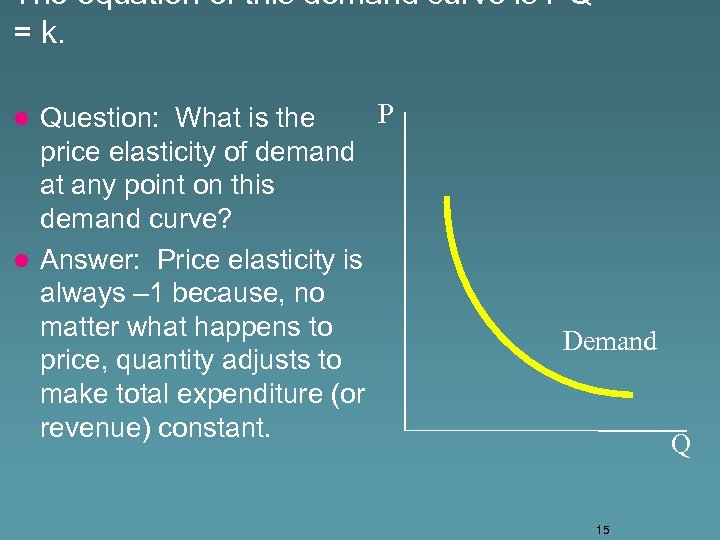 The equation of this demand curve is PQ = k. P Question: What is the price elasticity of demand at any point on this demand curve? l Answer: Price elasticity is always – 1 because, no matter what happens to price, quantity adjusts to make total expenditure (or revenue) constant. l Demand Q 15
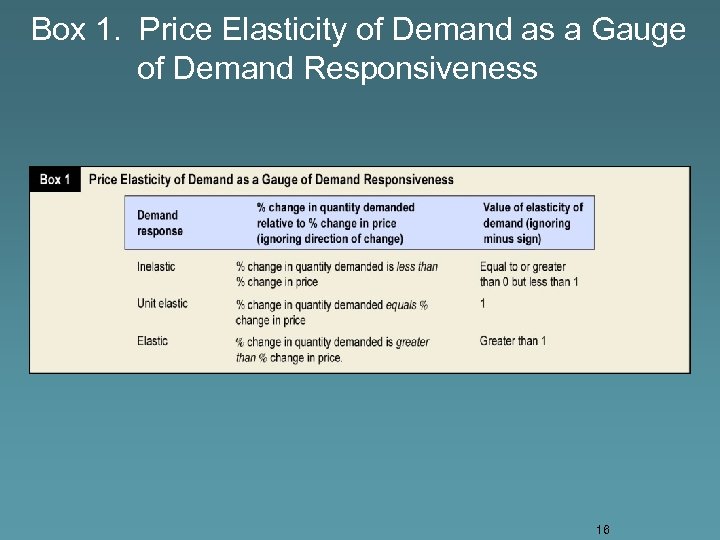 Box 1. Price Elasticity of Demand as a Gauge of Demand Responsiveness 16
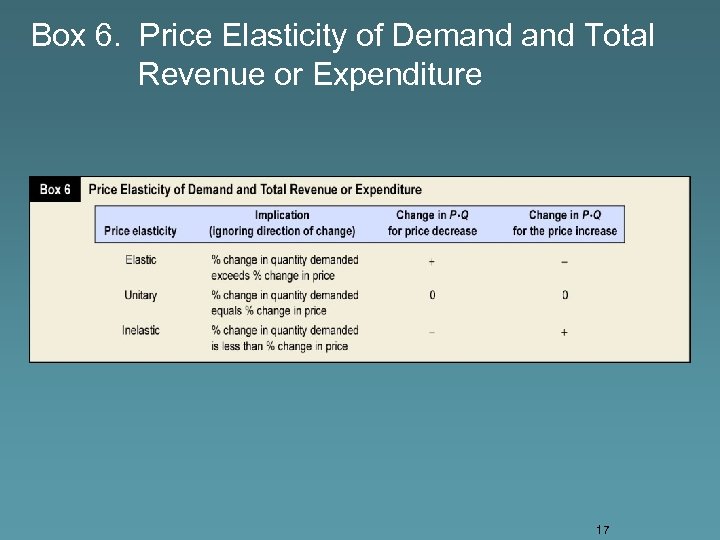 Box 6. Price Elasticity of Demand Total Revenue or Expenditure 17
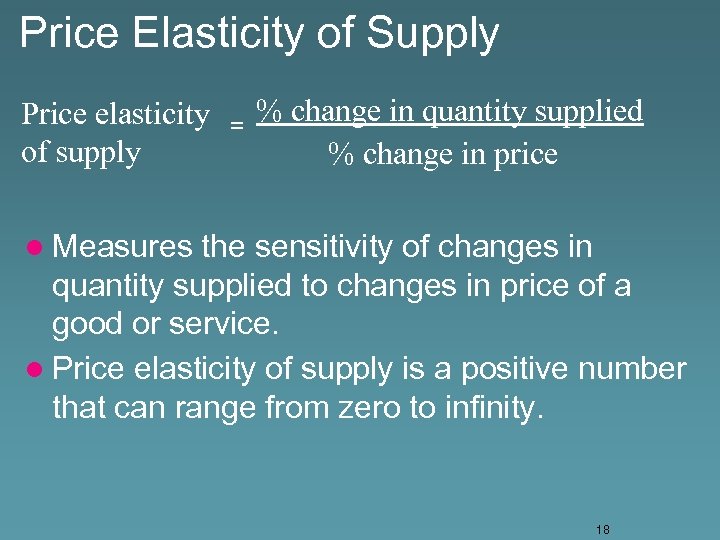 Price Elasticity of Supply Price elasticity of supply = % change in quantity supplied % change in price l Measures the sensitivity of changes in quantity supplied to changes in price of a good or service. l Price elasticity of supply is a positive number that can range from zero to infinity. 18
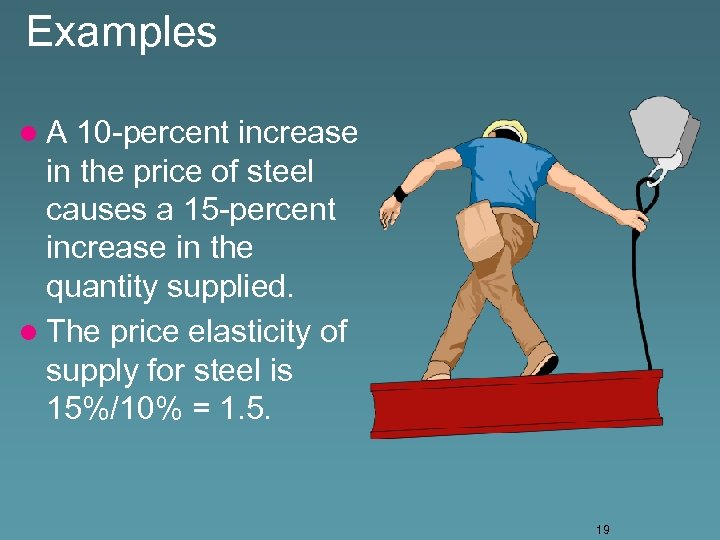 Examples l. A 10 -percent increase in the price of steel causes a 15 -percent increase in the quantity supplied. l The price elasticity of supply for steel is 15%/10% = 1. 5. 19
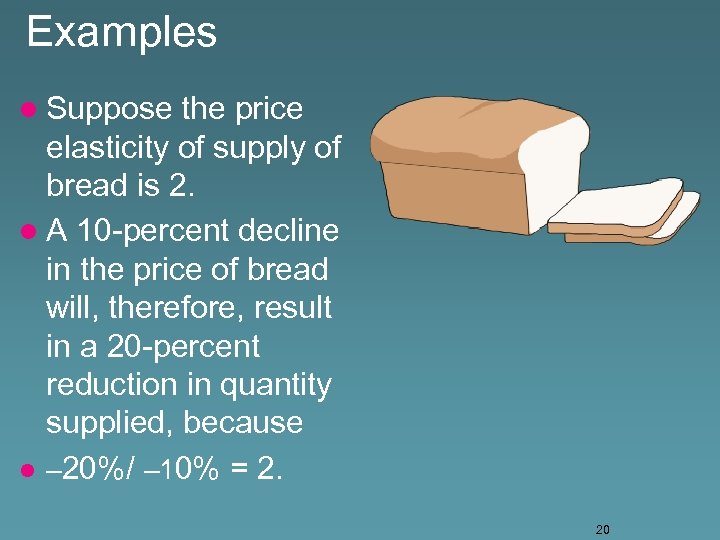 Examples l Suppose the price elasticity of supply of bread is 2. l A 10 -percent decline in the price of bread will, therefore, result in a 20 -percent reduction in quantity supplied, because l – 20%/ – 10% = 2. 20
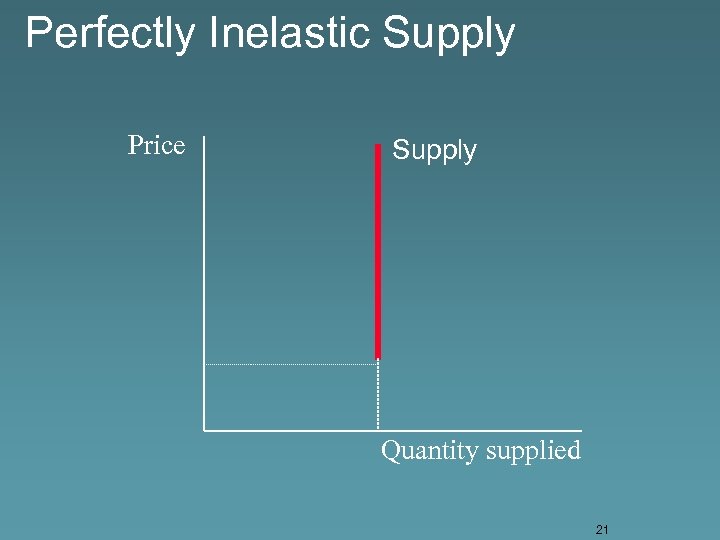 Perfectly Inelastic Supply Price Supply Quantity supplied 21
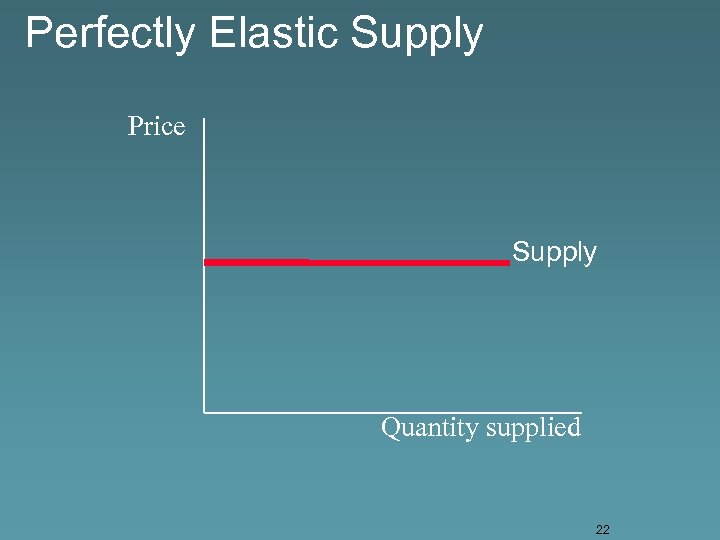 Perfectly Elastic Supply Price Supply Quantity supplied 22
 Using Elasticity to Analyze the Effect of Taxes on Prices l Taxes can affect incentives to buy and sell goods and services. l An excise tax is a tax on the production or sale of a particular product, such as gasoline. 23
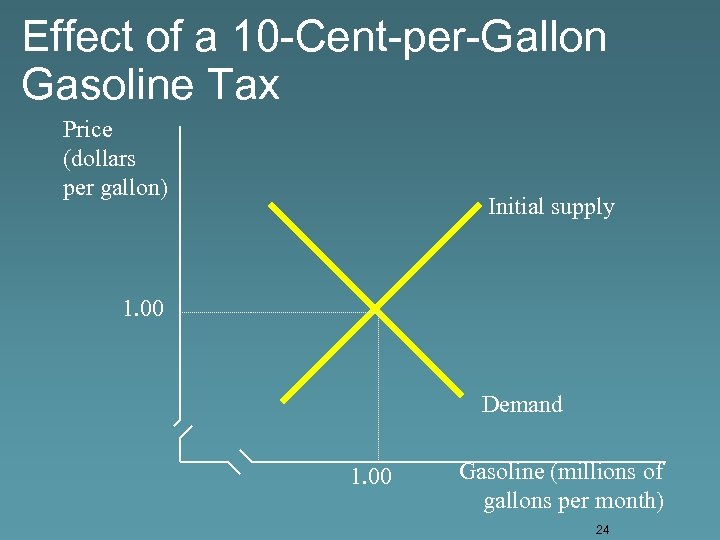 Effect of a 10 -Cent-per-Gallon Gasoline Tax Price (dollars per gallon) Initial supply 1. 00 Demand 1. 00 Gasoline (millions of gallons per month) 24
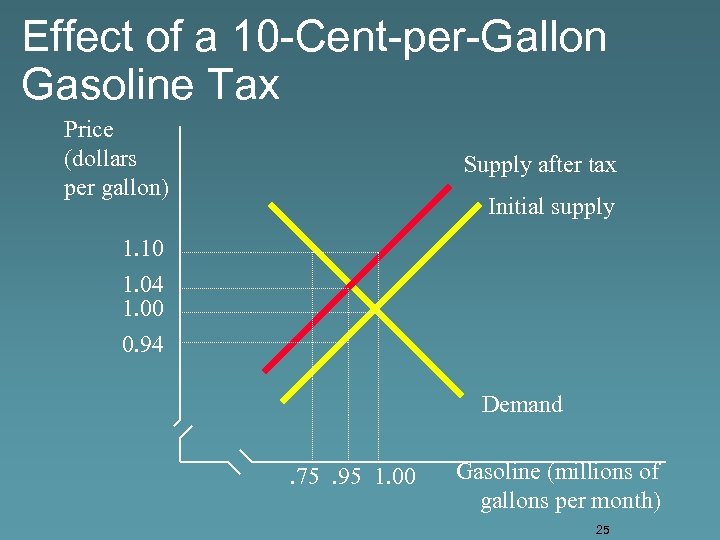 Effect of a 10 -Cent-per-Gallon Gasoline Tax Price (dollars per gallon) Supply after tax Initial supply 1. 10 1. 04 1. 00 0. 94 Demand. 75. 95 1. 00 Gasoline (millions of gallons per month) 25
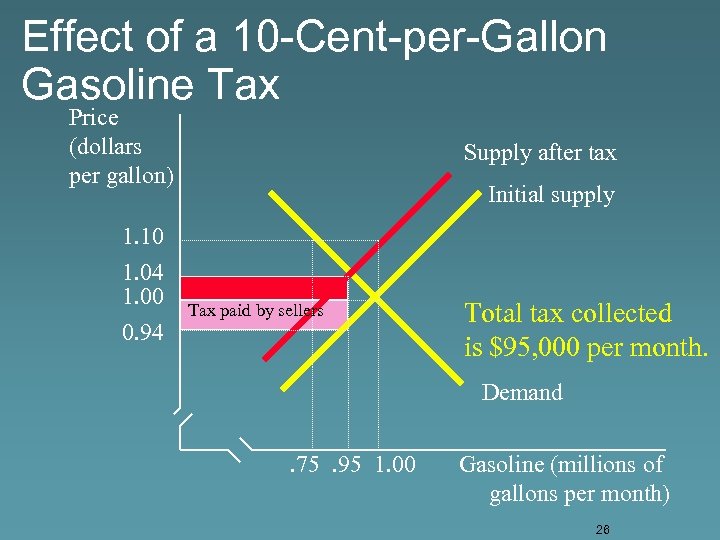 Effect of a 10 -Cent-per-Gallon Gasoline Tax Price (dollars per gallon) 1. 10 1. 04 1. 00 0. 94 Supply after tax Initial supply Tax paid by buyers Tax paid by sellers Total tax collected is $95, 000 per month. Demand . 75. 95 1. 00 Gasoline (millions of gallons per month) 26
 Conclusions l. A tax on the sale of an item is unlikely to raise its equilibrium price by the full amount of the tax per unit. l The tax is likely to increase the price paid by buyers and to decrease the net price received by sellers. l In effect, the tax revenues paid are collected from both buyers and sellers of the product. 27
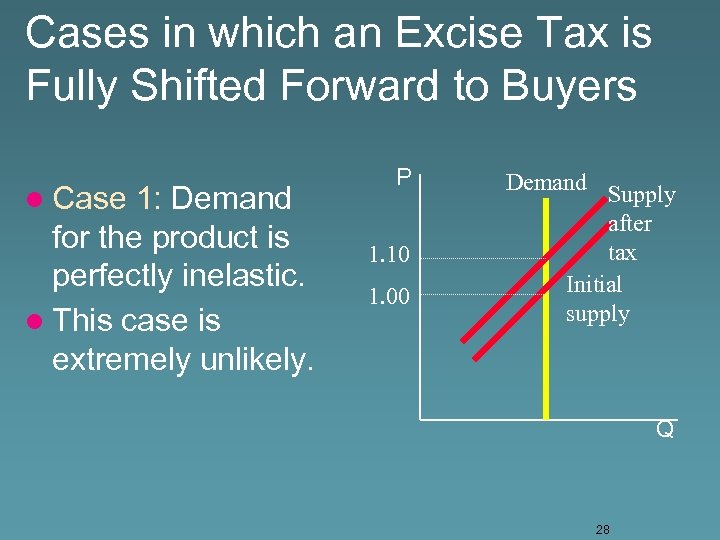 Cases in which an Excise Tax is Fully Shifted Forward to Buyers l Case 1: Demand for the product is perfectly inelastic. l This case is extremely unlikely. P 1. 10 1. 00 Demand Supply after tax Initial supply Q 28
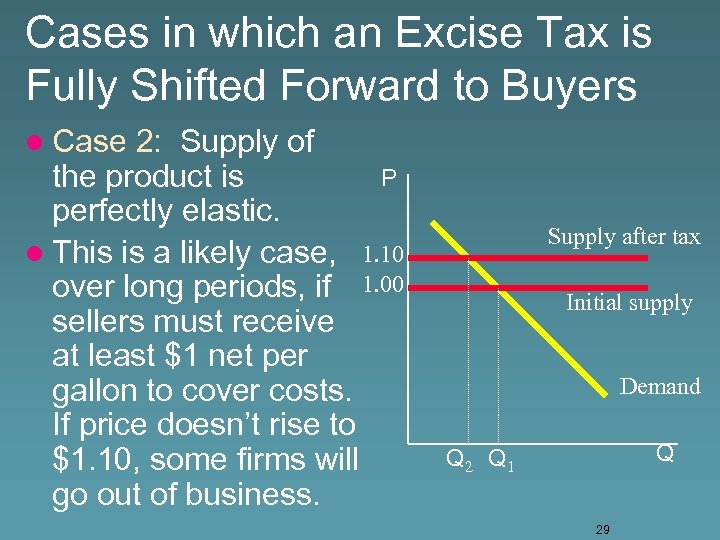 Cases in which an Excise Tax is Fully Shifted Forward to Buyers l Case 2: Supply of P the product is perfectly elastic. l This is a likely case, 1. 10 over long periods, if 1. 00 sellers must receive at least $1 net per gallon to cover costs. If price doesn’t rise to $1. 10, some firms will go out of business. Supply after tax Initial supply Demand Q Q 2 Q 1 29
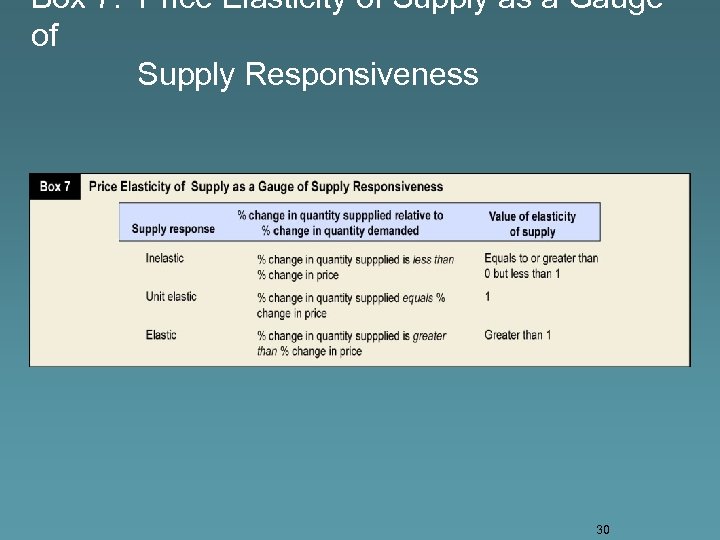 Box 7. Price Elasticity of Supply as a Gauge of Supply Responsiveness 30