



 C E N T R E F O R I N T E G R A T I V E B I O I N F O R M A T I C S V U Master Course DNA/Protein Structurefunction Analysis and Prediction Lecture 7 Protein Secondary Structure Prediction
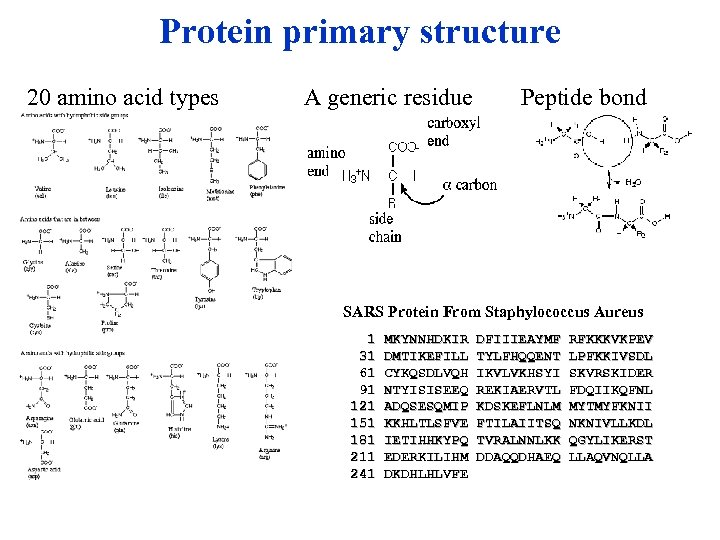 Protein primary structure 20 amino acid types A generic residue Peptide bond SARS Protein From Staphylococcus Aureus 1 31 61 91 121 151 181 211 241 MKYNNHDKIR DMTIKEFILL CYKQSDLVQH NTYISISEEQ ADQSESQMIP KKHLTLSFVE IETIHHKYPQ EDERKILIHM DKDHLHLVFE DFIIIEAYMF TYLFHQQENT IKVLVKHSYI REKIAERVTL KDSKEFLNLM FTILAIITSQ TVRALNNLKK DDAQQDHAEQ RFKKKVKPEV LPFKKIVSDL SKVRSKIDER FDQIIKQFNL MYTMYFKNII NKNIVLLKDL QGYLIKERST LLAQVNQLLA
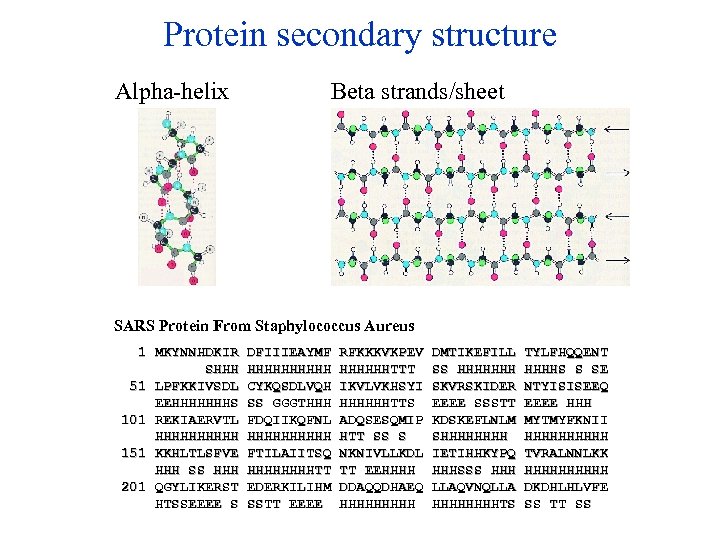 Protein secondary structure Alpha-helix Beta strands/sheet SARS Protein From Staphylococcus Aureus 1 MKYNNHDKIR SHHH 51 LPFKKIVSDL EEHHHHHHHS 101 REKIAERVTL HHHHH 151 KKHLTLSFVE HHH SS HHH 201 QGYLIKERST HTSSEEEE S DFIIIEAYMF HHHHH CYKQSDLVQH SS GGGTHHH FDQIIKQFNL HHHHH FTILAIITSQ HHHHTT EDERKILIHM SSTT EEEE RFKKKVKPEV HHHHHHTTT IKVLVKHSYI HHHHHHTTS ADQSESQMIP HTT SS S NKNIVLLKDL TT EEHHHH DDAQQDHAEQ HHHHH DMTIKEFILL SS HHHHHHH SKVRSKIDER EEEE SSSTT KDSKEFLNLM SHHHH IETIHHKYPQ HHHSSS HHH LLAQVNQLLA HHHHTS TYLFHQQENT HHHHS S SE NTYISISEEQ EEEE HHH MYTMYFKNII HHHHH TVRALNNLKK HHHHH DKDHLHLVFE SS TT SS
 Secondary Structure • An easier question – what is the secondary structure when the 3 D structure is known?
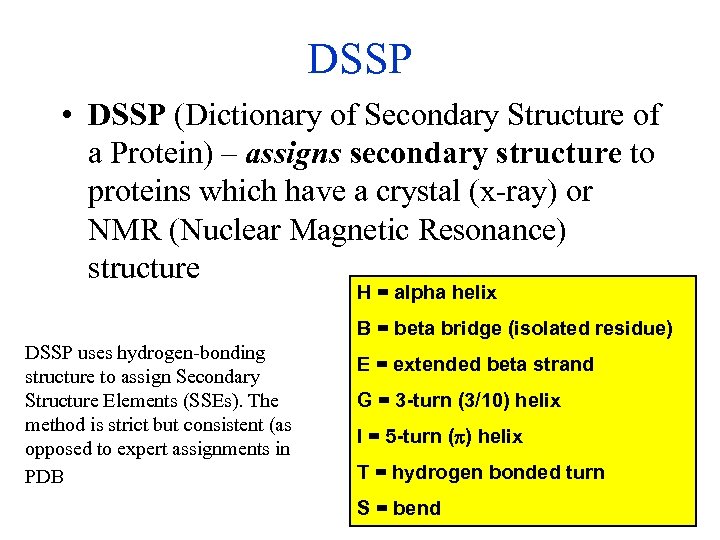 DSSP • DSSP (Dictionary of Secondary Structure of a Protein) – assigns secondary structure to proteins which have a crystal (x-ray) or NMR (Nuclear Magnetic Resonance) structure H = alpha helix B = beta bridge (isolated residue) DSSP uses hydrogen-bonding structure to assign Secondary Structure Elements (SSEs). The method is strict but consistent (as opposed to expert assignments in PDB E = extended beta strand G = 3 -turn (3/10) helix I = 5 -turn ( ) helix T = hydrogen bonded turn S = bend
 A more challenging task: Predicting secondary structure from primary sequence alone
 Secondary Structure Prediction Early On • Some clever ad hoc tricks • Prediction on single sequence • Exploiting stereochemistry, residue contact patterns, information theory, preference calculation, etc.
 Improvements in the 1990’s • Conservation in MSA • Smarter machine learning algorithms (e. g. HMM, neural networks).
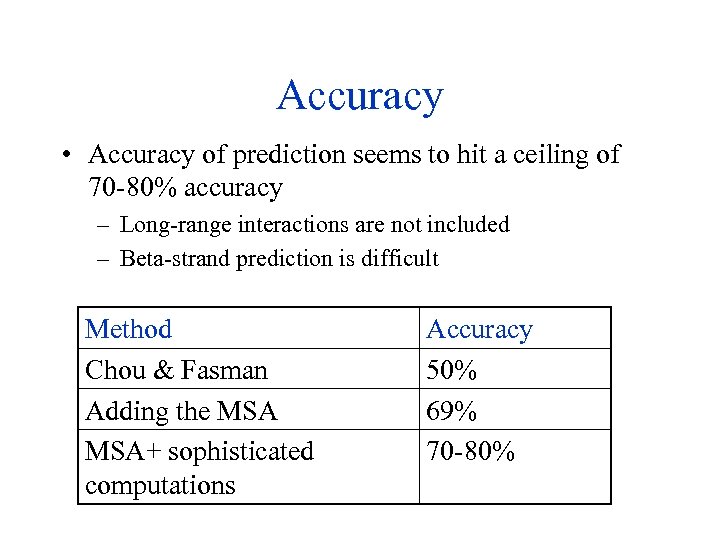 Accuracy • Accuracy of prediction seems to hit a ceiling of 70 -80% accuracy – Long-range interactions are not included – Beta-strand prediction is difficult Method Chou & Fasman Adding the MSA+ sophisticated computations Accuracy 50% 69% 70 -80%
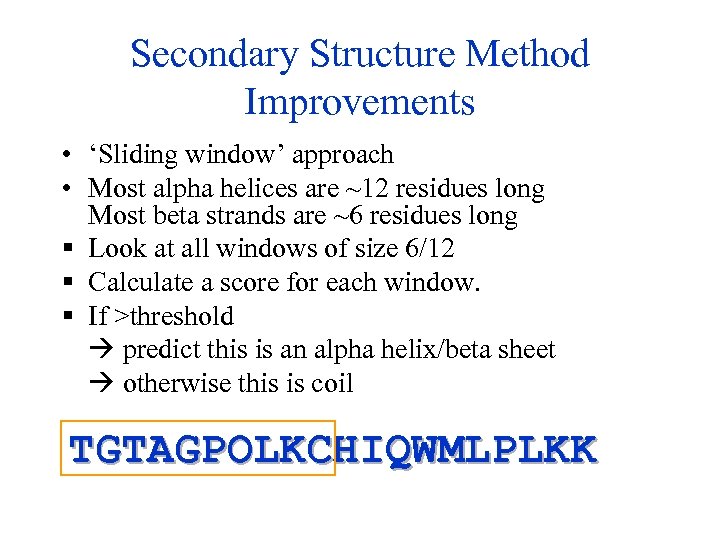 Secondary Structure Method Improvements • ‘Sliding window’ approach • Most alpha helices are ~12 residues long Most beta strands are ~6 residues long § Look at all windows of size 6/12 § Calculate a score for each window. § If >threshold predict this is an alpha helix/beta sheet otherwise this is coil TGTAGPOLKCHIQWMLPLKK
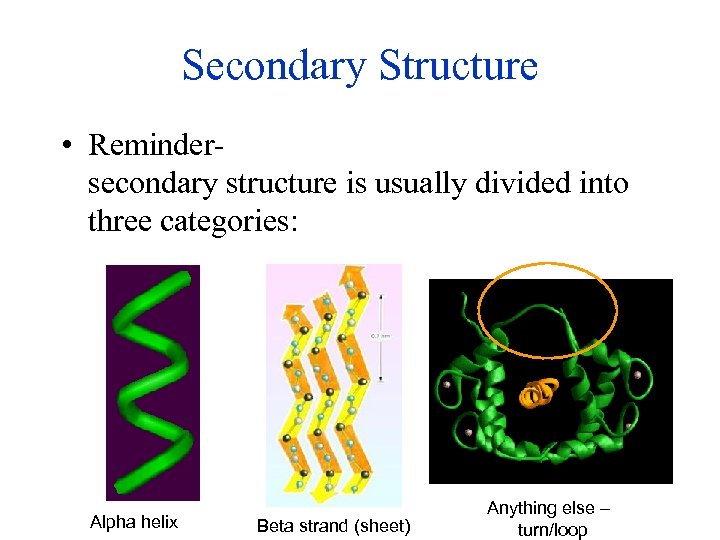 Secondary Structure • Reminder- secondary structure is usually divided into three categories: Alpha helix Beta strand (sheet) Anything else – turn/loop
 Protein secondary structure Why bother predicting them? SS Information can be used for downstream analysis: • Framework model of protein folding, collapse secondary structures • Fold prediction by comparing to database of known structures • Can be used as information to predict function • Can also be used to help align sequences (e. g. SSPraline)
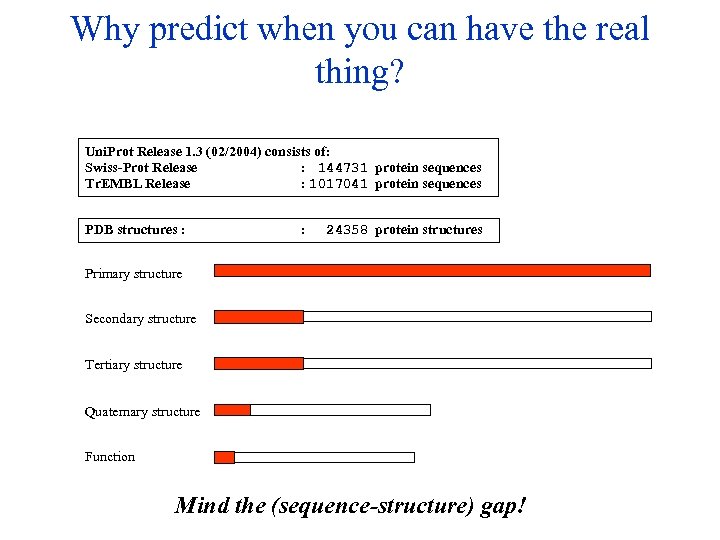 Why predict when you can have the real thing? Uni. Prot Release 1. 3 (02/2004) consists of: Swiss-Prot Release : 144731 protein sequences Tr. EMBL Release : 1017041 protein sequences PDB structures : : 24358 protein structures Primary structure Secondary structure Tertiary structure Quaternary structure Function Mind the (sequence-structure) gap!
 What we need to do 1) Train a method on a diverse set of proteins of known structure 2) Test the method on a test separate from our training set 3) Assess our results in a useful way against a standard of truth 4) Compare to already existing methods using the same assessment
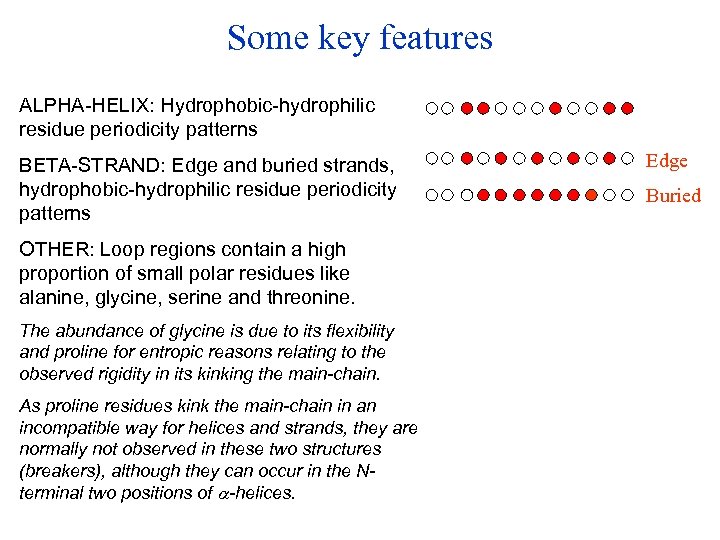 Some key features ALPHA-HELIX: Hydrophobic-hydrophilic residue periodicity patterns BETA-STRAND: Edge and buried strands, hydrophobic-hydrophilic residue periodicity patterns OTHER: Loop regions contain a high proportion of small polar residues like alanine, glycine, serine and threonine. The abundance of glycine is due to its flexibility and proline for entropic reasons relating to the observed rigidity in its kinking the main-chain. As proline residues kink the main-chain in an incompatible way for helices and strands, they are normally not observed in these two structures (breakers), although they can occur in the Nterminal two positions of a-helices. Edge Buried
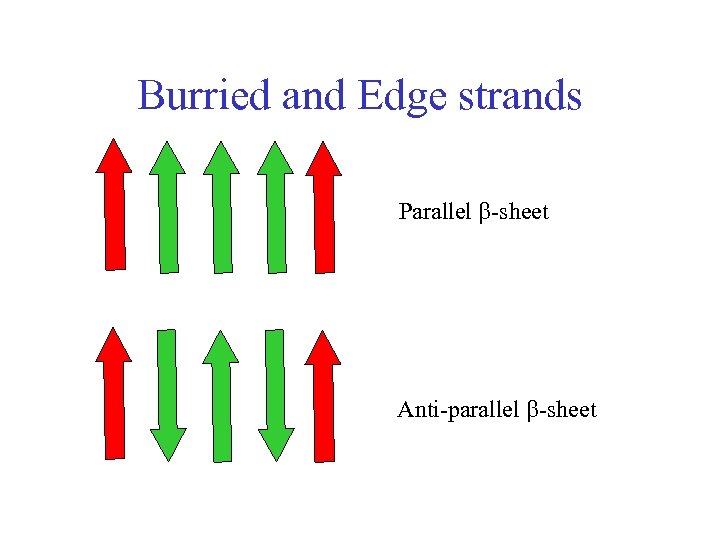 Burried and Edge strands Parallel -sheet Anti-parallel -sheet
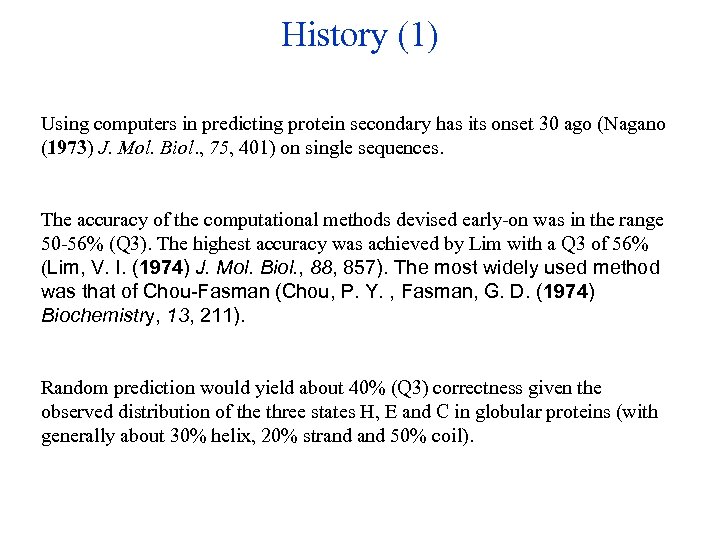 History (1) Using computers in predicting protein secondary has its onset 30 ago (Nagano (1973) J. Mol. Biol. , 75, 401) on single sequences. The accuracy of the computational methods devised early-on was in the range 50 -56% (Q 3). The highest accuracy was achieved by Lim with a Q 3 of 56% (Lim, V. I. (1974) J. Mol. Biol. , 88, 857). The most widely used method was that of Chou-Fasman (Chou, P. Y. , Fasman, G. D. (1974) Biochemistry, 13, 211). Random prediction would yield about 40% (Q 3) correctness given the observed distribution of the three states H, E and C in globular proteins (with generally about 30% helix, 20% strand 50% coil).
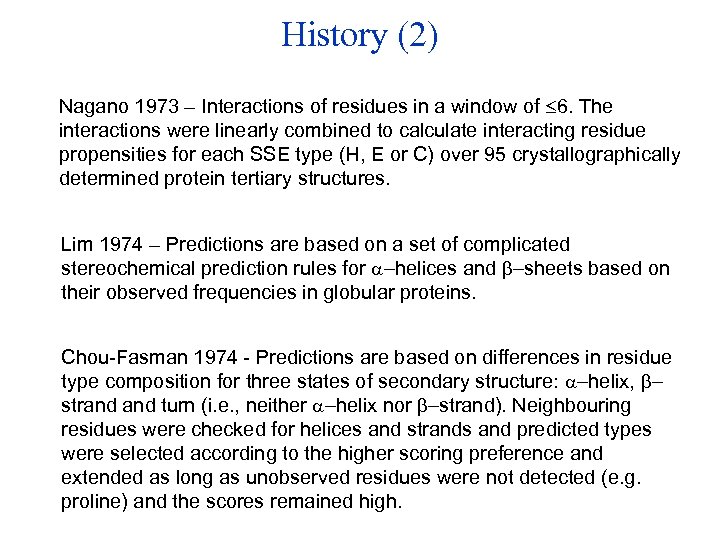 History (2) Nagano 1973 – Interactions of residues in a window of 6. The interactions were linearly combined to calculate interacting residue propensities for each SSE type (H, E or C) over 95 crystallographically determined protein tertiary structures. Lim 1974 – Predictions are based on a set of complicated stereochemical prediction rules for -helices and -sheets based on their observed frequencies in globular proteins. Chou-Fasman 1974 - Predictions are based on differences in residue type composition for three states of secondary structure: -helix, strand turn (i. e. , neither -helix nor -strand). Neighbouring residues were checked for helices and strands and predicted types were selected according to the higher scoring preference and extended as long as unobserved residues were not detected (e. g. proline) and the scores remained high.
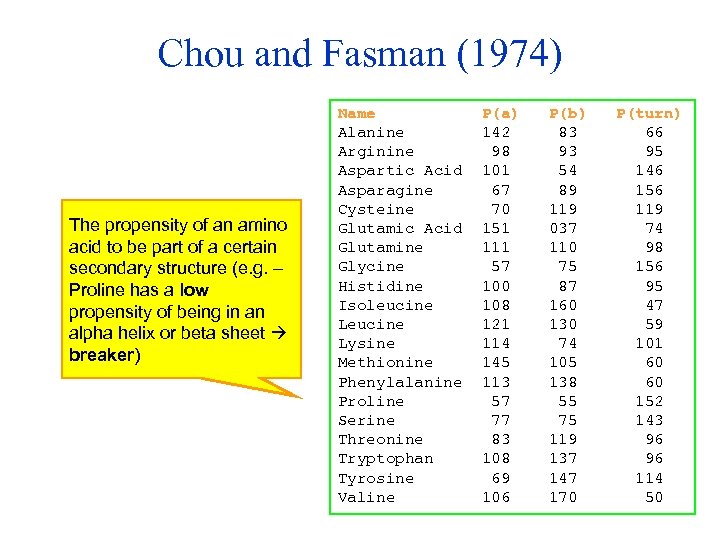 Chou and Fasman (1974) The propensity of an amino acid to be part of a certain secondary structure (e. g. – Proline has a low propensity of being in an alpha helix or beta sheet breaker) Name Alanine Arginine Aspartic Acid Asparagine Cysteine Glutamic Acid Glutamine Glycine Histidine Isoleucine Lysine Methionine Phenylalanine Proline Serine Threonine Tryptophan Tyrosine Valine P(a) 142 98 101 67 70 151 111 57 100 108 121 114 145 113 57 77 83 108 69 106 P(b) 83 93 54 89 119 037 110 75 87 160 130 74 105 138 55 75 119 137 147 170 P(turn) 66 95 146 156 119 74 98 156 95 47 59 101 60 60 152 143 96 96 114 50
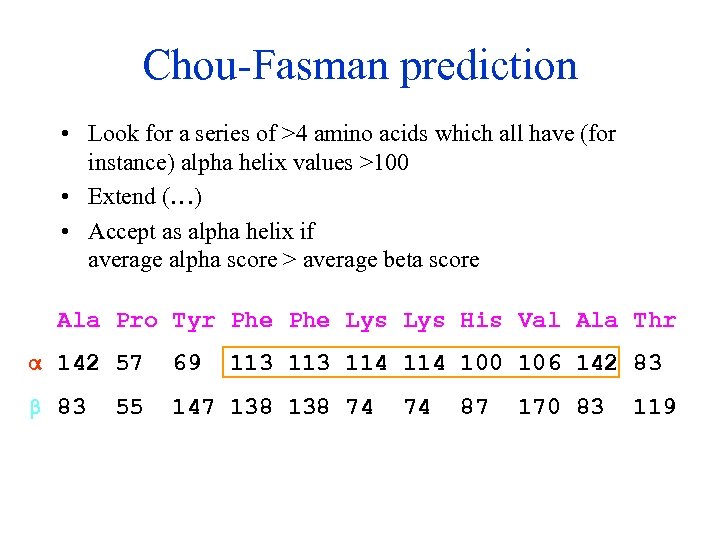 Chou-Fasman prediction • Look for a series of >4 amino acids which all have (for instance) alpha helix values >100 • Extend (…) • Accept as alpha helix if average alpha score > average beta score Ala Pro Tyr Phe Lys His Val Ala Thr α 142 57 69 β 83 147 138 74 55 113 114 100 106 142 83 74 87 170 83 119
 Chou and Fasman (1974) • Success rate of 50%
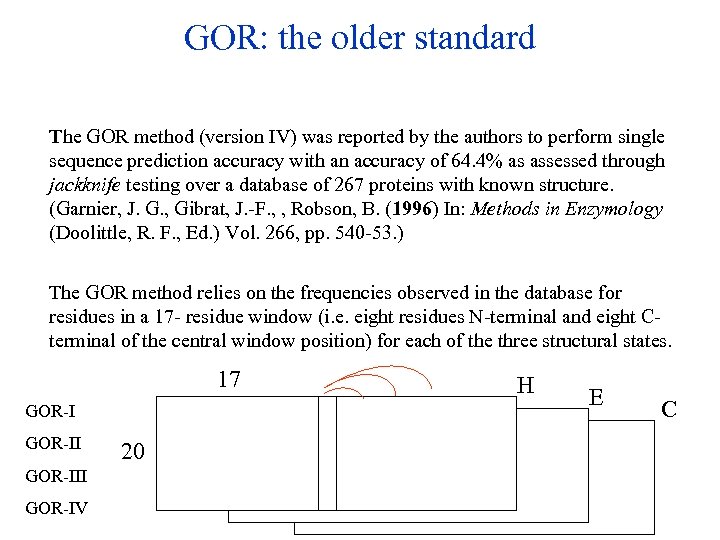 GOR: the older standard The GOR method (version IV) was reported by the authors to perform single sequence prediction accuracy with an accuracy of 64. 4% as assessed through jackknife testing over a database of 267 proteins with known structure. (Garnier, J. G. , Gibrat, J. -F. , , Robson, B. (1996) In: Methods in Enzymology (Doolittle, R. F. , Ed. ) Vol. 266, pp. 540 -53. ) The GOR method relies on the frequencies observed in the database for residues in a 17 - residue window (i. e. eight residues N-terminal and eight Cterminal of the central window position) for each of the three structural states. 17 GOR-III GOR-IV 20 H E C
 How do secondary structure prediction methods work? • They often use a window approach to include a local stretch of amino acids around a considered sequence position in predicting the secondary structure state of that position • The next slides provide basic explanations of the window approach (for the GOR method as an example) and two basic techniques to train a method and predict SSEs: k-nearest neighbour and neural nets
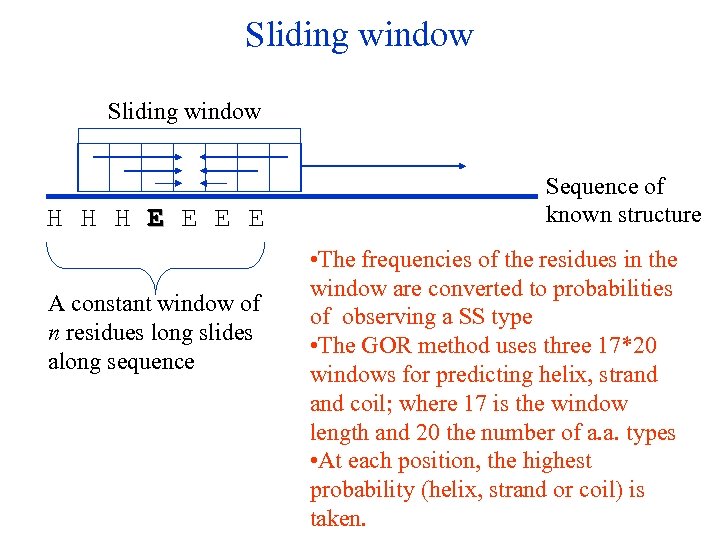
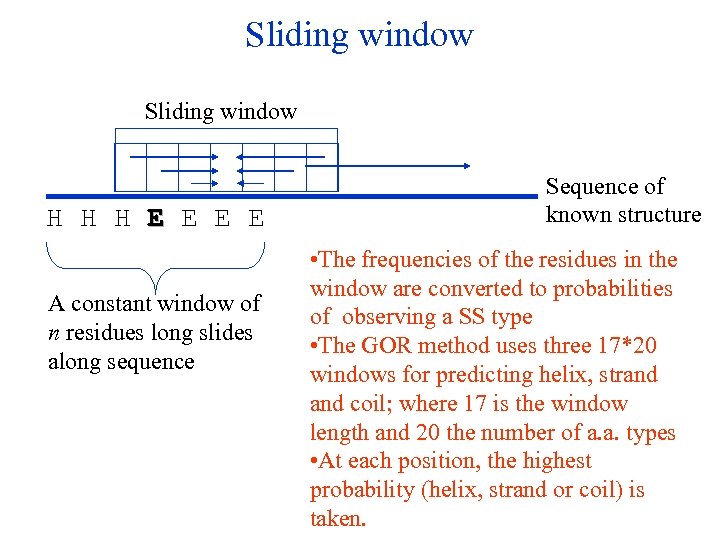
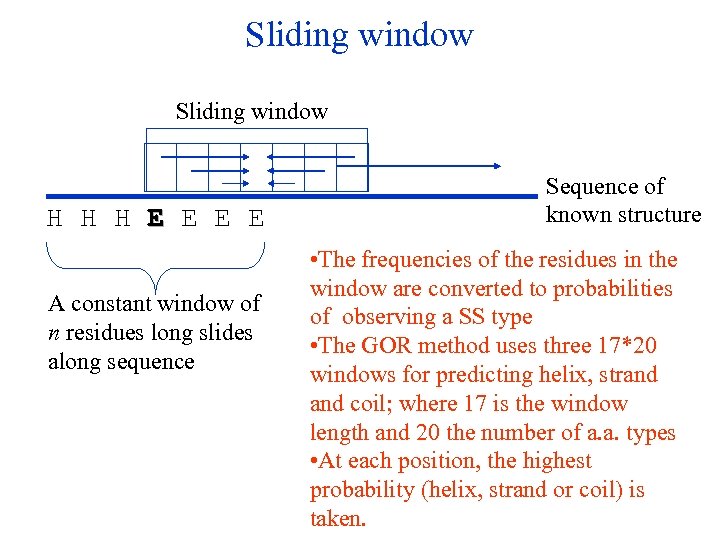
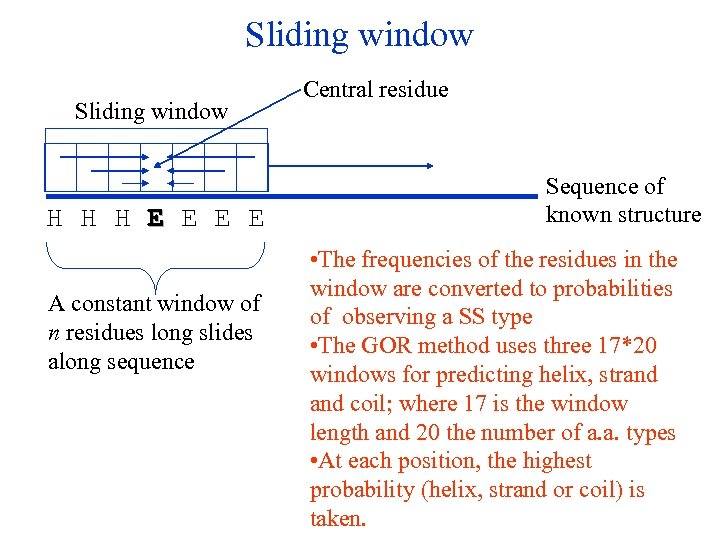 Sliding window H H H E E A constant window of n residues long slides along sequence Central residue Sequence of known structure • The frequencies of the residues in the window are converted to probabilities of observing a SS type • The GOR method uses three 17*20 windows for predicting helix, strand coil; where 17 is the window length and 20 the number of a. a. types • At each position, the highest probability (helix, strand or coil) is taken.
 Sliding window H H H E E A constant window of n residues long slides along sequence Sequence of known structure • The frequencies of the residues in the window are converted to probabilities of observing a SS type • The GOR method uses three 17*20 windows for predicting helix, strand coil; where 17 is the window length and 20 the number of a. a. types • At each position, the highest probability (helix, strand or coil) is taken.
 Sliding window H H H E E A constant window of n residues long slides along sequence Sequence of known structure • The frequencies of the residues in the window are converted to probabilities of observing a SS type • The GOR method uses three 17*20 windows for predicting helix, strand coil; where 17 is the window length and 20 the number of a. a. types • At each position, the highest probability (helix, strand or coil) is taken.
 Sliding window H H H E E A constant window of n residues long slides along sequence Sequence of known structure • The frequencies of the residues in the window are converted to probabilities of observing a SS type • The GOR method uses three 17*20 windows for predicting helix, strand coil; where 17 is the window length and 20 the number of a. a. types • At each position, the highest probability (helix, strand or coil) is taken.
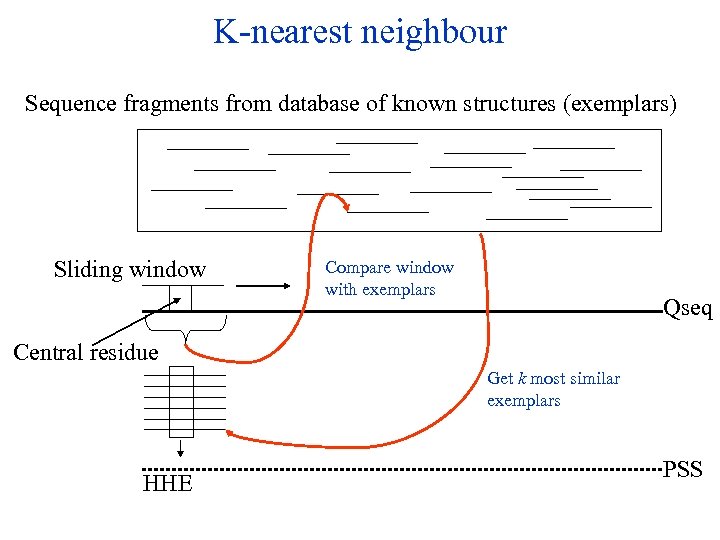 K-nearest neighbour Sequence fragments from database of known structures (exemplars) Sliding window Compare window with exemplars Qseq Central residue Get k most similar exemplars HHE PSS
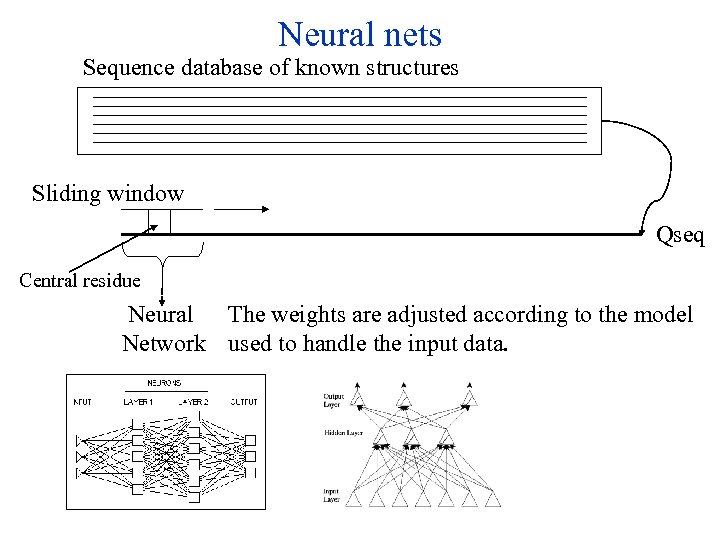 Neural nets Sequence database of known structures Sliding window Qseq Central residue Neural The weights are adjusted according to the model Network used to handle the input data.
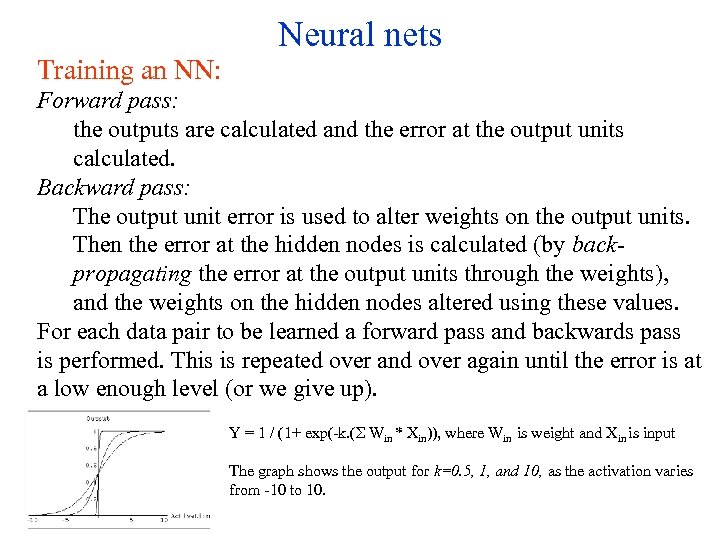 Training an NN: Neural nets Forward pass: the outputs are calculated and the error at the output units calculated. Backward pass: The output unit error is used to alter weights on the output units. Then the error at the hidden nodes is calculated (by backpropagating the error at the output units through the weights), and the weights on the hidden nodes altered using these values. For each data pair to be learned a forward pass and backwards pass is performed. This is repeated over and over again until the error is at a low enough level (or we give up). Y = 1 / (1+ exp(-k. (Σ Win * Xin)), where Win is weight and Xin is input The graph shows the output for k=0. 5, 1, and 10, as the activation varies from -10 to 10.
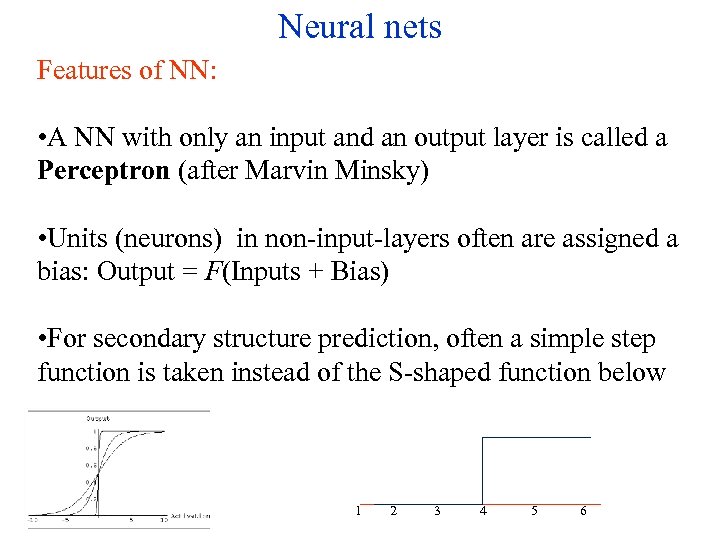 Neural nets Features of NN: • A NN with only an input and an output layer is called a Perceptron (after Marvin Minsky) • Units (neurons) in non-input-layers often are assigned a bias: Output = F(Inputs + Bias) • For secondary structure prediction, often a simple step function is taken instead of the S-shaped function below 1 2 3 4 5 6
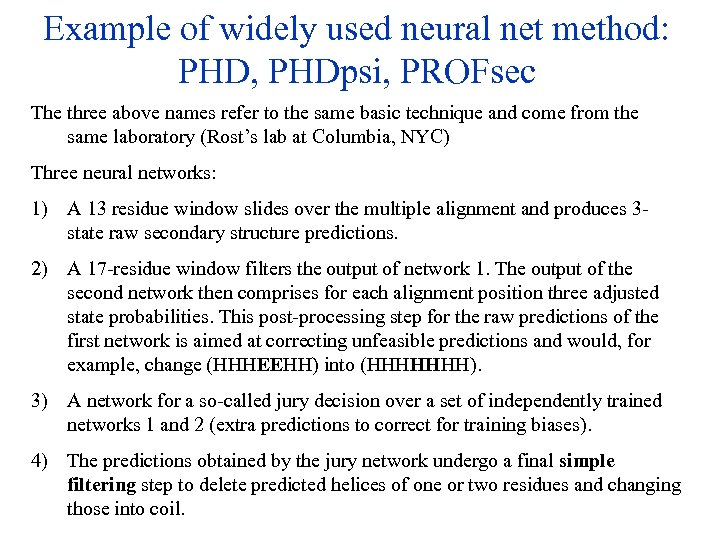 Example of widely used neural net method: PHD, PHDpsi, PROFsec The three above names refer to the same basic technique and come from the same laboratory (Rost’s lab at Columbia, NYC) Three neural networks: 1) A 13 residue window slides over the multiple alignment and produces 3 state raw secondary structure predictions. 2) A 17 -residue window filters the output of network 1. The output of the second network then comprises for each alignment position three adjusted state probabilities. This post-processing step for the raw predictions of the first network is aimed at correcting unfeasible predictions and would, for example, change (HHHEEHH) into (HHHHHHH). 3) A network for a so-called jury decision over a set of independently trained networks 1 and 2 (extra predictions to correct for training biases). 4) The predictions obtained by the jury network undergo a final simple filtering step to delete predicted helices of one or two residues and changing those into coil.
 Multiple Sequence Alignments are the superior input to a secondary structure prediction method Multiple sequence alignment: three or more sequences that are aligned so that overall the greatest number of similar characters are matched in the same column of the alignment. Enables detection of: • Regions of high mutation rates over evolutionary time. • Evolutionary conservation. • Regions or domains that are critical to functionality. • Sequence changes that cause a change in functionality. Modern SS prediction methods all use Multiple Sequence Alignments (compared to single sequence prediction >10% better)
 Rules of thumb when looking at a multiple alignment (MA) • • Hydrophobic residues are internal Gly (Thr, Ser) in loops MA: hydrophobic block -> internal -strand MA: alternating (1 -1) hydrophobic/hydrophilic => edge -strand • MA: alternating 2 -2 (or 3 -1) periodicity => -helix • MA: gaps in loops • MA: Conserved column => functional? => active site
 Rules of thumb when looking at a multiple alignment (MA) • Active site residues are together in 3 D structure • MA: ‘inconsistent’ alignment columns and alignment match errors! • Helices often cover up core of strands • Helices less extended than strands => more residues to cross protein • - - motif is right-handed in >95% of cases (with parallel strands) • Secondary structures have local anomalies, e. g. -bulges
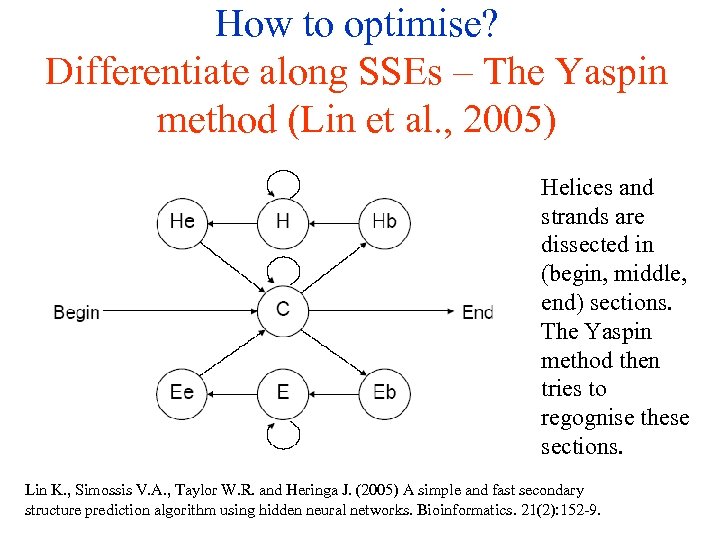 How to optimise? Differentiate along SSEs – The Yaspin method (Lin et al. , 2005) Helices and strands are dissected in (begin, middle, end) sections. The Yaspin method then tries to regognise these sections. Lin K. , Simossis V. A. , Taylor W. R. and Heringa J. (2005) A simple and fast secondary structure prediction algorithm using hidden neural networks. Bioinformatics. 21(2): 152 -9.
 How to optimise? Capture long-range interactions (Important for -strand prediction) • Predator (Frishman and Argos, 1995) – side-chains show subtle patterns in cross-strand contacts • SSPro (Polastri et al. , 2002) – uses bidirectional recurrent neural networks – One basic sliding window is used, with two more windows that slight in from opposites at each basic window position. This way all-possible long-range interactions are checked.
 A stepwise hierarchy 1) Sequence database searching • PSI-BLAST, SAM-T 2 K These basically are local alignment techniques to collect homologous sequences from a database so a multiple alignment containing the query sequence can be made 2) Multiple sequence alignment of selected sequences • PSSMs, HMM models, MSAs 3) Secondary structure prediction of query sequences based on the generated MSAs • Single methods: PHD, PROFsec, PSIPred, SSPro, JNET (consensus method), YASPIN • consensus methods using best methods § Issue is accuracy and correlation of methods used in consensus
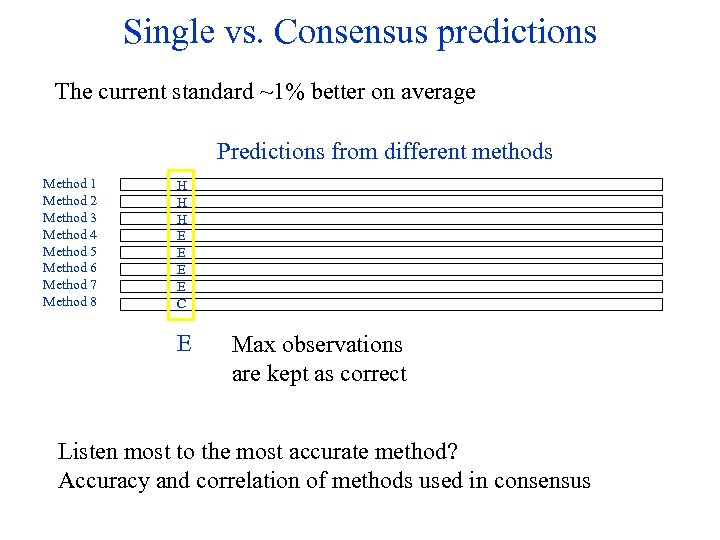 Single vs. Consensus predictions The current standard ~1% better on average Predictions from different methods Method 1 Method 2 Method 3 Method 4 Method 5 Method 6 Method 7 Method 8 H H H E E C E Max observations are kept as correct Listen most to the most accurate method? Accuracy and correlation of methods used in consensus
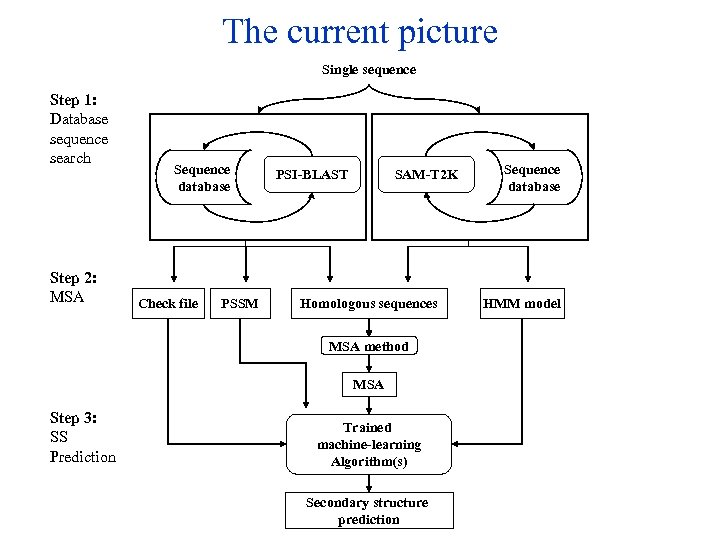 The current picture Single sequence Step 1: Database sequence search Step 2: MSA Sequence database Check file PSSM PSI-BLAST SAM-T 2 K Homologous sequences MSA method MSA Step 3: SS Prediction Trained machine-learning Algorithm(s) Secondary structure prediction Sequence database HMM model
 Jackknife test A jackknife test is a test scenario for prediction methods that need to be tuned using a training database. In its simplest form: For a database containing N sequences with known tertiary (and hence secondary) structure, a prediction is made for one test sequence after training the method on a training database containing the N-1 remaining sequences (one-at-a-time jackknife testing). A complete jackknife test involves N such predictions, after which for all sequences a prediction is made. If N is large enough, meaningful statistics can be derived from the observed performance. For example, the mean prediction accuracy and associated standard deviation give a good indication of the sustained performance of the method tested. If the jackknife test is computationally too expensive, the database can be split in larger groups, which are then jackknifed. The latter is called Cross -validation
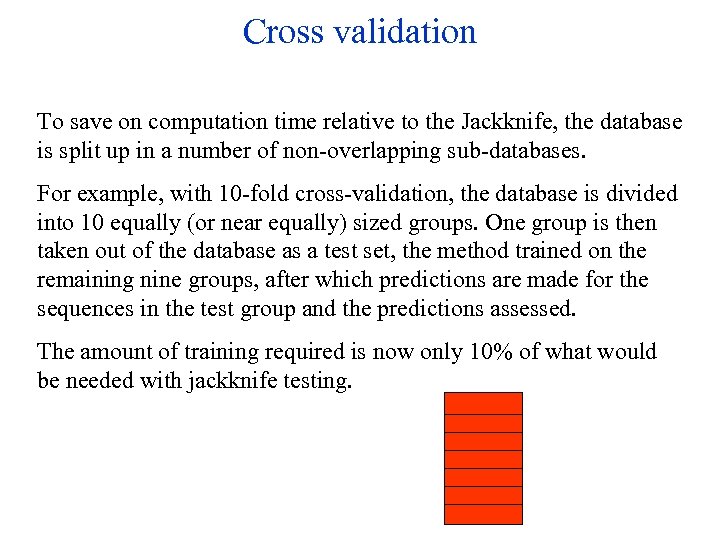 Cross validation To save on computation time relative to the Jackknife, the database is split up in a number of non-overlapping sub-databases. For example, with 10 -fold cross-validation, the database is divided into 10 equally (or near equally) sized groups. One group is then taken out of the database as a test set, the method trained on the remaining nine groups, after which predictions are made for the sequences in the test group and the predictions assessed. The amount of training required is now only 10% of what would be needed with jackknife testing.
 Standards of truth What is a standard of truth? - a structurally derived secondary structure assignment (using a 3 D structure from the PDB) Why do we need one? - it dictates how accurate our prediction is How do we get it? - methods use hydrogen-bonding patterns along the main-chain or knowledge-based approaches to assign the Secondary Structure Elements (SSEs) in experimentally solved tertiary structures.
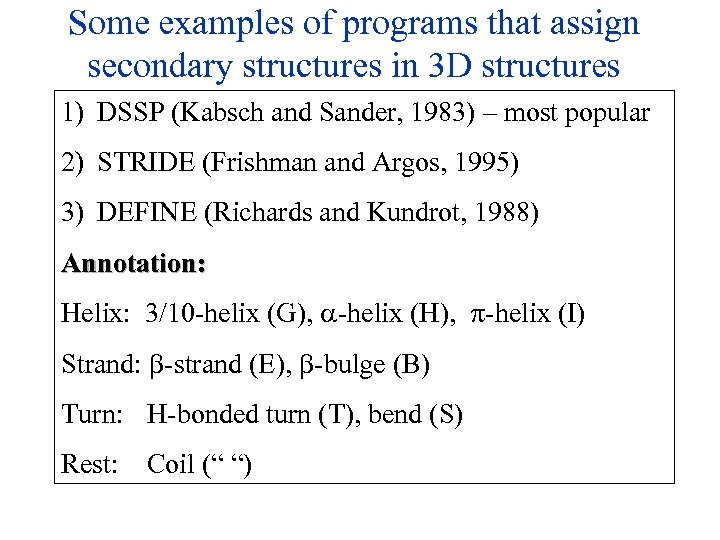 Some examples of programs that assign secondary structures in 3 D structures 1) DSSP (Kabsch and Sander, 1983) – most popular 2) STRIDE (Frishman and Argos, 1995) 3) DEFINE (Richards and Kundrot, 1988) Annotation: Helix: 3/10 -helix (G), -helix (H), -helix (I) Strand: -strand (E), -bulge (B) Turn: H-bonded turn (T), bend (S) Rest: Coil (“ “)
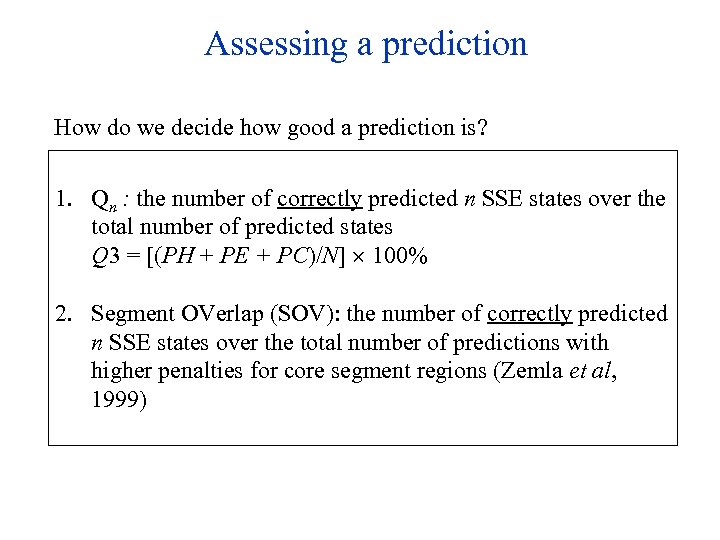 Assessing a prediction How do we decide how good a prediction is? 1. Qn : the number of correctly predicted n SSE states over the total number of predicted states Q 3 = [(PH + PE + PC)/N] 100% 2. Segment OVerlap (SOV): the number of correctly predicted n SSE states over the total number of predictions with higher penalties for core segment regions (Zemla et al, 1999)
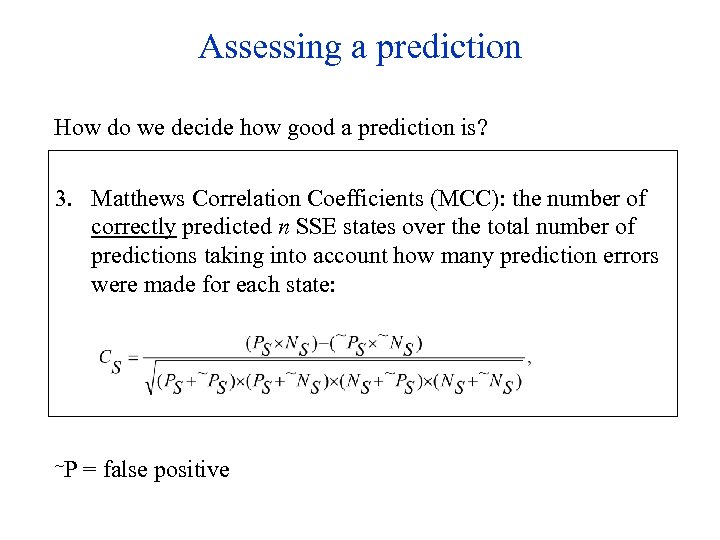 Assessing a prediction How do we decide how good a prediction is? 3. Matthews Correlation Coefficients (MCC): the number of correctly predicted n SSE states over the total number of predictions taking into account how many prediction errors were made for each state: ~P = false positive
 Some Servers • PSI-pred uses PSI-BLAST profiles • JPRED Consensus prediction • PHD home page – all-in-one prediction, includes secondary structure • nn. Predict – uses neural networks • BMERC PSA Server • IBIVU YASPIN server • BMC launcher – choose your prediction program