 Скачать презентацию C Biblical Interpretation Randy Flores SVD Theology 121
27dd6893a636f2bd5233c2c1296bffd0.ppt
- Количество слайдов: 57



C. Biblical Interpretation Randy Flores, SVD Theology 121 Ateneo de Manila University Philippines
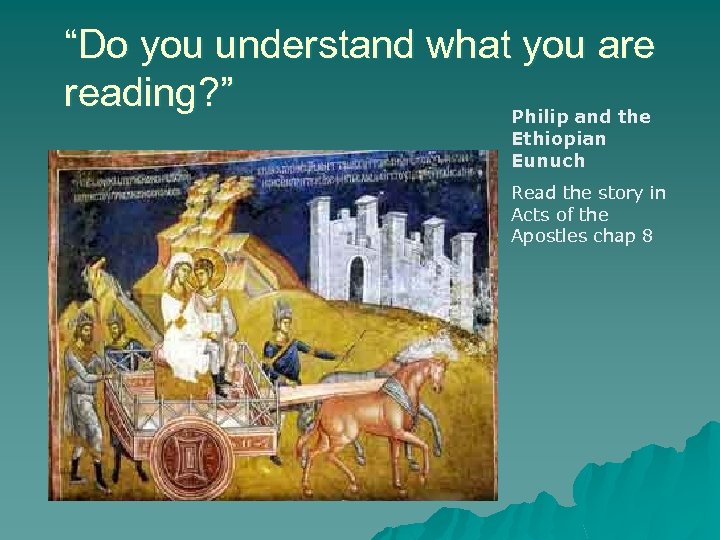
“Do you understand what you are reading? ” Philip and the Ethiopian Eunuch Read the story in Acts of the Apostles chap 8
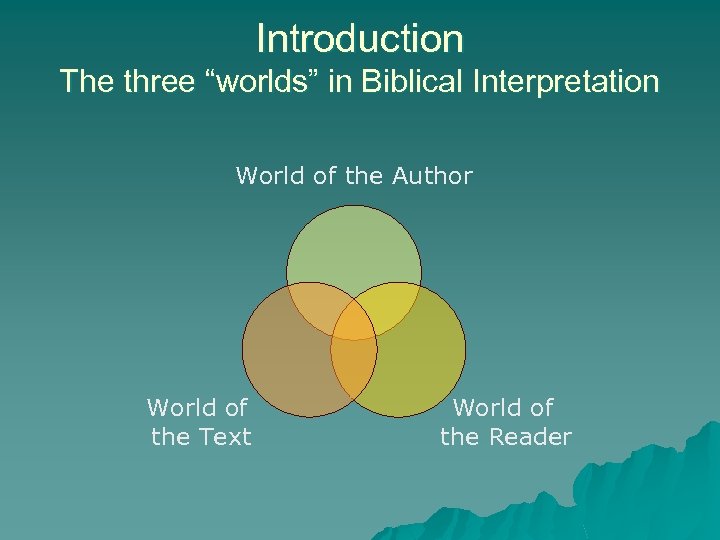
Introduction The three “worlds” in Biblical Interpretation World of the Author World of the Text World of the Reader
The Two-Fold Sense of the Sacred Scripture u Literal Sense – What the author intended as the meaning of the text. u Spiritual Sense – A meaning that the text poses in the light of God’s revelation in Jesus Christ.
Clarification of Terms u Biblical Interpretation – Is also Biblical Hermeneutics – “hermeneutics” is from the Greek word, “hermeneuo”, “to translate, interpret, expound, put into words, express, write about, speak clearly, articulate” – In the strict sense u the science or art of interpretation u the methodology of interpretation
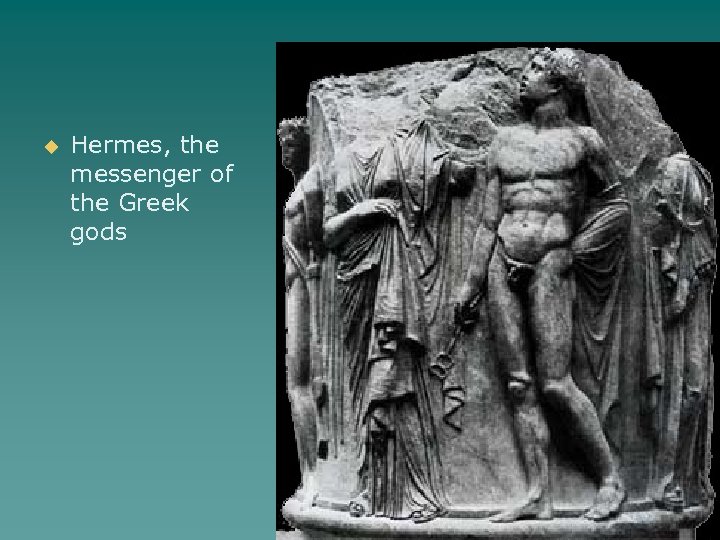
u Hermes, the messenger of the Greek gods
u Hermeneutics is the “interpretation of a written record (text) to uncover what the text is telling us in language understandable to human beings” (by Prosper Grech, 1988).
u “Exegesis” – From the Greek word, exegesis meaning “statement, narrative, explanation, interpretation”. – Analysis of the written text to uncover the original meaning as the author originally intended.
u Biblical interpretation is the task of theologian, u while exegesis is for the biblical specialist (exegete) who explains both theological and non-theological materials and offers his work for the use of theology” (Grant – Tracy, 1973: 4).
Useful References on Biblical Interpretation u u u Pontifical Biblical Commission, The Interpretation of the Bible in the Church (1993). George Montague, Understanding the Bible. A Basic Introduction to Biblical Interpretation (Pasay: Paulines, 1988). Maria Ko Ha-Fong, “Reading the Bible in an Asian Context” Bulletin Dei Verbum 40/41 (1996). Robert Grant – David Tracy, A Short History of the Interpretaion of the Bible (Philadelphia: Fortress, 3 rd ed. , 1984). Gerry Tapiador, The Mysterious Seed: A Simplified Manual on the Tools and the Principles of Interpreting the Bible (Makati: St. Paul, 1988) Erlinda Bragad 0 – Arnold Monera, Kaloob: Interweavings on the Christian Story (Manila: DLSU, 1997).
1. The Historical Critical-Method
What is it? It is the scientific study of ancient texts. u It is “historical” because it deals with ancient texts, their historical contexts and circumstances in which these were composed and edited, and the process by which the final form of the texts came to be. u It is “critical”, not that it criticizes as one looking for errors, but that it uses scientific criteria to judge the text as objectively as possible about its historical and literary aspects. u
Origin and Brief Historical Background u The method was first used by Greek philologians and commentators of antiquity to establish the best text of the writings of Homer. u It was adopted by the Church Fathers like Origen, Jerome and Augustine in their study of the Hebrew and Greek forms of the Old Testament.

St. Jerome, patron saint of biblical scholars
u u It was refined during the time of the Renaissance humanists (14 th cent. – 15 th cent. ) whose emphasis is on the “return to the sources” (recursus ad fontes) and so the study of the neglected ancient biblical languages (Hebrew, Greek, and Aramaic) came to the fore. The Reformers (16 th cent. ), Martin Luther (1485 -1546) and John Calvin (1509 -1564) applied the method in their study, lectures, and homilies on the Old Testament.
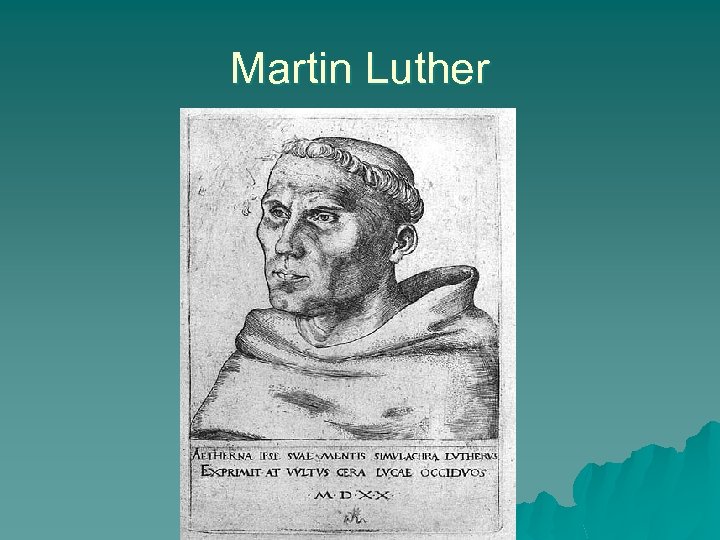
Martin Luther
u At the time of the Enlightenment (17 th - 18 th centuries), still further refinements were made to the method. Textual criticism became a scientific discipline. More valuable ancient manuscripts were discovered.
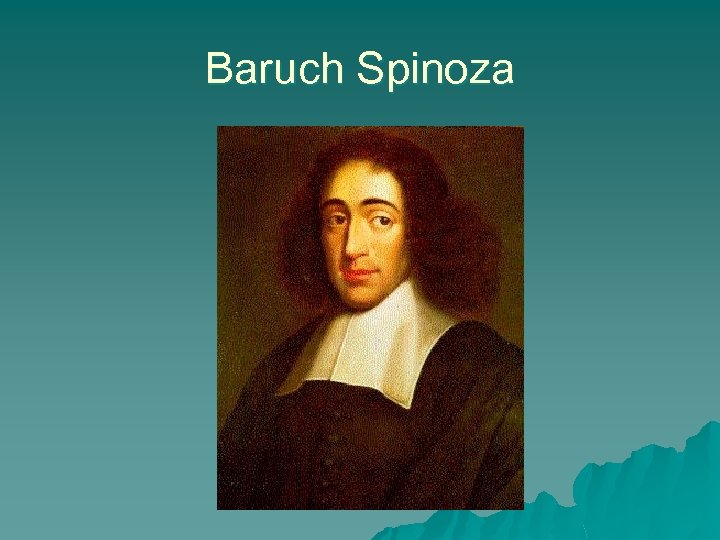
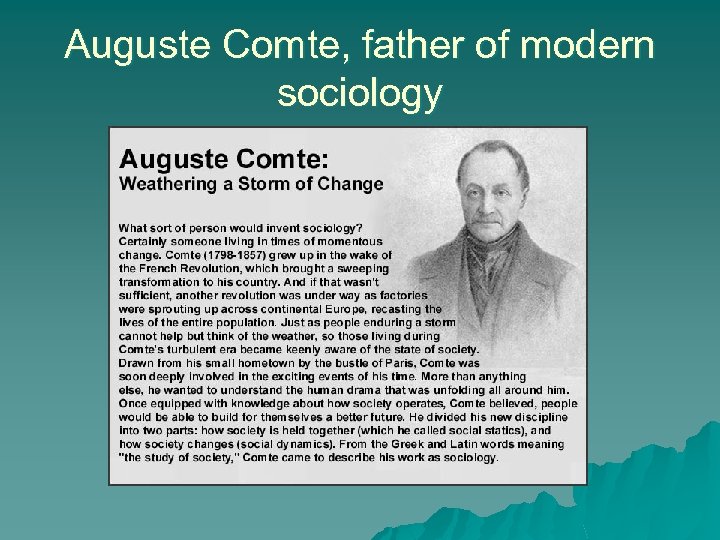
u Bible in the period of Enlightenment (17 th cent- 18 th cent. ) – Rise of Rationalism and Scientific Revolution u Baruch Spinoza (1634 -1677) questioned the historical reliability of many biblical passages. u Sir Isaac Newton (1642 -1727) was brining a wholly new way of understanding the universe itself u John Locke (1632 -1704) affirmed that reason alone must be the judge of all truth u Auguste Comte (1798 -1857) founded Positivism (“the law of the three stages” – theological-metaphysical-positive). u Discovery of classical texts and languages and valuable ancient manuscripts.
Baruch Spinoza
Auguste Comte, father of modern sociology
Example: A new edition of the Greek New Testament came out, an edition NO longer based on the traditionally received Greek text (called “Textus Receptus”) but based on older and superior manuscripts recently uncovered. u Read the file Textus Receptus!
u From 19 th Century onwards, the scientific and critical interpretation of the Bible gained importance and later on it was accepted in the Roman Catholic Church. Today, this method is better known as as “the historical-critical method”, an indispensable method of biblical exegesis.
Goal(s) of the Method u 1. Determine the authentic meaning of the biblical text as a literary document (or the “literal sense”). u 2. Determine the historicity (or lack thereof)—the extent to which the factual is present in an author’s text.
Advantages of this Method 1. Check and balance of the two extremes: Fundamentalism and texts as merely good human interest stories – Fundamentalism: Everything in the Bible actually happened and words actually spoken. – Good human interest stories: wonderful stories with little or no historical foundations (like the Ilocano epic, Lamang).
2. Check and balance of other modern approaches: --Ideological interpretation: Using the Bible to promote certain ideological views. --Post-modernism or deconstructionism: awareness that history relativizes people, places, event, texts, etc. Hence, all interpretations are colored by the interpreter. All interpretations are subjective. Meaning is only meaning for me.
Various Forms of the Method u 1. Textual Criticism – The study which seeks to establish, according to fixed rules, a biblical text as close as possible to the original. – This is based on the testimony of the oldest and best manuscripts, papyri, ancient versions, and texts quoted by the Church Fathers in their writings.
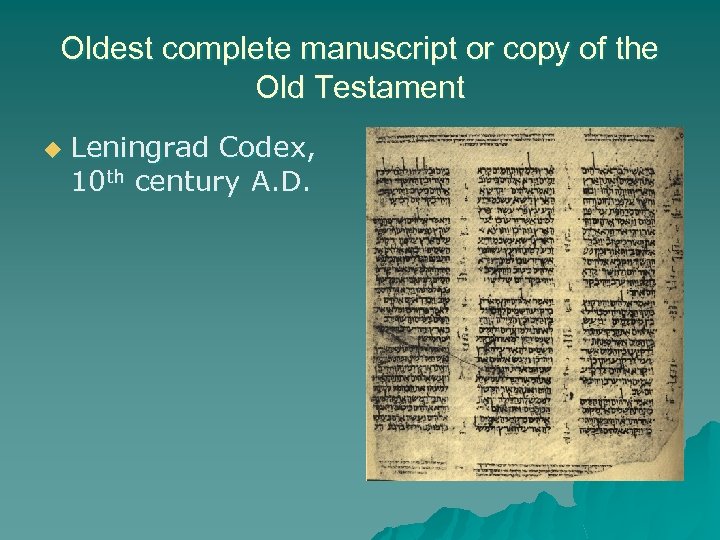
Oldest complete manuscript or copy of the Old Testament u Leningrad Codex, 10 th century A. D.
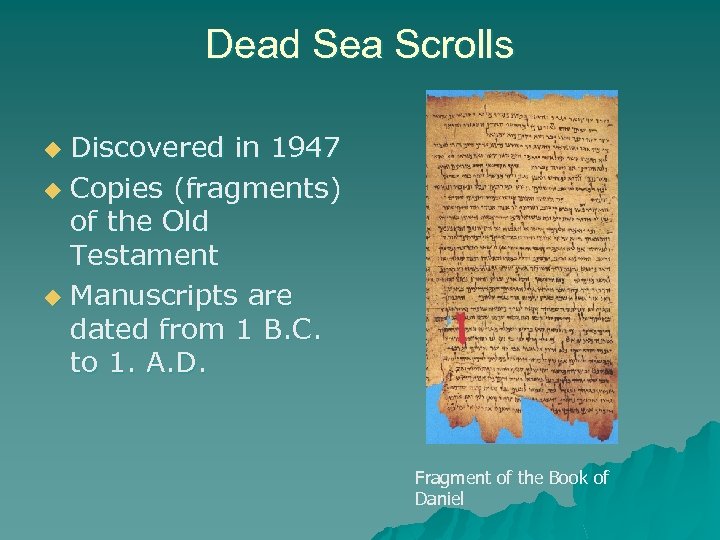
Dead Sea Scrolls Discovered in 1947 u Copies (fragments) of the Old Testament u Manuscripts are dated from 1 B. C. to 1. A. D. u Fragment of the Book of Daniel

Map of Modern Israel

Modern Israel

Qumran Caves
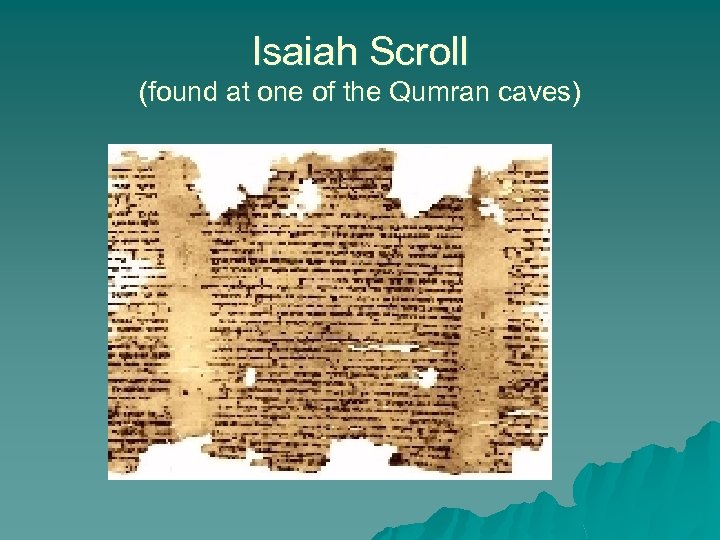
Isaiah Scroll (found at one of the Qumran caves)
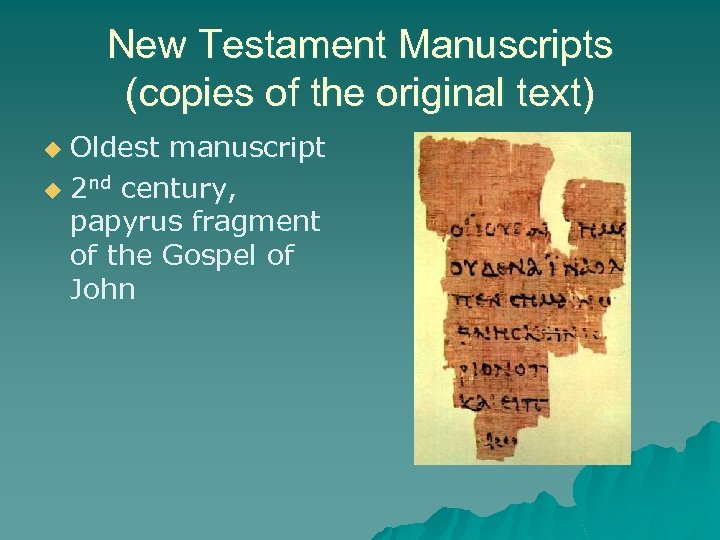
New Testament Manuscripts (copies of the original text) Oldest manuscript u 2 nd century, papyrus fragment of the Gospel of John u
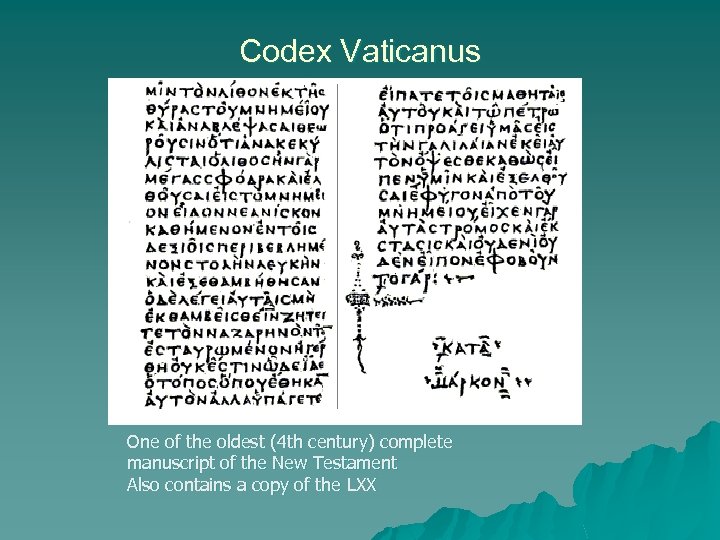
Codex Vaticanus One of the oldest (4 th century) complete manuscript of the New Testament Also contains a copy of the LXX
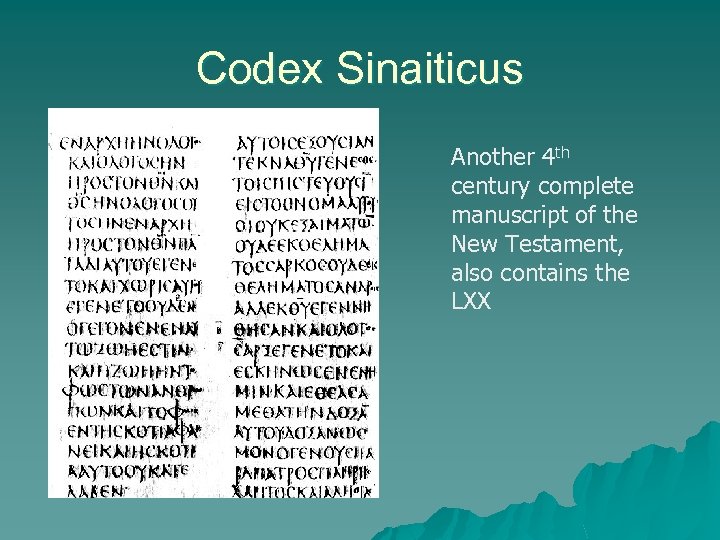
Codex Sinaiticus Another 4 th century complete manuscript of the New Testament, also contains the LXX
u 2. Philological criticism – The linguistic and grammatical analysis of the text. – Aim: to know the meaning of a word or expression in the bible by comparing it with the languages of Ancient Near East.


A Text of a Ugaritic Language
u 3. Form Criticism – It identifies what kind or type of literature is the text and the its social text from which it emerged.
Some Literary Forms in the Bible u u u u u Myths (Gen 1) Legends (Gen 13) Epics (Exod 14: 15 -31) Elegies (2 Saam 1: 19 -27) Poetry (Judith 16: 1 -17) Parables (2 Sam 12: 1 -4) Narratives (Book of Tobit) Letters (Romans 2: 1 -16) Fiction (Book of Jonah) Apocalptic (Book of Daniel and Book of Revelation)
u 4. Source Criticism – The study of the different materials (both oral and written) the writer's) used in making his text in order to explain the apparent contradictions or discrepancies in the text.
u 5. Redaction Criticism – It concentrates on how and why the author(s) wove together history, traditions, stories to suit a particular audience—the individual authors brought together (“redacted” or “edited”) these materials to produce a composite written work.
2. Some Contemporary Approaches of Biblical Interpretation
Rhetorical Analysis: u It investigates the “spoken” quality of the text, the impact on the influence of the text on the people who listened to it. u Example: the hyperbolical and emphatic speech of Jesus in Mt 5: 2930.
Narrative Analysis: u studies how the text tells a story in such a way as to engage the reader in its “narrative world” and the system of values contained therein. u See Robert Alter, The Art of Biblical Narrative (USA: Basic. Books, 1981). u E. g. The narration of a powerful story by Nathan to David (2 Sam 12)
The Sociological Approach u– the investigation of the social conditions out of which the writings recorded in the Bible took shape. u Example: what were the social conditions and political problems during the writing of the Gospel of Mark?
The Approach through Cultural Anthropology – u It seeks to define the characteristics of the different kinds of human beings in their social context, their culture and their social values. u e. g. What is “honor and shame” in the Bible? / The wedding at Cana in John 2
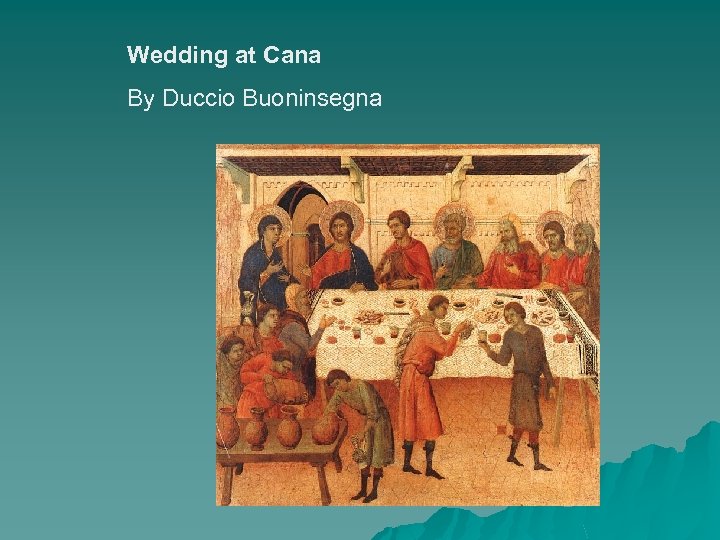
Wedding at Cana By Duccio Buoninsegna
The Psychological and Psychoanalytical approaches – u They strive to understand the bible in terms of the experience of human life, the norms of human conduct and behavior. u E. g. What is the meaning of “sickness” in the Bible? u What is the psychological profile of Jesus?
The Liberationist Approach – It seeks a reading of the text drawn from the situation of the people as it is lived here and now. If people lives in circumstances of oppression, one must go to the Bible to find there nourishment capable of sustaining the people in its struggles and its hopes. u E. g. The meaning of Exodus as liberation from oppression; from unjust social structures. u
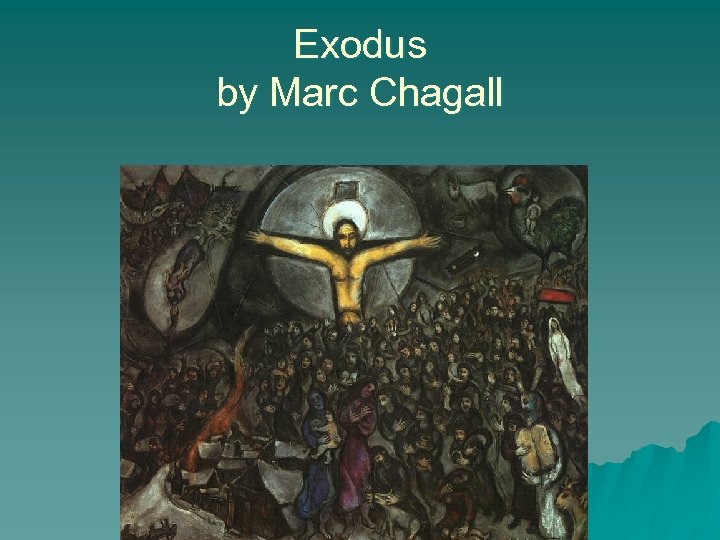
Exodus by Marc Chagall
The Feminist Hermeneutics – the bible is read from the perspective of the struggle for the rights of women. The goal is liberation of women and the acquisition on their part of rights equal to those enjoyed by men. u e. g. Gal 3: 28 against texts which tends to undermine the rights of women u Sir 25: 24 vs. Rom 5: 12 u
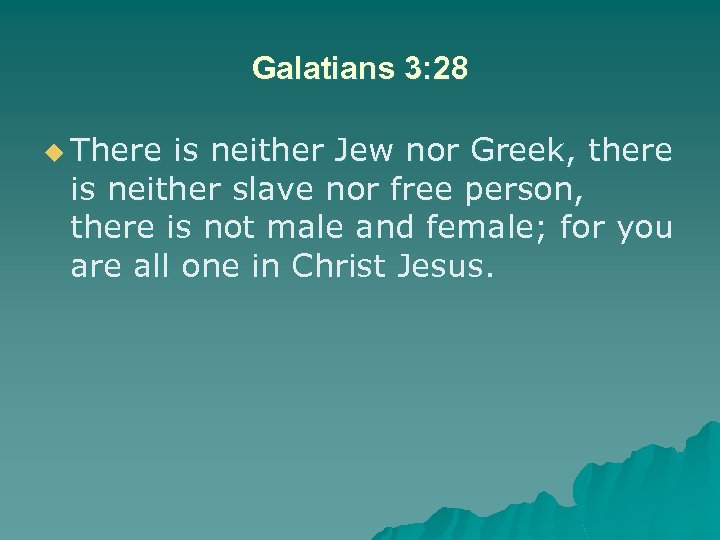
Galatians 3: 28 u There is neither Jew nor Greek, there is neither slave nor free person, there is not male and female; for you are all one in Christ Jesus.
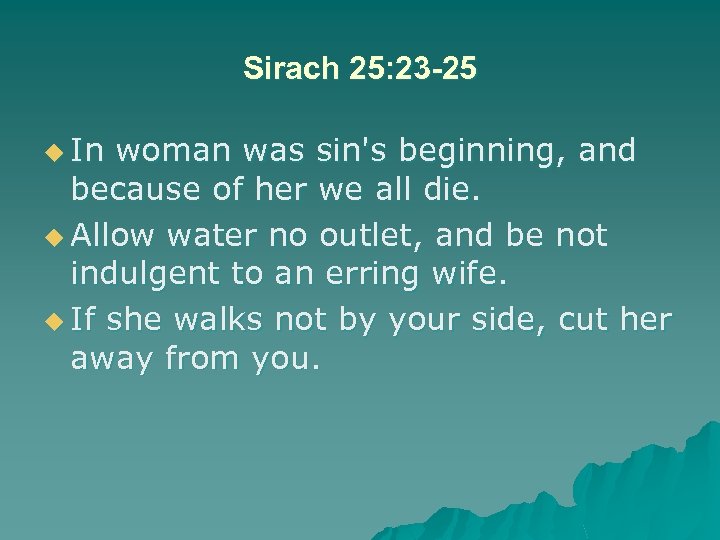
Sirach 25: 23 -25 u In woman was sin's beginning, and because of her we all die. u Allow water no outlet, and be not indulgent to an erring wife. u If she walks not by your side, cut her away from you.
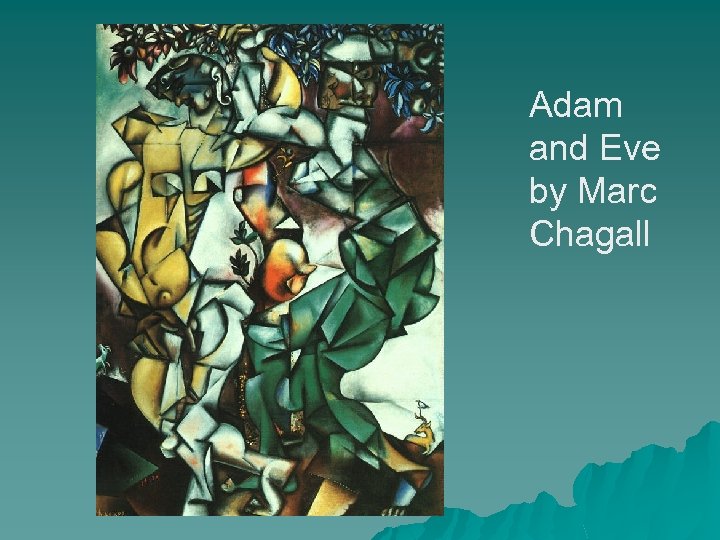
Adam and Eve by Marc Chagall
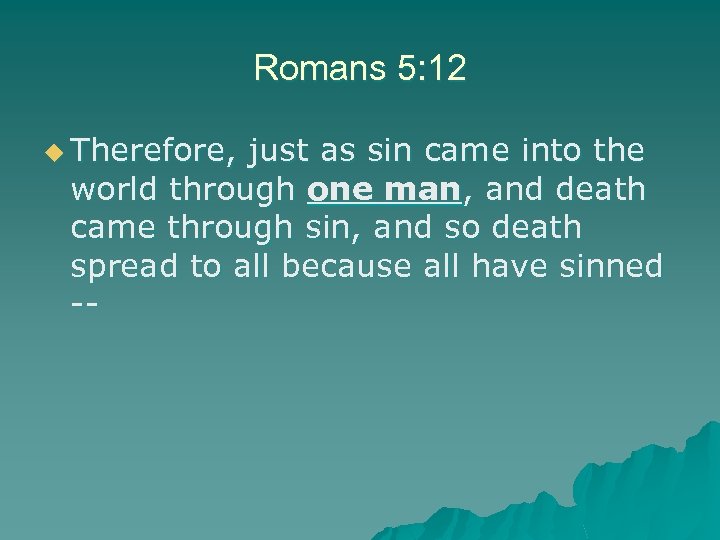
Romans 5: 12 u Therefore, just as sin came into the world through one man, and death came through sin, and so death spread to all because all have sinned --
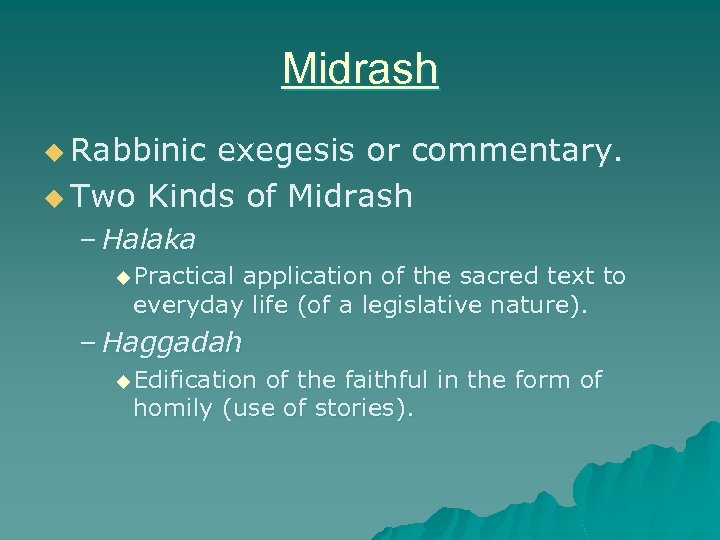
Midrash u Rabbinic exegesis or commentary. u Two Kinds of Midrash – Halaka u Practical application of the sacred text to everyday life (of a legislative nature). – Haggadah u Edification of the faithful in the form of homily (use of stories).
Скачать презентацию C Biblical Interpretation Randy Flores SVD Theology 121
27dd6893a636f2bd5233c2c1296bffd0.ppt