 Скачать презентацию BUSS 909 Office Automation Intranets Supplementary Lecture
35e3e55e2ead90f64644eaaa4a75ca87.ppt
- Количество слайдов: 114



BUSS 909 Office Automation & Intranets Supplementary Lecture 00: Information Theory & Systems Theory Clarke, R. J (2000) SL 909 -00: 1
Agenda n Discuss Theory: two basic ideas in IS – General Systems Model – Data and Information n At the end of the lecture you should understand that the basic IS theory is flawed Clarke, R. J (2000) SL 909 -00: 2
Information Systems Theory: a very brief introduction Clarke, R. J (2000) SL 909 -00: 3
Information Systems Theory n Information Systems Discipline = Concepts of ‘Systems’ + ‘Information’ n both ‘systems’ and ‘information’ have considerable theoretical, methodological and substantive problems, ie/ are problematic Clarke, R. J (2000) SL 909 -00: 4
General Systems Model Applied to Organisations Clarke, R. J (2000) SL 909 -00: 5
General Systems Model Development n Contrary to what you may believe (or may have been taught) the IS Discipline did not develop the concept of the system n in fact the ‘General Systems Model’ was in wide circulation well before computers were invented Clarke, R. J (2000) SL 909 -00: 6
General Systems Model Development n understanding how we got and how we use ‘general systems’ tells us a great deal about disciplines in general (and IS in particular) n the General Systems Model dates from the late 1920 s 1930 s Clarke, R. J (2000) SL 909 -00: 7
General Systems Model Development n the work originates in Biology n useful concepts emerge in population dynamics (Lotka c. 1907 and later) n developed as a general model for biology (von Bertalanffy c. 1930 s; 1968) Clarke, R. J (2000) SL 909 -00: 8
Basic System Elements Clarke, R. J (2000) SL 909 -00: 9
System Boundary Clarke, R. J (2000) SL 909 -00: 10
System Clarke, R. J (2000) SL 909 -00: 11
Environment Clarke, R. J (2000) SL 909 -00: 12

Clarke, R. J (2000) SL 909 -00: 13
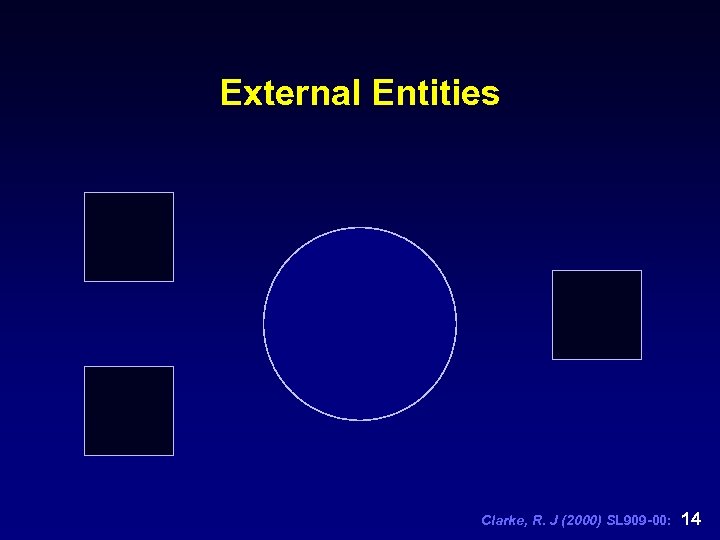
External Entities Clarke, R. J (2000) SL 909 -00: 14
External Entity 1 Clarke, R. J (2000) SL 909 -00: 15
External Entity 2 Clarke, R. J (2000) SL 909 -00: 16
External Entity 3 Clarke, R. J (2000) SL 909 -00: 17
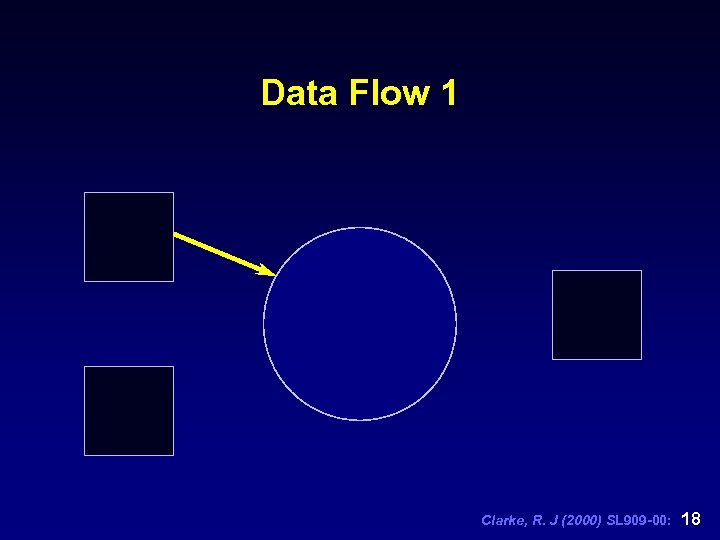
Data Flow 1 Clarke, R. J (2000) SL 909 -00: 18
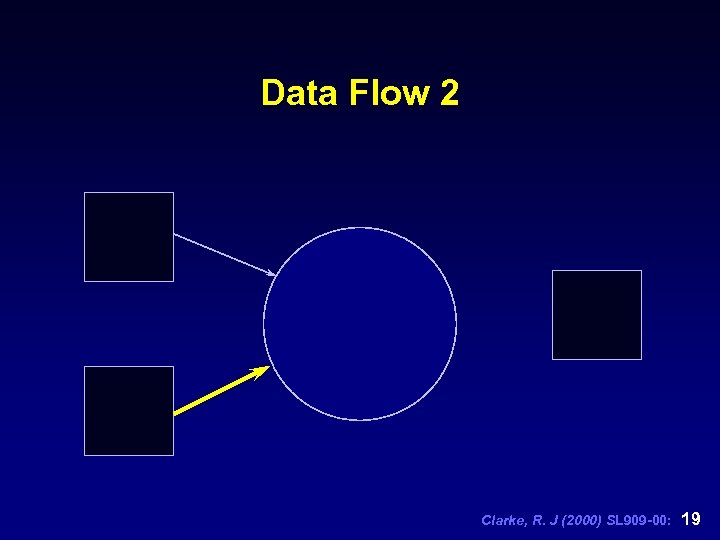
Data Flow 2 Clarke, R. J (2000) SL 909 -00: 19
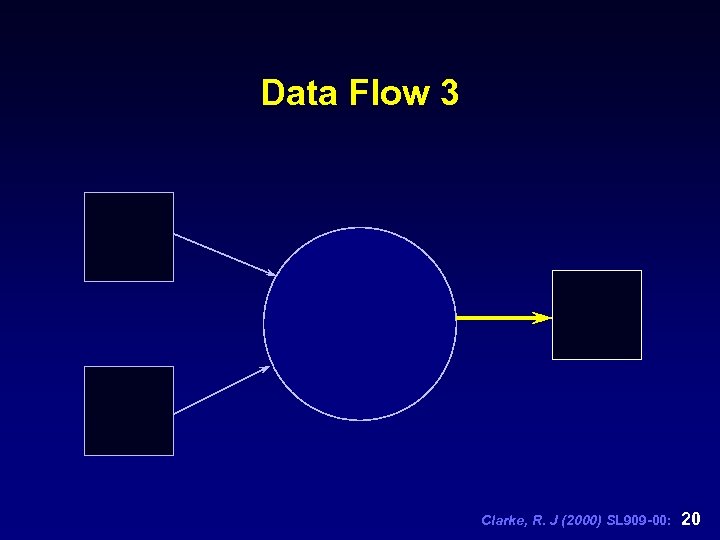
Data Flow 3 Clarke, R. J (2000) SL 909 -00: 20
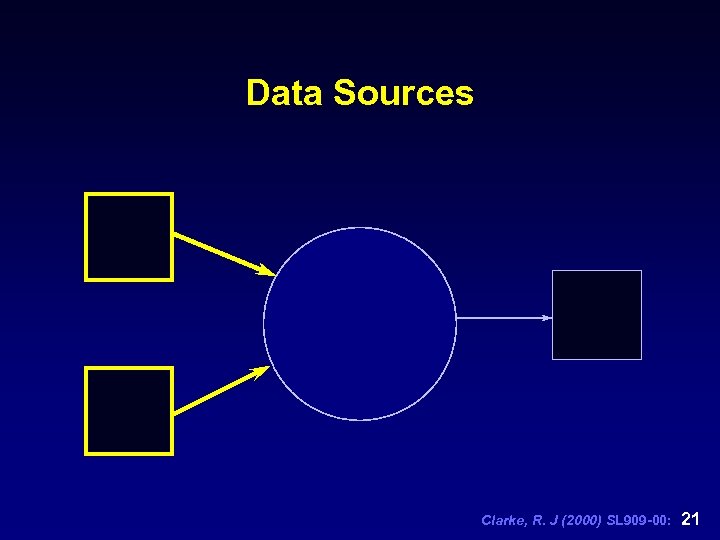
Data Sources Clarke, R. J (2000) SL 909 -00: 21
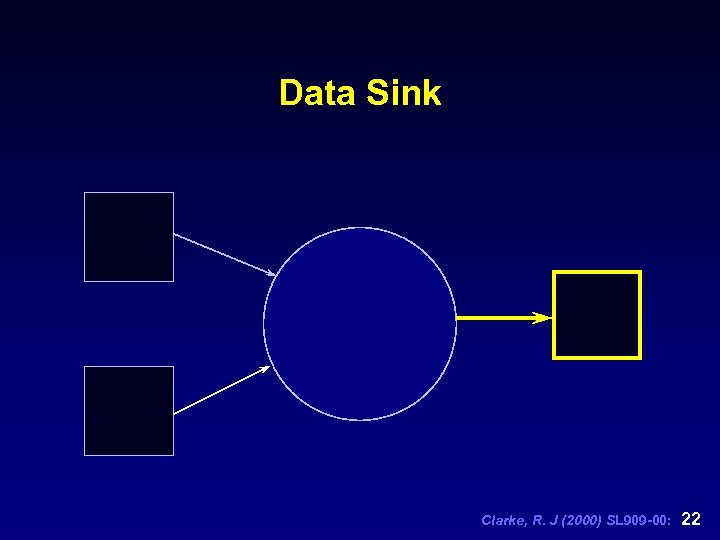
Data Sink Clarke, R. J (2000) SL 909 -00: 22
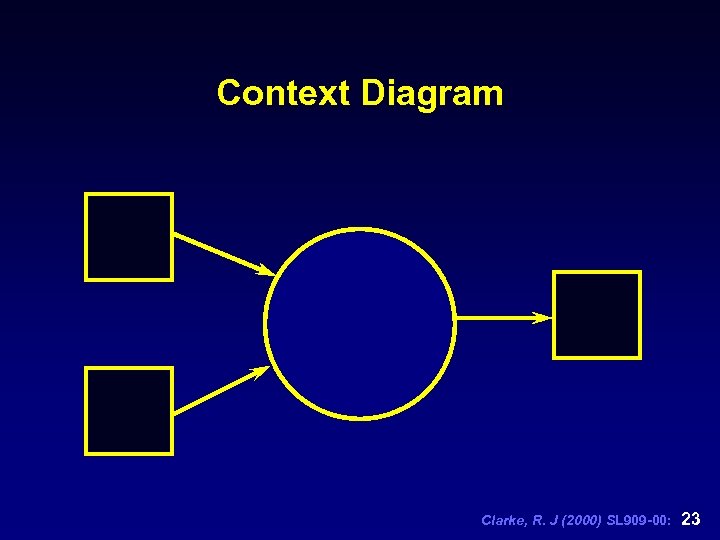
Context Diagram Clarke, R. J (2000) SL 909 -00: 23
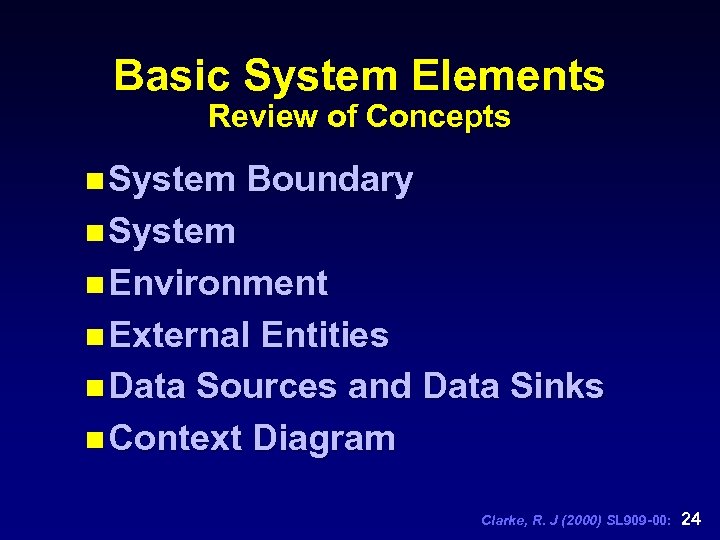
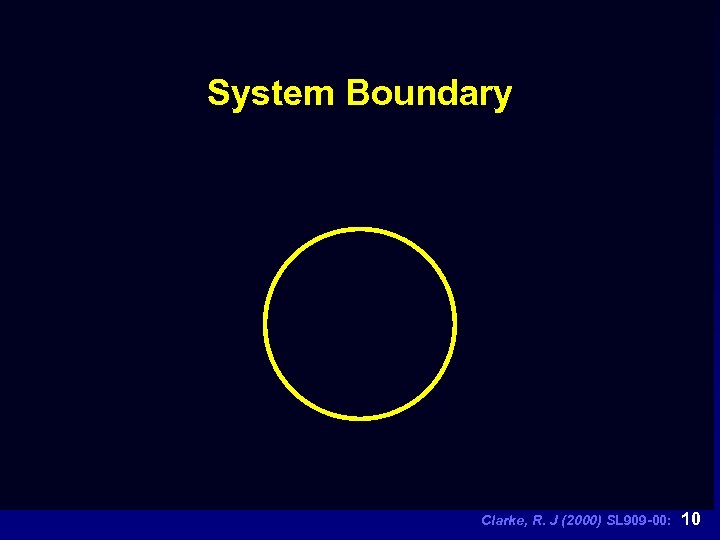
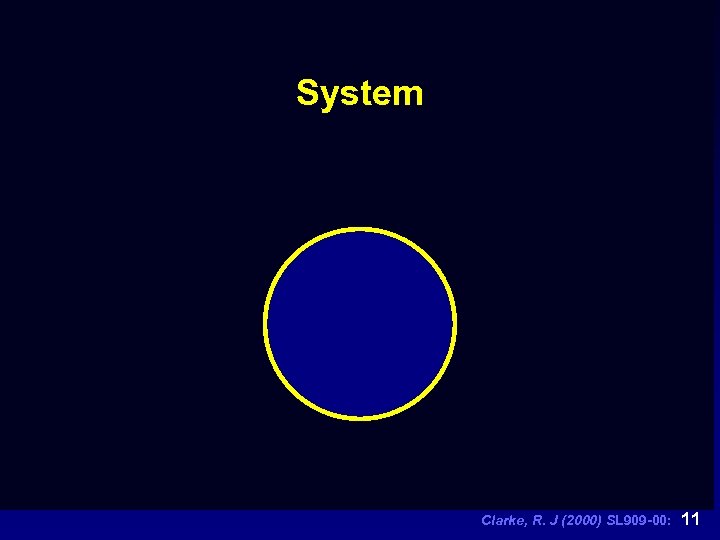
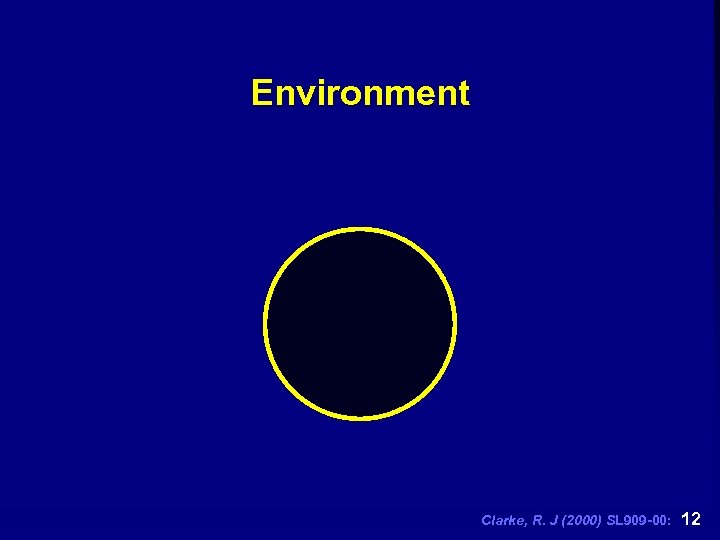
Basic System Elements Review of Concepts n System Boundary n System n Environment n External Entities n Data Sources and Data Sinks n Context Diagram Clarke, R. J (2000) SL 909 -00: 24
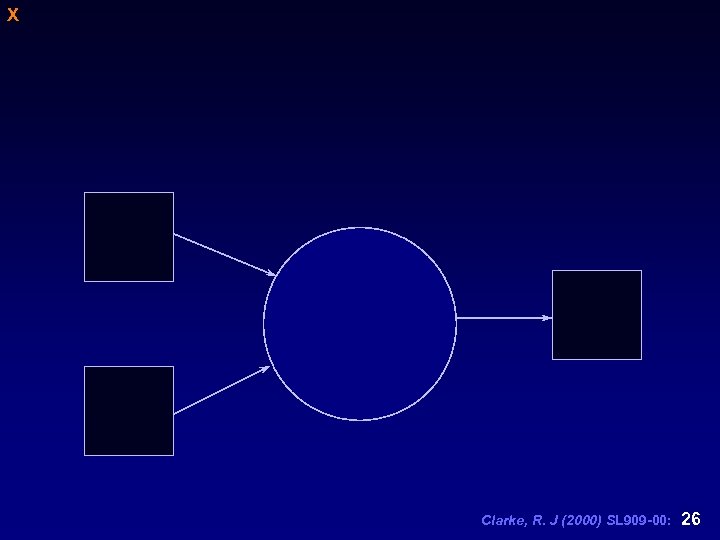
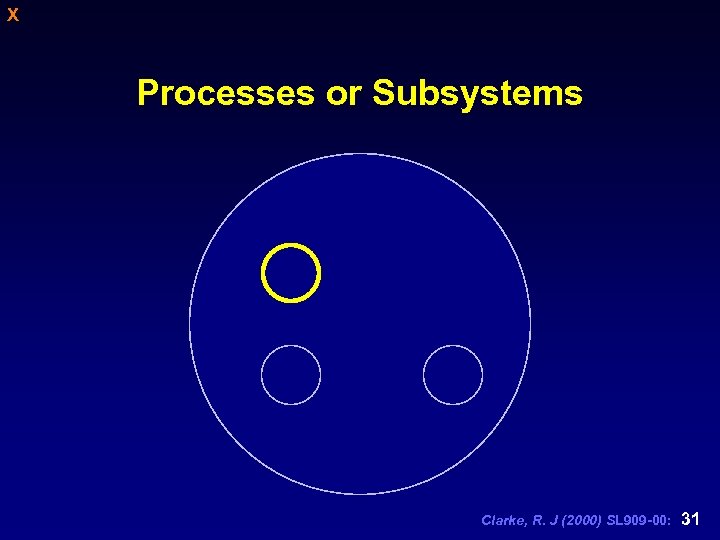
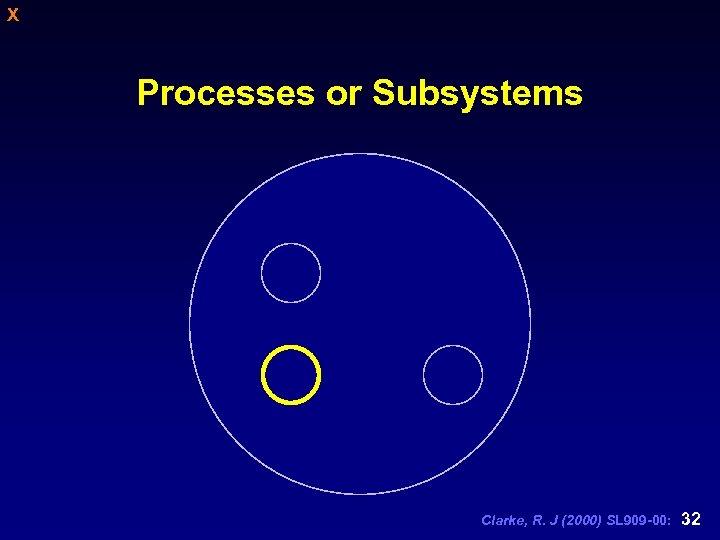
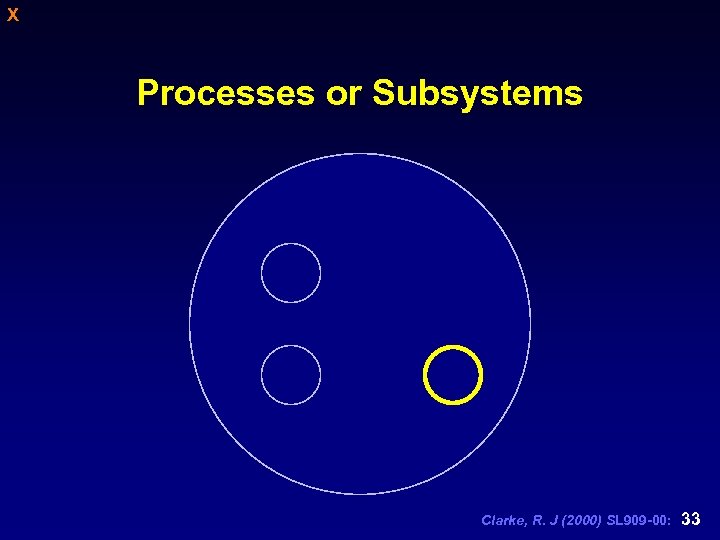
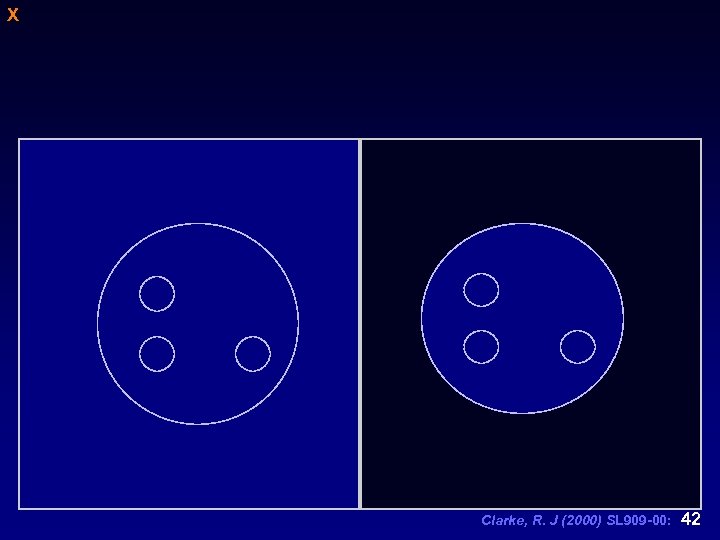
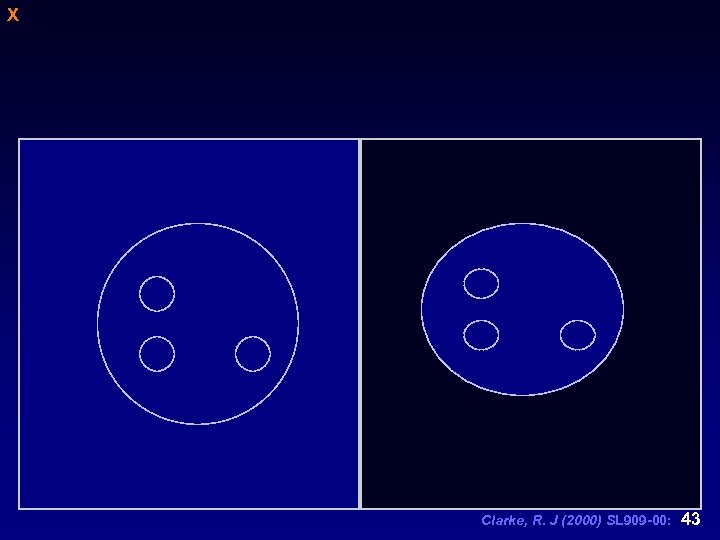
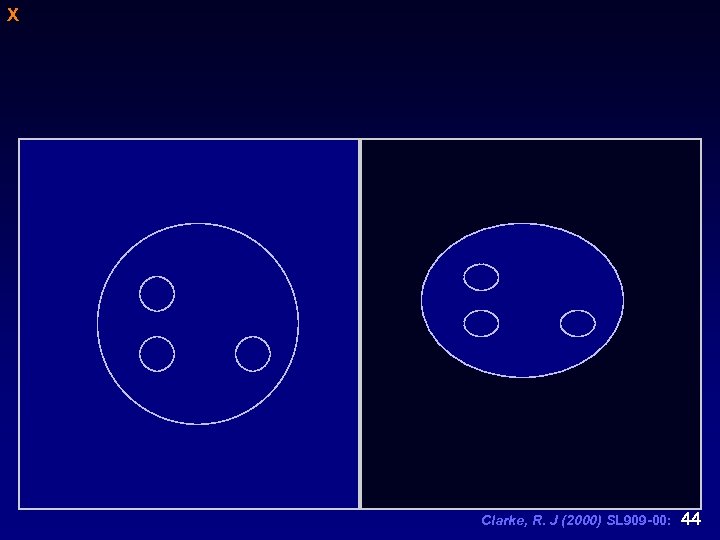
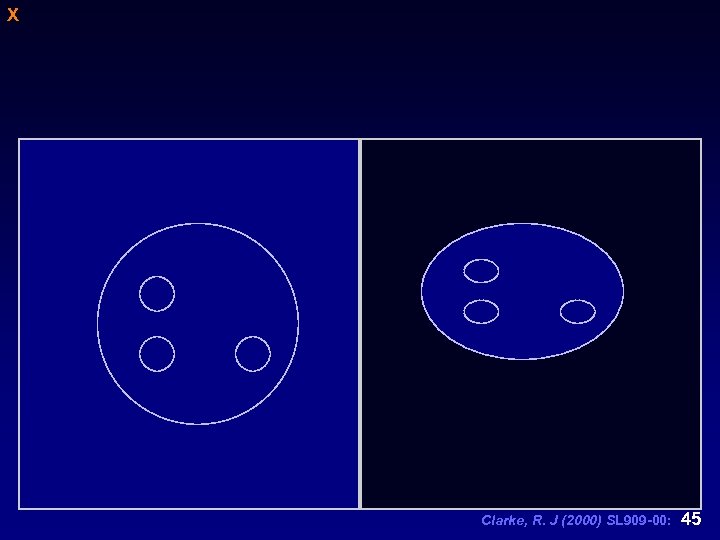
Levels of a System An Animation Clarke, R. J (2000) SL 909 -00: 25
X Clarke, R. J (2000) SL 909 -00: 26
X Clarke, R. J (2000) SL 909 -00: 27
X Clarke, R. J (2000) SL 909 -00: 28
X Clarke, R. J (2000) SL 909 -00: 29
X Clarke, R. J (2000) SL 909 -00: 30
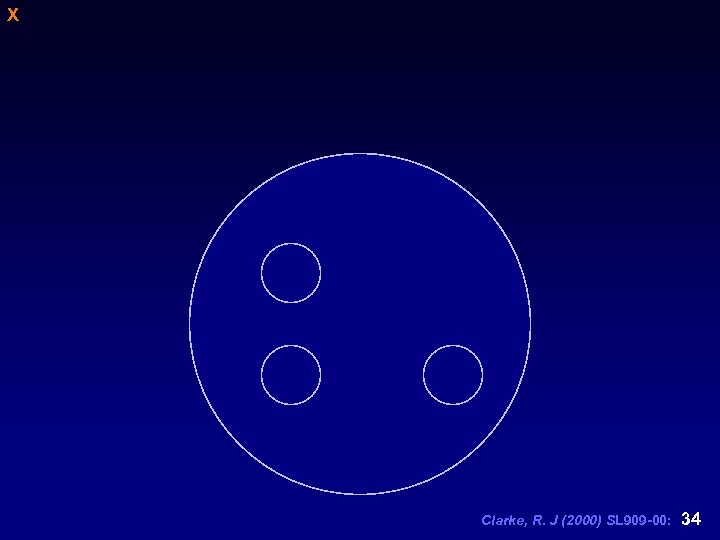
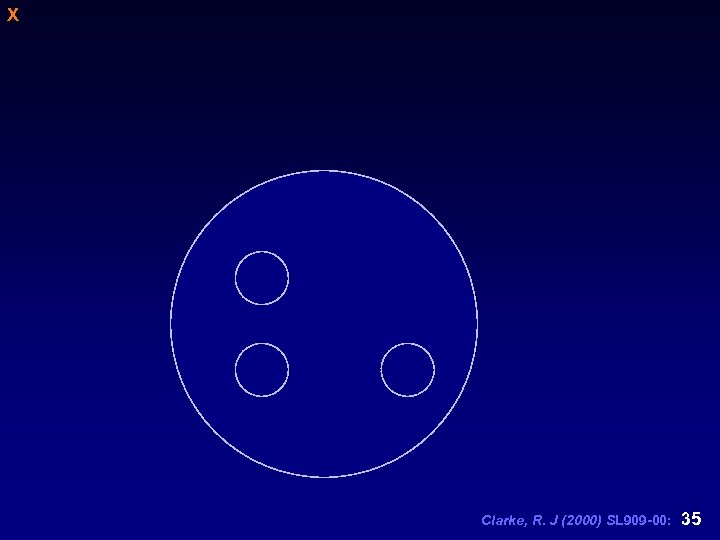
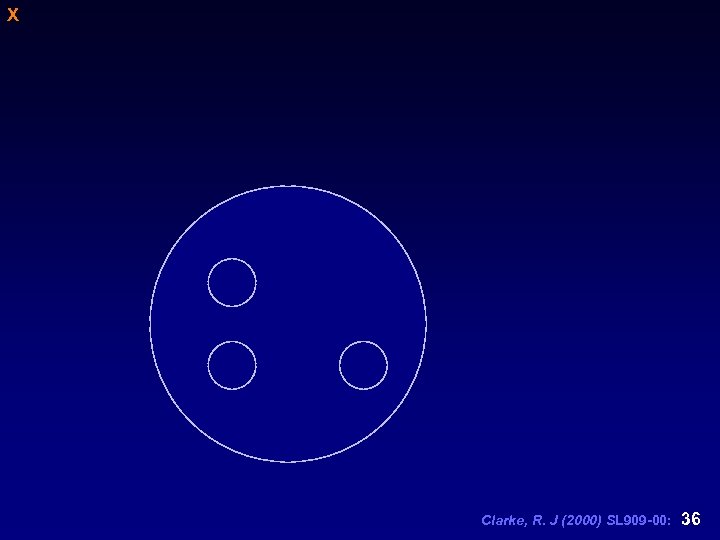
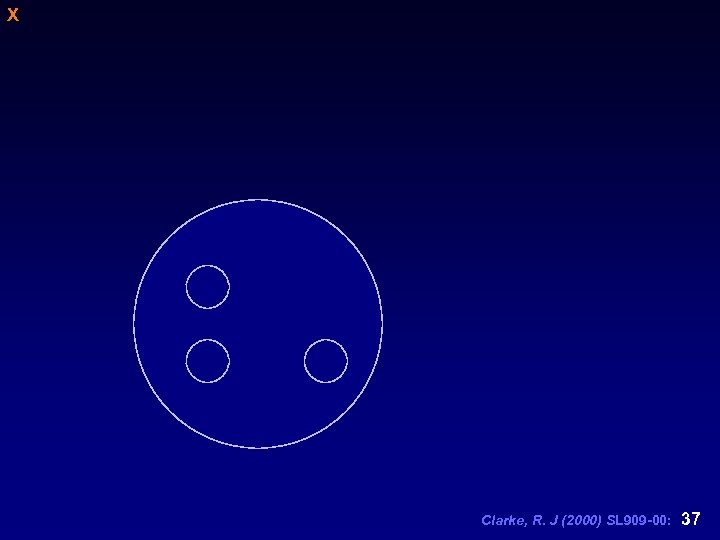
X Processes or Subsystems Clarke, R. J (2000) SL 909 -00: 31
X Processes or Subsystems Clarke, R. J (2000) SL 909 -00: 32
X Processes or Subsystems Clarke, R. J (2000) SL 909 -00: 33
X Clarke, R. J (2000) SL 909 -00: 34
X Clarke, R. J (2000) SL 909 -00: 35
X Clarke, R. J (2000) SL 909 -00: 36
X Clarke, R. J (2000) SL 909 -00: 37
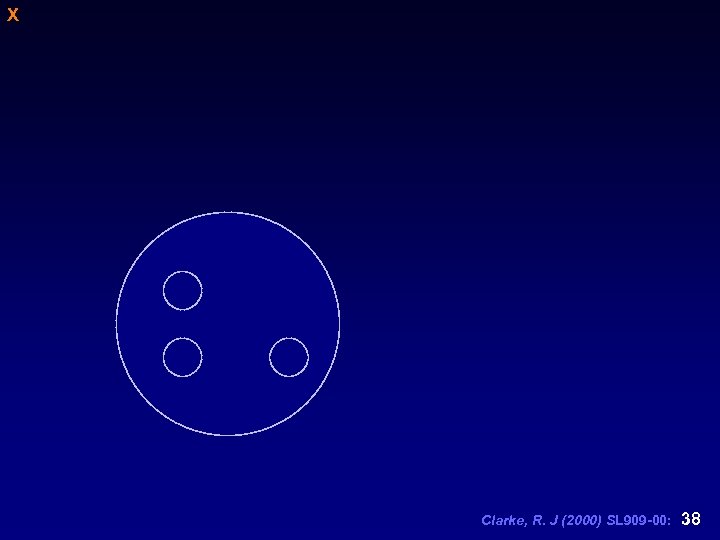
X Clarke, R. J (2000) SL 909 -00: 38
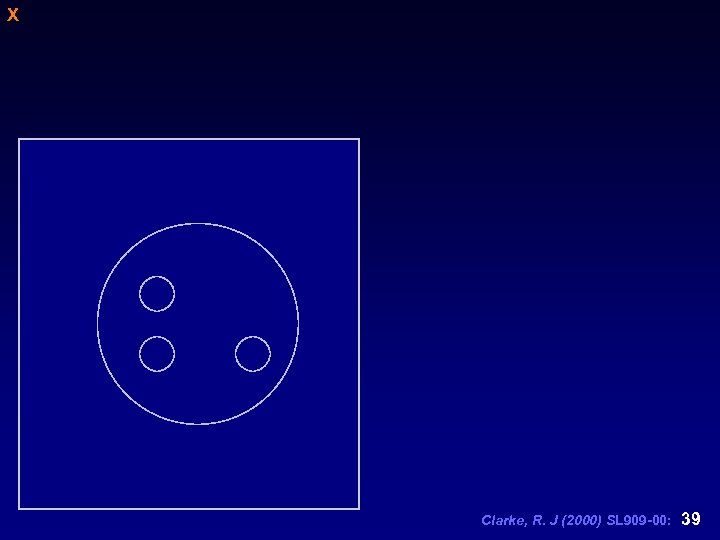
X Clarke, R. J (2000) SL 909 -00: 39
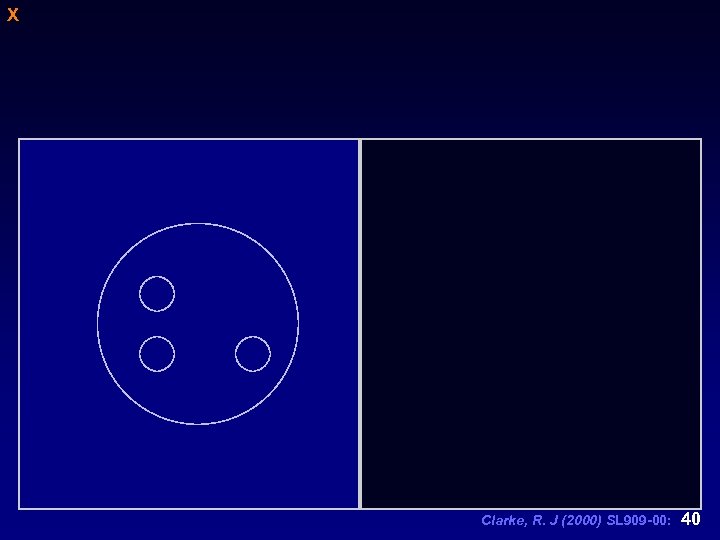
X Clarke, R. J (2000) SL 909 -00: 40
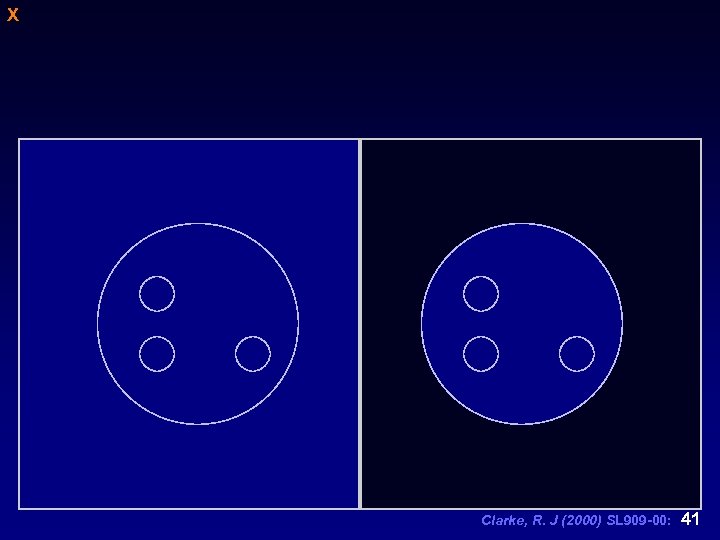
X Clarke, R. J (2000) SL 909 -00: 41
X Clarke, R. J (2000) SL 909 -00: 42
X Clarke, R. J (2000) SL 909 -00: 43
X Clarke, R. J (2000) SL 909 -00: 44
X Clarke, R. J (2000) SL 909 -00: 45
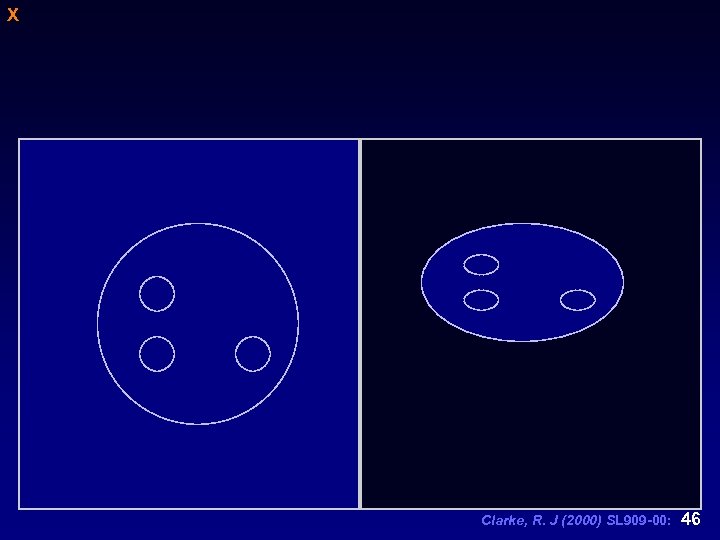
X Clarke, R. J (2000) SL 909 -00: 46
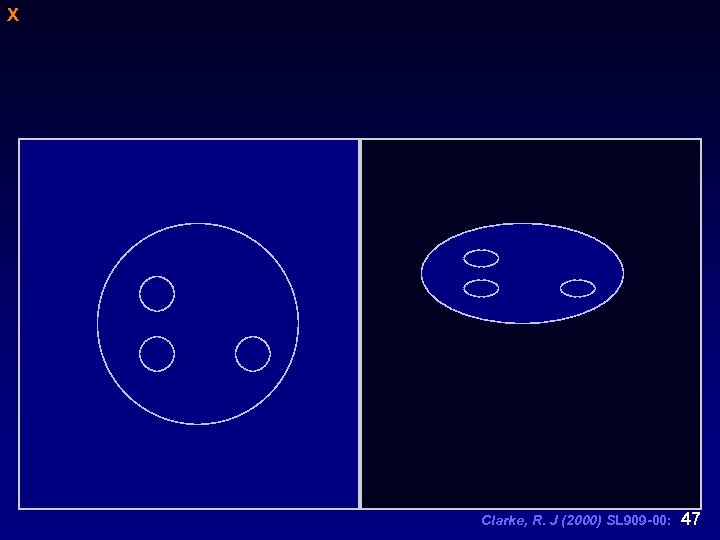
X Clarke, R. J (2000) SL 909 -00: 47
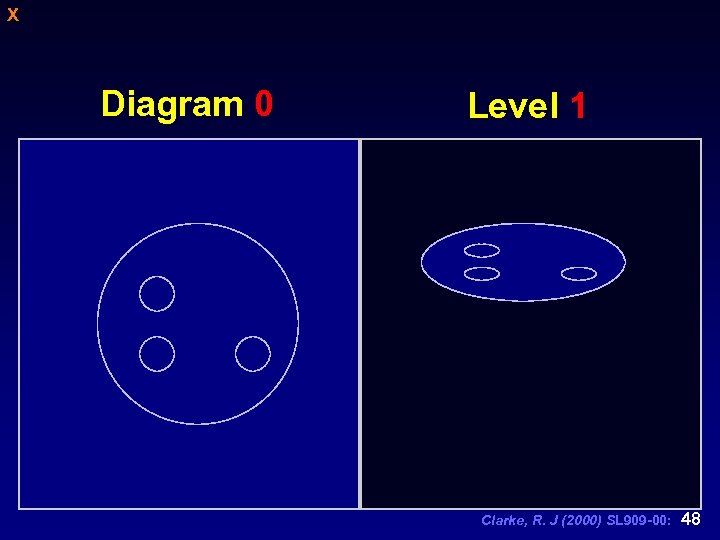
X Diagram 0 Level 1 Clarke, R. J (2000) SL 909 -00: 48
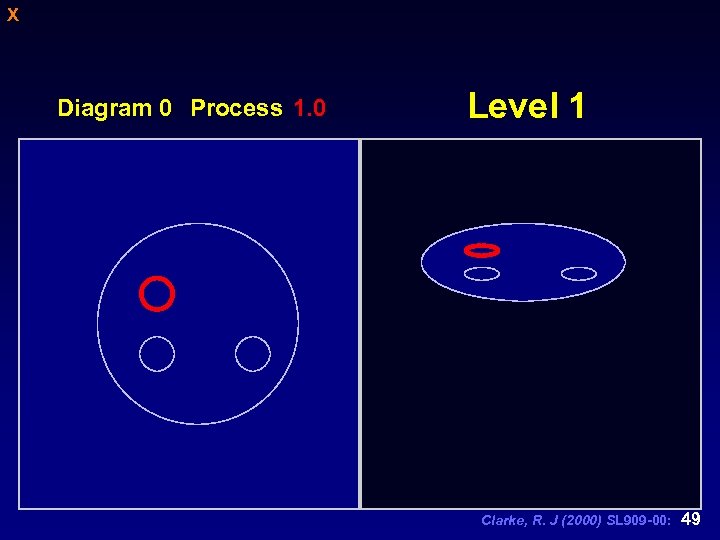
X Diagram 0 Process 1. 0 Level 1 Clarke, R. J (2000) SL 909 -00: 49
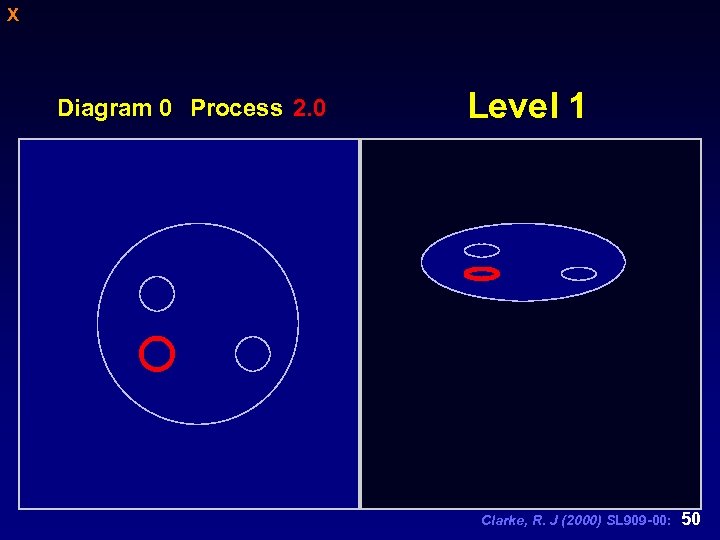
X Diagram 0 Process 2. 0 Level 1 Clarke, R. J (2000) SL 909 -00: 50
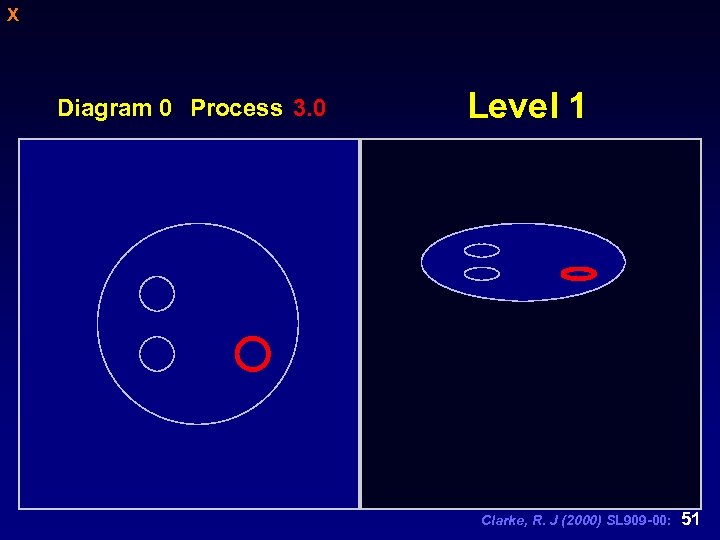
X Diagram 0 Process 3. 0 Level 1 Clarke, R. J (2000) SL 909 -00: 51
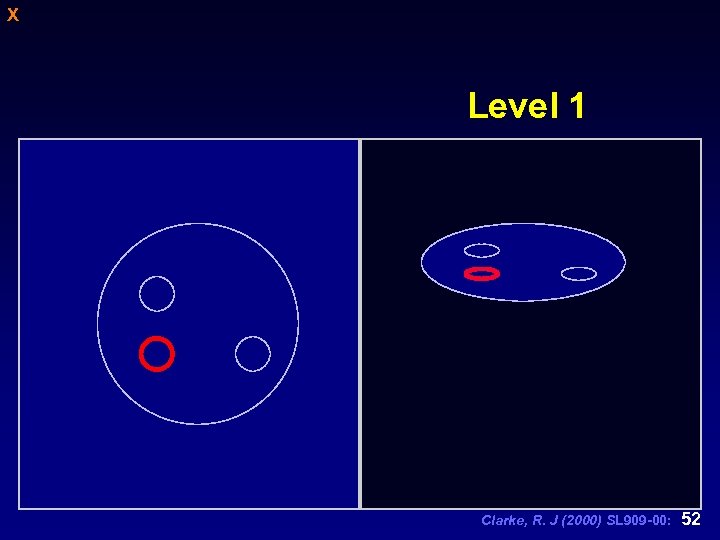
X Level 1 Clarke, R. J (2000) SL 909 -00: 52
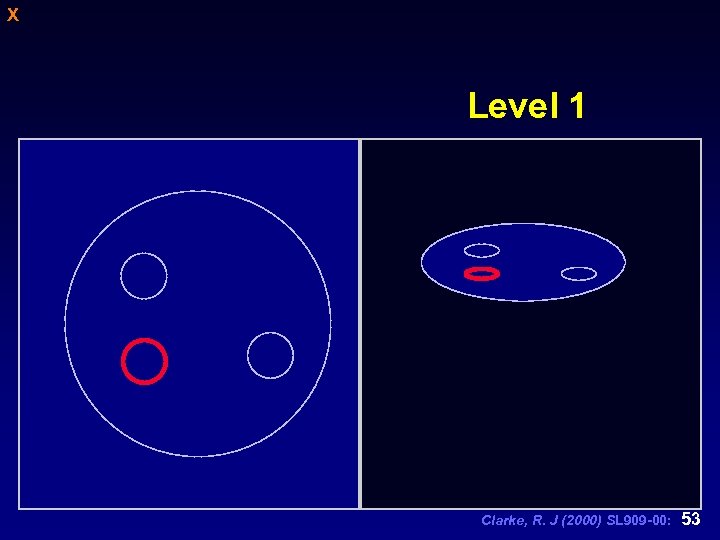
X Level 1 Clarke, R. J (2000) SL 909 -00: 53
X Level 1 Clarke, R. J (2000) SL 909 -00: 54
X Level 1 Clarke, R. J (2000) SL 909 -00: 55
X Level 1 Clarke, R. J (2000) SL 909 -00: 56
X Level 1 Clarke, R. J (2000) SL 909 -00: 57
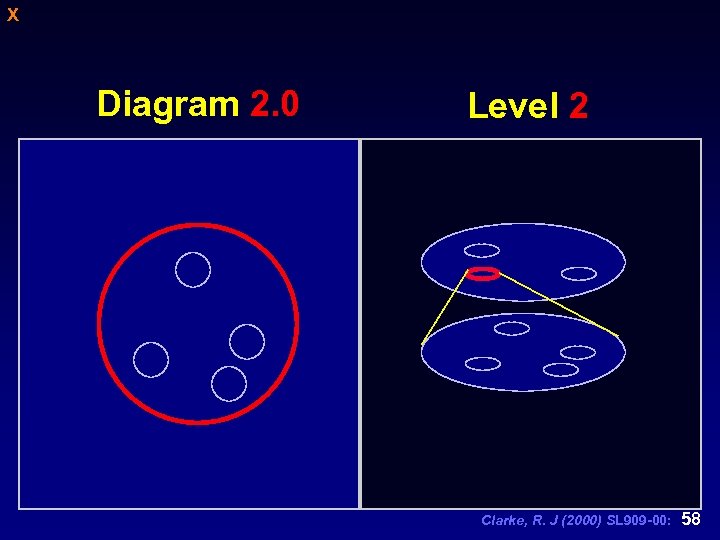
X Diagram 2. 0 Level 2 Clarke, R. J (2000) SL 909 -00: 58
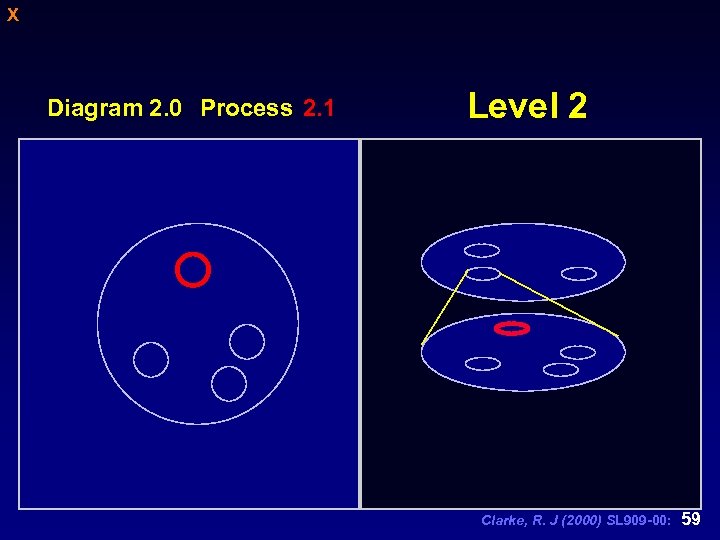
X Diagram 2. 0 Process 2. 1 Level 2 Clarke, R. J (2000) SL 909 -00: 59
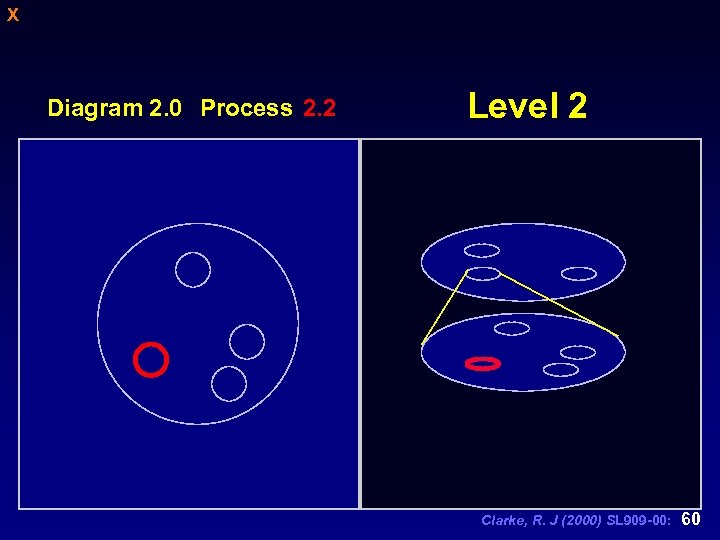
X Diagram 2. 0 Process 2. 2 Level 2 Clarke, R. J (2000) SL 909 -00: 60
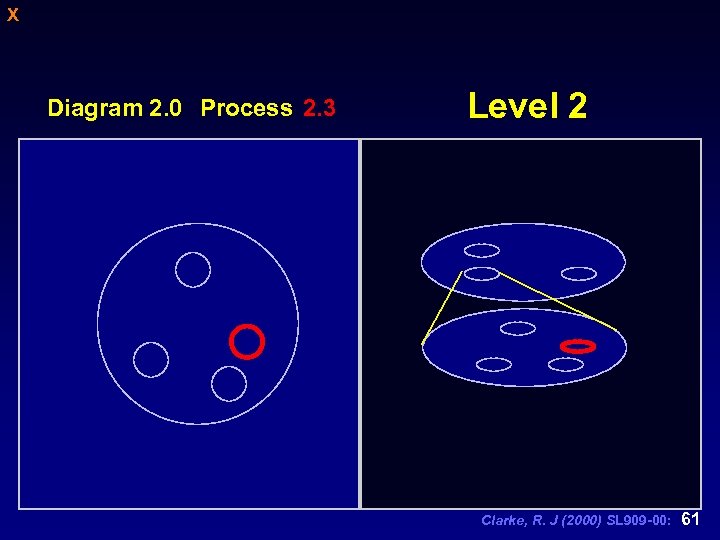
X Diagram 2. 0 Process 2. 3 Level 2 Clarke, R. J (2000) SL 909 -00: 61
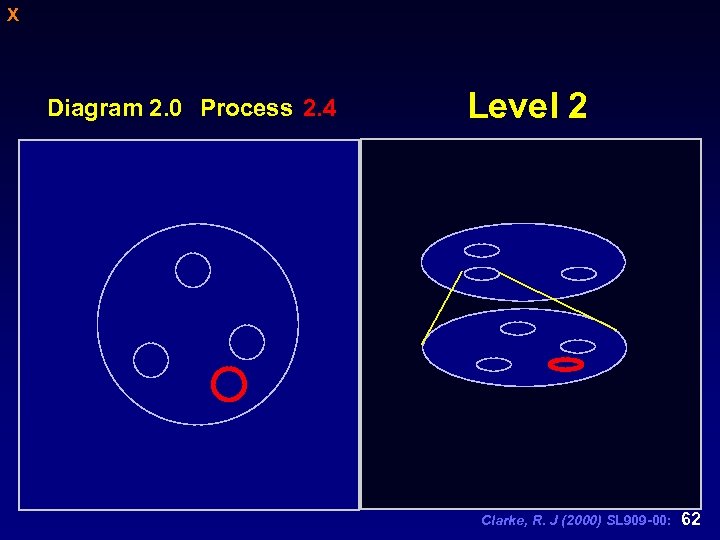
X Diagram 2. 0 Process 2. 4 Level 2 Clarke, R. J (2000) SL 909 -00: 62
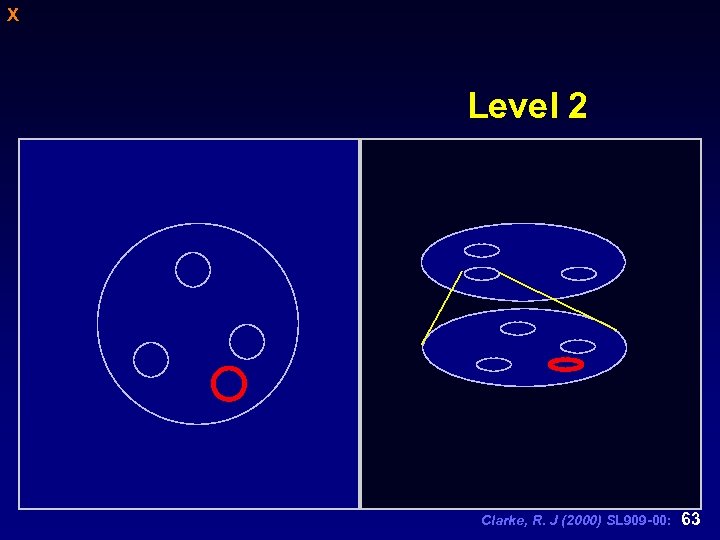
X Level 2 Clarke, R. J (2000) SL 909 -00: 63
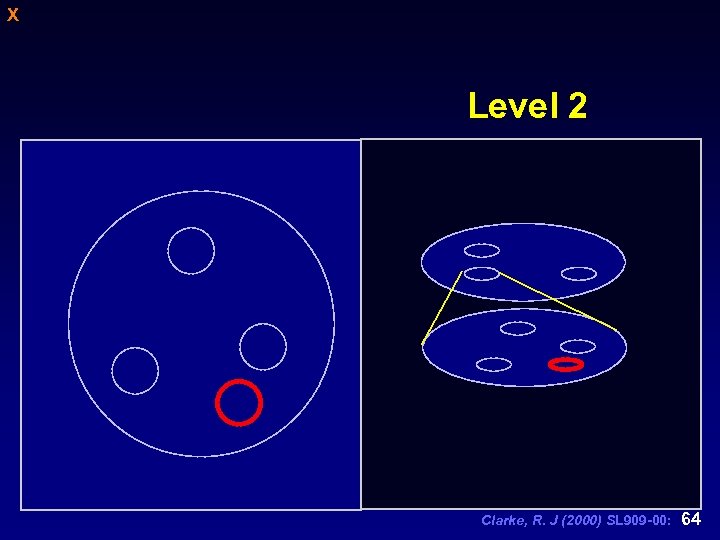
X Level 2 Clarke, R. J (2000) SL 909 -00: 64
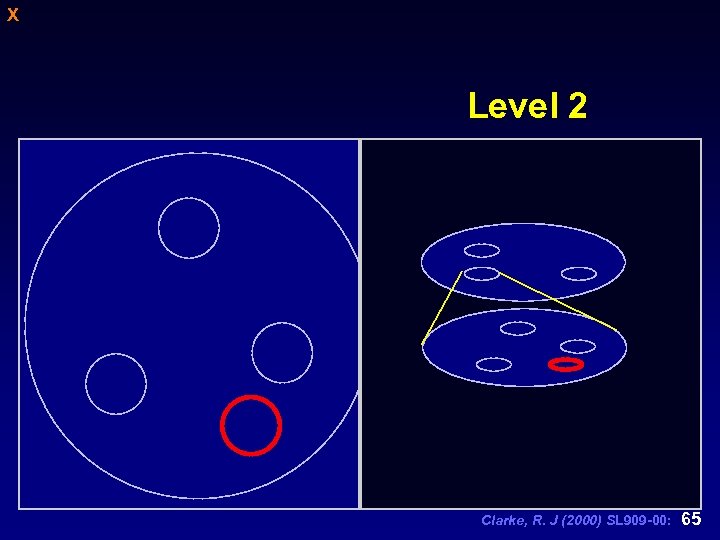
X Level 2 Clarke, R. J (2000) SL 909 -00: 65
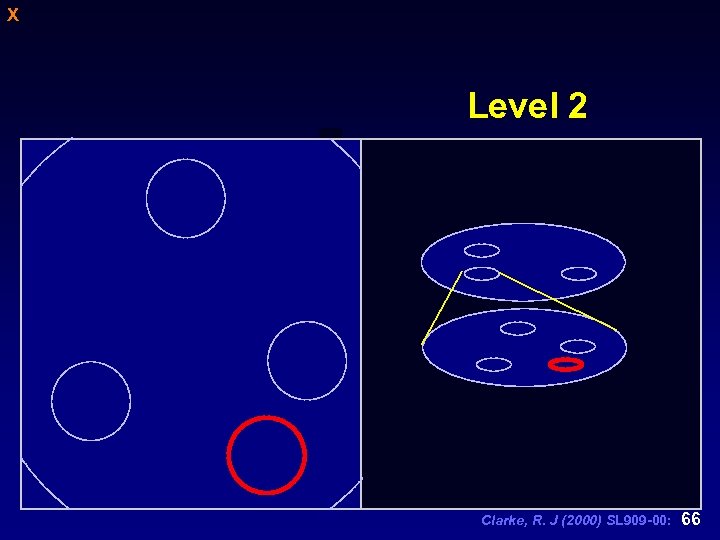
X Level 2 Clarke, R. J (2000) SL 909 -00: 66
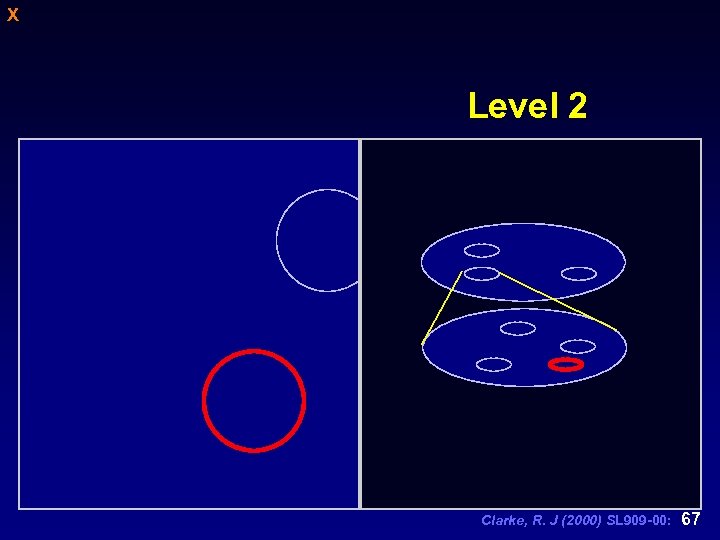
X Level 2 Clarke, R. J (2000) SL 909 -00: 67
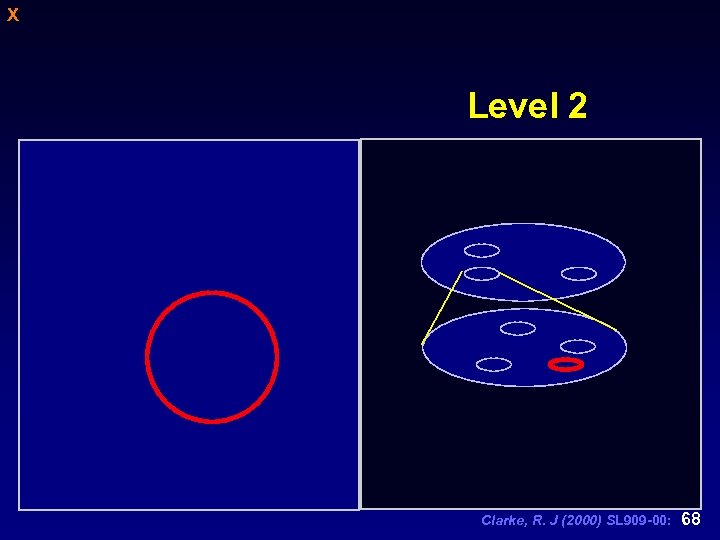
X Level 2 Clarke, R. J (2000) SL 909 -00: 68
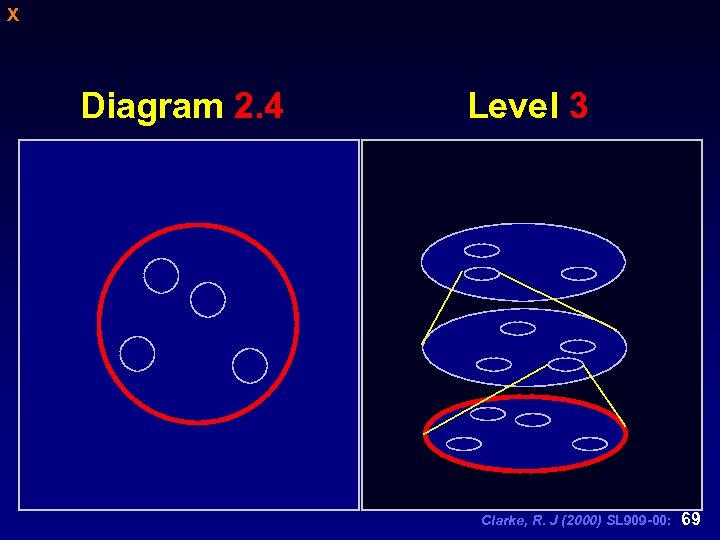
X Diagram 2. 4 Level 3 Clarke, R. J (2000) SL 909 -00: 69
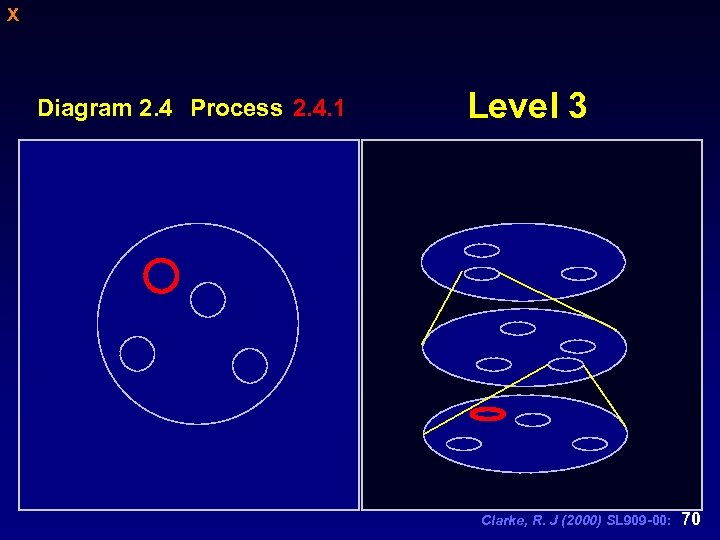
X Diagram 2. 4 Process 2. 4. 1 Level 3 Clarke, R. J (2000) SL 909 -00: 70
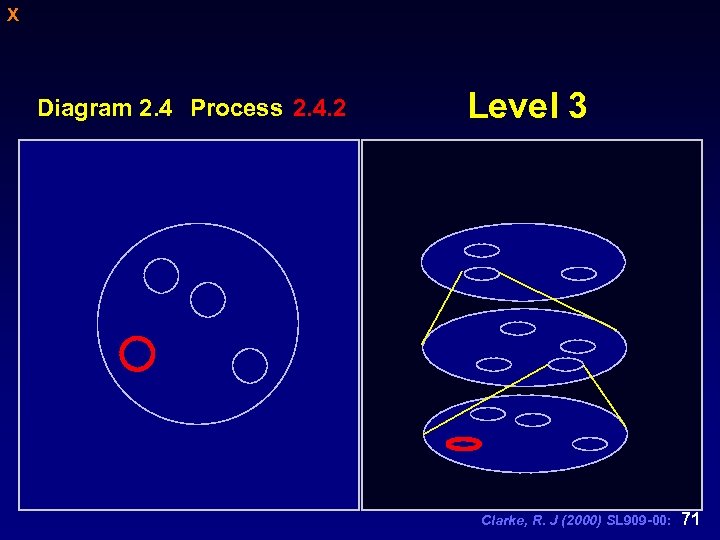
X Diagram 2. 4 Process 2. 4. 2 Level 3 Clarke, R. J (2000) SL 909 -00: 71
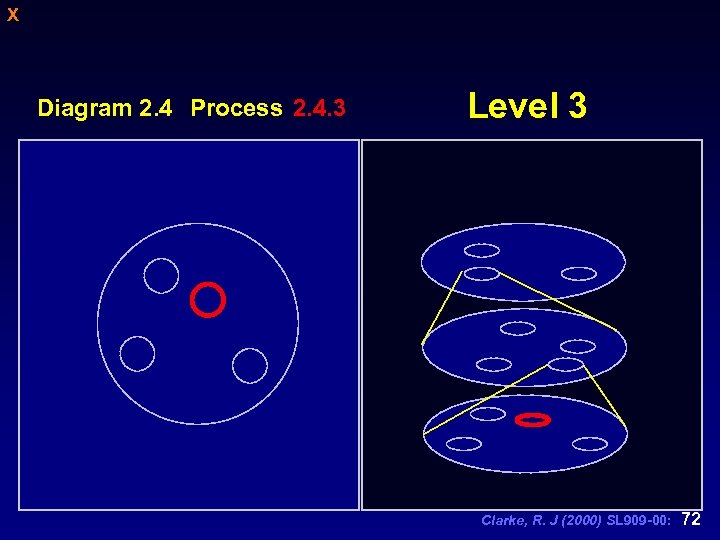
X Diagram 2. 4 Process 2. 4. 3 Level 3 Clarke, R. J (2000) SL 909 -00: 72
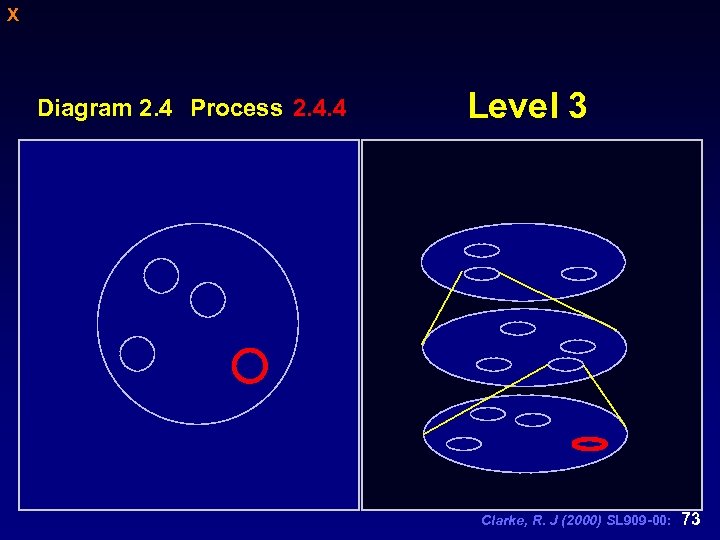
X Diagram 2. 4 Process 2. 4. 4 Level 3 Clarke, R. J (2000) SL 909 -00: 73
General Systems Model Propogation or Spread n entered sociology/political science in 1950 s and 1960 s n the view of systems theorists is that the general concept of a system can be applied to social systems ie. organisations Clarke, R. J (2000) SL 909 -00: 74
Closed Systems n some systems are closed – they are not influenced by their environment, eg. solar system – have entropy which describes how these systems use up energy and run down n not useful to IS Clarke, R. J (2000) SL 909 -00: 75
Open Systems n social systems are open systems – can import energy from the environment – can sustain themselves in response to changes in their environment – possess negentropy, and can achieve new states n they adapt Clarke, R. J (2000) SL 909 -00: 76
Organisations as Systems (1) n Organisations are open system (contrast with closed systems) n a physical system of the firm transforms input resources into output resources n input resources come from environment, output resources go to environment Clarke, R. J (2000) SL 909 -00: 77
Organisations as Systems (2) n physical resources: – material flow (from suppliers to customers) – personnel flow (from the labour market and back) – machine flow (from supplier to scrap yard) – money flow (from owners who provide investment capital and customers who buy goods) Clarke, R. J (2000) SL 909 -00: 78
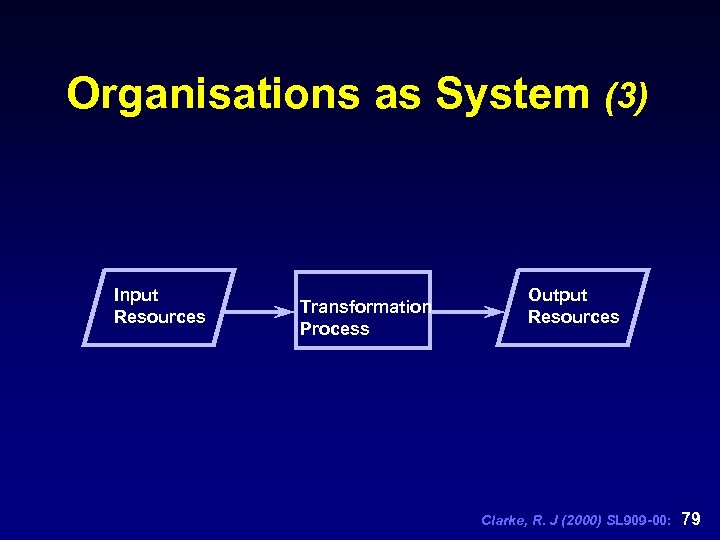
Organisations as System (3) Input Resources Transformation Process Output Resources Clarke, R. J (2000) SL 909 -00: 79
Closed Loop Systems (1) n some open system can control operations, some cannot n when no feedback loop is provided for an open system then it is called an open-loop system n when feedback loop and control mechanism exists -closed loop system Clarke, R. J (2000) SL 909 -00: 80
Closed Loop Systems (2) n control is provided by a loopcalled a feedback loop n feedback consists of signals are sent to provide a corrective action Clarke, R. J (2000) SL 909 -00: 81
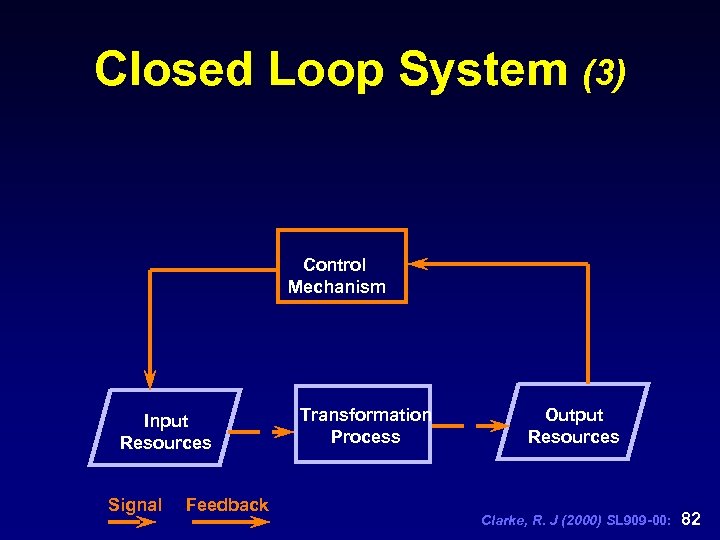
Closed Loop System (3) Control Mechanism Input Resources Signal Feedback Transformation Process Output Resources Clarke, R. J (2000) SL 909 -00: 82
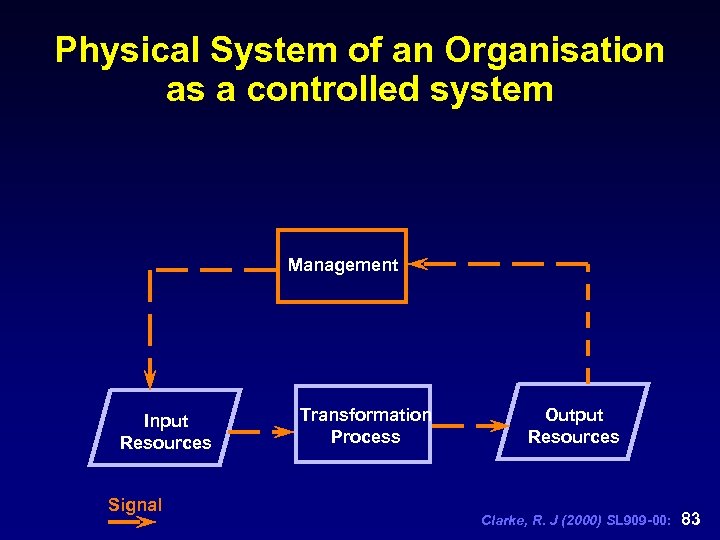
Physical System of an Organisation as a controlled system Management Input Resources Signal Transformation Process Output Resources Clarke, R. J (2000) SL 909 -00: 83
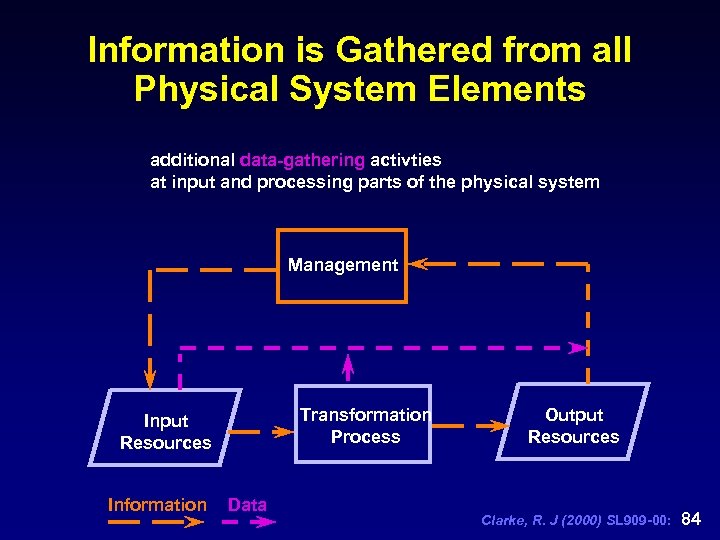
Information is Gathered from all Physical System Elements additional data-gathering activties at input and processing parts of the physical system Management Transformation Process Input Resources Information Data Output Resources Clarke, R. J (2000) SL 909 -00: 84
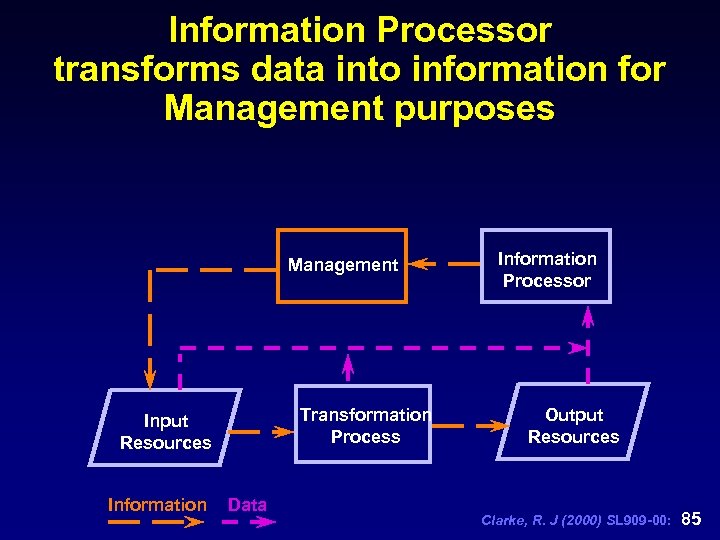
Information Processor transforms data into information for Management purposes Management Transformation Process Input Resources Information Data Information Processor Output Resources Clarke, R. J (2000) SL 909 -00: 85
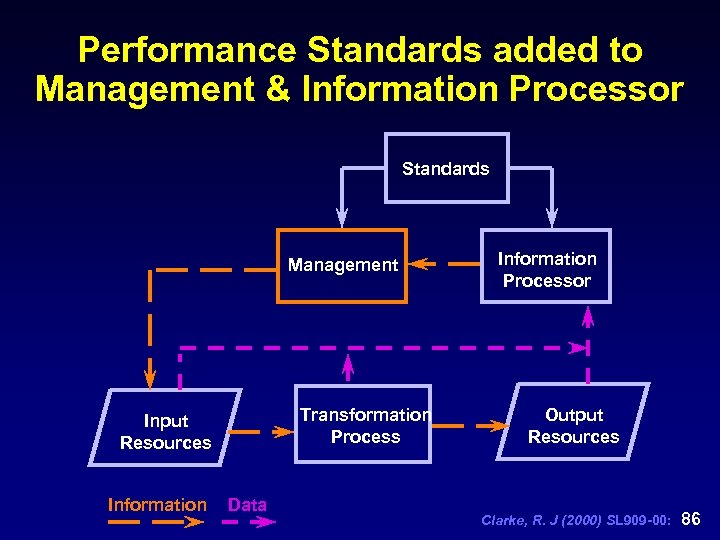
Performance Standards added to Management & Information Processor Standards Management Transformation Process Input Resources Information Data Information Processor Output Resources Clarke, R. J (2000) SL 909 -00: 86
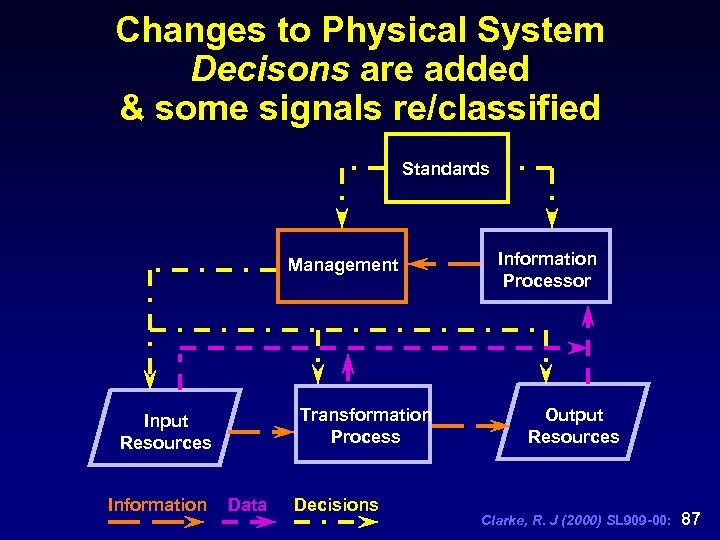
Changes to Physical System Decisons are added & some signals re/classified Standards Management Transformation Process Input Resources Information Data Decisions Information Processor Output Resources Clarke, R. J (2000) SL 909 -00: 87
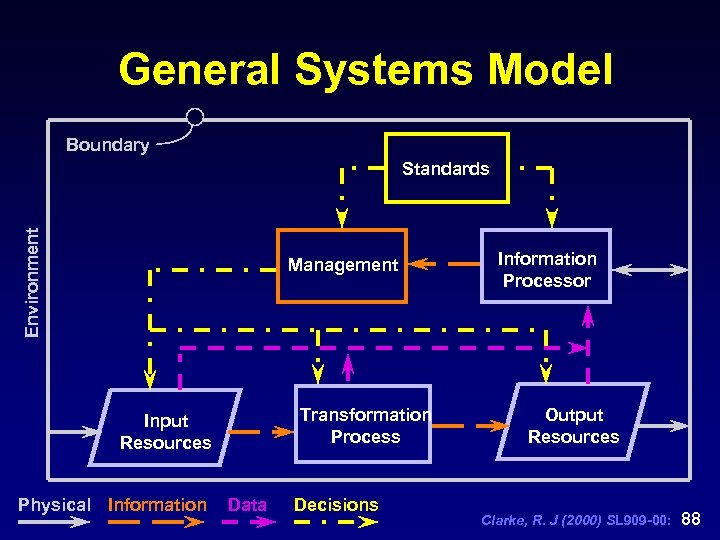
General Systems Model Boundary Environment Standards Management Transformation Process Input Resources Physical Information Data Decisions Information Processor Output Resources Clarke, R. J (2000) SL 909 -00: 88
Systems Approach to Decision Making Clarke, R. J (2000) SL 909 -00: 89
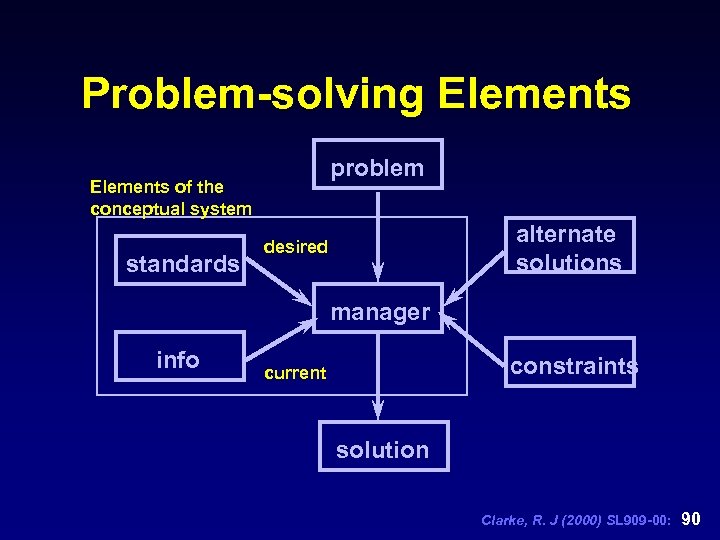
Problem-solving Elements problem Elements of the conceptual system standards alternate solutions desired manager info constraints current solution Clarke, R. J (2000) SL 909 -00: 90
Structured, Unstructured, Semistructured Problems (1) Management problems are often considered to be either structured or unstructured in nature n Important criteria as these are used to identify different types of system: Operational Systems, MIS, and DSS n Clarke, R. J (2000) SL 909 -00: 91
Structured, Unstructured, Semistructured Problems (2) n Structured Problems –consist of elements and relationships between elements which are understood by the problem solver –problem expressed in mathematical form and therefore probably implementable Clarke, R. J (2000) SL 909 -00: 92
Structured, Unstructured, Semistructured Problems (3) n Unstructured Problem –contains no elements or relationships between elements which are understood by the problem solver –quantification of unstructured problems is difficult if not impossible Clarke, R. J (2000) SL 909 -00: 93
Structured, Unstructured, Semistructured Problems (4) n Semistructured Problem –contains some elements or relationships between elements that are understood by the problem solver –other elements or relationships between elements may not be understood at all Clarke, R. J (2000) SL 909 -00: 94
Structured, Unstructured, Semistructured Problems (5) n Is there such a thing as a structured problem? This already presupposes a particular type of solution! n computers can solve structured problems n most managers deal with semistructured problems Clarke, R. J (2000) SL 909 -00: 95
Introduction to MIS (1) n computers first applied to business tasks – accounting functions – specific functional areas eg. / order entry n today computers used also to provide management information Clarke, R. J (2000) SL 909 -00: 96
Introduction to MIS (2) as we will see the information needs of Management are different from the information needs of other system users n also, management has special responsibilities and obligations in organisationsrequire managed information n Clarke, R. J (2000) SL 909 -00: 97
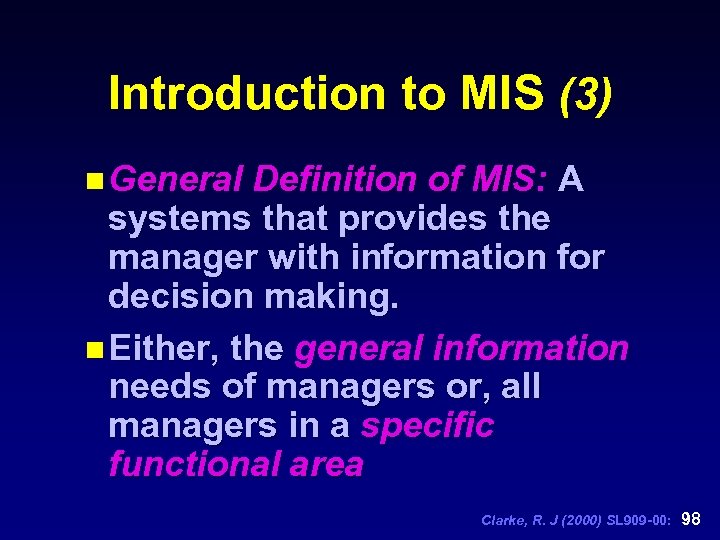
Introduction to MIS (3) n General Definition of MIS: A systems that provides the manager with information for decision making. n Either, the general information needs of managers or, all managers in a specific functional area Clarke, R. J (2000) SL 909 -00: 98
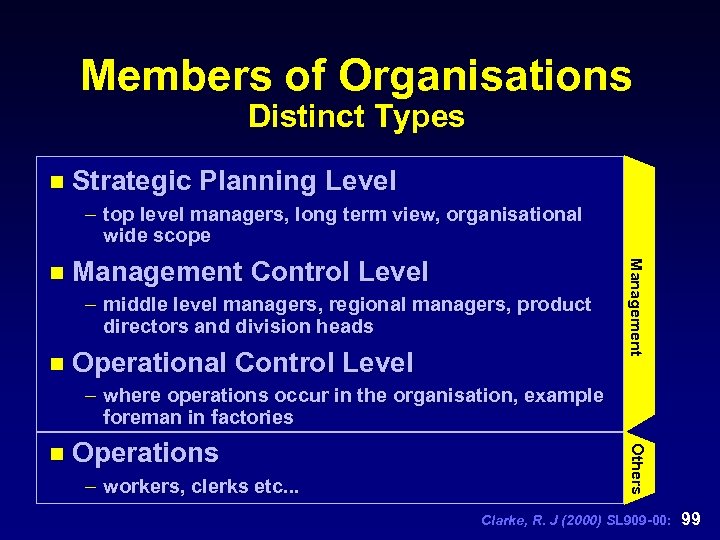
Members of Organisations Distinct Types n Strategic Planning Level – top level managers, long term view, organisational wide scope directors and division heads n Operational Control Level – where operations occur in the organisation, example Management n Management Control Level – middle level managers, regional managers, product foreman in factories Others n Operations – workers, clerks etc. . . Clarke, R. J (2000) SL 909 -00: 99
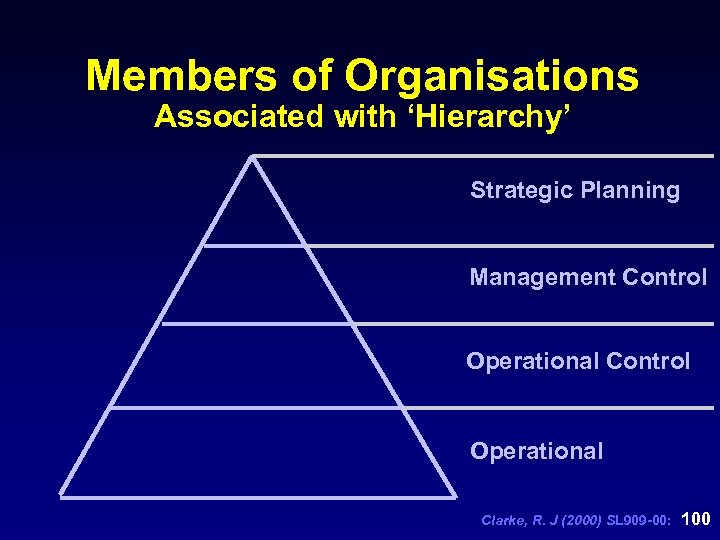
Members of Organisations Associated with ‘Hierarchy’ Strategic Planning Management Control Operational Clarke, R. J (2000) SL 909 -00: 100
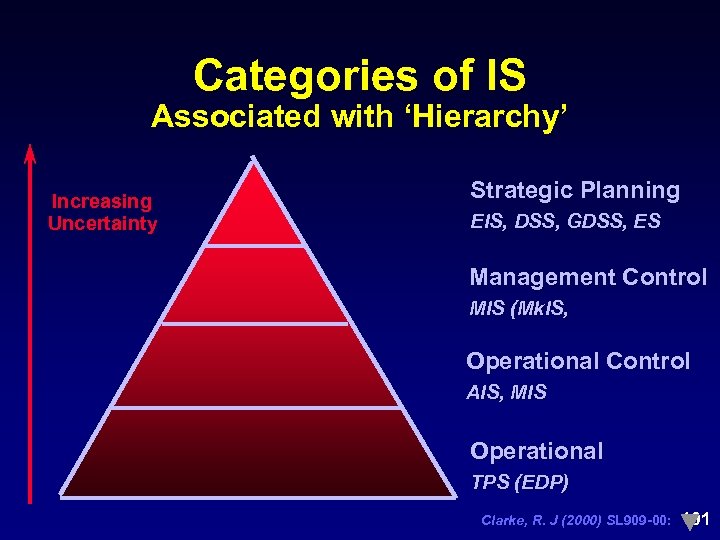
Categories of IS Associated with ‘Hierarchy’ Increasing Uncertainty Strategic Planning EIS, DSS, GDSS, ES Management Control MIS (Mk. IS, Operational Control AIS, MIS Operational TPS (EDP) Clarke, R. J (2000) SL 909 -00: 101
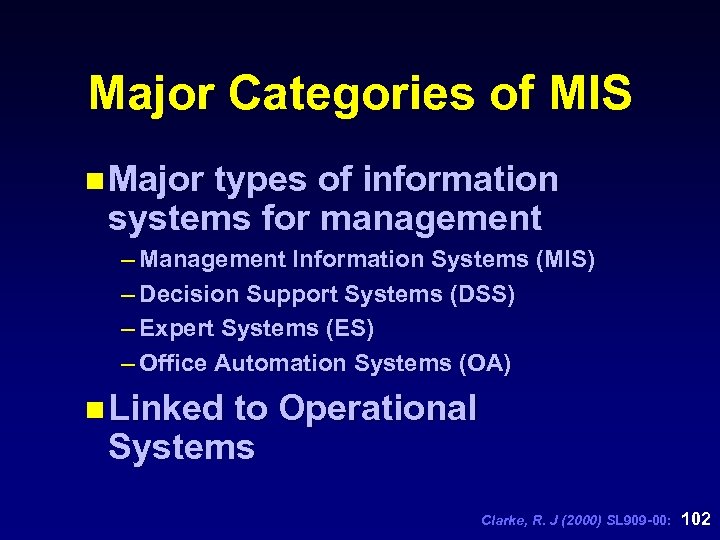
Major Categories of MIS n Major types of information systems for management – Management Information Systems (MIS) – Decision Support Systems (DSS) – Expert Systems (ES) – Office Automation Systems (OA) n Linked to Operational Systems Clarke, R. J (2000) SL 909 -00: 102
Social Systems considered harmful n in sociology. . . “Although hugely influential at the time. . . [attempts] to found a new general theory of. . . social systems [are] now adjudged a relative failure” (Jary & Jary 1991, 649) n there are therefore some obvious questions. . . Clarke, R. J (2000) SL 909 -00: 103
Isn’t ‘system’ OK for IS? n couldn’t it be suitable for IS but not suitable for sociology? – well this is possible – not likely – we find some theoretical problems with ‘systems’ as a way of modelling workplaces Clarke, R. J (2000) SL 909 -00: 104
Some technologies don’t fit n MIS do fit (EIS, DSS, GDSS, MIS Mk. IS, AIS etc) and therefore by definition Operational Systems that feed them data n but others do not because they span all levels of the hierarchy, – Office Automation – EDI (Electronic Data Interchange) Clarke, R. J (2000) SL 909 -00: 105
Why use ‘system’ n why does the information systems discipline still use it? – to answer this question we look at why sociology thinks ‘social systems’ are a failure n ‘conservative’ assumptions about the integration of social systems Clarke, R. J (2000) SL 909 -00: 106
Why use ‘system’ n levels of abstraction that are removed from the workplace n tautology n relative neglect of the independent influence of individual members agency n ignoring the effects of culture on development and use of IS Clarke, R. J (2000) SL 909 -00: 107
Why use ‘system’ n there alternatives to ‘social system’ explanations of organisations – webs – language-basis n we will look at these in later Lectures (5 -13) Clarke, R. J (2000) SL 909 -00: 108
Data & Information Clarke, R. J (2000) SL 909 -00: 109
![Information Systems Typical Definition “[An information system]. . . is a grouping of people,](https://present5.com/presentation/35e3e55e2ead90f64644eaaa4a75ca87/image-110.jpg "Information Systems Typical Definition “[An information system]. . . is a grouping of people,")
Information Systems Typical Definition “[An information system]. . . is a grouping of people, objects and procedures. . . [providing] information about the organization and its environment. . . which is useful to members and clients of that organization” Paraphrase Avison and Fitzgerald (1988, 1) Clarke, R. J (2000) SL 909 -00: 110
Data & Information n data is easy to identify n data is created with purposes in mind n but information depends on who, what, where, how and when n for closed, biological systems the idea of information is great! Clarke, R. J (2000) SL 909 -00: 111
Data & Information n organisations are not axiomatic (rule determined) n the members can change the internal and external processes of the organisation n information becomes difficult to define/changes- just ask any systems developer Clarke, R. J (2000) SL 909 -00: 112
Data & Information n concept of information relies on Shannon & Weaver (c. 1940 s) n defines information in terms which exclude meaning n in other words the second basis of our discipline (the concept of information) is theoretically inappropriate for use when developing systems Clarke, R. J (2000) SL 909 -00: 113
Information Systems Definitional Problems n analysis, design and implementation practices focus on the people, objects and procedures n rarely focus on the use of systems- the purposes of systems in given organisational contexts Clarke, R. J (2000) SL 909 -00: 114
Скачать презентацию BUSS 909 Office Automation Intranets Supplementary Lecture
35e3e55e2ead90f64644eaaa4a75ca87.ppt