 Скачать презентацию Business Studies for Computer Scientists or How to
c9652d996aa7ea810b99c99c5b0dcab3.ppt
- Количество слайдов: 63



Business Studies for Computer Scientists, or "How to Start and Run a Company" A course of 8 lectures Jack Lang
My Book The High-tech Entrepreneur's Handbook Jack Lang Paperback - 224 pages (2 November, 2001) FT. COM; ISBN: 0273656155
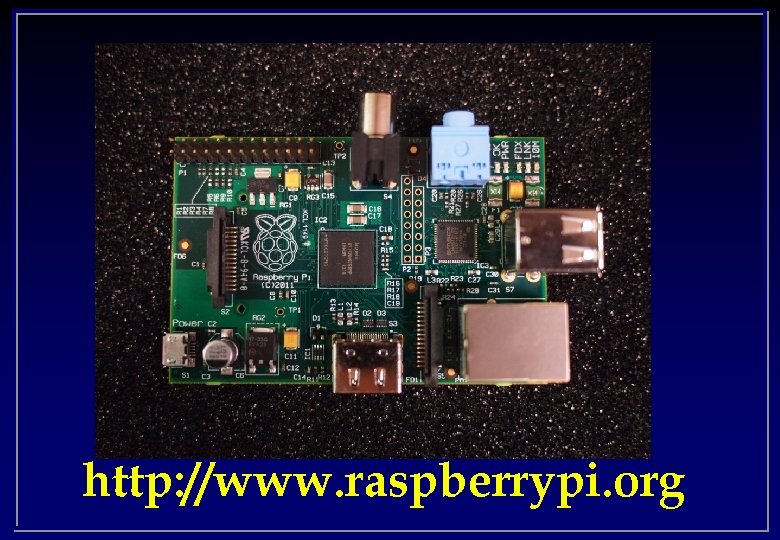
http: //www. raspberrypi. org
Cambridge Cluster l About 2000 companies – Employing about 50, 000 l Largest European cluster – 8% EU VC investment l $20 billion value created by Cambridge Alumni – Stanford $1000 billion? l Billion $ market cap companies – – – l ARM, Virata, CSR, Autonomy, Cambridge Antibody Solexa Cambridge Angels Source: Cambridge Technopole Report

http: //shop. tmiltd. com/shop/home/p. Id/176

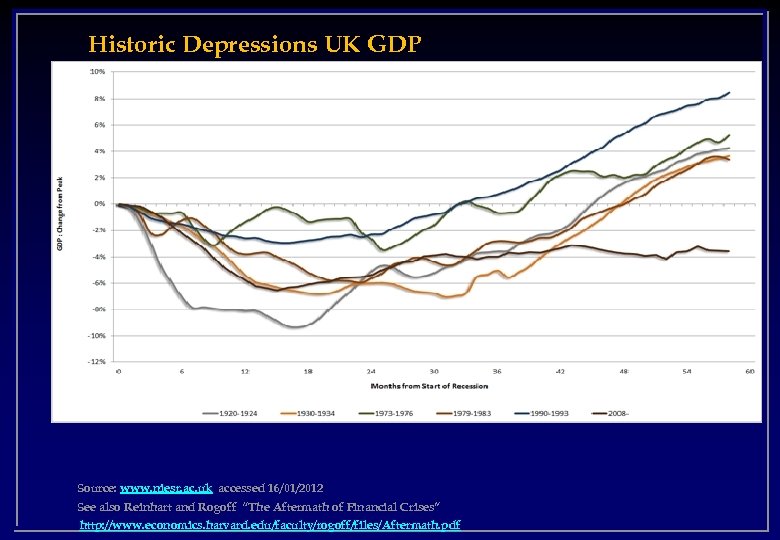
Historic Depressions UK GDP Source: www. niesr. ac. uk accessed 16/01/2012 See also Reinhart and Rogoff “The Aftermath of Financial Crises” http: //www. economics. harvard. edu/faculty/rogoff/files/Aftermath. pdf
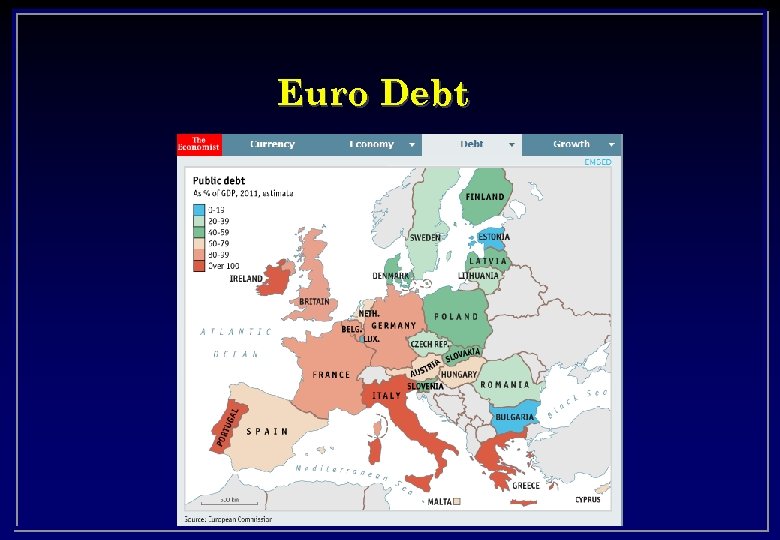
Euro Debt
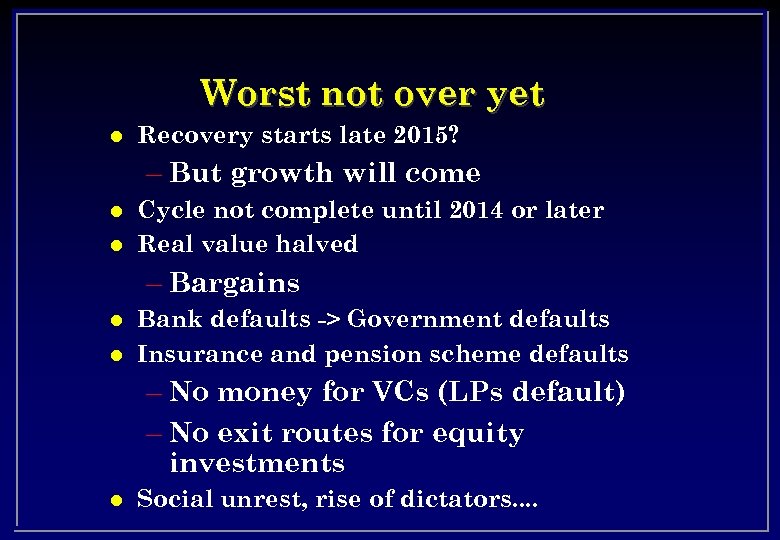
Worst not over yet l Recovery starts late 2015? – But growth will come l l Cycle not complete until 2014 or later Real value halved – Bargains l l Bank defaults -> Government defaults Insurance and pension scheme defaults – No money for VCs (LPs default) – No exit routes for equity investments l Social unrest, rise of dictators. .
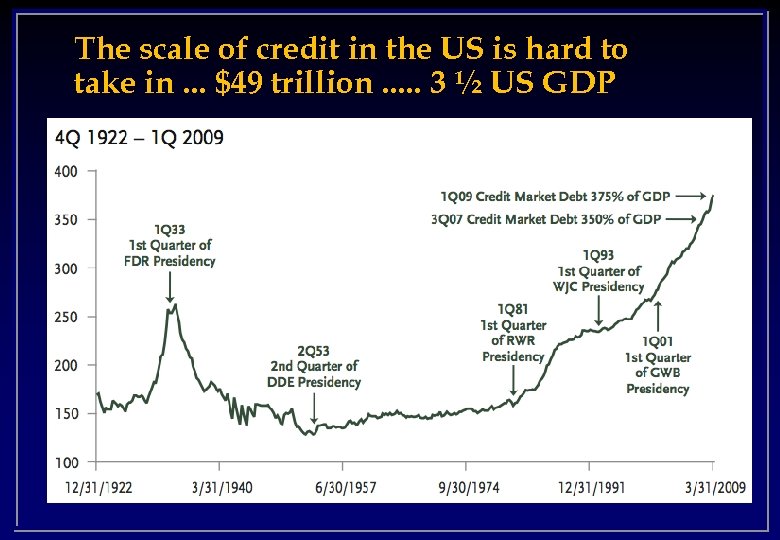
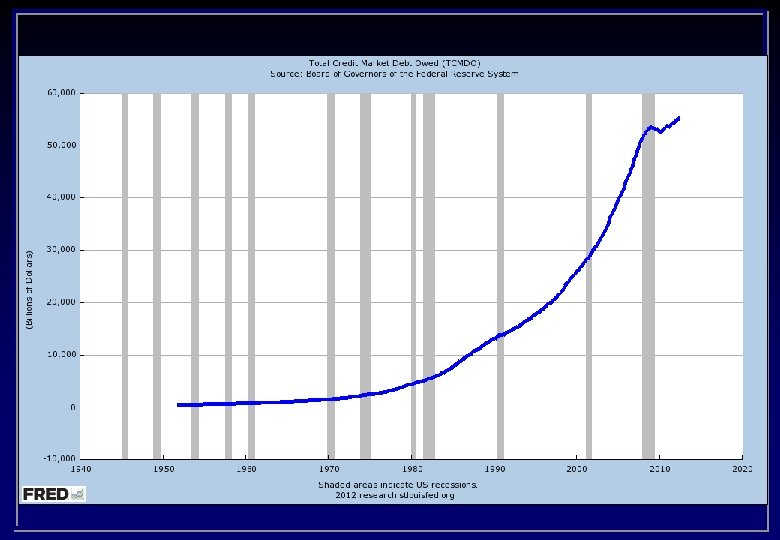
The scale of credit in the US is hard to take in. . . $49 trillion. . . 3 ½ US GDP
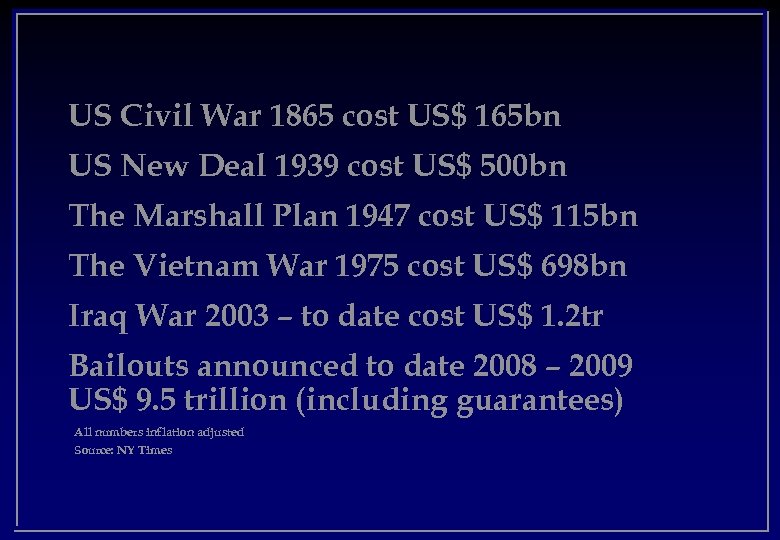
US Civil War 1865 cost US$ 165 bn US New Deal 1939 cost US$ 500 bn The Marshall Plan 1947 cost US$ 115 bn The Vietnam War 1975 cost US$ 698 bn Iraq War 2003 – to date cost US$ 1. 2 tr Bailouts announced to date 2008 – 2009 US$ 9. 5 trillion (including guarantees) All numbers inflation adjusted Source: NY Times
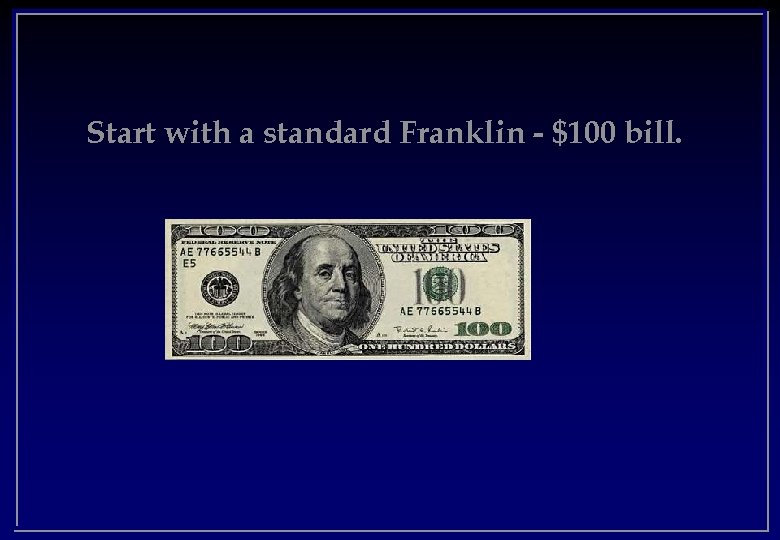
Start with a standard Franklin - $100 bill.
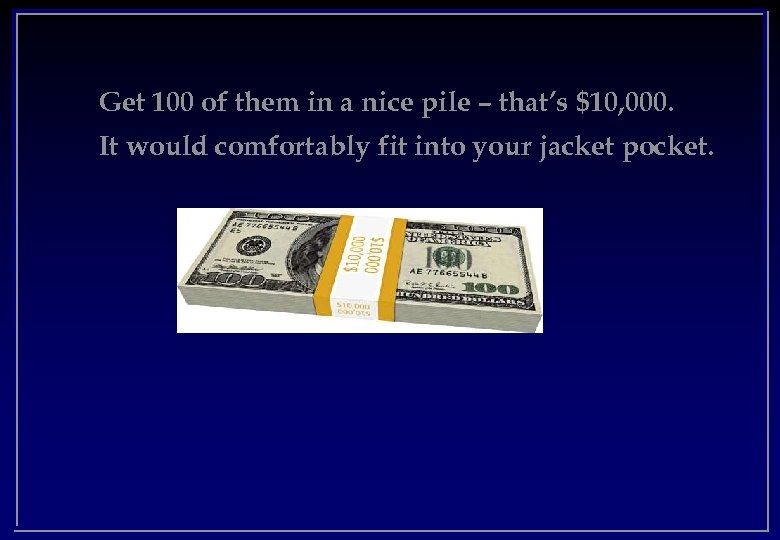
Get 100 of them in a nice pile – that’s $10, 000. It would comfortably fit into your jacket pocket.
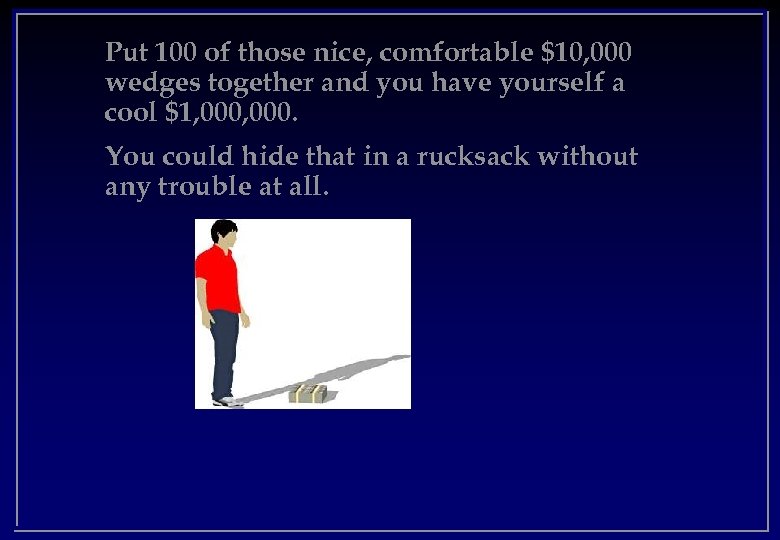
Put 100 of those nice, comfortable $10, 000 wedges together and you have yourself a cool $1, 000. You could hide that in a rucksack without any trouble at all.
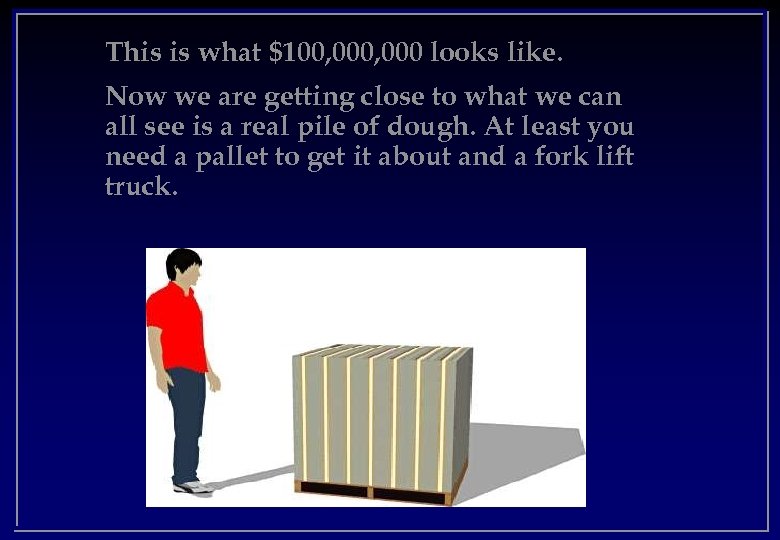
This is what $100, 000 looks like. Now we are getting close to what we can all see is a real pile of dough. At least you need a pallet to get it about and a fork lift truck.
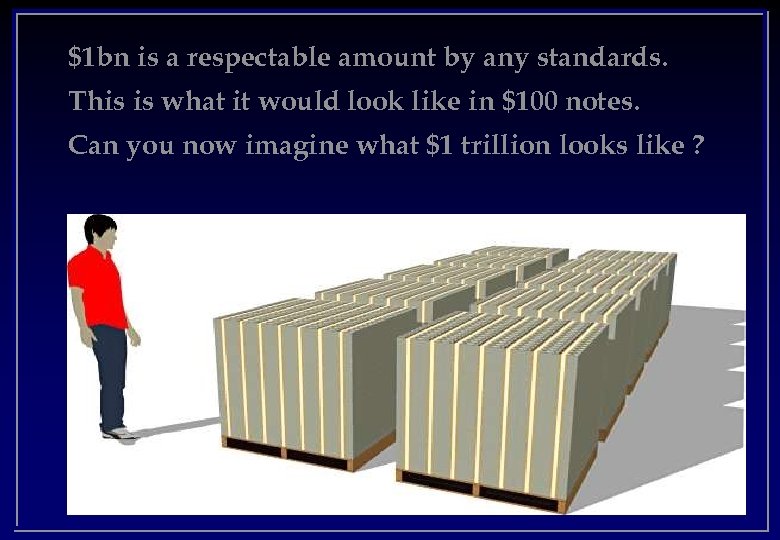
$1 bn is a respectable amount by any standards. This is what it would look like in $100 notes. Can you now imagine what $1 trillion looks like ?

Can you see yourself? $ 1 trillion
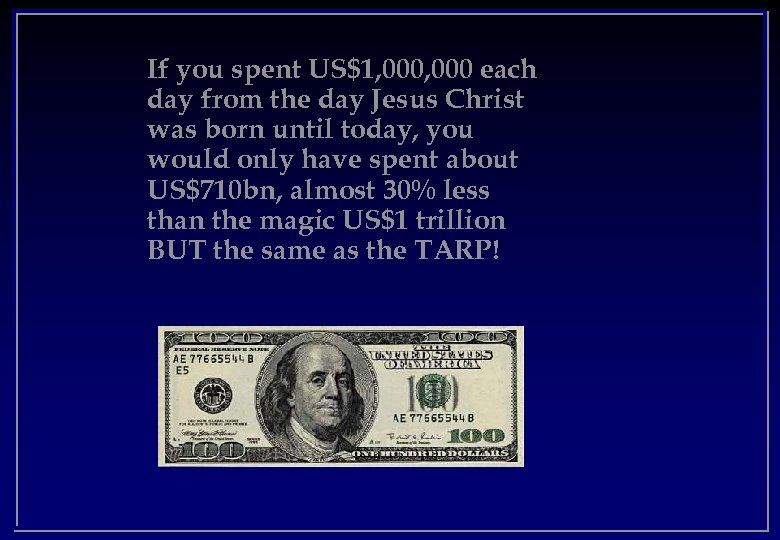
If you spent US$1, 000 each day from the day Jesus Christ was born until today, you would only have spent about US$710 bn, almost 30% less than the magic US$1 trillion BUT the same as the TARP!
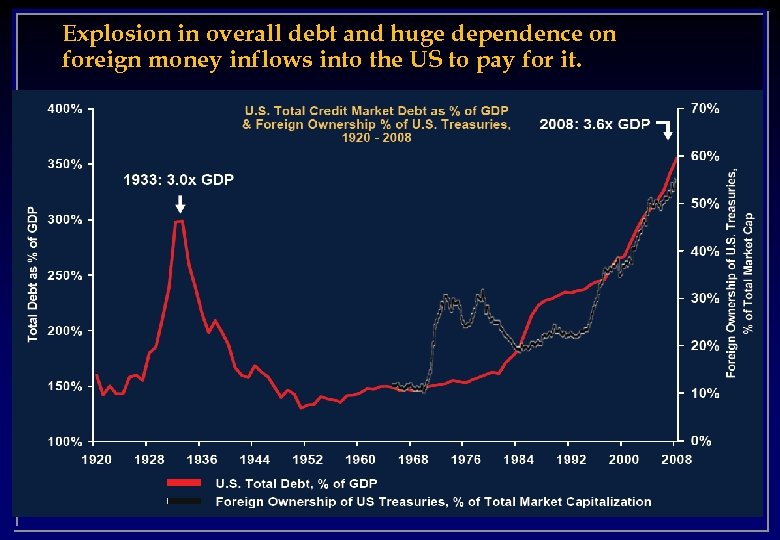
Explosion in overall debt and huge dependence on foreign money inflows into the US to pay for it.

Stagflation l l Classical shock response (for e. g. 1971) Rapid inflation No increase in real output Economic/Government response – High interest (to control inflation) – Low taxes (to stimulate production) – Grants l BAD – Savings, wealth, pensions – Current deficit; few projects – Weak dollar – fewer imports l GOOD – Starting new projects
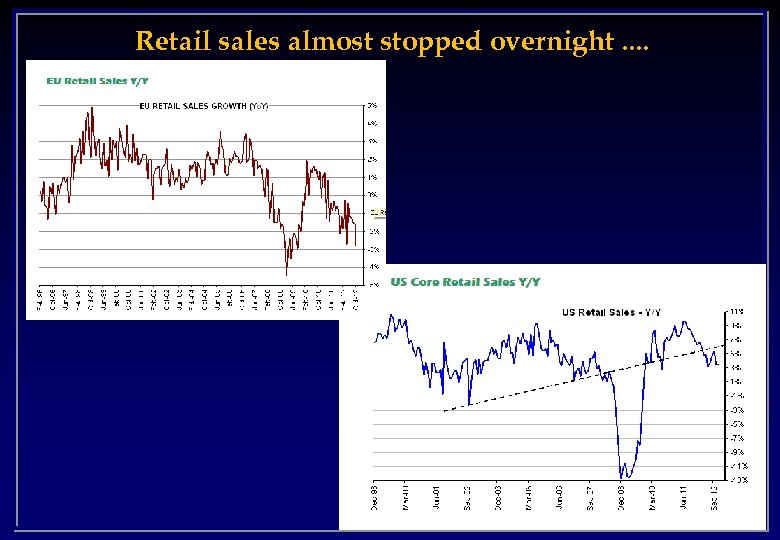
Retail sales almost stopped overnight. .
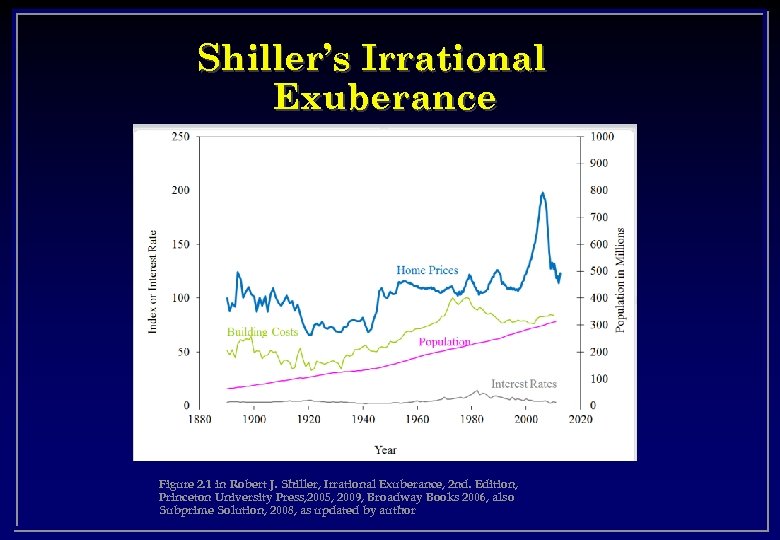
Shiller’s Irrational Exuberance Figure 2. 1 in Robert J. Shiller, Irrational Exuberance, 2 nd. Edition, Princeton University Press, 2005, 2009, Broadway Books 2006, also Subprime Solution, 2008, as updated by author
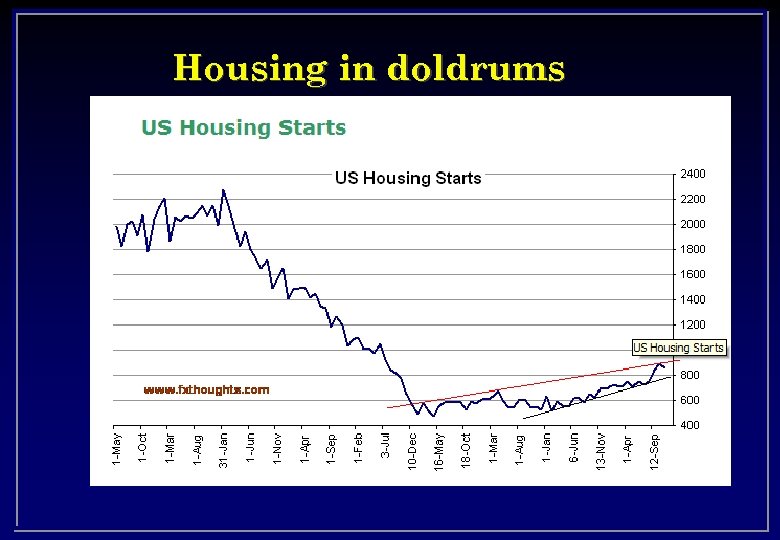
Housing in doldrums
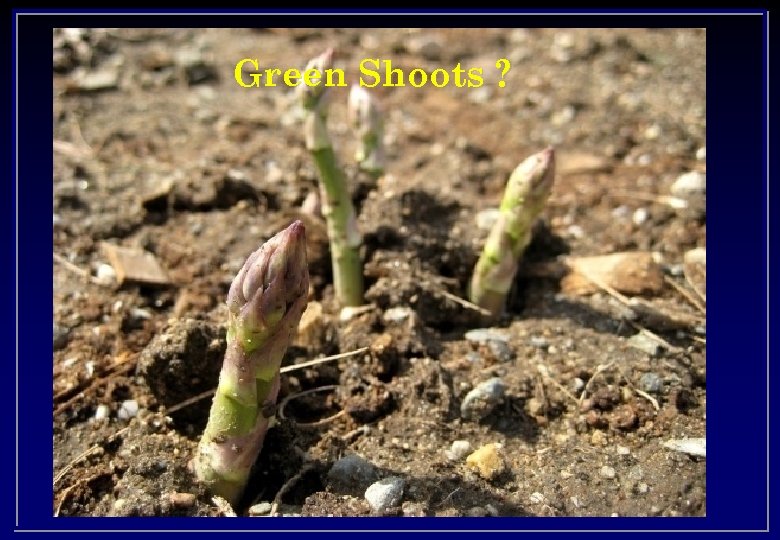
Green Shoots ?
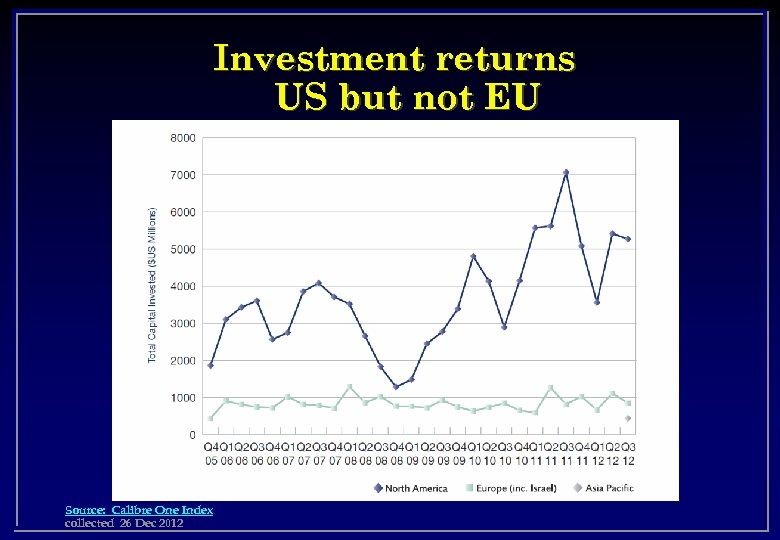
Investment returns US but not EU Source: Calibre One Index collected 26 Dec 2012
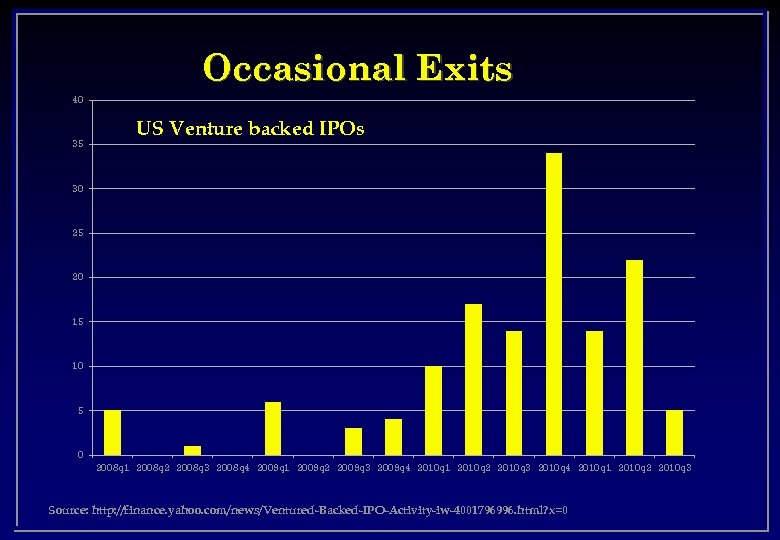
Occasional Exits 40 35 US Venture backed IPOs 30 25 20 15 10 5 0 2008 q 1 2008 q 2 2008 q 3 2008 q 4 2009 q 1 2009 q 2 2009 q 3 2009 q 4 2010 q 1 2010 q 2 2010 q 3 2010 q 4 2010 q 1 2010 q 2 2010 q 3 Source: http: //finance. yahoo. com/news/Ventured-Backed-IPO-Activity-iw-4001796996. html? x=0
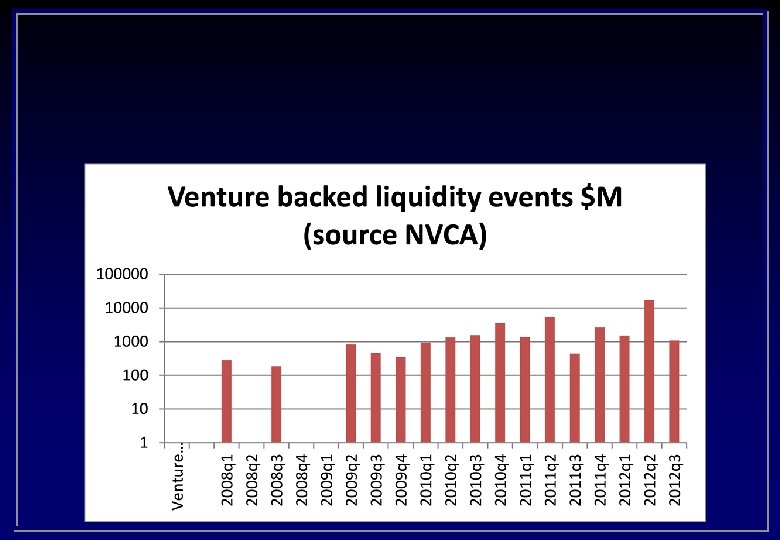
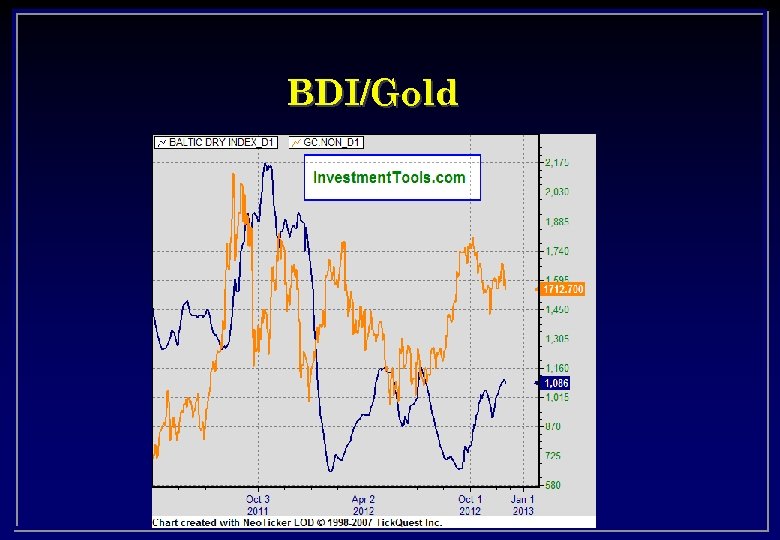
BDI/Gold
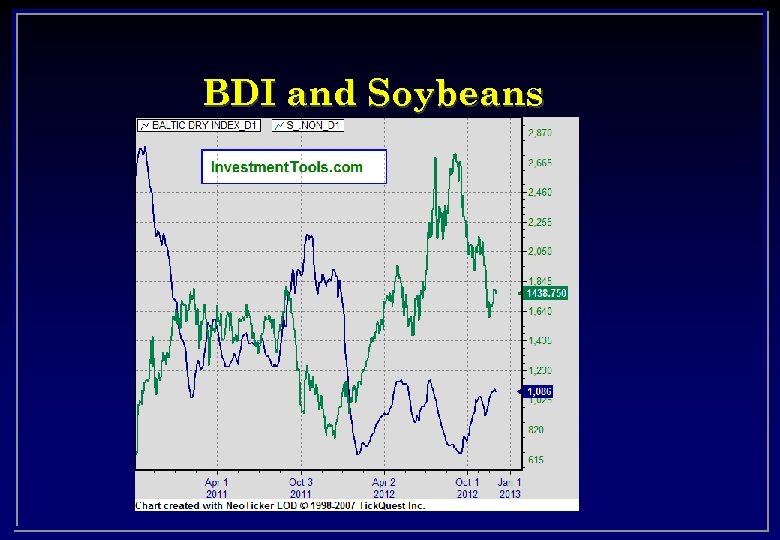
BDI and Soybeans
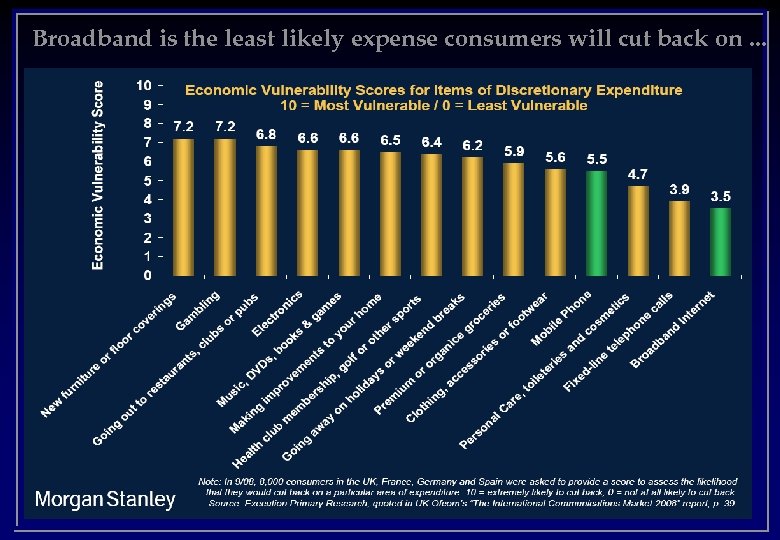
Broadband is the least likely expense consumers will cut back on. . .
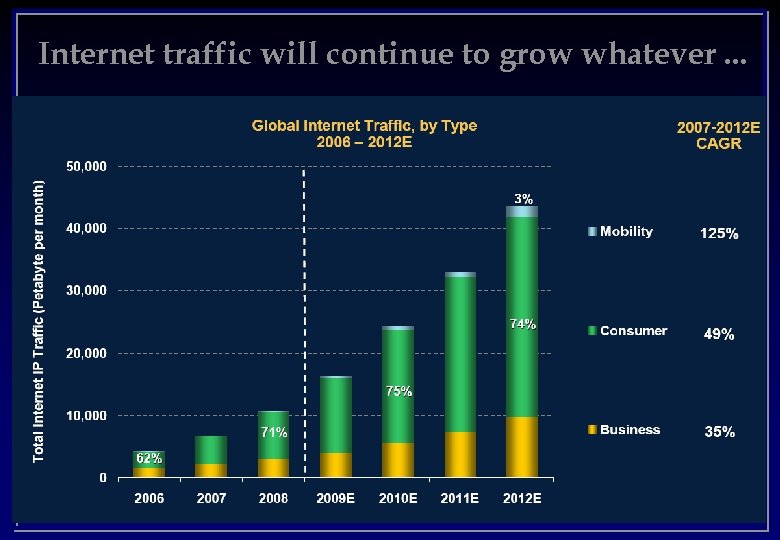
Internet traffic will continue to grow whatever. . .
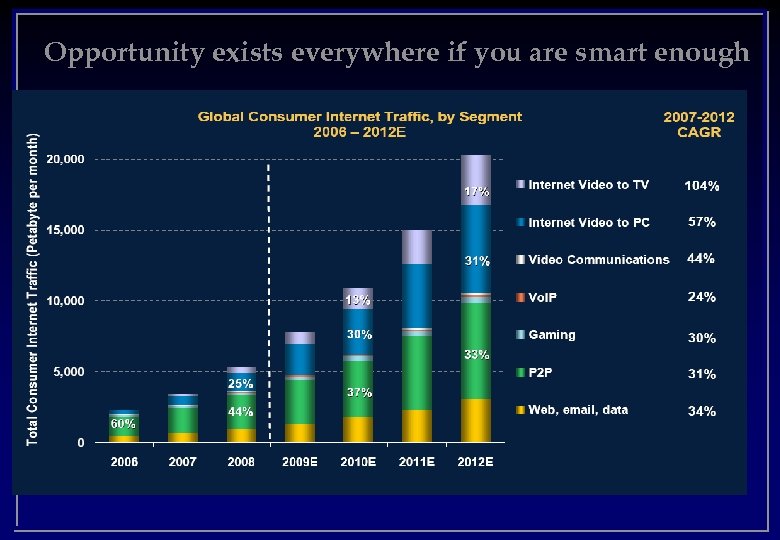
Opportunity exists everywhere if you are smart enough
Outline Synopsis 1. So you've got an idea. . . 2. Money and Tools for it's management 3. Legal aspects, contracts and copyright 4. People: How to organise a team 5. Project planning and management 6. Quality, maintenance and documentation 7. Marketing and Selling 8. Growth and Exit routes In addition to the above, there will be a course of 6 seminars in the Easter term
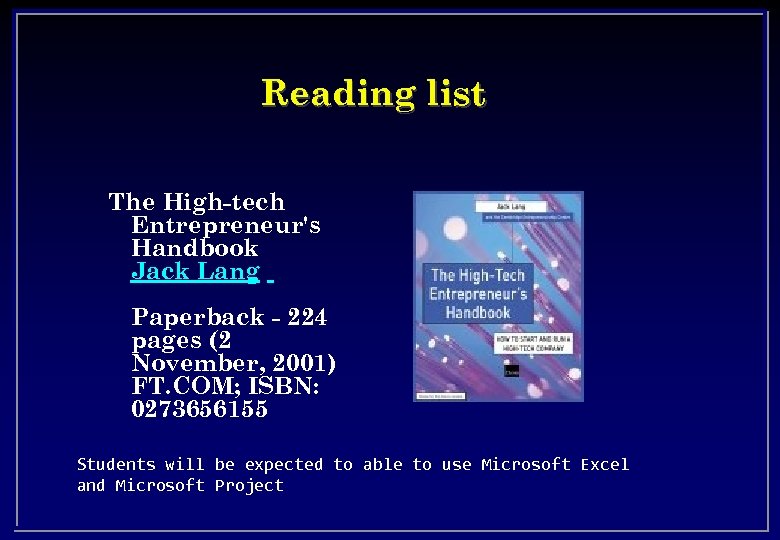
Reading list The High-tech Entrepreneur's Handbook Jack Lang Paperback - 224 pages (2 November, 2001) FT. COM; ISBN: 0273656155 Students will be expected to able to use Microsoft Excel and Microsoft Project
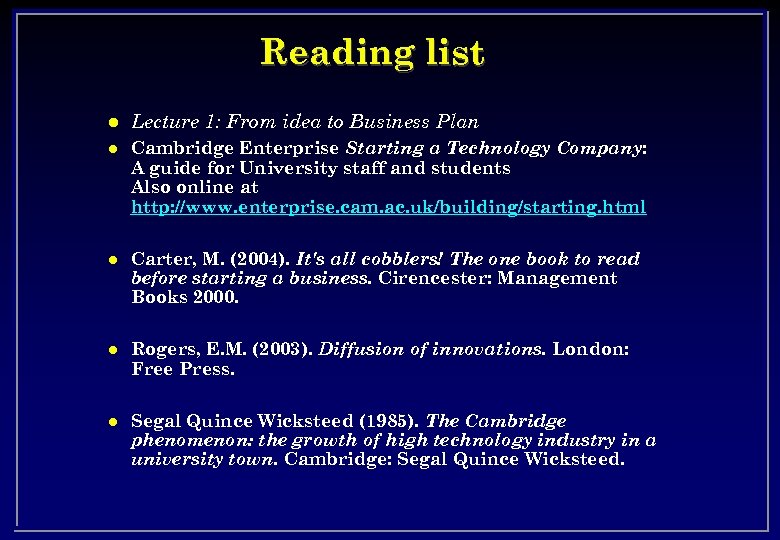
Reading list l Lecture 1: From idea to Business Plan l Cambridge Enterprise Starting a Technology Company: A guide for University staff and students Also online at http: //www. enterprise. cam. ac. uk/building/starting. html l Carter, M. (2004). It's all cobblers! The one book to read before starting a business. Cirencester: Management Books 2000. l Rogers, E. M. (2003). Diffusion of innovations. London: Free Press. l Segal Quince Wicksteed (1985). The Cambridge phenomenon: the growth of high technology industry in a university town. Cambridge: Segal Quince Wicksteed.
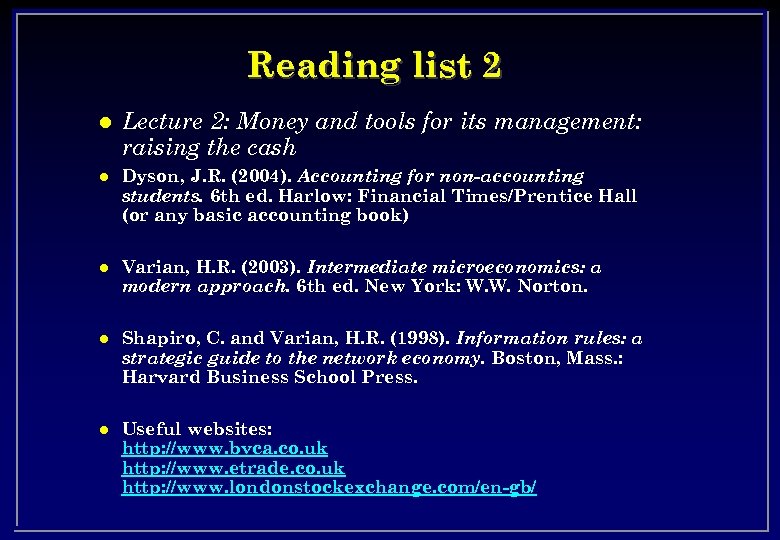
Reading list 2 l Lecture 2: Money and tools for its management: raising the cash l Dyson, J. R. (2004). Accounting for non-accounting students. 6 th ed. Harlow: Financial Times/Prentice Hall (or any basic accounting book) l Varian, H. R. (2003). Intermediate microeconomics: a modern approach. 6 th ed. New York: W. W. Norton. l Shapiro, C. and Varian, H. R. (1998). Information rules: a strategic guide to the network economy. Boston, Mass. : Harvard Business School Press. l Useful websites: http: //www. bvca. co. uk http: //www. etrade. co. uk http: //www. londonstockexchange. com/en-gb/
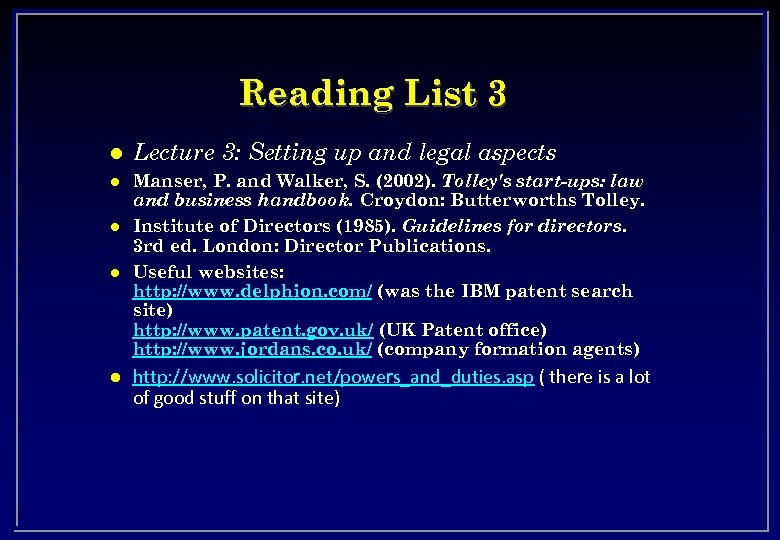
Reading List 3 l Lecture 3: Setting up and legal aspects l Manser, P. and Walker, S. (2002). Tolley's start-ups: law and business handbook. Croydon: Butterworths Tolley. Institute of Directors (1985). Guidelines for directors. 3 rd ed. London: Director Publications. Useful websites: http: //www. delphion. com/ (was the IBM patent search site) http: //www. patent. gov. uk/ (UK Patent office) http: //www. jordans. co. uk/ (company formation agents) l l l http: //www. solicitor. net/powers_and_duties. asp ( there is a lot of good stuff on that site)
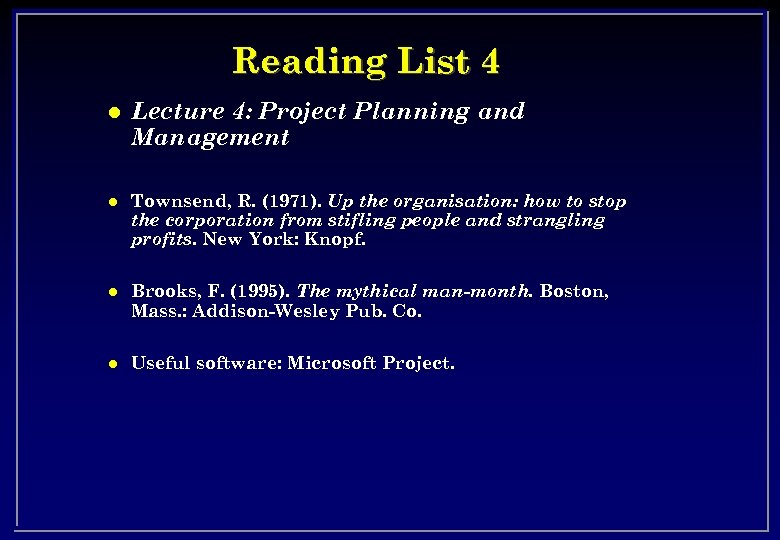
Reading List 4 l Lecture 4: Project Planning and Management l Townsend, R. (1971). Up the organisation: how to stop the corporation from stifling people and strangling profits. New York: Knopf. l Brooks, F. (1995). The mythical man-month. Boston, Mass. : Addison-Wesley Pub. Co. l Useful software: Microsoft Project.
Reading List 5 l Lecture 5: Prototype to Product l Moore, G. A. (1998). Crossing the chasm. Oxford: Capstone. Moore, G. A. (1998). Inside the tornado. Oxford: Capstone. l l Lecture 6: Standards, Quality, Documentation and Maintenance l l British Standards Institute (2000). Quality management systems: fundamentals and vocabulary. ISO 9000: 2000 London: British Standards Institute (2002). Information security management: specification with guidance for use. BS 7799 -2: 2002 London: British Standards Institute. http: //standards. ieee. org/ l . l
Reading List 6 l l l Lecture 7: Marketing and Selling Jeff Cox, Howard Stevens (2001). Selling the Wheel: Choosing the Best Way to Sell for You and Your Company. Pocket Books ISBN: 0671033107. Lecture 8: Growth, exit and Futures: places to look for new businesses Raymond, E. S. (1999). The cathedral and the bazaar. Sebastopol, CA: O'Reilly Alvin Toffler (1973). Future Shock. Pan ISBN: 0330028618. Vernor Vinge, Marvin L. Minsky (Afterword), James Frenkel (Editor) : True Names: and the Opening of the Cyberspace Frontier (2002) Tor Books ISBN 0312862075
1. So you've got an idea. . . Introduction Why are you doing it? What is it? defining the product or service; types of company Who needs it? an introduction to market analysis How? Writing the business plan Futures: some emerging areas for new computer businesses
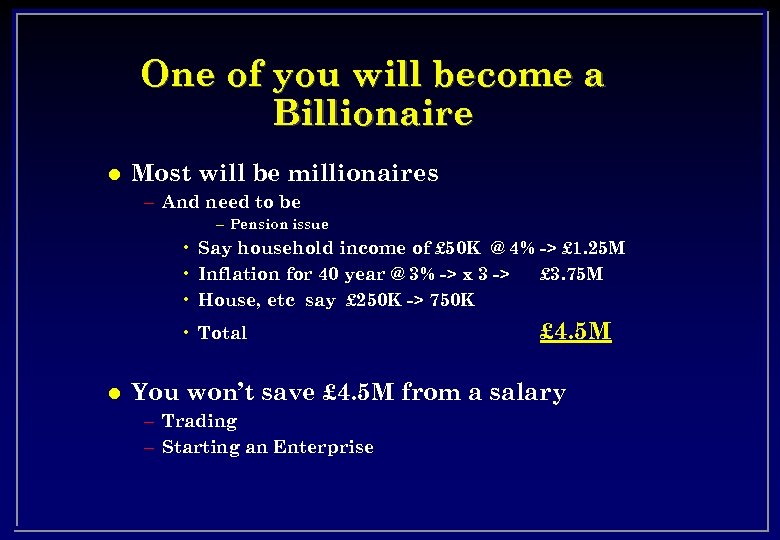
One of you will become a Billionaire l Most will be millionaires – And need to be – Pension issue • Say household income of £ 50 K @ 4% -> £ 1. 25 M • Inflation for 40 year @ 3% -> x 3 -> £ 3. 75 M • House, etc say £ 250 K -> 750 K • Total l £ 4. 5 M You won’t save £ 4. 5 M from a salary – Trading – Starting an Enterprise
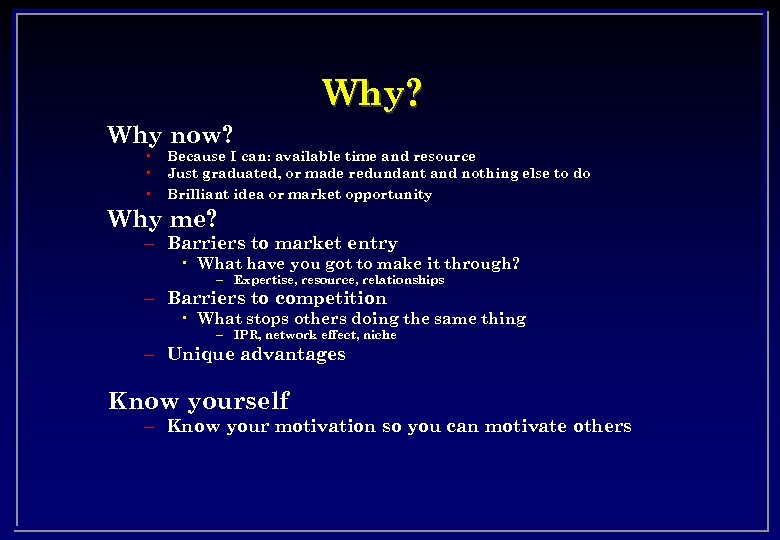
Why? Why now? • Because I can: available time and resource • Just graduated, or made redundant and nothing else to do • Brilliant idea or market opportunity Why me? – Barriers to market entry • What have you got to make it through? – Expertise, resource, relationships – Barriers to competition • What stops others doing the same thing – IPR, network effect, niche – Unique advantages Know yourself – Know your motivation so you can motivate others
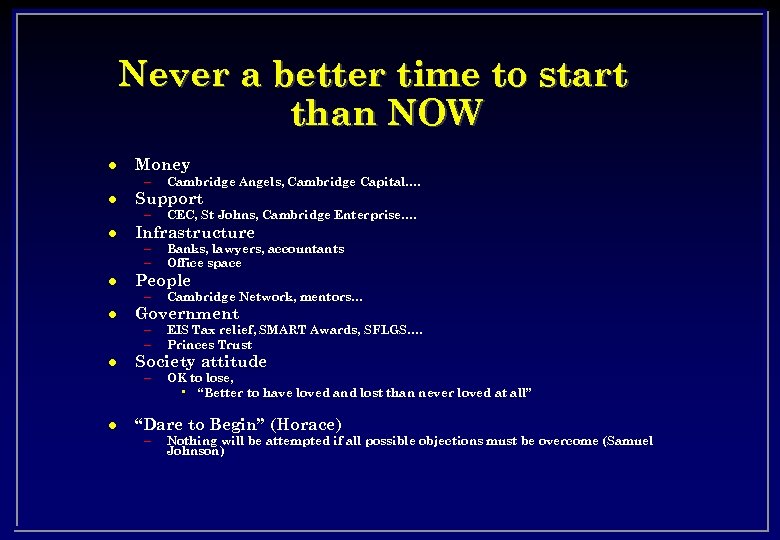
Never a better time to start than NOW l Money – l Support – l EIS Tax relief, SMART Awards, SFLGS…. Princes Trust Society attitude – l Cambridge Network, mentors… Government – – l Banks, lawyers, accountants Office space People – l CEC, St Johns, Cambridge Enterprise…. Infrastructure – – l Cambridge Angels, Cambridge Capital…. OK to lose, • “Better to have loved and lost than never loved at all” “Dare to Begin” (Horace) – Nothing will be attempted if all possible objections must be overcome (Samuel Johnson)
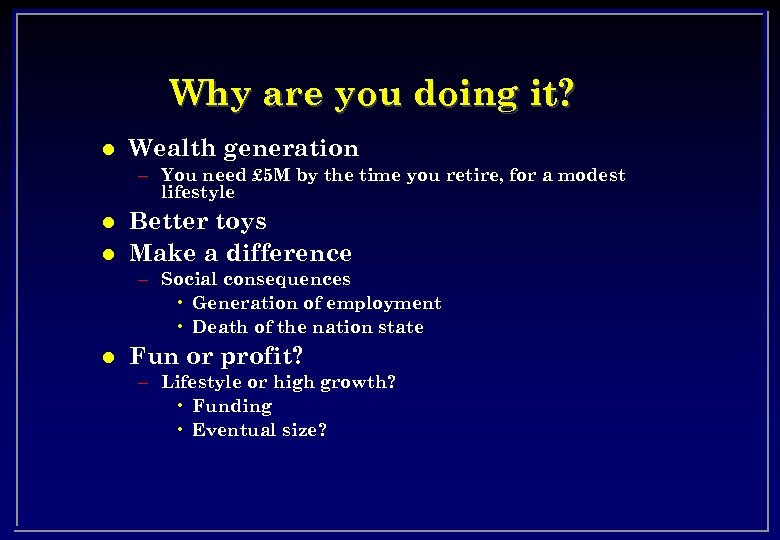
Why are you doing it? l Wealth generation – You need £ 5 M by the time you retire, for a modest lifestyle l l Better toys Make a difference – Social consequences • Generation of employment • Death of the nation state l Fun or profit? – Lifestyle or high growth? • Funding • Eventual size?
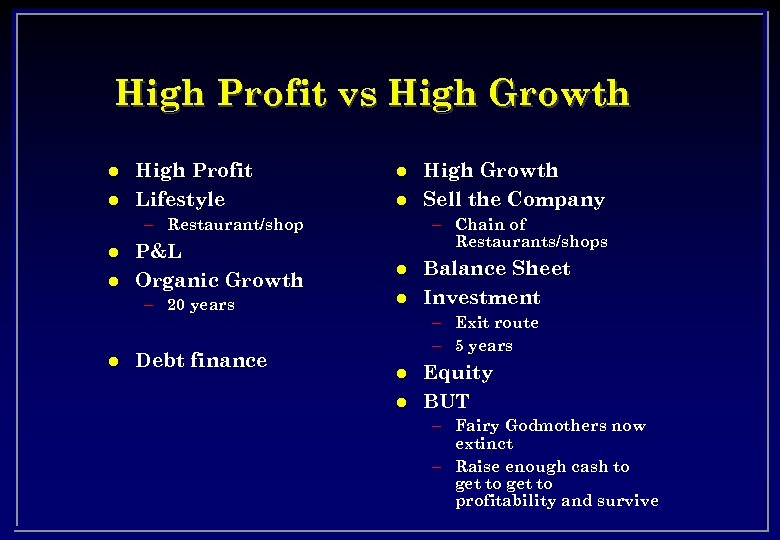
High Profit vs High Growth l l High Profit Lifestyle l l – Restaurant/shop l l P&L Organic Growth – 20 years l Debt finance High Growth Sell the Company – Chain of Restaurants/shops l l Balance Sheet Investment – Exit route – 5 years l l Equity BUT – Fairy Godmothers now extinct – Raise enough cash to get to profitability and survive
If you are not in business for fun or profit, what are you doing there?
An Entrepreneur takes risks… l Someone who starts a project without having the full resources or knowledge – Estimate, guess and gut feel – Risk taking • Market risk • People risk • Technology risk • Financial risk l Value accrues as risk lessens – Guesses replaced by justified facts – Balance sheet or P&L?
The Business Plan l Business plan describes what you want to do KISS: Keep It Simple and Stupid! Write for the target audience l BVCA Handbook l l
VC Criteria l l l Global sustainable under-served market need Strong management team Defensible technological advantage Believable Plans 60% IRR
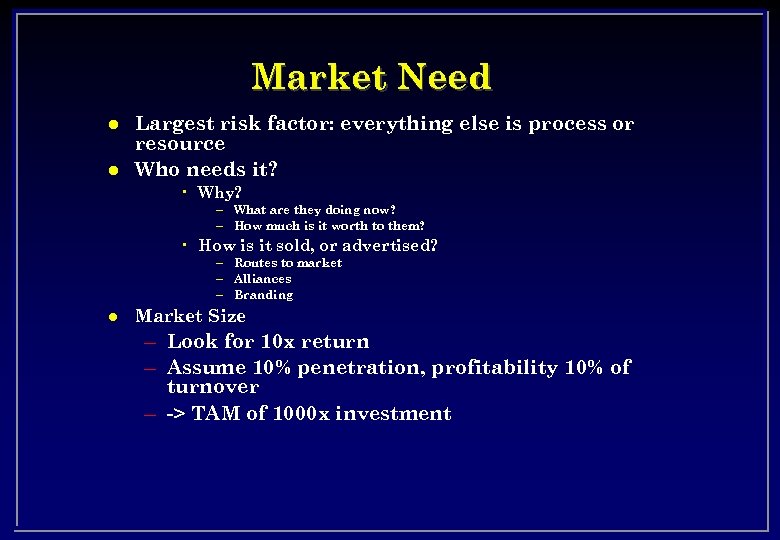
Market Need l l Largest risk factor: everything else is process or resource Who needs it? • Why? – What are they doing now? – How much is it worth to them? • How is it sold, or advertised? – Routes to market – Alliances – Branding l Market Size – Look for 10 x return – Assume 10% penetration, profitability 10% of turnover – -> TAM of 1000 x investment

Global Sustainable Under-Served Market Need
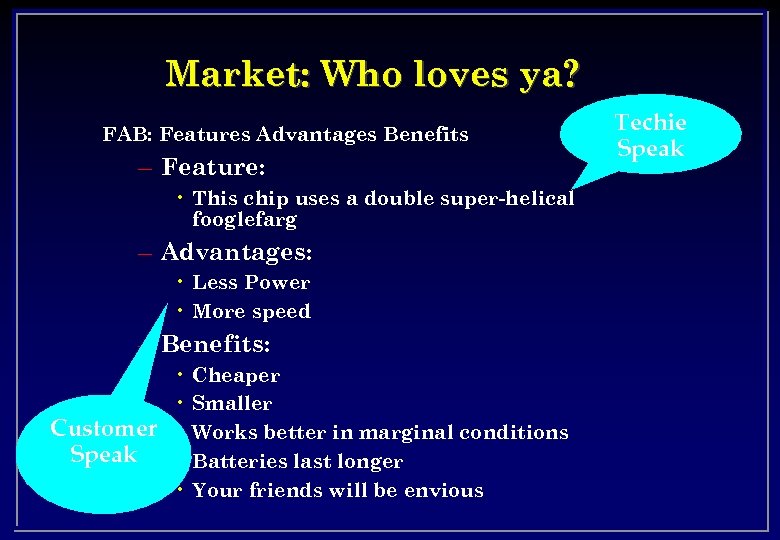
Market: Who loves ya? FAB: Features Advantages Benefits – Feature: • This chip uses a double super-helical fooglefarg – Advantages: • Less Power • More speed – Benefits: • Cheaper • Smaller Customer • Works better in marginal conditions Speak • Batteries last longer • Your friends will be envious Techie Speak
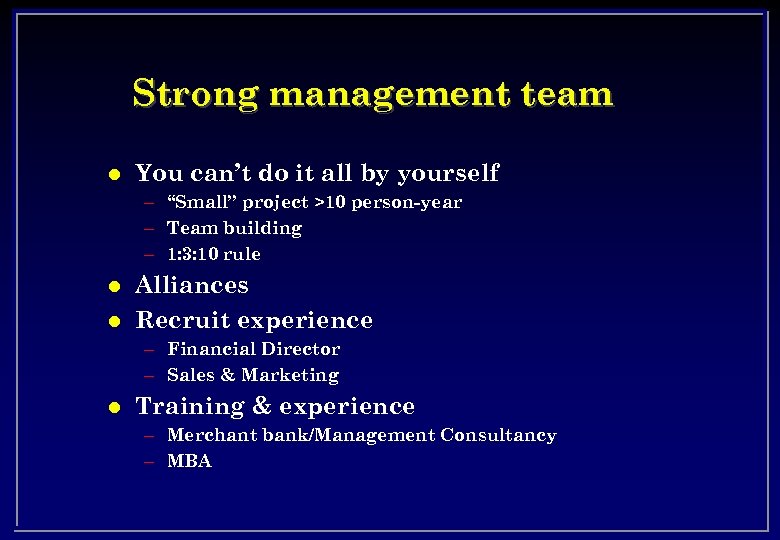
Strong management team l You can’t do it all by yourself – “Small” project >10 person-year – Team building – 1: 3: 10 rule l l Alliances Recruit experience – Financial Director – Sales & Marketing l Training & experience – Merchant bank/Management Consultancy – MBA
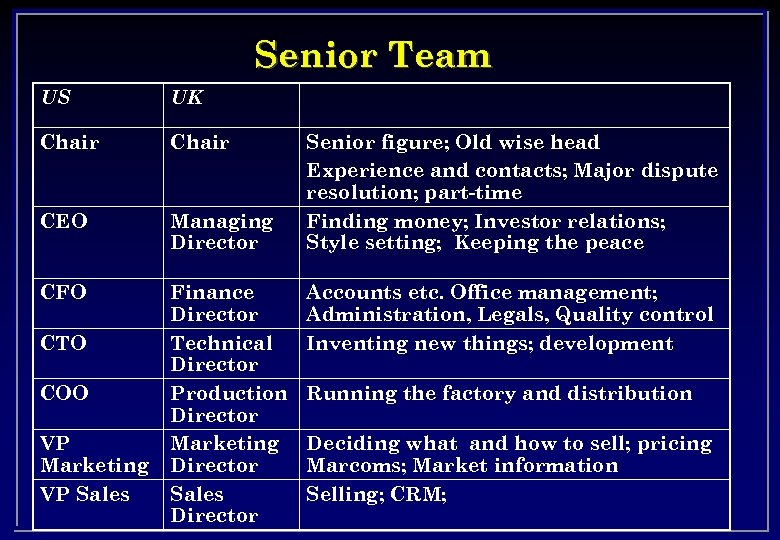
Senior Team US UK Chair CEO Managing Director CFO Finance Director Technical Director Production Director Marketing Director Sales Director CTO COO VP Marketing VP Sales Senior figure; Old wise head Experience and contacts; Major dispute resolution; part-time Finding money; Investor relations; Style setting; Keeping the peace Accounts etc. Office management; Administration, Legals, Quality control Inventing new things; development Running the factory and distribution Deciding what and how to sell; pricing Marcoms; Market information Selling; CRM;
Defensible advantage l IPR – Patent – Copyright – Trademark l Defensible leadership – against well-funded competition – Niche Market share – Brand l Examples
Believable Plans l l l Business Plan Development Plan Marketing plan – Adverts, mail shots, web-sites l Sales Plans – Distribution, Direct Sales l l Quality Plans Financial Projections – Budget • 60% IRR – Pay back financing in third year – Cash flow
Writing the Business Plan Executive Summary and funding requirement 2. Concept 3. The Market 3. 1 Global market size and need 3. 2 Sustainability 3. 3 Competition 3. 4 Marketing plans 4. The Team 4. 1 CEO 4. 2 CTO 4. 3 CFO 4. 4 VP Sales and Marketing
Writing the Plan - 2 5. The technology and its IPR 6. Summary of plans 6. 1 Development plans 6. 1. 1 Methodology 6. 1. 2 Milestones 6. 2 Marketing 6. 3 Sales and distribution 6. 4 Quality and industry standards 7. Financials
Writing the Plan - 3 Appendices: Financial model Key staff Letters of support Correspondence re IPR Full development plan Full marketing and sales plan Examples and brochures
Скачать презентацию Business Studies for Computer Scientists or How to
c9652d996aa7ea810b99c99c5b0dcab3.ppt