 Скачать презентацию Business Process Management Systems Pascal Ravesteyn UU HU —
7d00aef3b335a96938b707fe244ae0e9.ppt
- Количество слайдов: 44



Business Process Management Systems Pascal Ravesteyn UU/HU - 2007
General overview • • • Introduction What is BPMS? Research question BPMS implementation framework Assignment

Introduction
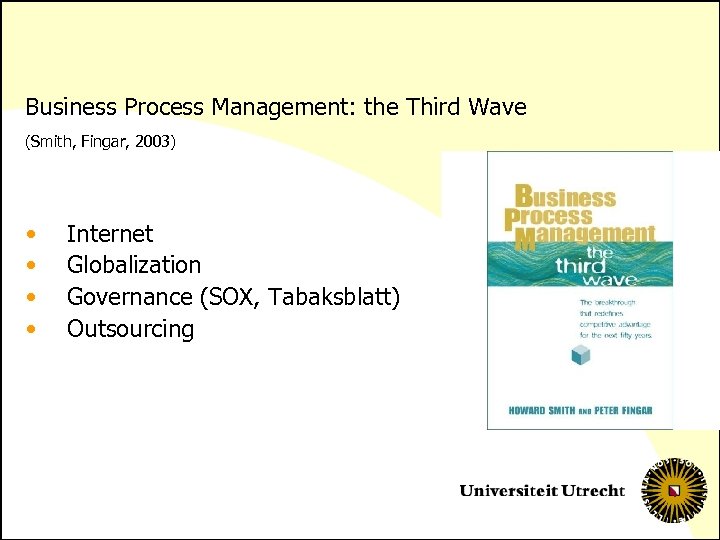
Business Process Management: the Third Wave (Smith, Fingar, 2003) • • Internet Globalization Governance (SOX, Tabaksblatt) Outsourcing
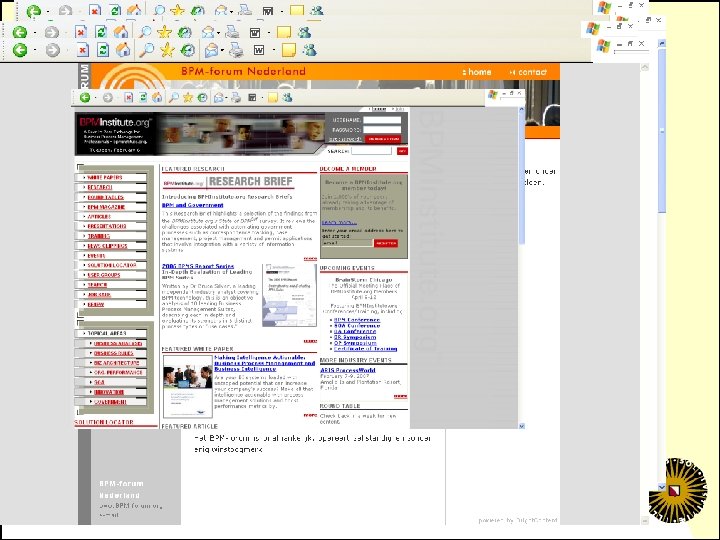
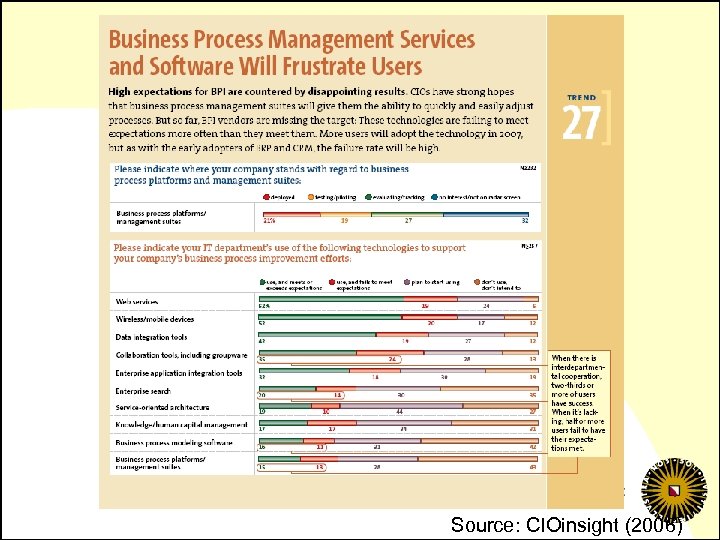
Source: CIOinsight (2006)
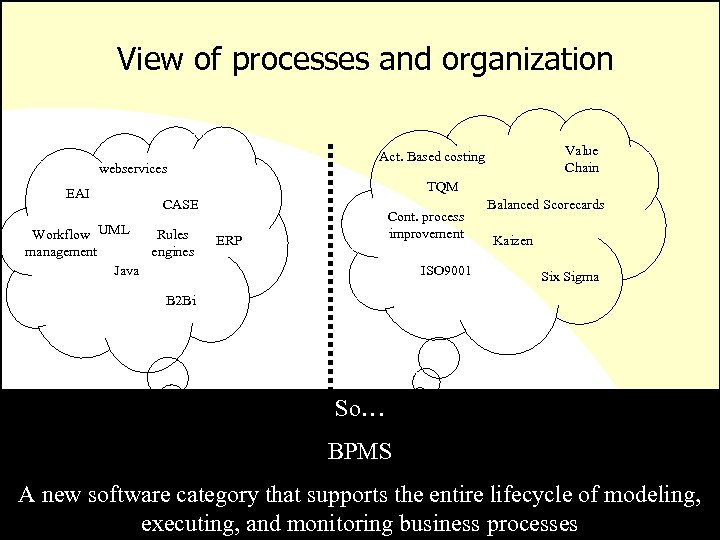
View of processes and organization webservices EAI Value Chain Act. Based costing TQM CASE Workflow UML Rules management engines Java Cont. process improvement ERP ISO 9001 Balanced Scorecards Kaizen Six Sigma B 2 Bi So… BPMS A new IT organization that supports the entire lifecycle of modeling, software category Business organization executing, and monitoring business processes
What is Business Process Management (System)
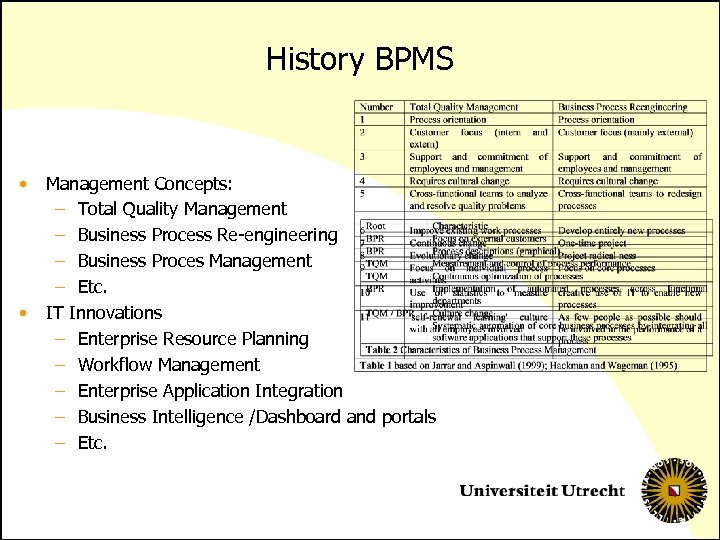
History BPMS • • Management Concepts: – Total Quality Management – Business Process Re-engineering – Business Proces Management – Etc. IT Innovations – Enterprise Resource Planning – Workflow Management – Enterprise Application Integration – Business Intelligence /Dashboard and portals – Etc.
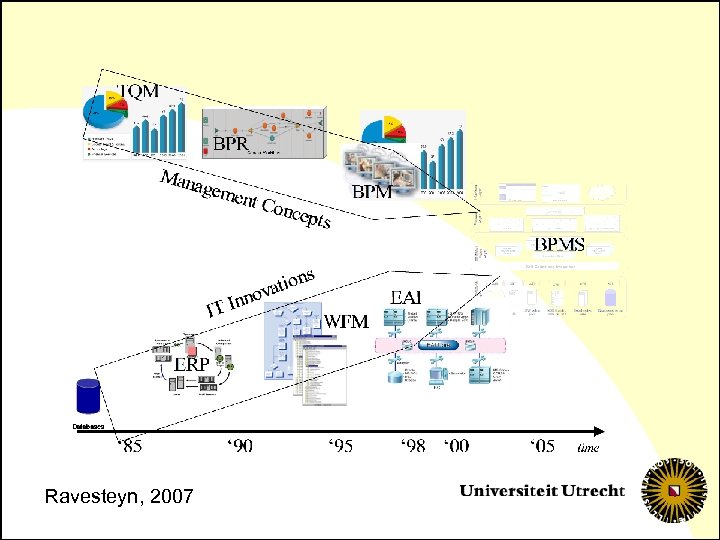
Ravesteyn, 2007
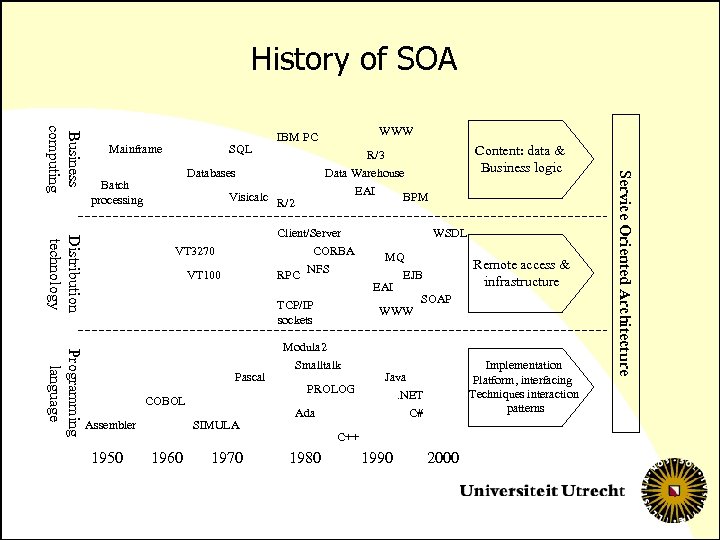
History of SOA SQL Databases Batch processing Visicalc R/2 Distribution technology Client/Server CORBA VT 3270 RPC NFS VT 100 Programming language COBOL Assembler 1950 SIMULA 1960 1970 WSDL MQ EAI TCP/IP sockets Pascal Content: data & Business logic R/3 Data Warehouse EAI BPM WWW Modula 2 Smalltalk PROLOG Ada Remote access & infrastructure EJB SOAP Implementation Platform, interfacing Techniques interaction patterns Java. NET C# C++ 1980 1990 2000 Service Oriented Architecture Business computing Mainframe WWW IBM PC
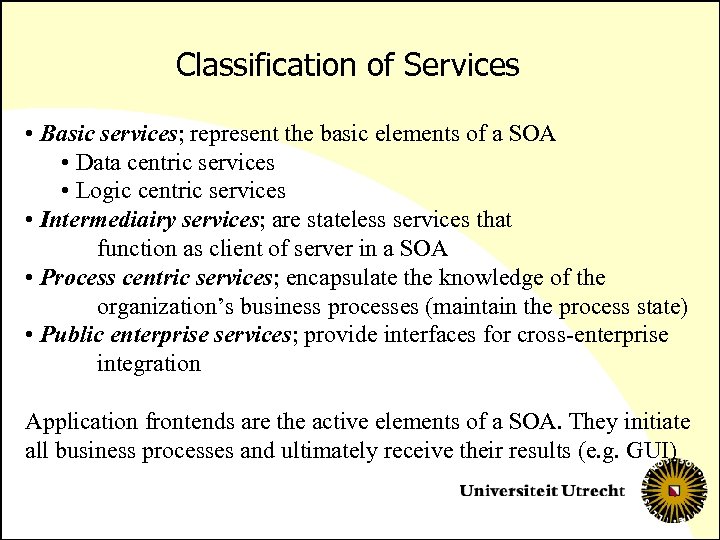
Classification of Services • Basic services; represent the basic elements of a SOA • Data centric services • Logic centric services • Intermediairy services; are stateless services that function as client of server in a SOA • Process centric services; encapsulate the knowledge of the organization’s business processes (maintain the process state) • Public enterprise services; provide interfaces for cross-enterprise integration Application frontends are the active elements of a SOA. They initiate all business processes and ultimately receive their results (e. g. GUI)
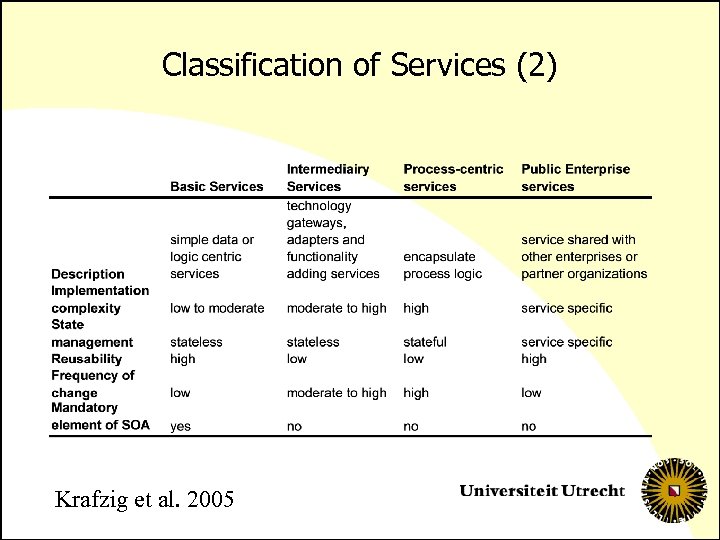
Classification of Services (2) Krafzig et al. 2005
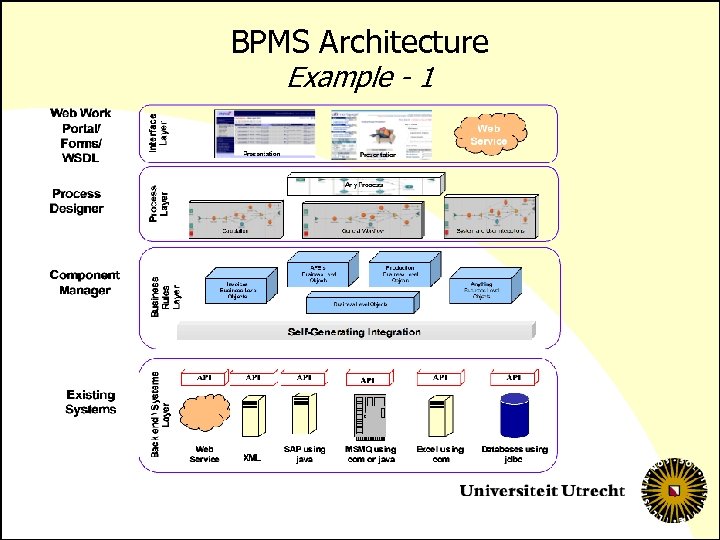
BPMS Architecture Example - 1
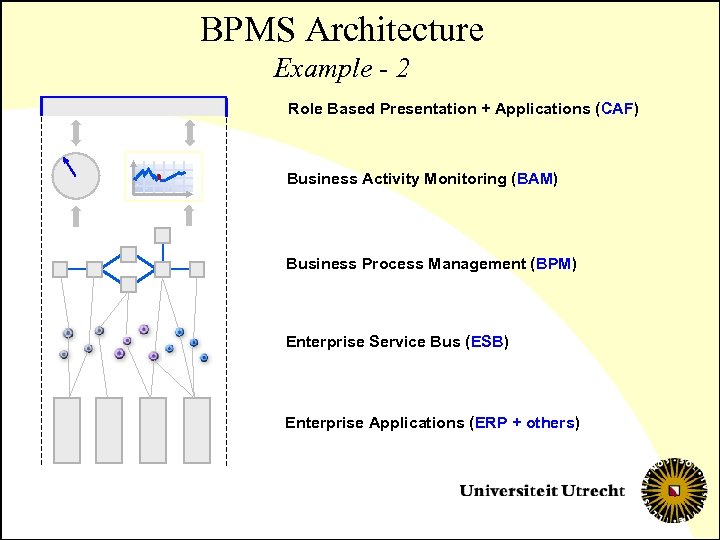
BPMS Architecture Example - 2 Role Based Presentation + Applications (CAF) Business Activity Monitoring (BAM) Business Process Management (BPM) Enterprise Service Bus (ESB) Enterprise Applications (ERP + others)
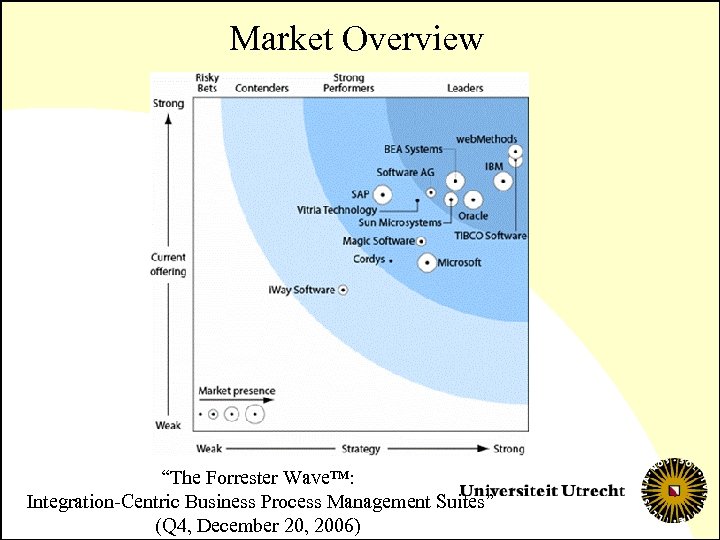
Market Overview “The Forrester Wave™: Integration-Centric Business Process Management Suites” (Q 4, December 20, 2006)
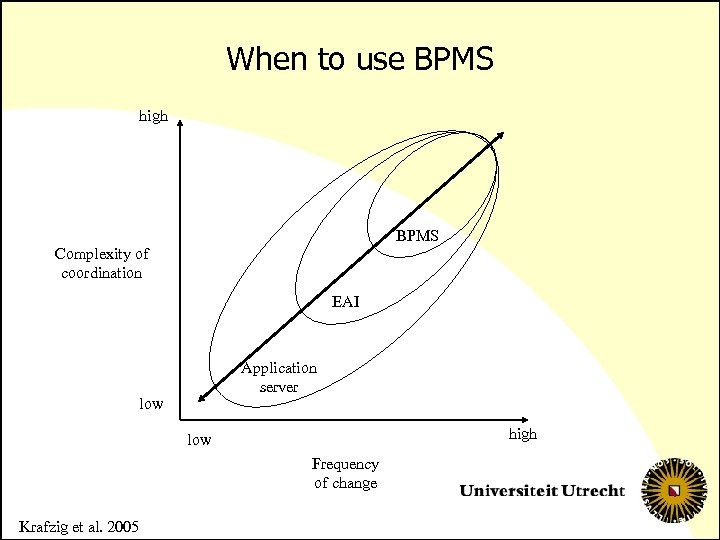
When to use BPMS high BPMS Complexity of coordination EAI Application server low high low Frequency of change Krafzig et al. 2005
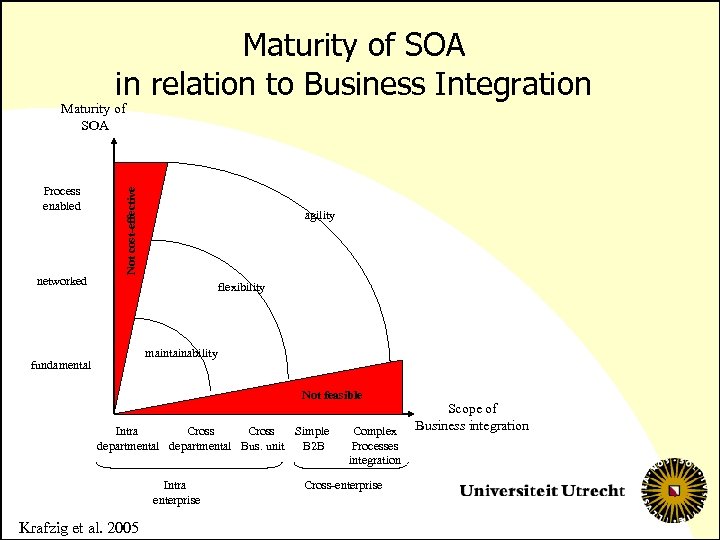
Maturity of SOA in relation to Business Integration Process enabled networked Not cost-effective Maturity of SOA agility flexibility maintainability fundamental Not feasible Intra Cross Simple departmental Bus. unit B 2 B Intra enterprise Krafzig et al. 2005 Complex Processes integration Cross-enterprise Scope of Business integration

Research
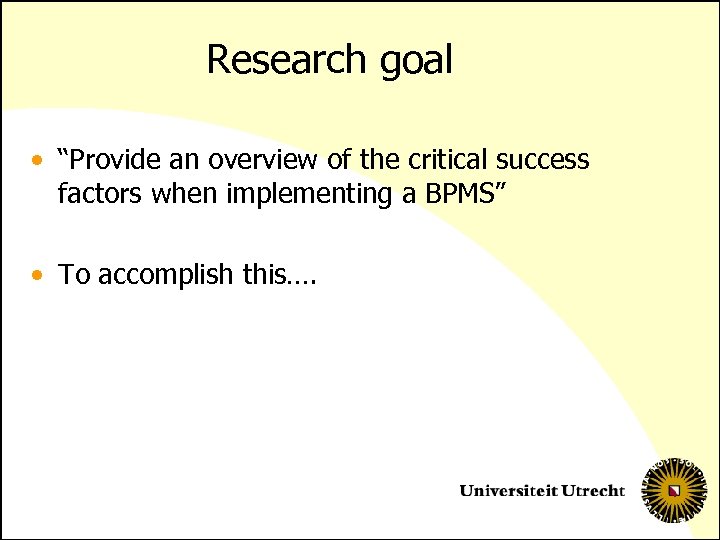
Research goal • “Provide an overview of the critical success factors when implementing a BPMS” • To accomplish this….
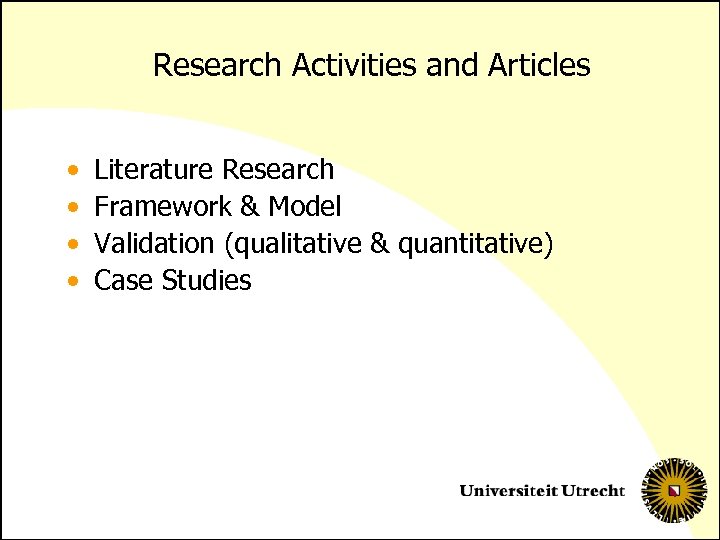
Research Activities and Articles • • Literature Research Framework & Model Validation (qualitative & quantitative) Case Studies
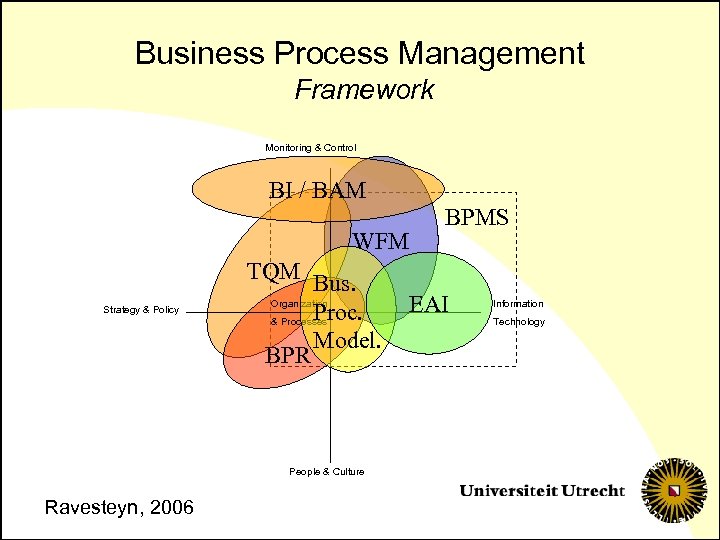
Business Process Management Framework Monitoring & Control BI / BAM WFM Strategy & Policy TQM Bus. Organization Proc. & Processes Model. BPR People & Culture Ravesteyn, 2006 BPMS EAI Information Technology
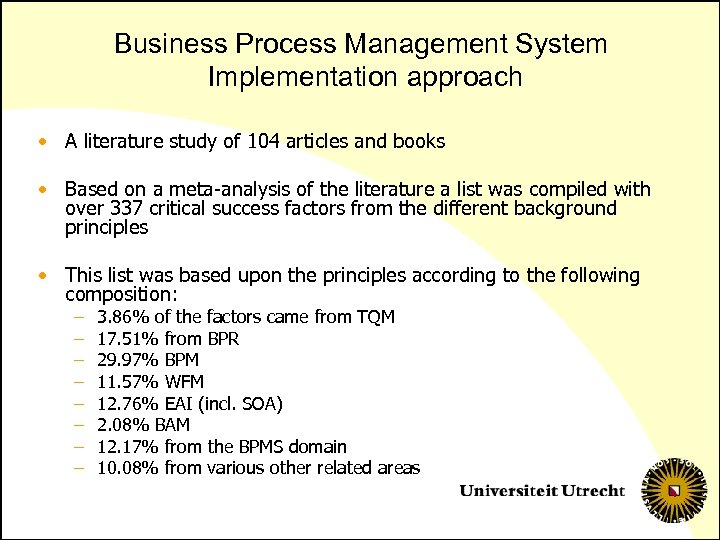
Business Process Management System Implementation approach • A literature study of 104 articles and books • Based on a meta-analysis of the literature a list was compiled with over 337 critical success factors from the different background principles • This list was based upon the principles according to the following composition: – – – – 3. 86% of the factors came from TQM 17. 51% from BPR 29. 97% BPM 11. 57% WFM 12. 76% EAI (incl. SOA) 2. 08% BAM 12. 17% from the BPMS domain 10. 08% from various other related areas
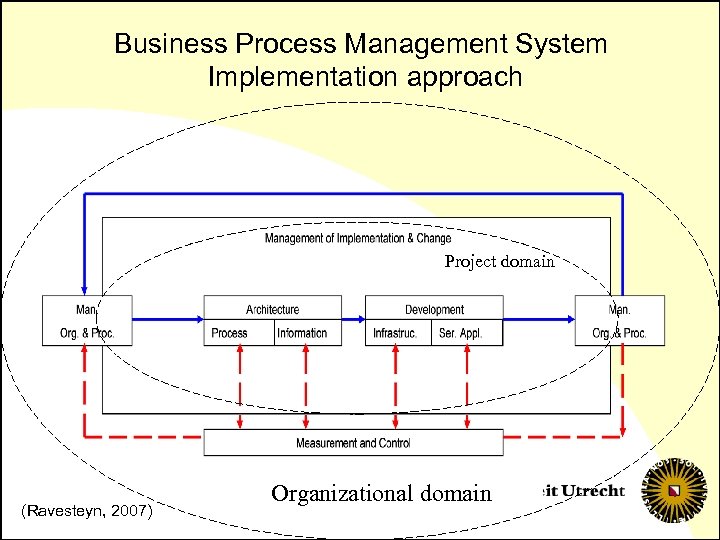
Business Process Management System Implementation approach Project domain (Ravesteyn, 2007) Organizational domain
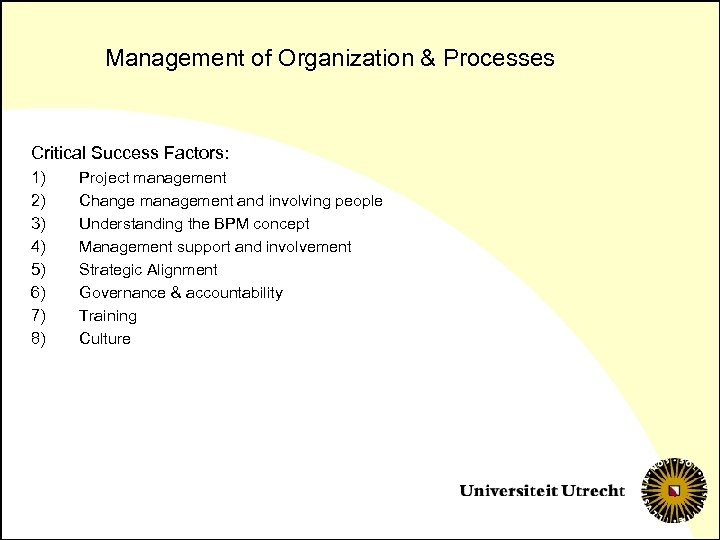
Management of Organization & Processes Critical Success Factors: 1) 2) 3) 4) 5) 6) 7) 8) Project management Change management and involving people Understanding the BPM concept Management support and involvement Strategic Alignment Governance & accountability Training Culture
Management of Organization & Processes Other factors mentioned: • • take into account the customers, industrial partners and the target environment create challenging roles and new job perspectives after the project establishing a support organization because ongoing maintenance and management is very difficult Treat value as realizable by all stakeholders, irrespective of geography or organizational boundaries Build a knowledge base around processes implementation guide: follow an "inside-out" strategy, this means first prioritize the integration of internal systems and applications, defining and institutionalizing your business processes then the company is better suited for integration with external systems use of best practices
Architecture Design (process model) Critical Success Factors: 1) 2) 3) 4) Understanding the process Use the 'best' modeling standards & techniques Organizing the modeling ‘design’ phase Maintenance and control - including quality - of the models is important
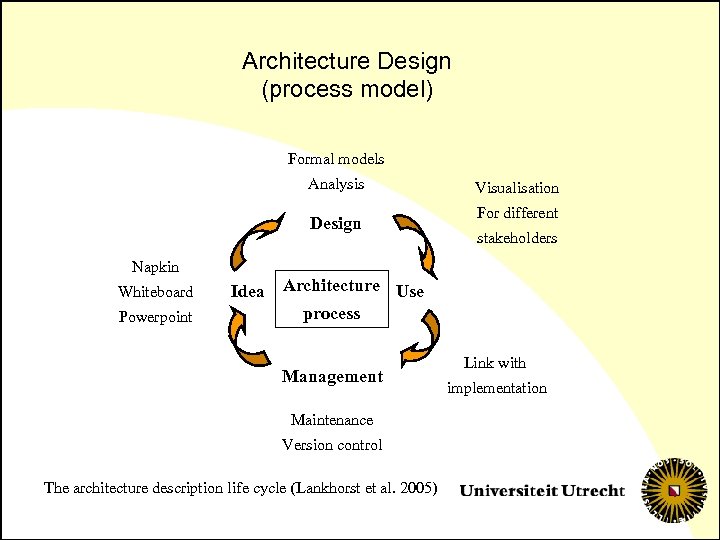
Architecture Design (process model) Formal models Analysis Design Napkin Whiteboard Powerpoint Visualisation For different stakeholders Idea Architecture Use process Management Maintenance Version control The architecture description life cycle (Lankhorst et al. 2005) Link with implementation
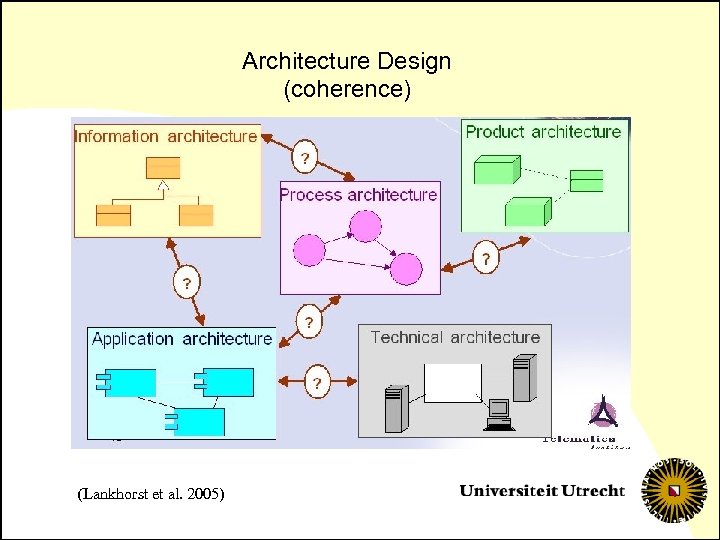
Architecture Design (coherence) (Lankhorst et al. 2005)
Architecture Design (process model) Other factors mentioned: • • When altering private processes, which modifications are allowed without jeopardizing the correct operation of the overall workflow Strategic objectives and functional objectives should be identified and linked to process model lack of documentation of embedded processes in application systems Multi process adaptation alternatives should be present, and also a contextual adaptation process Underestimating the difficulty in integrating offshore-supplier employees into the processes and work flows of their companies Modeling interfaces related to software systems pre-determined collaboration choreography of participating organizations (ad hoc changes are not possible)
Architecture Design (information model) Critical Success Factors: 1) 2) 3) 4) 5) 6) 7) Interdependencies and Integration of Data sources Discovery of Information Process Orientation Defining (web) services Understanding the BPMS paradigm Business & IT divide Use of Business Rules
Architecture Design (information model) Other factors mentioned: • • Sometimes information-processing work is subsumed into the real work that produces the information For global inter-operability, transparency to the end user is needed which has consequences for the information availability
Development (infrastructure) Critical Success Factor: 1) IT Infrastructure: – IT infrastructure is not aligned to the developed solution – embedded business logic within communications networks
Development (Service Oriented Business Appl. ) Critical Success Factors: 1) 2) Integration of processes and data (Use of) Webservices
Development (Service Oriented Business Appl. ) Other factors mentioned: • • Transformation of design models into implementation models Delay the technology evaluation until process reverse engineering is finished SOA (currently) works best when working with applications from large IT vendors Reliability of Internet (standards) The process manager might get direct access to the application server where connections are running Testing prototypes and the final solution The inflexibility of IT application systems
Management of Implementation & Change Critical Success Factors: 1) 2) Project management Change management and involving people
Measurement & Control Critical Success Factors: 1) 2) 3) Performance Measurement Continuous Optimization An organization and culture of Quality
Measurement & Control Other factors mentioned: • • • Use multiple data gathering approaches The availability of data within the Supply Chain is critical Both formal and informal monitoring and reporting activities should be taken into account Capture information once and at the source (tasks are performed wherever it provides the most value) Granularity and visibility control (information is not available or private information is made public)

Assignment
Assignment Investigate the validity of (part of) the provided success factors. Extend and/or drill-down when necessary. Aspects to consider: – Mapping on the Model – Weight – Aspects per CSF
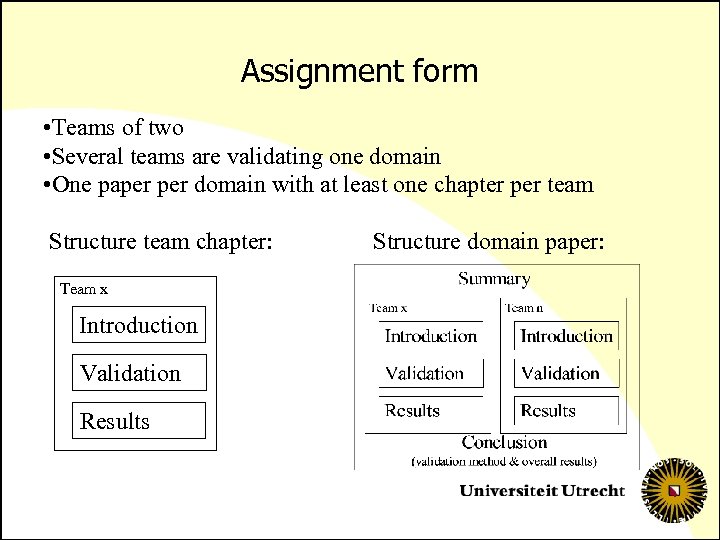
Assignment form • Teams of two • Several teams are validating one domain • One paper domain with at least one chapter per team Structure team chapter: Team x Introduction Validation Results Structure domain paper:
Resources • BPM Forum • Suppliers (BEA (Fuego), Cordys, IBM, Microsoft, SAP, Seebeyond, Tibco, Webmethods etc. ) • Consultancy Organizations (Capgemini, Inter. Access, Logica. CMG, Ordina etc. ) • Users (Interpay, ING, ABN-AMRO, Nuon etc. )

Questions?
Скачать презентацию Business Process Management Systems Pascal Ravesteyn UU HU —
7d00aef3b335a96938b707fe244ae0e9.ppt