 Скачать презентацию Business Plan Preparation Frank Moyes Leeds School of
f51a1312af68ecbf5eeaff1256335c1e.ppt
- Количество слайдов: 22



Business Plan Preparation Frank Moyes Leeds School of Business University of Colorado Boulder, Colorado Industry Analysis 1
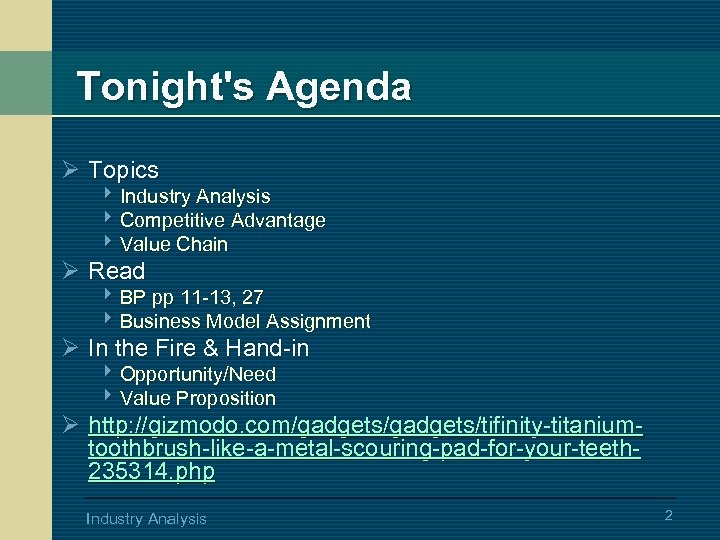
Tonight's Agenda Ø Topics 4 Industry Analysis 4 Competitive Advantage 4 Value Chain Ø Read 4 BP pp 11 -13, 27 4 Business Model Assignment Ø In the Fire & Hand-in 4 Opportunity/Need 4 Value Proposition Ø http: //gizmodo. com/gadgets/tifinity-titaniumtoothbrush-like-a-metal-scouring-pad-for-your-teeth 235314. php Industry Analysis 2
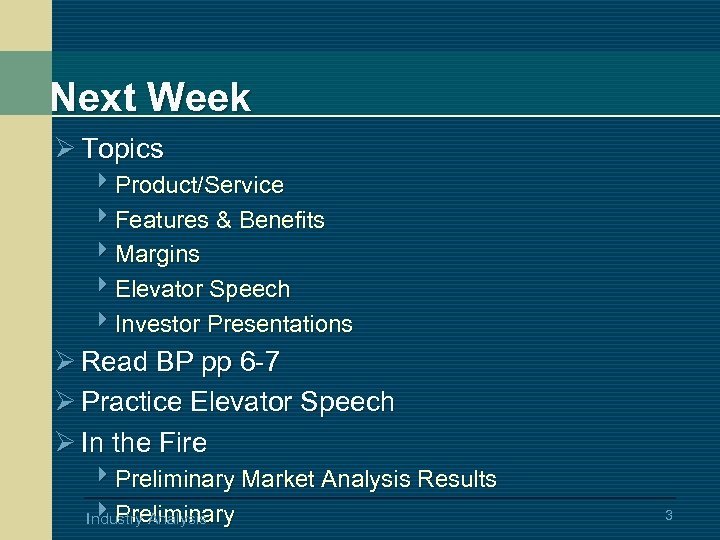
Next Week Ø Topics 4 Product/Service 4 Features & Benefits 4 Margins 4 Elevator Speech 4 Investor Presentations Ø Read BP pp 6 -7 Ø Practice Elevator Speech Ø In the Fire 4 Preliminary Market Analysis Results 4 Preliminary Industry Analysis 3
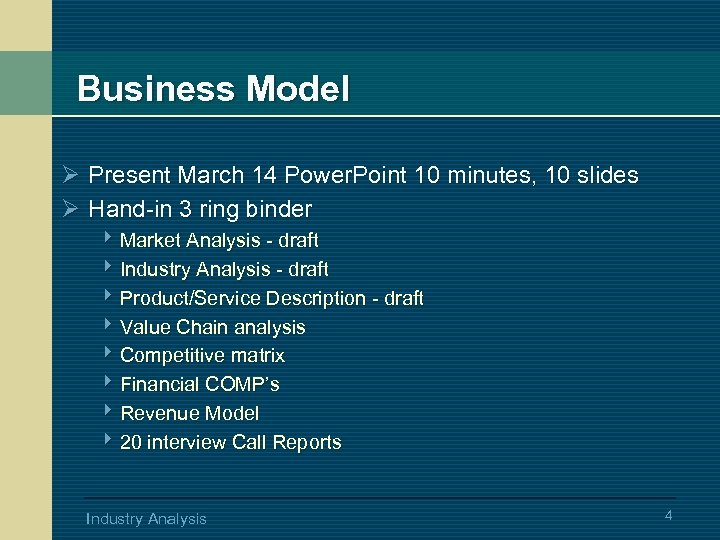
Business Model Ø Present March 14 Power. Point 10 minutes, 10 slides Ø Hand-in 3 ring binder 4 Market Analysis - draft 4 Industry Analysis - draft 4 Product/Service Description - draft 4 Value Chain analysis 4 Competitive matrix 4 Financial COMP’s 4 Revenue Model 4 20 interview Call Reports Industry Analysis 4
Market & Industry Ø Market: “group of current and potential customers having the willingness and ability to buy product/services to satisfy a need. ” Ø Industry: “group of sellers that offer product/services that are similar and close substitutes for one another. ” JW Mullins, New Business Road Test Industry Analysis 5
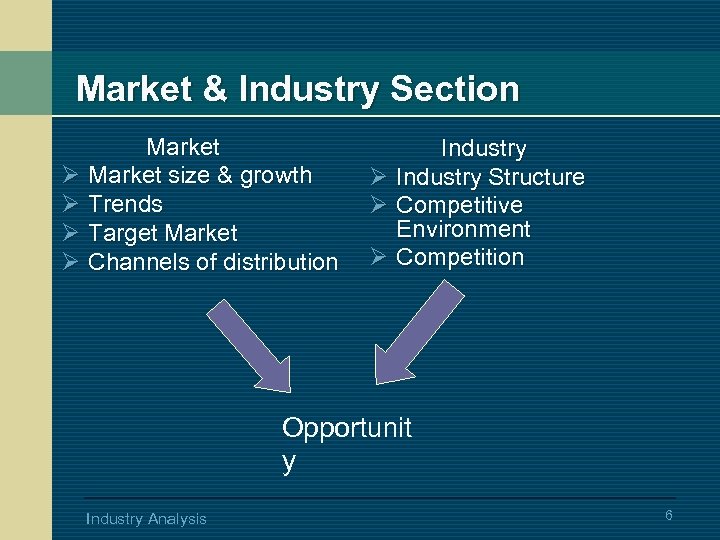
Market & Industry Section Market Ø Market size & growth Ø Trends Ø Target Market Ø Channels of distribution Industry Ø Industry Structure Ø Competitive Environment Ø Competition Opportunit y Industry Analysis 6
Industry Structure Ø Organization – how & where are products/services produced and delivered? Ø Supply chain Industry Analysis 7
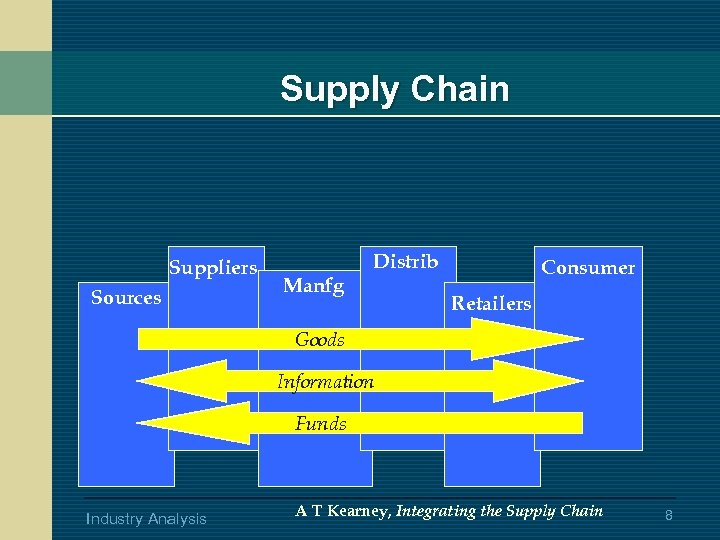
Supply Chain Suppliers Sources Distrib Manfg Consumer Retailers Goods Information Funds Industry Analysis A T Kearney, Integrating the Supply Chain 8
Competitive Environment Ø How do companies compete – quality, price, new products, customer service Ø Degree of rivalry Ø Response to new entries Industry Analysis 9
Control Ø Setting prices – bargaining strength of customers Ø Lowering costs – technology, process design, resources, bargaining strength of competitors Ø Channels of distribution – access, creating new channel Industry Analysis 10
Barriers to Entry? Ø Economies of scale: manufacturing, marketing, technological Ø Customer loyalty: well established brands, long established relationships Ø Agreements with customers, suppliers, strategic partners Ø Switching costs Ø Capital requirements: high investment Industry Analysis 11
Barriers to Entry (continued) Ø Access to distribution channels: exclusive distribution agreements, dominant position of competitors Ø Intellectual property: patents, trade secrets, copyrights, trademarks, know-how Ø Government regulations: defense contracts, import restrictions Ø Industry hostility to new entrants. Will use all means to drive out new competition: pricing, legal, spreading rumors Industry Analysis 12
Competition Ø Describe key competitors Ø Direct, indirect, future Ø Prepare a competitive matrix 4 Product/Services 4 Marketing 4 Management 4 Financial Ø Image – website, brochures, literature, advertisements Ø Industry Analysis Inertia 13
Opportunity Ø Last section Ø Make case attractive opportunity validate Ø Draw conclusions based on your research, interviews and customer surveys Industry Analysis 14
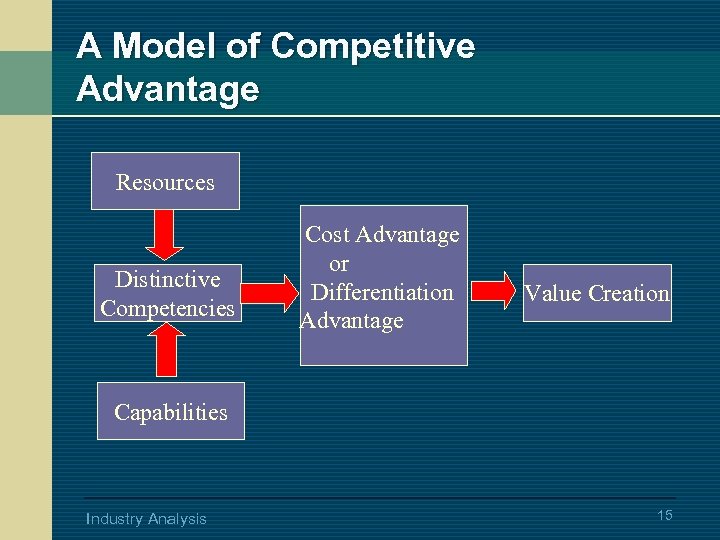
A Model of Competitive Advantage Resources Distinctive Competencies Cost Advantage or Differentiation Advantage Value Creation Capabilities Industry Analysis 15
Identify Your Resources Ø Financial: access to capital (equity & debt), cash reserves, government grants, etc. Ø Physical assets: plant & equipment, raw materials, location, working capital, etc. Ø Human: social, employee knowledge, experience, accumulated wisdom, labor cost and skills, etc. Ø Intangible: patents, trade secrets, know-how, copyrights, databases, etc. Ø Organizational: culture, contacts, policies, Boards of Directors & Advisors, suppliers, service providers, etc. Industry Analysis 16
Identify Your Capabilities Ø World class management (serial entrepreneur) Ø Network - well developed, high-quality, accessible contacts that take years to build Ø Marketing - differentiation, branding, positioning Ø Product/service - design features & benefits Ø Sales & distribution - rep organization Ø Total operational approach - Dell, Wal-Mart Ø Supply chain management - Asia contacts Industry Analysis 17
What Barriers Can You Establish? Ø Intellectual property: patents, trade secrets, copyrights, trademarks, etc Ø Switching costs to your target market Ø Customer loyalty Ø Agreements with customers, suppliers, strategic partners Ø Control of the distribution channel Industry Analysis 18
Competitive Advantage Challenges Ø Intellectual property Ø Agreements with customers or suppliers Ø Long term contracts Ø Control of costs Ø Control of prices Ø Control of channel Ø Location Ø Differentiation Industry Analysis Ø First to market Ø World class management Ø Expertise Ø Development lead time Ø Brand Ø Quality Ø Service Ø Execution Ø Relationships 19
Sustainable Competitive Advantage Ø Understand the market Ø Understand the competition Ø Differentiation Ø Innovation Ø Resources & capabilities Ø Really understand the market & competition Why is this so hard? Industry Analysis 20
Competitive Advantages Difficult to Achieve & Sustain Ø Most are easily copied Ø Entrepreneur ignorant of or ignores competition Ø Entrepreneur is not realistic about own resources & capabilities Ø Entrepreneur ignores future Ø Entrepreneur must be intellectually honest Industry Analysis 21
Sustaining Competitive Advantage Is a Dynamic Process Market, competition, resources, and capabilities are continually changing. Industry Analysis 22
Скачать презентацию Business Plan Preparation Frank Moyes Leeds School of
f51a1312af68ecbf5eeaff1256335c1e.ppt