


Business Organizations
Types of Firms • Sole proprietorship – a business owned and run by one person. • Advantages of sole proprietorships: -easy start-up -flexible (can make decisions quickly) management is all yours -the profits are yours -you are your own boss -no business taxes; all income for you -easy exit pay your bills and stop working
Disadvantages of sole proprietorships -unlimited liability you are responsible for everything -it’s hard to borrow money - Size and efficiency—you have to do everything yourself. You may be good at some things (making the product) but not at others (keeping the financial records, doing the insurance paperwork) -limited management experience -hard time finding qualified employees -limited life – business dies when you die
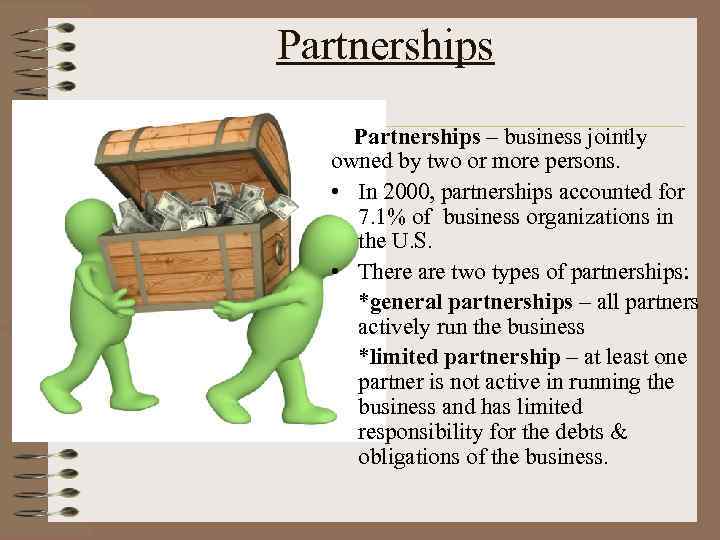
Partnerships – business jointly owned by two or more persons. • In 2000, partnerships accounted for 7. 1% of business organizations in the U. S. • There are two types of partnerships: *general partnerships – all partners actively run the business *limited partnership – at least one partner is not active in running the business and has limited responsibility for the debts & obligations of the business.
Forming a Partnership • It’s sort of like getting a marriage prenup. • Legal papers are drafted that specify: -how profits are divided. -how new partners may join. -how property is divided if the partnership ends. Warning You are responsible for the debts of your partners!
Advantages of partnerships: -easy to start -easy to manage -you get your share of the profits -can attract financial capital easier than sole proprietorships -larger, so some economies of scale present More efficient operations (people can specialize) -easier to attract qualified employees
Disadvantages of partnerships: -responsible for the acts of all the other partners -if you are a limited partner, not involved in daily activity, you only lose your original investment - limited life when a partner dies or leaves, it ends. It must be dissolved legally and reorganized with the remaining partners. (They usually want to keep the old name. ) -conflict between partners -bankruptcy – if you’re not a limited partner, you have to pay any debts!
Corporations • Corporation – a form of business organization that is recognized by the law as having all the legal rights of an individual. • They have the right to buy & sell property, enter into legal contracts, and to sue & be sued.
Corporations • Forming a Corporation: – File for permission from the federal (national) government or the state where your HQ will be – “charter” is granted: states name, address, purpose, number of shares of stock, etc. – Sell stock (“IPO”) at an initial price – Stock value goes up and down according to your profitability – Issue dividends (hopefully)
Stock? • Stock – a certificate of ownership in a firm. • Stockholders– shareholders – investors in a corporation (they own stock). • The money from the stockholders (investors) is used to set up the firm. This money is called financial capital.
Types of Stock • Common stock – basic form of ownership in a corporation. Each share is worth one vote for the board of directors, who run the company. • Preferred Stock – non-voting shares of stock, but these shareholders receive profits before common stockholders.
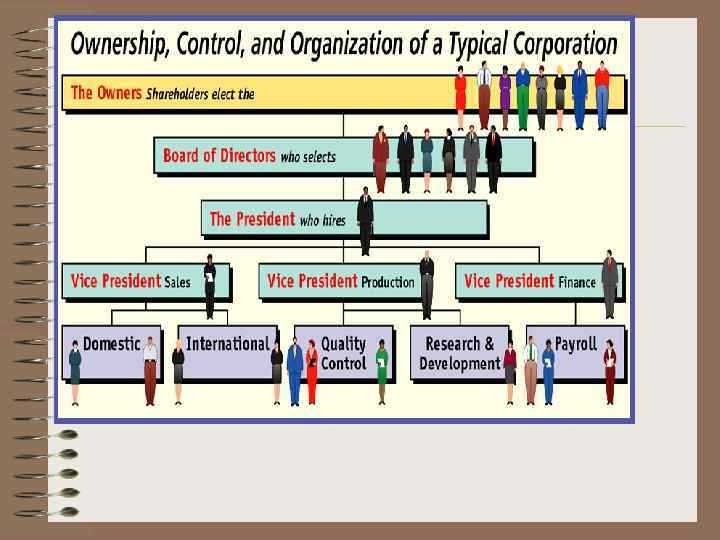
Advantages of Corporations • Easy to raise financial capital 1. ) sell stock 2. ) issue bonds a written promise to repay the amount borrowed in the future • Hire professional managers • Limited liability for the corporation’s owners: the corporation itself is responsible for all debts, not the owners. If it goes out of business, stockholders do not have to repay the corporation’s debts. • Unlimited life – the firm doesn’t die when a shareholder does.
Advantages of Corporations • Ease of transferring ownership: If you don’t want to be part owner any more, you just sell your stock. Much easier than a sole proprietorship trying to find someone to buy the entire business.
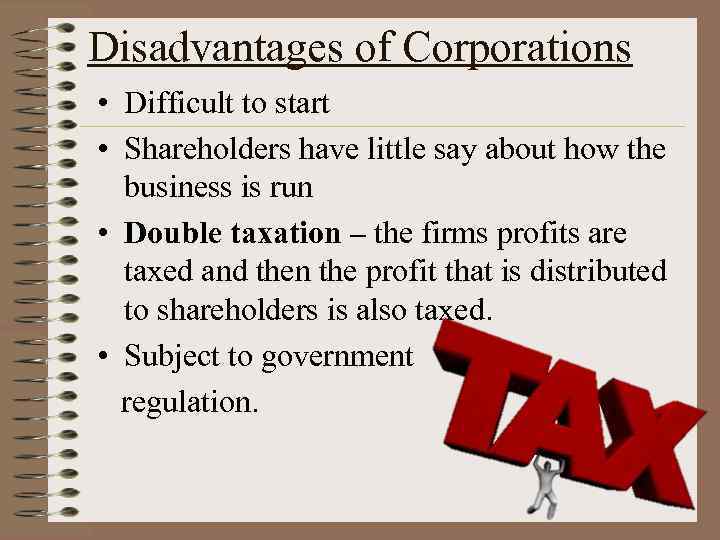
Disadvantages of Corporations • Difficult to start • Shareholders have little say about how the business is run • Double taxation – the firms profits are taxed and then the profit that is distributed to shareholders is also taxed. • Subject to government regulation.

Thank you for attention
