 Скачать презентацию Business in Action 7 e Bovée Thill Entrepreneurship
52aeaa798a7fc2a52ff6dc70c7886d99.ppt
- Количество слайдов: 32



Business in Action 7 e Bovée/Thill
Entrepreneurship and Small-Business Ownership Chapter 6 Business in Action 7 e Bovée/Thill
Learning Objectives 1. Highlight the contributions small businesses make to the U. S. economy 2. List the most common reasons people start their own companies and identify the common traits of successful entrepreneurs 3. Explain the importance of planning a new business and outline the key elements in a business plan Copyright © 2015 Pearson Education, Inc. 6 -3
Learning Objectives (cont. ) 4. Identify the major causes of business failures and identify sources of advice and support for struggling business owners 5. Discuss the principal sources of smallbusiness private financing 6. Explain the advantages and disadvantages of franchising Copyright © 2015 Pearson Education, Inc. 6 -4
The Big World of Small Business • Small Business 9 A company that is independently owned and operated, is not dominant in its field, and employs fewer than 500 people (although this number varies by industry) Copyright © 2015 Pearson Education, Inc. 6 -5
Economic Roles of Small Business • They provide jobs • They introduce new products • They meet the needs of larger • organizations They inject a considerable amount of money into the economy. Copyright © 2015 Pearson Education, Inc. 6 -6
Economic Roles of Small Business (cont. ) • They take risks that larger companies • sometimes avoid They provide specialized goods and services Copyright © 2015 Pearson Education, Inc. 6 -7
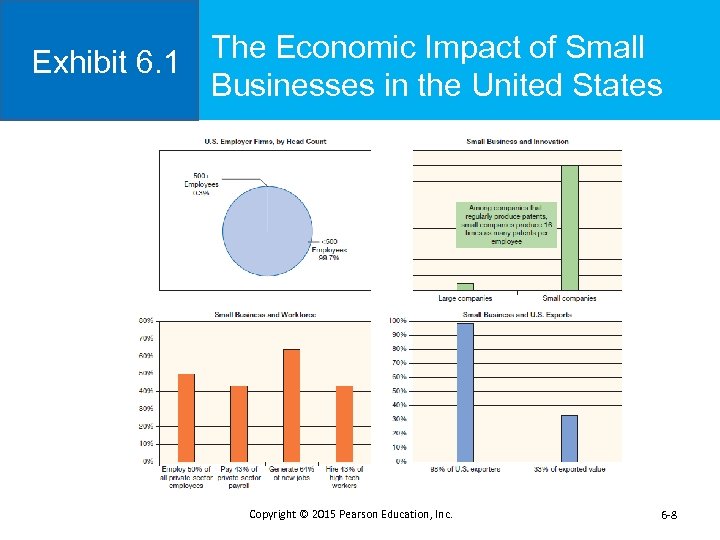
The Economic Impact of Small Exhibit 6. 1 Businesses in the United States Copyright © 2015 Pearson Education, Inc. 6 -8
Characteristics of Small Businesses • Most small firms have a narrow focus • Small businesses have to get by with • • limited resources Small businesses often have more freedom to innovate Entrepreneurial firms find it easier to make decisions quickly and react to changes in the marketplace Copyright © 2015 Pearson Education, Inc. 6 -9
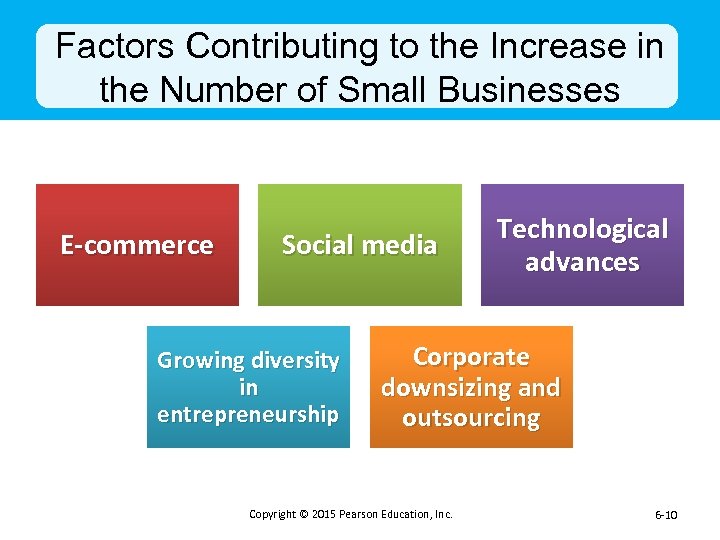
Factors Contributing to the Increase in the Number of Small Businesses E-commerce Social media Growing diversity in entrepreneurship Technological advances Corporate downsizing and outsourcing Copyright © 2015 Pearson Education, Inc. 6 -10
The Entrepreneurial Spirit • Entrepreneurial Spirit 9 The positive, forward-thinking desire to create profitable, sustainable business enterprises Copyright © 2015 Pearson Education, Inc. 6 -11
Why People Start their Own Companies • • • More control over their future Tired of working for someone else Passion for new product ideas Pursue business goals that are important to them on a personal level Inability to find attractive employment anywhere else. Copyright © 2015 Pearson Education, Inc. 6 -12
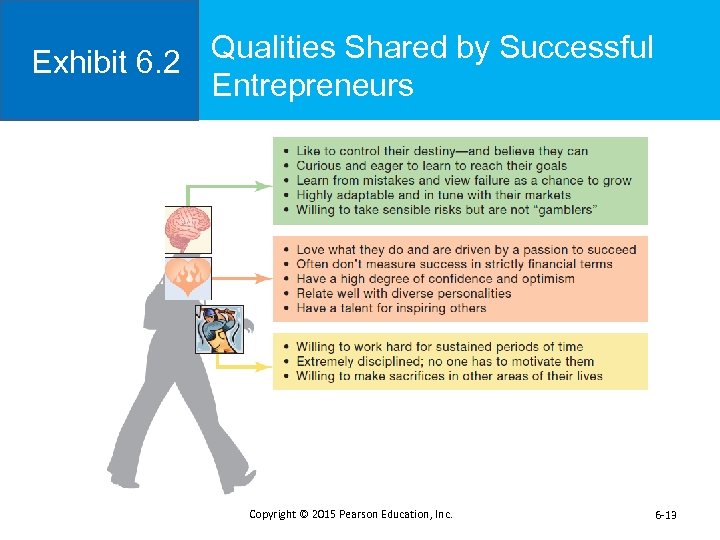
Qualities Shared by Successful Exhibit 6. 2 Entrepreneurs Copyright © 2015 Pearson Education, Inc. 6 -13
Blueprint for an Effective Business Plan • Business plan 9 A document that summarizes a proposed business venture, goals, and plans for achieving those goals Copyright © 2015 Pearson Education, Inc. 6 -14
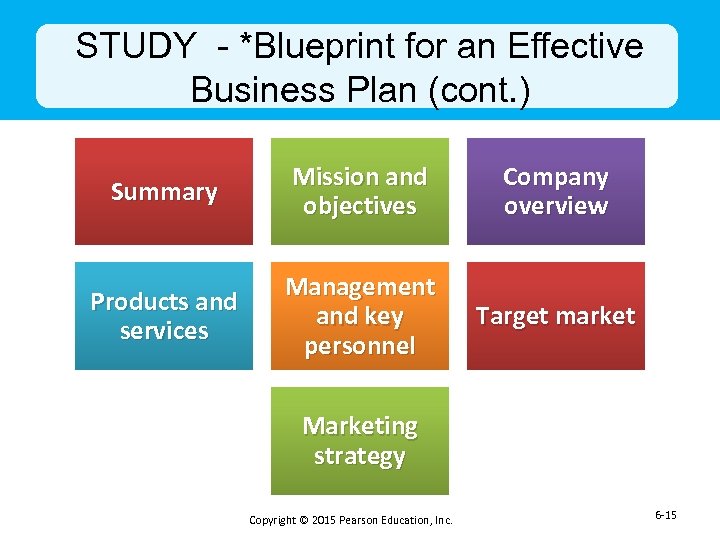
STUDY - *Blueprint for an Effective Business Plan (cont. ) Summary Mission and objectives Company overview Products and services Management and key personnel Target market Marketing strategy Copyright © 2015 Pearson Education, Inc. 6 -15
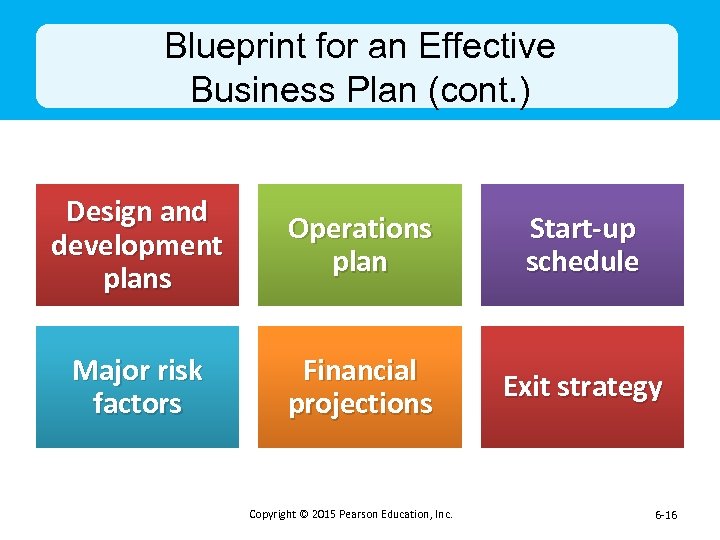
Blueprint for an Effective Business Plan (cont. ) Design and development plans Operations plan Start-up schedule Major risk factors Financial projections Exit strategy Copyright © 2015 Pearson Education, Inc. 6 -16
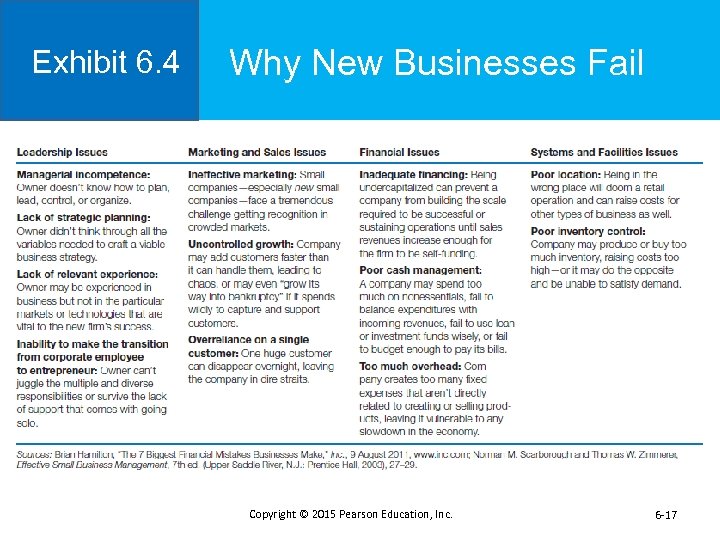
Exhibit 6. 4 Why New Businesses Fail Copyright © 2015 Pearson Education, Inc. 6 -17
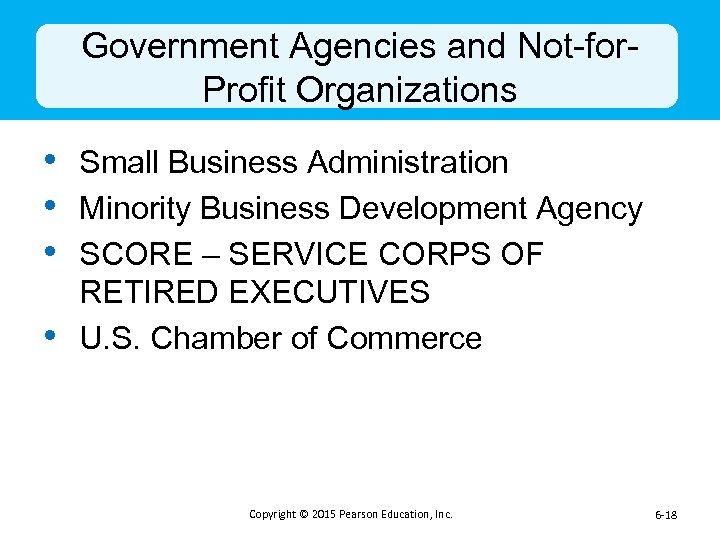
Government Agencies and Not-for. Profit Organizations • Small Business Administration • Minority Business Development Agency • SCORE – SERVICE CORPS OF • RETIRED EXECUTIVES U. S. Chamber of Commerce Copyright © 2015 Pearson Education, Inc. 6 -18
Mentors and Advisory Boards • Advisory Board 9 A team of people with subject-area expertise or vital contacts who help a business owner review plans and decisions Copyright © 2015 Pearson Education, Inc. 6 -19
Print and Online Media • www. entrepreneurship. org • Inc. www. inc. com • Business 2. 0 • • http: //money. cnn. com/magazines/business 2 Bloomberg Business. Week www. businessweek. com/small-business Fortune and Money http: //money. cnn. com/smallbusiness Copyright © 2015 Pearson Education, Inc. 6 -20
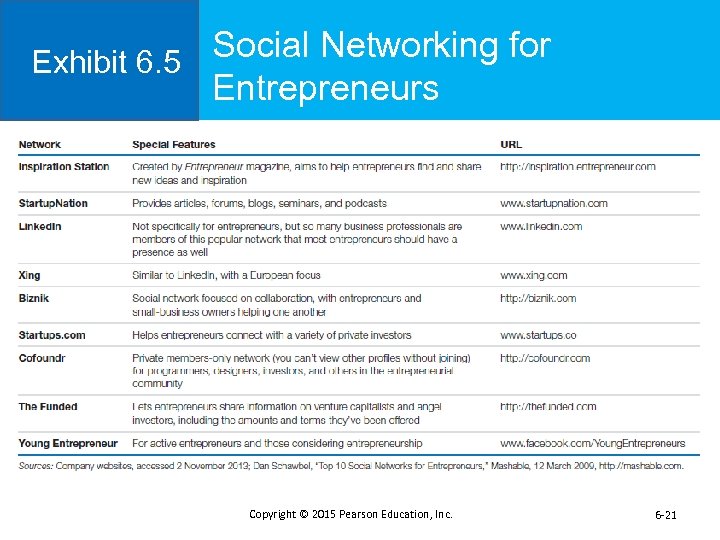
Social Networking for Exhibit 6. 5 Entrepreneurs Copyright © 2015 Pearson Education, Inc. 6 -21
Business Incubators • Business Incubators 9 Facilities that house small businesses and provide support services during the company’s early growth phases Copyright © 2015 Pearson Education, Inc. 6 -22
Financing Options for Small Businesses • Seed Money 9 The first infusion of capital used to get a business started • Micro Lenders 9 Organizations, often not-for-profit, that lend smaller amounts of money to business owners who might not qualify for conventional bank loans Copyright © 2015 Pearson Education, Inc. 6 -23
Financing Options for Small Businesses (cont. ) • Venture Capitalists (VCs) 9 Investors who provide money to finance new businesses or turnarounds in exchange for a portion of ownership, with the objective of reselling the business at a profit Copyright © 2015 Pearson Education, Inc. 6 -24
Financing Options for Small Businesses (cont. ) • Angel investors 9 Private individuals who invest money in startups, usually earlier in a business’s life and in smaller amounts than VCs are willing to invest or banks are willing to lend • Initial public offering (IPO) 9 A corporation’s first offering of shares to the public Copyright © 2015 Pearson Education, Inc. 6 -25
Financing Options for Small Businesses (cont. ) • Crowdfunding 9 Soliciting project funds, business investment, or business loans from members of the public. Copyright © 2015 Pearson Education, Inc. 6 -26
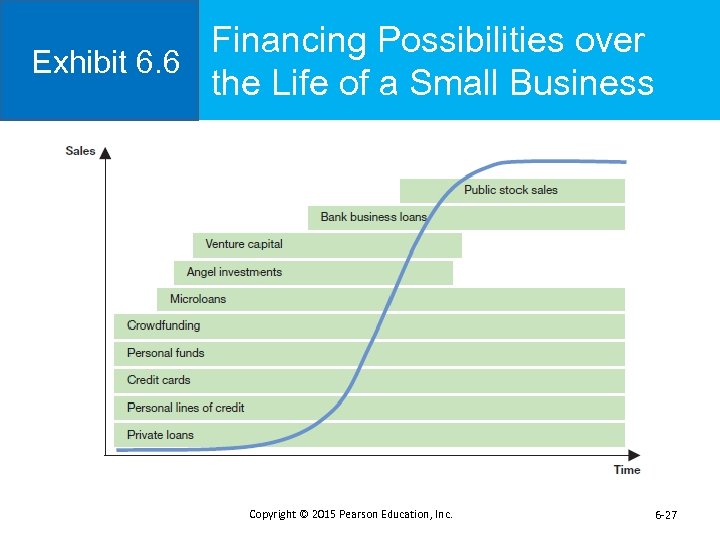
Financing Possibilities over Exhibit 6. 6 the Life of a Small Business Copyright © 2015 Pearson Education, Inc. 6 -27
The Franchise Alternative • Franchise 9 A business arrangement in which one company (the franchisee) obtains the rights to sell the products and use various elements of a business system of another company (the franchisor) Copyright © 2015 Pearson Education, Inc. 6 -28
The Franchise Alternative (cont. ) • Franchisee • Franchisor 9 A business owner who pays for the rights to sell the products and use the business system of a franchisor 9 A company that licenses elements of its business system to other companies (franchisees) Copyright © 2015 Pearson Education, Inc. 6 -29
Advantages of Franchising • Combines at least some of the freedom of • working for yourself with many of the advantages of being part of a larger, established organization. Name recognition, national advertising programs, standardized quality of goods and services, and a proven formula for success. Copyright © 2015 Pearson Education, Inc. 6 -30
Disadvantages of Franchising • You typically agree to follow the business • • format Little control over decisions the franchisor makes that affect the entire system You don’t have the option of independently changing your business in response to market changes Copyright © 2015 Pearson Education, Inc. 6 -31
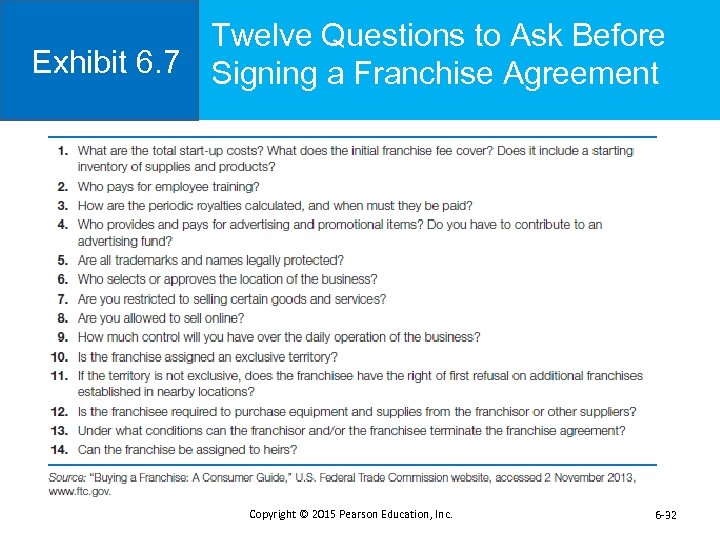
Twelve Questions to Ask Before Exhibit 6. 7 Signing a Franchise Agreement Copyright © 2015 Pearson Education, Inc. 6 -32
Скачать презентацию Business in Action 7 e Bovée Thill Entrepreneurship
52aeaa798a7fc2a52ff6dc70c7886d99.ppt