 Скачать презентацию BUSINESS COMMUNICATION SKILLS Business Correspondence Unit 10 Developed
e22701c4c25ec9709b66a5d1f911b36b.ppt
- Количество слайдов: 57



BUSINESS COMMUNICATION SKILLS Business Correspondence Unit 10 Developed by F. Chilufya

I Books
Outline 1. Note Making 2. Summarizing 3. Documents Formal Letters Job Documents 4. Writing Circulars

Note Making
Introduction This is a skill that involves summarizing spoken or written message. Spoken words are more difficult to summaries as there is no further reference even as the speaking proceeds. Examples of situations needing note-taking include summarising telephone deals with clients concerning business, summarising a business seminar, conference or university lectures, supervisor gives verbal instructions, summarise information from educative television or radio programmes, etc.
Skills Involved In Note Making 1. Abbreviating words - development (dev) should (shd) would (wd) information (infor) relationship (reshps) etc. 1. Shortening of long sentences - Example -Jane always behaves as though bad things will become worse. This can be summarised as follows: Jane is always pessimistic. 2. Listen more and write less.
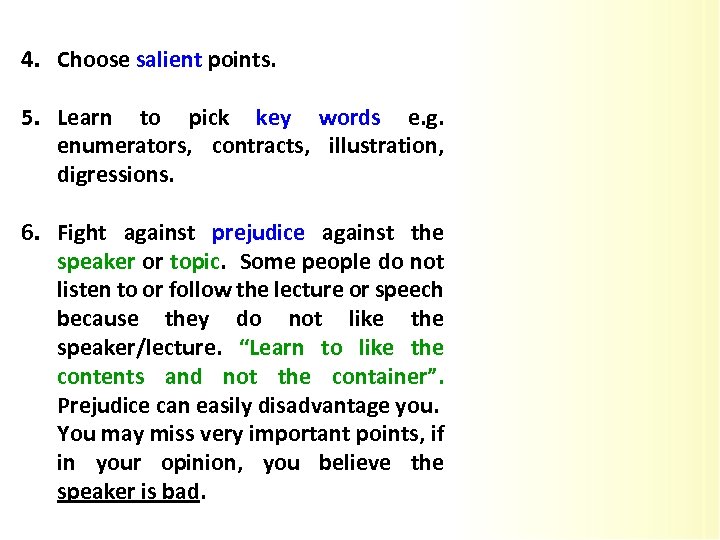
4. Choose salient points. 5. Learn to pick key words e. g. enumerators, contracts, illustration, digressions. 6. Fight against prejudice against the speaker or topic. Some people do not listen to or follow the lecture or speech because they do not like the speaker/lecture. “Learn to like the contents and not the container”. Prejudice can easily disadvantage you. You may miss very important points, if in your opinion, you believe the speaker is bad.
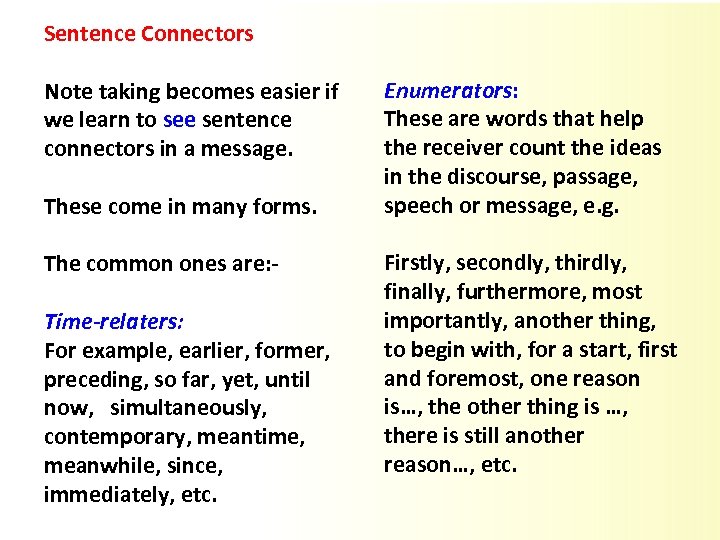
Sentence Connectors Note taking becomes easier if we learn to see sentence connectors in a message. These come in many forms. The common ones are: Time-relaters: For example, earlier, former, preceding, so far, yet, until now, simultaneously, contemporary, meantime, meanwhile, since, immediately, etc. Enumerators: These are words that help the receiver count the ideas in the discourse, passage, speech or message, e. g. Firstly, secondly, thirdly, finally, furthermore, most importantly, another thing, to begin with, for a start, first and foremost, one reason is…, the other thing is …, there is still another reason…, etc.
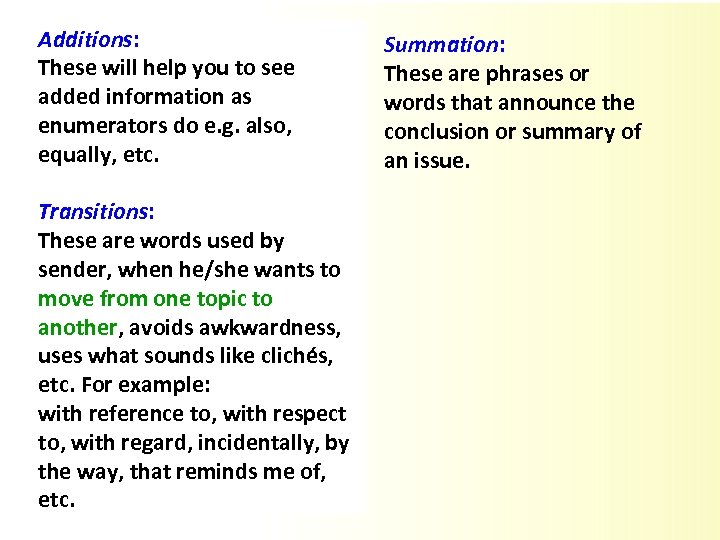
Additions: These will help you to see added information as enumerators do e. g. also, equally, etc. Transitions: These are words used by sender, when he/she wants to move from one topic to another, avoids awkwardness, uses what sounds like clichés, etc. For example: with reference to, with respect to, with regard, incidentally, by the way, that reminds me of, etc. Summation: These are phrases or words that announce the conclusion or summary of an issue.
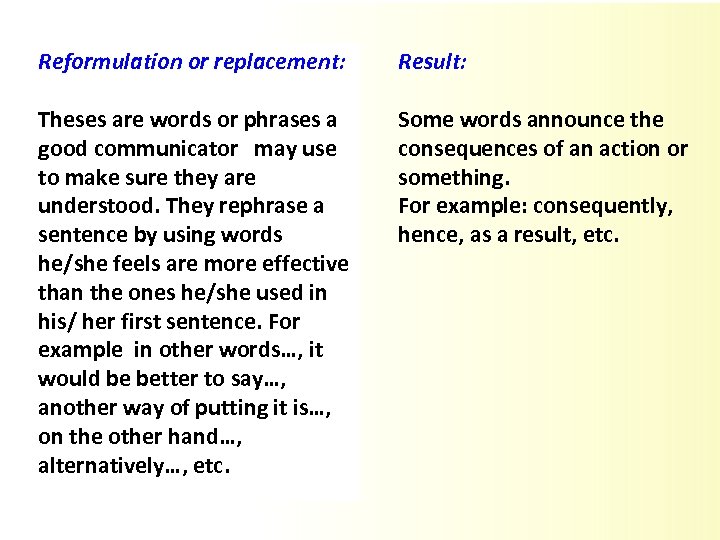
Reformulation or replacement: Result: Theses are words or phrases a good communicator may use to make sure they are understood. They rephrase a sentence by using words he/she feels are more effective than the ones he/she used in his/ her first sentence. For example in other words…, it would be better to say…, another way of putting it is…, on the other hand…, alternatively…, etc. Some words announce the consequences of an action or something. For example: consequently, hence, as a result, etc.

Summarizing
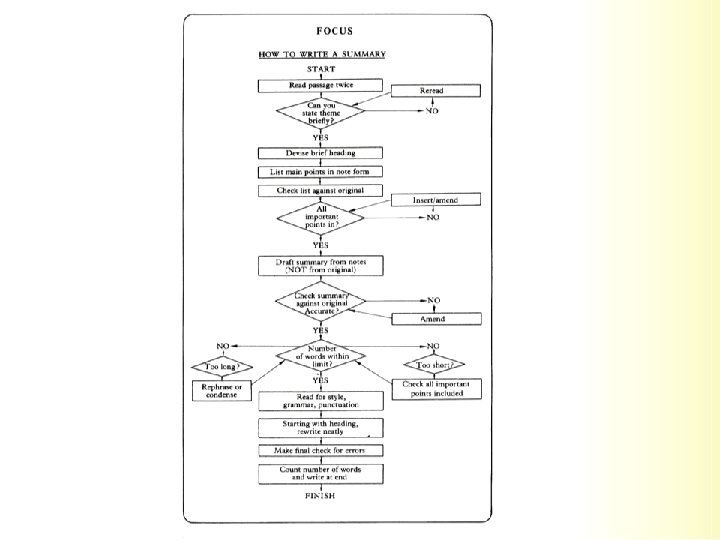
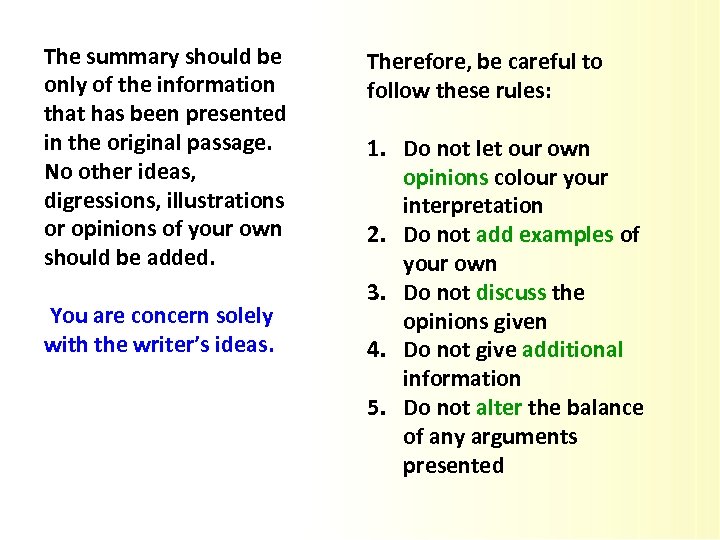
The summary should be only of the information that has been presented in the original passage. No other ideas, digressions, illustrations or opinions of your own should be added. You are concern solely with the writer’s ideas. Therefore, be careful to follow these rules: 1. Do not let our own opinions colour your interpretation 2. Do not add examples of your own 3. Do not discuss the opinions given 4. Do not give additional information 5. Do not alter the balance of any arguments presented
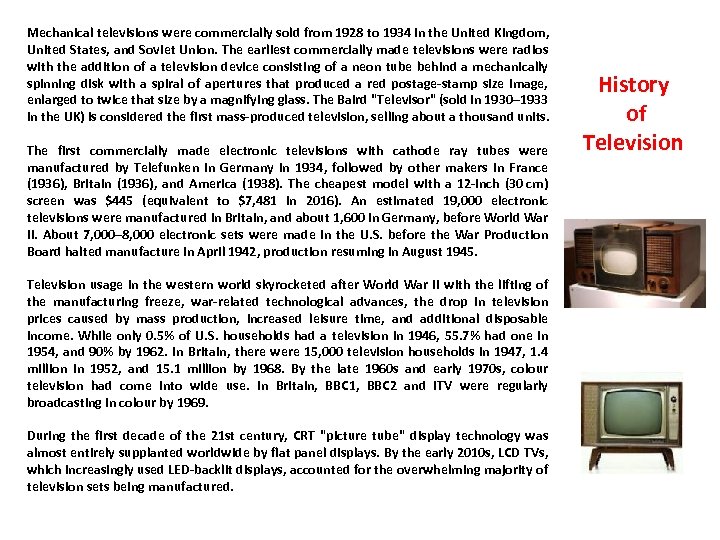
Mechanical televisions were commercially sold from 1928 to 1934 in the United Kingdom, United States, and Soviet Union. The earliest commercially made televisions were radios with the addition of a television device consisting of a neon tube behind a mechanically spinning disk with a spiral of apertures that produced a red postage-stamp size image, enlarged to twice that size by a magnifying glass. The Baird "Televisor" (sold in 1930– 1933 in the UK) is considered the first mass-produced television, selling about a thousand units. The first commercially made electronic televisions with cathode ray tubes were manufactured by Telefunken in Germany in 1934, followed by other makers in France (1936), Britain (1936), and America (1938). The cheapest model with a 12 -inch (30 cm) screen was $445 (equivalent to $7, 481 in 2016). An estimated 19, 000 electronic televisions were manufactured in Britain, and about 1, 600 in Germany, before World War II. About 7, 000– 8, 000 electronic sets were made in the U. S. before the War Production Board halted manufacture in April 1942, production resuming in August 1945. Television usage in the western world skyrocketed after World War II with the lifting of the manufacturing freeze, war-related technological advances, the drop in television prices caused by mass production, increased leisure time, and additional disposable income. While only 0. 5% of U. S. households had a television in 1946, 55. 7% had one in 1954, and 90% by 1962. In Britain, there were 15, 000 television households in 1947, 1. 4 million in 1952, and 15. 1 million by 1968. By the late 1960 s and early 1970 s, colour television had come into wide use. In Britain, BBC 1, BBC 2 and ITV were regularly broadcasting in colour by 1969. During the first decade of the 21 st century, CRT "picture tube" display technology was almost entirely supplanted worldwide by flat panel displays. By the early 2010 s, LCD TVs, which increasingly used LED-backlit displays, accounted for the overwhelming majority of television sets being manufactured. History of Television

Documents
1. Formal Letters Message 1. Explicit message is what we say to the reader through the words we choose to use. 2. Implicit message is conveyed by the appearance of the letter i. e. by the way the words are arranged on the paper, by the quality of typing, the quality of paper, by the quality of the letterhead.
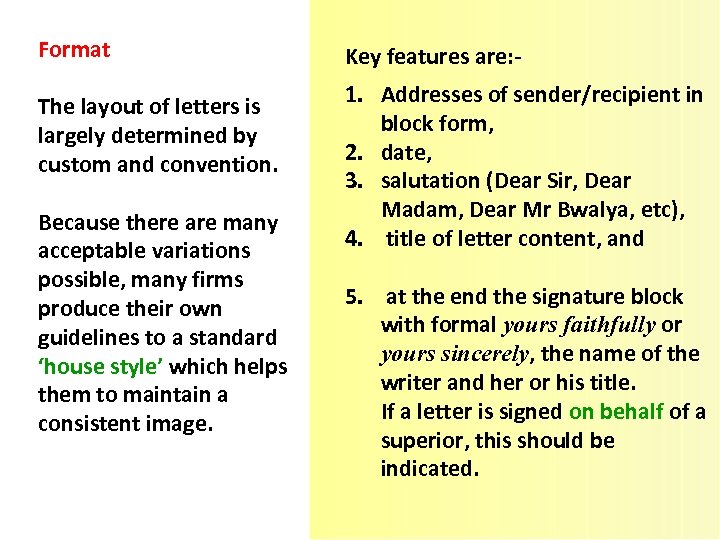
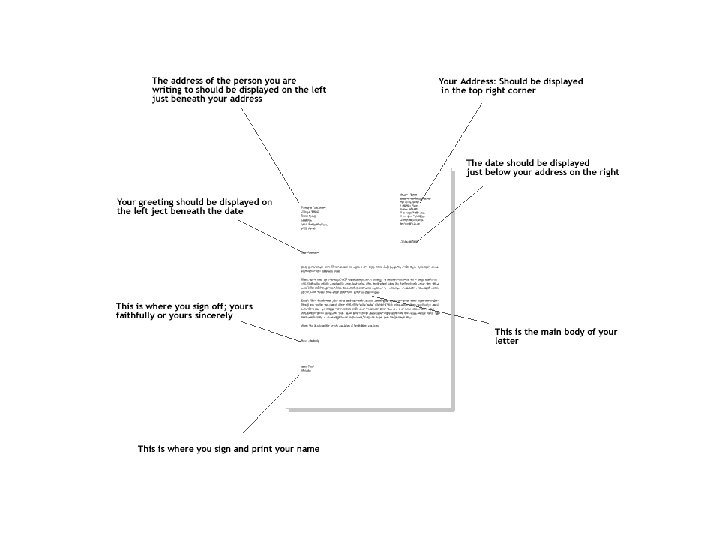
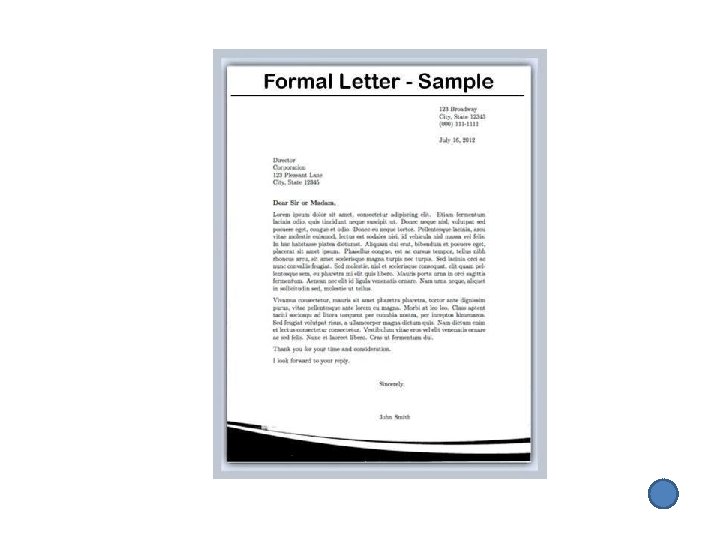
Format The layout of letters is largely determined by custom and convention. Because there are many acceptable variations possible, many firms produce their own guidelines to a standard ‘house style’ which helps them to maintain a consistent image. Key features are: - 1. Addresses of sender/recipient in block form, 2. date, 3. salutation (Dear Sir, Dear Madam, Dear Mr Bwalya, etc), 4. title of letter content, and 5. at the end the signature block with formal yours faithfully or yours sincerely, the name of the writer and her or his title. If a letter is signed on behalf of a superior, this should be indicated.
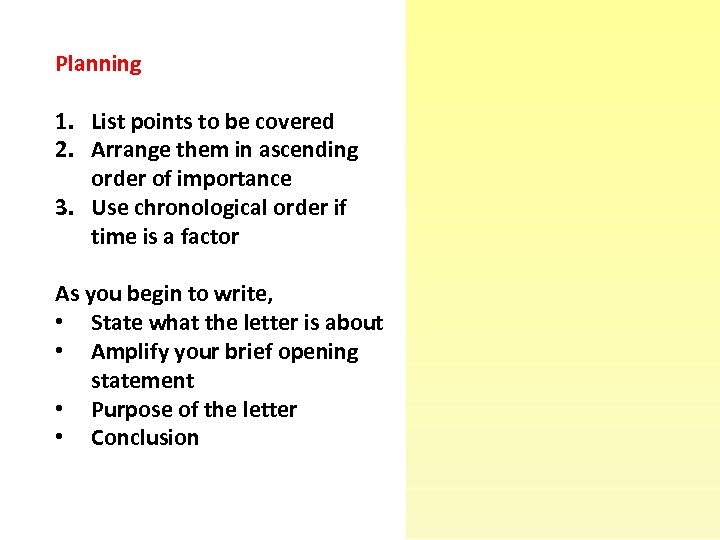
Planning 1. List points to be covered 2. Arrange them in ascending order of importance 3. Use chronological order if time is a factor As you begin to write, • State what the letter is about • Amplify your brief opening statement • Purpose of the letter • Conclusion
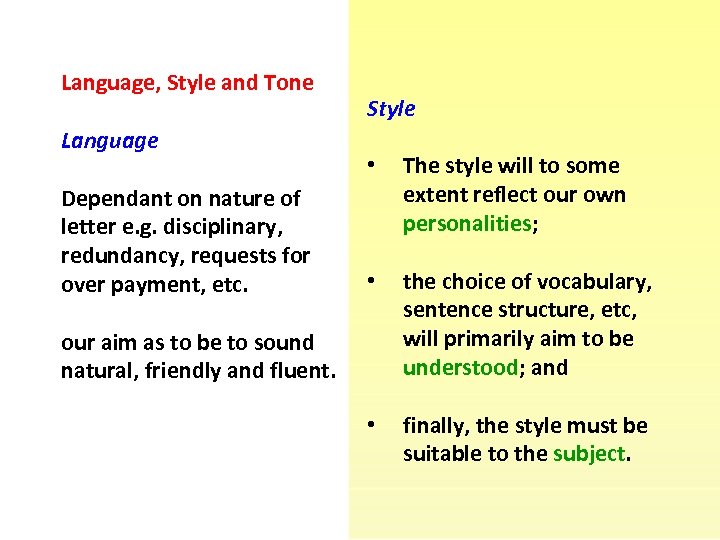
Language, Style and Tone Language Dependant on nature of letter e. g. disciplinary, redundancy, requests for over payment, etc. Style • The style will to some extent reflect our own personalities; • the choice of vocabulary, sentence structure, etc, will primarily aim to be understood; and • finally, the style must be suitable to the subject. our aim as to be to sound natural, friendly and fluent.
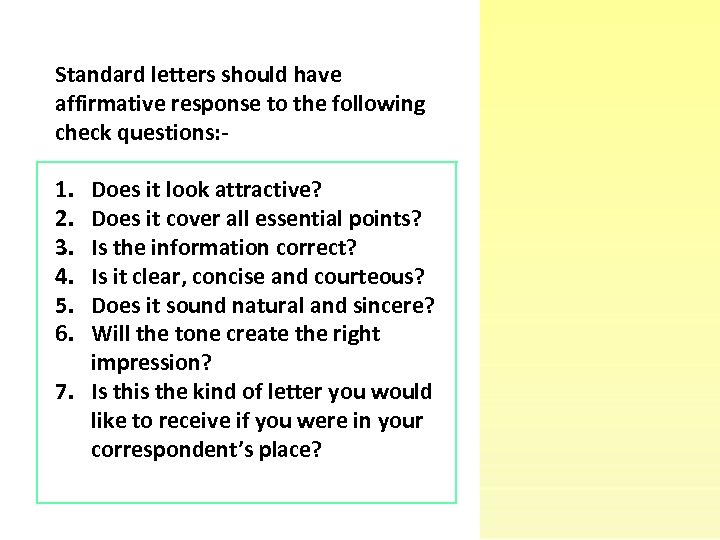
Standard letters should have affirmative response to the following check questions: - 1. 2. 3. 4. 5. 6. Does it look attractive? Does it cover all essential points? Is the information correct? Is it clear, concise and courteous? Does it sound natural and sincere? Will the tone create the right impression? 7. Is this the kind of letter you would like to receive if you were in your correspondent’s place?
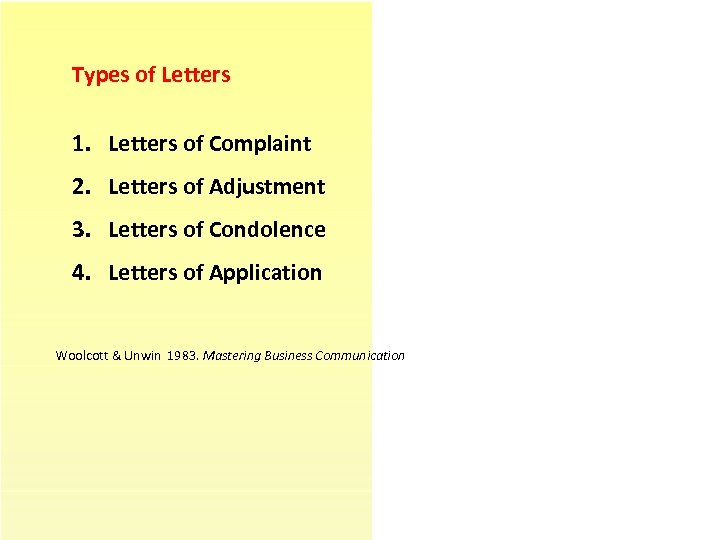
Types of Letters 1. Letters of Complaint 2. Letters of Adjustment 3. Letters of Condolence 4. Letters of Application Woolcott & Unwin 1983. Mastering Business Communication
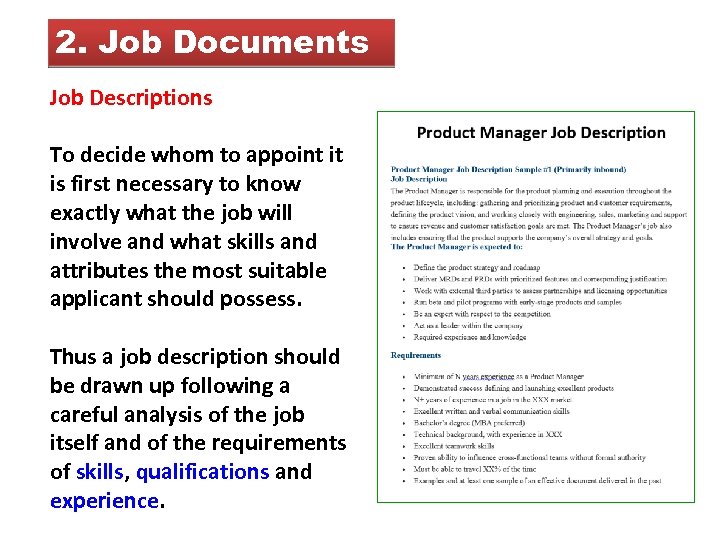
2. Job Documents Job Descriptions To decide whom to appoint it is first necessary to know exactly what the job will involve and what skills and attributes the most suitable applicant should possess. Thus a job description should be drawn up following a careful analysis of the job itself and of the requirements of skills, qualifications and experience.
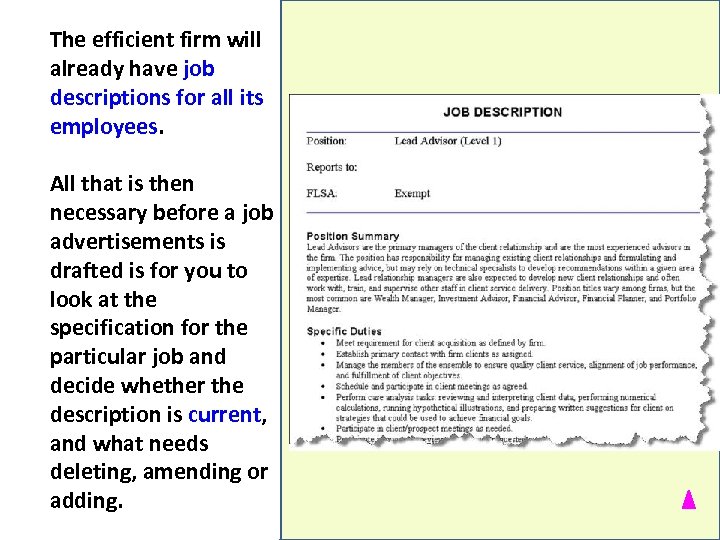
The efficient firm will already have job descriptions for all its employees. All that is then necessary before a job advertisements is drafted is for you to look at the specification for the particular job and decide whether the description is current, and what needs deleting, amending or adding.
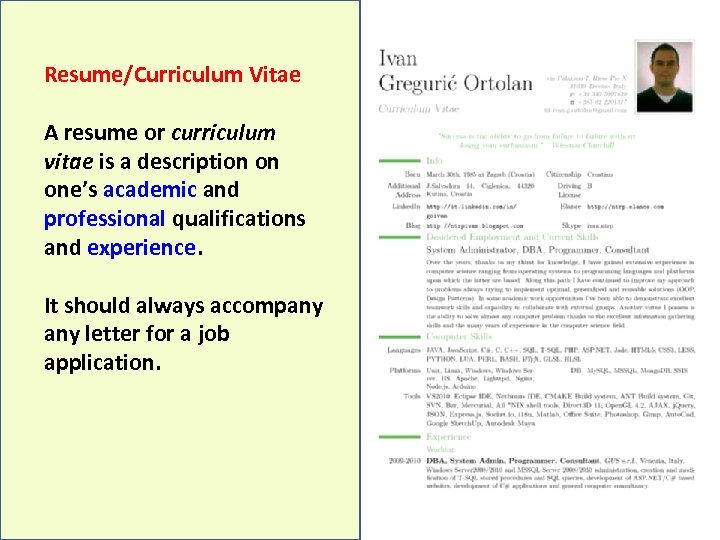
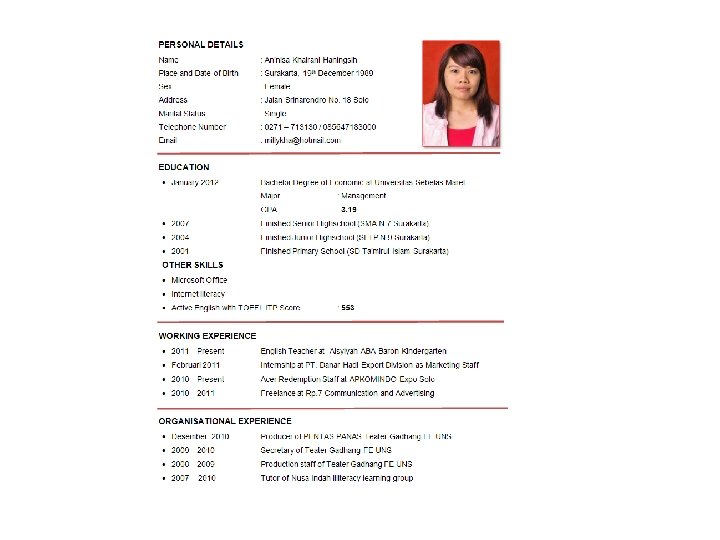
Resume/Curriculum Vitae A resume or curriculum vitae is a description on one’s academic and professional qualifications and experience. It should always accompany letter for a job application.
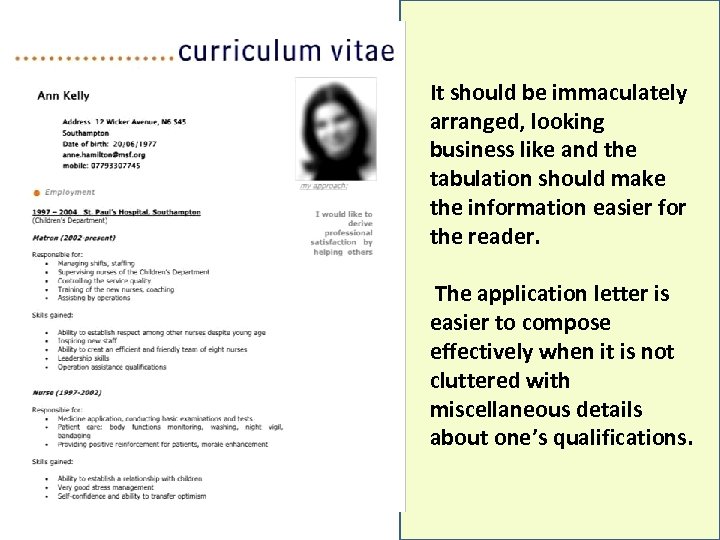
It should be immaculately arranged, looking business like and the tabulation should make the information easier for the reader. The application letter is easier to compose effectively when it is not cluttered with miscellaneous details about one’s qualifications.
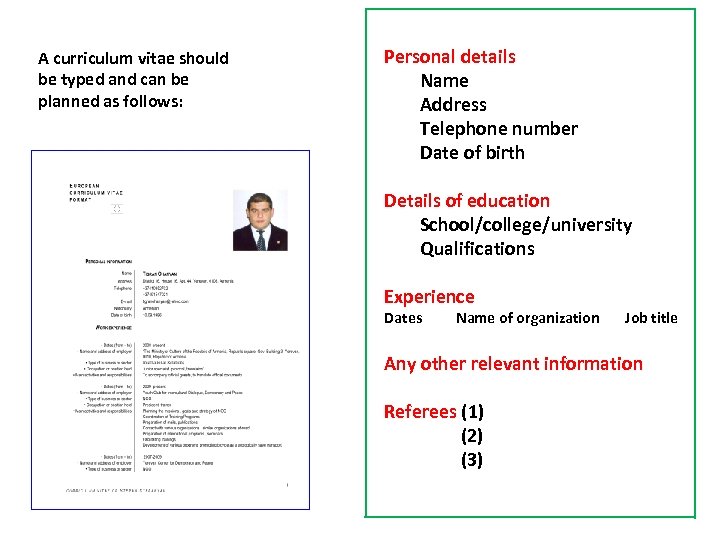
A curriculum vitae should be typed and can be planned as follows: Personal details Name Address Telephone number Date of birth Details of education School/college/university Qualifications Experience Dates Name of organization Job title Any other relevant information Referees (1) (2) (3)
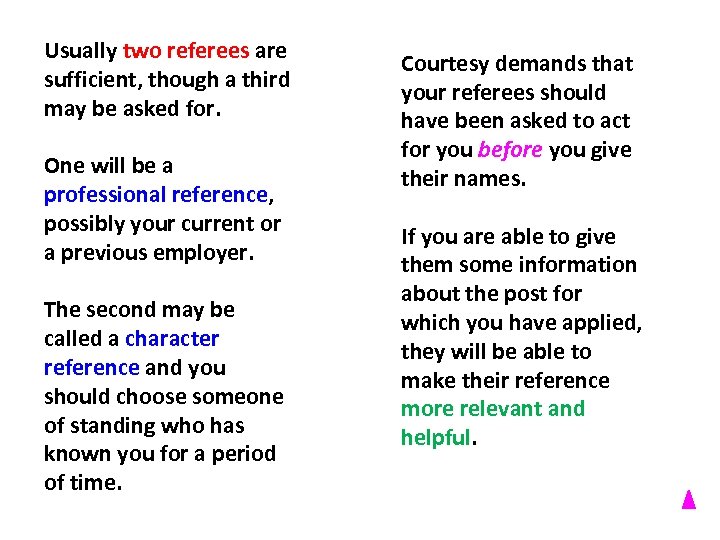
Usually two referees are sufficient, though a third may be asked for. One will be a professional reference, possibly your current or a previous employer. The second may be called a character reference and you should choose someone of standing who has known you for a period of time. Courtesy demands that your referees should have been asked to act for you before you give their names. If you are able to give them some information about the post for which you have applied, they will be able to make their reference more relevant and helpful.
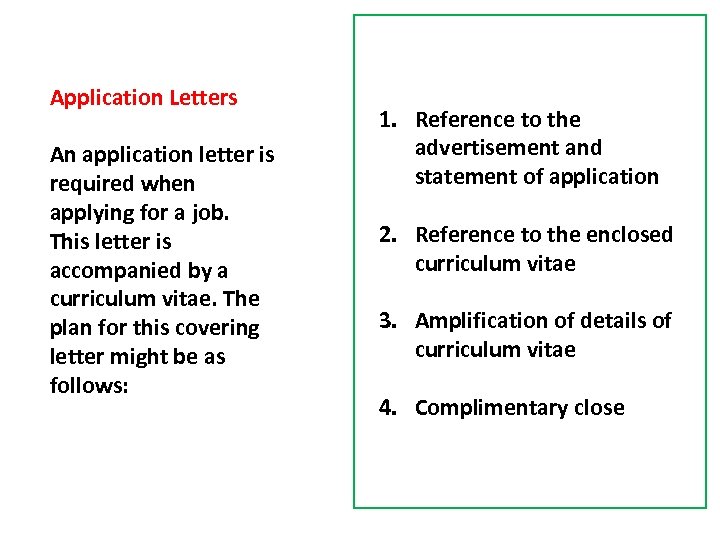
Application Letters An application letter is required when applying for a job. This letter is accompanied by a curriculum vitae. The plan for this covering letter might be as follows: 1. Reference to the advertisement and statement of application 2. Reference to the enclosed curriculum vitae 3. Amplification of details of curriculum vitae 4. Complimentary close
Your letter must sound like YOU, it must convey something of your own personality. However, if you are a very assuming person, you will need to make the effort to sound a little more forceful than usual. After all you do have to speak for yourself on this occasion!

The aim of the letter is to ensure that your name goes on to the shortlist and takes you to the next stage, the interview.

To do this you need to study the advertisement very carefully indeed, decide what sort of person with what qualifications, is being sort, and then show that you are that person.
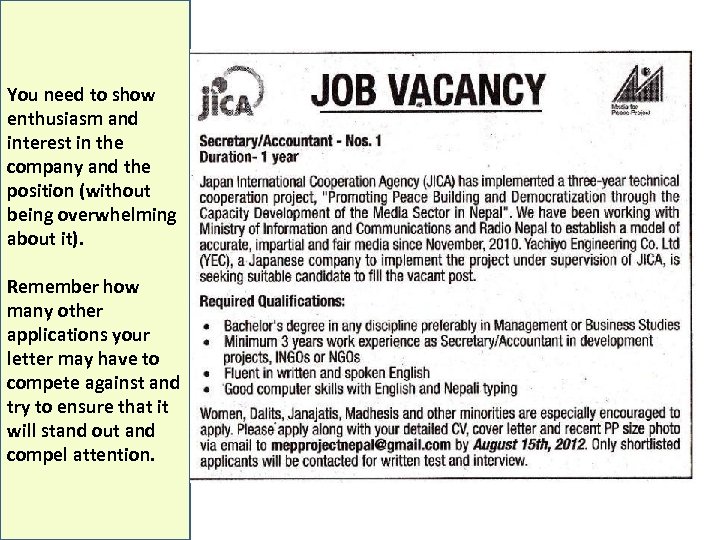
You need to show enthusiasm and interest in the company and the position (without being overwhelming about it). Remember how many other applications your letter may have to compete against and try to ensure that it will stand out and compel attention.
Since every letter of application should be unique to the individual and specially written as a response to one particular advertisement, no model is necessary per say.
Writing Circulars • Memos • Notices • Press Statements • Emails
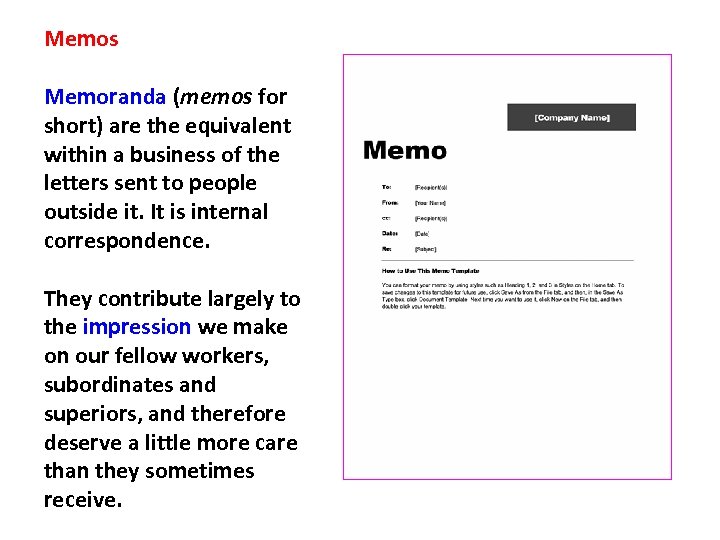
Memos Memoranda (memos for short) are the equivalent within a business of the letters sent to people outside it. It is internal correspondence. They contribute largely to the impression we make on our fellow workers, subordinates and superiors, and therefore deserve a little more care than they sometimes receive.
• They are usually pre-printed so that staff may be encouraged to keep memos short. • It is often of A 5 paper size. • They are presented in different variations.
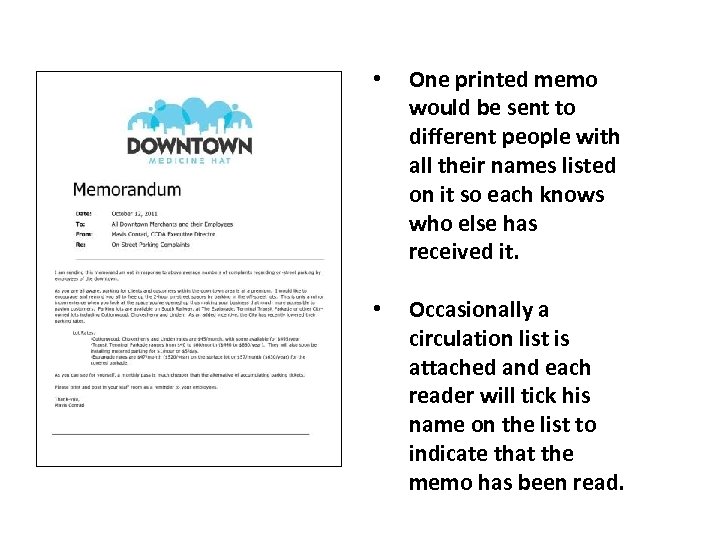
• One printed memo would be sent to different people with all their names listed on it so each knows who else has received it. • Occasionally a circulation list is attached and each reader will tick his name on the list to indicate that the memo has been read.
• Sometimes memos are used as notices for display on a board. • These should be carefully designed so that the information is clearly displayed and very easy to read.
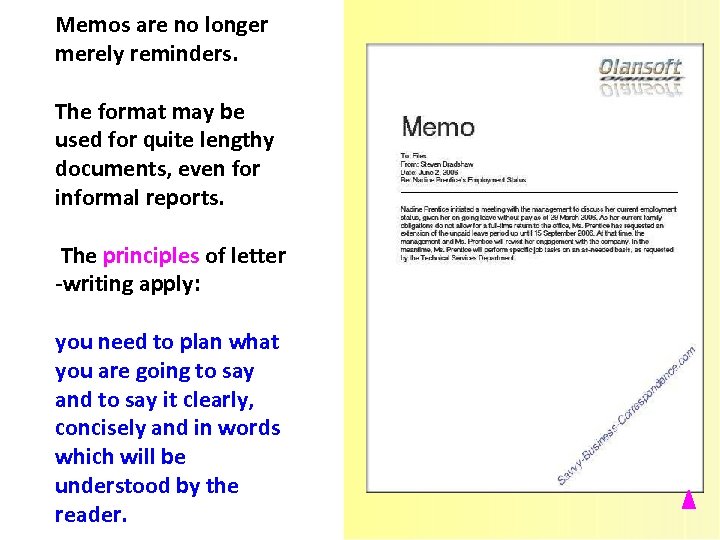
Memos are no longer merely reminders. The format may be used for quite lengthy documents, even for informal reports. The principles of letter -writing apply: you need to plan what you are going to say and to say it clearly, concisely and in words which will be understood by the reader.
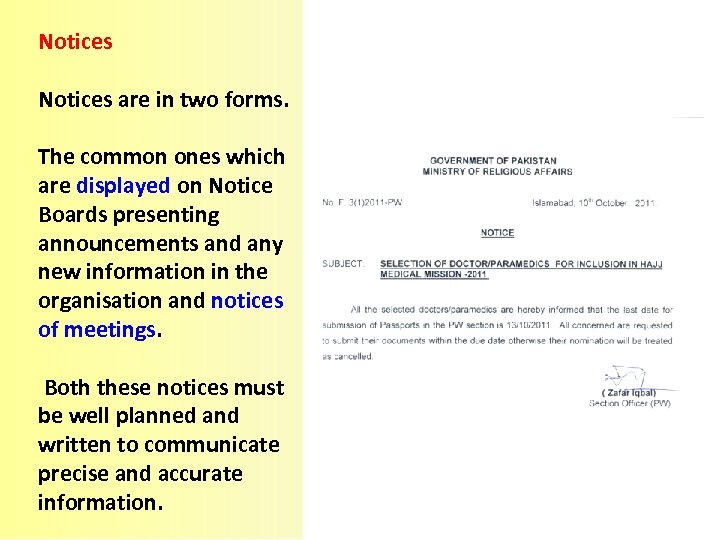
Notices are in two forms. The common ones which are displayed on Notice Boards presenting announcements and any new information in the organisation and notices of meetings. Both these notices must be well planned and written to communicate precise and accurate information.
Notice of meetings must be sent out at a suitable time before the meeting and to everyone whose presence is needed. Additionally, others who are not attending may need to be notified e. g. to sent a representative. A two weeks period of notice is advisable to give ample time for people to make arrangements. However in practice, many meetings at work are held at very short notice, as need arise, while others are held at a regular time and day each week or month, so that a written notice may not be necessary.
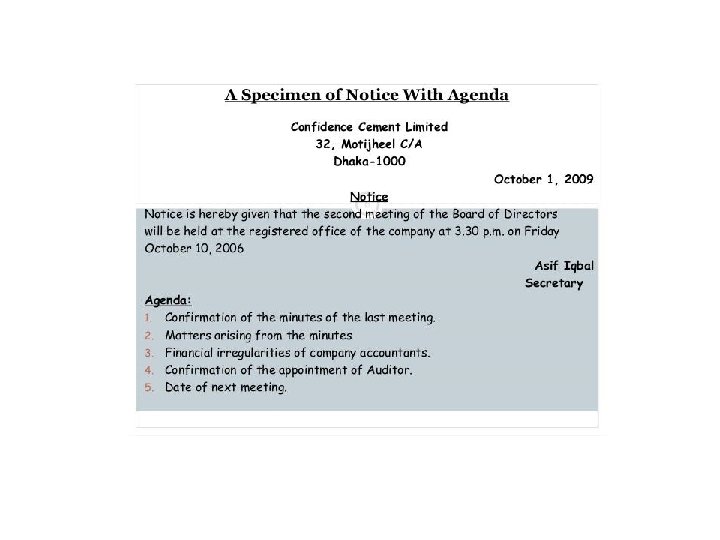
The contents of a formal notice of a meeting are as follows: • Name of the organisation or meeting • Place of meeting • Date and time of meeting • Date of notice • Signature of person convening the meeting, with title • Type of meeting, it applicable, e. g. committee, AGM.
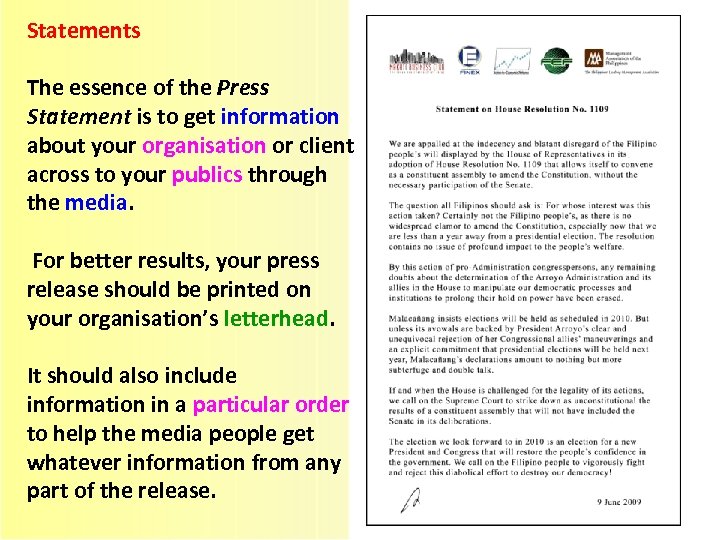
Statements The essence of the Press Statement is to get information about your organisation or client across to your publics through the media. For better results, your press release should be printed on your organisation’s letterhead. It should also include information in a particular order to help the media people get whatever information from any part of the release.
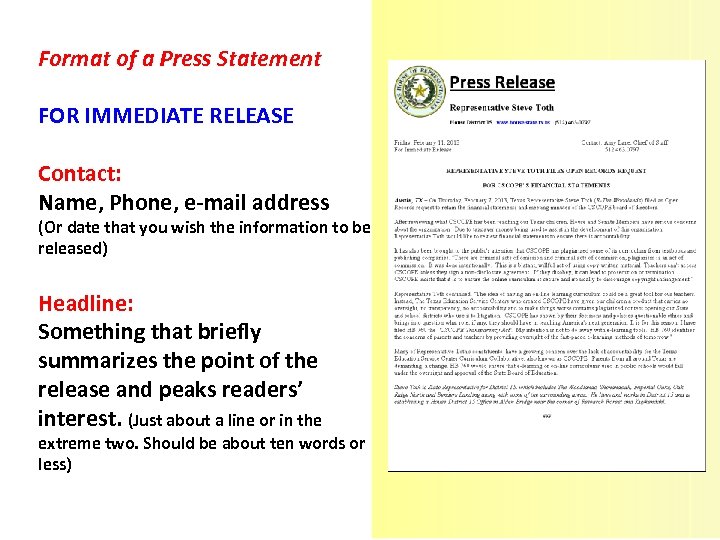
Format of a Press Statement FOR IMMEDIATE RELEASE Contact: Name, Phone, e-mail address (Or date that you wish the information to be released) Headline: Something that briefly summarizes the point of the release and peaks readers’ interest. (Just about a line or in the extreme two. Should be about ten words or less)
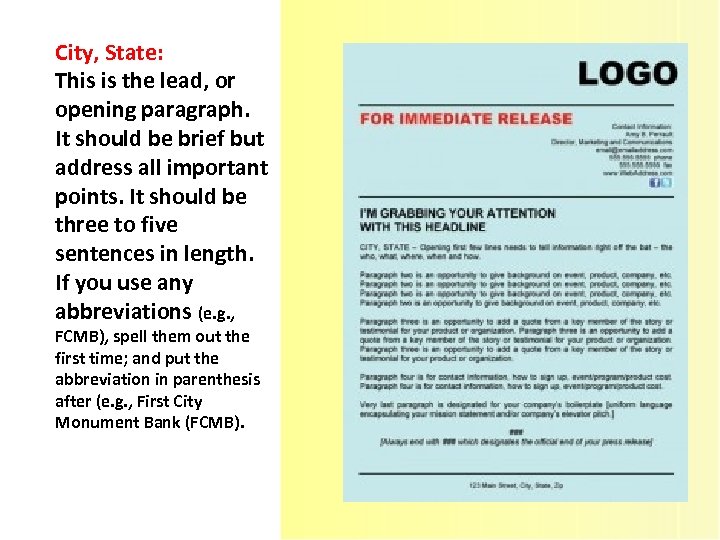
City, State: This is the lead, or opening paragraph. It should be brief but address all important points. It should be three to five sentences in length. If you use any abbreviations (e. g. , FCMB), spell them out the first time; and put the abbreviation in parenthesis after (e. g. , First City Monument Bank (FCMB).
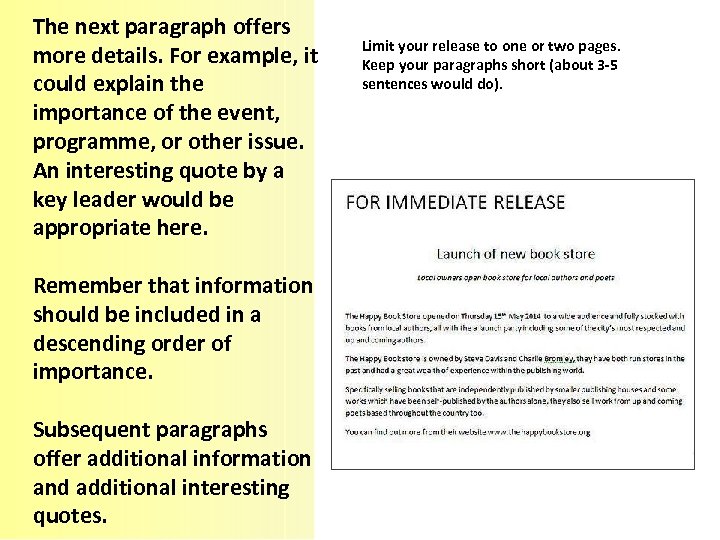
The next paragraph offers more details. For example, it could explain the importance of the event, programme, or other issue. An interesting quote by a key leader would be appropriate here. Remember that information should be included in a descending order of importance. Subsequent paragraphs offer additional information and additional interesting quotes. Limit your release to one or two pages. Keep your paragraphs short (about 3 -5 sentences would do).
Boilerplate: The last paragraph is called the “boilerplate. ” It describes the organization issuing the release and, when appropriate, directs the reader to sources of additional information or materials.
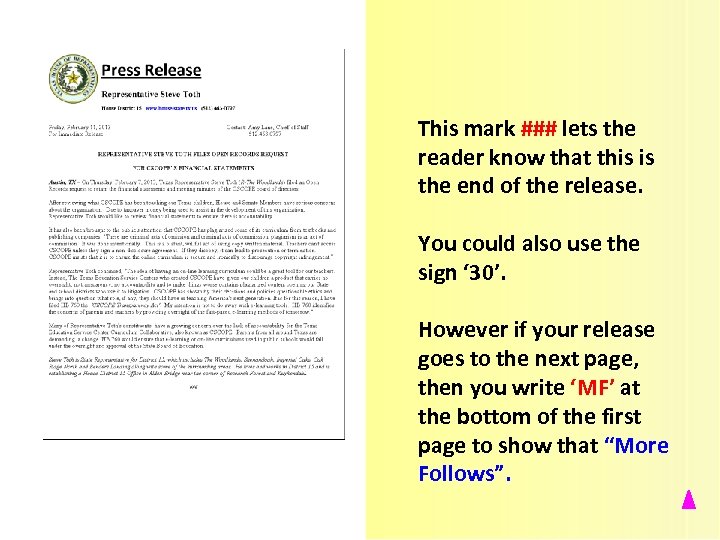
This mark ### lets the reader know that this is the end of the release. You could also use the sign ‘ 30’. However if your release goes to the next page, then you write ‘MF’ at the bottom of the first page to show that “More Follows”.
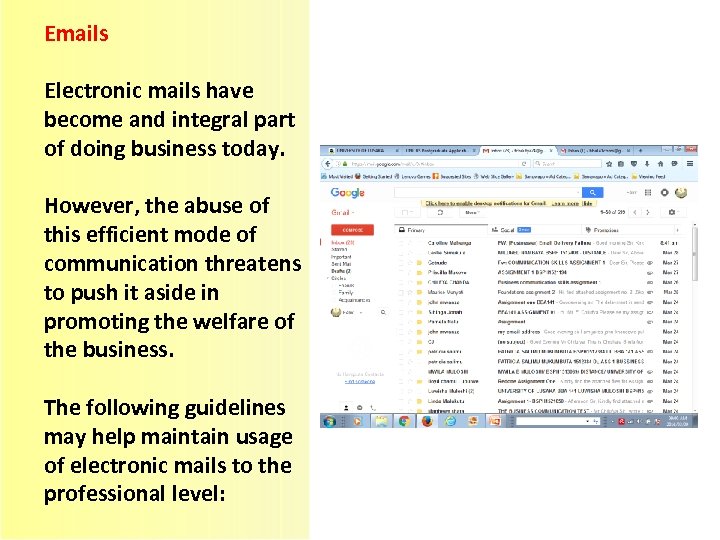
Emails Electronic mails have become and integral part of doing business today. However, the abuse of this efficient mode of communication threatens to push it aside in promoting the welfare of the business. The following guidelines may help maintain usage of electronic mails to the professional level:
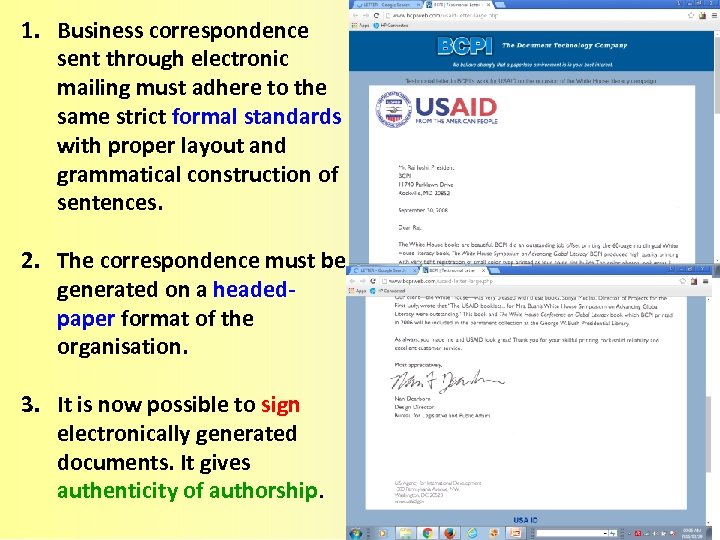
1. Business correspondence sent through electronic mailing must adhere to the same strict formal standards with proper layout and grammatical construction of sentences. 2. The correspondence must be generated on a headedpaper format of the organisation. 3. It is now possible to sign electronically generated documents. It gives authenticity of authorship.
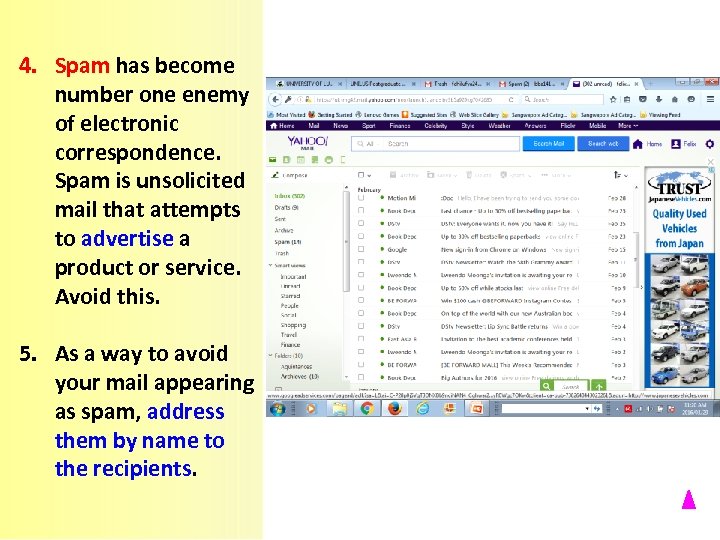
4. Spam has become number one enemy of electronic correspondence. Spam is unsolicited mail that attempts to advertise a product or service. Avoid this. 5. As a way to avoid your mail appearing as spam, address them by name to the recipients.

I Books
BUSINESS COMMUNICATION SKILLS Business Correspondence Unit 6 Developed by F. Chilufya
Скачать презентацию BUSINESS COMMUNICATION SKILLS Business Correspondence Unit 10 Developed
e22701c4c25ec9709b66a5d1f911b36b.ppt