 Скачать презентацию Bushings What is a bushing What does
4877407b67a2c546419a623ea1fc8bd7.ppt
- Количество слайдов: 32



Bushings
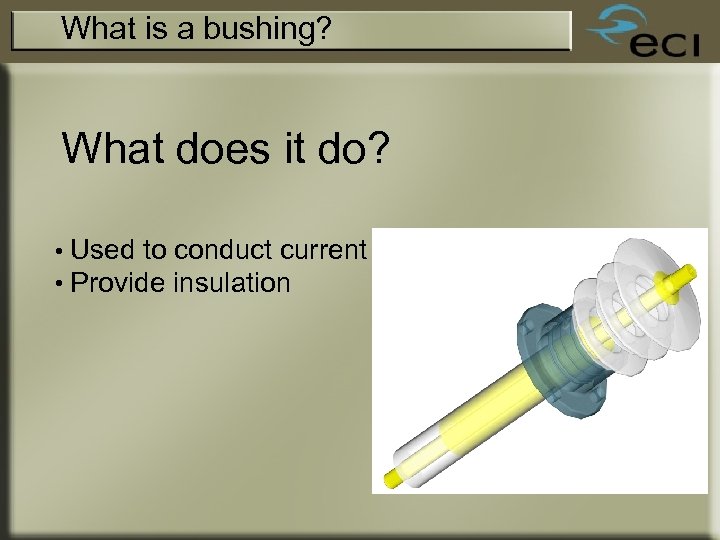
What is a bushing? What does it do? • Used to conduct current • Provide insulation
Materials / Types of insulation Ours • Polymer cycloaliphatic • Dry type Others • Ceramic/phenolic paper • Oil filled
What product do we offer? • Voltage up to 46 k. V • Current up to 3000 A • Air/air and Air/oil applications (also other special items) • Can meet IEC or ANSI standards
What are the components? • • • Central conductor Insulating material Flange Capacitance tap Shield
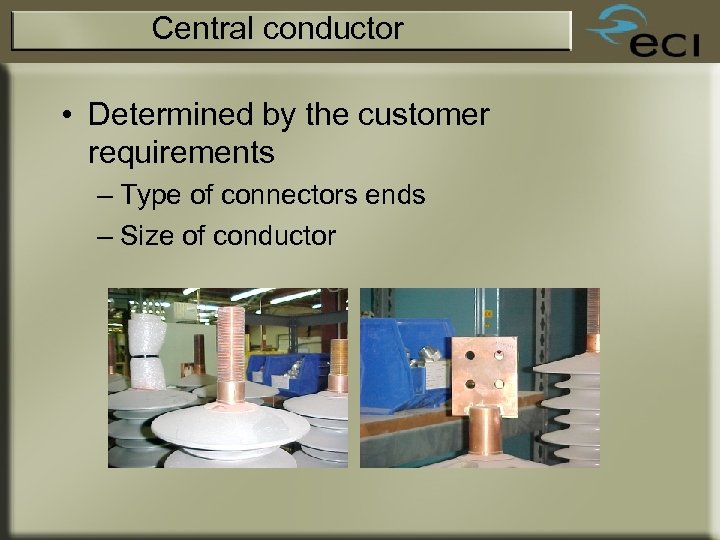
Central conductor • Determined by the customer requirements – Type of connectors ends – Size of conductor
Insulating material • Cycloaliphatic epoxy resin-based • Different formulations – depends of the application • Indoor/outdoor • Mechanical loads • etc. . .
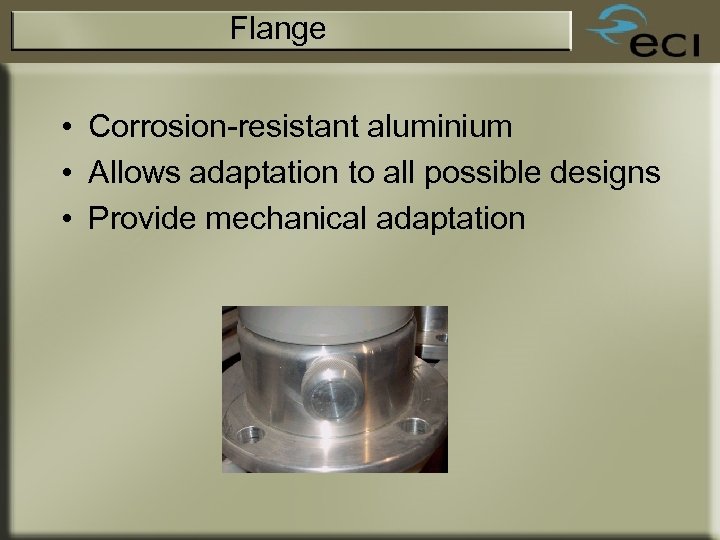
Flange • Corrosion-resistant aluminium • Allows adaptation to all possible designs • Provide mechanical adaptation
Shield • Limit the level of electrical field around a Current transformer • Connected to the ground by the flange • Integrated to the insulating material
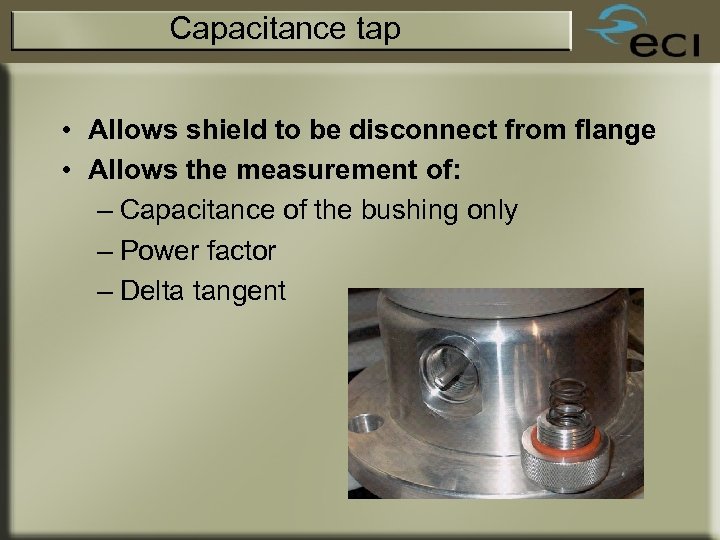
Capacitance tap • Allows shield to be disconnect from flange • Allows the measurement of: – Capacitance of the bushing only – Power factor – Delta tangent
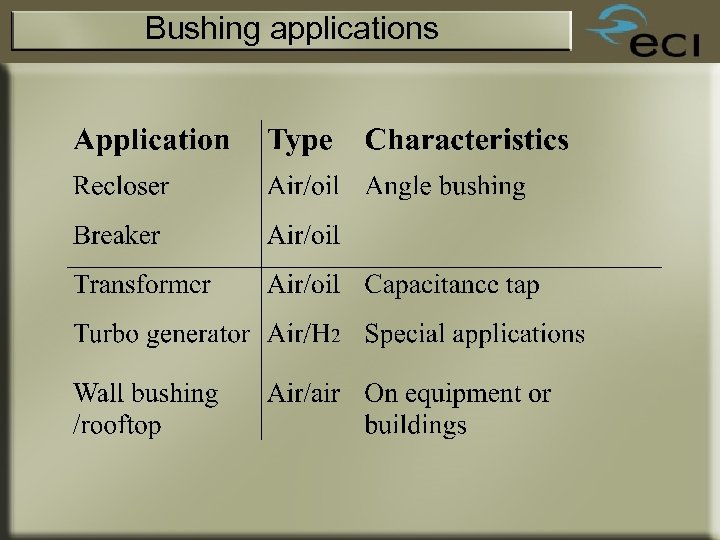
Bushing applications
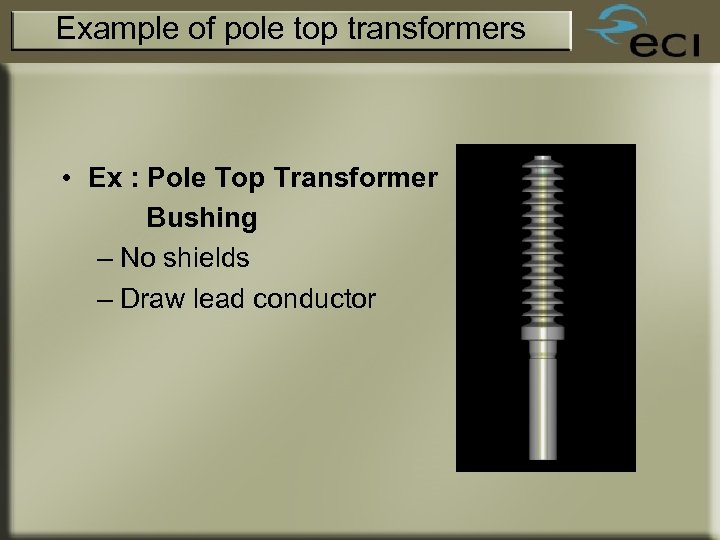
Example of pole top transformers • Ex : Pole Top Transformer Bushing – No shields – Draw lead conductor
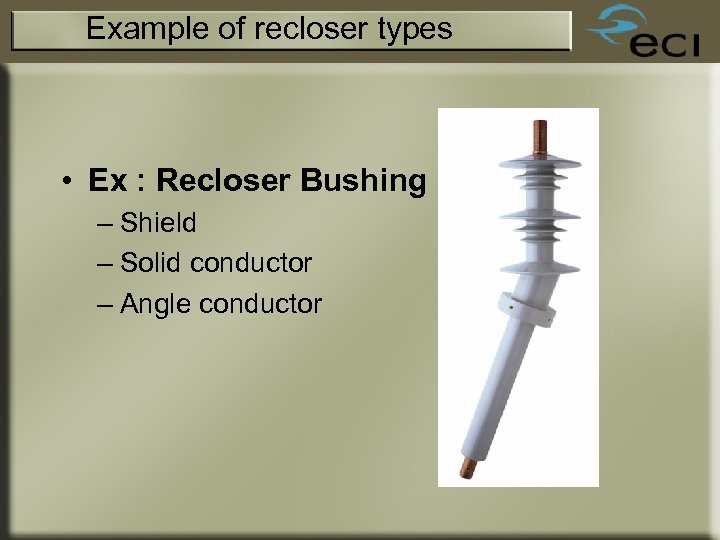
Example of recloser types • Ex : Recloser Bushing – Shield – Solid conductor – Angle conductor
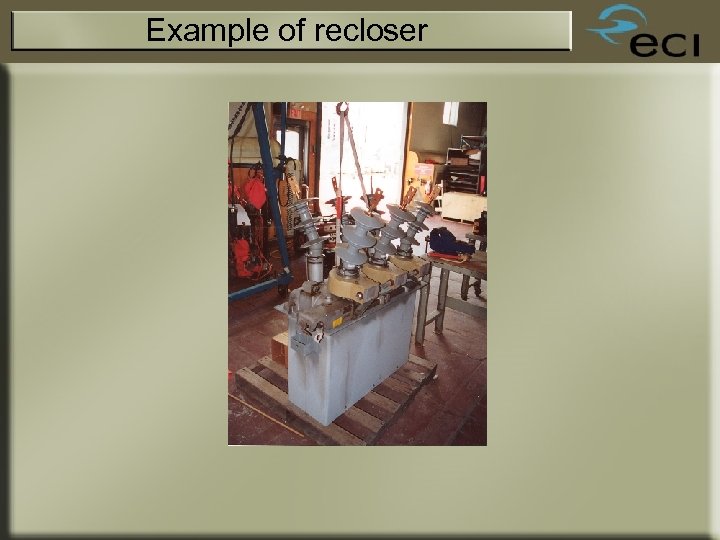
Example of recloser
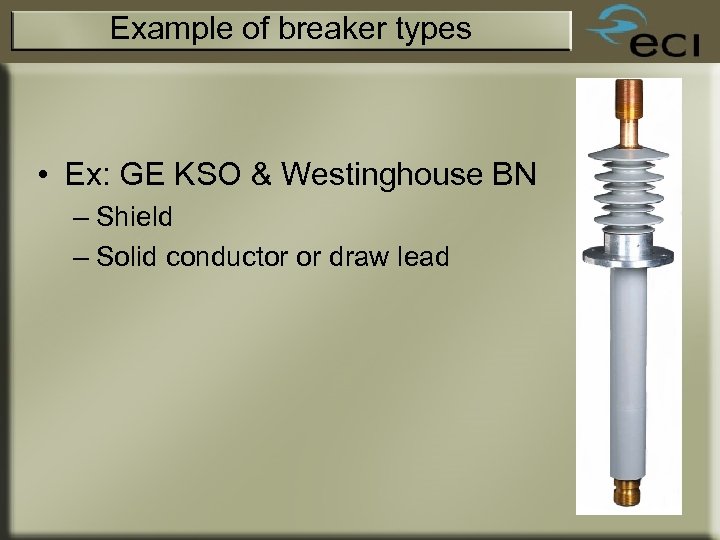
Example of breaker types • Ex: GE KSO & Westinghouse BN – Shield – Solid conductor or draw lead
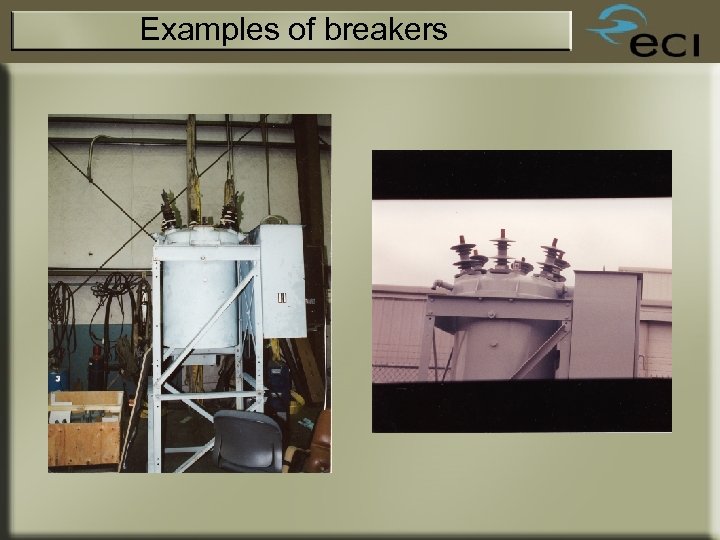
Examples of breakers
Example of transformer types • Ex : ANSI Bushing, Primary & Secondary – Shield – Solid conductor or draw lead – Capacitance tap
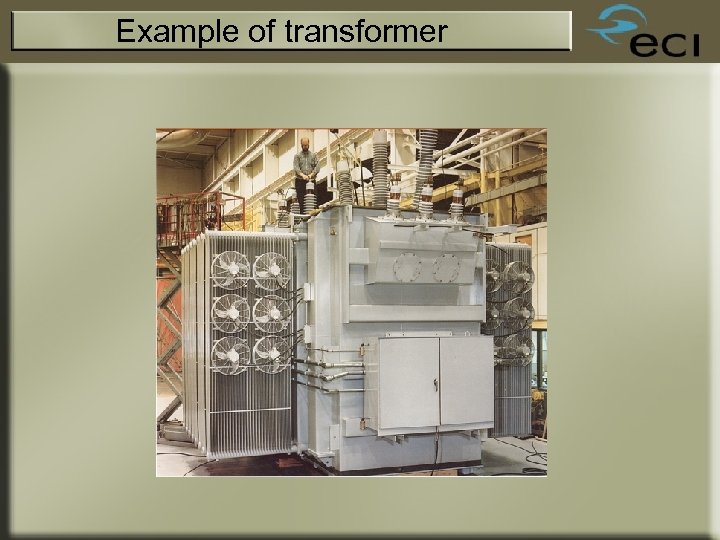
Example of transformer
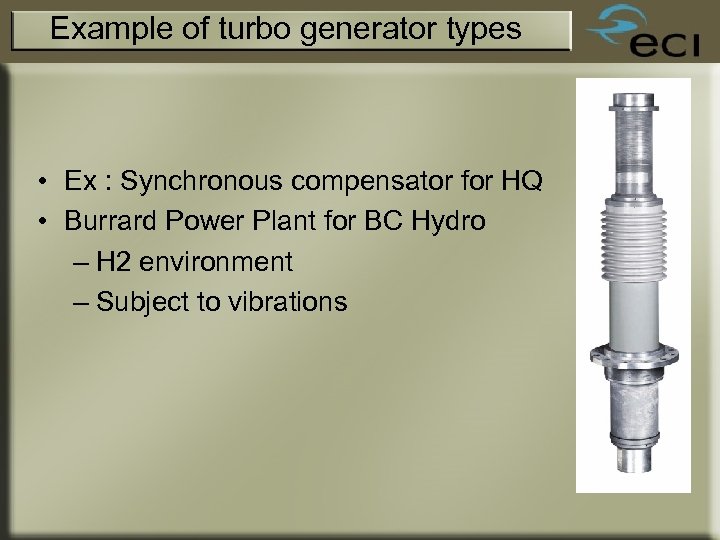
Example of turbo generator types • Ex : Synchronous compensator for HQ • Burrard Power Plant for BC Hydro – H 2 environment – Subject to vibrations
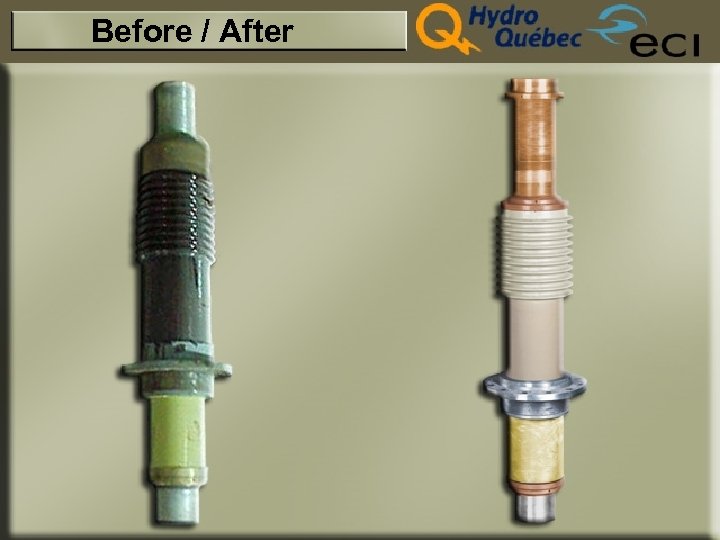
Before / After
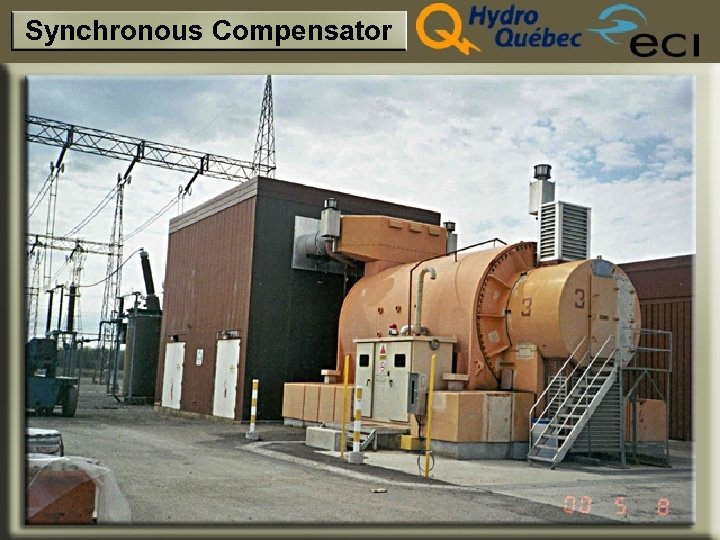
Synchronous Compensator
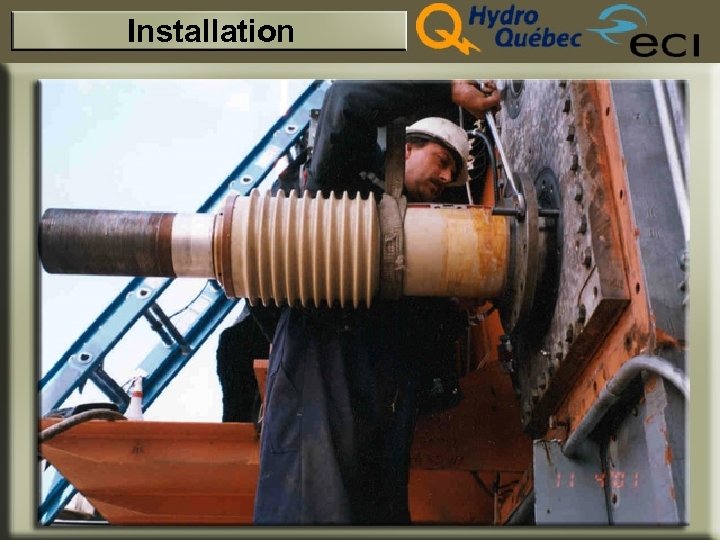
Installation
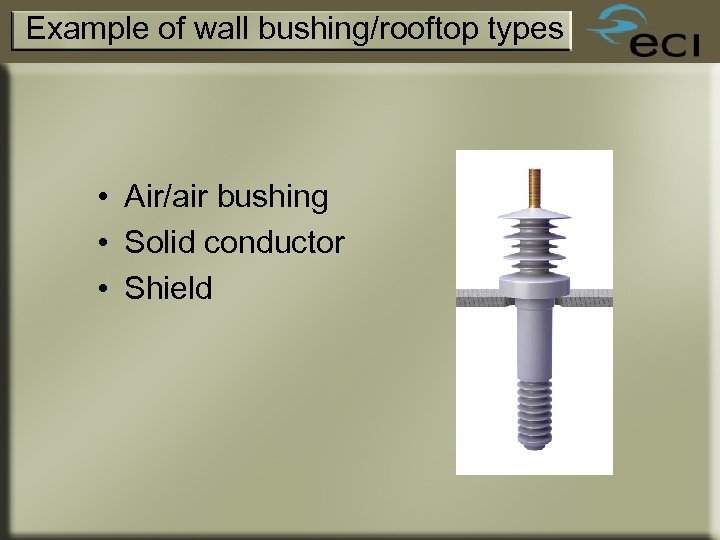
Example of wall bushing/rooftop types • Air/air bushing • Solid conductor • Shield
Key features of our products • Dry type – No oil and no PCB – Can be mounted at any angles – Environmentally friendly
Key features of our products • Highly resistant to lightning – Does not explode like porcelain – Increased safety
Key features of our products • Non tracking material - perfect for highly polluted areas : – salt fog (coastal and highways) – heavy industrialized areas
Key features of our products • Longer creepage distance – Because of higher mechanical properties of composite vs porcelain – Rule of thumb: ECI bushings are lighter and more compact than equivalent porcelain products
Key features of our products • Low partial discharge – Because the manufacturing process is void free – Typical value under 2 p. C, which translates to increased longevity of the insulation component
Key features of our products • Lower cost and better delivery time – Shorter delivery times, generally half the time than for porcelain – Flexible tooling allows for more bushing designs to replace porcelain bushings no longer available – Typically lower cost: as much as 25% less than porcelain
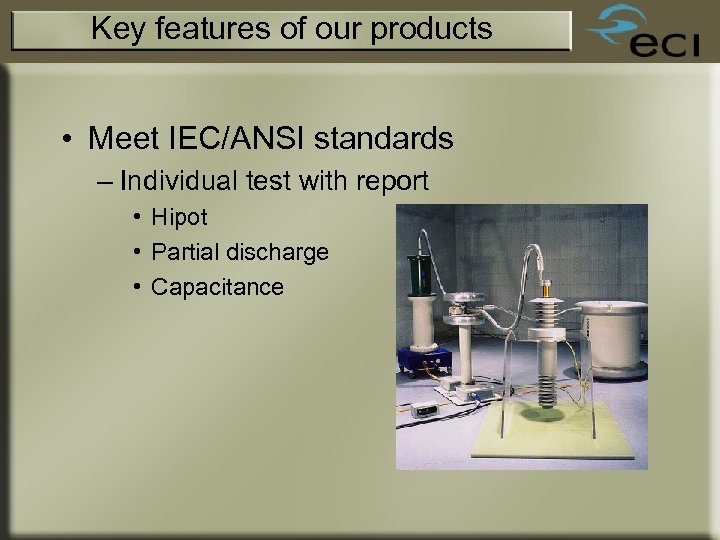
Key features of our products • Meet IEC/ANSI standards – Individual test with report • Hipot • Partial discharge • Capacitance
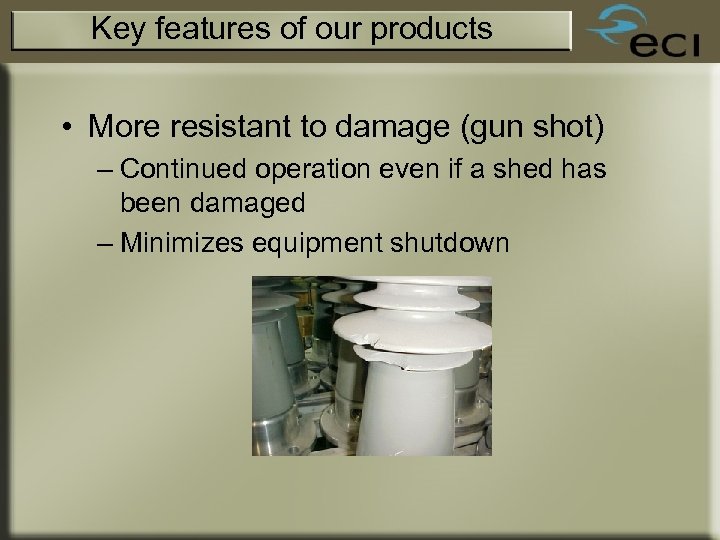
Key features of our products • More resistant to damage (gun shot) – Continued operation even if a shed has been damaged – Minimizes equipment shutdown
Conclusion • Why buy an ECI bushing? – Excellent electrical and mechanical properties • Non tracking, longer creep, low PD • Meet IEC/ANSI standards – Clean • Oil free / PCB • Environmentally friendly – Typically less expensive and faster delivery than porcelain bushings – Generally safer failure mode
Скачать презентацию Bushings What is a bushing What does
4877407b67a2c546419a623ea1fc8bd7.ppt