


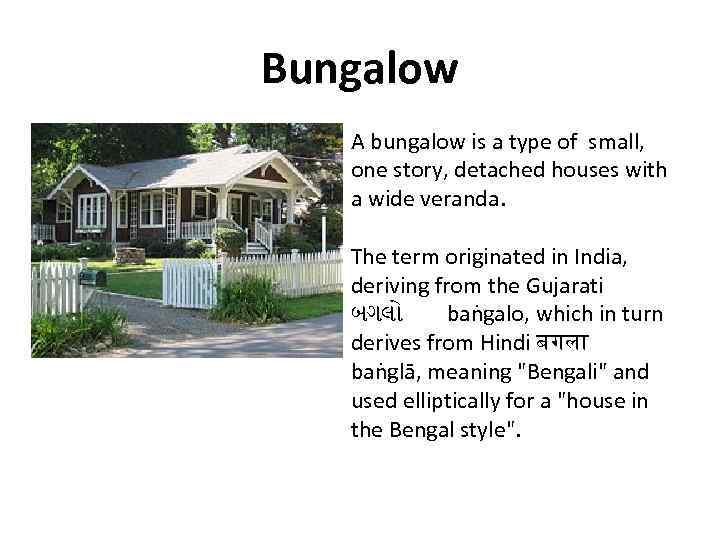
Bungalow A bungalow is a type of small, one story, detached houses with a wide veranda. The term originated in India, deriving from the Gujarati બગલ baṅgalo, which in turn derives from Hindi बगल baṅglā, meaning "Bengali" and used elliptically for a "house in the Bengal style".
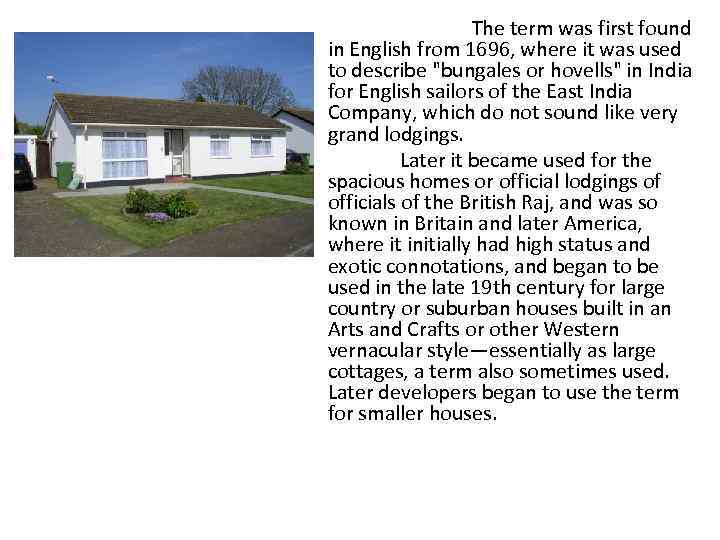
The term was first found in English from 1696, where it was used to describe "bungales or hovells" in India for English sailors of the East India Company, which do not sound like very grand lodgings. Later it became used for the spacious homes or official lodgings of officials of the British Raj, and was so known in Britain and later America, where it initially had high status and exotic connotations, and began to be used in the late 19 th century for large country or suburban houses built in an Arts and Crafts or other Western vernacular style—essentially as large cottages, a term also sometimes used. Later developers began to use the term for smaller houses.
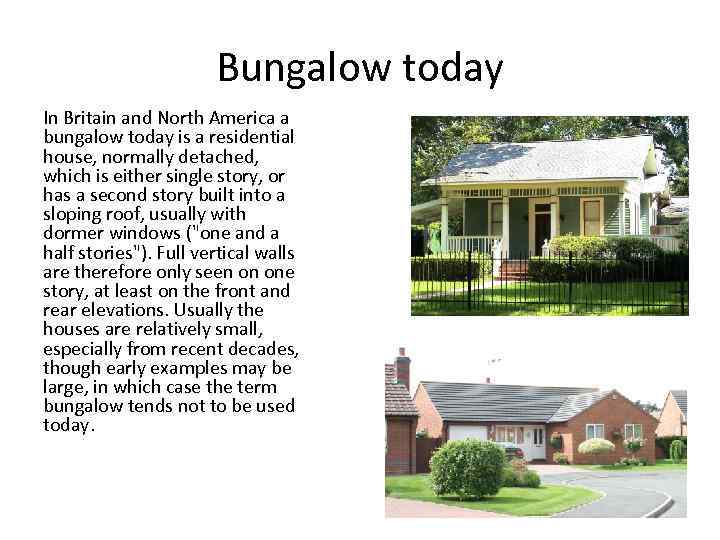
Bungalow today In Britain and North America a bungalow today is a residential house, normally detached, which is either single story, or has a second story built into a sloping roof, usually with dormer windows ("one and a half stories"). Full vertical walls are therefore only seen on one story, at least on the front and rear elevations. Usually the houses are relatively small, especially from recent decades, though early examples may be large, in which case the term bungalow tends not to be used today.
Who lives in bungalow on average? Bungalows became popular in the United Kingdom between the Wars. Many villages and seaside resorts have large estates of 1960 s bungalows, usually occupied by retired people. Now it is preferred by: - Old people - Families with disabled members - Bungalow lovers
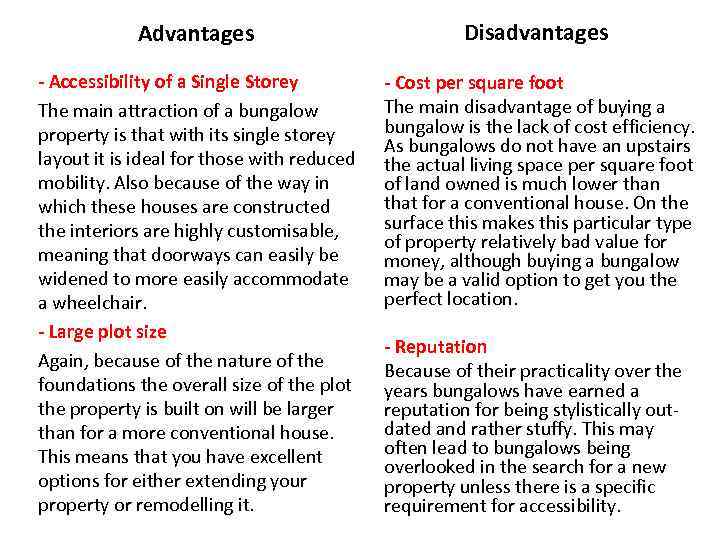
Advantages Disadvantages - Accessibility of a Single Storey The main attraction of a bungalow property is that with its single storey layout it is ideal for those with reduced mobility. Also because of the way in which these houses are constructed the interiors are highly customisable, meaning that doorways can easily be widened to more easily accommodate a wheelchair. - Large plot size Again, because of the nature of the foundations the overall size of the plot the property is built on will be larger than for a more conventional house. This means that you have excellent options for either extending your property or remodelling it. - Cost per square foot The main disadvantage of buying a bungalow is the lack of cost efficiency. As bungalows do not have an upstairs the actual living space per square foot of land owned is much lower than that for a conventional house. On the surface this makes this particular type of property relatively bad value for money, although buying a bungalow may be a valid option to get you the perfect location. - Reputation Because of their practicality over the years bungalows have earned a reputation for being stylistically outdated and rather stuffy. This may often lead to bungalows being overlooked in the search for a new property unless there is a specific requirement for accessibility.
