 Скачать презентацию Bulk Silicon Micromachining Chang Liu Micro Actuators Sensors
78cacb77e859afc45dbee32389652f36.ppt
- Количество слайдов: 90



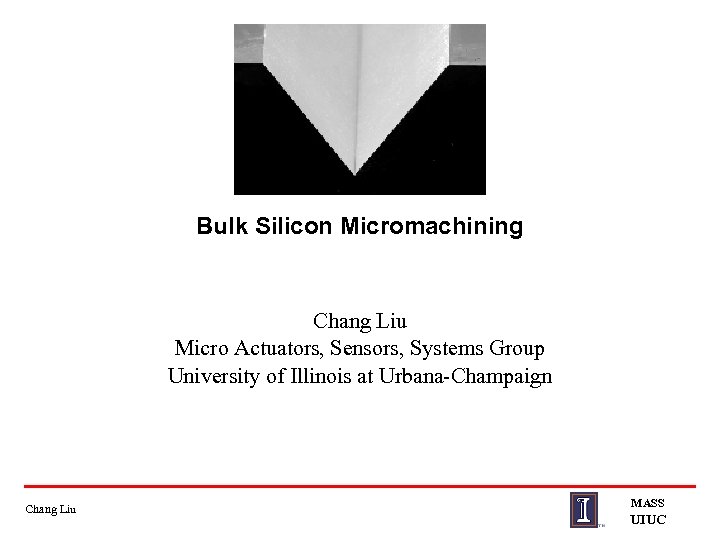
Bulk Silicon Micromachining Chang Liu Micro Actuators, Sensors, Systems Group University of Illinois at Urbana-Champaign Chang Liu MASS UIUC
Outline • Types of bulk micromachining – silicon anisotropic etching • crystal orientation – isotropic etching by liquid and gas phase etchants • Silicon anisotropic etching – influence on etch rate by orientation – influence on etch rate by doping concentration – Etching simulation with ACES • Other bulk etching processes – Plasma etching/Reactive ion etching – High aspect ratio, deep reactive ion etching (DRIE) • Examples: applying bulk etching processes Chang Liu MASS UIUC
Definition • Silicon bulk micromachining – processes that involve partial removal of bulk material in order to create three dimensional structures or free devices. • General micromachining – machining process that involves removal of substrate materials in order to render functional devices. Chang Liu MASS UIUC
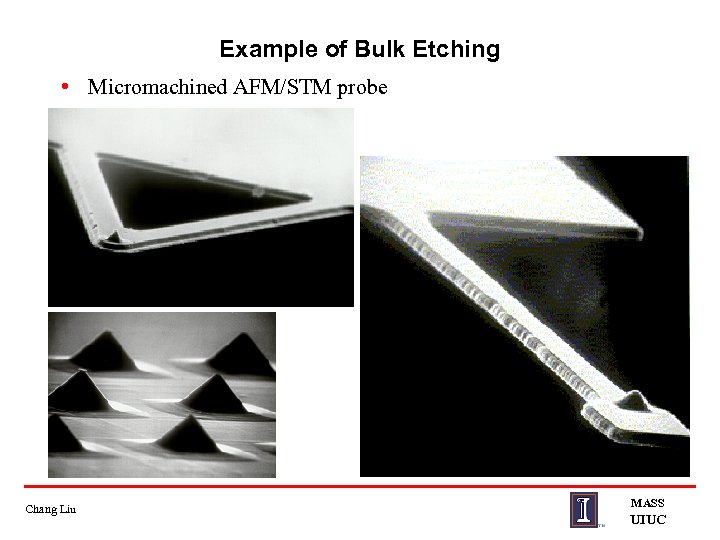
Example of Bulk Etching • Micromachined AFM/STM probe Chang Liu MASS UIUC
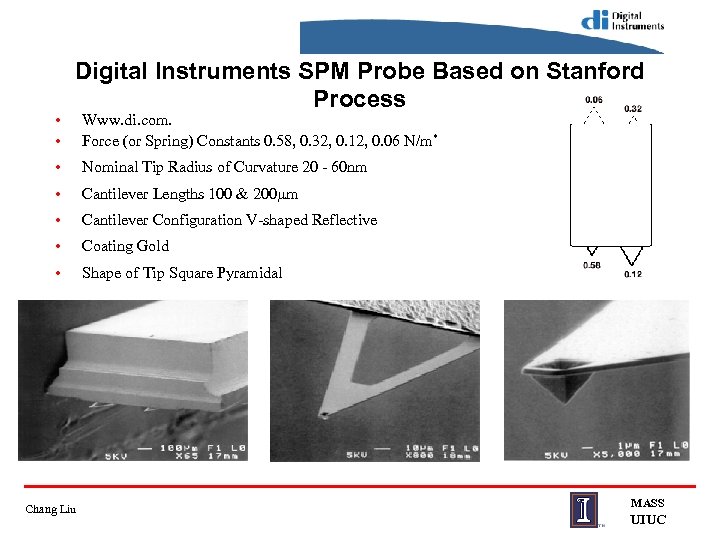
• • Digital Instruments SPM Probe Based on Stanford Process Www. di. com. Force (or Spring) Constants 0. 58, 0. 32, 0. 12, 0. 06 N/m* • Nominal Tip Radius of Curvature 20 - 60 nm • Cantilever Lengths 100 & 200µm • Cantilever Configuration V-shaped Reflective • Coating Gold • Shape of Tip Square Pyramidal Chang Liu MASS UIUC
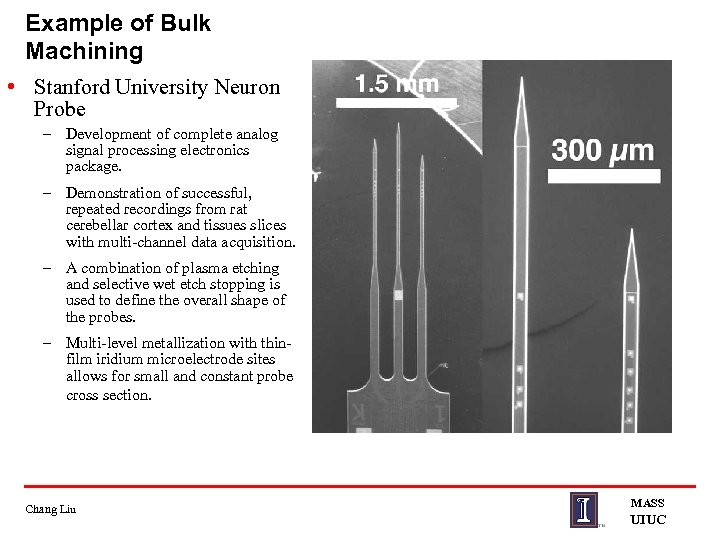
Example of Bulk Machining • Stanford University Neuron Probe – Development of complete analog signal processing electronics package. – Demonstration of successful, repeated recordings from rat cerebellar cortex and tissues slices with multi-channel data acquisition. – A combination of plasma etching and selective wet etch stopping is used to define the overall shape of the probes. – Multi-level metallization with thinfilm iridium microelectrode sites allows for small and constant probe cross section. Chang Liu MASS UIUC
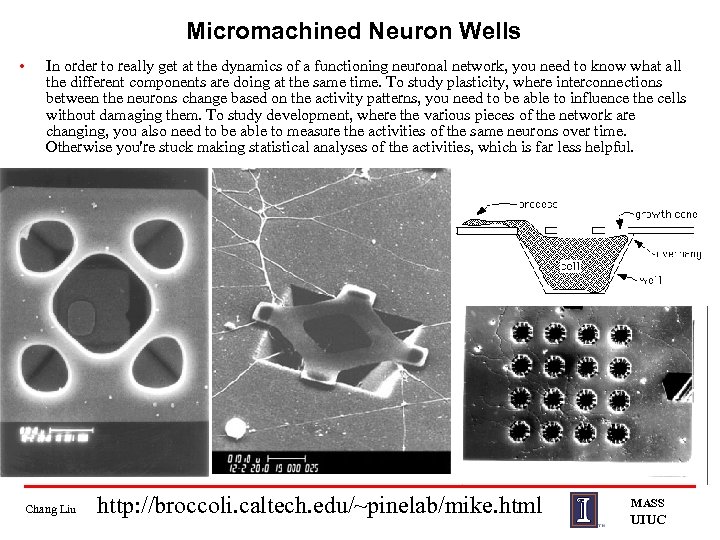
Micromachined Neuron Wells • In order to really get at the dynamics of a functioning neuronal network, you need to know what all the different components are doing at the same time. To study plasticity, where interconnections between the neurons change based on the activity patterns, you need to be able to influence the cells without damaging them. To study development, where the various pieces of the network are changing, you also need to be able to measure the activities of the same neurons over time. Otherwise you're stuck making statistical analyses of the activities, which is far less helpful. Chang Liu http: //broccoli. caltech. edu/~pinelab/mike. html MASS UIUC
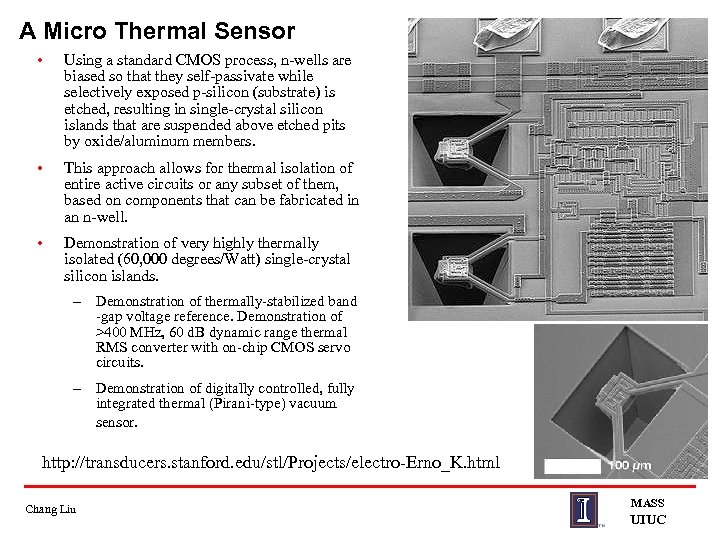
A Micro Thermal Sensor • Using a standard CMOS process, n-wells are biased so that they self-passivate while selectively exposed p-silicon (substrate) is etched, resulting in single-crystal silicon islands that are suspended above etched pits by oxide/aluminum members. • This approach allows for thermal isolation of entire active circuits or any subset of them, based on components that can be fabricated in an n-well. • Demonstration of very highly thermally isolated (60, 000 degrees/Watt) single-crystal silicon islands. – Demonstration of thermally-stabilized band -gap voltage reference. Demonstration of >400 MHz, 60 d. B dynamic range thermal RMS converter with on-chip CMOS servo circuits. – Demonstration of digitally controlled, fully integrated thermal (Pirani-type) vacuum sensor. http: //transducers. stanford. edu/stl/Projects/electro-Erno_K. html Chang Liu MASS UIUC
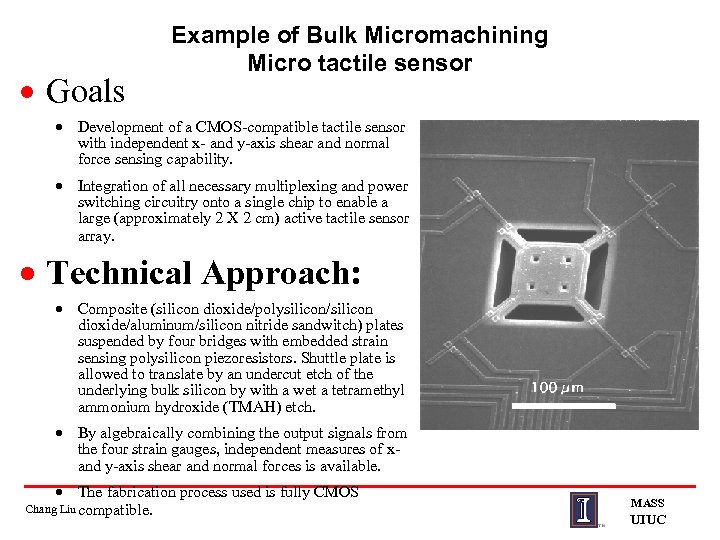
· Goals Example of Bulk Micromachining Micro tactile sensor · Development of a CMOS-compatible tactile sensor with independent x- and y-axis shear and normal force sensing capability. · Integration of all necessary multiplexing and power switching circuitry onto a single chip to enable a large (approximately 2 X 2 cm) active tactile sensor array. · Technical Approach: · Composite (silicon dioxide/polysilicon/silicon dioxide/aluminum/silicon nitride sandwitch) plates suspended by four bridges with embedded strain sensing polysilicon piezoresistors. Shuttle plate is allowed to translate by an undercut etch of the underlying bulk silicon by with a wet a tetramethyl ammonium hydroxide (TMAH) etch. · By algebraically combining the output signals from the four strain gauges, independent measures of xand y-axis shear and normal forces is available. · The fabrication process used is fully CMOS Chang Liu compatible. MASS UIUC
Chang Liu MASS UIUC
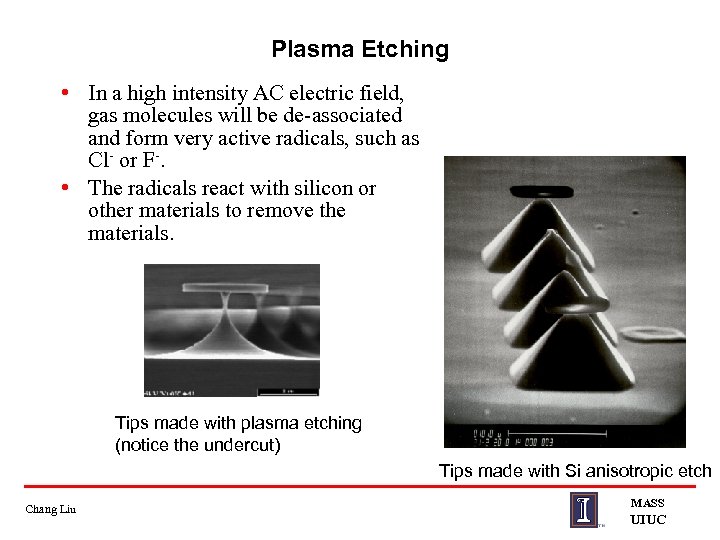
Plasma Etching • In a high intensity AC electric field, gas molecules will be de-associated and form very active radicals, such as Cl- or F-. • The radicals react with silicon or other materials to remove the materials. Tips made with plasma etching (notice the undercut) Tips made with Si anisotropic etch Chang Liu MASS UIUC
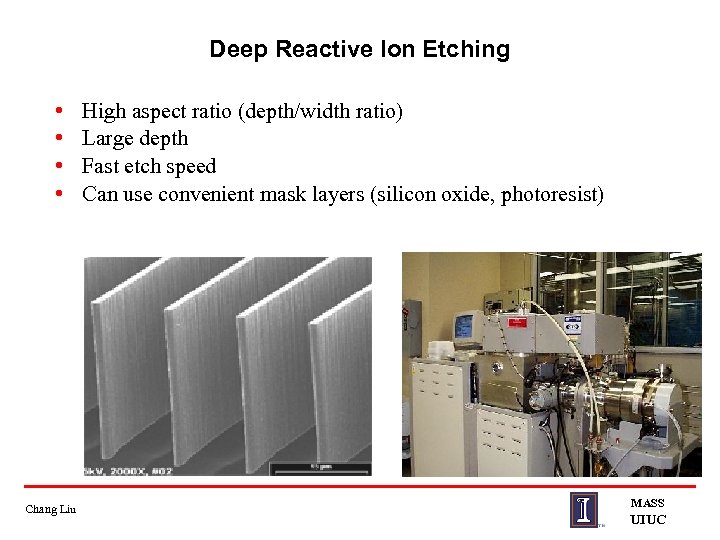
Deep Reactive Ion Etching • • Chang Liu High aspect ratio (depth/width ratio) Large depth Fast etch speed Can use convenient mask layers (silicon oxide, photoresist) MASS UIUC
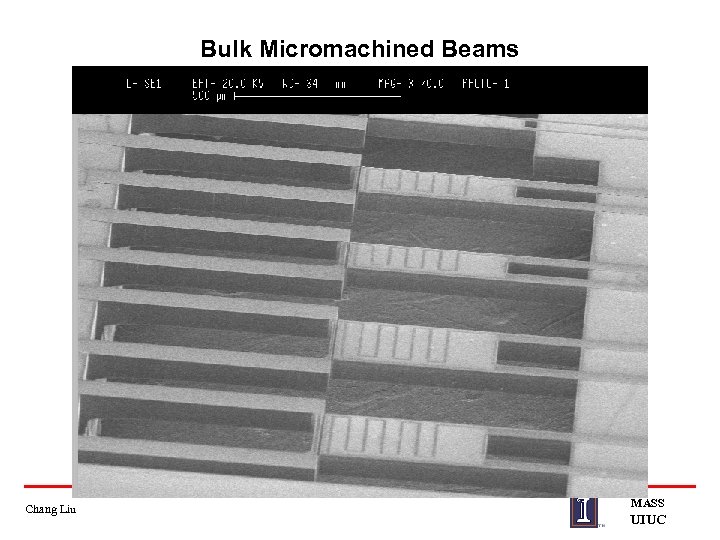
Bulk Micromachined Beams Chang Liu MASS UIUC
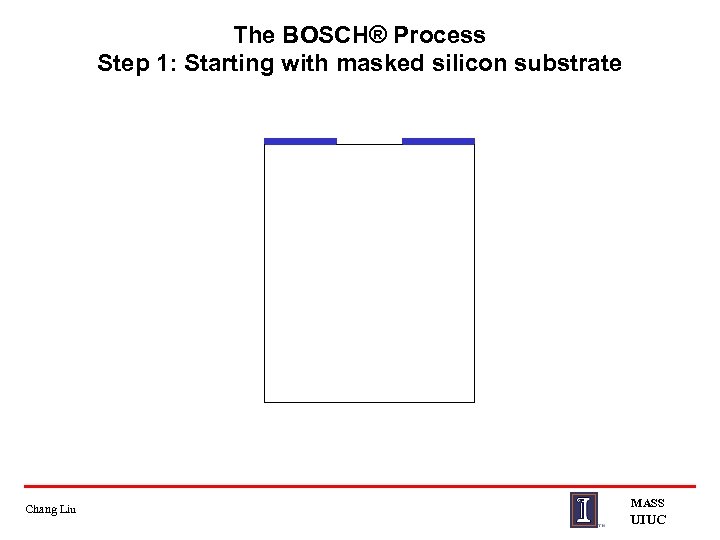
The BOSCH® Process Step 1: Starting with masked silicon substrate Chang Liu MASS UIUC
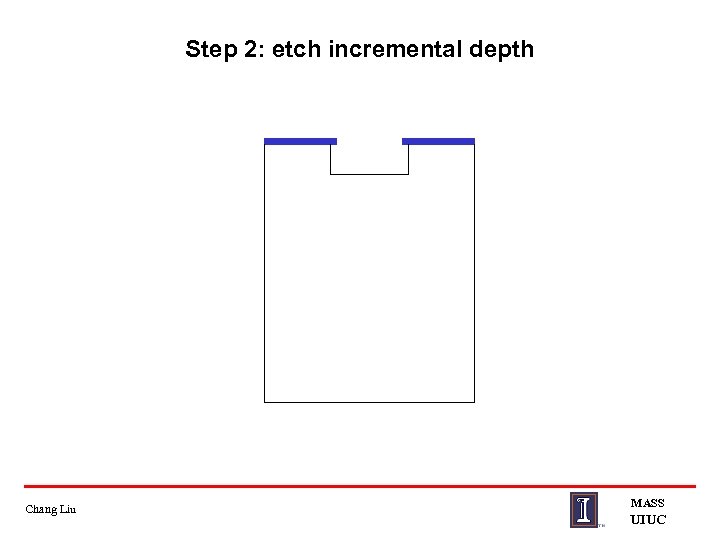
Step 2: etch incremental depth Chang Liu MASS UIUC
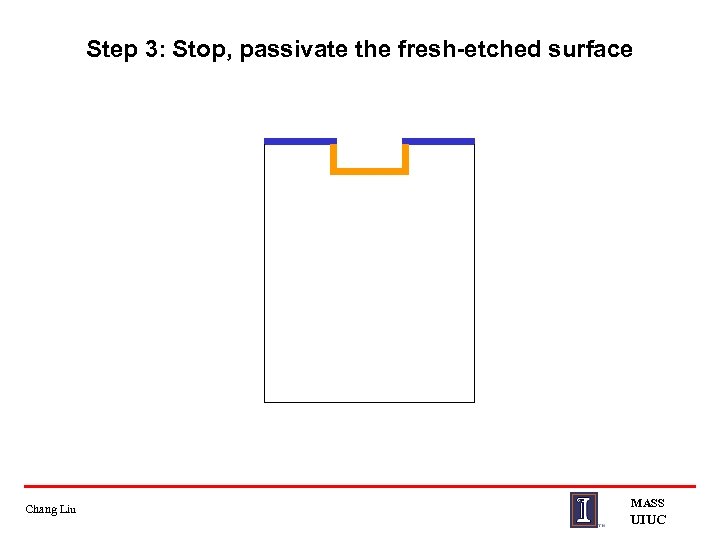
Step 3: Stop, passivate the fresh-etched surface Chang Liu MASS UIUC
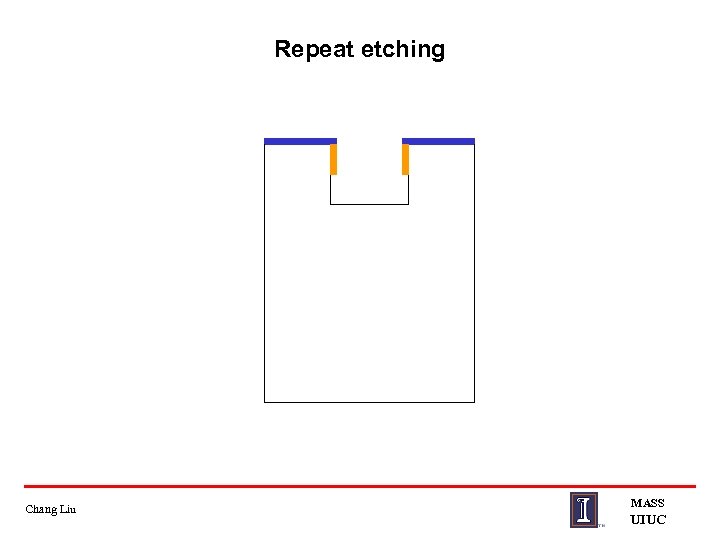
Repeat etching Chang Liu MASS UIUC
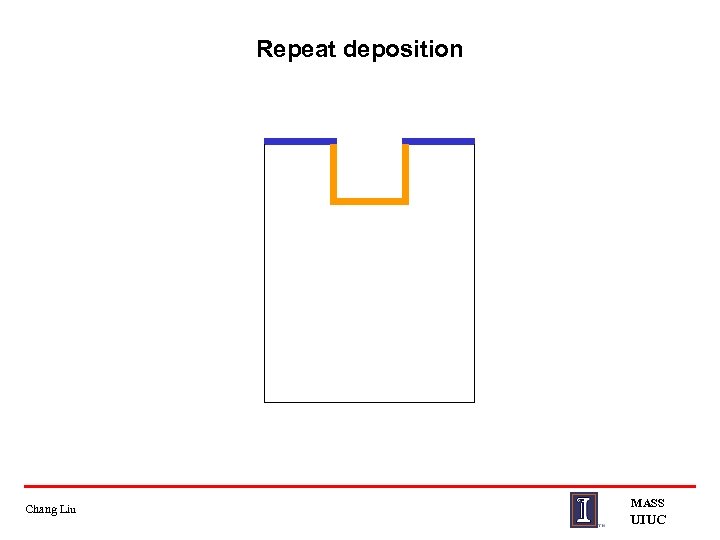
Repeat deposition Chang Liu MASS UIUC
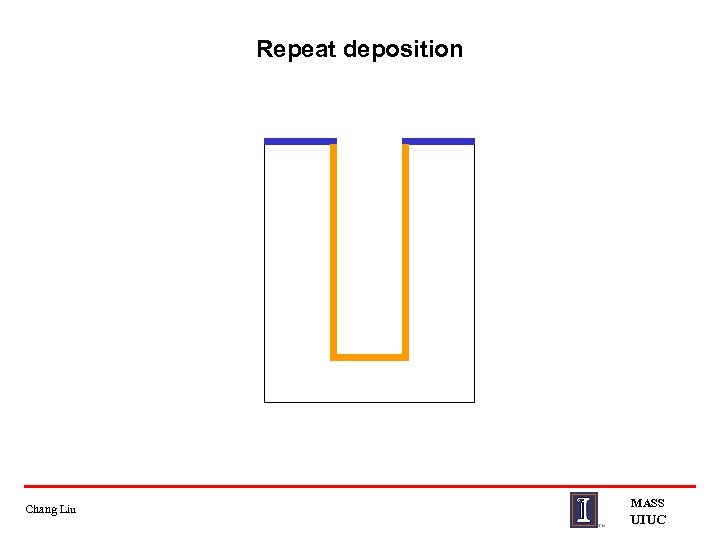
Repeat deposition Chang Liu MASS UIUC
Gas Phase Silicon Isotropic Etching • Br. F 3 • Xe. F 2 shows very high selectivity of silicon versus photoresist, Si. O 2, silicon nitride, Al, Cr, and Ti. N. The Xetch's selectivity to silicon nitride is better than 100: 1. The selectivity to silicon dioxide is reported to be better than 10, 000: 1 Xe. F 2 does not explode on contact with moisture or air, nor does it form compounds that explode. The "exploding Xe. F 2" story comes from impurities in the Xe. F 2, according to Neil Bartlett, discoverer of noble gas chemistry in 1963 (and now professor of chemistry at the University of California at Berkeley). Specifically, Xe. F 4 is a common impurity. In the presence of moisture Xe. F 4 turns into Xe. O 3, which is a contact explosive. Lots of the early noble gas chemists had Xe. O 3 explosions due to working with Xe. F 2 that had Xe. F 4 in it. The Xe. F 2 that you buy has only trace Xe. F 4 impurities, so the total mass of explosive that could be generated under any circumstances is probably measured in tens milligrams - enough to cause a pop perhaps, but not dangerous. Chang Liu MASS UIUC
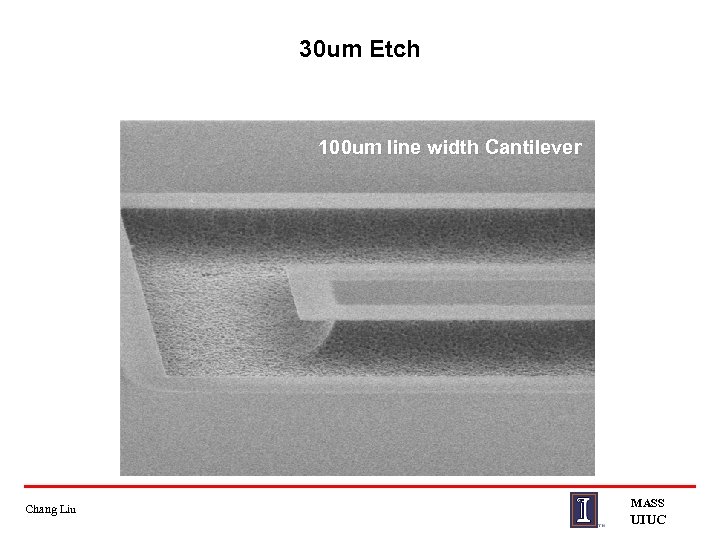
30 um Etch 100 um line width Cantilever Chang Liu MASS UIUC
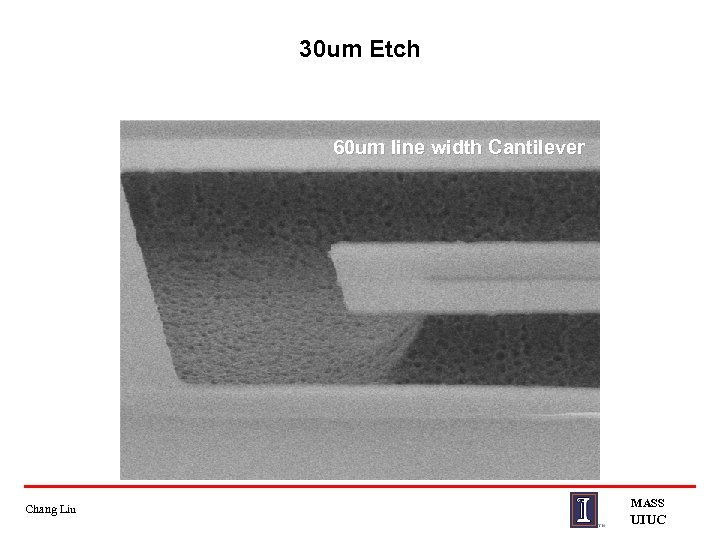
30 um Etch 60 um line width Cantilever Chang Liu MASS UIUC
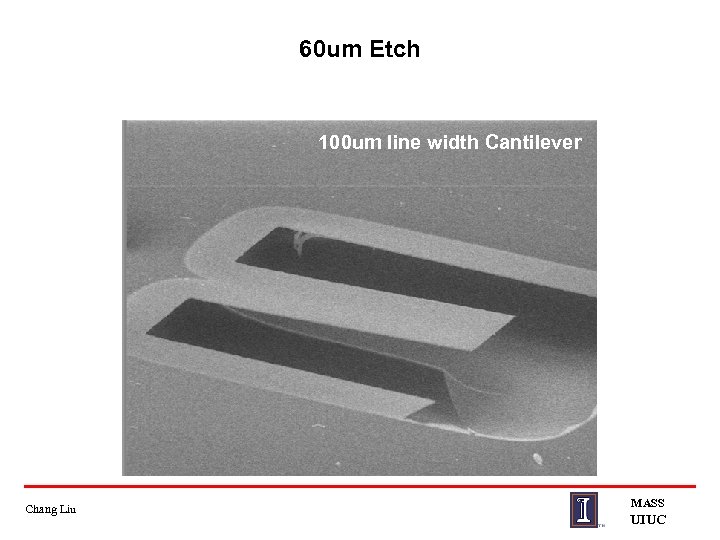
60 um Etch 100 um line width Cantilever Chang Liu MASS UIUC
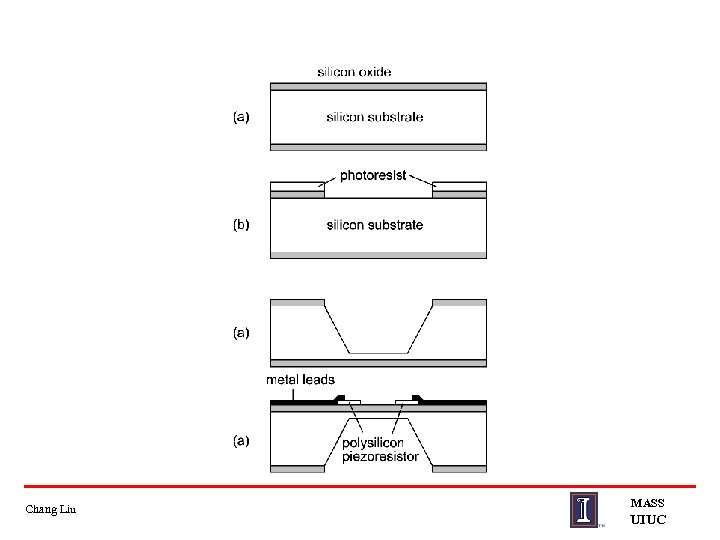
Chang Liu MASS UIUC
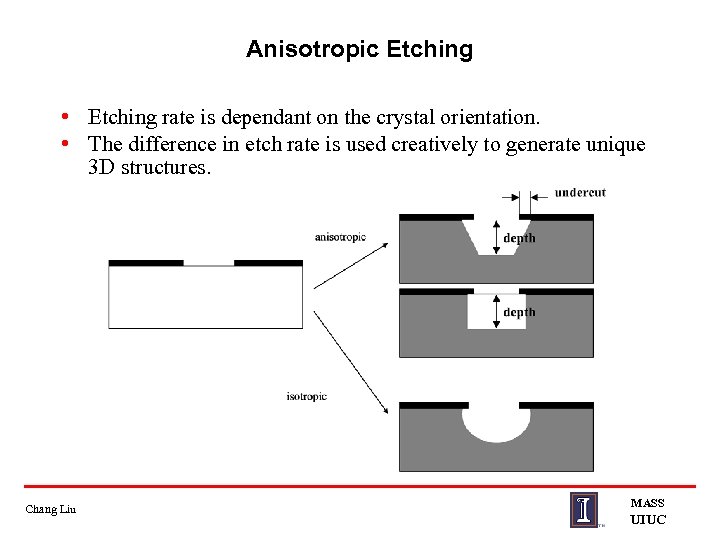
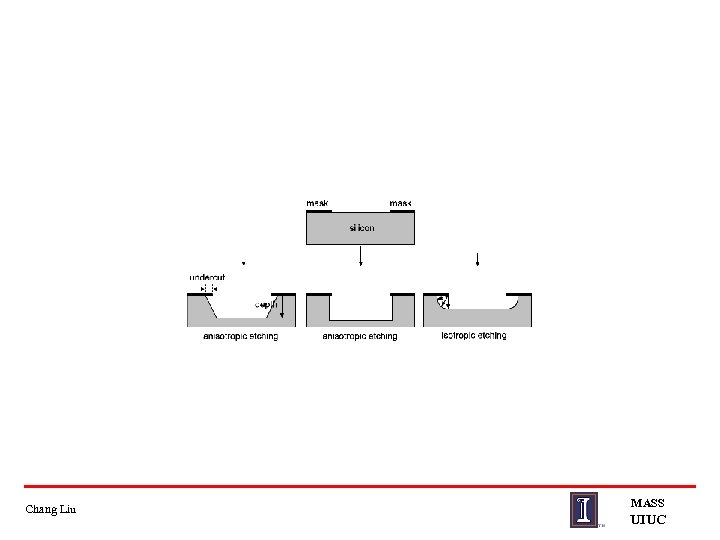
Anisotropic Etching • Etching rate is dependant on the crystal orientation. • The difference in etch rate is used creatively to generate unique 3 D structures. Chang Liu MASS UIUC
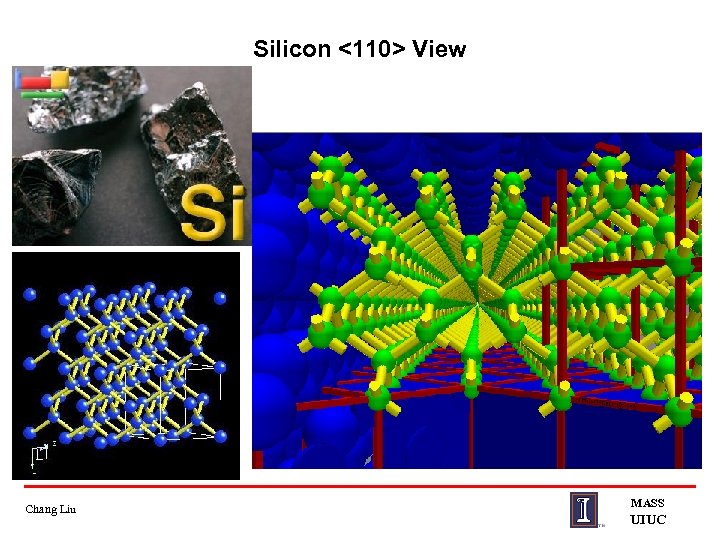
Silicon <110> View Chang Liu MASS UIUC
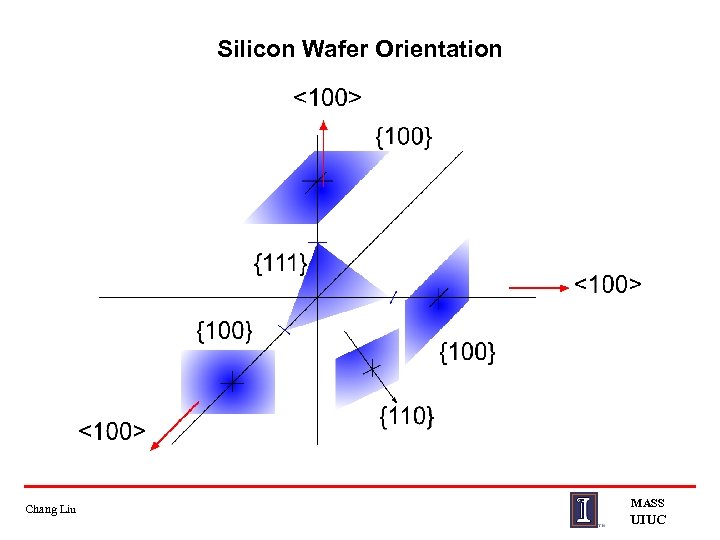
Silicon Wafer Orientation Chang Liu MASS UIUC
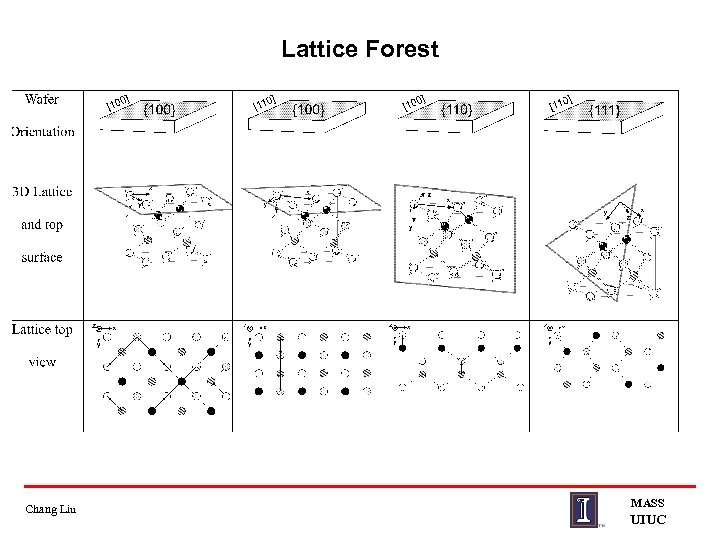
Lattice Forest Chang Liu MASS UIUC
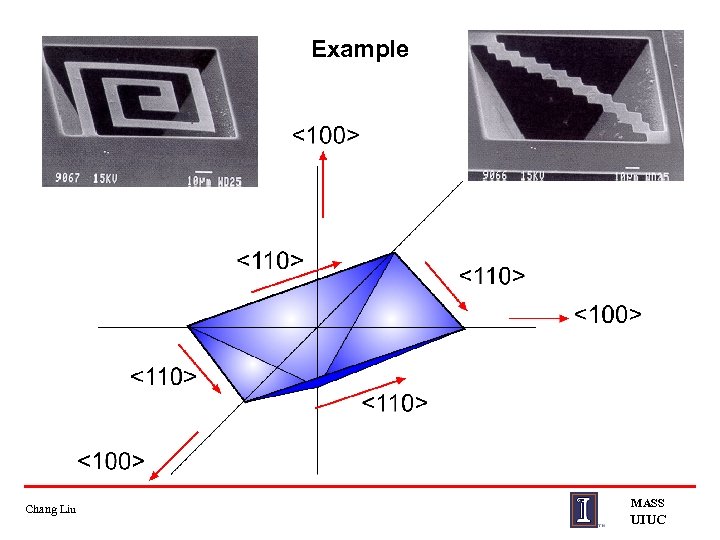
Example Chang Liu MASS UIUC
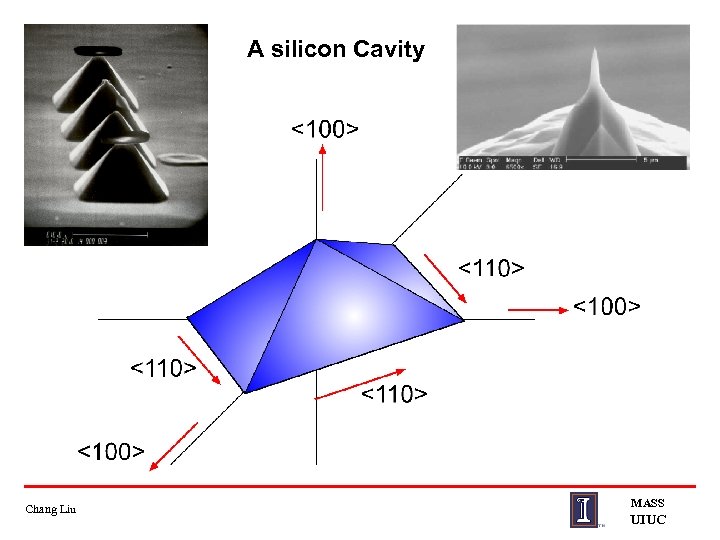
A silicon Cavity Chang Liu MASS UIUC
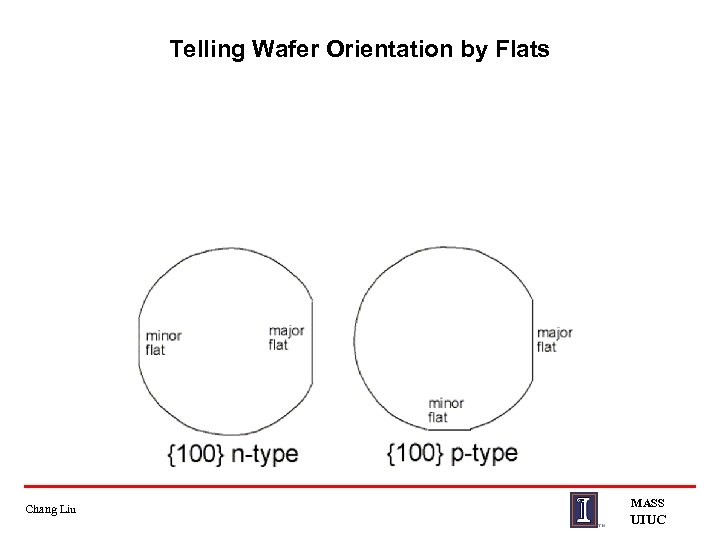
Telling Wafer Orientation by Flats Chang Liu MASS UIUC
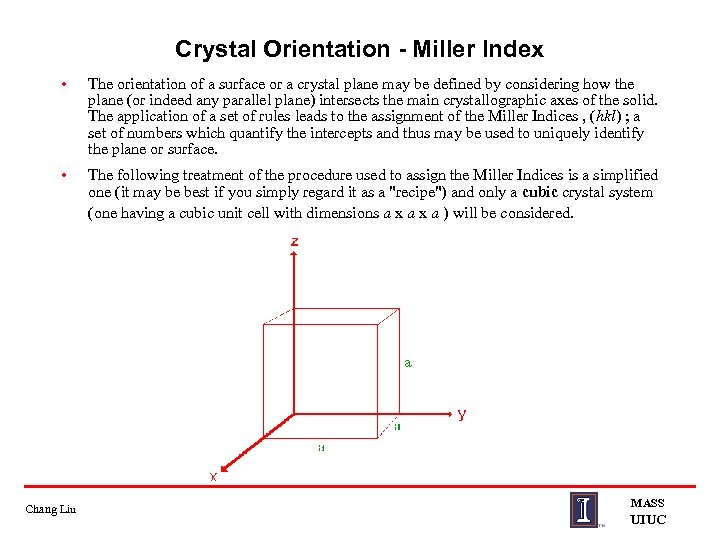
Crystal Orientation - Miller Index • The orientation of a surface or a crystal plane may be defined by considering how the plane (or indeed any parallel plane) intersects the main crystallographic axes of the solid. The application of a set of rules leads to the assignment of the Miller Indices , (hkl) ; a set of numbers which quantify the intercepts and thus may be used to uniquely identify the plane or surface. • The following treatment of the procedure used to assign the Miller Indices is a simplified one (it may be best if you simply regard it as a "recipe") and only a cubic crystal system (one having a cubic unit cell with dimensions a x a ) will be considered. Chang Liu MASS UIUC
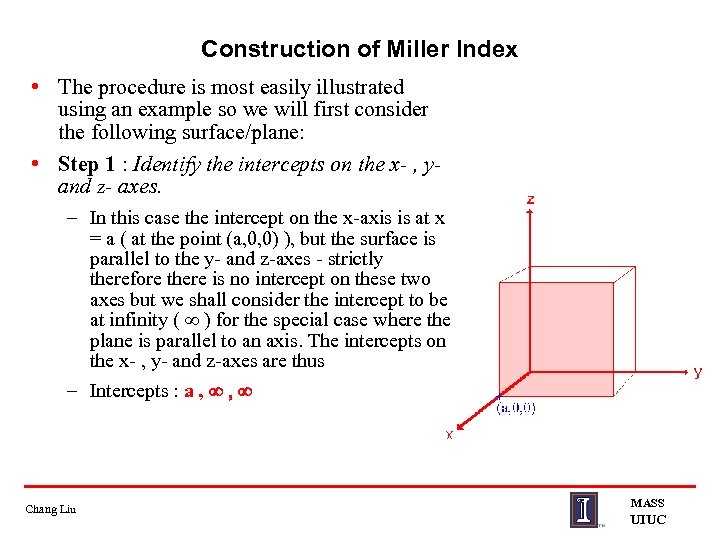
Construction of Miller Index • The procedure is most easily illustrated using an example so we will first consider the following surface/plane: • Step 1 : Identify the intercepts on the x- , yand z- axes. – In this case the intercept on the x-axis is at x = a ( at the point (a, 0, 0) ), but the surface is parallel to the y- and z-axes - strictly therefore there is no intercept on these two axes but we shall consider the intercept to be at infinity ( ¥ ) for the special case where the plane is parallel to an axis. The intercepts on the x- , y- and z-axes are thus – Intercepts : a , ¥ Chang Liu MASS UIUC
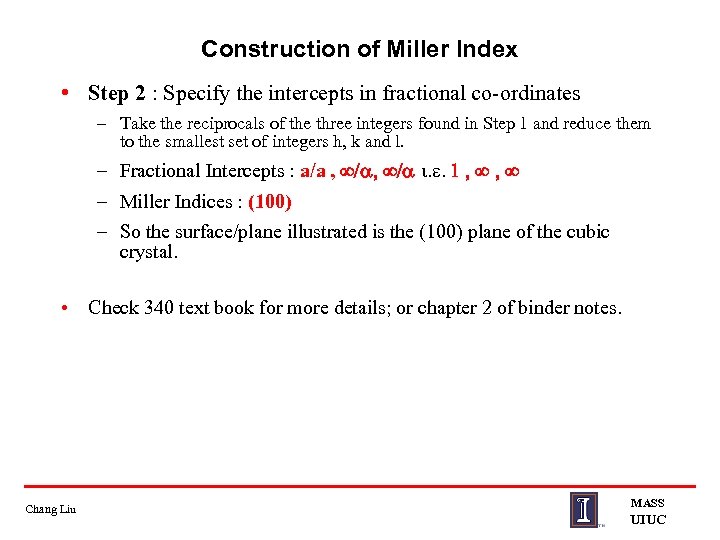
Construction of Miller Index • Step 2 : Specify the intercepts in fractional co-ordinates – Take the reciprocals of the three integers found in Step 1 and reduce them to the smallest set of integers h, k and l. – Fractional Intercepts : a/a , ¥/a i. e. 1 , ¥ – Miller Indices : (100) – So the surface/plane illustrated is the (100) plane of the cubic crystal. • Check 340 text book for more details; or chapter 2 of binder notes. Chang Liu MASS UIUC
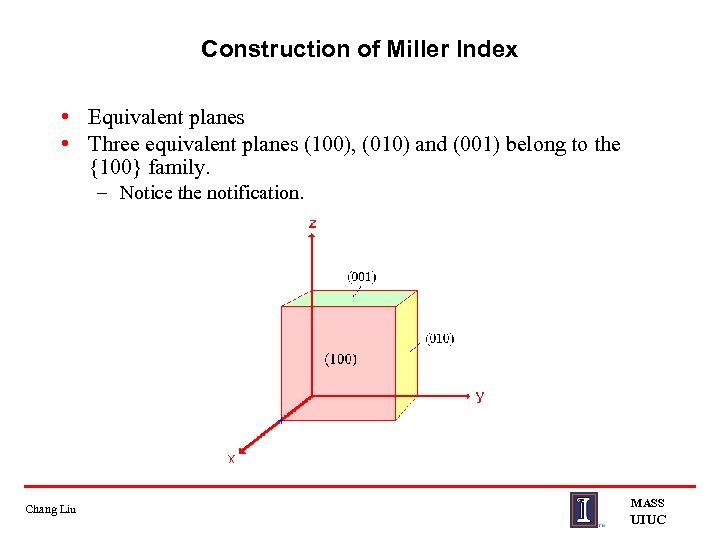
Construction of Miller Index • Equivalent planes • Three equivalent planes (100), (010) and (001) belong to the {100} family. – Notice the notification. Chang Liu MASS UIUC
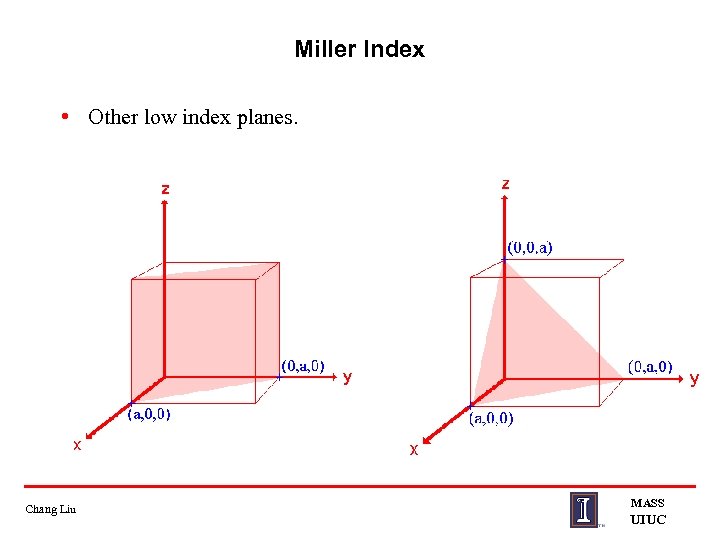
Miller Index • Other low index planes. Chang Liu MASS UIUC
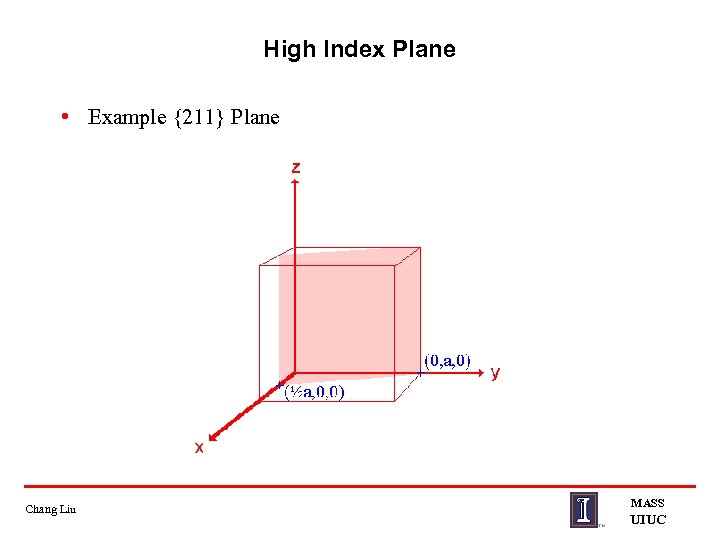
High Index Plane • Example {211} Plane Chang Liu MASS UIUC
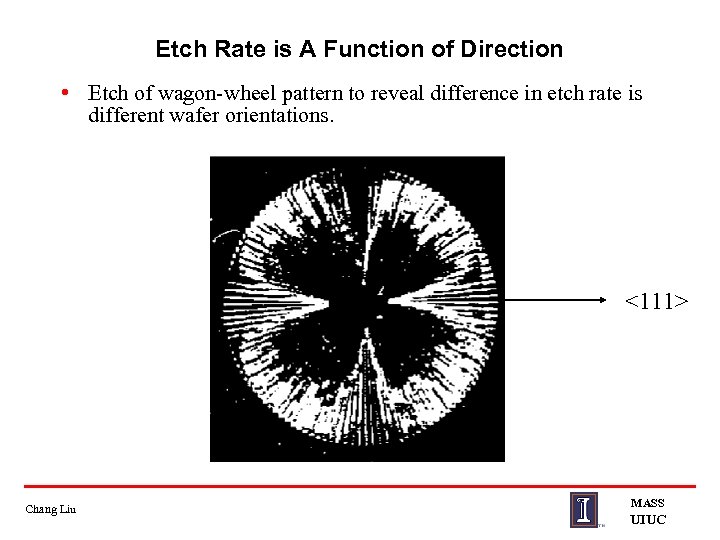
Etch Rate is A Function of Direction • Etch of wagon-wheel pattern to reveal difference in etch rate is different wafer orientations. <111> Chang Liu MASS UIUC
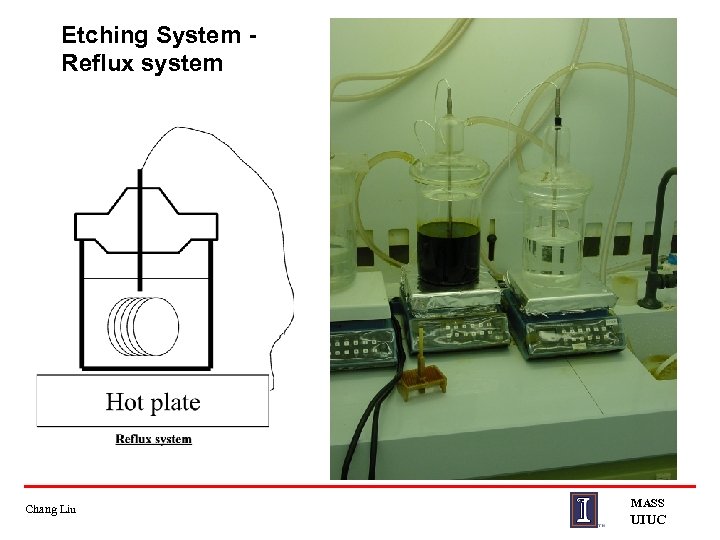
Etching System Reflux system Chang Liu MASS UIUC
Commonly Used Silicon Etchants • EDP (Ethylene diamine pyrocatechol) 90 o – sometimes refers to EPW, Ethylenediamine Pyrocatechol and Water) – Etch rate ratio for <100> and <111> is as high as 35: 1 or higher (Petersen paper, chpt. 1, Binder notes) – Etch rate for silicon nitride and silicon oxide is almost negligible. • Even native oxide (see next page) becomes important in processing – Highly directional selective, allows cheap oxide as mask. – Expensive; chemically unstable. – Aging: etch rate and color changes with time after exposure to oxygen. Chang Liu • KOH (Potassium hydroxide) 75 -90 o – various concentration can be used, 20 -40 wt % is common. – Etch rate ratio for , 100> and <111> is also very high (even higher than that of EDP). – Etch rate on silicon nitride (LPCVD) is negligible. – Etch rate on silicon oxide is not negligible. • 14 angstrom/min. (thermally grown oxide quality). • e. g. a process last for 10 hours consumes 0. 84 mm of oxide. • Other – TMAH (tetramethyl ammonium hydroxide) MASS UIUC
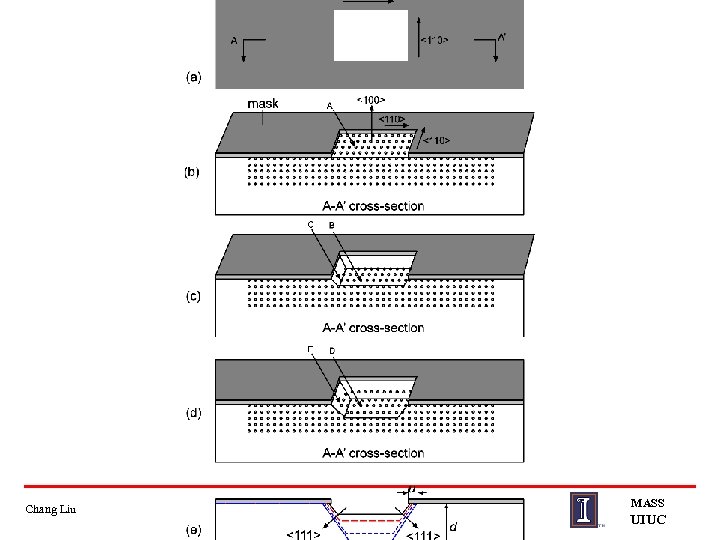
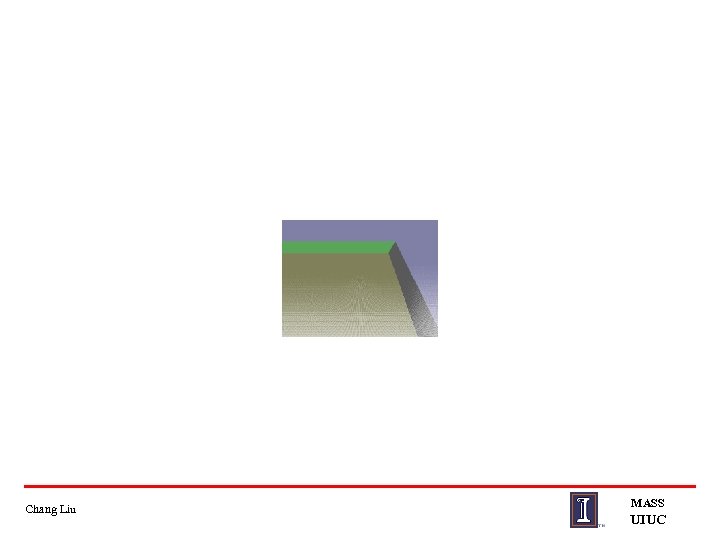
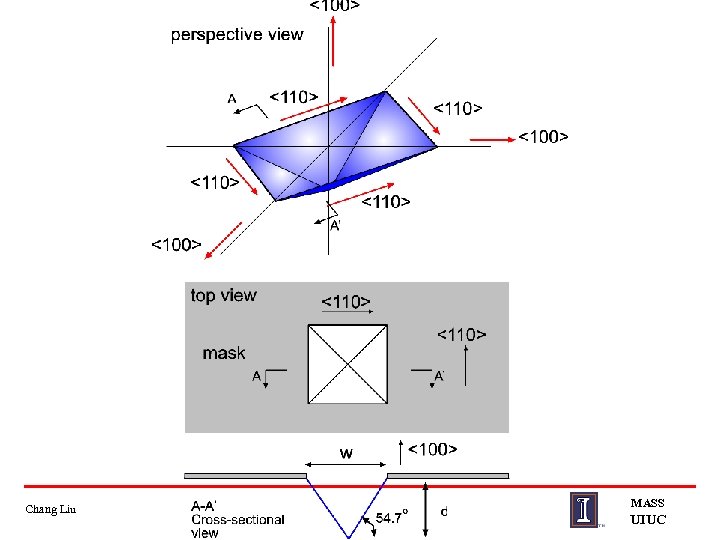
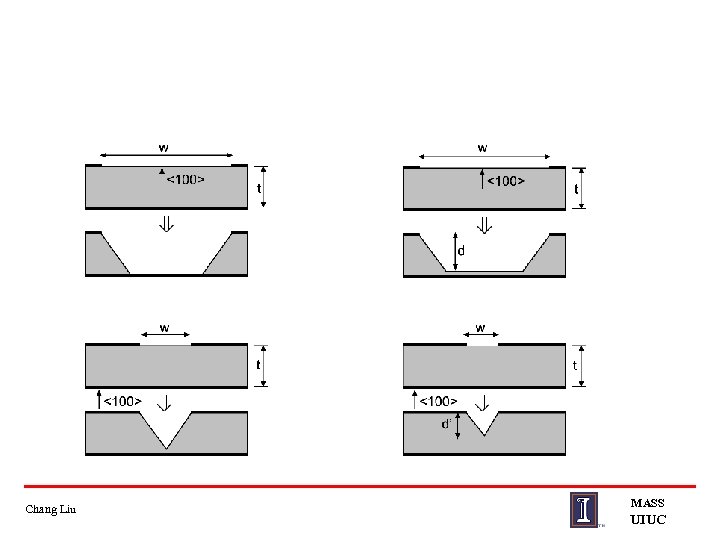
Simplest Case • Rectangular mask opening. • Sides aligned to <110> directions. • Etch rate in <111> is zero. Chang Liu MASS UIUC
Chang Liu MASS UIUC
Chang Liu MASS UIUC
Chang Liu MASS UIUC
Chang Liu MASS UIUC
Chang Liu MASS UIUC
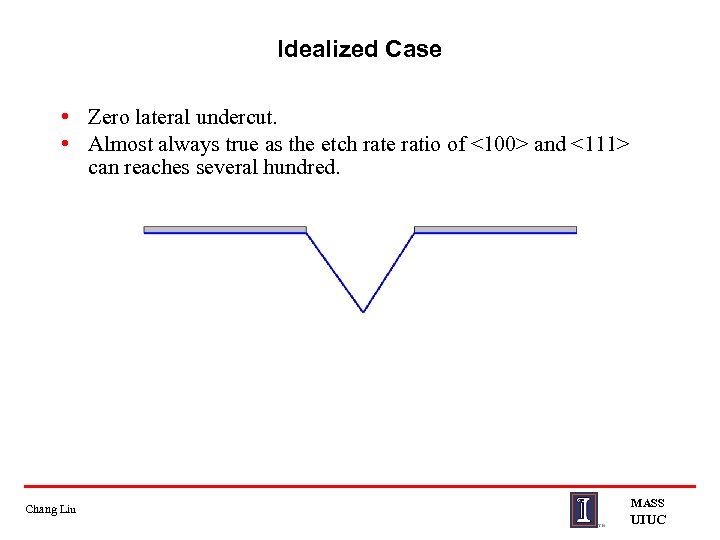
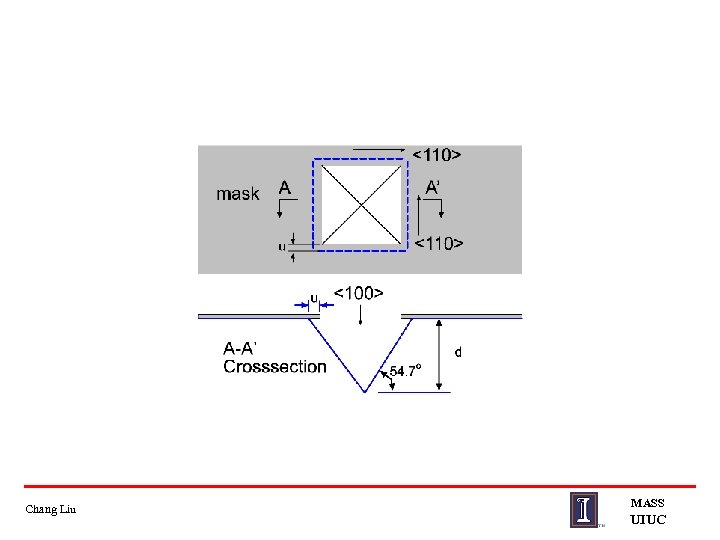
Idealized Case • Zero lateral undercut. • Almost always true as the etch rate ratio of <100> and <111> can reaches several hundred. Chang Liu MASS UIUC
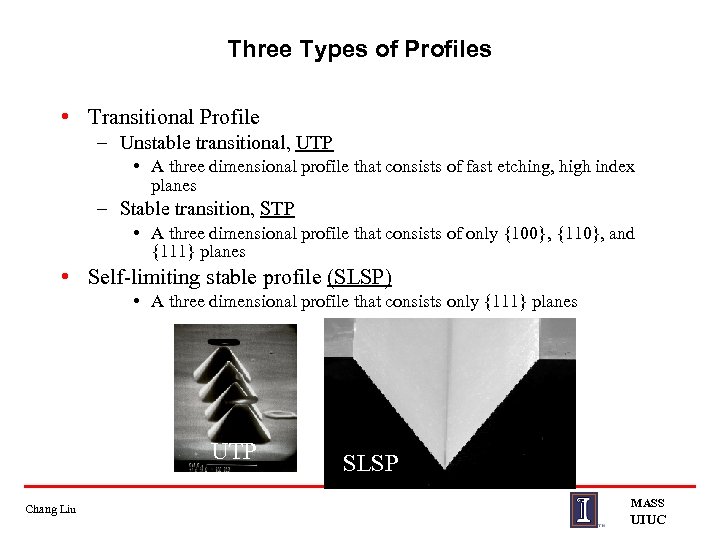
Three Types of Profiles • Transitional Profile – Unstable transitional, UTP • A three dimensional profile that consists of fast etching, high index planes – Stable transition, STP • A three dimensional profile that consists of only {100}, {110}, and {111} planes • Self-limiting stable profile (SLSP) • A three dimensional profile that consists only {111} planes UTP Chang Liu SLSP MASS UIUC
Chang Liu MASS UIUC
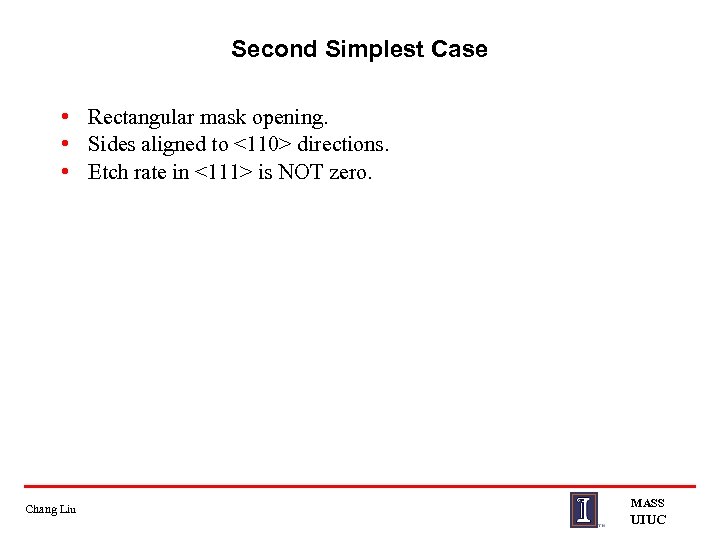
Second Simplest Case • Rectangular mask opening. • Sides aligned to <110> directions. • Etch rate in <111> is NOT zero. Chang Liu MASS UIUC
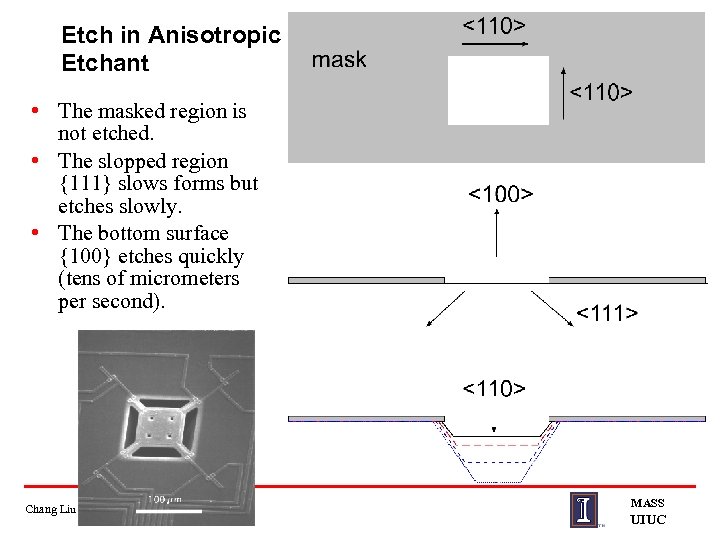
Etch in Anisotropic Etchant • The masked region is not etched. • The slopped region {111} slows forms but etches slowly. • The bottom surface {100} etches quickly (tens of micrometers per second). Chang Liu MASS UIUC
Chang Liu MASS UIUC
Third Simplest Case • Arbitrary • Sides aligned to arbitrary directions. • Etch rate in <111> is zero. Chang Liu MASS UIUC
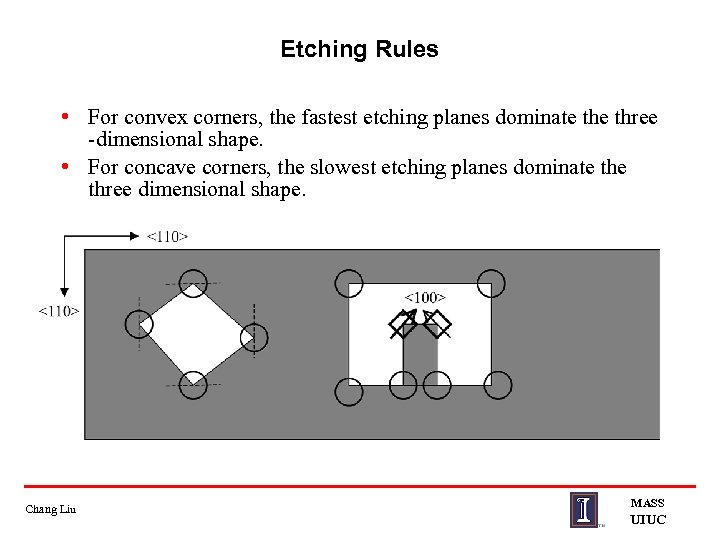
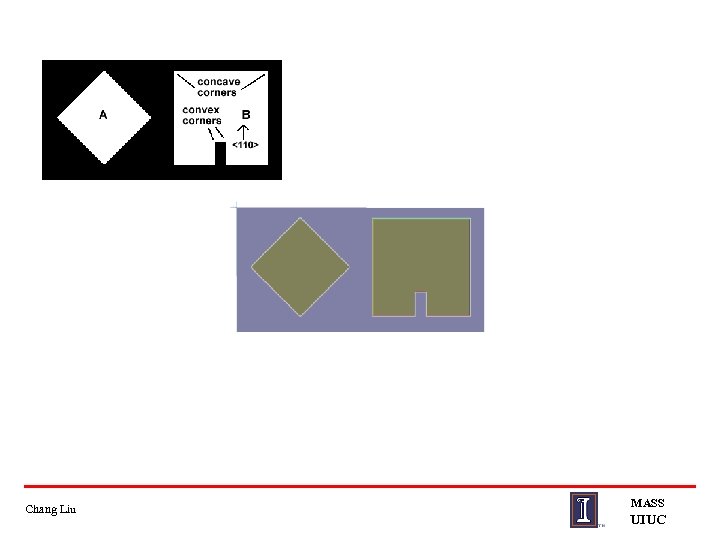
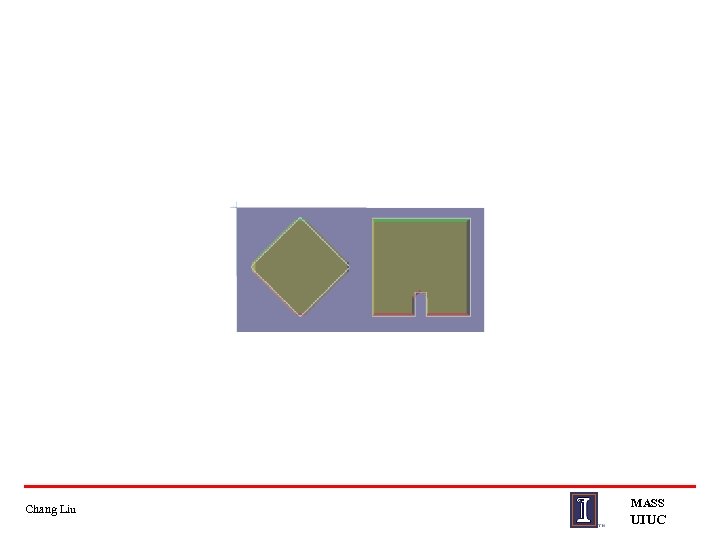
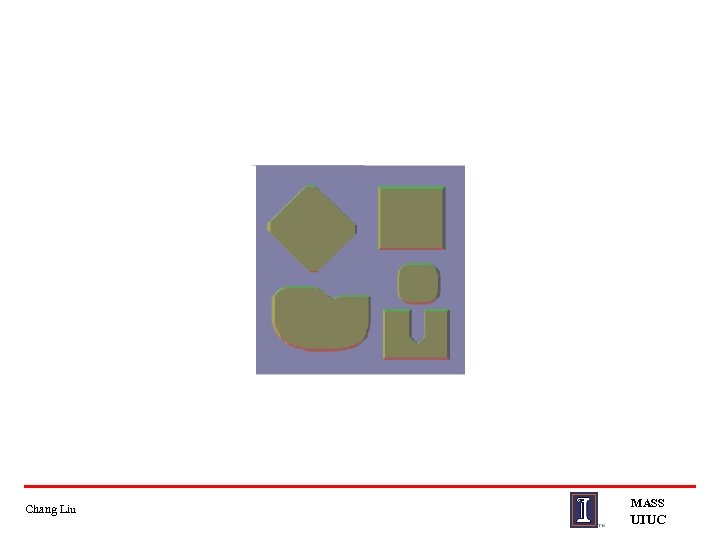
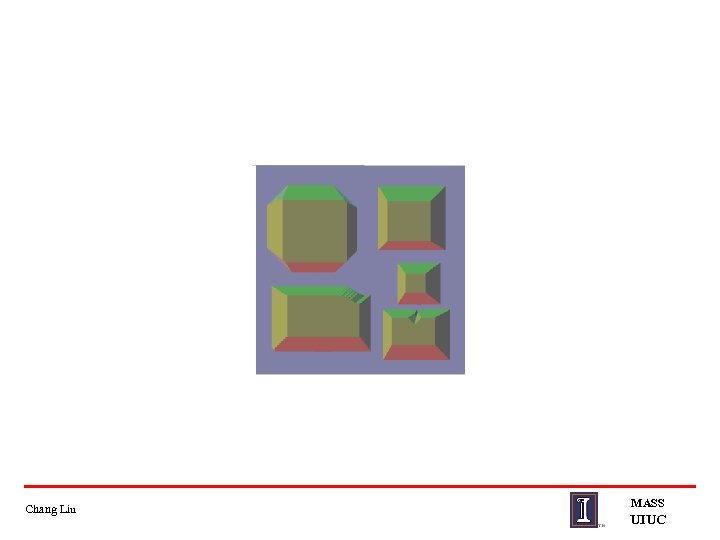
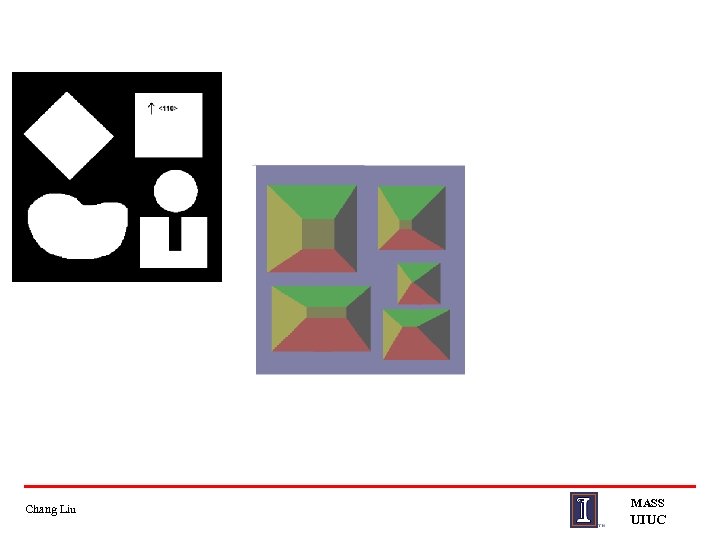
Etching Rules • For convex corners, the fastest etching planes dominate three -dimensional shape. • For concave corners, the slowest etching planes dominate three dimensional shape. Chang Liu MASS UIUC
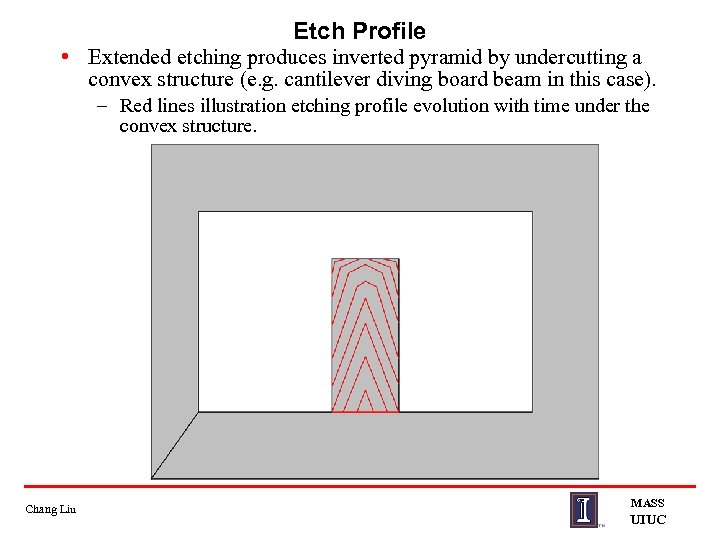
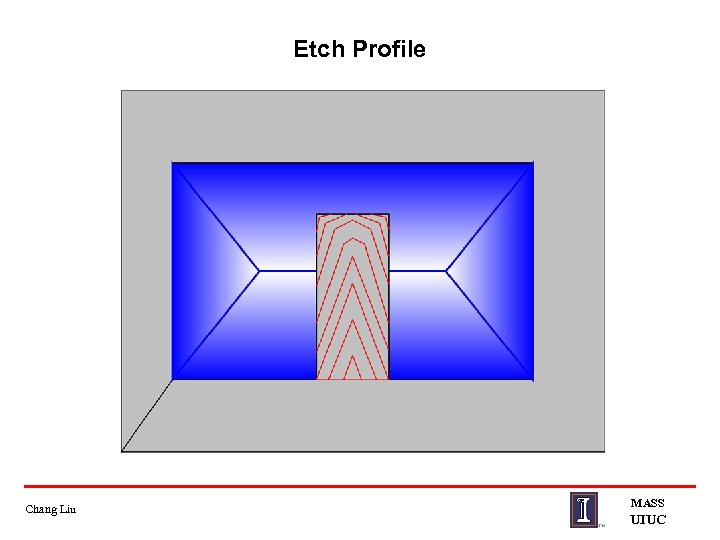
Etch Profile • Extended etching produces inverted pyramid by undercutting a convex structure (e. g. cantilever diving board beam in this case). – Red lines illustration etching profile evolution with time under the convex structure. Chang Liu MASS UIUC
Etch Profile Chang Liu MASS UIUC
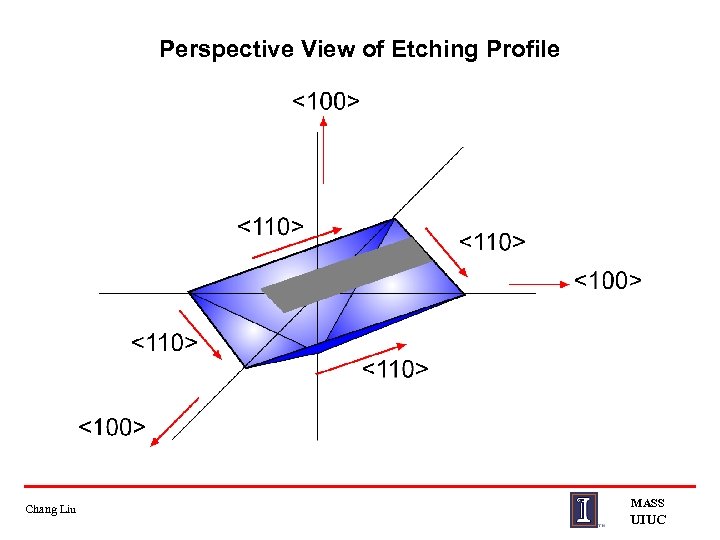
Perspective View of Etching Profile Chang Liu MASS UIUC
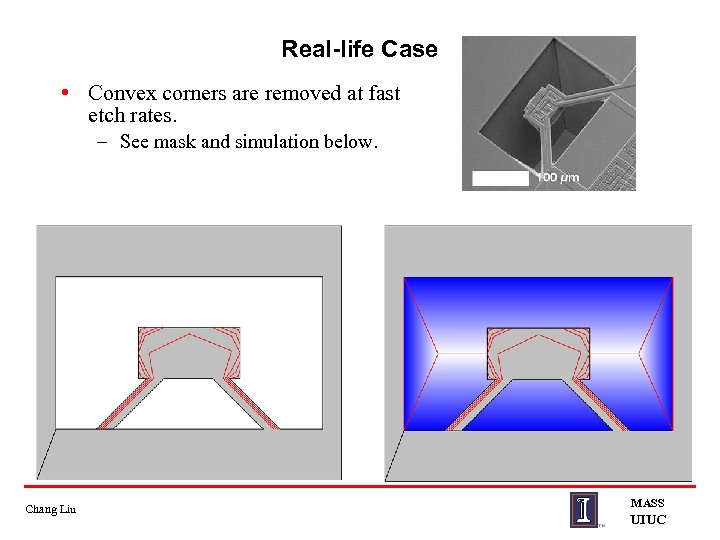
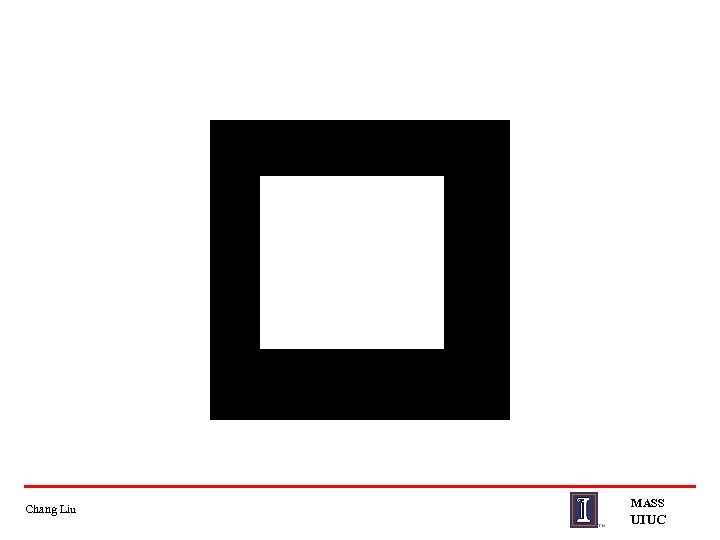
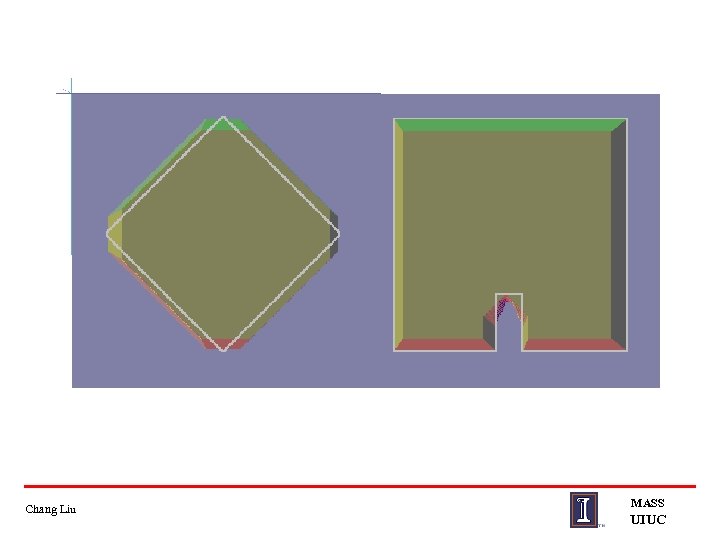
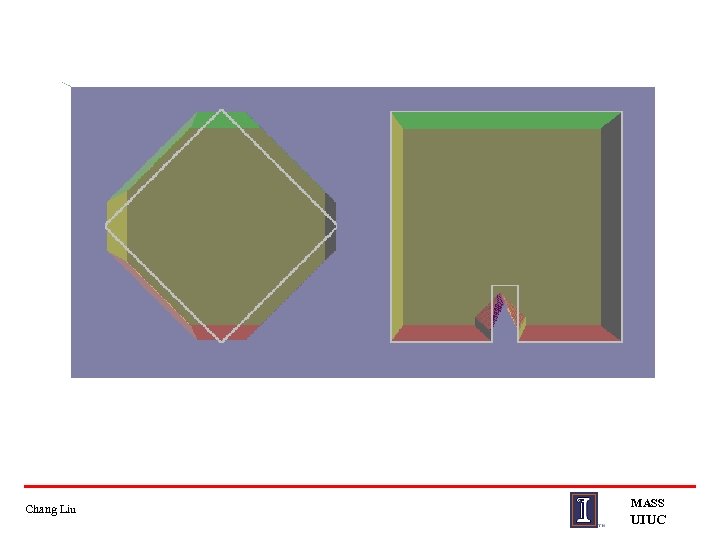
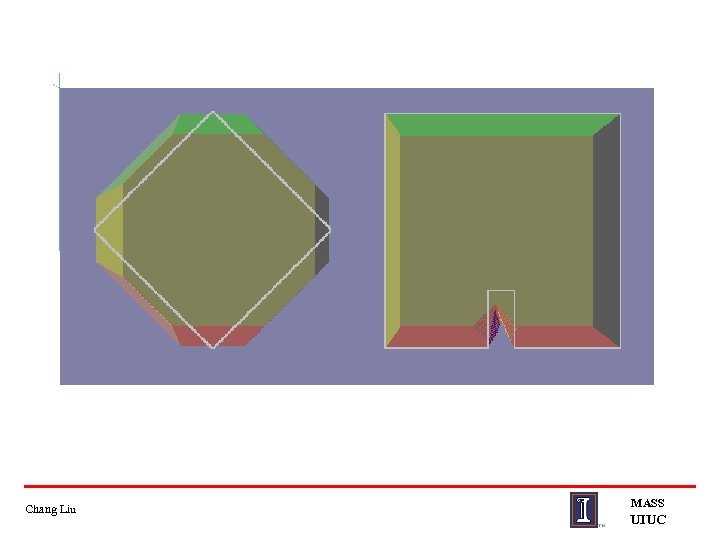
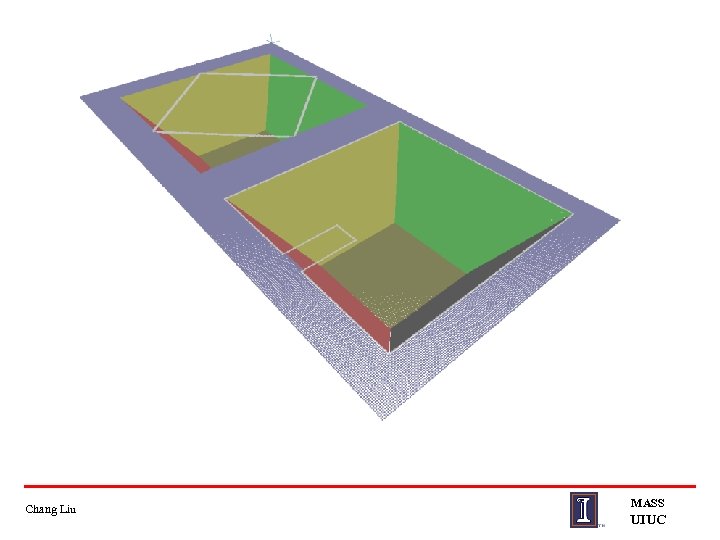
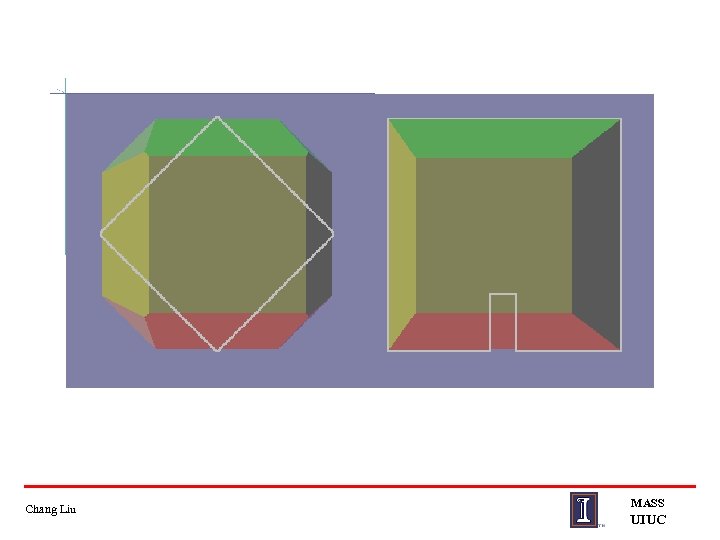
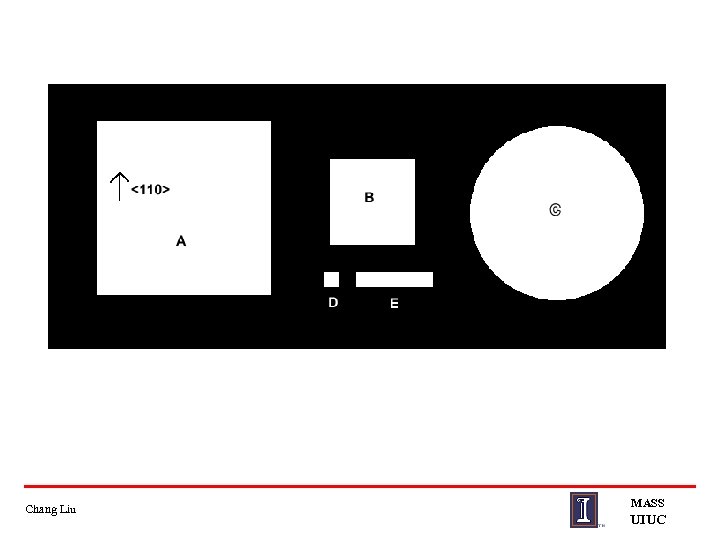
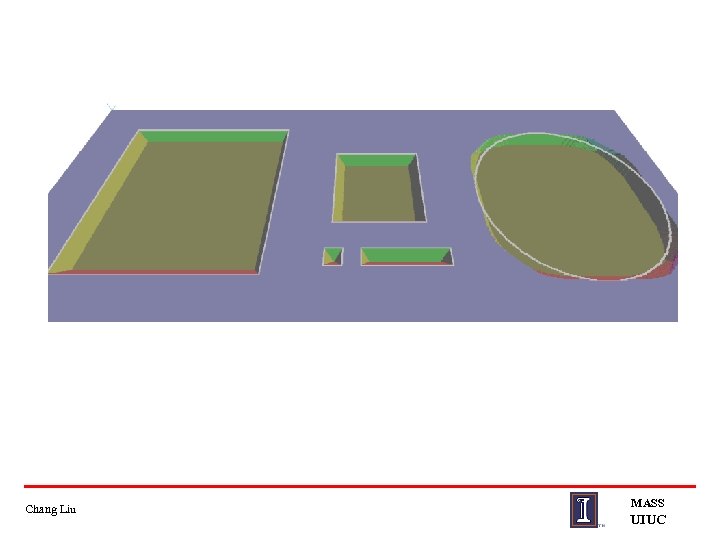
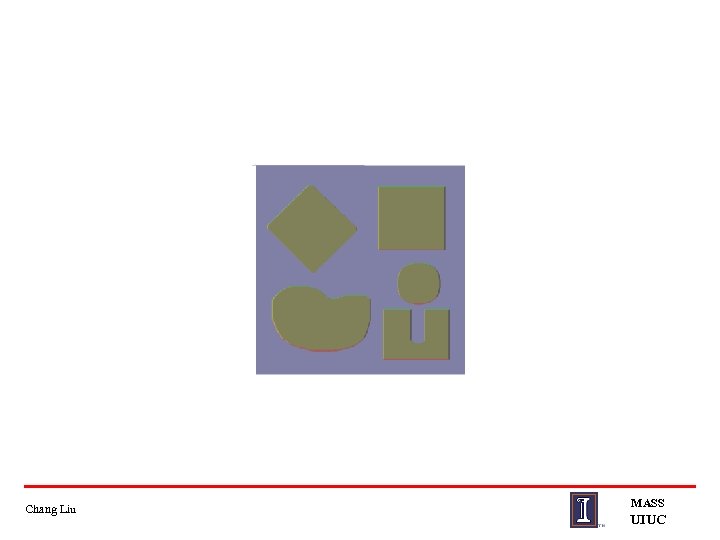
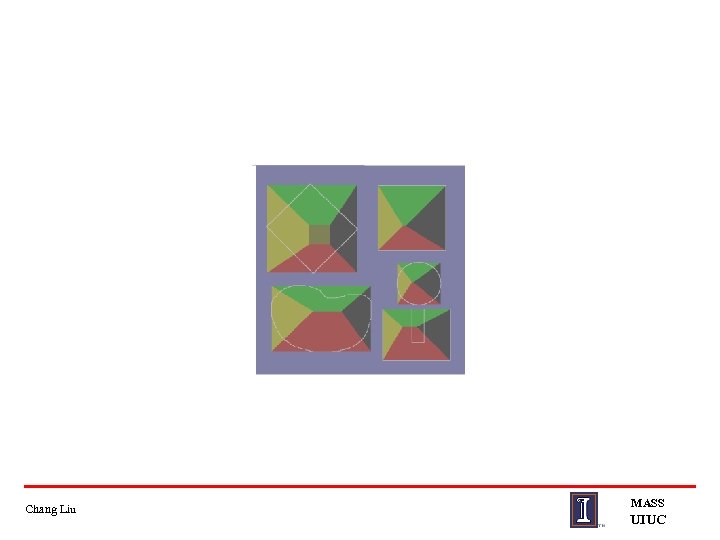
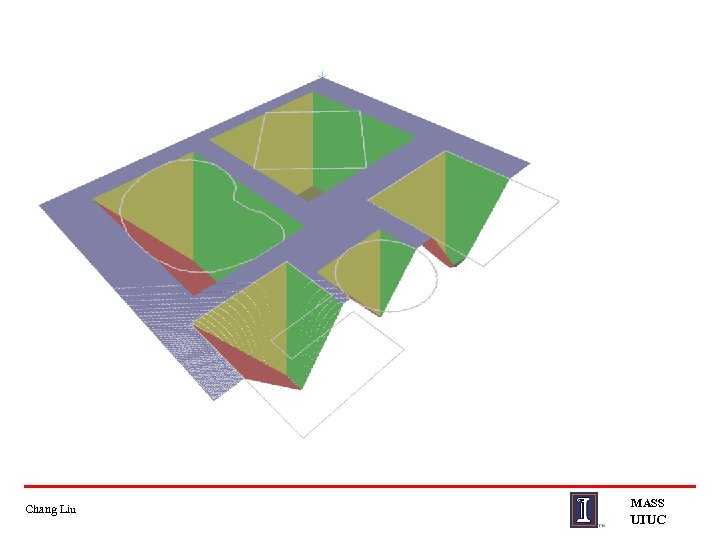
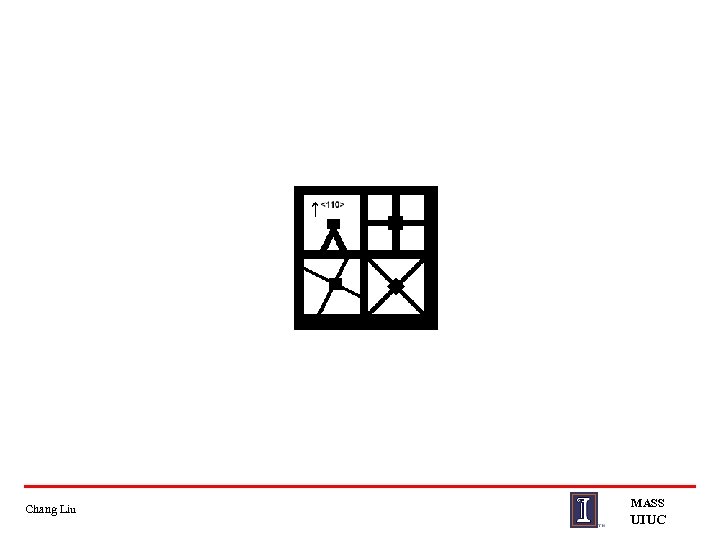
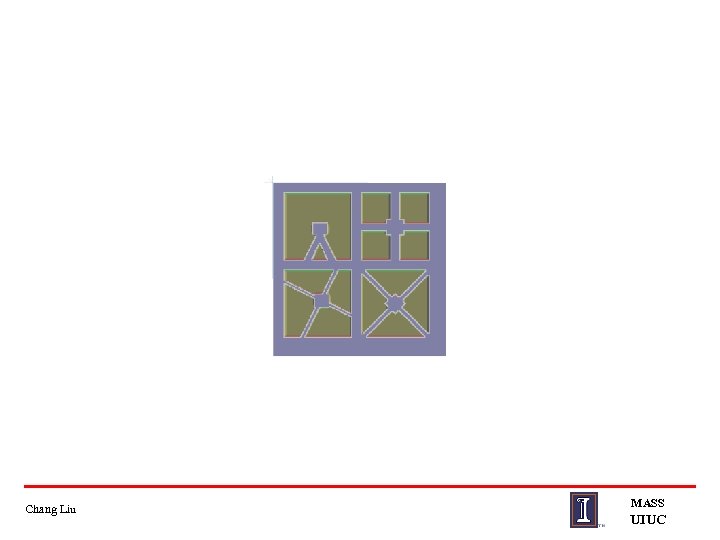
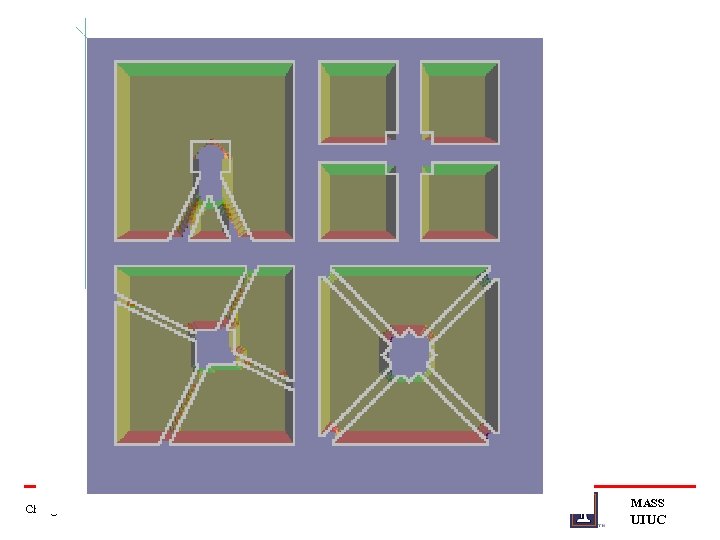
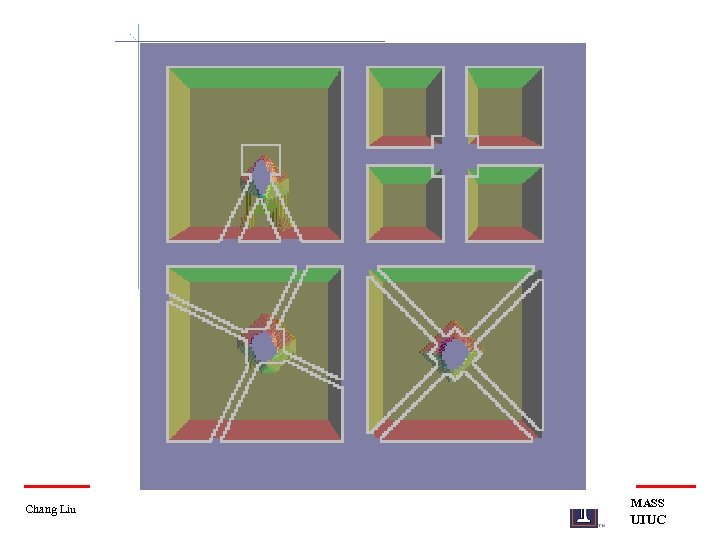
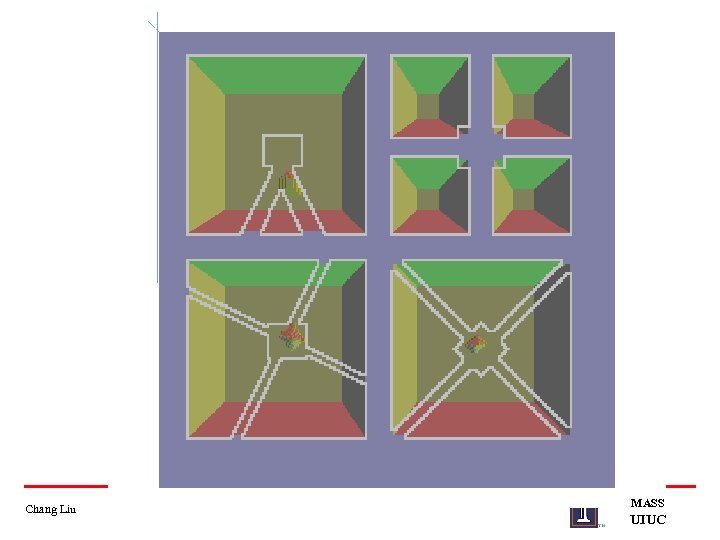
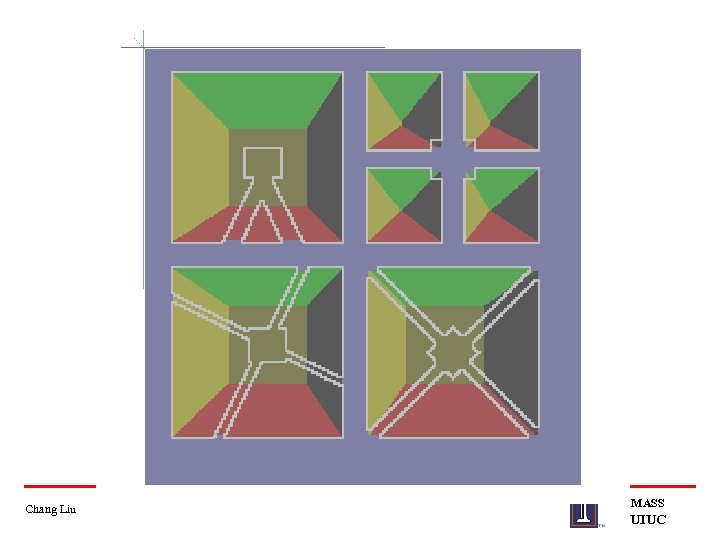
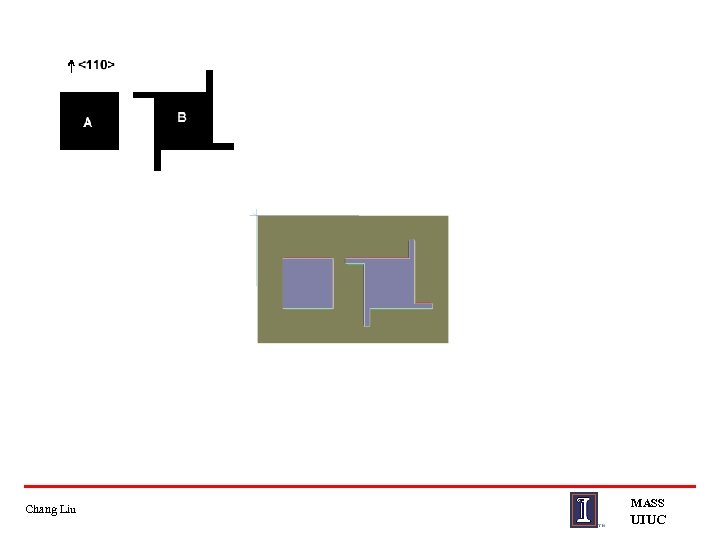
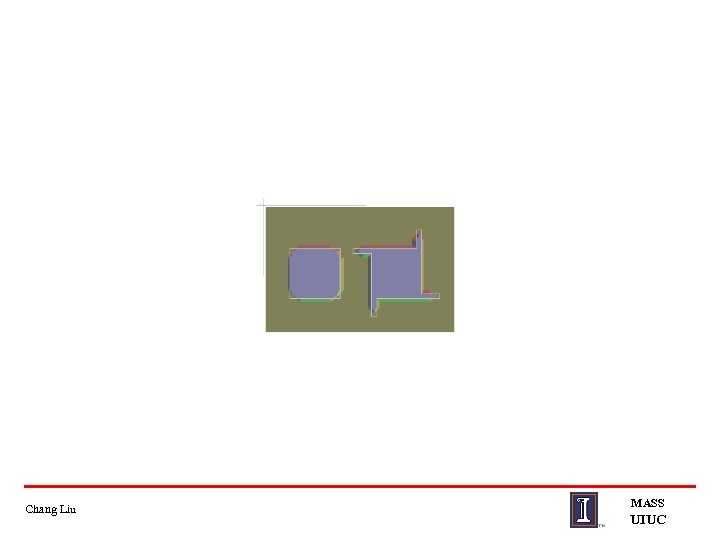
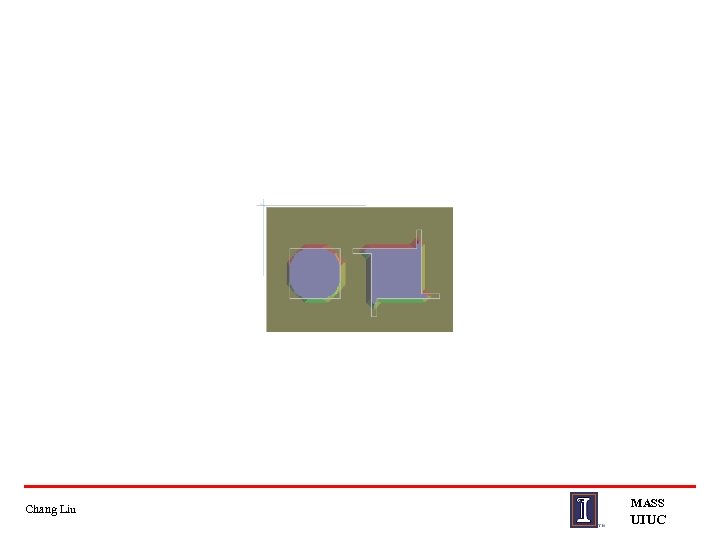
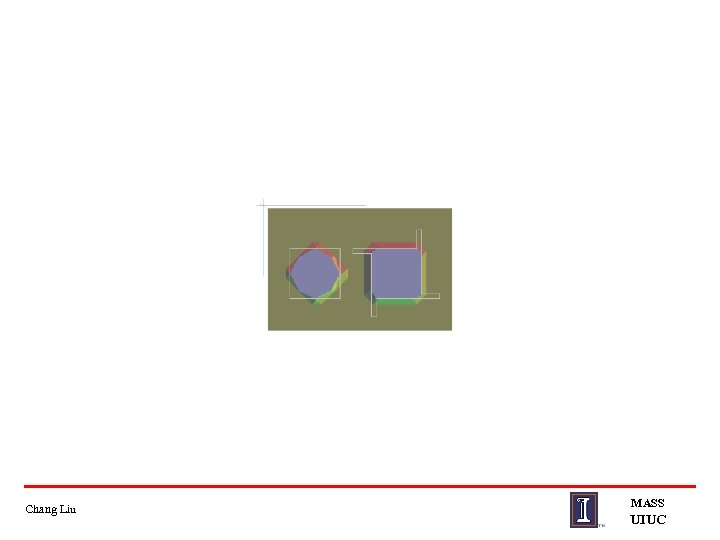
Real-life Case • Convex corners are removed at fast etch rates. – See mask and simulation below. Chang Liu MASS UIUC
Chang Liu MASS UIUC
Chang Liu MASS UIUC
Chang Liu MASS UIUC
Chang Liu MASS UIUC
Chang Liu MASS UIUC
Chang Liu MASS UIUC
Chang Liu MASS UIUC
Chang Liu MASS UIUC
Chang Liu MASS UIUC
Chang Liu MASS UIUC
Chang Liu MASS UIUC
Chang Liu MASS UIUC
Chang Liu MASS UIUC
Chang Liu MASS UIUC
Chang Liu MASS UIUC
Footprint of Self-Limiting Cavity • Orient the mask so that the vertical and horizontal directions are <110> • Find the left most, right most, top most, and buttom most points (or lines) associated with the continuous periphery of a mask opening. • Draw vertical <110> lines passing through the left and right most points. • Draw horizontal <110> lines passing through the top and bottom most points. • The FSLC is the area bound by those afore-mentioned four lines. Chang Liu MASS UIUC
Chang Liu MASS UIUC
Chang Liu MASS UIUC
Chang Liu MASS UIUC
Chang Liu MASS UIUC
Chang Liu MASS UIUC
Chang Liu MASS UIUC
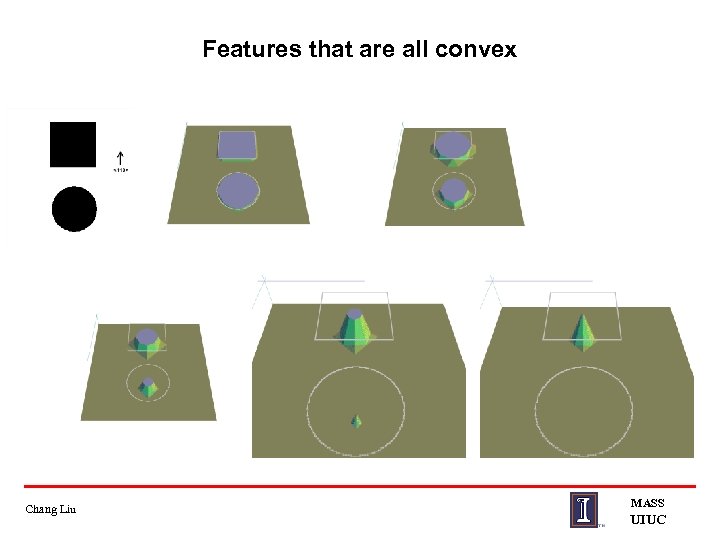
Features that are all convex Chang Liu MASS UIUC
Chang Liu MASS UIUC
Chang Liu MASS UIUC
Chang Liu MASS UIUC
Chang Liu MASS UIUC
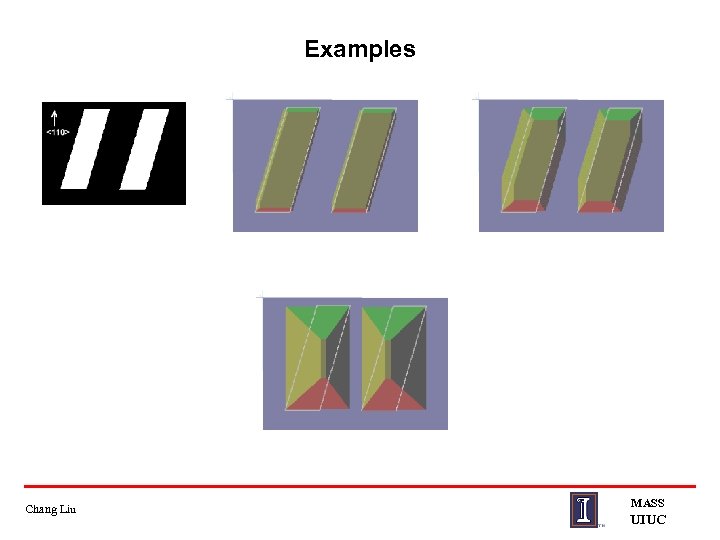
Examples Chang Liu MASS UIUC
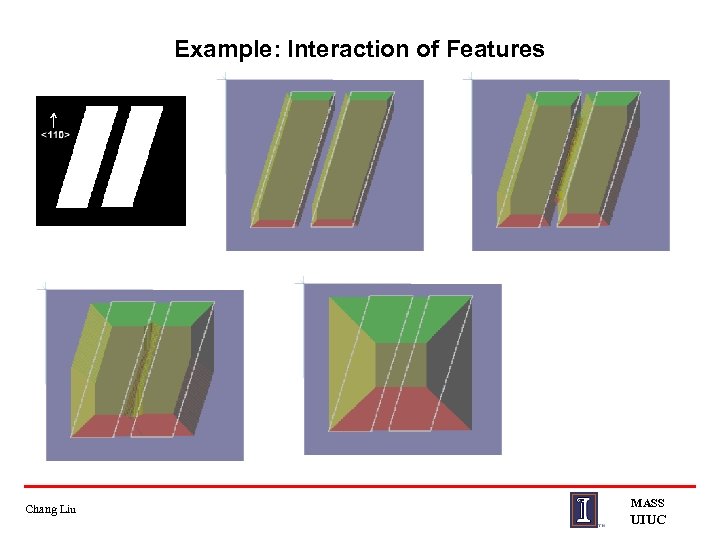
Example: Interaction of Features Chang Liu MASS UIUC
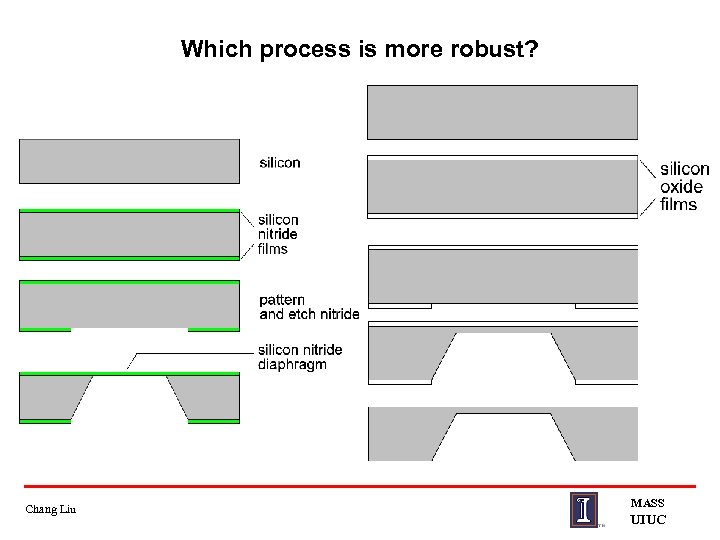
Which process is more robust? Chang Liu MASS UIUC
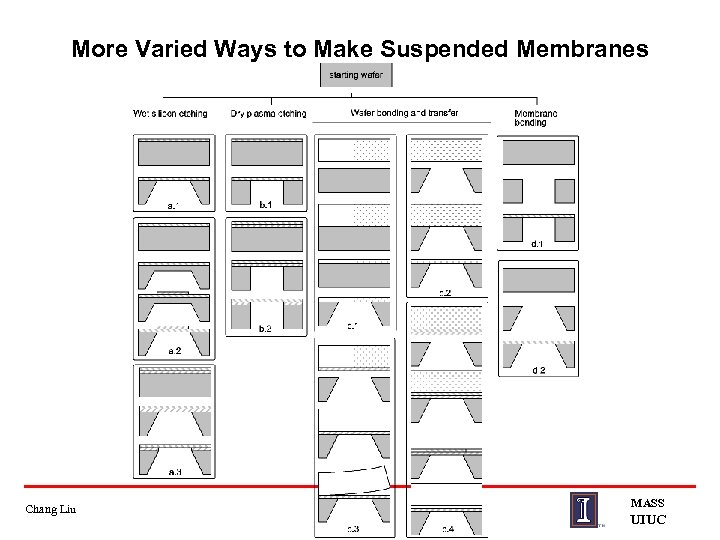
More Varied Ways to Make Suspended Membranes Chang Liu MASS UIUC
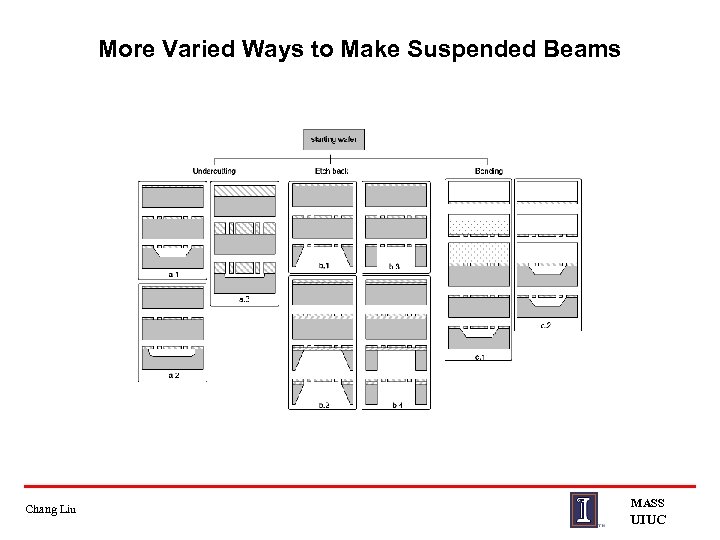
More Varied Ways to Make Suspended Beams Chang Liu MASS UIUC
Скачать презентацию Bulk Silicon Micromachining Chang Liu Micro Actuators Sensors
78cacb77e859afc45dbee32389652f36.ppt