 Скачать презентацию Building the Evidence Base for Policy and Environmental
2300f29f04ece8d3c4e8ed7af77c9dc2.ppt
- Количество слайдов: 15



Building the Evidence Base for Policy and Environmental Approaches to Obesity Prevention Kaiser Permanente’s Community Health Initiative Group Health Center for Community Health and Evaluation
KP Cross-site Evaluation strategy: overview Evaluation Goals • Program improvement • Impact assessment • Build the field of evaluation General Strategy • Collaborative approach • Local evaluators working in each community • Focus on intermediate outcomes • Sustainable behavioral surveillance 2
Cross-site data collection activities • Documentation of Community Change database (DOCC) • Youth Survey and BMI (school based) • Automated Telephone Survey of Adult Residents (IVR) • KP member data • Photovoice • Key Informant Interviews • Partnership Functioning Survey 3
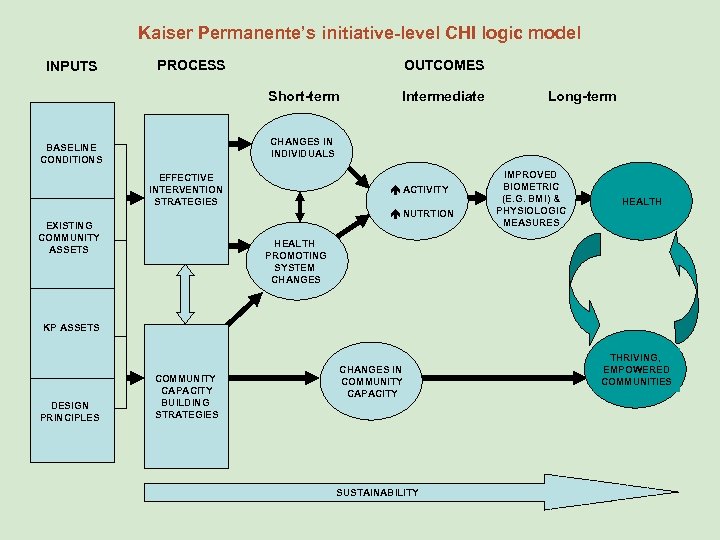
Kaiser Permanente’s initiative-level CHI logic model INPUTS PROCESS OUTCOMES Short-term Intermediate Long-term CHANGES IN INDIVIDUALS BASELINE CONDITIONS EFFECTIVE INTERVENTION STRATEGIES ACTIVITY NUTRTION EXISTING COMMUNITY ASSETS IMPROVED BIOMETRIC (E. G. BMI) & PHYSIOLOGIC MEASURES HEALTH PROMOTING SYSTEM CHANGES KP ASSETS DESIGN PRINCIPLES COMMUNITY CAPACITY BUILDING STRATEGIES CHANGES IN COMMUNITY CAPACITY SUSTAINABILITY THRIVING, EMPOWERED COMMUNITIES
Intervention examples • Modifying school policies to include healthier items in vending machines • Changing zoning requirements to encourage dense development, walkable neighborhoods • Creating community gardens, encouraging farmers’ markets 5
Why focus on intermediate outcomes? Intervention dose compared to size of the population Attribution of distal outcomes difficult: • Behaviors with complex causes • Many parallel intervention efforts, no “control” communities 6
DOCC – measuring intermediate outcomes • Documentation of Community Change (DOCC) • Modification of Community Tool Box – online database • Unit of analysis = “strategy” • Qualitative elements – strategy description, status, challenges, lessons learned • Quantitative elements – reach and intensity 7
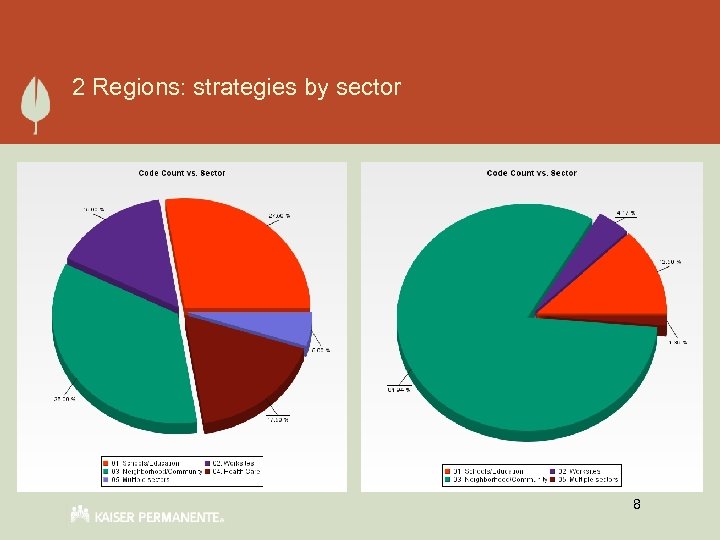
2 Regions: strategies by sector 8
Youth data • Middle and high school students • School surveys • BMI/Fitness. Gram • School consent issues 9
Interactive Voice Response (IVR) • Low-cost, automated phone surveys of adults • Consistent over time, but. . • Response rates/representativeness 10
KP member clinical data • Clinical indicators: • BMI • Obesity-related conditions (e. g. diabetes) • Control data available • Penetration/representativeness 11
Sample Baseline Results from Northern CA • 38% adults doing recommended PA level (53% BRFSS) • 34% adults classified as obese; 34% overweight • 55% adults reported problem with food access/food security • 35% 9 th graders getting at least 30 minutes of vigorous exercise • 69% 9 th graders sometimes/never like to go to neighborhood places where PA offered • 46% 7 th graders sometimes/never feel safe outdoors in neighborhood 12
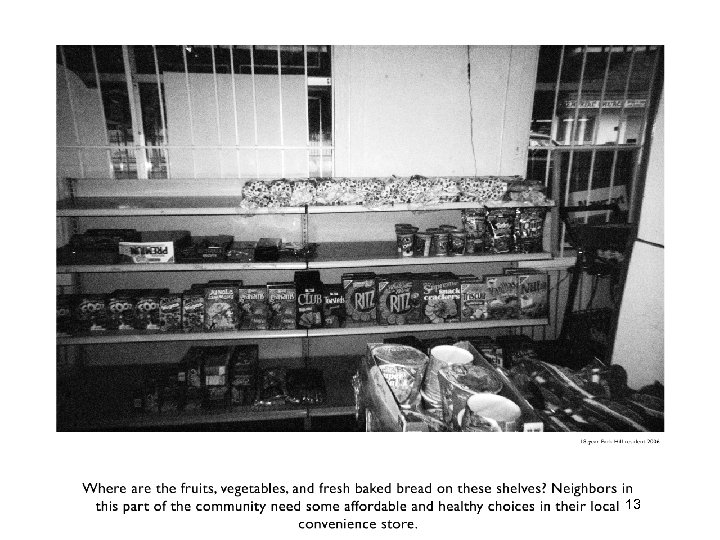
13
Summary • Evaluation of CHI focused on capturing community changes resulting from partnership activities, AND • Setting up sustainable approaches to measuring long-term outcomes 14
For more information http: //xnet. kp. org/communitybenefit/chi Pamela Schwartz Kaiser Permanente Pamela. M. Schwartz@kp. org 510 -271 -5630 Allen Cheadle University of Washington cheadle@u. washington. edu 206 -543 -3736 Bill Beery Group Health Center for Community Health and Evaluation beery. b@ghc. org 206 -287 -4390 15
Скачать презентацию Building the Evidence Base for Policy and Environmental
2300f29f04ece8d3c4e8ed7af77c9dc2.ppt