 Скачать презентацию Building the Europe of Knowledge for Growth Proposals
45107bc8ae0c03e89a9bdf85af63303d.ppt
- Количество слайдов: 28



Building the Europe of Knowledge for Growth Proposals for the 7 th Research Framework Programme 2007 – 2013 adopted by the Commission on 6 April 2005 Dr Alfredo Aguilar Head of Unit Community Cooperation Activities International Scientific Cooperation Directorate-General for Research European Commission
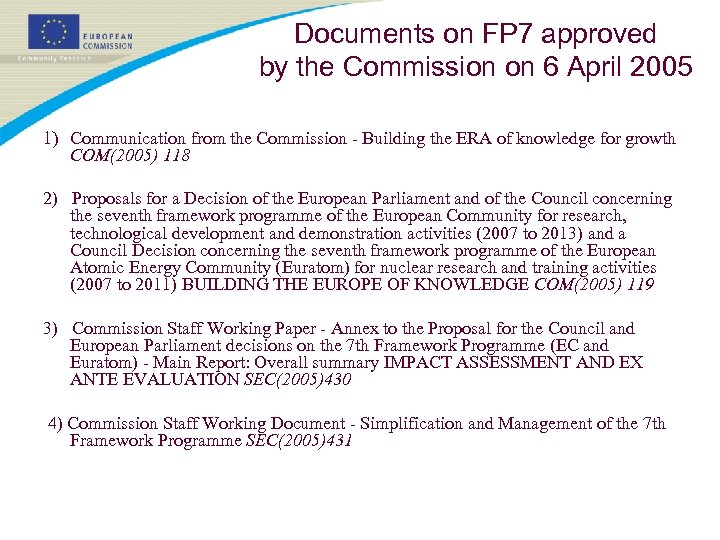
Documents on FP 7 approved by the Commission on 6 April 2005 1) Communication from the Commission - Building the ERA of knowledge for growth COM(2005) 118 2) Proposals for a Decision of the European Parliament and of the Council concerning the seventh framework programme of the European Community for research, technological development and demonstration activities (2007 to 2013) and a Council Decision concerning the seventh framework programme of the European Atomic Energy Community (Euratom) for nuclear research and training activities (2007 to 2011) BUILDING THE EUROPE OF KNOWLEDGE COM(2005) 119 3) Commission Staff Working Paper - Annex to the Proposal for the Council and European Parliament decisions on the 7 th Framework Programme (EC and Euratom) - Main Report: Overall summary IMPACT ASSESSMENT AND EX ANTE EVALUATION SEC(2005)430 4) Commission Staff Working Document - Simplification and Management of the 7 th Framework Programme SEC(2005)431
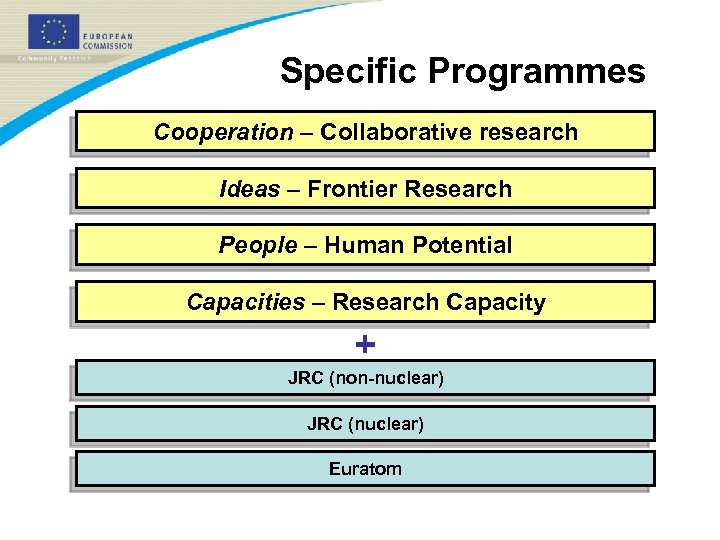
Specific Programmes Cooperation – Collaborative research Ideas – Frontier Research People – Human Potential Capacities – Research Capacity + JRC (non-nuclear) JRC (nuclear) Euratom
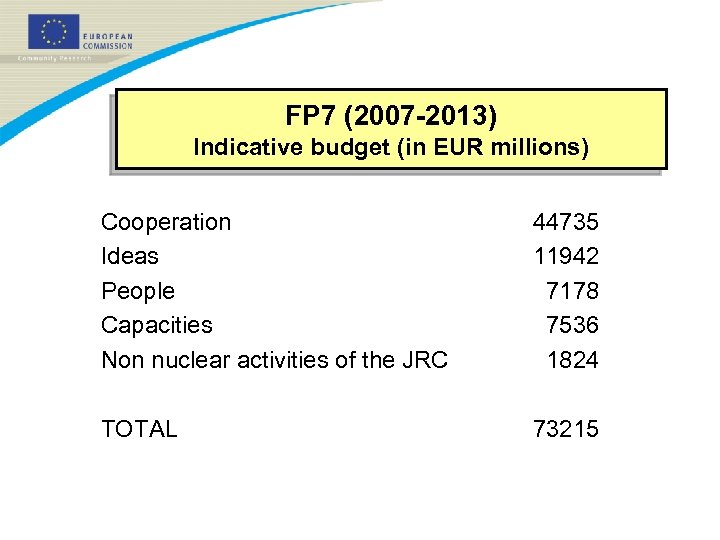
FP 7 (2007 -2013) Indicative budget (in EUR millions) Cooperation Ideas People Capacities Non nuclear activities of the JRC 44735 11942 7178 7536 1824 TOTAL 73215
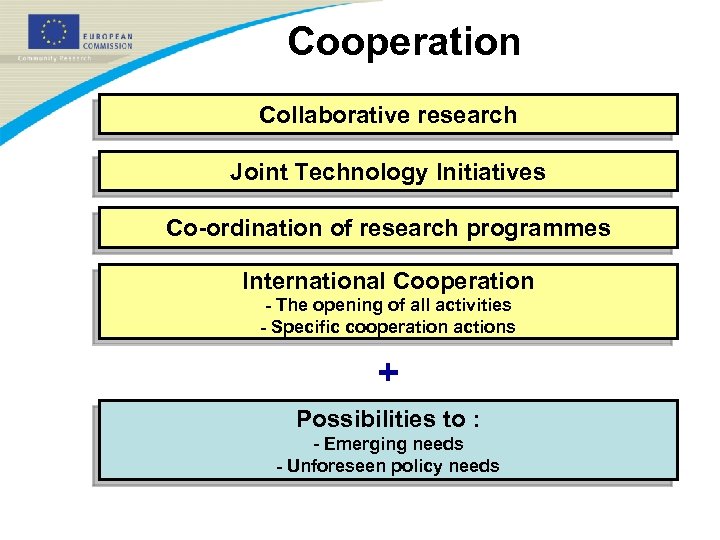
Cooperation Collaborative research Joint Technology Initiatives Co-ordination of research programmes International Cooperation - The opening of all activities - Specific cooperation actions + Possibilities to : - Emerging needs - Unforeseen policy needs
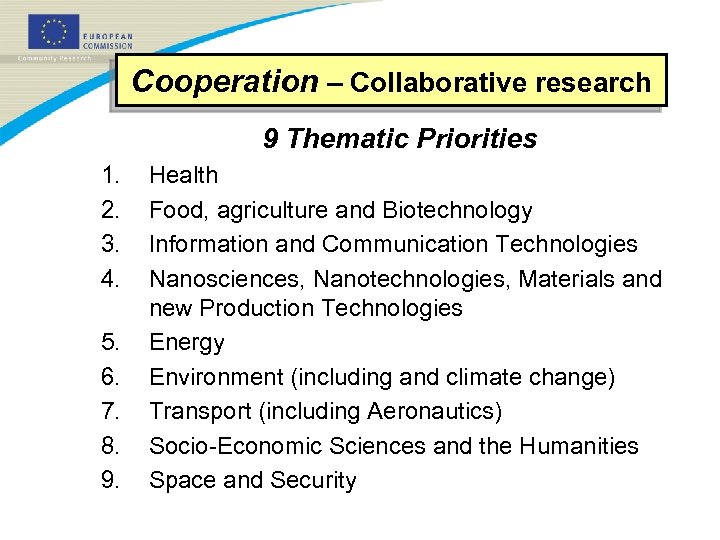
Cooperation – Collaborative research 9 Thematic Priorities 1. 2. 3. 4. 5. 6. 7. 8. 9. Health Food, agriculture and Biotechnology Information and Communication Technologies Nanosciences, Nanotechnologies, Materials and new Production Technologies Energy Environment (including and climate change) Transport (including Aeronautics) Socio-Economic Sciences and the Humanities Space and Security
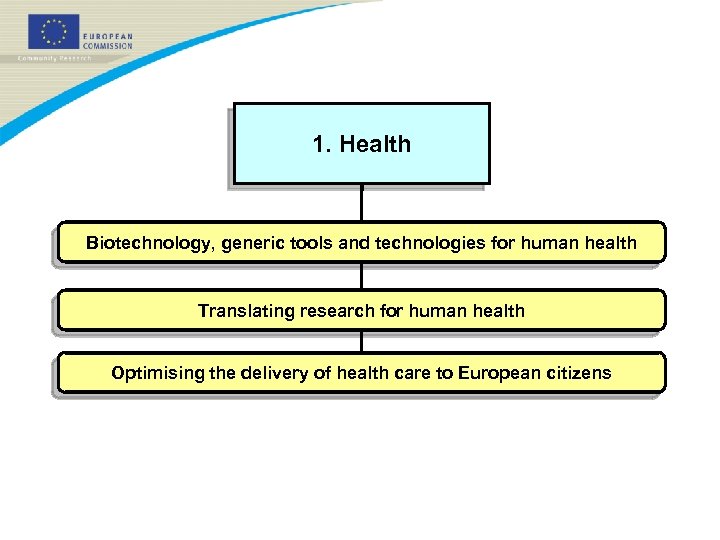
1. Health Biotechnology, generic tools and technologies for human health Translating research for human health Optimising the delivery of health care to European citizens
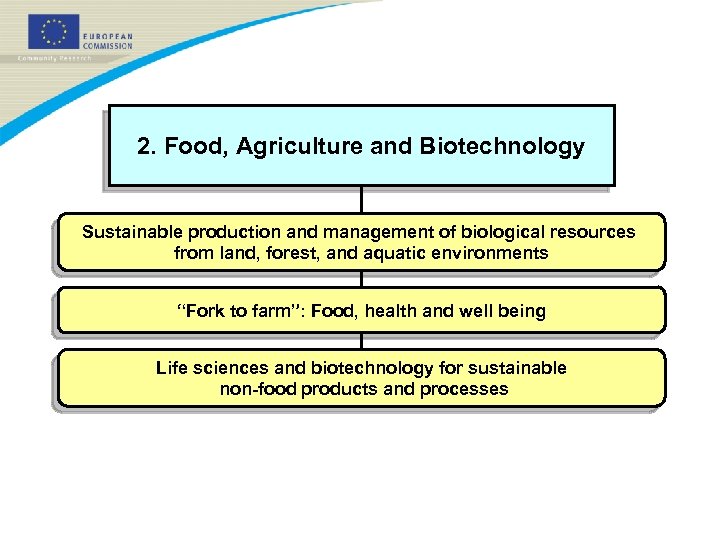
2. Food, Agriculture and Biotechnology Sustainable production and management of biological resources from land, forest, and aquatic environments “Fork to farm”: Food, health and well being Life sciences and biotechnology for sustainable non-food products and processes
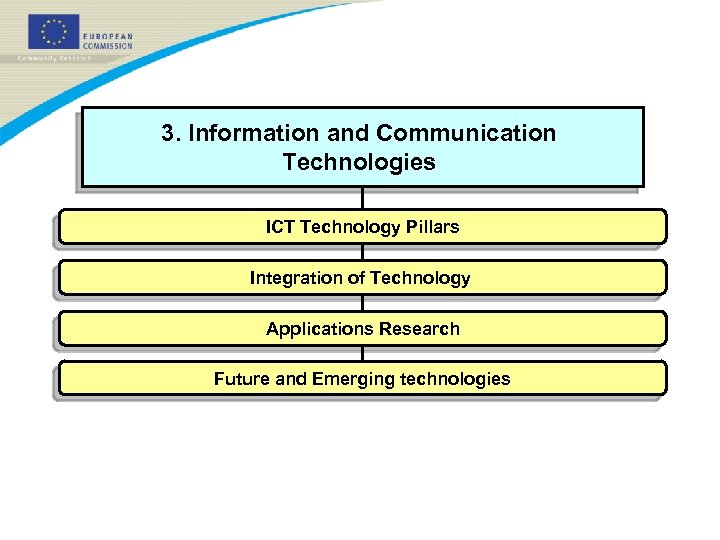
3. Information and Communication Technologies ICT Technology Pillars Integration of Technology Applications Research Future and Emerging technologies
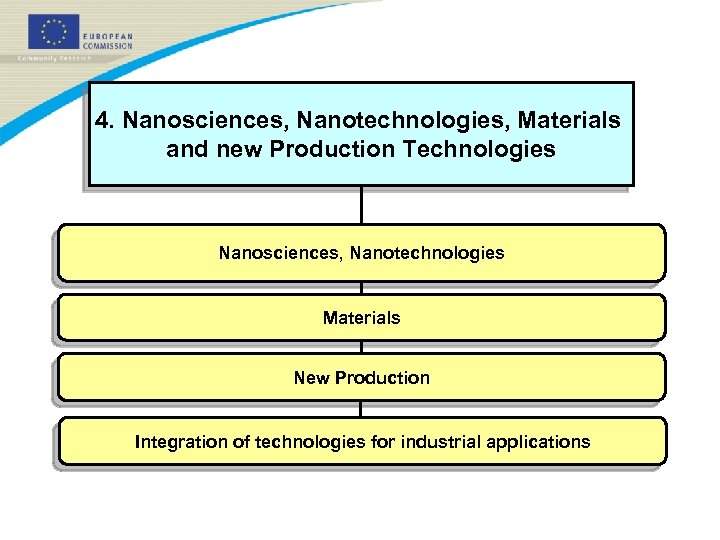
4. Nanosciences, Nanotechnologies, Materials and new Production Technologies Nanosciences, Nanotechnologies Materials New Production Integration of technologies for industrial applications
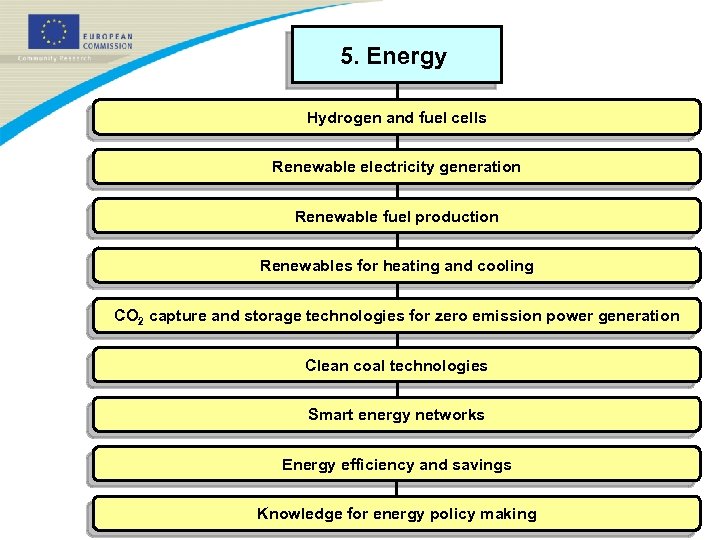
5. Energy Hydrogen and fuel cells Renewable electricity generation Renewable fuel production Renewables for heating and cooling CO 2 capture and storage technologies for zero emission power generation Clean coal technologies Smart energy networks Energy efficiency and savings Knowledge for energy policy making
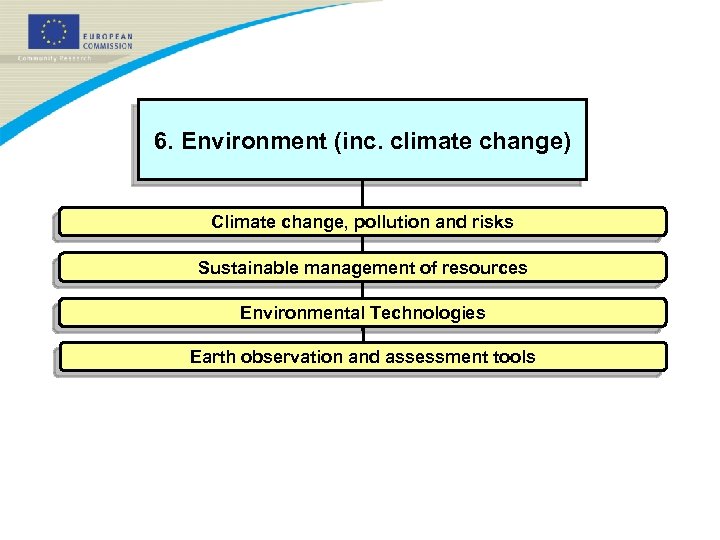
6. Environment (inc. climate change) Climate change, pollution and risks Sustainable management of resources Environmental Technologies Earth observation and assessment tools
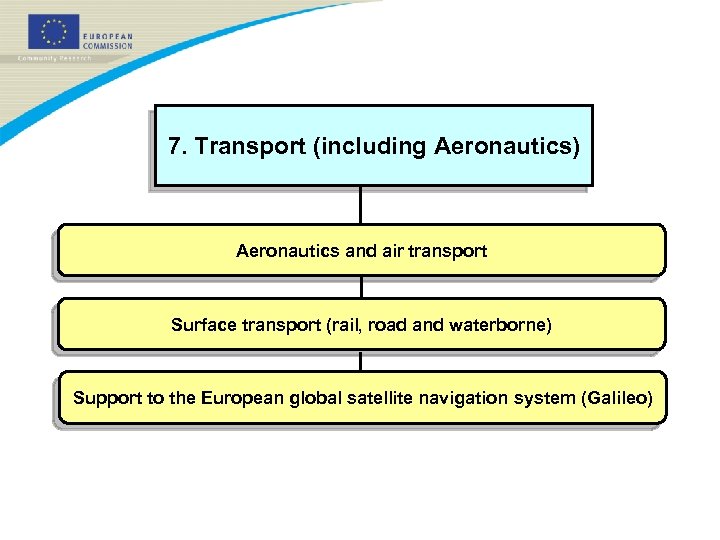
7. Transport (including Aeronautics) Aeronautics and air transport Surface transport (rail, road and waterborne) Support to the European global satellite navigation system (Galileo)
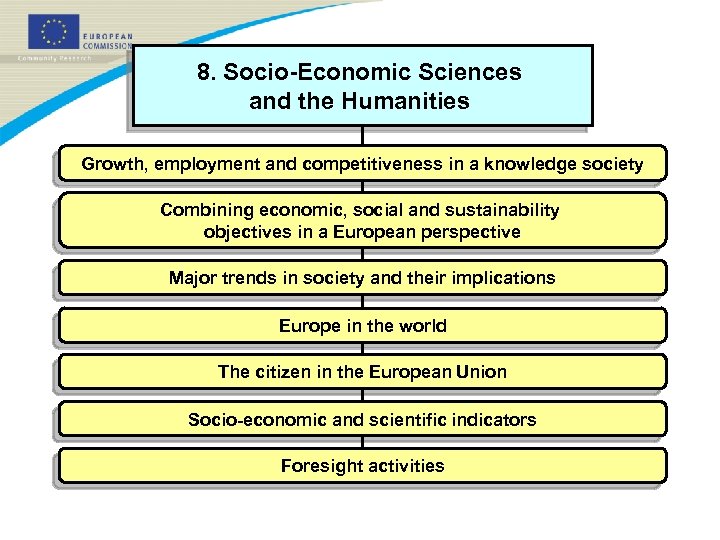
8. Socio-Economic Sciences and the Humanities Growth, employment and competitiveness in a knowledge society Combining economic, social and sustainability objectives in a European perspective Major trends in society and their implications Europe in the world The citizen in the European Union Socio-economic and scientific indicators Foresight activities
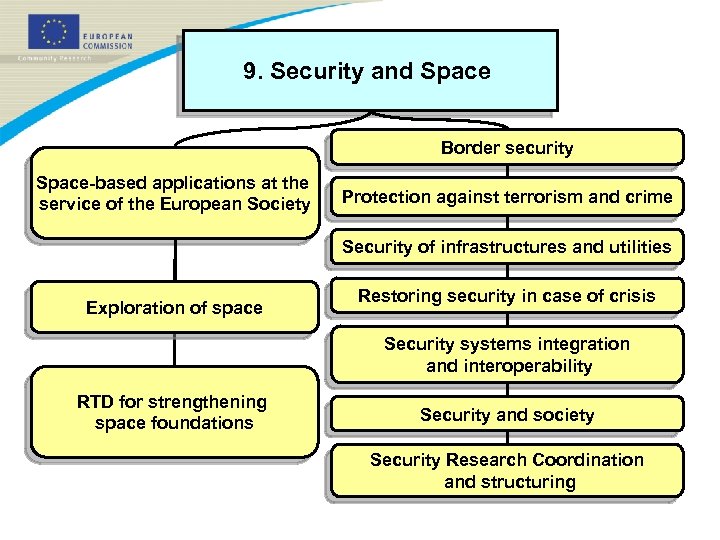
9. Security and Space Border security Space-based applications at the service of the European Society Protection against terrorism and crime Security of infrastructures and utilities Exploration of space Restoring security in case of crisis Security systems integration and interoperability RTD for strengthening space foundations Security and society Security Research Coordination and structuring
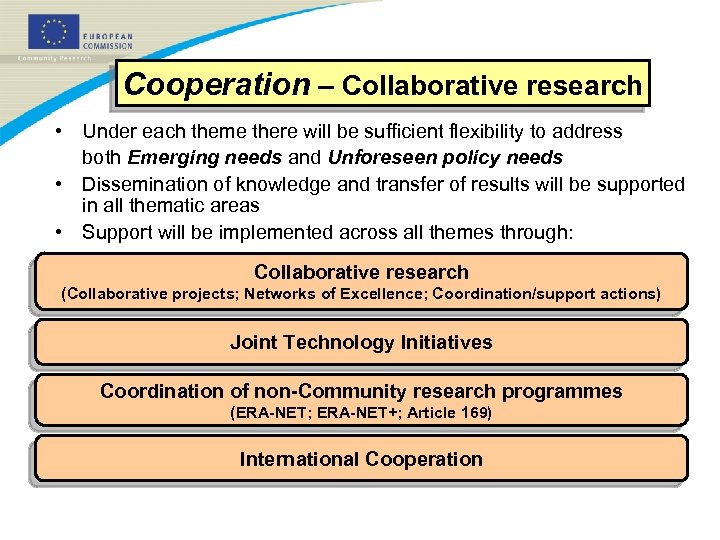
Cooperation – Collaborative research • Under each theme there will be sufficient flexibility to address both Emerging needs and Unforeseen policy needs • Dissemination of knowledge and transfer of results will be supported in all thematic areas • Support will be implemented across all themes through: Collaborative research (Collaborative projects; Networks of Excellence; Coordination/support actions) Joint Technology Initiatives Coordination of non-Community research programmes (ERA-NET; ERA-NET+; Article 169) International Cooperation
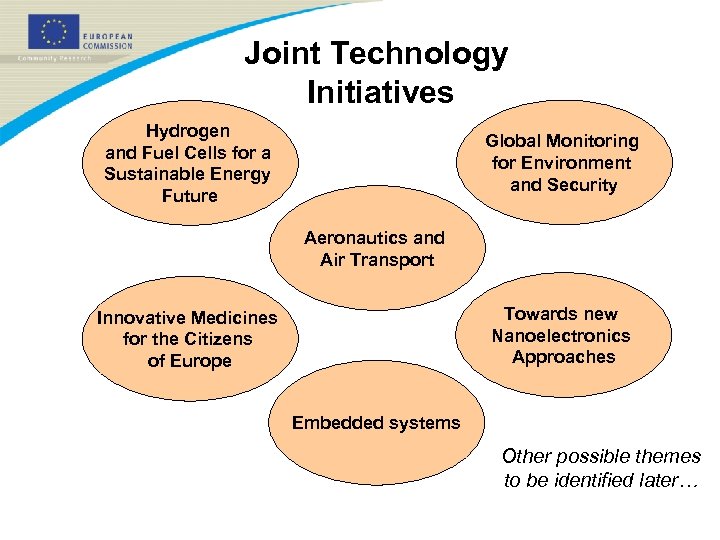
Joint Technology Initiatives Hydrogen and Fuel Cells for a Sustainable Energy Future Global Monitoring for Environment and Security Aeronautics and Air Transport Towards new Nanoelectronics Approaches Innovative Medicines for the Citizens of Europe Embedded systems Other possible themes to be identified later…
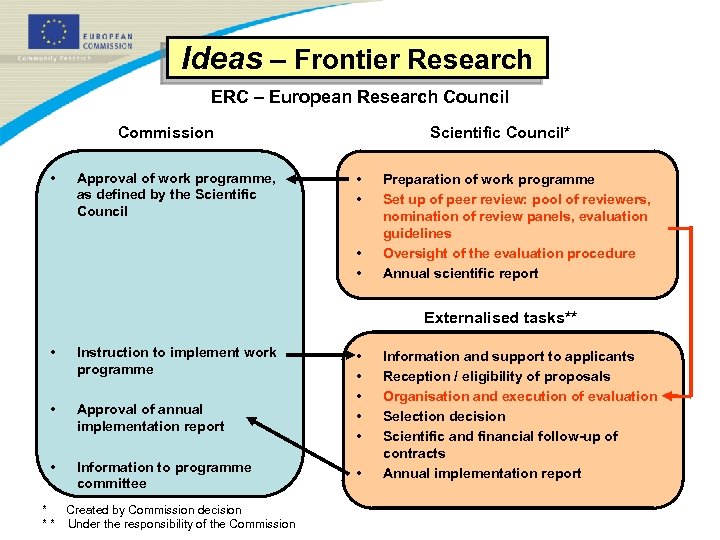
Ideas – Frontier Research ERC – European Research Council Commission • Approval of work programme, as defined by the Scientific Council* • • Preparation of work programme Set up of peer review: pool of reviewers, nomination of review panels, evaluation guidelines Oversight of the evaluation procedure Annual scientific report Externalised tasks** • Instruction to implement work programme • Approval of annual implementation report • Information to programme committee * Created by Commission decision * * Under the responsibility of the Commission • • • Information and support to applicants Reception / eligibility of proposals Organisation and execution of evaluation Selection decision Scientific and financial follow-up of contracts Annual implementation report
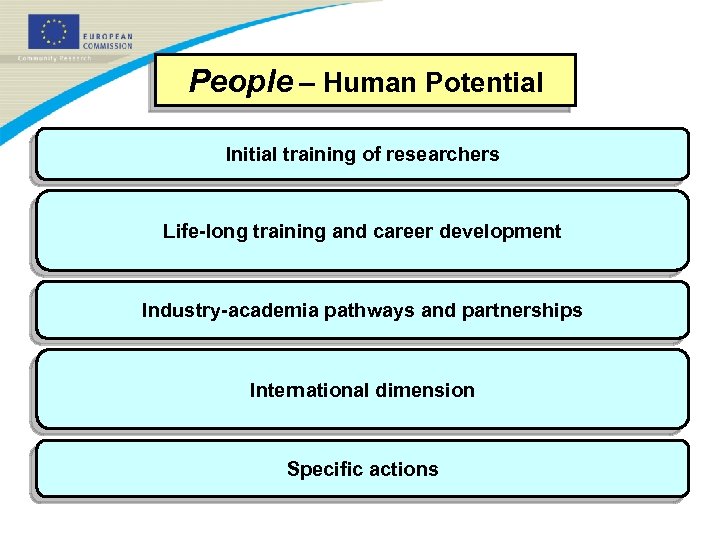
People – Human Potential Initial training of researchers Life-long training and career development Industry-academia pathways and partnerships International dimension Specific actions
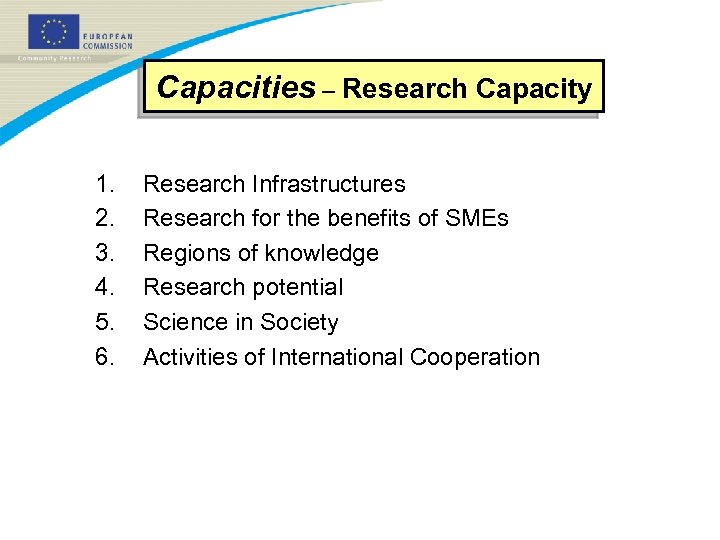
Capacities – Research Capacity 1. 2. 3. 4. 5. 6. Research Infrastructures Research for the benefits of SMEs Regions of knowledge Research potential Science in Society Activities of International Cooperation
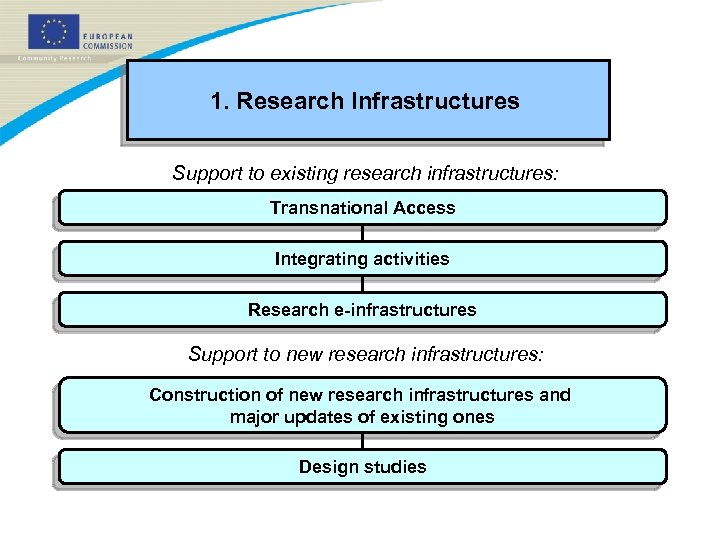
1. Research Infrastructures Support to existing research infrastructures: Transnational Access Integrating activities Research e-infrastructures Support to new research infrastructures: Construction of new research infrastructures and major updates of existing ones Design studies
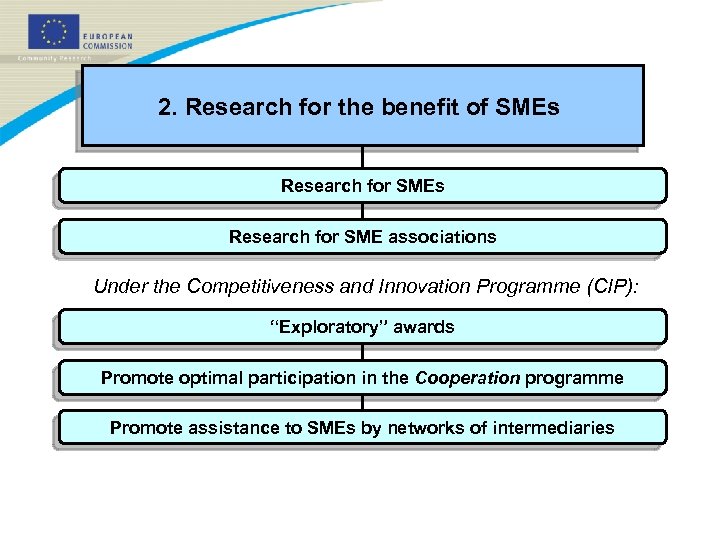
2. Research for the benefit of SMEs Research for SME associations Under the Competitiveness and Innovation Programme (CIP): “Exploratory” awards Promote optimal participation in the Cooperation programme Promote assistance to SMEs by networks of intermediaries
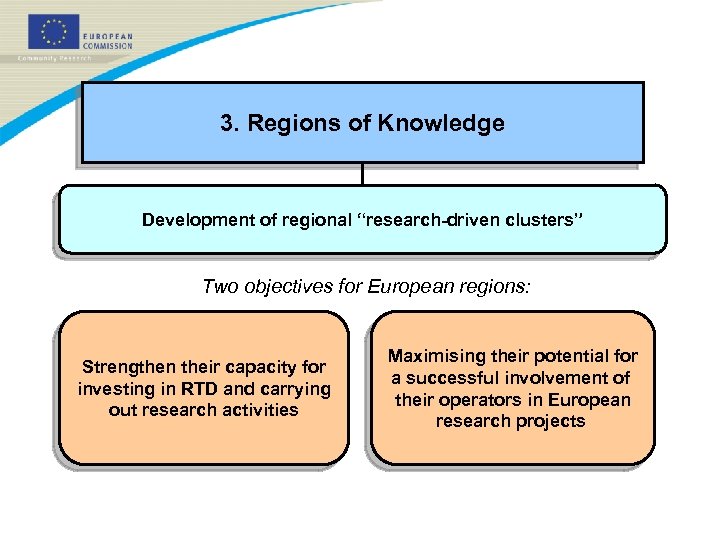
3. Regions of Knowledge Development of regional “research-driven clusters” Two objectives for European regions: Strengthen their capacity for investing in RTD and carrying out research activities Maximising their potential for a successful involvement of their operators in European research projects
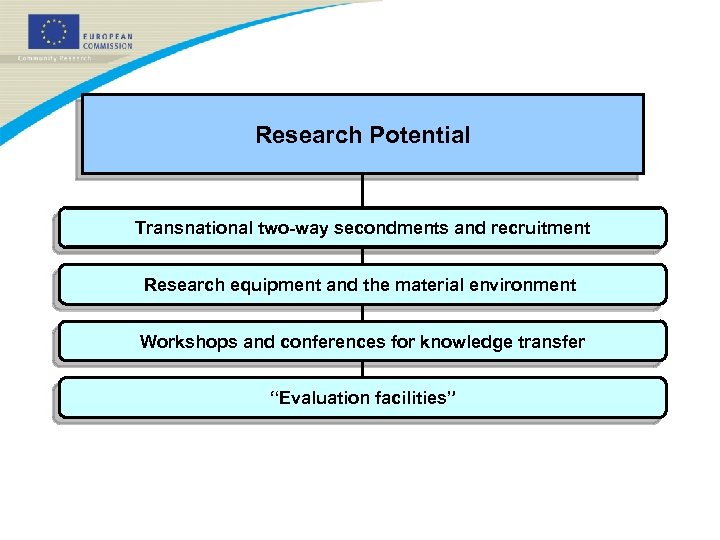
Research Potential Transnational two-way secondments and recruitment Research equipment and the material environment Workshops and conferences for knowledge transfer “Evaluation facilities”
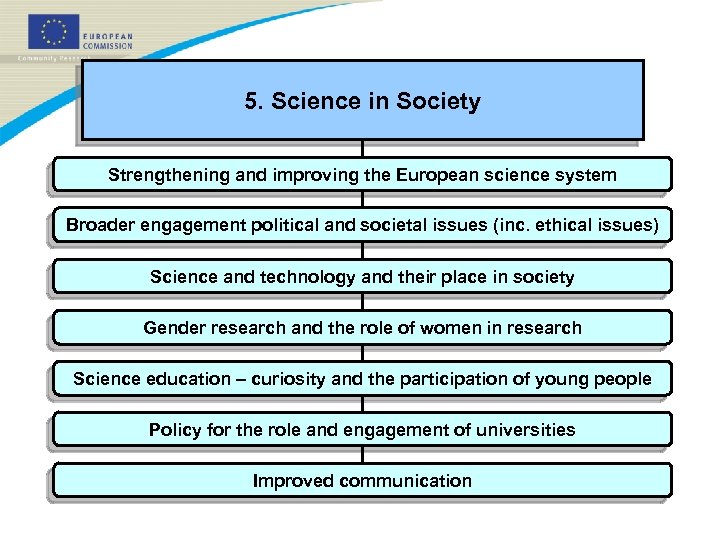
5. Science in Society Strengthening and improving the European science system Broader engagement political and societal issues (inc. ethical issues) Science and technology and their place in society Gender research and the role of women in research Science education – curiosity and the participation of young people Policy for the role and engagement of universities Improved communication
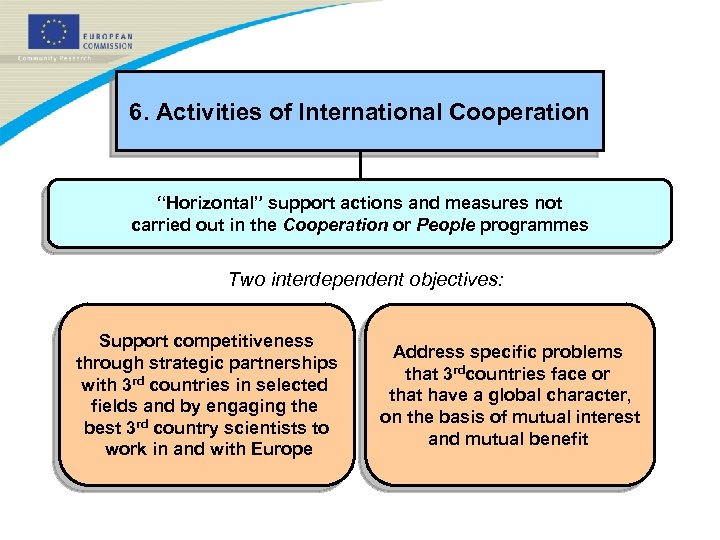
6. Activities of International Cooperation “Horizontal” support actions and measures not carried out in the Cooperation or People programmes Two interdependent objectives: Support competitiveness through strategic partnerships with 3 rd countries in selected fields and by engaging the best 3 rd country scientists to work in and with Europe Address specific problems that 3 rdcountries face or that have a global character, on the basis of mutual interest and mutual benefit
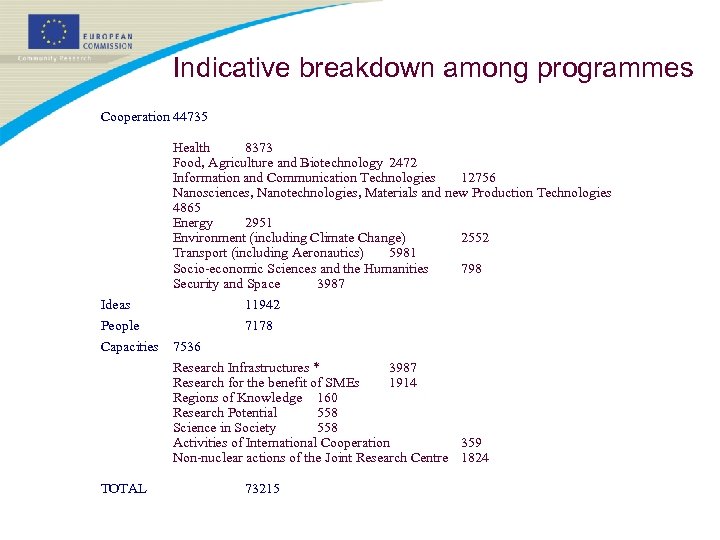
Indicative breakdown among programmes Cooperation 44735 Health 8373 Food, Agriculture and Biotechnology 2472 Information and Communication Technologies 12756 Nanosciences, Nanotechnologies, Materials and new Production Technologies 4865 Energy 2951 Environment (including Climate Change) 2552 Transport (including Aeronautics) 5981 Socio-economic Sciences and the Humanities 798 Security and Space 3987 Ideas 11942 People 7178 Capacities 7536 Research Infrastructures * 3987 Research for the benefit of SMEs 1914 Regions of Knowledge 160 Research Potential 558 Science in Society 558 Activities of International Cooperation 359 Non-nuclear actions of the Joint Research Centre 1824 TOTAL 73215
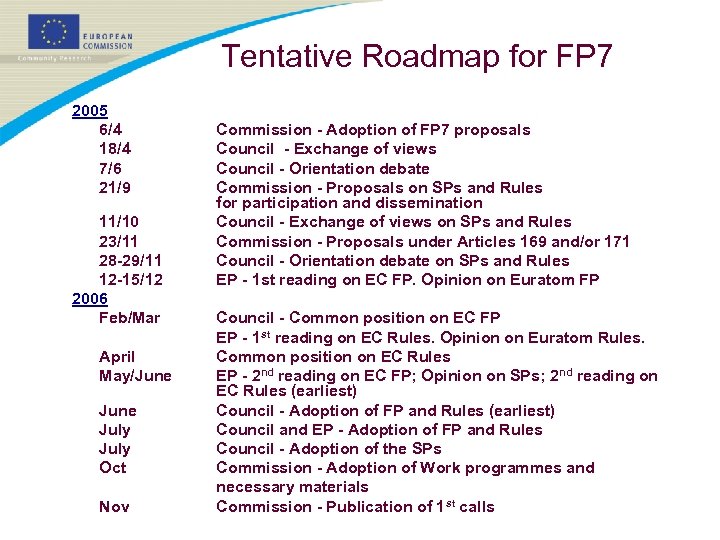
Tentative Roadmap for FP 7 2005 6/4 18/4 7/6 21/9 11/10 23/11 28 -29/11 12 -15/12 2006 Feb/Mar April May/June July Oct Nov Commission - Adoption of FP 7 proposals Council - Exchange of views Council - Orientation debate Commission - Proposals on SPs and Rules for participation and dissemination Council - Exchange of views on SPs and Rules Commission - Proposals under Articles 169 and/or 171 Council - Orientation debate on SPs and Rules EP - 1 st reading on EC FP. Opinion on Euratom FP Council - Common position on EC FP EP - 1 st reading on EC Rules. Opinion on Euratom Rules. Common position on EC Rules EP - 2 nd reading on EC FP; Opinion on SPs; 2 nd reading on EC Rules (earliest) Council - Adoption of FP and Rules (earliest) Council and EP - Adoption of FP and Rules Council - Adoption of the SPs Commission - Adoption of Work programmes and necessary materials Commission - Publication of 1 st calls
Скачать презентацию Building the Europe of Knowledge for Growth Proposals
45107bc8ae0c03e89a9bdf85af63303d.ppt