 Скачать презентацию Building on the Osuntokun Legacy of Excellence in
d714f0418147df85f392369730168afd.ppt
- Количество слайдов: 37



Building on the Osuntokun Legacy of Excellence in Clinical Medicine – Precision Medicine for All Olufunmilayo I Olopade, MB, BS, FACP, OON Walter L. Palmer Distinguished Service Professor ACS Clinical Research Professor The University of Chicago Osuntokun Lectures January 7 th, 2016
Outline • Introductions and Definitions • Discuss the new Taxonomy of disease • Discuss the social and economic barriers to effective breast cancer diagnosis and treatment • Discuss novel ideas about targeted treatment • Personalized risk assessment for precision care for all
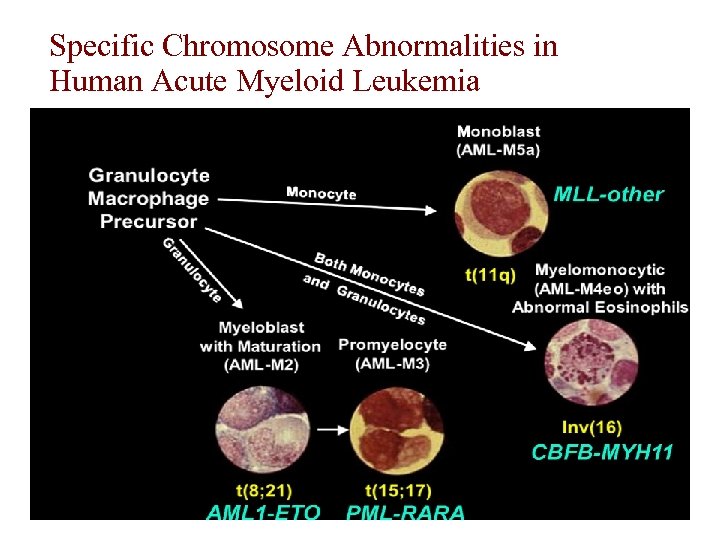
Specific Chromosome Abnormalities in Human Acute Myeloid Leukemia
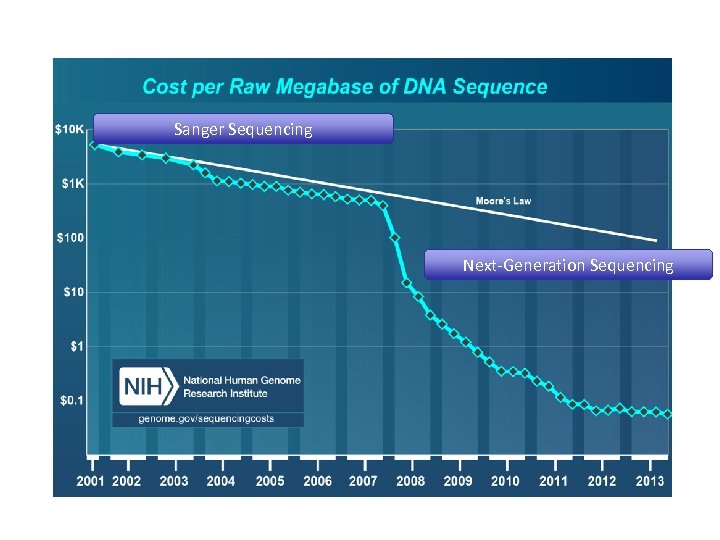
Sanger Sequencing Next-Generation Sequencing
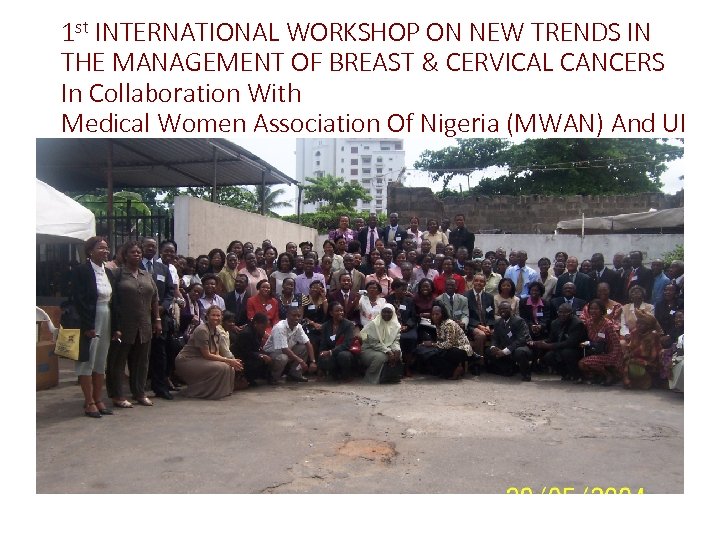
1 st INTERNATIONAL WORKSHOP ON NEW TRENDS IN THE MANAGEMENT OF BREAST & CERVICAL CANCERS In Collaboration With Medical Women Association Of Nigeria (MWAN) And UI
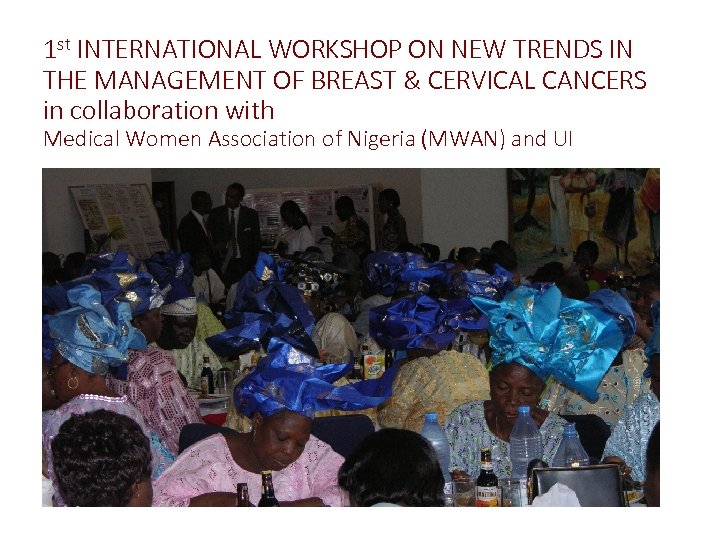
1 st INTERNATIONAL WORKSHOP ON NEW TRENDS IN THE MANAGEMENT OF BREAST & CERVICAL CANCERS in collaboration with Medical Women Association of Nigeria (MWAN) and UI
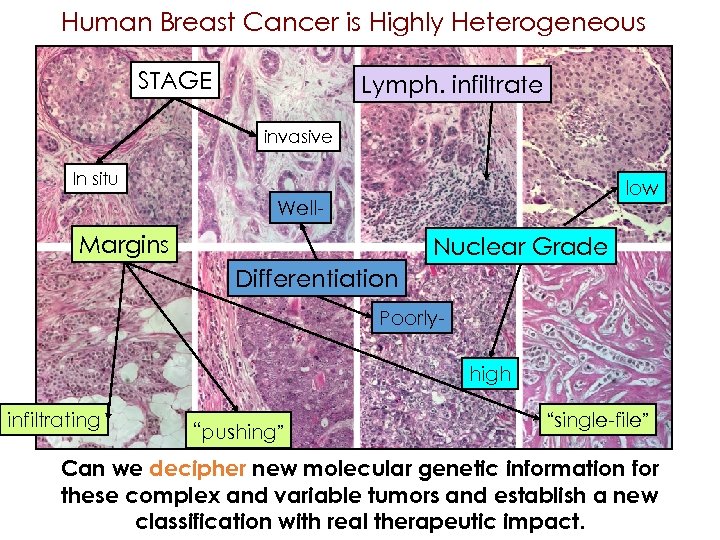
Human Breast Cancer is Highly Heterogeneous STAGE Lymph. infiltrate invasive In situ low Well- Margins Nuclear Grade Differentiation Poorlyhigh infiltrating “pushing” “single-file” Can we decipher new molecular genetic information for these complex and variable tumors and establish a new classification with real therapeutic impact.
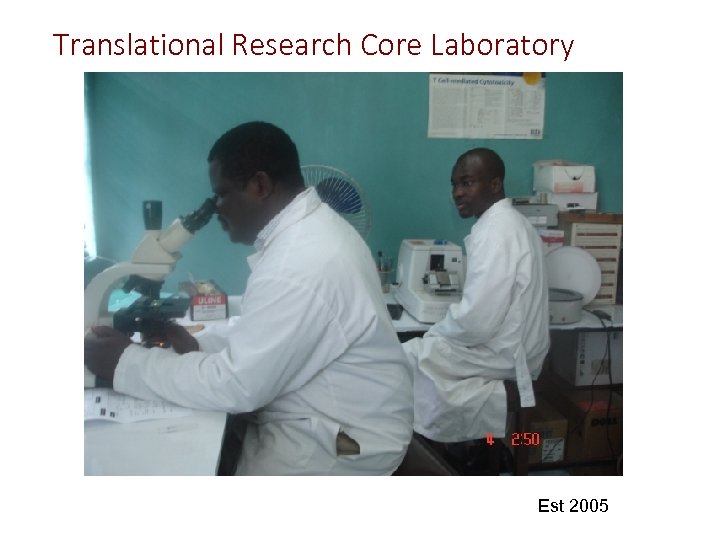
Translational Research Core Laboratory Est 2005
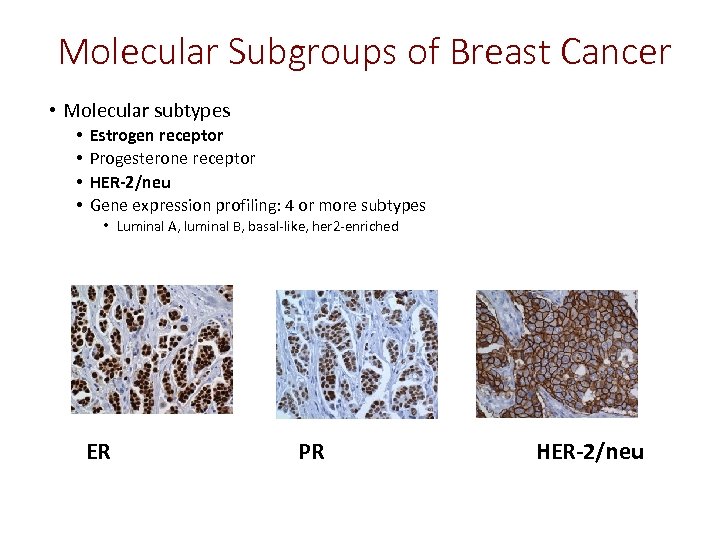
Molecular Subgroups of Breast Cancer • Molecular subtypes • • Estrogen receptor Progesterone receptor HER-2/neu Gene expression profiling: 4 or more subtypes • Luminal A, luminal B, basal-like, her 2 -enriched ER PR HER-2/neu
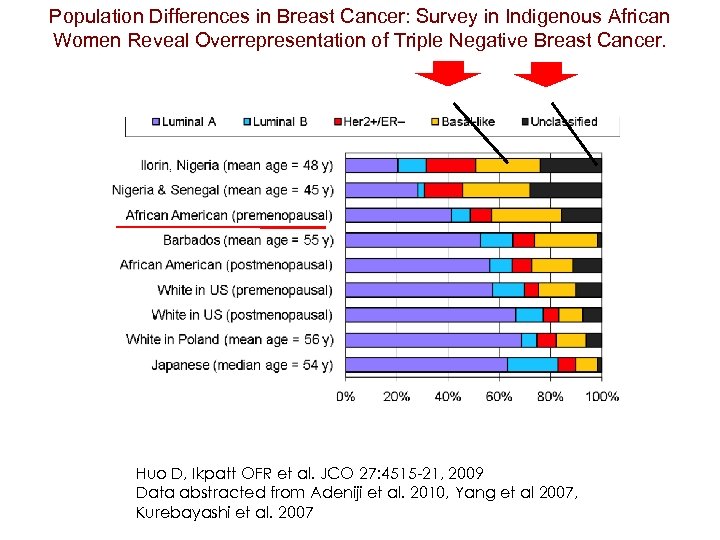
Population Differences in Breast Cancer: Survey in Indigenous African Women Reveal Overrepresentation of Triple Negative Breast Cancer. Huo D, Ikpatt OFR et al. JCO 27: 4515 -21, 2009 Data abstracted from Adeniji et al. 2010, Yang et al 2007, Kurebayashi et al. 2007
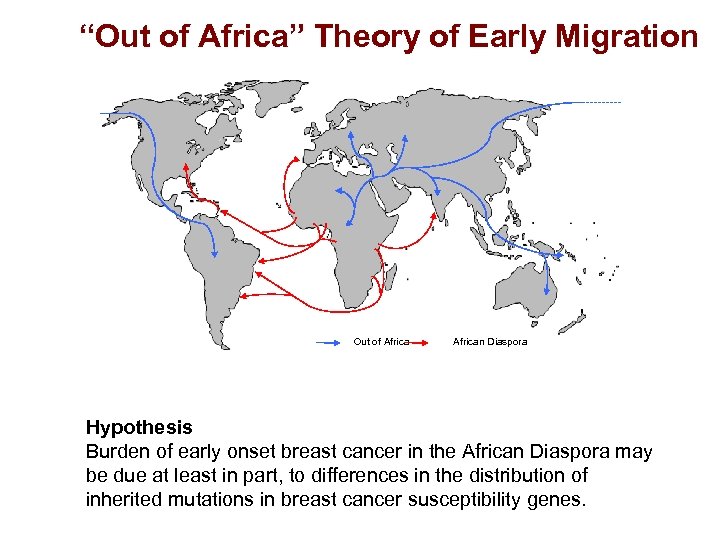
“Out of Africa” Theory of Early Migration Out of African Diaspora Hypothesis Burden of early onset breast cancer in the African Diaspora may be due at least in part, to differences in the distribution of inherited mutations in breast cancer susceptibility genes.
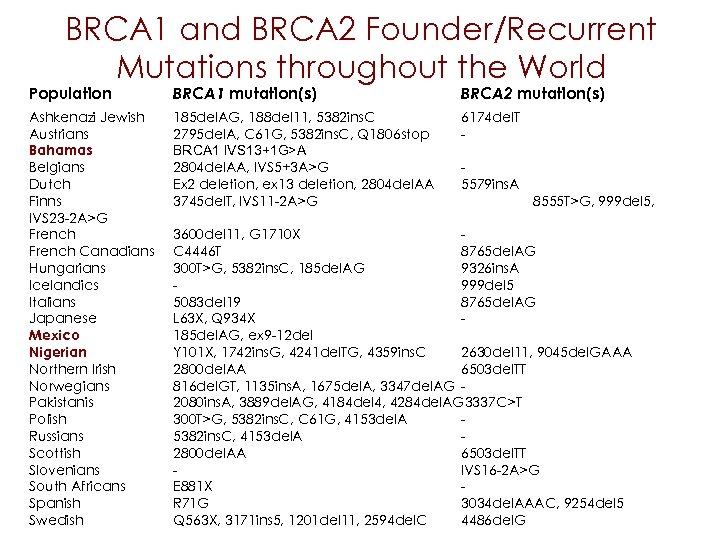
BRCA 1 and BRCA 2 Founder/Recurrent Mutations throughout the World Population BRCA 1 mutation(s) BRCA 2 mutation(s) Ashkenazi Jewish Austrians Bahamas Belgians Dutch Finns IVS 23 -2 A>G French Canadians Hungarians Icelandics Italians Japanese Mexico Nigerian Northern Irish Norwegians Pakistanis Polish Russians Scottish Slovenians South Africans Spanish Swedish 185 del. AG, 188 del 11, 5382 ins. C 2795 del. A, C 61 G, 5382 ins. C, Q 1806 stop BRCA 1 IVS 13+1 G>A 2804 del. AA, IVS 5+3 A>G Ex 2 deletion, ex 13 deletion, 2804 del. AA 3745 del. T, IVS 11 -2 A>G 6174 del. T 5579 ins. A 8555 T>G, 999 del 5, 3600 del 11, G 1710 X C 4446 T 8765 del. AG 300 T>G, 5382 ins. C, 185 del. AG 9326 ins. A 999 del 5 5083 del 19 8765 del. AG L 63 X, Q 934 X 185 del. AG, ex 9 -12 del Y 101 X, 1742 ins. G, 4241 del. TG, 4359 ins. C 2630 del 11, 9045 del. GAAA 2800 del. AA 6503 del. TT 816 del. GT, 1135 ins. A, 1675 del. A, 3347 del. AG 2080 ins. A, 3889 del. AG, 4184 del 4, 4284 del. AG 3337 C>T 300 T>G, 5382 ins. C, C 61 G, 4153 del. A 5382 ins. C, 4153 del. A 2800 del. AA 6503 del. TT IVS 16 -2 A>G E 881 X R 71 G 3034 del. AAAC, 9254 del 5 Q 563 X, 3171 ins 5, 1201 del 11, 2594 del. C 4486 del. G
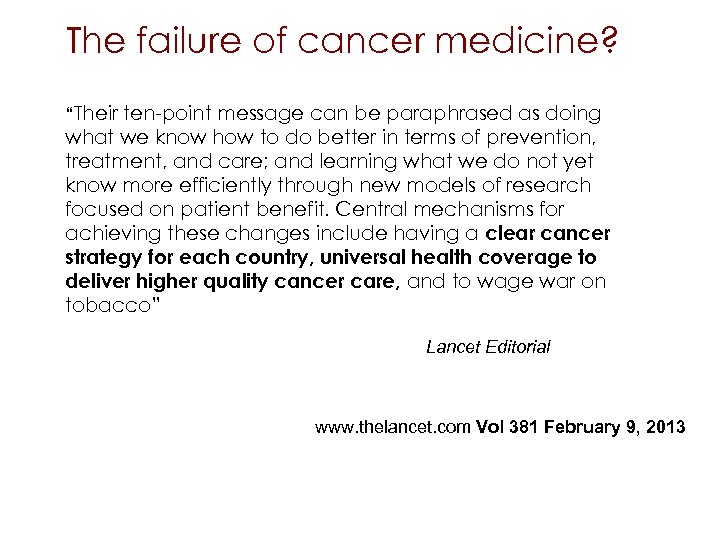
The failure of cancer medicine? “Their ten-point message can be paraphrased as doing what we know how to do better in terms of prevention, treatment, and care; and learning what we do not yet know more efficiently through new models of research focused on patient benefit. Central mechanisms for achieving these changes include having a clear cancer strategy for each country, universal health coverage to deliver higher quality cancer care, and to wage war on tobacco” Lancet Editorial www. thelancet. com Vol 381 February 9, 2013
Disparities in Breast Cancer Outcomes A perfect storm: How tumor biology, genomics, and health care delivery patterns collide to create a racial survival disparity in breast cancer and proposed interventions for change. Daly B, Olopade OI: CA Cancer J Clin 2015 65: 221 -38
Social and Cultural Barriers to Breast Cancer Diagnosis and Treatment in Ibadan, Nigeria Liese Pruitt, Medical Student, University of Chicago Funded By: Pritzker Summer Research Program 2011, Dennis and Anita Lee Global Health Scholarship, Doris Duke Clinical Mentorship Grant 2013 -2014 Mentors: Olufunmilayo Olopade Oladosu Ojengbede Temidayo Ogundiran
Economic Barriers to Breast Cancer Care in Ibadan, Nigeria Christine Anterasian, Medical Student, University of Chicago Funded By: Pritzker Summer Research Program 2011, Dennis and Anita Lee Global Health Scholarship, Doris Duke Clinical Mentorship Grant 2013 -2014 Mentors: Olufunmilayo Olopade Oladosu Ojengbede Temidayo Ogundiran
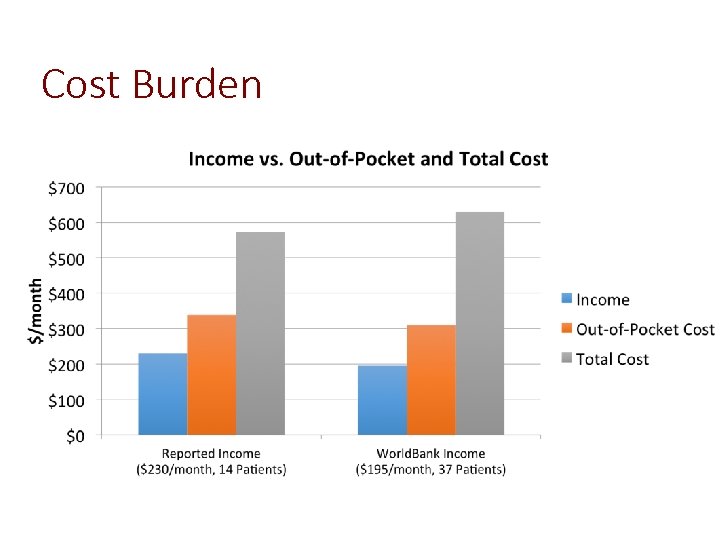
Cost Burden
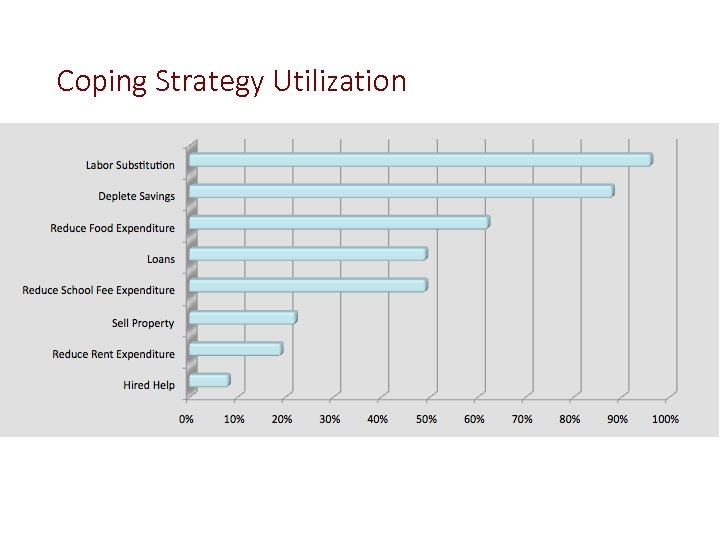
Coping Strategy Utilization
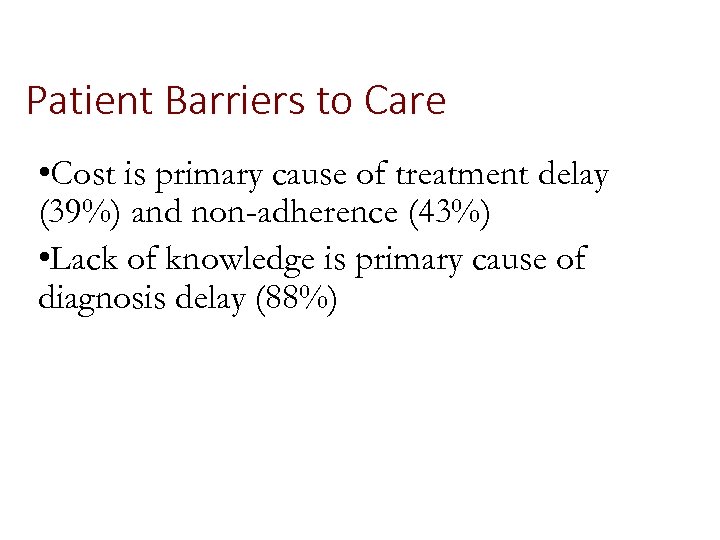
Patient Barriers to Care • Cost is primary cause of treatment delay (39%) and non-adherence (43%) • Lack of knowledge is primary cause of diagnosis delay (88%)
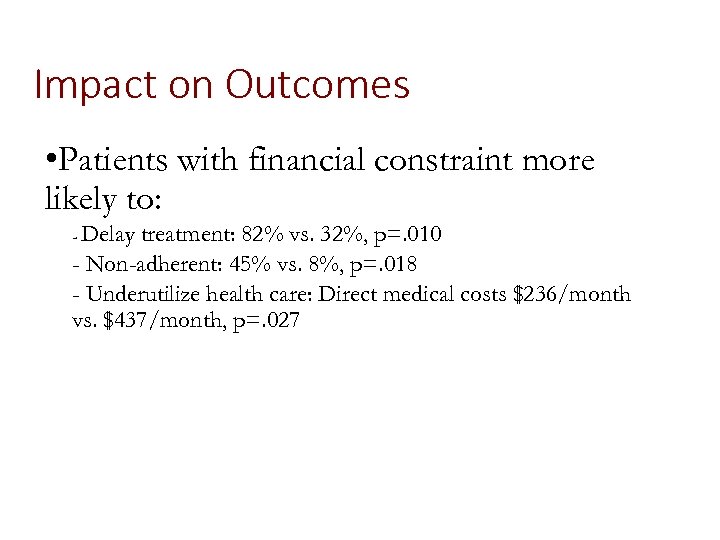
Impact on Outcomes • Patients with financial constraint more likely to: Delay treatment: 82% vs. 32%, p=. 010 - Non-adherent: 45% vs. 8%, p=. 018 - Underutilize health care: Direct medical costs $236/month vs. $437/month, p=. 027 -
Precision Medicine Initiative • The new medical model • Care tailored to genetics, environment, lifestyle • No more “one-size-fits-all” • Precision Medicine Initiative • $215 million in 2016 budget • Voluntary cohort of a million or more people • Promoting research to identify genomic drivers of cancer • Commitment to protecting privacy • Multidisciplinary collaboration
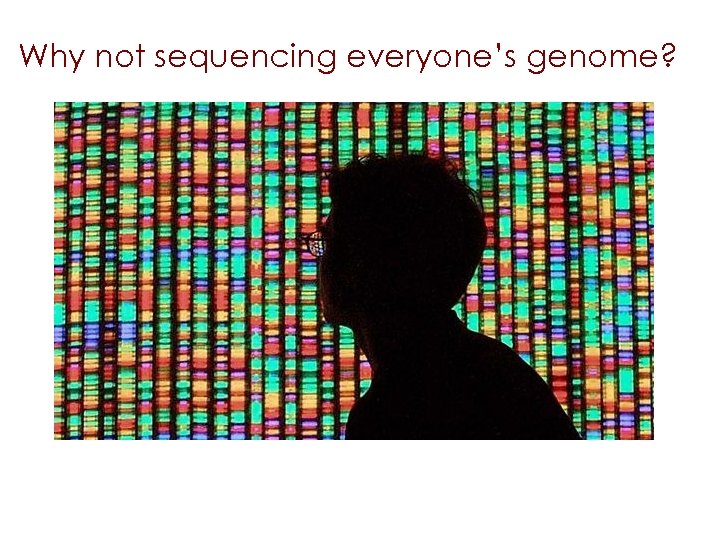
Why not sequencing everyone’s genome?
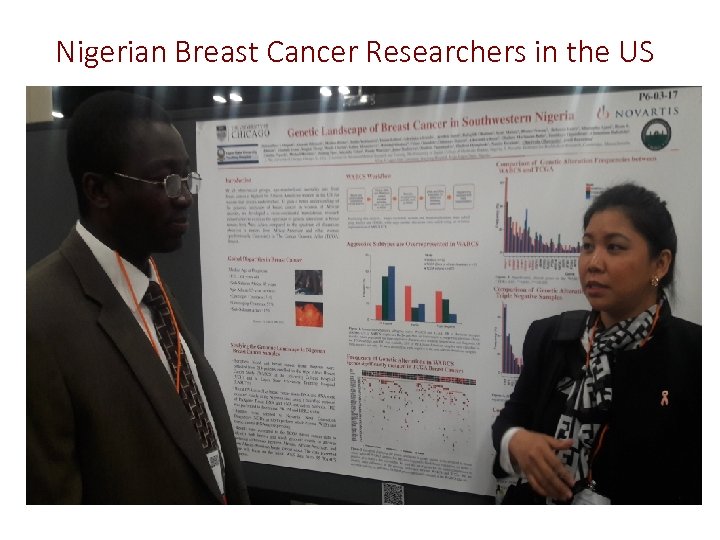
Nigerian Breast Cancer Researchers in the US
Optimal Use of Endocrine Therapy • Tamoxifen • Aromatase Inhibitors • Anastrazole • Letrozole • Exemestane • Ovarian Suppression • Novel agents • Combinations
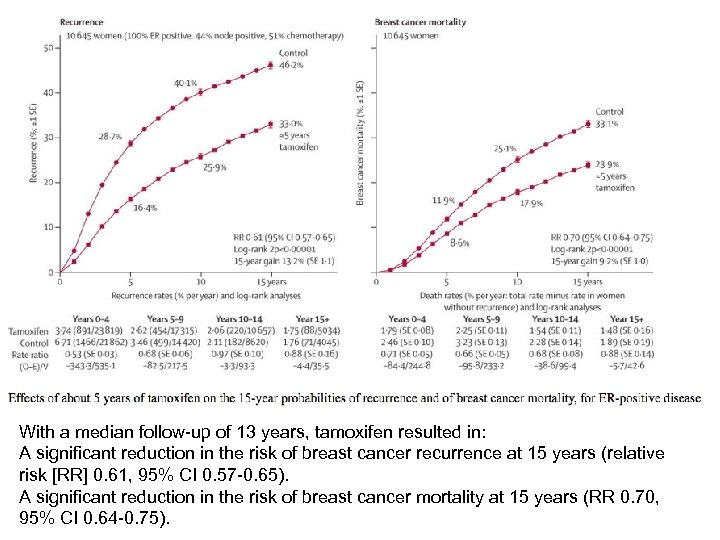
With a median follow-up of 13 years, tamoxifen resulted in: A significant reduction in the risk of breast cancer recurrence at 15 years (relative risk [RR] 0. 61, 95% CI 0. 57 -0. 65). A significant reduction in the risk of breast cancer mortality at 15 years (RR 0. 70, 95% CI 0. 64 -0. 75).
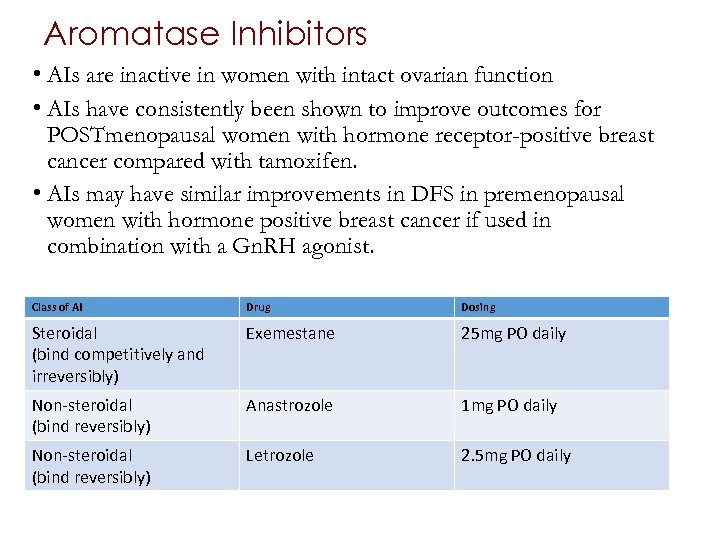
Aromatase Inhibitors • AIs are inactive in women with intact ovarian function • AIs have consistently been shown to improve outcomes for POSTmenopausal women with hormone receptor-positive breast cancer compared with tamoxifen. • AIs may have similar improvements in DFS in premenopausal women with hormone positive breast cancer if used in combination with a Gn. RH agonist. Class of AI Drug Dosing Steroidal (bind competitively and irreversibly) Exemestane 25 mg PO daily Non-steroidal (bind reversibly) Anastrozole 1 mg PO daily Non-steroidal (bind reversibly) Letrozole 2. 5 mg PO daily
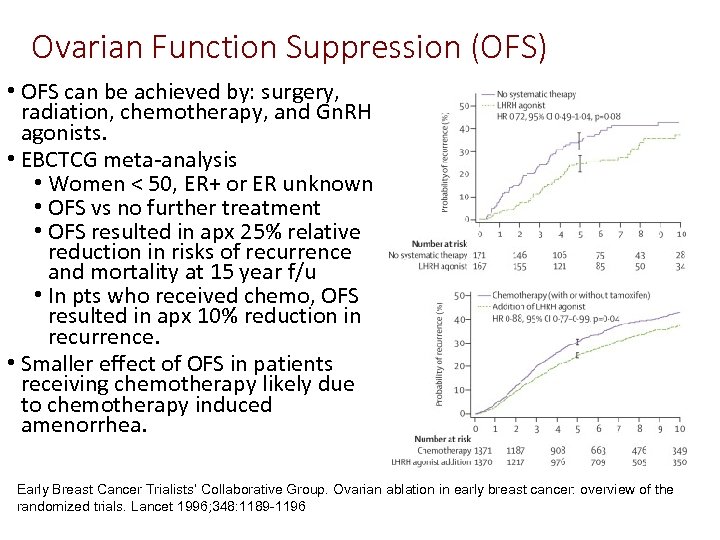
Ovarian Function Suppression (OFS) • OFS can be achieved by: surgery, radiation, chemotherapy, and Gn. RH agonists. • EBCTCG meta-analysis • Women < 50, ER+ or ER unknown • OFS vs no further treatment • OFS resulted in apx 25% relative reduction in risks of recurrence and mortality at 15 year f/u • In pts who received chemo, OFS resulted in apx 10% reduction in recurrence. • Smaller effect of OFS in patients receiving chemotherapy likely due to chemotherapy induced amenorrhea. Early Breast Cancer Trialists’ Collaborative Group. Ovarian ablation in early breast cancer: overview of the randomized trials. Lancet 1996; 348: 1189 -1196
Triple Negative Triple Threat • Young Onset • Aggressive pathologic features • High response rate but early recurrence deadly
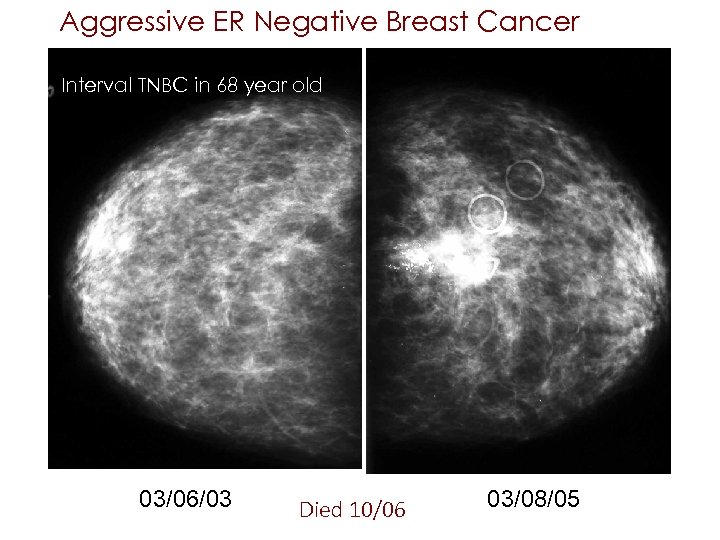
Aggressive ER Negative Breast Cancer Interval TNBC in 68 year old 03/06/03 Died 10/06 03/08/05
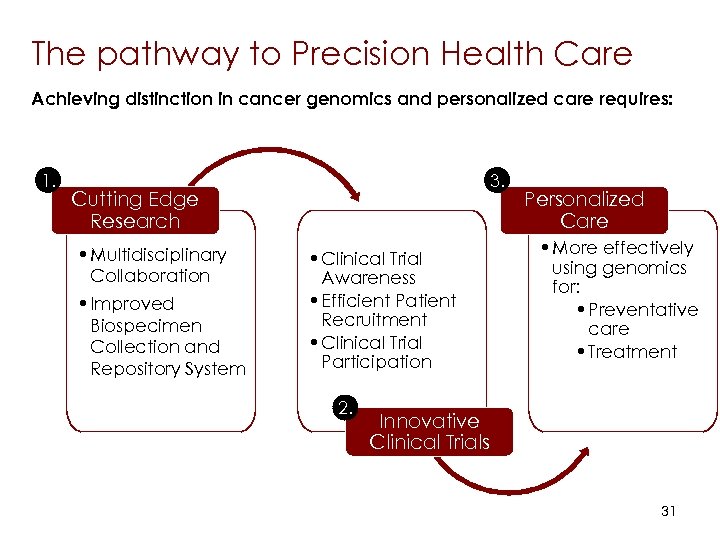
The pathway to Precision Health Care Achieving distinction in cancer genomics and personalized care requires: 1. 3. Cutting Edge Research • Multidisciplinary Collaboration • Improved Biospecimen Collection and Repository System • Clinical Trial Awareness • Efficient Patient Recruitment • Clinical Trial Participation 2. Personalized Care • More effectively using genomics for: • Preventative care • Treatment Innovative Clinical Trials 31
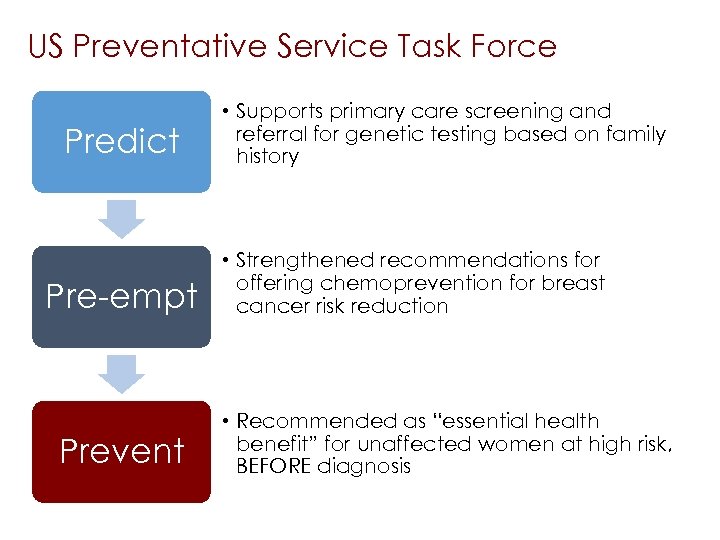
US Preventative Service Task Force Predict Pre-empt Prevent • Supports primary care screening and referral for genetic testing based on family history • Strengthened recommendations for offering chemoprevention for breast cancer risk reduction • Recommended as “essential health benefit” for unaffected women at high risk, BEFORE diagnosis
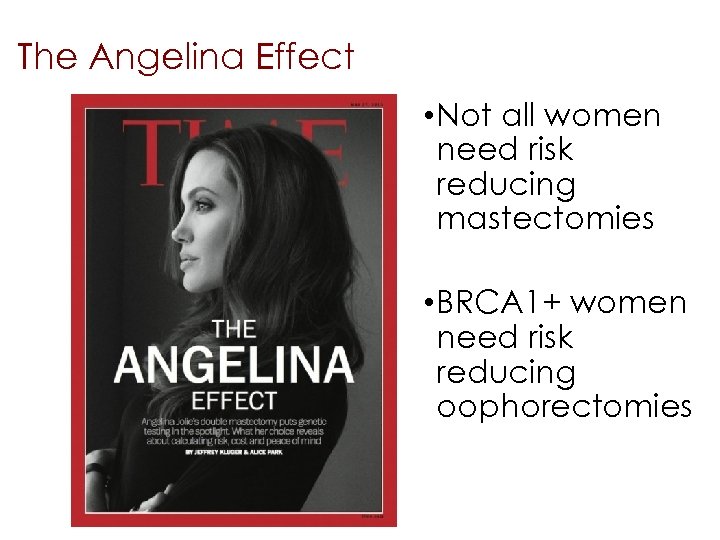
The Angelina Effect • Not all women need risk reducing mastectomies • BRCA 1+ women need risk reducing oophorectomies
Final Thoughts • In the spirit of Osuntokun, Nigeria poised to accelerate discovery and translation of research that benefit patients ü 21 st Century Medicine is interdisciplinary, patient centered, community based and networked ü Diverse team of investigators ü Address global burden of NCD – cancer predicted to be leading cause of death globally ü Health care financing üFocus on risk assessment and prevention üScreen high risk individuals and refer promptly to treatment ü Leverage public private partnerships to accelerate progress
Thanks • NCI, Cancer Training Branch • T 32 and K 12 in Oncology • NCI, Division of Cancer Control & Population Sciences • Nigerian Breast Cancer Study • NCI, Division of Cancer Treatment and Diagnosis • Spore in Breast Cancer • NCI, Diversity Training Branch, Center To Reduce Cancer Health Disparities • NIH, Fogarty International Center • Novartis Biomedical research Institute • West African Breast Cancer Study • Foundations • • Komen Breast Cancer Research Foundation Avon Entertainment Industry • American Cancer Society
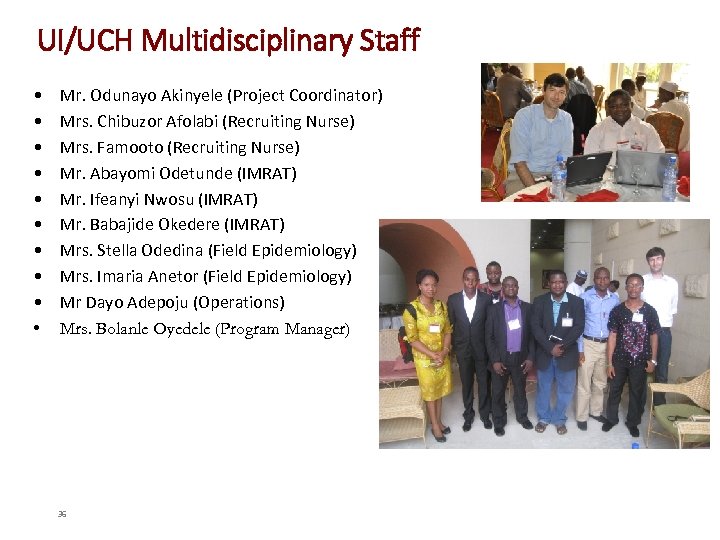
UI/UCH Multidisciplinary Staff • • • Mr. Odunayo Akinyele (Project Coordinator) Mrs. Chibuzor Afolabi (Recruiting Nurse) Mrs. Famooto (Recruiting Nurse) Mr. Abayomi Odetunde (IMRAT) Mr. Ifeanyi Nwosu (IMRAT) Mr. Babajide Okedere (IMRAT) Mrs. Stella Odedina (Field Epidemiology) Mrs. Imaria Anetor (Field Epidemiology) Mr Dayo Adepoju (Operations) Mrs. Bolanle Oyedele (Program Manager) 36
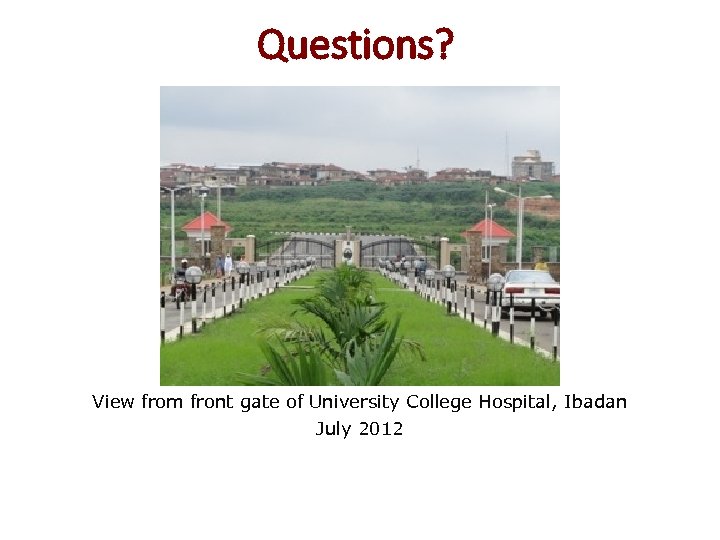
Questions? View from front gate of University College Hospital, Ibadan July 2012
Скачать презентацию Building on the Osuntokun Legacy of Excellence in
d714f0418147df85f392369730168afd.ppt