 Скачать презентацию Building More Effective Teams in Surgery Donald W
8d976c742816a54bb14b810d59f35a1f.ppt
- Количество слайдов: 22



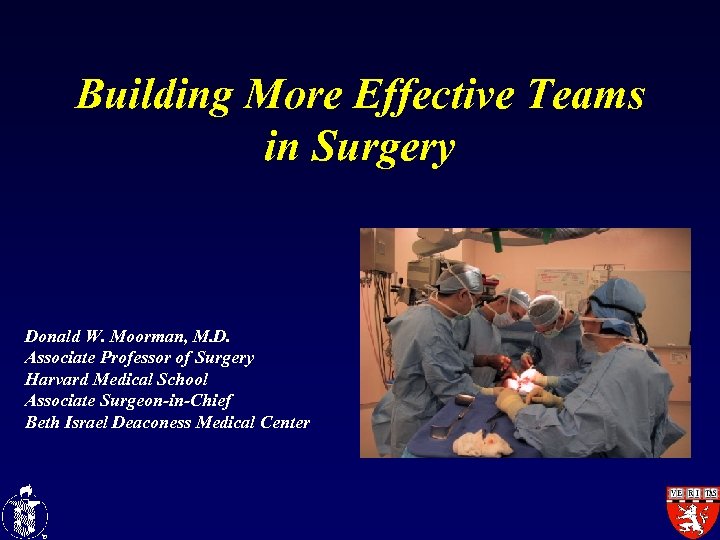
Building More Effective Teams in Surgery Donald W. Moorman, M. D. Associate Professor of Surgery Harvard Medical School Associate Surgeon-in-Chief Beth Israel Deaconess Medical Center
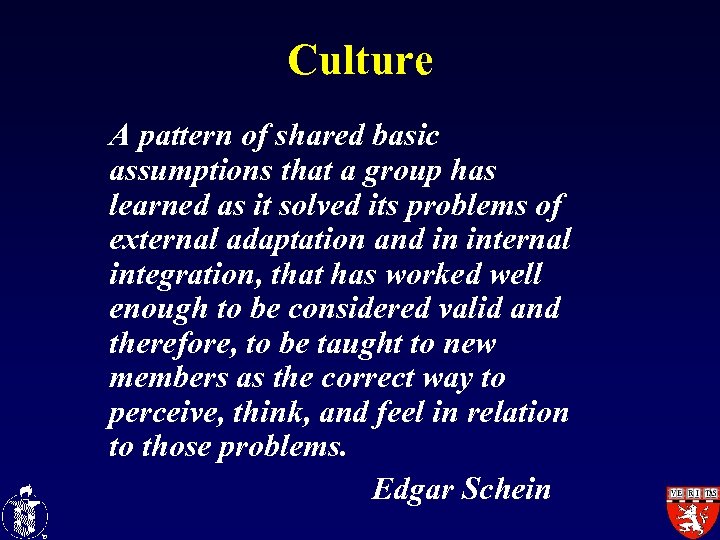
Culture A pattern of shared basic assumptions that a group has learned as it solved its problems of external adaptation and in internal integration, that has worked well enough to be considered valid and therefore, to be taught to new members as the correct way to perceive, think, and feel in relation to those problems. Edgar Schein
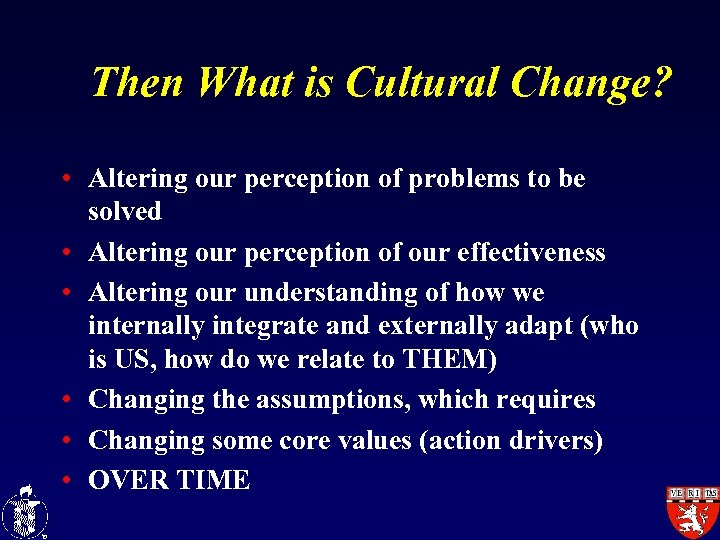
Then What is Cultural Change? • Altering our perception of problems to be solved • Altering our perception of our effectiveness • Altering our understanding of how we internally integrate and externally adapt (who is US, how do we relate to THEM) • Changing the assumptions, which requires • Changing some core values (action drivers) • OVER TIME
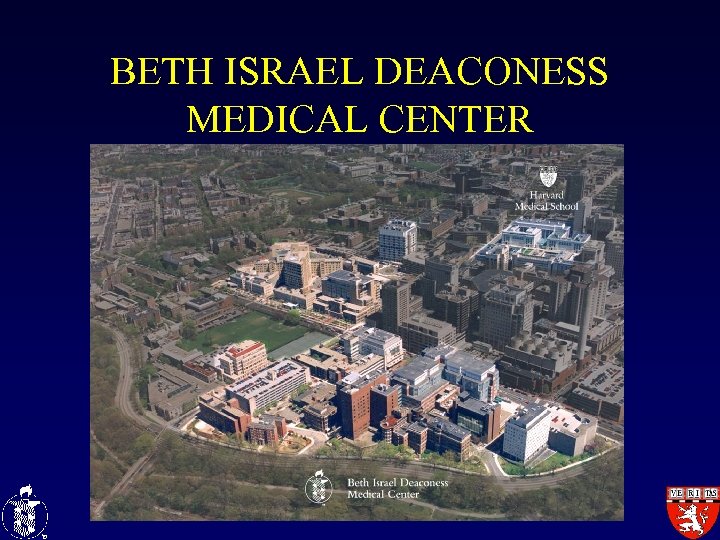
BETH ISRAEL DEACONESS MEDICAL CENTER
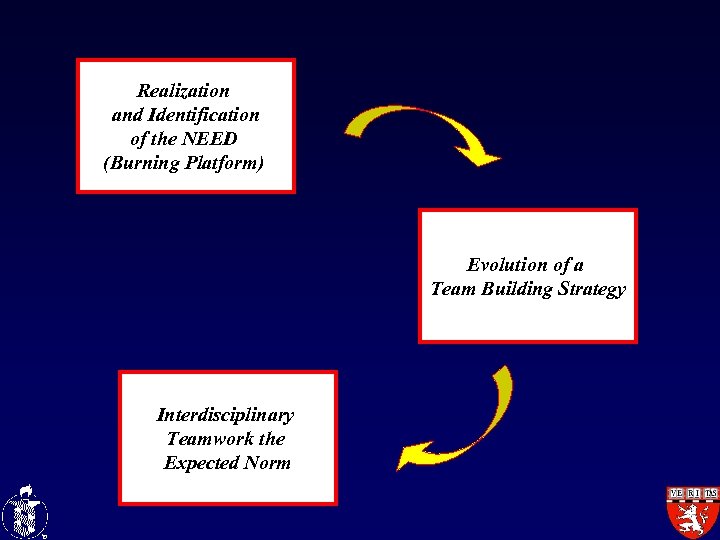
Realization and Identification of the NEED (Burning Platform) Evolution of a Team Building Strategy Interdisciplinary Teamwork the Expected Norm
TEAM DYNAMICS in SURGERY Beth Israel Deaconess Surgical Safety Team And Harvard Risk Management Foundation Copyright: Donald W. Moorman, M. D. and BIDMC Surgery, 2004
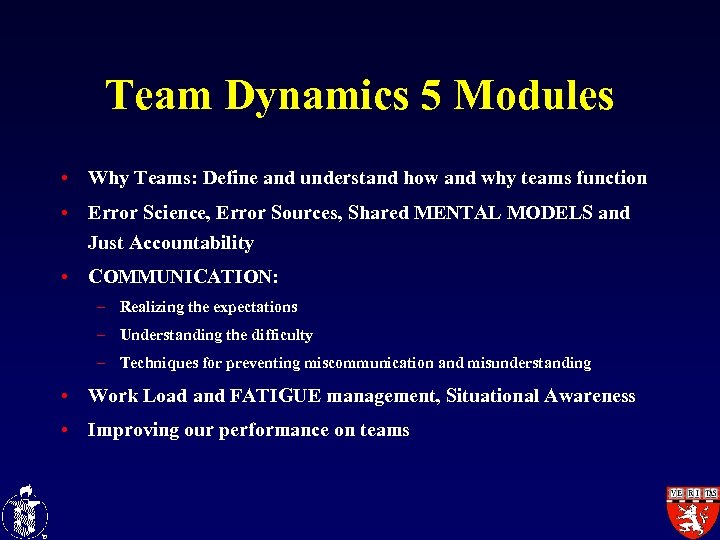
Team Dynamics 5 Modules • Why Teams: Define and understand how and why teams function • Error Science, Error Sources, Shared MENTAL MODELS and Just Accountability • COMMUNICATION: – Realizing the expectations – Understanding the difficulty – Techniques for preventing miscommunication and misunderstanding • Work Load and FATIGUE management, Situational Awareness • Improving our performance on teams
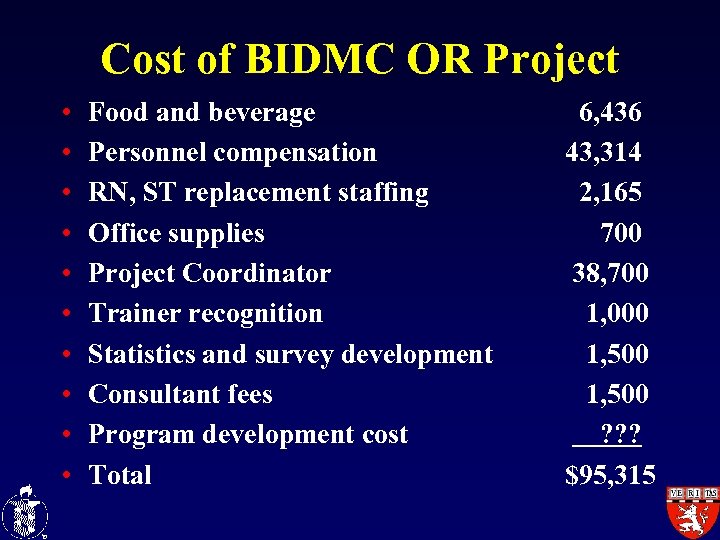
Cost of BIDMC OR Project • • • Food and beverage Personnel compensation RN, ST replacement staffing Office supplies Project Coordinator Trainer recognition Statistics and survey development Consultant fees Program development cost Total 6, 436 43, 314 2, 165 700 38, 700 1, 000 1, 500 ? ? ? $95, 315
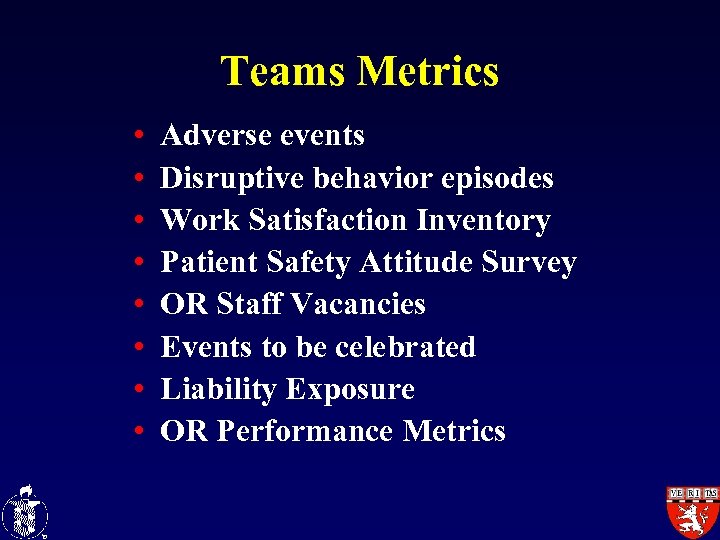
Teams Metrics • • Adverse events Disruptive behavior episodes Work Satisfaction Inventory Patient Safety Attitude Survey OR Staff Vacancies Events to be celebrated Liability Exposure OR Performance Metrics
OR Metrics: An Emerging Business Case for Interdisciplinary Team Culture
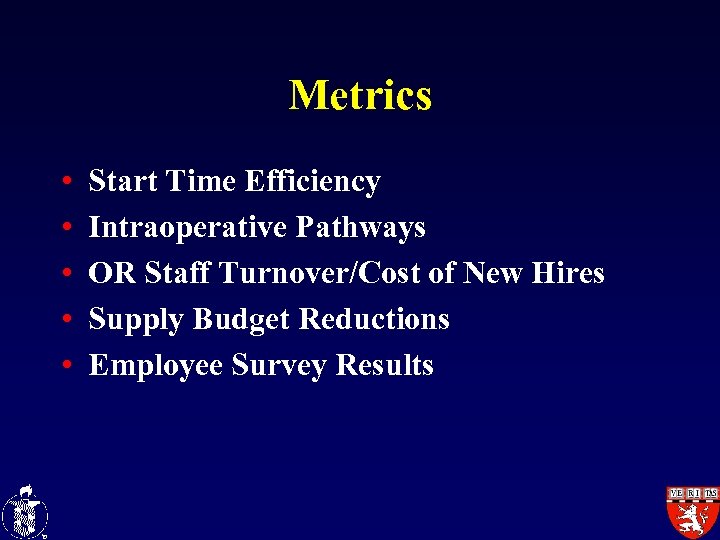
Metrics • • • Start Time Efficiency Intraoperative Pathways OR Staff Turnover/Cost of New Hires Supply Budget Reductions Employee Survey Results
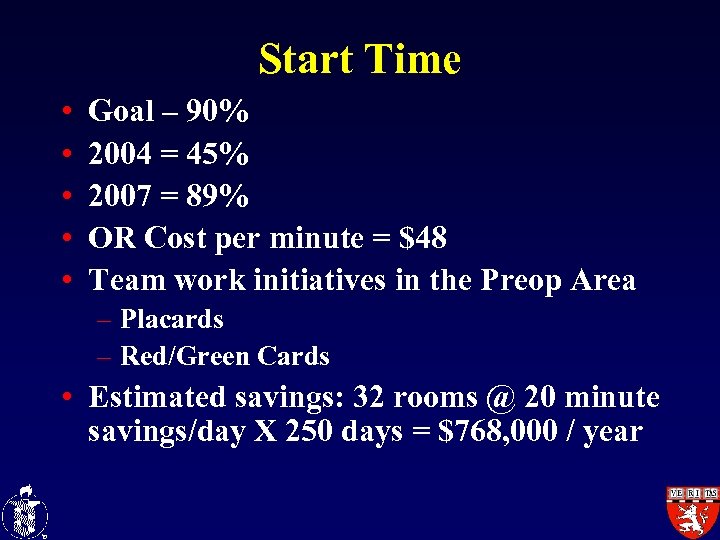
Start Time • • • Goal – 90% 2004 = 45% 2007 = 89% OR Cost per minute = $48 Team work initiatives in the Preop Area – Placards – Red/Green Cards • Estimated savings: 32 rooms @ 20 minute savings/day X 250 days = $768, 000 / year
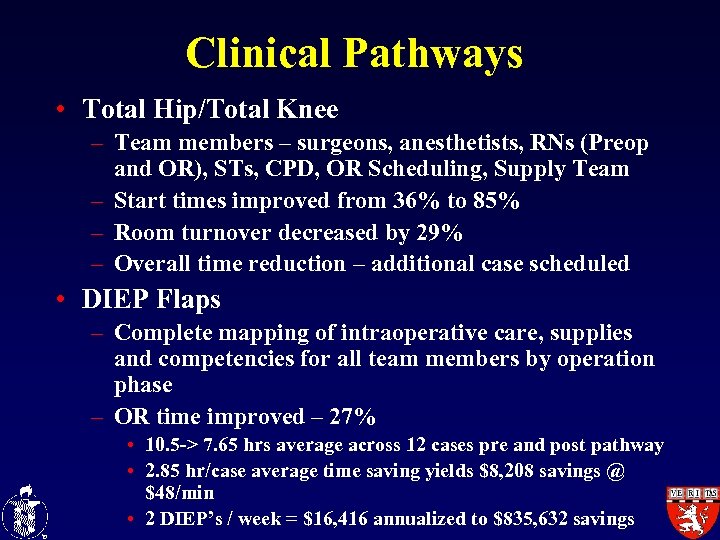
Clinical Pathways • Total Hip/Total Knee – Team members – surgeons, anesthetists, RNs (Preop and OR), STs, CPD, OR Scheduling, Supply Team – Start times improved from 36% to 85% – Room turnover decreased by 29% – Overall time reduction – additional case scheduled • DIEP Flaps – Complete mapping of intraoperative care, supplies and competencies for all team members by operation phase – OR time improved – 27% • 10. 5 -> 7. 65 hrs average across 12 cases pre and post pathway • 2. 85 hr/case average time saving yields $8, 208 savings @ $48/min • 2 DIEP’s / week = $16, 416 annualized to $835, 632 savings
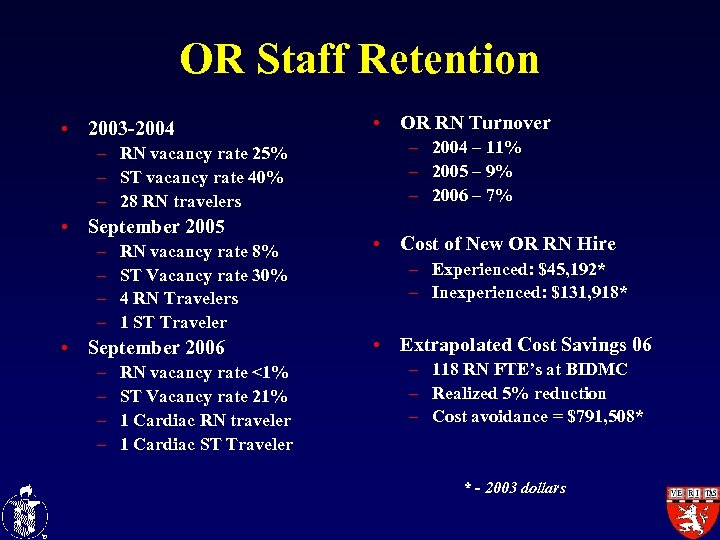
OR Staff Retention • 2003 -2004 – RN vacancy rate 25% – ST vacancy rate 40% – 28 RN travelers • September 2005 – – RN vacancy rate 8% ST Vacancy rate 30% 4 RN Travelers 1 ST Traveler • September 2006 – – RN vacancy rate <1% ST Vacancy rate 21% 1 Cardiac RN traveler 1 Cardiac ST Traveler • OR RN Turnover – 2004 – 11% – 2005 – 9% – 2006 – 7% • Cost of New OR RN Hire – Experienced: $45, 192* – Inexperienced: $131, 918* • Extrapolated Cost Savings 06 – 118 RN FTE’s at BIDMC – Realized 5% reduction – Cost avoidance = $791, 508* * - 2003 dollars
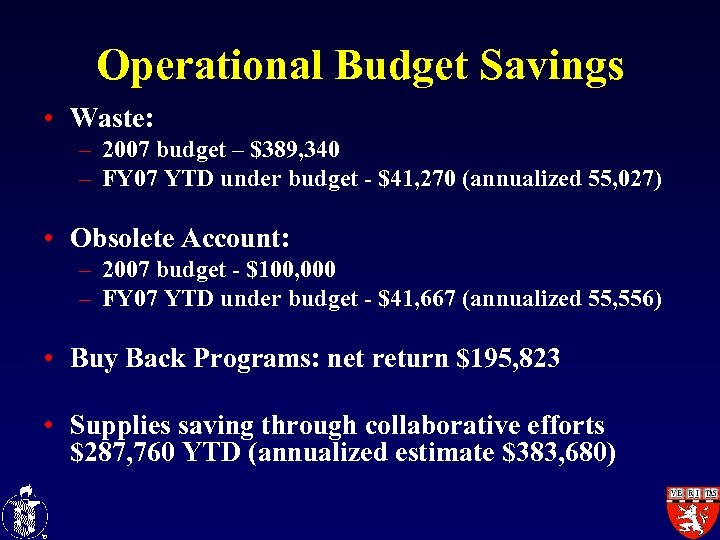
Operational Budget Savings • Waste: – 2007 budget – $389, 340 – FY 07 YTD under budget - $41, 270 (annualized 55, 027) • Obsolete Account: – 2007 budget - $100, 000 – FY 07 YTD under budget - $41, 667 (annualized 55, 556) • Buy Back Programs: net return $195, 823 • Supplies saving through collaborative efforts $287, 760 YTD (annualized estimate $383, 680)
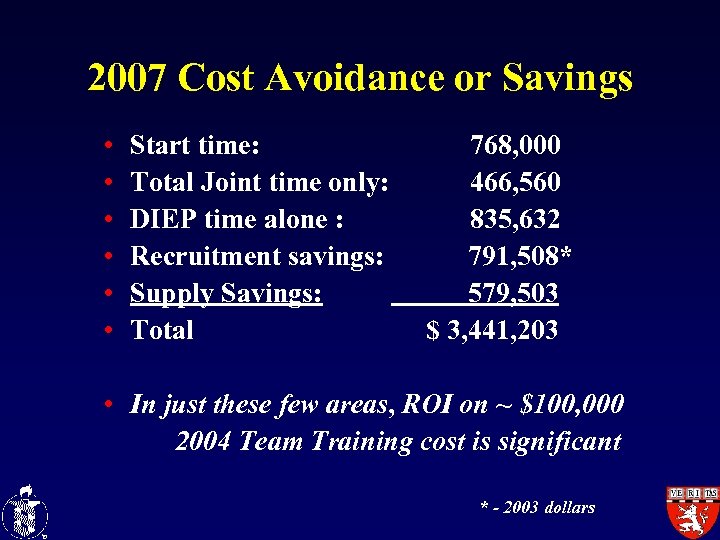
2007 Cost Avoidance or Savings • • • Start time: Total Joint time only: DIEP time alone : Recruitment savings: Supply Savings: Total 768, 000 466, 560 835, 632 791, 508* 579, 503 $ 3, 441, 203 • In just these few areas, ROI on ~ $100, 000 2004 Team Training cost is significant * - 2003 dollars
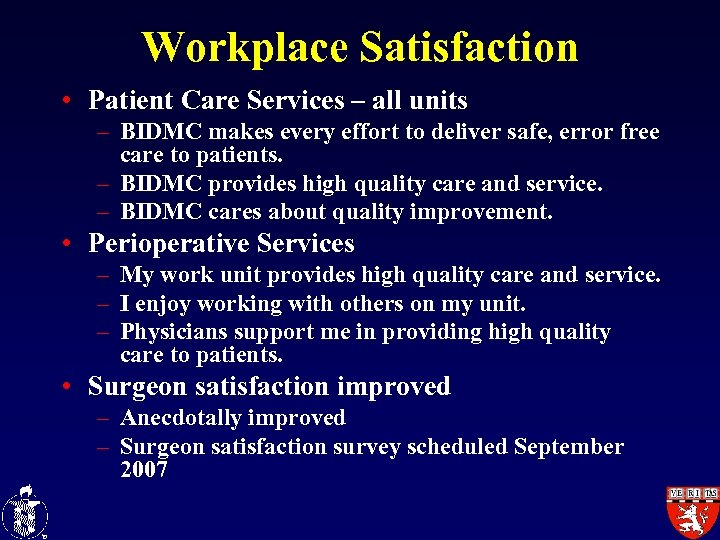
Workplace Satisfaction • Patient Care Services – all units – BIDMC makes every effort to deliver safe, error free care to patients. – BIDMC provides high quality care and service. – BIDMC cares about quality improvement. • Perioperative Services – My work unit provides high quality care and service. – I enjoy working with others on my unit. – Physicians support me in providing high quality care to patients. • Surgeon satisfaction improved – Anecdotally improved – Surgeon satisfaction survey scheduled September 2007
Can Team Paradigm Extend Beyond the OR?
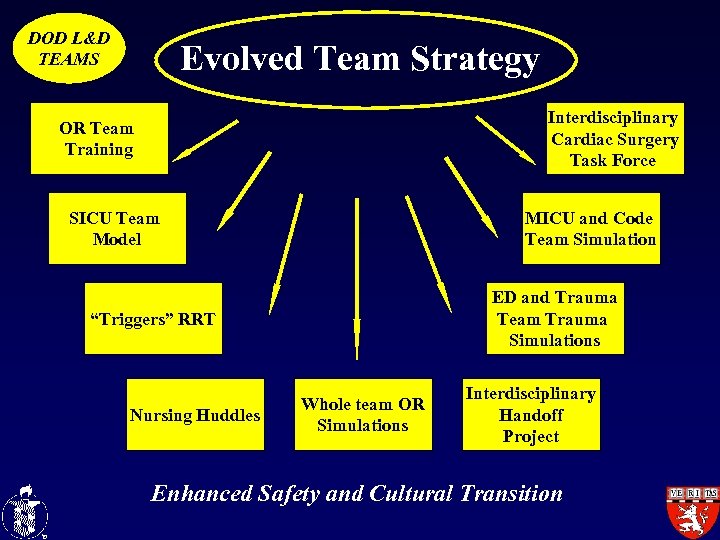
DOD L&D TEAMS Evolved Team Strategy Interdisciplinary Cardiac Surgery Task Force OR Team Training SICU Team Model MICU and Code Team Simulation ED and Trauma Team Trauma Simulations “Triggers” RRT Nursing Huddles Whole team OR Simulations Interdisciplinary Handoff Project Enhanced Safety and Cultural Transition
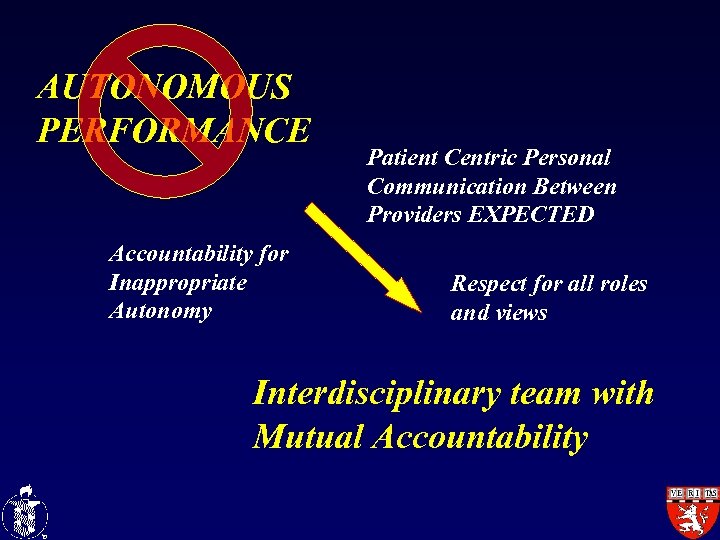
AUTONOMOUS PERFORMANCE Accountability for Inappropriate Autonomy Patient Centric Personal Communication Between Providers EXPECTED Respect for all roles and views Interdisciplinary team with Mutual Accountability
Conclusions • Morale and team function better • Team communication is good across hierarchy, especially in crisis • Retention and recruitment improved • Culture emerging which values – – All roles Monitoring and Cross Monitoring Setting expectations through briefings Communication is critical, especially around handoffs and critical events – Mutual responsibility and accountability • Team based performance IS cost effective
Change Requires Energy “Culture does not change because we desire to change it. Culture changes when the organization is transformed; the culture reflects the realities of people working together every day. ” Frances Hesselbein, The Key to Cultural Transformation, Leader to Leader (Spring 1999)
Скачать презентацию Building More Effective Teams in Surgery Donald W
8d976c742816a54bb14b810d59f35a1f.ppt