 Скачать презентацию Building Graduate Communities A Policy Imperative for Knowledge-based
47a25c109a0198e4621371243189a312.ppt
- Количество слайдов: 15



Building Graduate Communities: A Policy Imperative for Knowledge-based Societies University of Alberta and China Scholarship Council Conference “Quality and Relevance: Canada-China Forum on Graduate Education and Research”, 26 and 27 th of August 2010. Louis Maheu, FRSC, Emeritus professor, Department of Sociology, University of Montreal, Canada
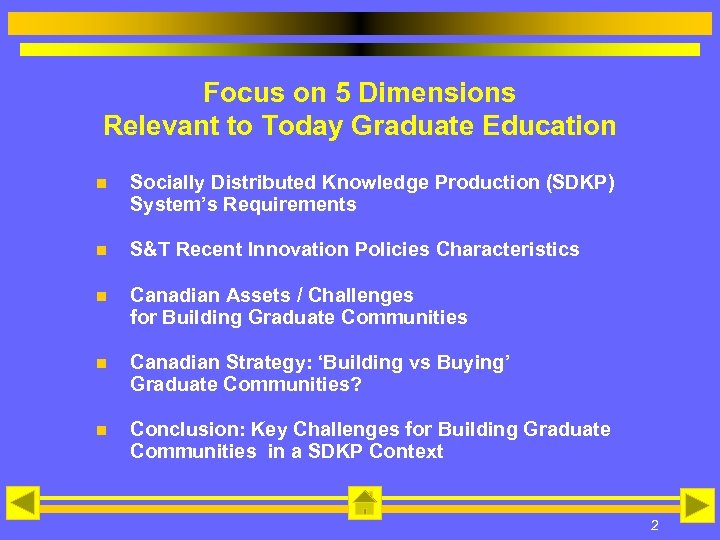
Focus on 5 Dimensions Relevant to Today Graduate Education n Socially Distributed Knowledge Production (SDKP) System’s Requirements n S&T Recent Innovation Policies Characteristics n Canadian Assets / Challenges for Building Graduate Communities n Canadian Strategy: ‘Building vs Buying’ Graduate Communities? n Conclusion: Key Challenges for Building Graduate Communities in a SDKP Context 2
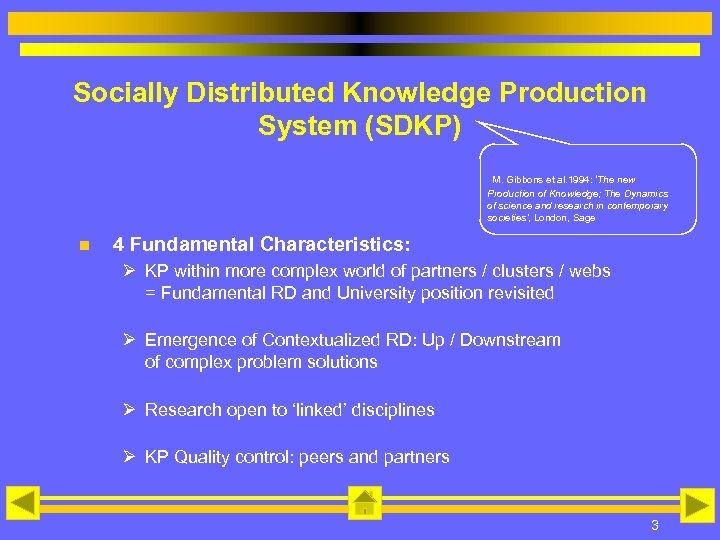
Socially Distributed Knowledge Production System (SDKP) M. Gibbons et al. 1994: ‘The new Production of Knowledge; The Dynamics of science and research in contemporary societies’, London, Sage n 4 Fundamental Characteristics: Ø KP within more complex world of partners / clusters / webs = Fundamental RD and University position revisited Ø Emergence of Contextualized RD: Up / Downstream of complex problem solutions Ø Research open to ‘linked’ disciplines Ø KP Quality control: peers and partners 3
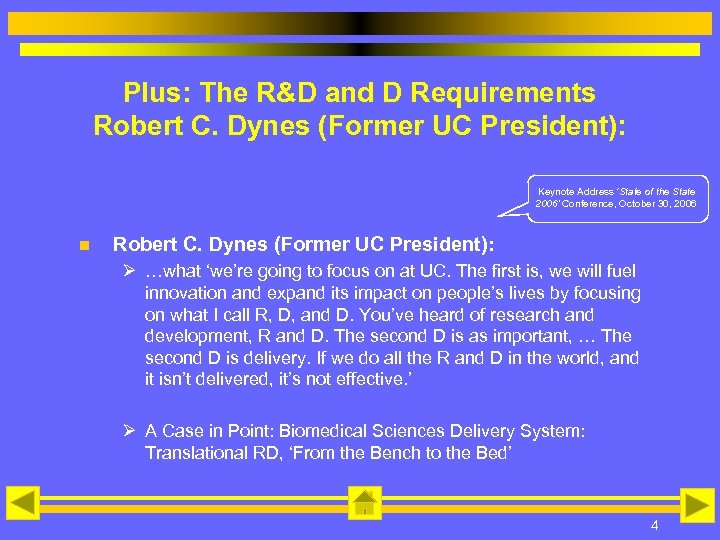
Plus: The R&D and D Requirements Robert C. Dynes (Former UC President): Keynote Address ‘State of the State 2006’ Conference, October 30, 2006 n Robert C. Dynes (Former UC President): Ø …what ‘we’re going to focus on at UC. The first is, we will fuel innovation and expand its impact on people’s lives by focusing on what I call R, D, and D. You’ve heard of research and development, R and D. The second D is as important, … The second D is delivery. If we do all the R and D in the world, and it isn’t delivered, it’s not effective. ’ Ø A Case in Point: Biomedical Sciences Delivery System: Translational RD, ‘From the Bench to the Bed’ 4
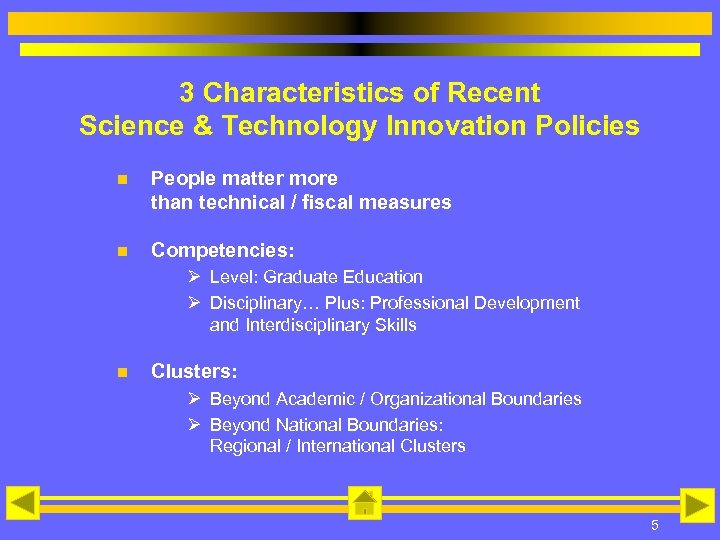
3 Characteristics of Recent Science & Technology Innovation Policies n People matter more than technical / fiscal measures n Competencies: Ø Level: Graduate Education Ø Disciplinary… Plus: Professional Development and Interdisciplinary Skills n Clusters: Ø Beyond Academic / Organizational Boundaries Ø Beyond National Boundaries: Regional / International Clusters 5
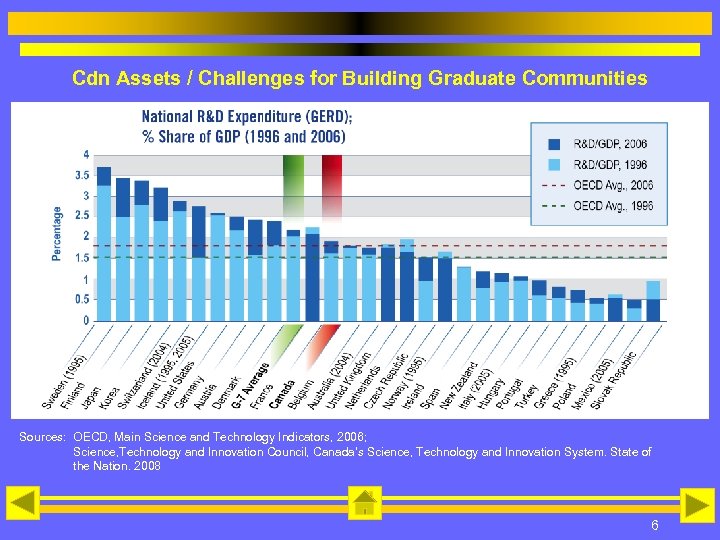
Cdn Assets / Challenges for Building Graduate Communities Sources: OECD, Main Science and Technology Indicators, 2006; Science, Technology and Innovation Council, Canada’s Science, Technology and Innovation System. State of the Nation. 2008 6
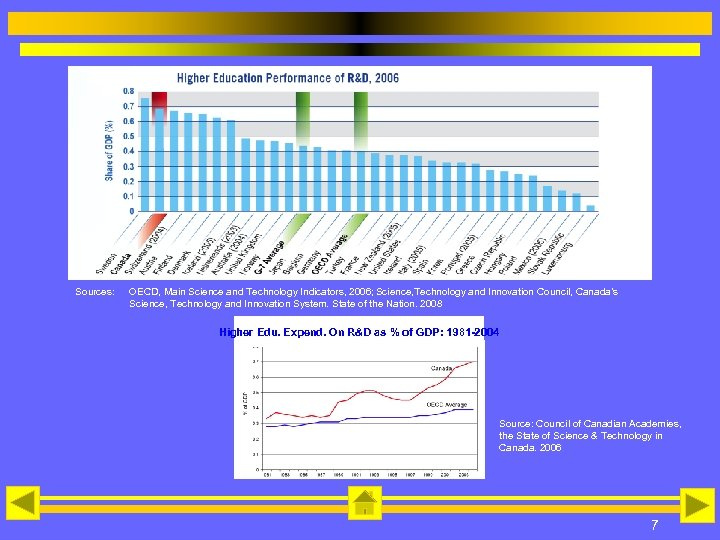
Higher Education Performance of R&D, 2006 Sources: OECD, Main Science and Technology Indicators, 2006; Science, Technology and Innovation Council, Canada’s Science, Technology and Innovation System. State of the Nation. 2008 Higher Edu. Expend. On R&D as % of GDP: 1981 -2004 Source: Council of Canadian Academies, the State of Science & Technology in Canada. 2006 7
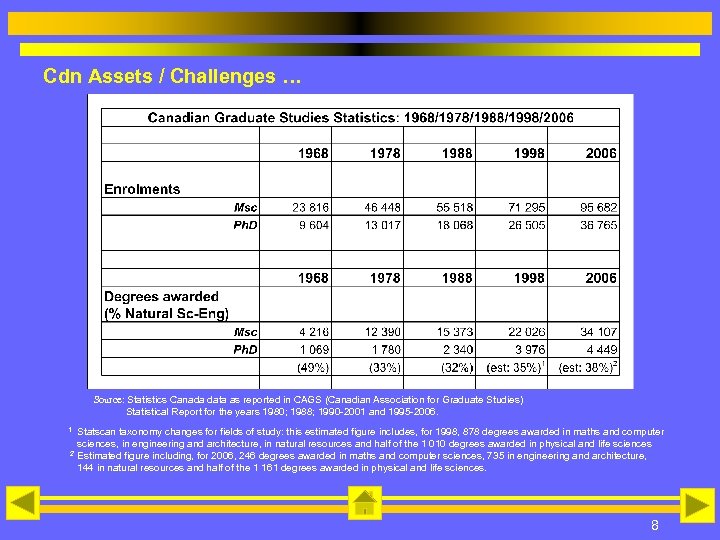
Cdn Assets / Challenges … Source: Statistics Canada data as reported in CAGS (Canadian Association for Graduate Studies) Statistical Report for the years 1980; 1988; 1990 -2001 and 1995 -2006. 1 2 Statscan taxonomy changes for fields of study: this estimated figure includes, for 1998, 878 degrees awarded in maths and computer sciences, in engineering and architecture, in natural resources and half of the 1 010 degrees awarded in physical and life sciences Estimated figure including, for 2006, 246 degrees awarded in maths and computer sciences, 735 in engineering and architecture, 144 in natural resources and half of the 1 161 degrees awarded in physical and life sciences. 8
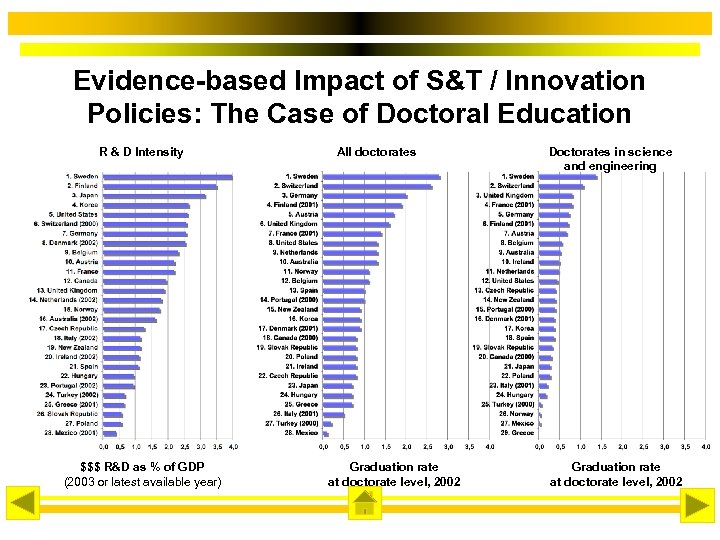
Evidence-based Impact of S&T / Innovation Policies: The Case of Doctoral Education R & D Intensity $$$ R&D as % of GDP (2003 or latest available year) All doctorates Graduation rate at doctorate level, 2002 Doctorates in science and engineering Graduation rate at doctorate level, 2002 9
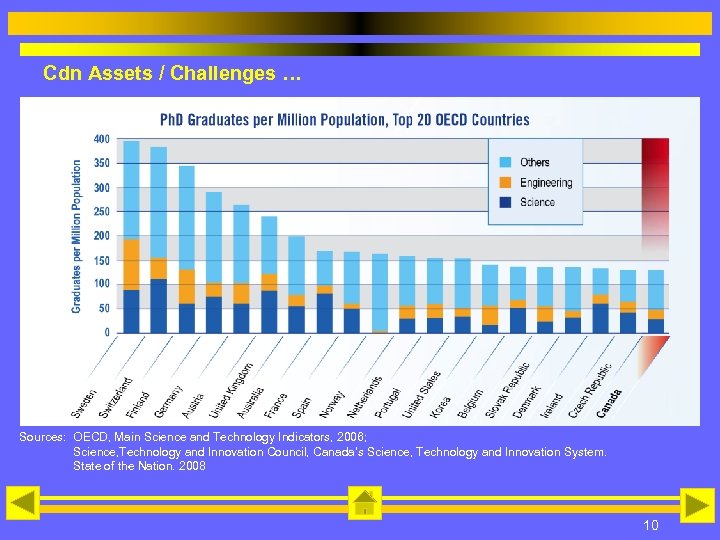
Cdn Assets / Challenges … Sources: OECD, Main Science and Technology Indicators, 2006; Science, Technology and Innovation Council, Canada’s Science, Technology and Innovation System. State of the Nation. 2008 10
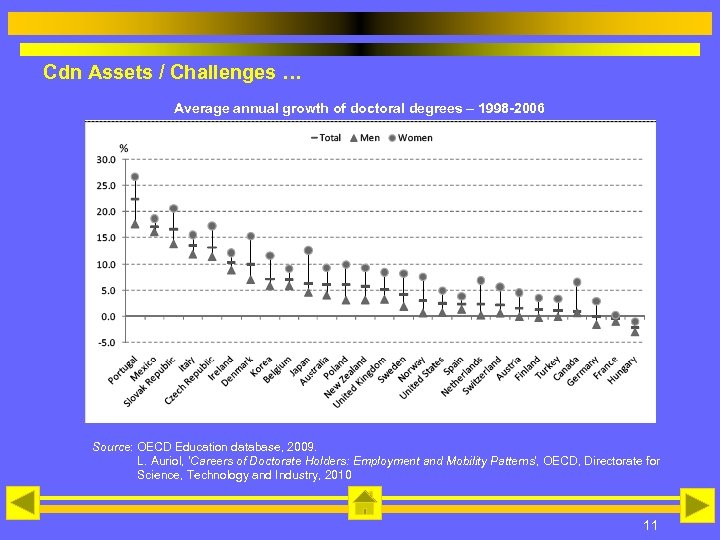
Cdn Assets / Challenges … Average annual growth of doctoral degrees – 1998 -2006 Source: OECD Education database, 2009. L. Auriol, 'Careers of Doctorate Holders: Employment and Mobility Patterns', OECD, Directorate for Science, Technology and Industry, 2010 11
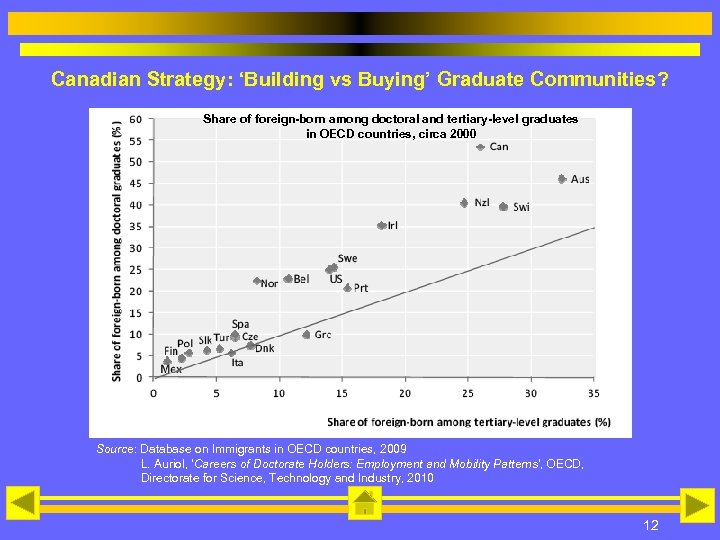
Canadian Strategy: ‘Building vs Buying’ Graduate Communities? Share of foreign-born among doctoral and tertiary-level graduates in OECD countries, circa 2000 Source: Database on Immigrants in OECD countries, 2009 L. Auriol, 'Careers of Doctorate Holders: Employment and Mobility Patterns', OECD, Directorate for Science, Technology and Industry, 2010 12
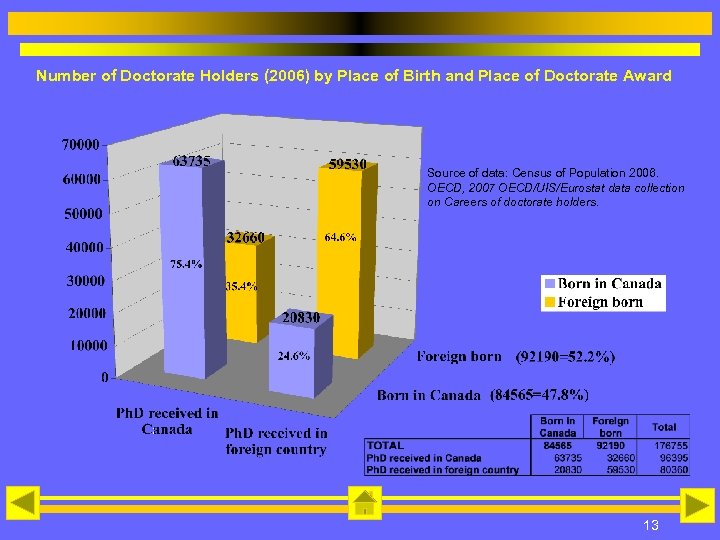
Number of Doctorate Holders (2006) by Place of Birth and Place of Doctorate Award Source of data: Census of Population 2006. OECD, 2007 OECD/UIS/Eurostat data collection on Careers of doctorate holders. 13
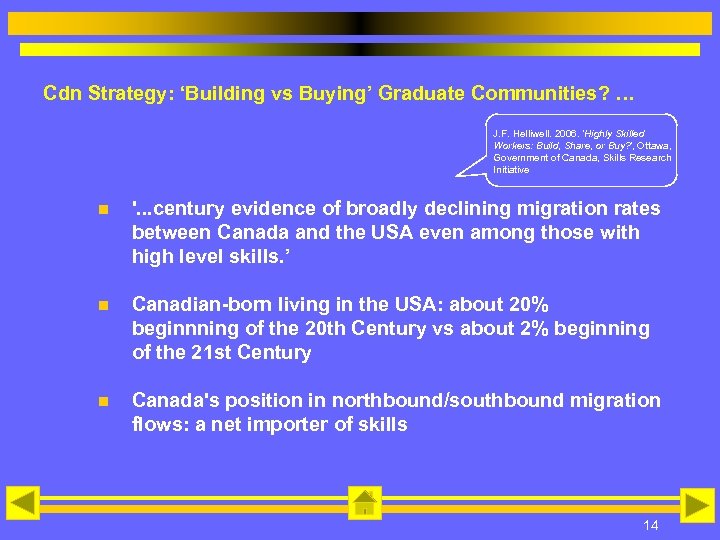
Cdn Strategy: ‘Building vs Buying’ Graduate Communities? … J. F. Helliwell. 2006. 'Highly Skilled Workers: Build, Share, or Buy? ', Ottawa, Government of Canada, Skills Research Initiative n '. . . century evidence of broadly declining migration rates between Canada and the USA even among those with high level skills. ’ n Canadian-born living in the USA: about 20% beginnning of the 20 th Century vs about 2% beginning of the 21 st Century n Canada's position in northbound/southbound migration flows: a net importer of skills 14
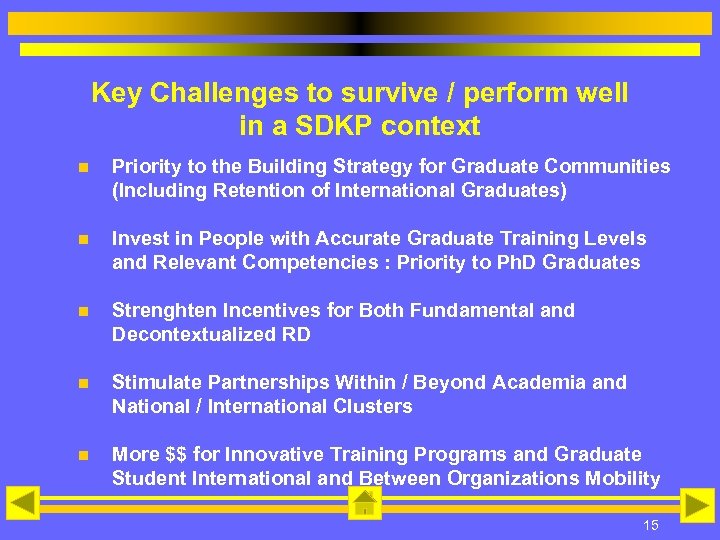
Key Challenges to survive / perform well in a SDKP context n Priority to the Building Strategy for Graduate Communities (Including Retention of International Graduates) n Invest in People with Accurate Graduate Training Levels and Relevant Competencies : Priority to Ph. D Graduates n Strenghten Incentives for Both Fundamental and Decontextualized RD n Stimulate Partnerships Within / Beyond Academia and National / International Clusters n More $$ for Innovative Training Programs and Graduate Student International and Between Organizations Mobility 15
Скачать презентацию Building Graduate Communities A Policy Imperative for Knowledge-based
47a25c109a0198e4621371243189a312.ppt