 Скачать презентацию Building an Autostereoscopic Display CS 448 A
8944da61d9e5410e22b0fde9ebe01452.ppt
- Количество слайдов: 21



Building an Autostereoscopic Display CS 448 A – Digital Photography and Image-Based Rendering Billy Chen
Original Goals • dynamic, real-time display • convenient 3 D display for the home (3 D desktops) • autostereoscopic light field viewer
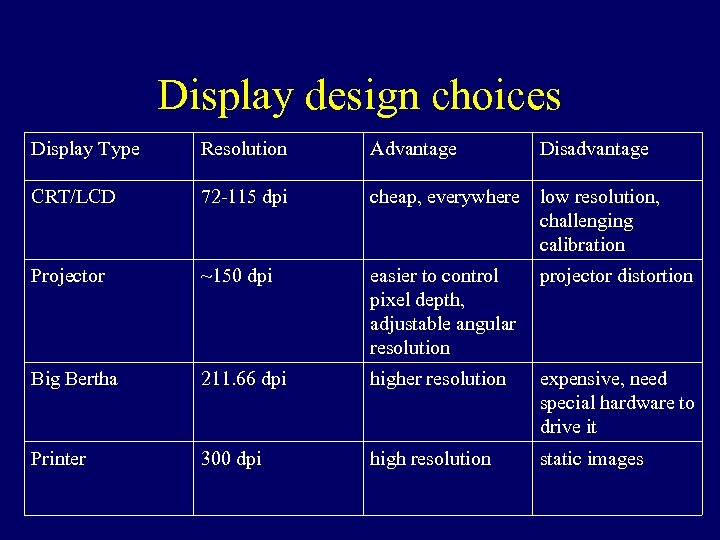
Display design choices Display Type Resolution Advantage Disadvantage CRT/LCD 72 -115 dpi cheap, everywhere low resolution, challenging calibration Projector ~150 dpi easier to control pixel depth, adjustable angular resolution projector distortion Big Bertha 211. 66 dpi higher resolution expensive, need special hardware to drive it Printer 300 dpi high resolution static images
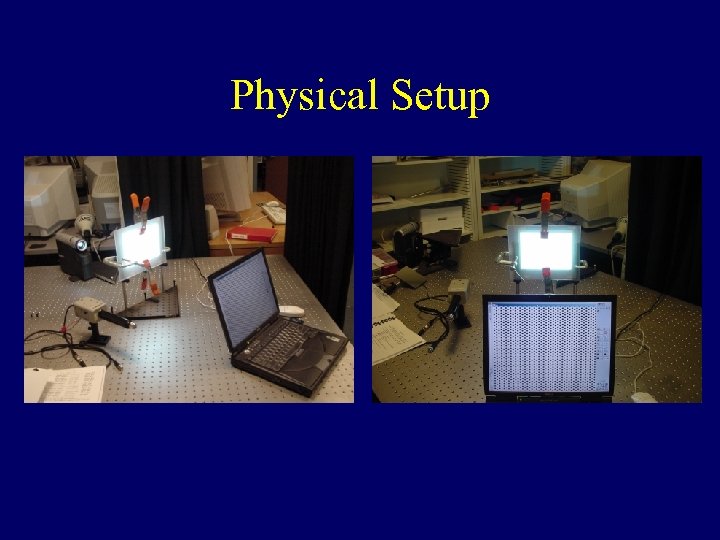
Physical Setup
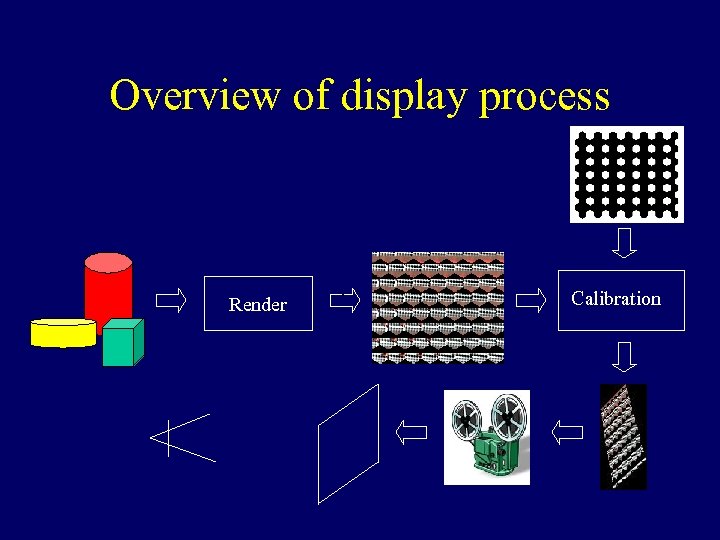
Overview of display process Render ` Calibration
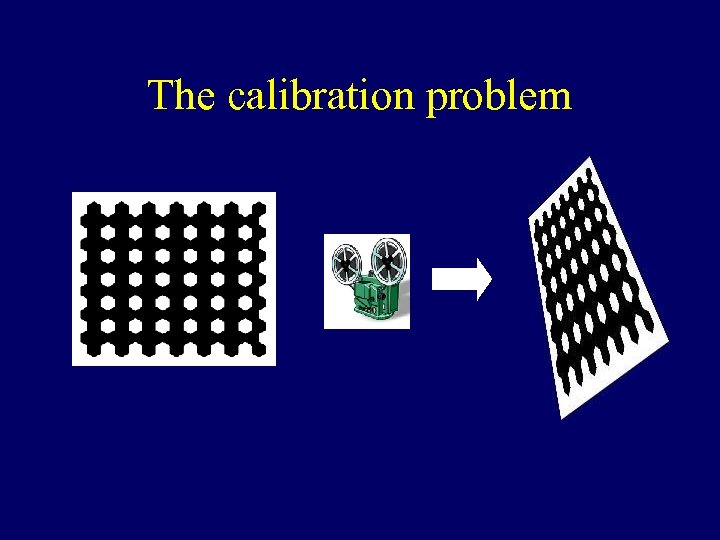
The calibration problem +
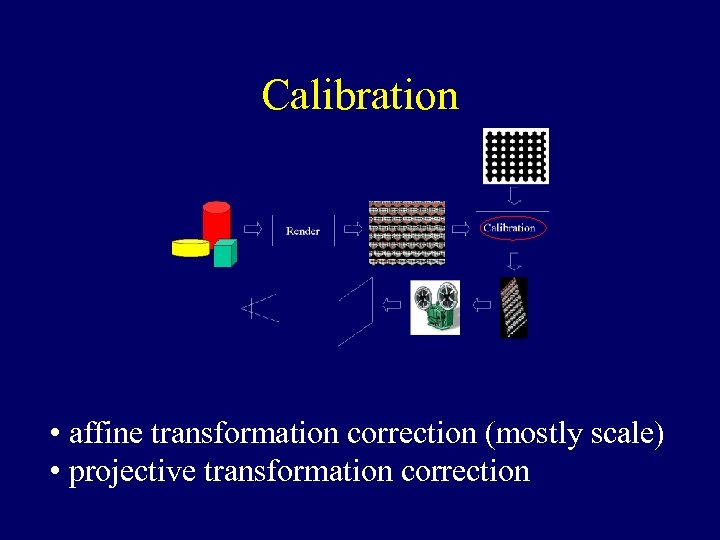
Calibration • affine transformation correction (mostly scale) • projective transformation correction
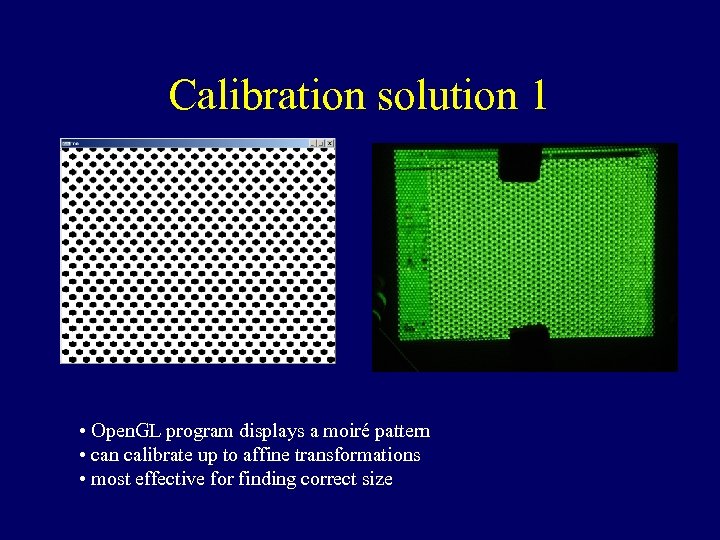
Calibration solution 1 • Open. GL program displays a moiré pattern • can calibrate up to affine transformations • most effective for finding correct size
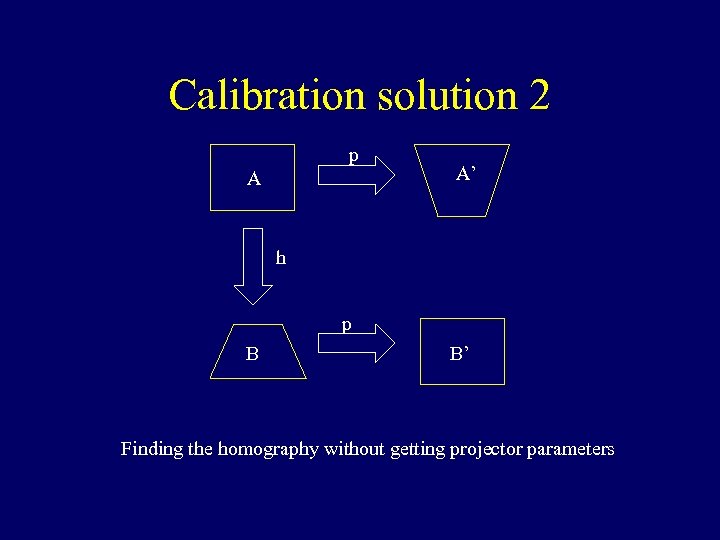
Calibration solution 2 p A A’ h p B B’ Finding the homography without getting projector parameters
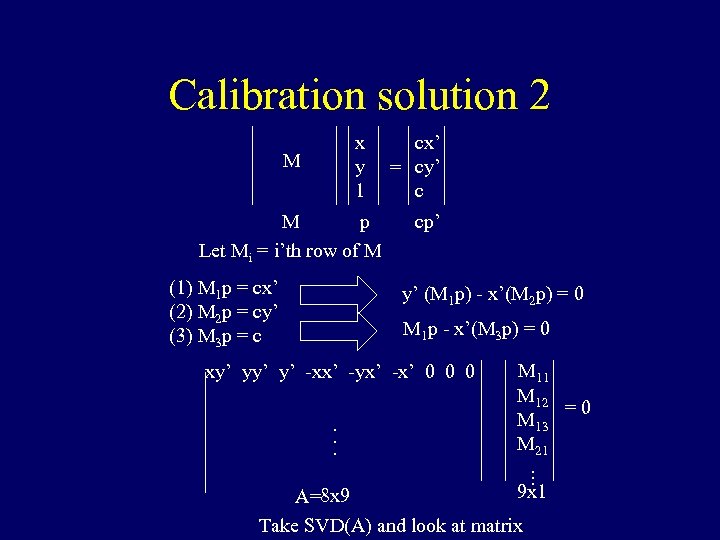
Calibration solution 2 x y 1 M M p Let Mi = i’th row of M (1) M 1 p = cx’ (2) M 2 p = cy’ (3) M 3 p = c cx’ = cy’ c cp’ y’ (M 1 p) - x’(M 2 p) = 0 M 1 p - x’(M 3 p) = 0 xy’ y’ -xx’ -yx’ -x’ 0 0 0. . . M 11 M 12 =0 M 13 M 21. . . 9 x 1 A=8 x 9 Take SVD(A) and look at matrix
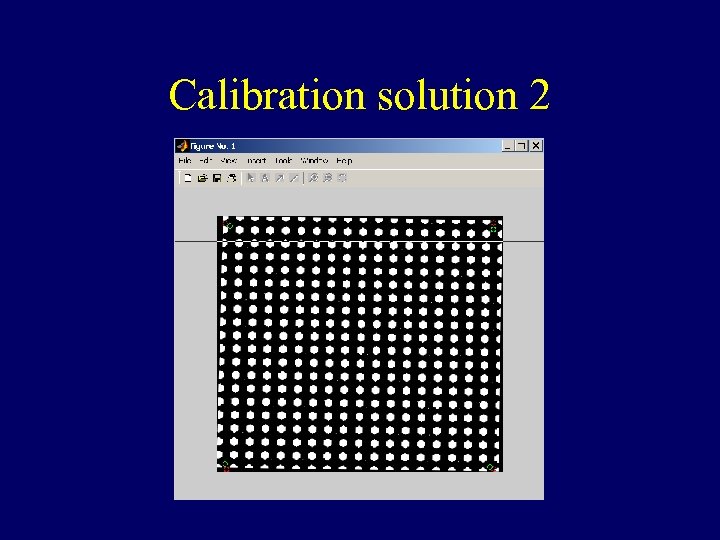
Calibration solution 2
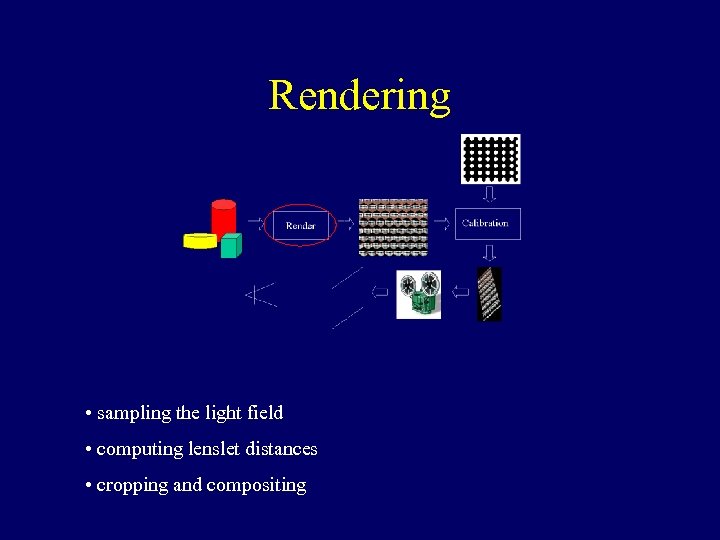
Rendering • sampling the light field • computing lenslet distances • cropping and compositing
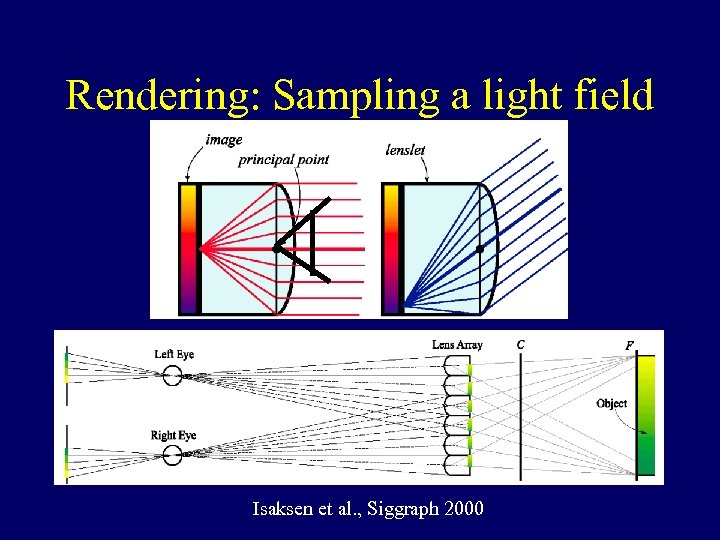
Rendering: Sampling a light field Isaksen et al. , Siggraph 2000
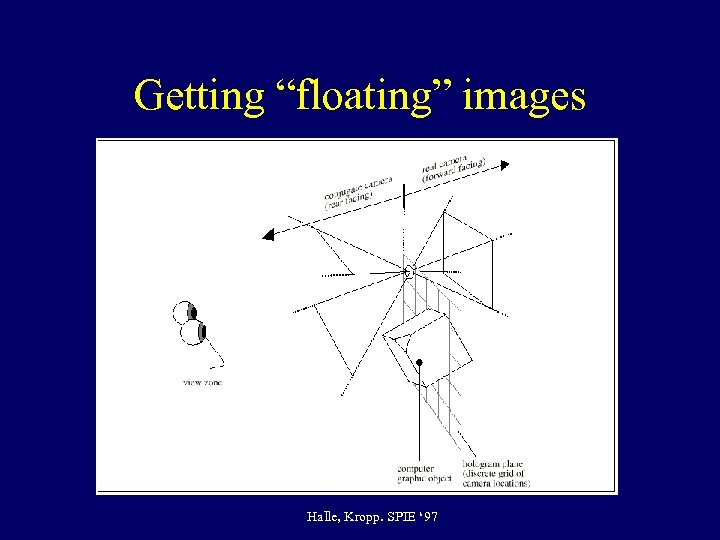
Getting “floating” images Halle, Kropp. SPIE ‘ 97
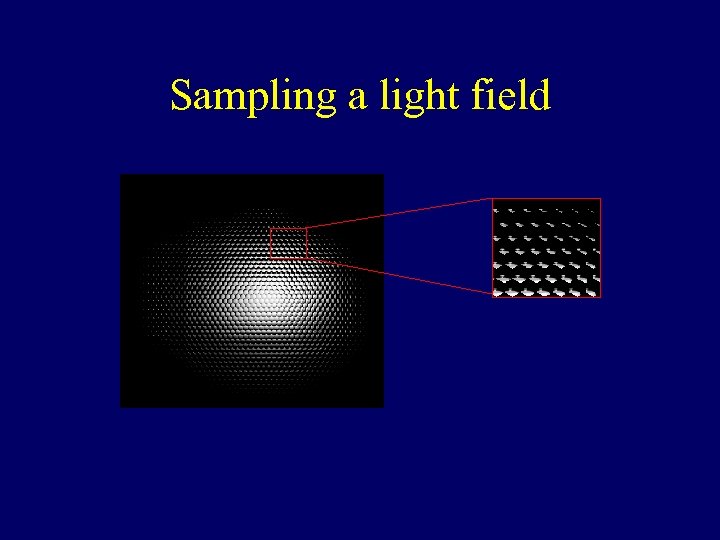
Sampling a light field
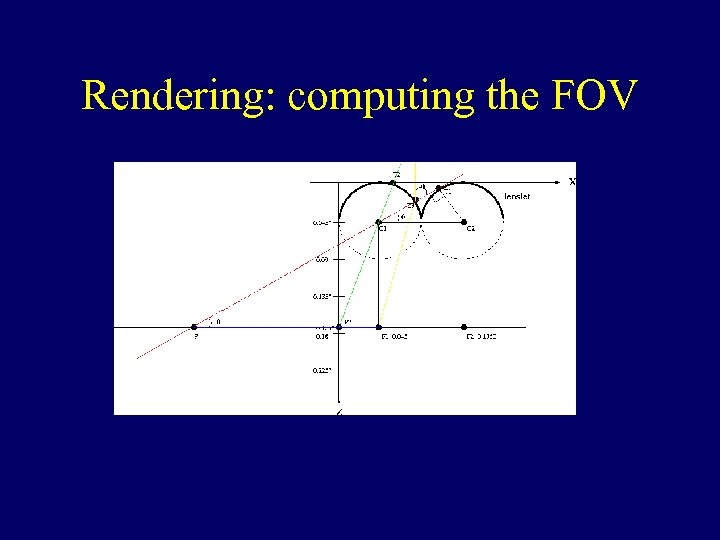
Rendering: computing the FOV
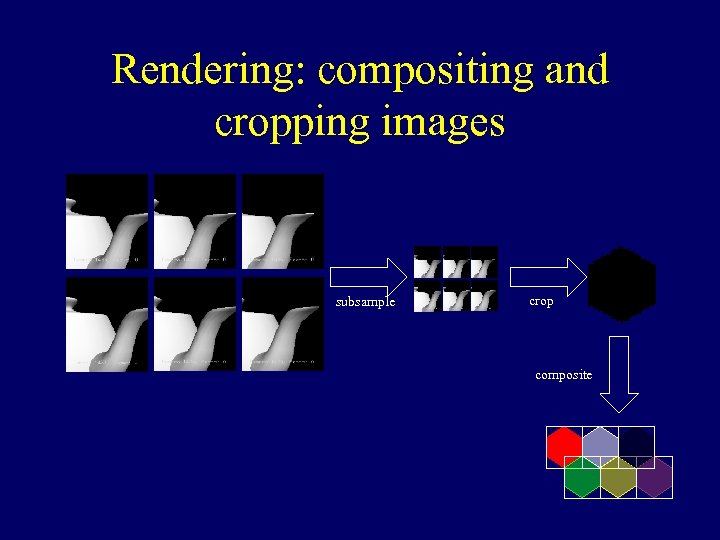
Rendering: compositing and cropping images subsample crop composite
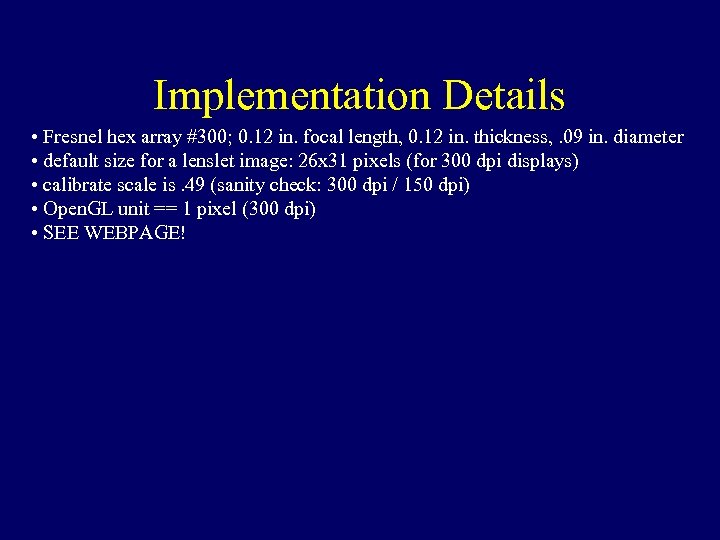
Implementation Details • Fresnel hex array #300; 0. 12 in. focal length, 0. 12 in. thickness, . 09 in. diameter • default size for a lenslet image: 26 x 31 pixels (for 300 dpi displays) • calibrate scale is. 49 (sanity check: 300 dpi / 150 dpi) • Open. GL unit == 1 pixel (300 dpi) • SEE WEBPAGE!
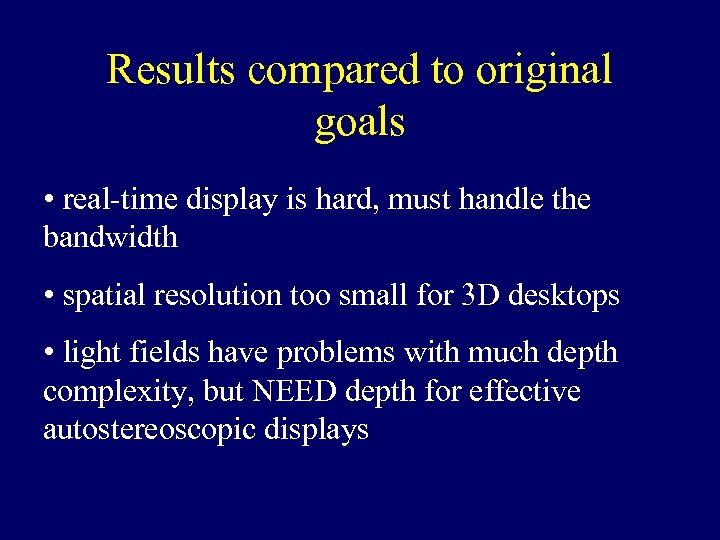
Results compared to original goals • real-time display is hard, must handle the bandwidth • spatial resolution too small for 3 D desktops • light fields have problems with much depth complexity, but NEED depth for effective autostereoscopic displays
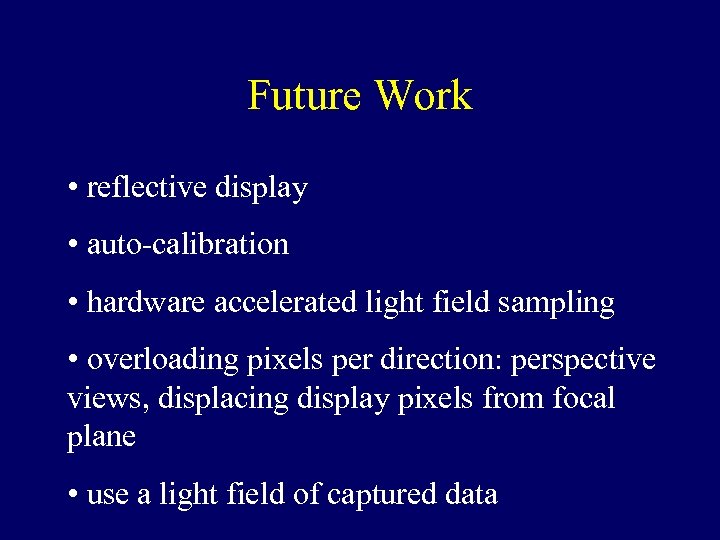
Future Work • reflective display • auto-calibration • hardware accelerated light field sampling • overloading pixels per direction: perspective views, displacing display pixels from focal plane • use a light field of captured data
Acknowledgements • calibration: Vaibhav Vaish • light field generator: Georg Petschnigg • hardware accelerated approach: Ren Ng • bootstrap: Sean Anderson
Скачать презентацию Building an Autostereoscopic Display CS 448 A
8944da61d9e5410e22b0fde9ebe01452.ppt