 Скачать презентацию Building a low-carbon economy The UK s innovation challenge
7d7ff5996c1446e6ad25da0ef3cf9fb8.ppt
- Количество слайдов: 26



Building a low-carbon economy The UK’s innovation challenge 19 th July 2010 www. theccc. org. uk
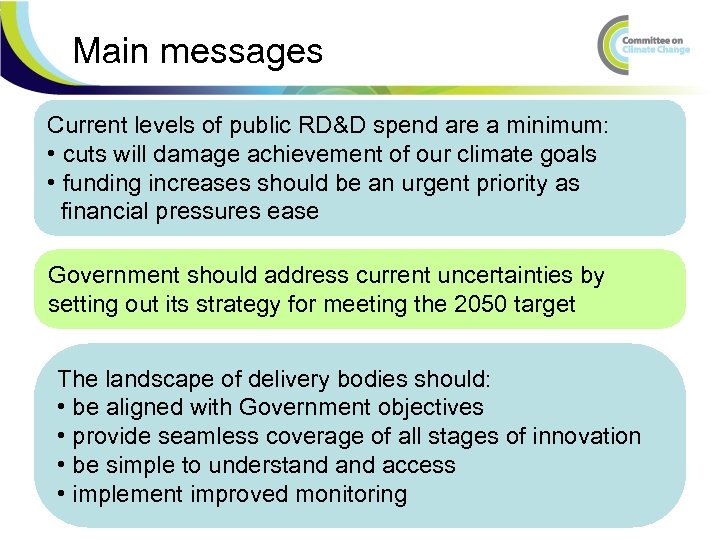
Main messages Current levels of public RD&D spend are a minimum: • cuts will damage achievement of our climate goals • funding increases should be an urgent priority as financial pressures ease Government should address current uncertainties by setting out its strategy for meeting the 2050 target The landscape of delivery bodies should: • be aligned with Government objectives • provide seamless coverage of all stages of innovation • be simple to understand access • implement improved monitoring
Presentation structure Background to the review The case for intervention Technologies the UK needs to develop & deploy Provision of public sector support The required institutional framework
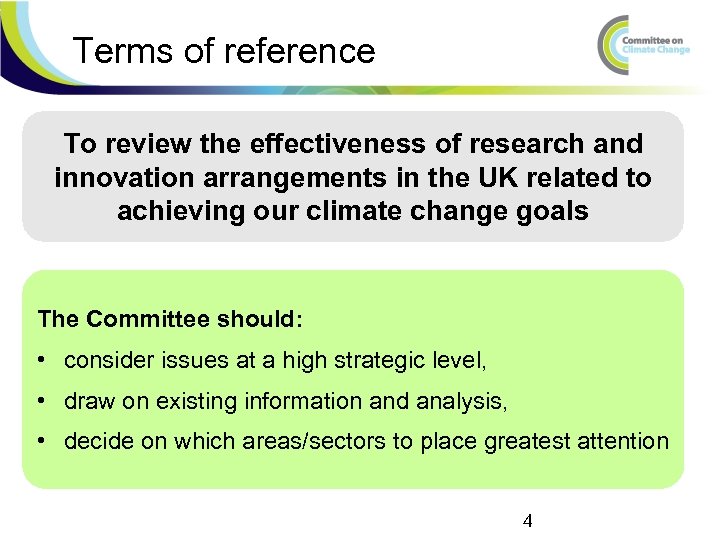
Terms of reference To review the effectiveness of research and innovation arrangements in the UK related to achieving our climate change goals The Committee should: • consider issues at a high strategic level, • draw on existing information and analysis, • decide on which areas/sectors to place greatest attention 4
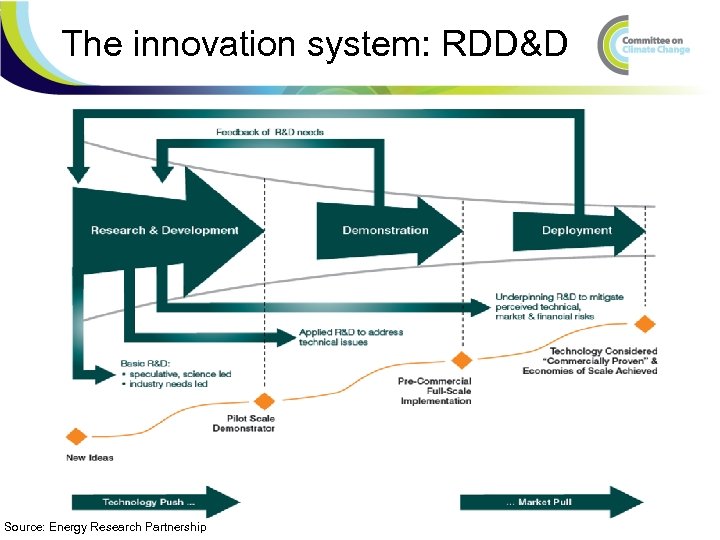
The innovation system: RDD&D Source: Energy Research Partnership
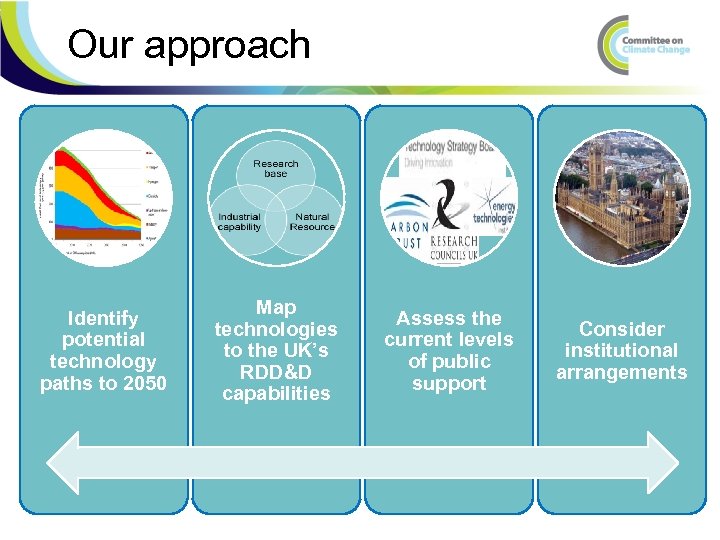
Our approach Identify potential technology paths to 2050 Map technologies to the UK’s RDD&D capabilities Assess the current levels of public support Consider institutional arrangements
Presentation structure Background to the review The case for intervention Technologies the UK needs to develop & deploy Provision of public sector support The required institutional framework
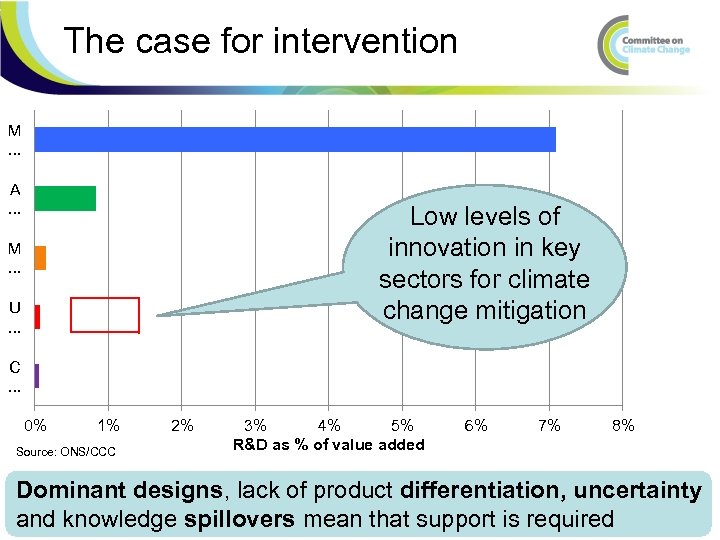
The case for intervention M. . . A. . . Low levels of innovation in key sectors for climate change mitigation M. . . U. . . C. . . 0% 1% Source: ONS/CCC 2% 3% 4% 5% R&D as % of value added 6% 7% 8% Dominant designs, lack of product differentiation, uncertainty and knowledge spillovers mean that support is required
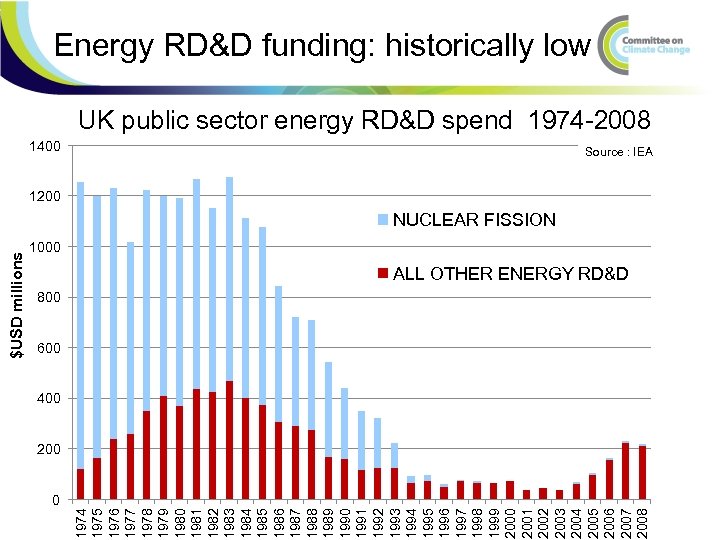
Energy RD&D funding: historically low UK public sector energy RD&D spend 1974 -2008 1400 Source : IEA 1200 1000 ALL OTHER ENERGY RD&D 800 600 400 200 0 1974 1975 1976 1977 1978 1979 1980 1981 1982 1983 1984 1985 1986 1987 1988 1989 1990 1991 1992 1993 1994 1995 1996 1997 1998 1999 2000 2001 2002 2003 2004 2005 2006 2007 2008 $USD millions NUCLEAR FISSION
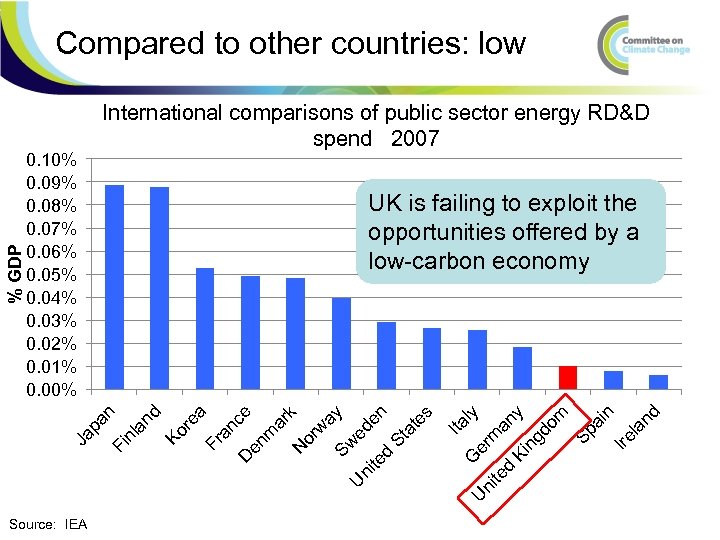
UK is failing to exploit the opportunities offered by a low-carbon economy Source: IEA Ita ly G U er ni m te a d Ki ny ng do m Sp ai n Ire la nd 0. 10% 0. 09% 0. 08% 0. 07% 0. 06% 0. 05% 0. 04% 0. 03% 0. 02% 0. 01% 0. 00% International comparisons of public sector energy RD&D spend 2007 Ja pa n Fi nl an d Ko re a Fr an ce D en m ar k N or w a Sw y U ed ni en te d St at es % GDP Compared to other countries: low
Presentation structure Background to the review The case for intervention Technologies the UK needs to develop & deploy Provision of public sector support The required institutional framework
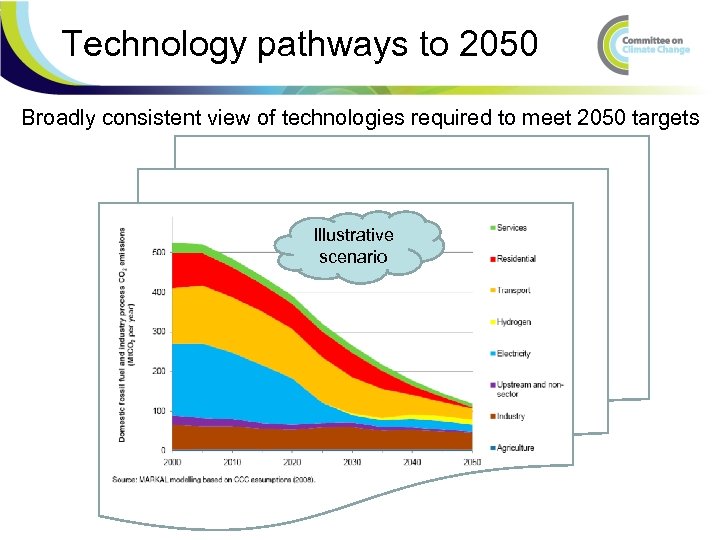
Technology pathways to 2050 Broadly consistent view of technologies required to meet 2050 targets Illustrative scenario
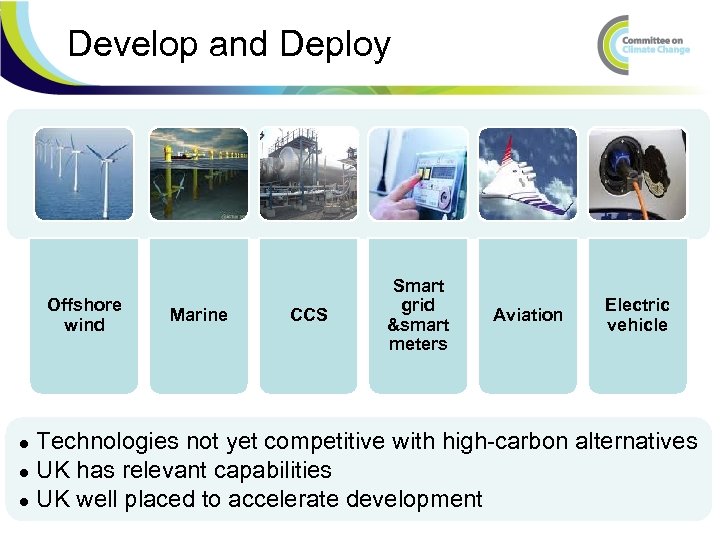
Develop and Deploy Offshore wind ● ● ● Marine CCS Smart grid &smart meters Aviation Electric vehicle Technologies not yet competitive with high-carbon alternatives UK has relevant capabilities UK well placed to accelerate development
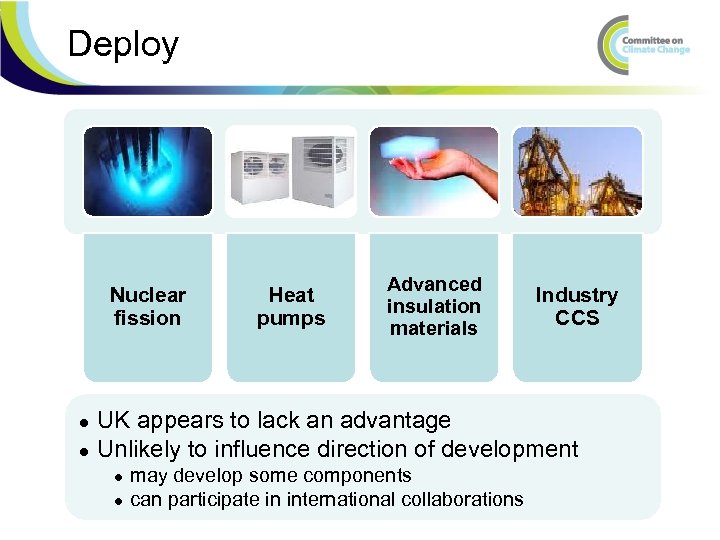
Deploy Nuclear fission ● ● Heat pumps Advanced insulation materials Industry CCS UK appears to lack an advantage Unlikely to influence direction of development ● ● may develop some components can participate in international collaborations
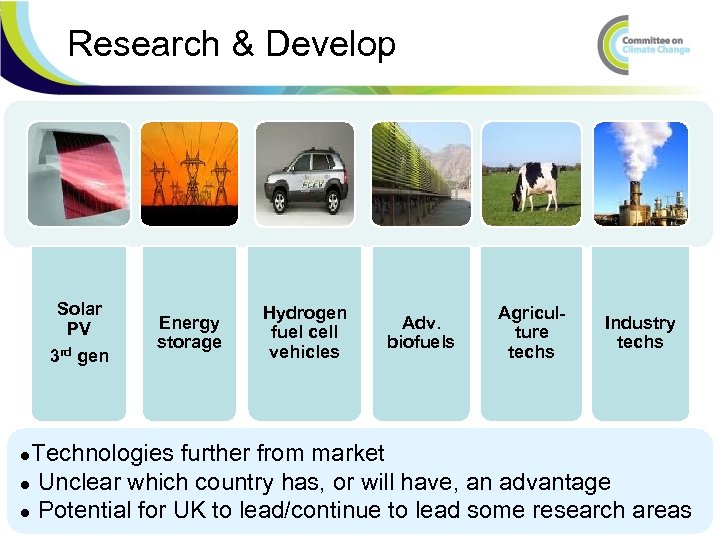
Research & Develop Solar PV 3 rd gen Energy storage Hydrogen fuel cell vehicles Adv. biofuels Agriculture techs Industry techs ●Technologies further from market ● Unclear which country has, or will have, an advantage ● Potential for UK to lead/continue to lead some research areas
Presentation structure Background to the review The case for intervention Technologies the UK needs to develop & deploy Provision of public sector support The required institutional framework
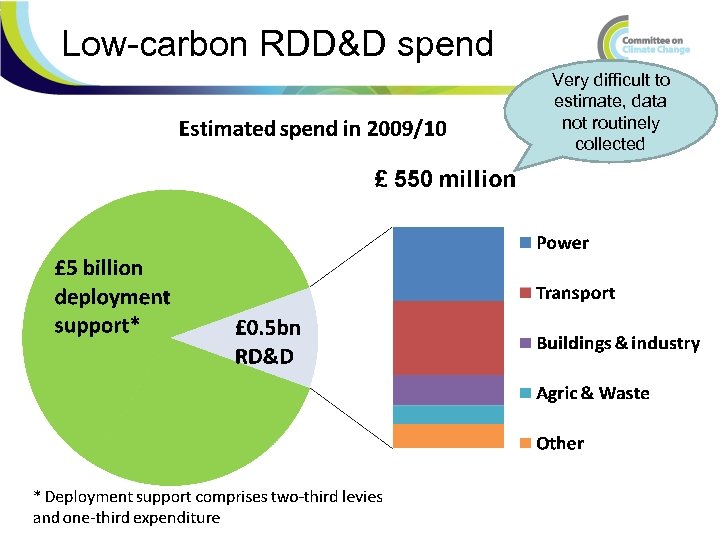
Low-carbon RDD&D spend Very difficult to estimate, data not routinely collected
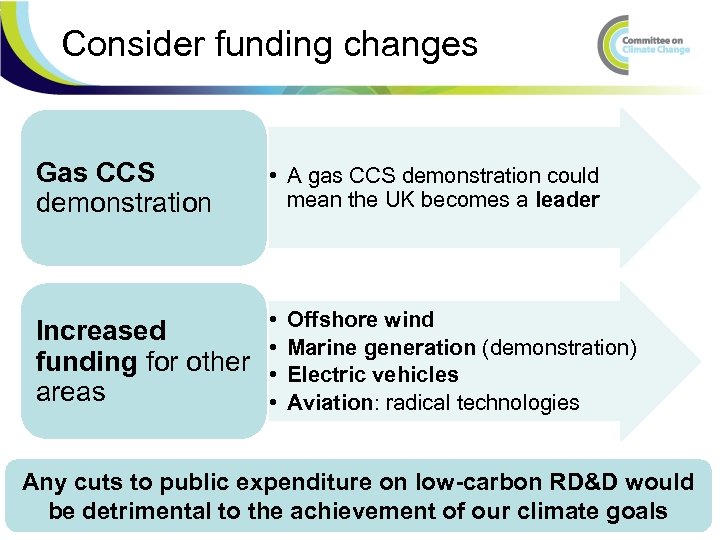
Consider funding changes Gas CCS demonstration • A gas CCS demonstration could mean the UK becomes a leader Increased funding for other areas • • Offshore wind Marine generation (demonstration) Electric vehicles Aviation: radical technologies Any cuts to public expenditure on low-carbon RD&D would be detrimental to the achievement of our climate goals
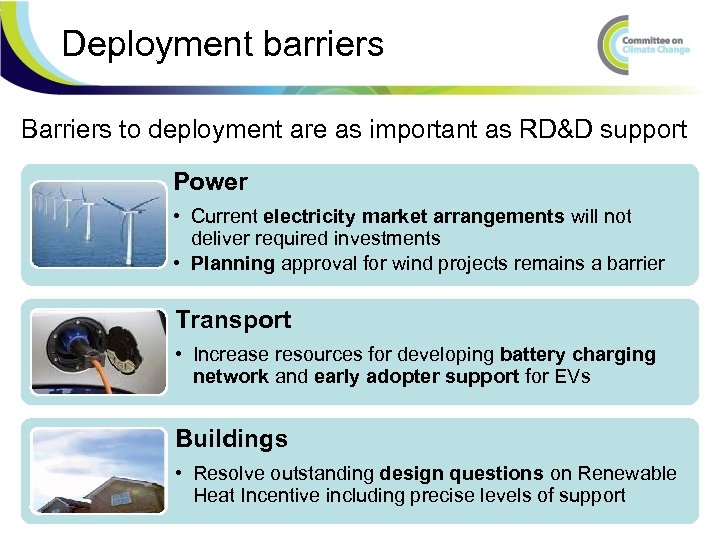
Deployment barriers Barriers to deployment are as important as RD&D support Power • Current electricity market arrangements will not deliver required investments • Planning approval for wind projects remains a barrier Transport • Increase resources for developing battery charging network and early adopter support for EVs Buildings • Resolve outstanding design questions on Renewable Heat Incentive including precise levels of support
Presentation structure Background to the review The case for intervention Technologies the UK needs to develop & deploy Provision of public sector support The required institutional framework
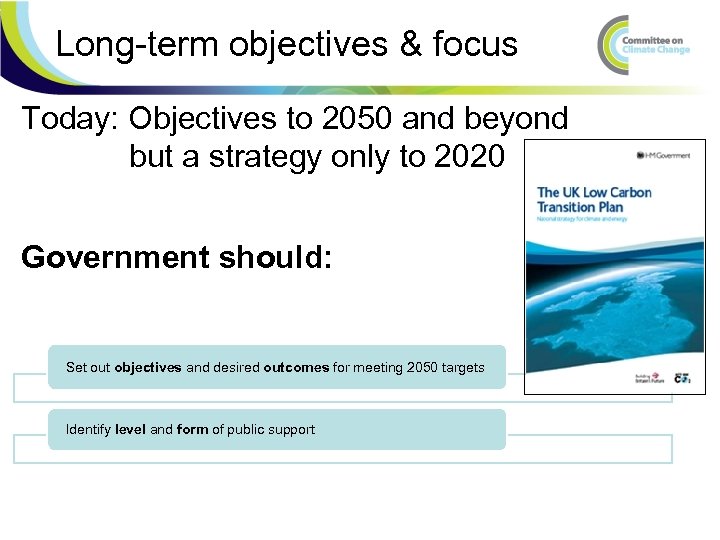
Long-term objectives & focus Today: Objectives to 2050 and beyond but a strategy only to 2020 Government should: Set out objectives and desired outcomes for meeting 2050 targets Identify level and form of public support
International engagement Government strategy should focus on increasing: UK influence on the design of European programmes Collaboration with other countries Influence on international arrangements
Delivery bodies should: Have objectives that are consistent with Government objectives Deliver better continuity and integration of support Provide clearer signposting of support
Monitoring and evaluation Improved monitoring and evaluation requires: Increased capacity to produce good quality monitoring and evaluation information Consistent collection and reporting of spend data Increased resources for measuring long-term performance
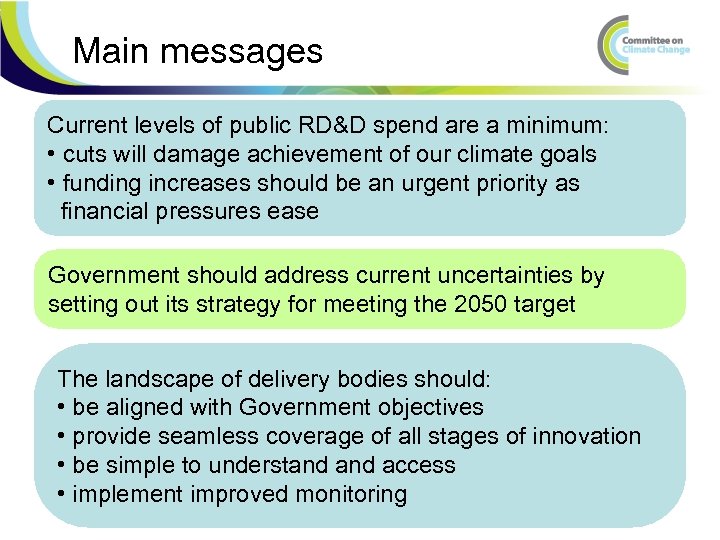
Main messages Current levels of public RD&D spend are a minimum: • cuts will damage achievement of our climate goals • funding increases should be an urgent priority as financial pressures ease Government should address current uncertainties by setting out its strategy for meeting the 2050 target The landscape of delivery bodies should: • be aligned with Government objectives • provide seamless coverage of all stages of innovation • be simple to understand access • implement improved monitoring
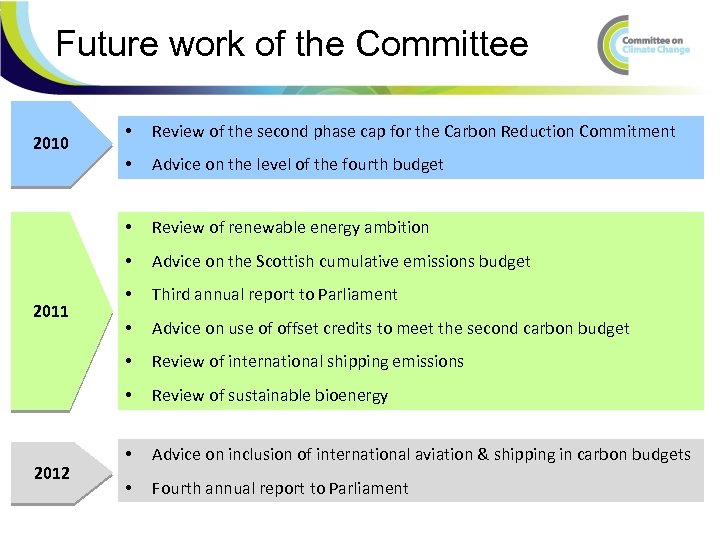
Future work of the Committee • Advice on the level of the fourth budget Review of renewable energy ambition Advice on the Scottish cumulative emissions budget • Third annual report to Parliament • Advice on use of offset credits to meet the second carbon budget • Review of international shipping emissions • 2012 Review of the second phase cap for the Carbon Reduction Commitment • 2011 • • 2010 Review of sustainable bioenergy • Advice on inclusion of international aviation & shipping in carbon budgets • Fourth annual report to Parliament
Скачать презентацию Building a low-carbon economy The UK s innovation challenge
7d7ff5996c1446e6ad25da0ef3cf9fb8.ppt