 Скачать презентацию BSE and Cosmetics FDA Risk Assessment and Management
7461b334f2fcb70875978fd9eefd3a1b.ppt
- Количество слайдов: 36



BSE and Cosmetics: FDA Risk Assessment and Management Perspectives. Stanley R. Milstein, Ph. D. , Office of Cosmetics and Colors CFSAN-Australian Embassy Presentation December 7, 2006
Cosmetic and Color Additive Regulatory Requirements n Cosmetics: ü No Pre-Market Approval (Products and Ingredients) § Color Additives: üPre-Market Approval
OCAC’s Top Risk-Based Enforcement Priorities • Safety and Security Related Ø Microbial contamination Ø Illegal color additive use Ø Bovine Spongiform Encephalopathy (BSE) Ø Bioterrorism/Counterterrorism (BT/CT)
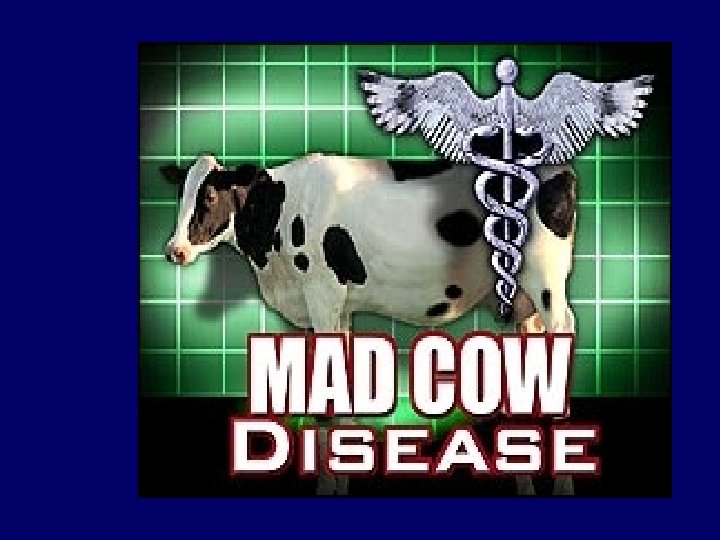
BSE and FDA Oversight of Cosmetics n OCAC has tracked the BSE epidemic since 1991.
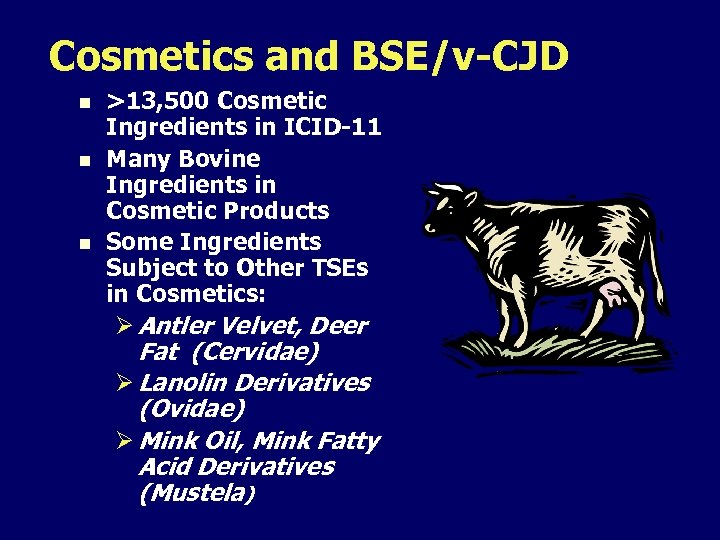
Cosmetics and BSE/v-CJD n n n >13, 500 Cosmetic Ingredients in ICID-11 Many Bovine Ingredients in Cosmetic Products Some Ingredients Subject to Other TSEs in Cosmetics: Ø Antler Velvet, Deer Fat (Cervidae) Ø Lanolin Derivatives (Ovidae) Ø Mink Oil, Mink Fatty Acid Derivatives (Mustela)
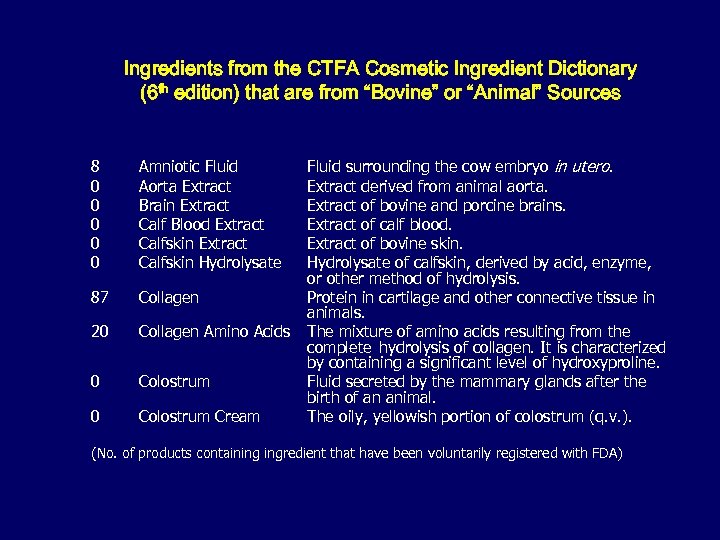
Ingredients from the CTFA Cosmetic Ingredient Dictionary (6 th edition) that are from “Bovine” or “Animal” Sources 8 0 0 0 Amniotic Fluid Aorta Extract Brain Extract Calf Blood Extract Calfskin Hydrolysate 87 Collagen 20 Collagen Amino Acids 0 Colostrum Cream Fluid surrounding the cow embryo in utero. Extract derived from animal aorta. Extract of bovine and porcine brains. Extract of calf blood. Extract of bovine skin. Hydrolysate of calfskin, derived by acid, enzyme, or other method of hydrolysis. Protein in cartilage and other connective tissue in animals. The mixture of amino acids resulting from the complete hydrolysis of collagen. It is characterized by containing a significant level of hydroxyproline. Fluid secreted by the mammary glands after the birth of an animal. The oily, yellowish portion of colostrum (q. v. ). (No. of products containing ingredient that have been voluntarily registered with FDA)
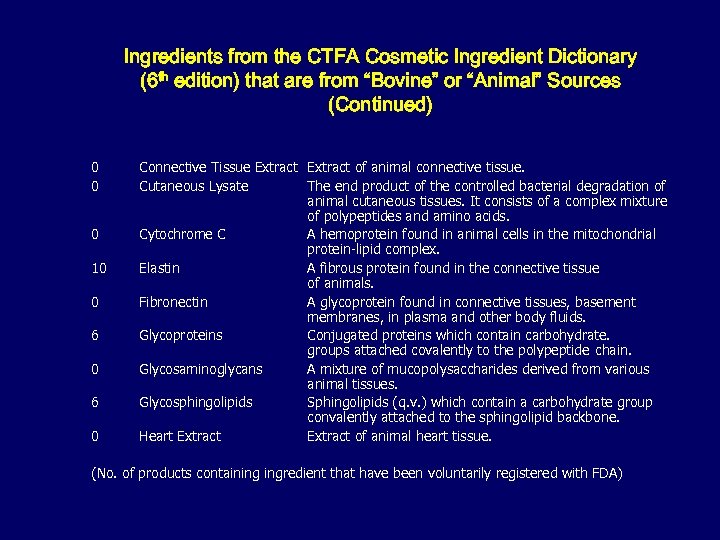
Ingredients from the CTFA Cosmetic Ingredient Dictionary (6 th edition) that are from “Bovine” or “Animal” Sources (Continued) 0 0 0 10 0 6 0 Connective Tissue Extract of animal connective tissue. Cutaneous Lysate The end product of the controlled bacterial degradation of animal cutaneous tissues. It consists of a complex mixture of polypeptides and amino acids. Cytochrome C A hemoprotein found in animal cells in the mitochondrial protein-lipid complex. Elastin A fibrous protein found in the connective tissue of animals. Fibronectin A glycoprotein found in connective tissues, basement membranes, in plasma and other body fluids. Glycoproteins Conjugated proteins which contain carbohydrate. groups attached covalently to the polypeptide chain. Glycosaminoglycans A mixture of mucopolysaccharides derived from various animal tissues. Glycosphingolipids Sphingolipids (q. v. ) which contain a carbohydrate group convalently attached to the sphingolipid backbone. Heart Extract of animal heart tissue. (No. of products containing ingredient that have been voluntarily registered with FDA)
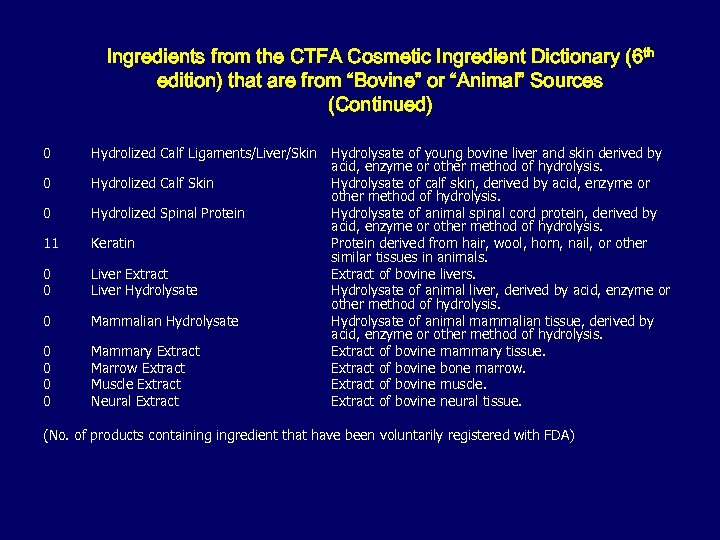
Ingredients from the CTFA Cosmetic Ingredient Dictionary (6 th edition) that are from “Bovine” or “Animal” Sources (Continued) 0 0 0 11 0 0 0 0 Hydrolized Calf Ligaments/Liver/Skin Hydrolysate of young bovine liver and skin derived by acid, enzyme or other method of hydrolysis. Hydrolized Calf Skin Hydrolysate of calf skin, derived by acid, enzyme or other method of hydrolysis. Hydrolized Spinal Protein Hydrolysate of animal spinal cord protein, derived by acid, enzyme or other method of hydrolysis. Keratin Protein derived from hair, wool, horn, nail, or other similar tissues in animals. Liver Extract of bovine livers. Liver Hydrolysate of animal liver, derived by acid, enzyme or other method of hydrolysis. Mammalian Hydrolysate of animal mammalian tissue, derived by acid, enzyme or other method of hydrolysis. Mammary Extract of bovine mammary tissue. Marrow Extract of bovine bone marrow. Muscle Extract of bovine muscle. Neural Extract of bovine neural tissue. (No. of products containing ingredient that have been voluntarily registered with FDA)
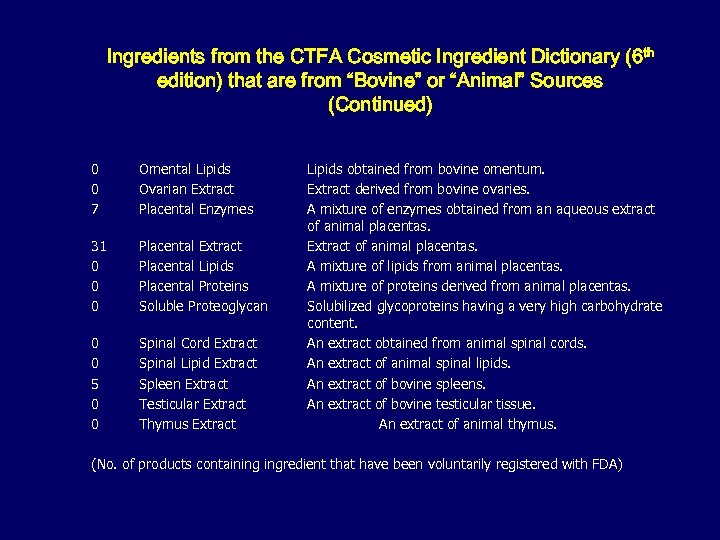
Ingredients from the CTFA Cosmetic Ingredient Dictionary (6 th edition) that are from “Bovine” or “Animal” Sources (Continued) 0 0 7 Omental Lipids Ovarian Extract Placental Enzymes 31 0 0 0 Placental Extract Placental Lipids Placental Proteins Soluble Proteoglycan 0 0 5 0 0 Spinal Cord Extract Spinal Lipid Extract Spleen Extract Testicular Extract Thymus Extract Lipids obtained from bovine omentum. Extract derived from bovine ovaries. A mixture of enzymes obtained from an aqueous extract of animal placentas. Extract of animal placentas. A mixture of lipids from animal placentas. A mixture of proteins derived from animal placentas. Solubilized glycoproteins having a very high carbohydrate content. An extract obtained from animal spinal cords. An extract of animal spinal lipids. An extract of bovine spleens. An extract of bovine testicular tissue. An extract of animal thymus. (No. of products containing ingredient that have been voluntarily registered with FDA)
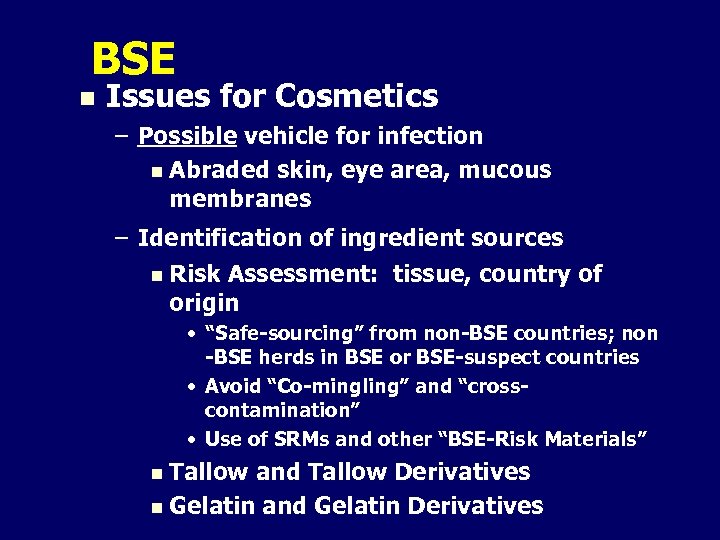
BSE n Issues for Cosmetics – Possible vehicle for infection n Abraded skin, eye area, mucous membranes – Identification of ingredient sources n Risk Assessment: tissue, country of origin • “Safe-sourcing” from non-BSE countries; non -BSE herds in BSE or BSE-suspect countries • Avoid “Co-mingling” and “crosscontamination” • Use of SRMs and other “BSE-Risk Materials” n Tallow and Tallow Derivatives n Gelatin and Gelatin Derivatives
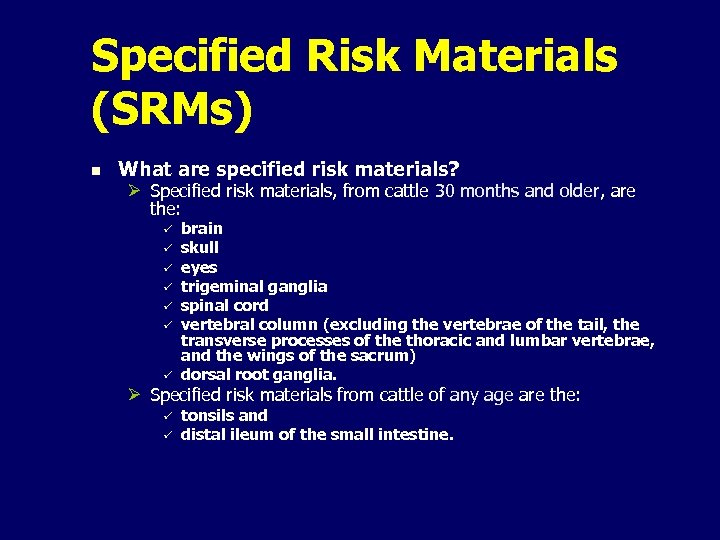
Specified Risk Materials (SRMs) n What are specified risk materials? Ø Specified risk materials, from cattle 30 months and older, are the: ü ü ü ü brain skull eyes trigeminal ganglia spinal cord vertebral column (excluding the vertebrae of the tail, the transverse processes of the thoracic and lumbar vertebrae, and the wings of the sacrum) dorsal root ganglia. Ø Specified risk materials from cattle of any age are the: ü ü tonsils and distal ileum of the small intestine.
Tallow – Cosmetic Functions n Definition: “Tallow is the fat derived from the fatty tissue of sheep or cattle. It consists primarily of fatty acid glycerides” – Skin conditioning agent-occlusive – Bath soaps and detergents
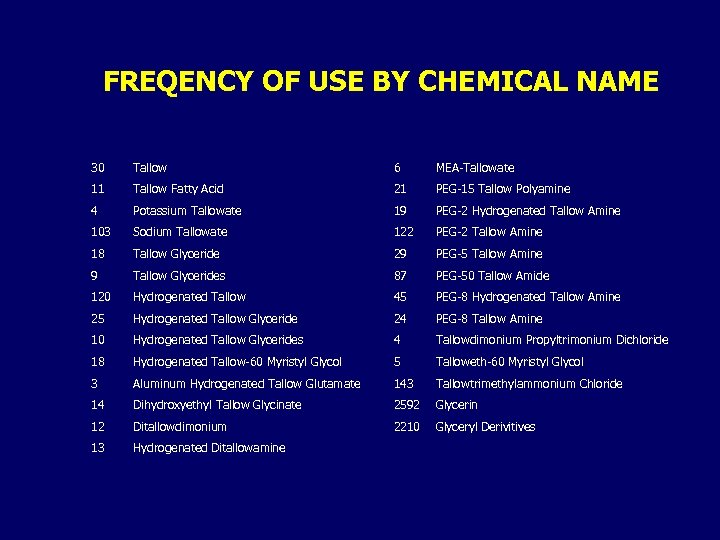
FREQENCY OF USE BY CHEMICAL NAME 30 Tallow 6 MEA-Tallowate 11 Tallow Fatty Acid 21 PEG-15 Tallow Polyamine 4 Potassium Tallowate 19 PEG-2 Hydrogenated Tallow Amine 103 Sodium Tallowate 122 PEG-2 Tallow Amine 18 Tallow Glyceride 29 PEG-5 Tallow Amine 9 Tallow Glycerides 87 PEG-50 Tallow Amide 120 Hydrogenated Tallow 45 PEG-8 Hydrogenated Tallow Amine 25 Hydrogenated Tallow Glyceride 24 PEG-8 Tallow Amine 10 Hydrogenated Tallow Glycerides 4 Tallowdimonium Propyltrimonium Dichloride 18 Hydrogenated Tallow-60 Myristyl Glycol 5 Talloweth-60 Myristyl Glycol 3 Aluminum Hydrogenated Tallow Glutamate 143 Tallowtrimethylammonium Chloride 14 Dihydroxyethyl Tallow Glycinate 2592 Glycerin 12 Ditallowdimonium 2210 Glyceryl Derivitives 13 Hydrogenated Ditallowamine
Gelatin – Cosmetic Functions n Definition: “Gelatin is a product obtained by the partial hydrolysis of collagen derived from the skin, white connective tissue, and bones of animals…” – – – Binder Lytic Agent Oral Health Care Drug Skin Conditioning Agent Hair Conditioning Agent Viscosity Increasing Agent - Aqueous
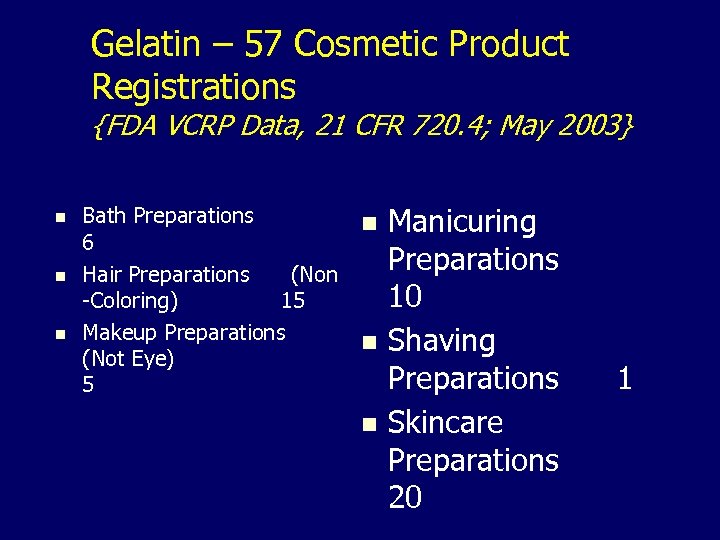
Gelatin – 57 Cosmetic Product Registrations {FDA VCRP Data, 21 CFR 720. 4; May 2003} n n n Bath Preparations 6 Hair Preparations (Non -Coloring) 15 Makeup Preparations (Not Eye) 5 n n n Manicuring Preparations 10 Shaving Preparations Skincare Preparations 20 1
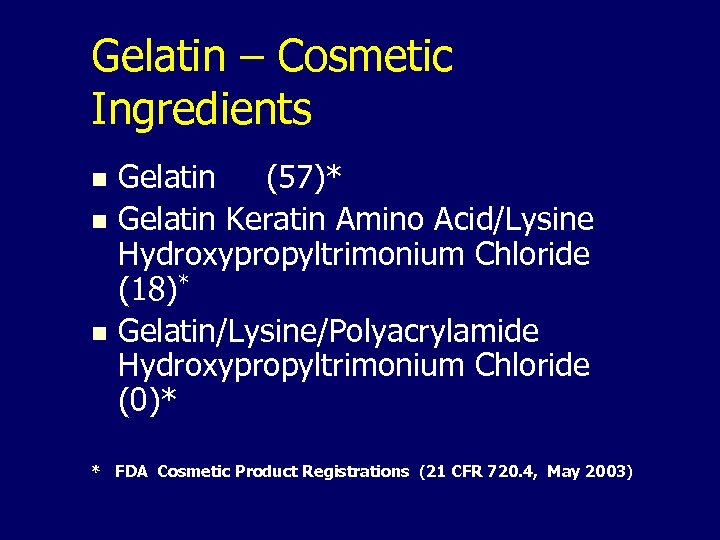
Gelatin – Cosmetic Ingredients Gelatin (57)* n Gelatin Keratin Amino Acid/Lysine Hydroxypropyltrimonium Chloride (18)* n Gelatin/Lysine/Polyacrylamide Hydroxypropyltrimonium Chloride (0)* n * FDA Cosmetic Product Registrations (21 CFR 720. 4, May 2003)
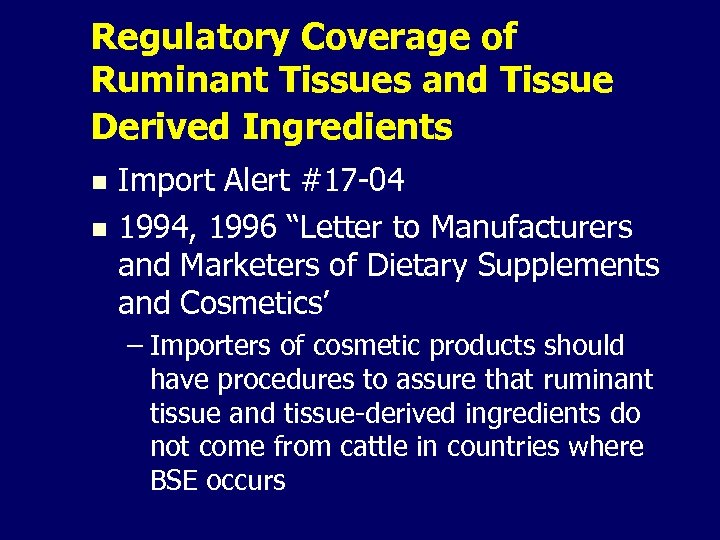
Regulatory Coverage of Ruminant Tissues and Tissue Derived Ingredients Import Alert #17 -04 n 1994, 1996 “Letter to Manufacturers and Marketers of Dietary Supplements and Cosmetics’ n – Importers of cosmetic products should have procedures to assure that ruminant tissue and tissue-derived ingredients do not come from cattle in countries where BSE occurs
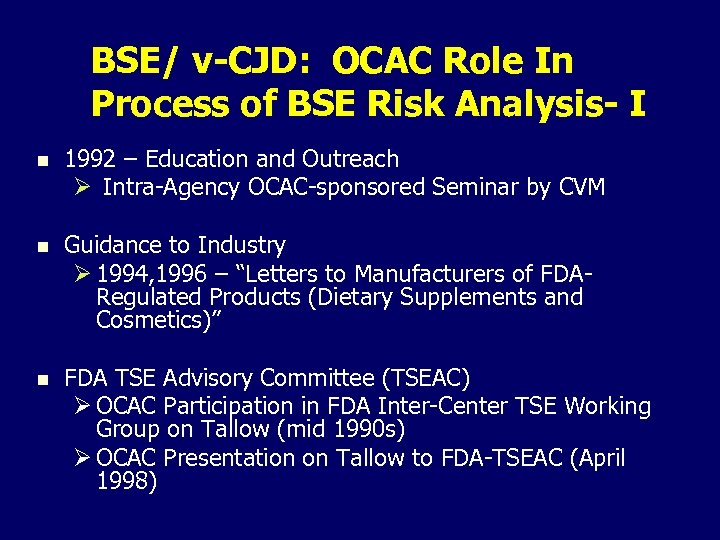
BSE/ v-CJD: OCAC Role In Process of BSE Risk Analysis- I n 1992 – Education and Outreach Ø Intra-Agency OCAC-sponsored Seminar by CVM n Guidance to Industry Ø 1994, 1996 – “Letters to Manufacturers of FDARegulated Products (Dietary Supplements and Cosmetics)” n FDA TSE Advisory Committee (TSEAC) Ø OCAC Participation in FDA Inter-Center TSE Working Group on Tallow (mid 1990 s) Ø OCAC Presentation on Tallow to FDA-TSEAC (April 1998)
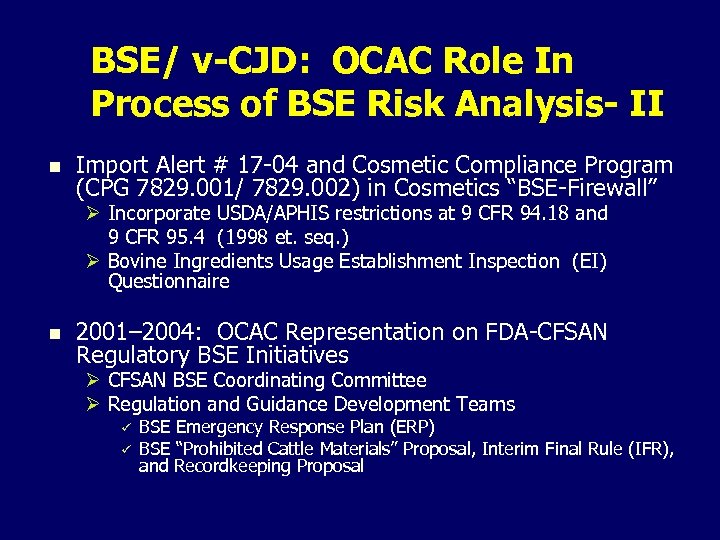
BSE/ v-CJD: OCAC Role In Process of BSE Risk Analysis- II n Import Alert # 17 -04 and Cosmetic Compliance Program (CPG 7829. 001/ 7829. 002) in Cosmetics “BSE-Firewall” Ø Incorporate USDA/APHIS restrictions at 9 CFR 94. 18 and 9 CFR 95. 4 (1998 et. seq. ) Ø Bovine Ingredients Usage Establishment Inspection (EI) Questionnaire n 2001– 2004: OCAC Representation on FDA-CFSAN Regulatory BSE Initiatives Ø CFSAN BSE Coordinating Committee Ø Regulation and Guidance Development Teams ü ü BSE Emergency Response Plan (ERP) BSE “Prohibited Cattle Materials” Proposal, Interim Final Rule (IFR), and Recordkeeping Proposal
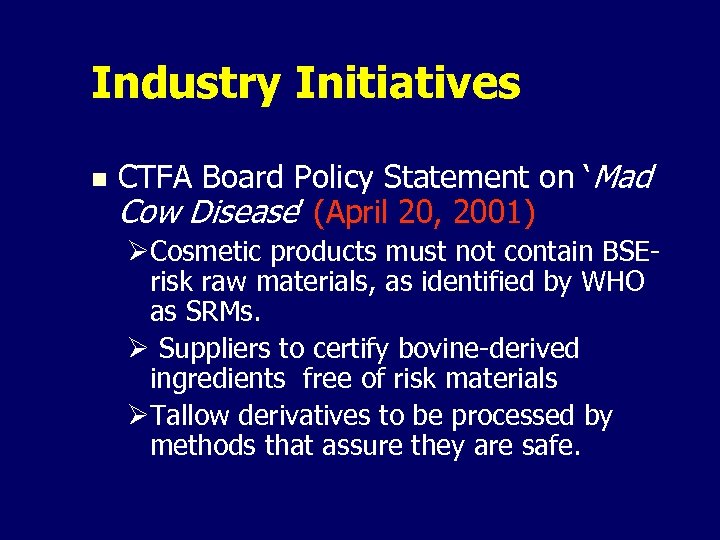
Industry Initiatives n CTFA Board Policy Statement on ‘Mad Cow Disease’ (April 20, 2001) ØCosmetic products must not contain BSErisk raw materials, as identified by WHO as SRMs. Ø Suppliers to certify bovine-derived ingredients free of risk materials ØTallow derivatives to be processed by methods that assure they are safe.
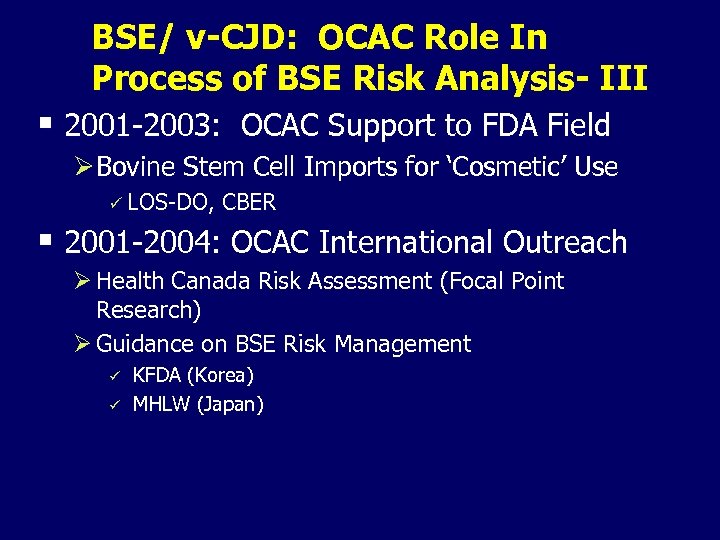
BSE/ v-CJD: OCAC Role In Process of BSE Risk Analysis- III § 2001 -2003: OCAC Support to FDA Field ØBovine Stem Cell Imports for ‘Cosmetic’ Use ü LOS-DO, CBER § 2001 -2004: OCAC International Outreach Ø Health Canada Risk Assessment (Focal Point Research) Ø Guidance on BSE Risk Management ü ü KFDA (Korea) MHLW (Japan)
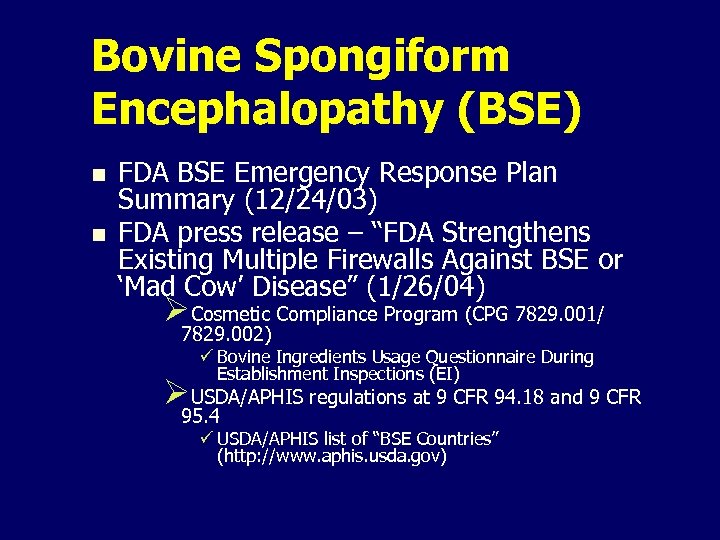
Bovine Spongiform Encephalopathy (BSE) n n FDA BSE Emergency Response Plan Summary (12/24/03) FDA press release – “FDA Strengthens Existing Multiple Firewalls Against BSE or ‘Mad Cow’ Disease” (1/26/04) ØCosmetic Compliance Program (CPG 7829. 001/ 7829. 002) ü Bovine Ingredients Usage Questionnaire During Establishment Inspections (EI) ØUSDA/APHIS regulations at 9 CFR 94. 18 and 9 CFR 95. 4 ü USDA/APHIS list of “BSE Countries” (http: //www. aphis. usda. gov)
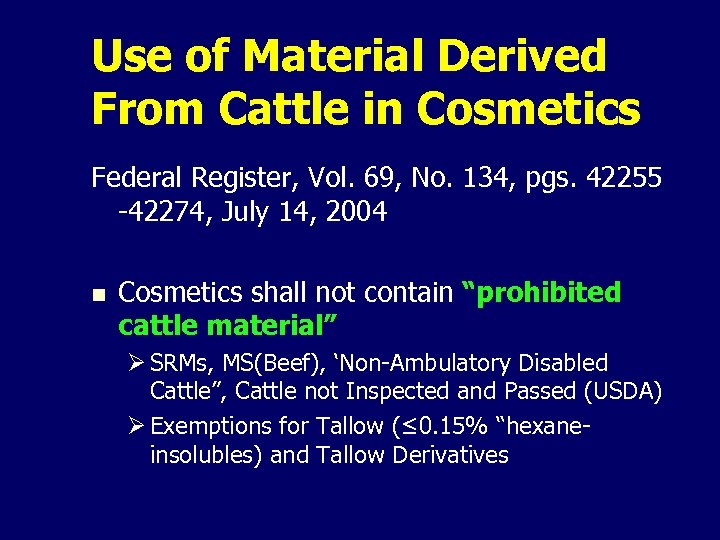
Use of Material Derived From Cattle in Cosmetics Federal Register, Vol. 69, No. 134, pgs. 42255 -42274, July 14, 2004 n Cosmetics shall not contain “prohibited cattle material” Ø SRMs, MS(Beef), ‘Non-Ambulatory Disabled Cattle”, Cattle not Inspected and Passed (USDA) Ø Exemptions for Tallow (≤ 0. 15% “hexaneinsolubles) and Tallow Derivatives
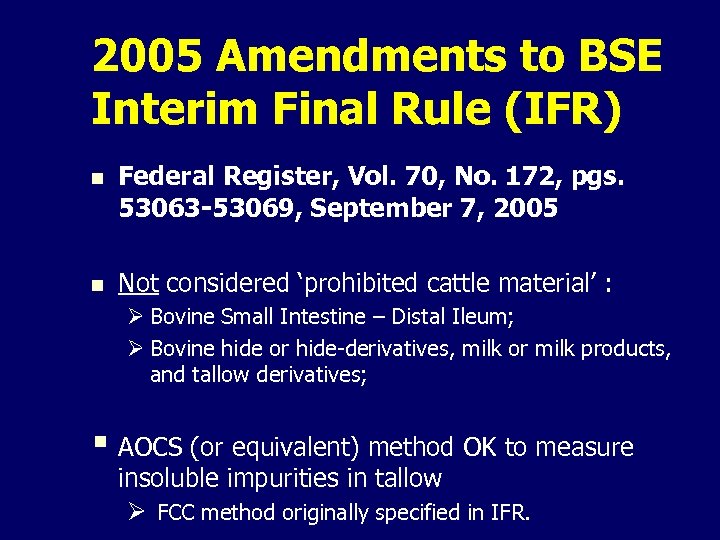
2005 Amendments to BSE Interim Final Rule (IFR) n Federal Register, Vol. 70, No. 172, pgs. 53063 -53069, September 7, 2005 n Not considered ‘prohibited cattle material’ : Ø Bovine Small Intestine – Distal Ileum; Ø Bovine hide or hide-derivatives, milk or milk products, and tallow derivatives; § AOCS (or equivalent) method OK to measure insoluble impurities in tallow Ø FCC method originally specified in IFR.
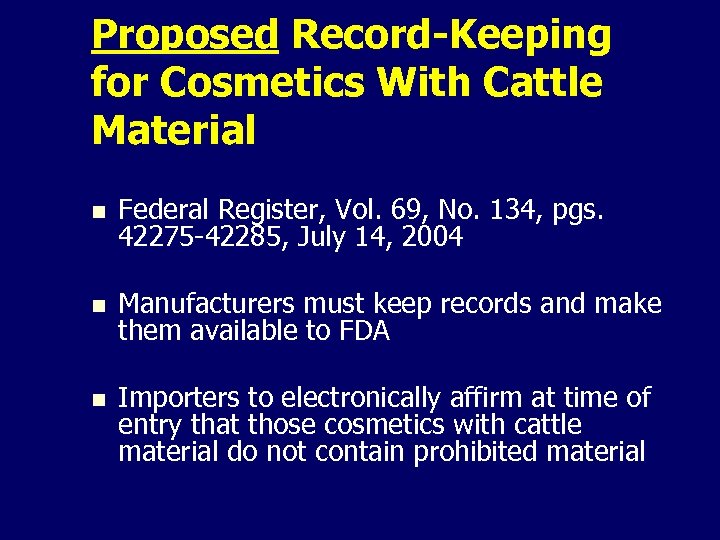
Proposed Record-Keeping for Cosmetics With Cattle Material n Federal Register, Vol. 69, No. 134, pgs. 42275 -42285, July 14, 2004 n Manufacturers must keep records and make them available to FDA n Importers to electronically affirm at time of entry that those cosmetics with cattle material do not contain prohibited material
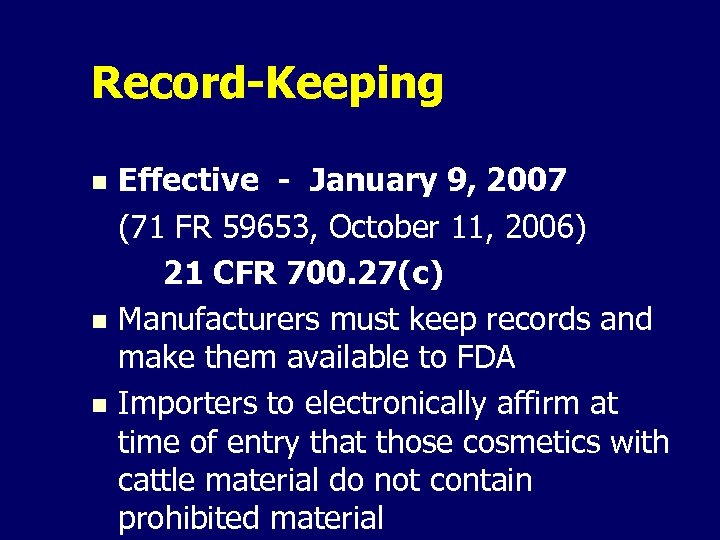
Record-Keeping Effective - January 9, 2007 (71 FR 59653, October 11, 2006) 21 CFR 700. 27(c) n Manufacturers must keep records and make them available to FDA n Importers to electronically affirm at time of entry that those cosmetics with cattle material do not contain prohibited material n
FDA Export Certificates n CTFA, ICMAD designated by FDA as “competent authority” for issuance of “BSE-free” certifications for industry firms
BSE Export Certificates n n Cosmetics Guidance http: //www. cfsan. fda. gov/~lrd/ certific. html CTFA and ICMAD designated as “Competent Authority” by FDA
BSE Risk Assessment n n Published by FDA-CFSAN as a notification to WTO/TBT on July 14, 2004 Transparency ØPublic posting to FDA-CFSAN Website http: //www. cfsan. fda. gov/~comm/bsera. html Qualitative Risk Assessment Follows generally accepted framework endorsed by Codex Alimentarius Commission, the U. S. National Academy of Sciences, and others
BSE Risk Assessment: Framework Hazard Identification n Exposure Assessment n Hazard Characterization n Ø Dose/ Response Assessment n Risk Characterization
BSE Risk Assessment n Conclusions Ø v. CJD – may be caused by BSE “prions” Ø Primary source of exposure – Ingestion of infected beef Ø Secondary routes of exposure – Topical (abraded skin), Ocular, or Oral/Buccal potentially possible, even if unlikely Ø Dose/Response (cattle) - Small doses still infectious but require longer incubation periods Ø Species Barrier - Human = ca. 101 – 104 (cattle) Ø Quantitative Risk Assessment - difficult due to much “Uncertainty” in assumptions and available data Ø Risk Management Effectiveness of cosmetic manufacturing proceses for inactivating BSE prions is unknown Best control of risk through cosmetics is to avoid and control exposure to high-risk cattle raw materials used in the manufacture of cosmetics.
Recent BSE Cases in North America: January 23, 2006; March 13, 2006 n n n Dairy cow, 6 -7 yrs old, Alberta, Canada Beef cow, > 10 yrs old, State of Alabama FDA and USDA Notified by CFIA (Canadian Cow) No part of either infected cow entered human food or animal feed chain FDA evaluating any ‘next steps’ through ORA and CVM.
v-CJD Cases in the U. S. n n n Tracked by CDC and FDA Few in number, generally non-resident or residentalien 200 cases worldwide; 3 cases in U. S. November 28, 2006 - Latest case reported by CDC is young Saudi Arabian adult, resident in U. S. resident since late 2005, living in Virginia. Other cases: UK (164), France (21), Republic of Ireland (4), the Netherlands (2), Canada (1), Italy (1), Japan (1), Portugal (1), Saudi Arabia (1), and Spain (1).
FDA Export Certificates n Guidance n Cosmetics http: //www. cfsan. fda. gov/~lrd/cer tific. html n CTFA, ICMAD designated by FDA as “competent authority”
CFSAN-OCAC Address Information n How To Find Us: ØOCAC Management: § CFSAN (HFS-100, 101) University Station (CPK 2) 4300 River Road, College Park MD 20740 Phone: 301 436 -1130 Fax: 301 436 -2975 E-Mail: stanley. milstein@fda. hhs. gov Additional Locators: CFSAN Website: § http: //www. cfsan. fda. gov/~dms/cos-toc. html § § §
Скачать презентацию BSE and Cosmetics FDA Risk Assessment and Management
7461b334f2fcb70875978fd9eefd3a1b.ppt