 Скачать презентацию British Society for Microbial Technology The laboratory diagnosis
acb7f81c6231a20059d4978bb02d846b.ppt
- Количество слайдов: 17



British Society for Microbial Technology The laboratory diagnosis of tuberculosis 25 years of progress D A Mitchison St George’s, University of London With assistance from FINDdiagnostics
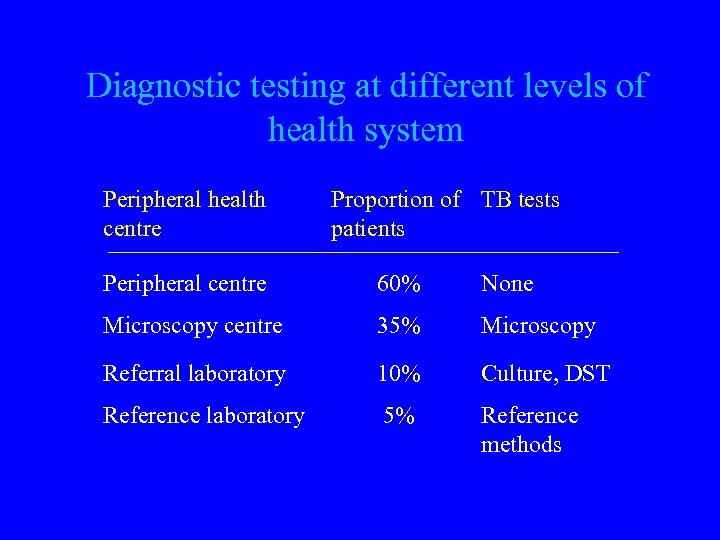
Diagnostic testing at different levels of health system Peripheral health centre Proportion of TB tests patients Peripheral centre 60% None Microscopy centre 35% Microscopy Referral laboratory 10% Culture, DST Reference laboratory 5% Reference methods
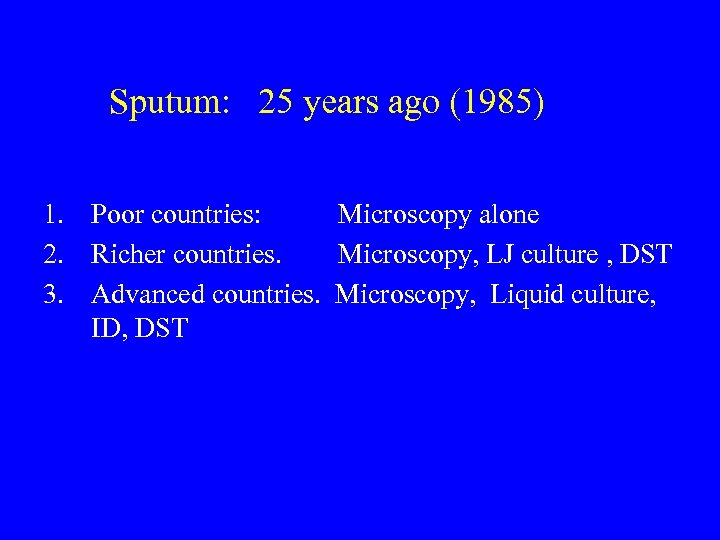
Sputum: 25 years ago (1985) 1. Poor countries: Microscopy alone 2. Richer countries. Microscopy, LJ culture , DST 3. Advanced countries. Microscopy, Liquid culture, ID, DST
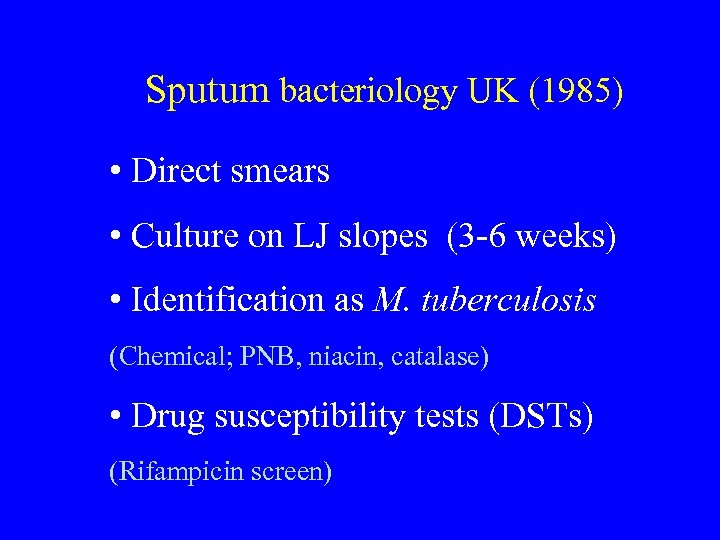
Sputum bacteriology UK (1985) • Direct smears • Culture on LJ slopes (3 -6 weeks) • Identification as M. tuberculosis (Chemical; PNB, niacin, catalase) • Drug susceptibility tests (DSTs) (Rifampicin screen)
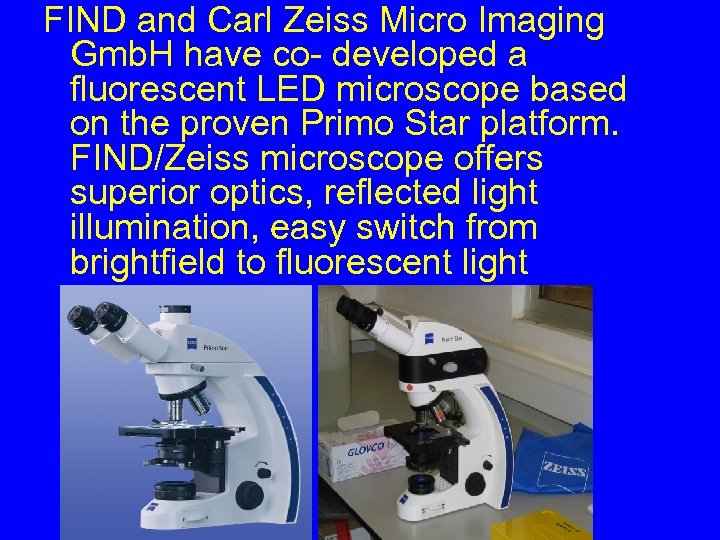
FIND and Carl Zeiss Micro Imaging Gmb. H have co- developed a fluorescent LED microscope based on the proven Primo Star platform. FIND/Zeiss microscope offers superior optics, reflected light illumination, easy switch from brightfield to fluorescent light
Direct smears Fluorescence v. Bright field microscopy Fluorescence: Introduced in 1940 s. 5 x more rapid than Bright field BUT: Mercury vapour bulb: Expensive. Limited life. Gradual decline. LED illumination introduced during past 5 years Find/Zeus collaboration
Culture: solid v. liquid Solid: LJ slopes. 7 H 11 slopes or plates. Liquid: Early attempts high contamination. 1971 Selective medium paper (Mitchison et al J Med Microbiol 1971; 5: 165) Penta used in Bactec machine Automated liquid systems v. solid media Sensitive. Rapid. Contamination. NTMs v. TB.
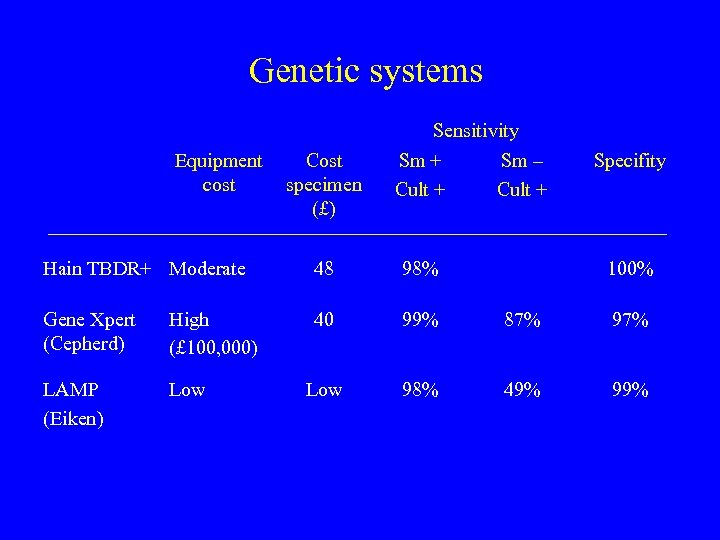
Genetic systems Equipment cost Cost specimen (£) Sensitivity Sm + Sm – Cult + Specifity Hain TBDR+ Moderate 48 98% 100% Gene Xpert (Cepherd) High (£ 100, 000) 40 99% 87% 97% LAMP (Eiken) Low 98% 49% 99%
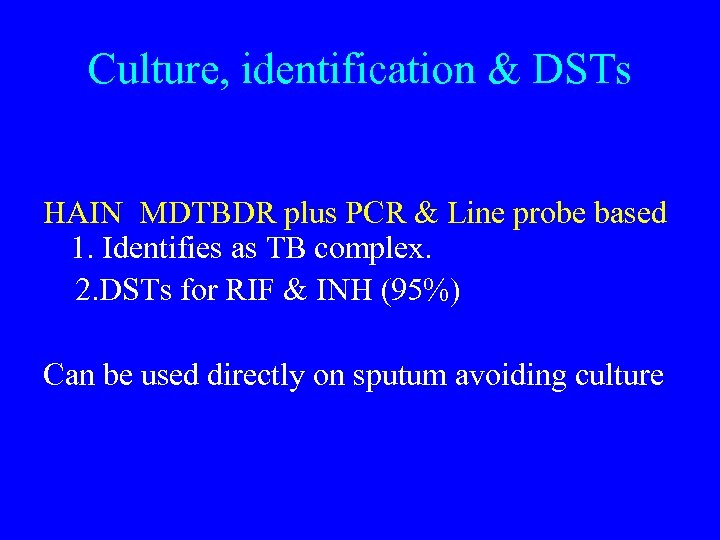
Culture, identification & DSTs HAIN MDTBDR plus PCR & Line probe based 1. Identifies as TB complex. 2. DSTs for RIF & INH (95%) Can be used directly on sputum avoiding culture
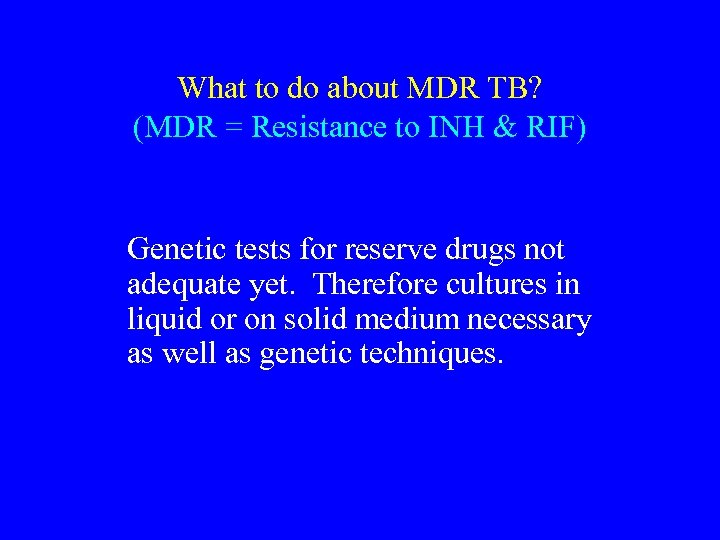
What to do about MDR TB? (MDR = Resistance to INH & RIF) Genetic tests for reserve drugs not adequate yet. Therefore cultures in liquid or on solid medium necessary as well as genetic techniques.
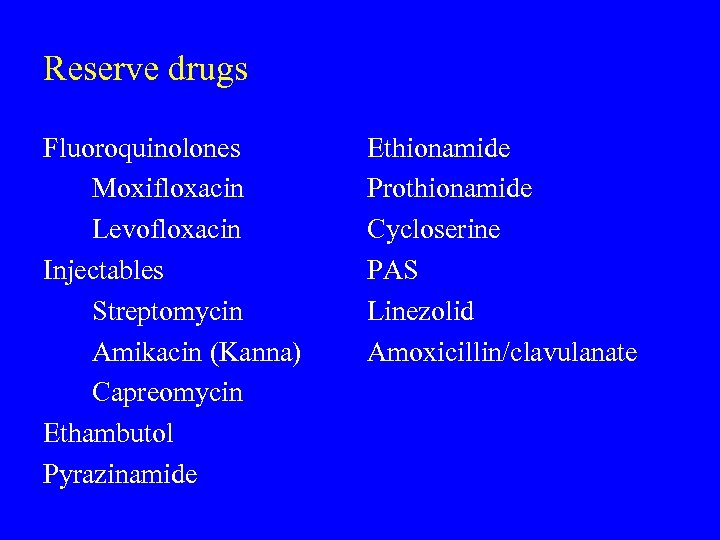
Reserve drugs Fluoroquinolones Moxifloxacin Levofloxacin Injectables Streptomycin Amikacin (Kanna) Capreomycin Ethambutol Pyrazinamide Ethionamide Prothionamide Cycloserine PAS Linezolid Amoxicillin/clavulanate
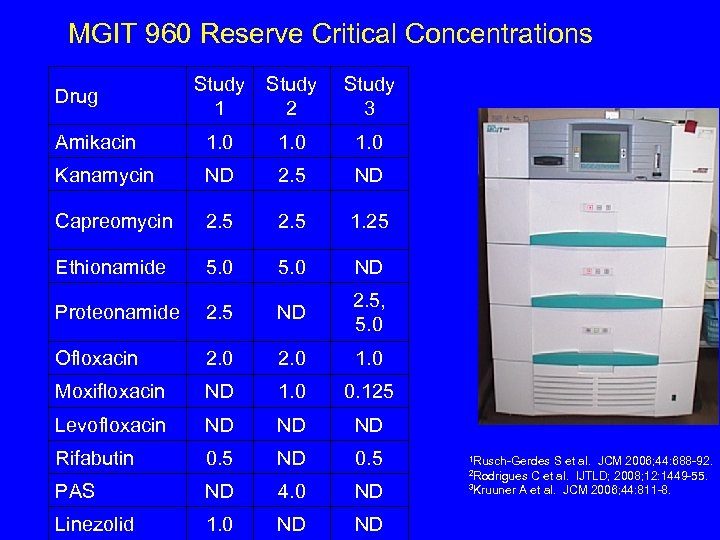
MGIT 960 Reserve Critical Concentrations Study 1 Study 2 Study 3 Amikacin 1. 0 Kanamycin ND 2. 5 ND Capreomycin 2. 5 1. 25 Ethionamide 5. 0 ND Proteonamide 2. 5 ND 2. 5, 5. 0 Ofloxacin 2. 0 1. 0 Moxifloxacin ND 1. 0 0. 125 Levofloxacin ND ND ND Rifabutin 0. 5 ND 0. 5 PAS ND 4. 0 ND Linezolid 1. 0 ND ND Drug 1 Rusch-Gerdes S et al. JCM 2006; 44: 688 -92. C et al. IJTLD; 2008; 12: 1449 -55. 3 Kruuner A et al. JCM 2006; 44: 811 -8. 2 Rodrigues
DSTs Phenotypic Classic on LJ slopes or 7 H 11 plates. Takes 7 weeks +. MGIT or other automated liquid tests. Microcolony methods • Liquid medium: Mods. Sensitive, time consuming, ? dangerous • Solid medium: Thin layer agar (TLA): Quicker. Less dangerous
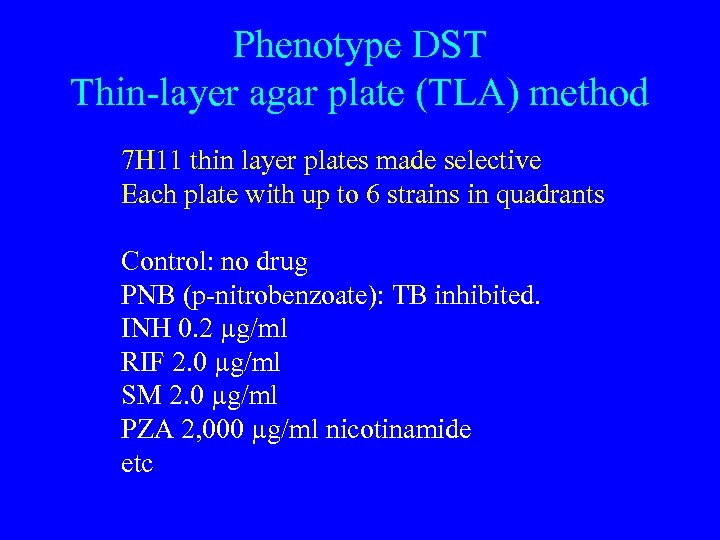
Phenotype DST Thin-layer agar plate (TLA) method 7 H 11 thin layer plates made selective Each plate with up to 6 strains in quadrants Control: no drug PNB (p-nitrobenzoate): TB inhibited. INH 0. 2 µg/ml RIF 2. 0 µg/ml SM 2. 0 µg/ml PZA 2, 000 µg/ml nicotinamide etc
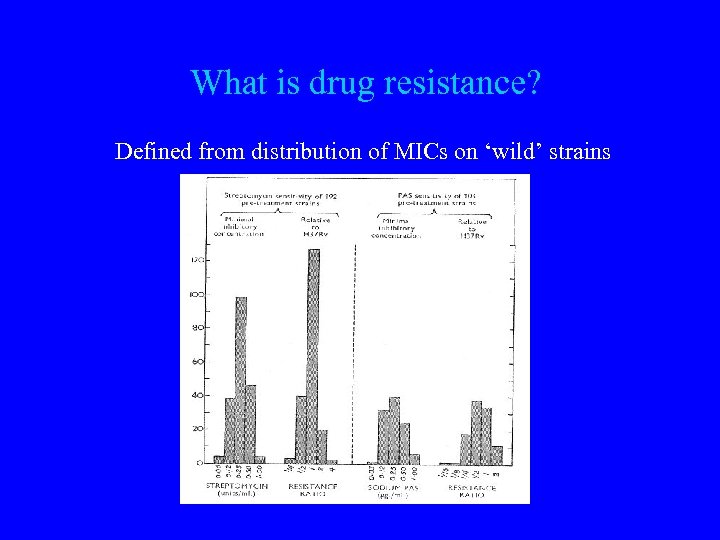
What is drug resistance? Defined from distribution of MICs on ‘wild’ strains
Studies of early bactericidal activity define the ‘therapeutic’ margin
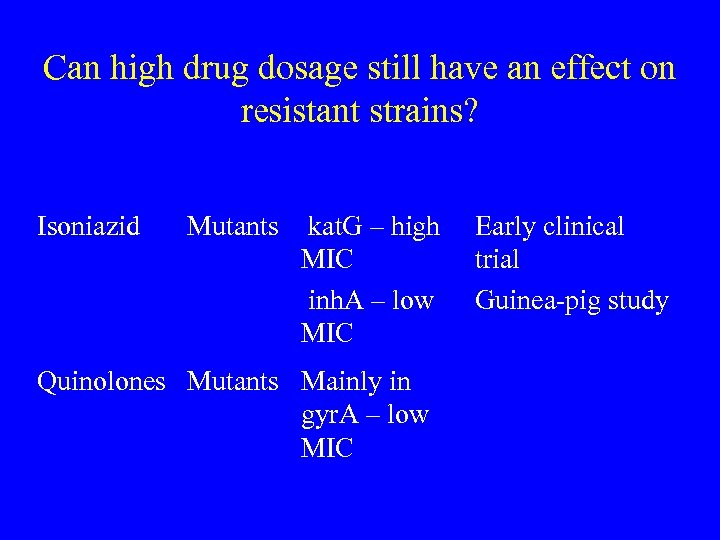
Can high drug dosage still have an effect on resistant strains? Isoniazid Mutants kat. G – high MIC inh. A – low MIC Quinolones Mutants Mainly in gyr. A – low MIC Early clinical trial Guinea-pig study
Скачать презентацию British Society for Microbial Technology The laboratory diagnosis
acb7f81c6231a20059d4978bb02d846b.ppt