 Скачать презентацию british parliament british parliament is housed in
BRITISH PARLIAMENT.pptx
- Количество слайдов: 16



british parliament
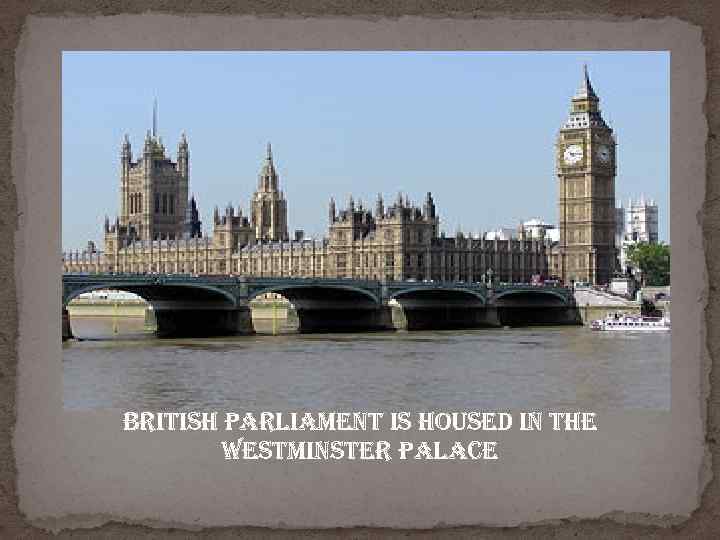
british parliament is housed in the Westminster palace
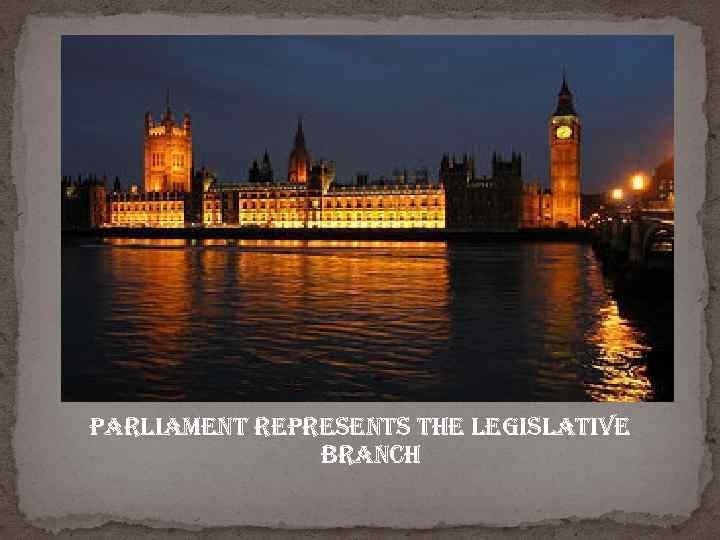
parliament represents the legislative branch
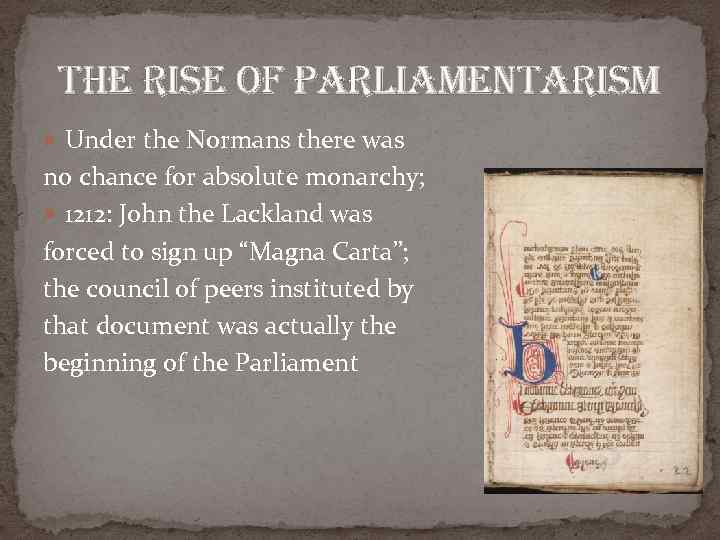
the rise of parliamentarism Under the Normans there was no chance for absolute monarchy; 1212: John the Lackland was forced to sign up “Magna Carta”; the council of peers instituted by that document was actually the beginning of the Parliament
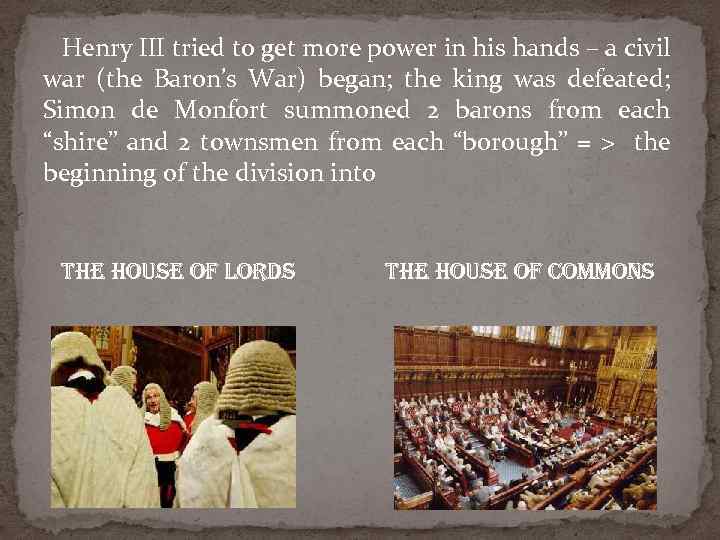
Henry III tried to get more power in his hands – a civil war (the Baron’s War) began; the king was defeated; Simon de Monfort summoned 2 barons from each “shire” and 2 townsmen from each “borough” = > the beginning of the division into the house of lords the house of commons
england during the revolutions The Puritans (the Roundheads) The Cavaliers Charles I reigned by the “divine right” and dismissed the Parliament Oliver Cromwell England became a republic The process of Restoration – Charles II His brother James was catholic => Mary and William (protestants) The Glorious Revolution 1688: the monarch reigned not by the “divine right” but by consent of Parliament
the reform bill June, 7, 1832 The House of Commons became stronger; Good base for liberal parties; Political institutes so useful due to economic revolutions were introduced; The House of Lords almost couldn’t influence the staff of the House of Commons; The King couldn’t control the politics of the Parliament; The workers found out that the reform meant nothing to them => trade unionism = > labour party
the house of lords “big days” “throne speech” The Bar – the granting that separates the houses Lord Chancellor – the presiding officer of the chamber The glided royal throne The Woolsack – the chair of the Lord Chancellor Backwoodsmen – members that appear rarely in the House
the house of lords About 1200 members “the Baby of the House” – the youngest member Two groups: 1) Lords Spiritual (archbishops and bishops) and 2) Lords Temporal (hereditary peers of England Scotland – dukes, marquises, earls and barons; life peeresses – earned the title by distinguished work; 9 “law lords” – members of the High Court of Justice Royal Dukes do not attend the sittings of the House
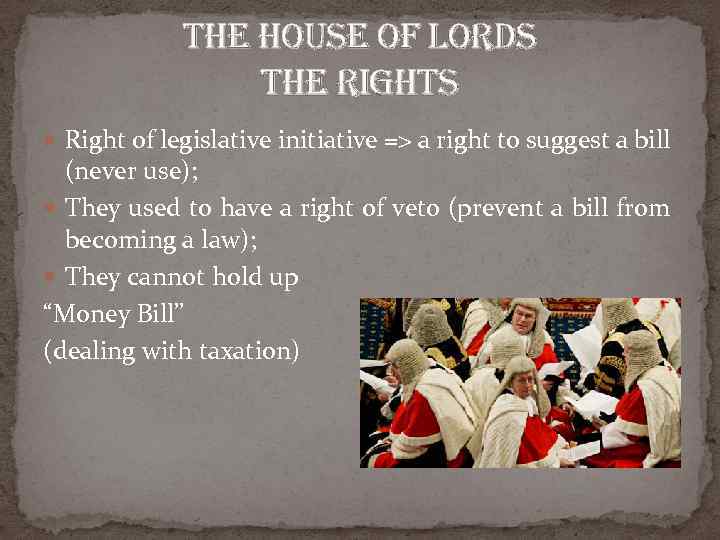
the house of lords the rights Right of legislative initiative => a right to suggest a bill (never use); They used to have a right of veto (prevent a bill from becoming a law); They cannot hold up “Money Bill” (dealing with taxation)
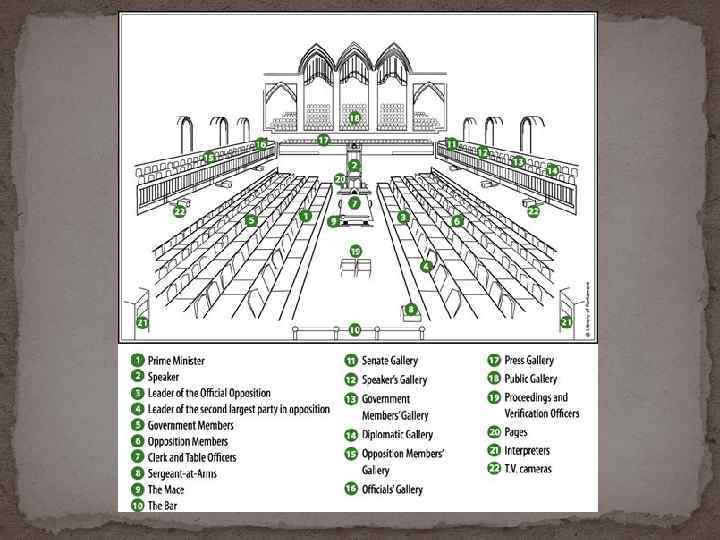
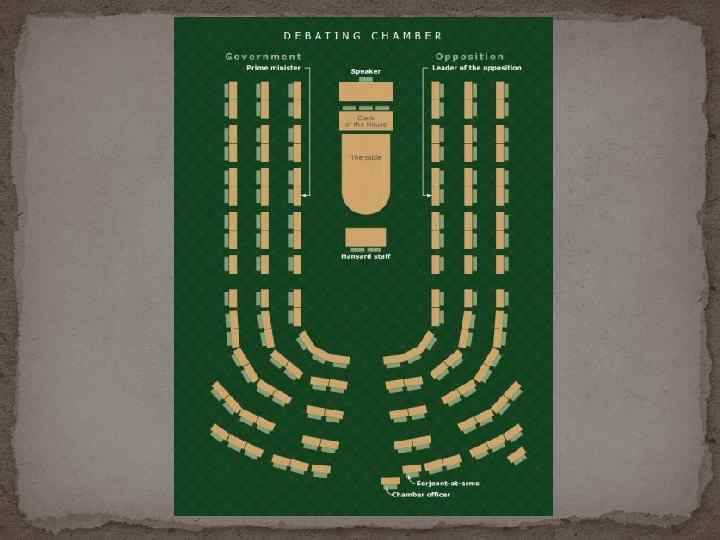
the house of commons “The House” – the debating chamber; The MPs – the members of the House of Commons; The General Elections (every 5 years); Totally 650 members Lack of seats => only 370 can occupy their seats;
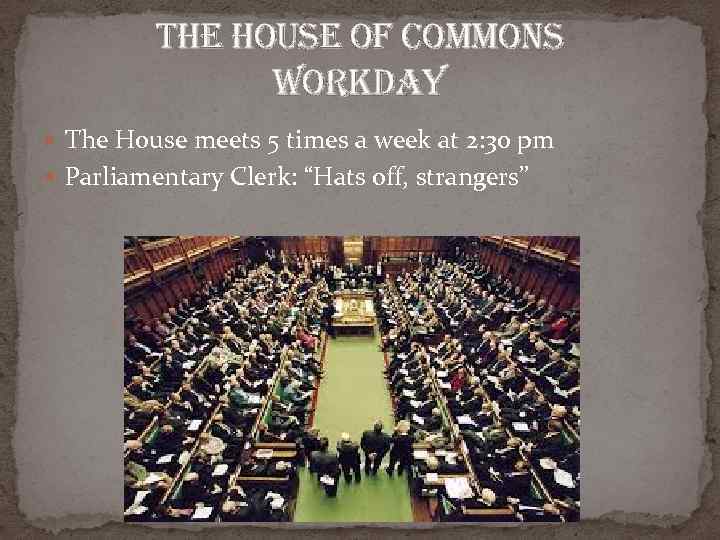
the house of commons Workday The House meets 5 times a week at 2: 30 pm Parliamentary Clerk: “Hats off, strangers”
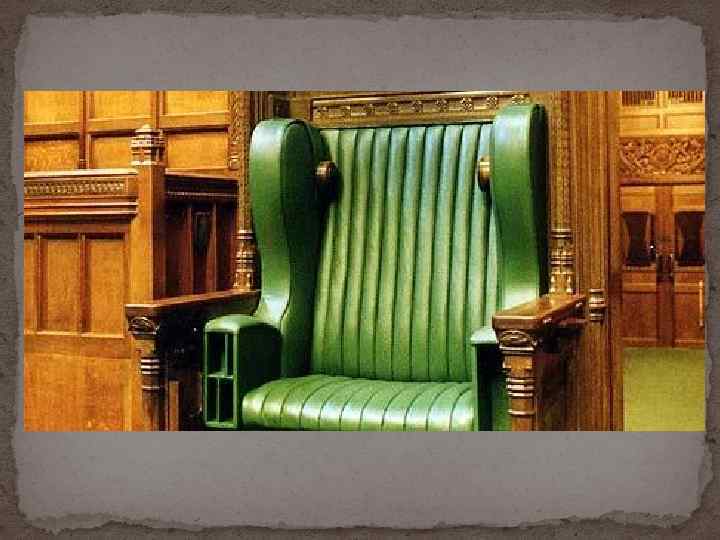
the house of commons the speaker The Speaker – the presiding officer of the House; After election the Speaker is dragged to the Speaker’s chair by 2 MPs; they kick and push him; The main function – not to speak but to give the opportunity to do it; “catch the Speaker’s eye”; The Admonition (warning)
 Скачать презентацию british parliament british parliament is housed in
BRITISH PARLIAMENT.pptx