 Скачать презентацию British Heart Foundation Health Promotion Research Group Goals
09a84fad2aa4cd3b3aa6ae8d780e67ad.ppt
- Количество слайдов: 24



British Heart Foundation Health Promotion Research Group Goals that are fit for purpose: science and policy Mike Rayner Chair of the EHN Nutrition Expert Group Diet, Physical Activity and Cardiovascular Disease Prevention in Europe 14 March 2012, Haus Deutscher Stiffungen, Berlin
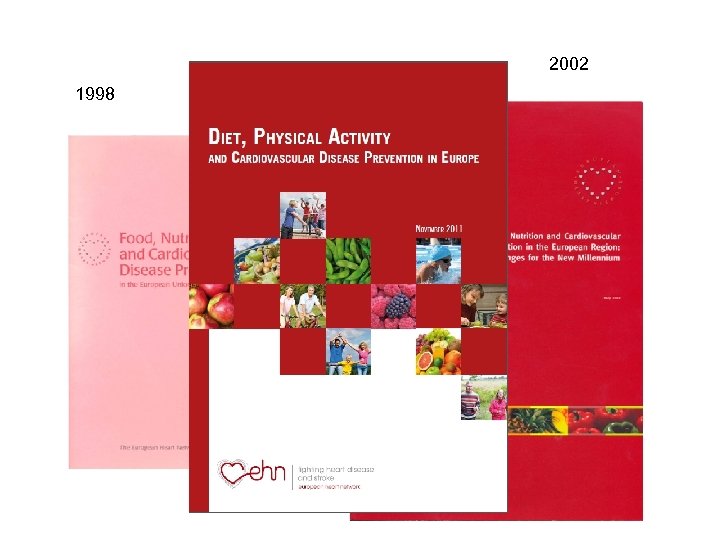
Presentation aims • To outline (briefly) the development of EHN’s new report (published 23 rd November 2011) • To say why EHN thinks it is both necessary and timely • To outline what it says: – The problem – Population dietary goals – Policy options
2002 1998
Purpose • Summarise current thinking on diet and CVD • Propose population dietary goals for European populations • Make policy recommendations for improving diets at both European and national levels
Methodology • Meetings of EHN Nutrition Expert Group • Experts commissioned to review particular topics to a predefined protocol • EHN Annual Workshop and General Assembly in 2010 discusses policy recommendations • Rounds of consultation with EHN members • Launch in November 2011
Why report is necessary (p 9) • ‘CVD causes death and disability on a massive scale across the region hitting the region’s poor countries and the poorer groups in wealthier countries hardest’ • ‘Although progress has been made, not everyone has benefited’
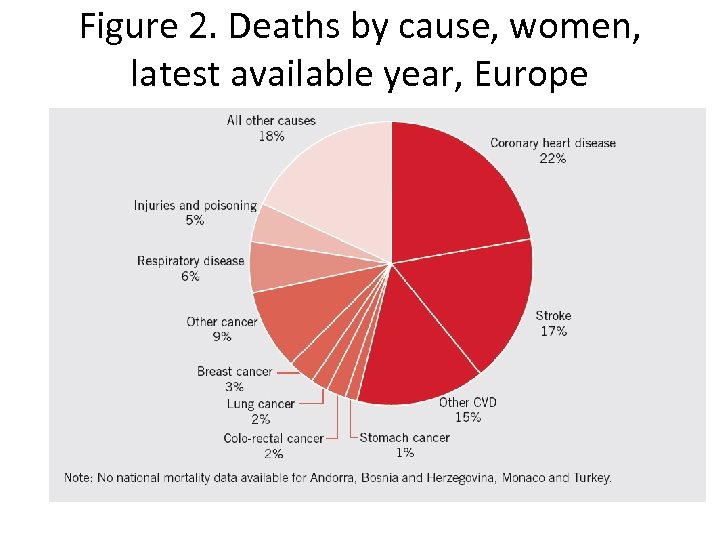
Figure 2. Deaths by cause, women, latest available year, Europe
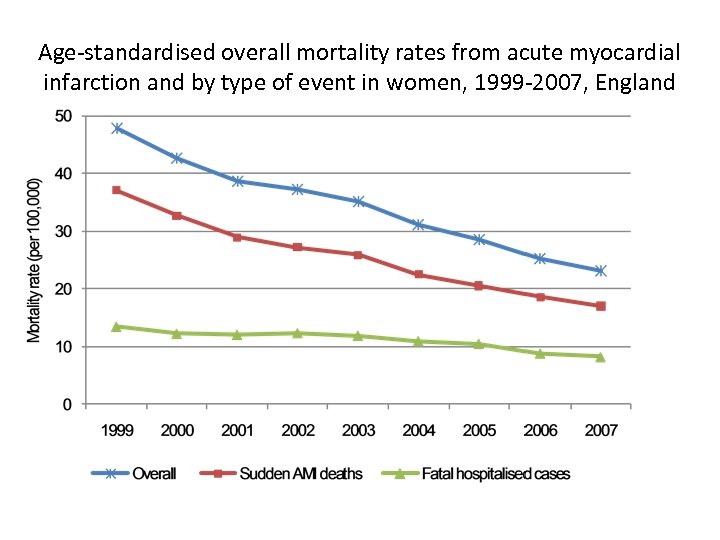
Age-standardised overall mortality rates from acute myocardial infarction and by type of event in women, 1999 -2007, England
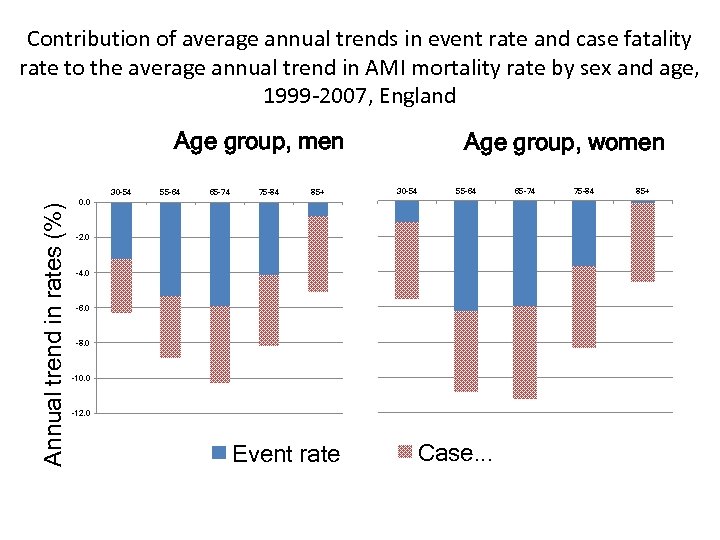
Contribution of average annual trends in event rate and case fatality rate to the average annual trend in AMI mortality rate by sex and age, 1999 -2007, England Age group, men Annual trend in rates (%) 30 -54 55 -64 65 -74 75 -84 85+ Age group, women 30 -54 55 -64 0. 0 -2. 0 -4. 0 -6. 0 -8. 0 -10. 0 -12. 0 Event rate Case. . . 65 -74 75 -84 85+
Health inequalities in Europe (p 12) • Between European countries there is: – a 19 -year gap in life expectancy for men (15 for women) – a 21 -year gap in healthy life expectancy for men (19 for women) • Within European countries there is: – differences of up to 10 years in male life expectancy between highest and lowest socio-economic groups • CVD accounts for 40% of differences in mortality between highest and lowest educational groups
Prevention is key (p 14) • ‘CVD is largely preventable’ • ‘We know prevention works’ – Reducing CVD mortality in Ukrainian males to Japanese rates would be a reduction of 90% • ‘Even small changes to risk factor levels can dramatically reduce death and disability’ • ‘Prevention efforts have a much greater impact if directed at the whole population’ • ‘A preventive approach is cost-effective’ – Diet-related ill health in the UK costs the health system 7. 0 billion Euros – Physical activity – 1. 1. billion Euros
EHN’s new population goals (p 15) • Intermediate targets – Based on an assessment of current dietary and physical activity patterns in Europe and including pragmatic considerations of what might be realistically aimed for in the next five to 10 years; • Ambitious longer term goals – Which highlight the levels we should ultimately be aiming for, if the pragmatic constraints that feed into the intermediate targets can be overcome.
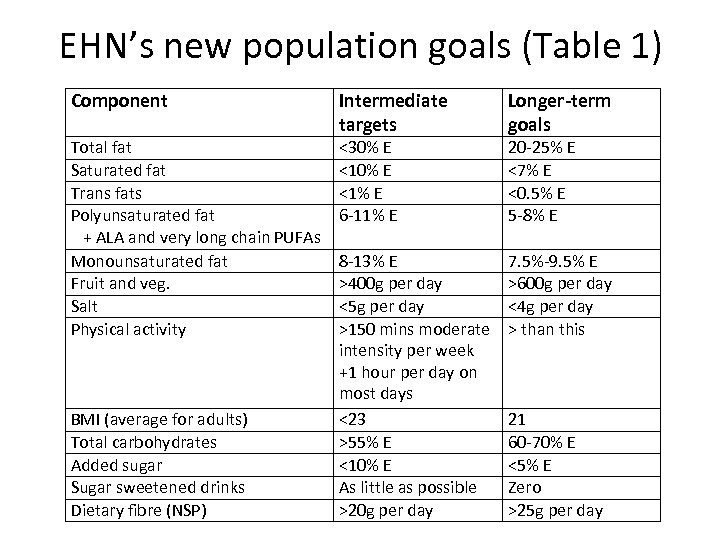
EHN’s new population goals (Table 1) Component Total fat Saturated fat Trans fats Polyunsaturated fat + ALA and very long chain PUFAs Monounsaturated fat Fruit and veg. Salt Physical activity BMI (average for adults) Total carbohydrates Added sugar Sugar sweetened drinks Dietary fibre (NSP) Intermediate targets Longer-term goals 8 -13% E >400 g per day <5 g per day >150 mins moderate intensity per week +1 hour per day on most days <23 >55% E <10% E As little as possible >20 g per day 7. 5%-9. 5% E >600 g per day <4 g per day > than this <30% E <1% E 6 -11% E 20 -25% E <7% E <0. 5% E 5 -8% E 21 60 -70% E <5% E Zero >25 g per day
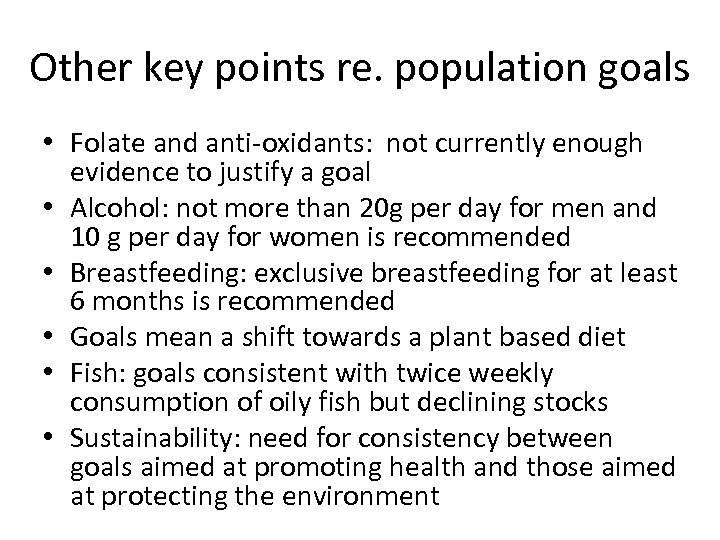
Other key points re. population goals • Folate and anti-oxidants: not currently enough evidence to justify a goal • Alcohol: not more than 20 g per day for men and 10 g per day for women is recommended • Breastfeeding: exclusive breastfeeding for at least 6 months is recommended • Goals mean a shift towards a plant based diet • Fish: goals consistent with twice weekly consumption of oily fish but declining stocks • Sustainability: need for consistency between goals aimed at promoting health and those aimed at protecting the environment
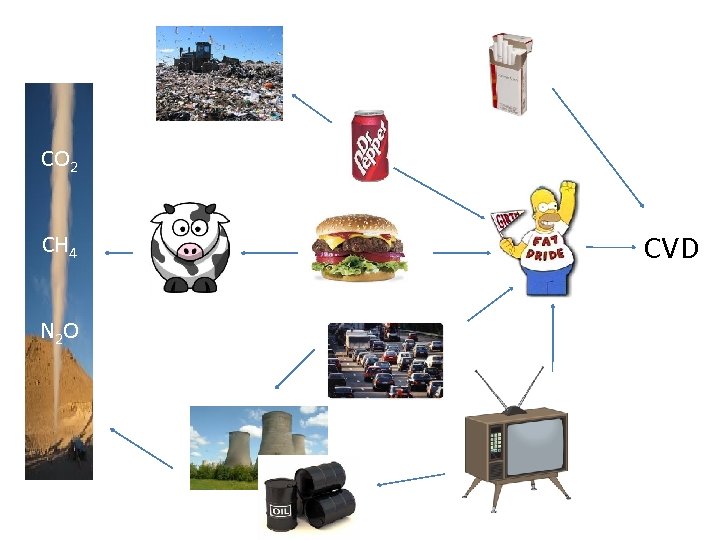
CO 2 CH 4 N 2 O CVD
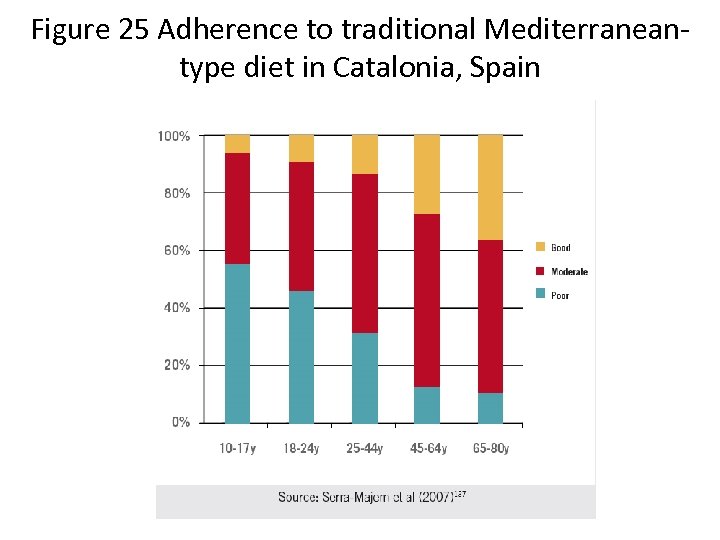
Figure 25 Adherence to traditional Mediterraneantype diet in Catalonia, Spain
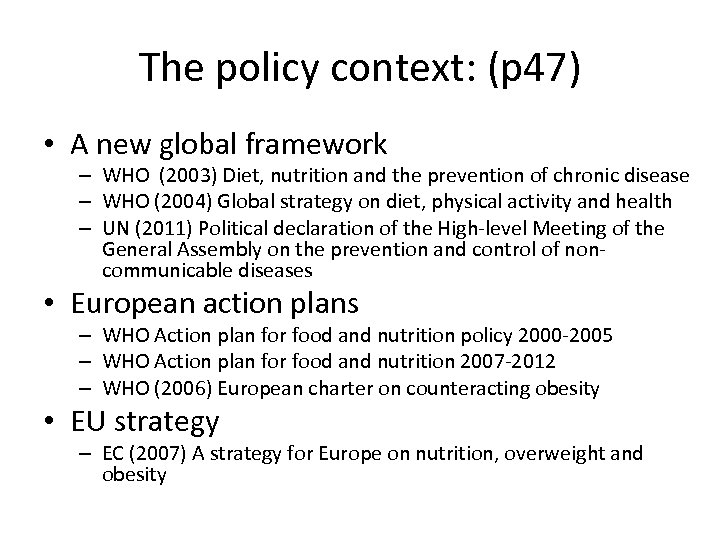
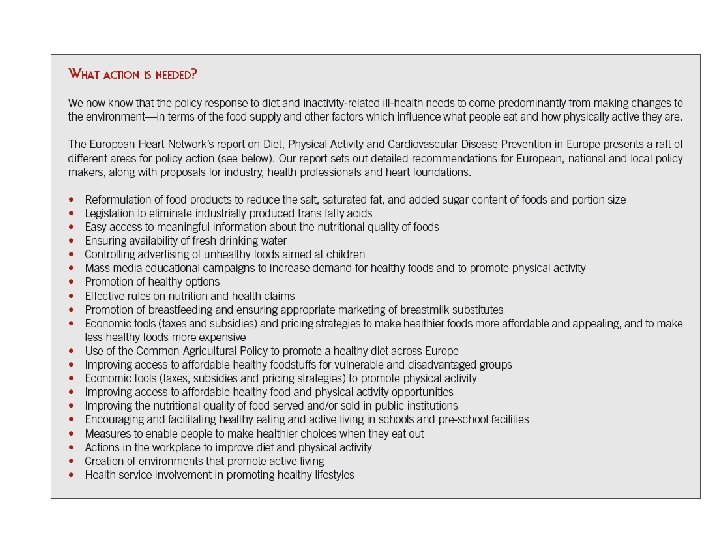
The policy context: (p 47) • A new global framework – WHO (2003) Diet, nutrition and the prevention of chronic disease – WHO (2004) Global strategy on diet, physical activity and health – UN (2011) Political declaration of the High-level Meeting of the General Assembly on the prevention and control of noncommunicable diseases • European action plans – WHO Action plan for food and nutrition policy 2000 -2005 – WHO Action plan for food and nutrition 2007 -2012 – WHO (2006) European charter on counteracting obesity • EU strategy – EC (2007) A strategy for Europe on nutrition, overweight and obesity
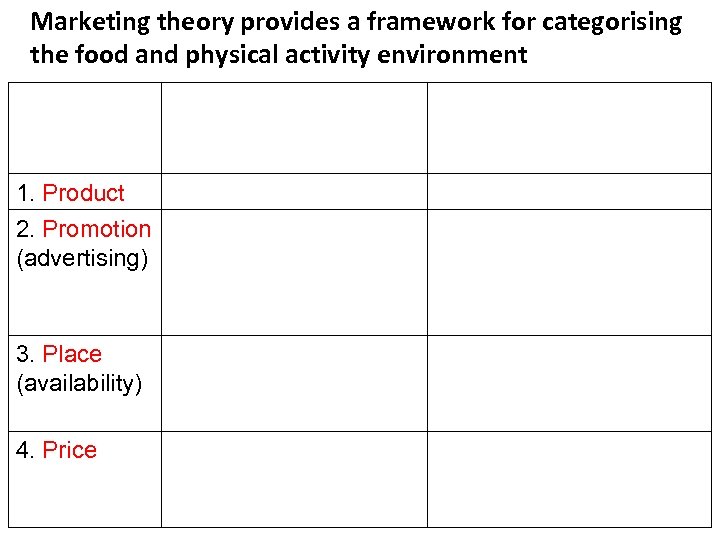
Marketing theory provides a framework for categorising the food and physical activity environment 1. Product 2. Promotion (advertising) 3. Place (availability) 4. Price
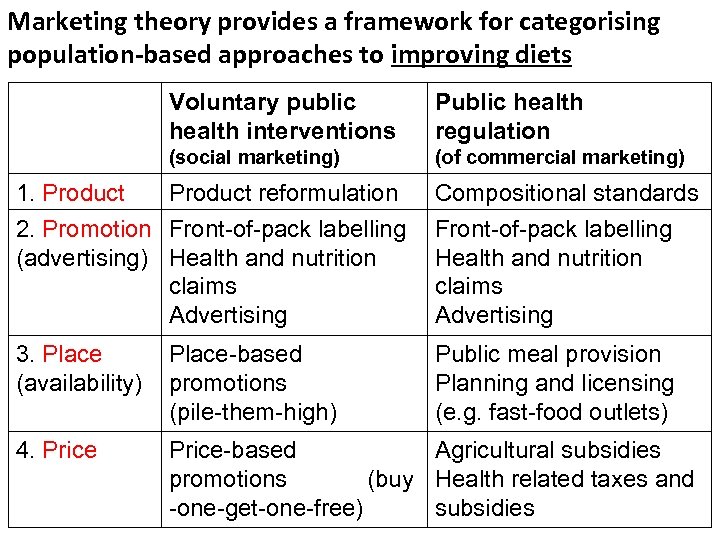
Marketing theory provides a framework for categorising population-based approaches to improving diets Voluntary public health interventions (social marketing) 1. Product Public health regulation (of commercial marketing) Product reformulation Compositional standards 2. Promotion Front-of-pack labelling (advertising) Health and nutrition claims Advertising Front-of-pack labelling Health and nutrition claims Advertising 3. Place (availability) Place-based promotions (pile-them-high) Public meal provision Planning and licensing (e. g. fast-food outlets) 4. Price-based Agricultural subsidies promotions (buy Health related taxes and -one-get-one-free) subsidies
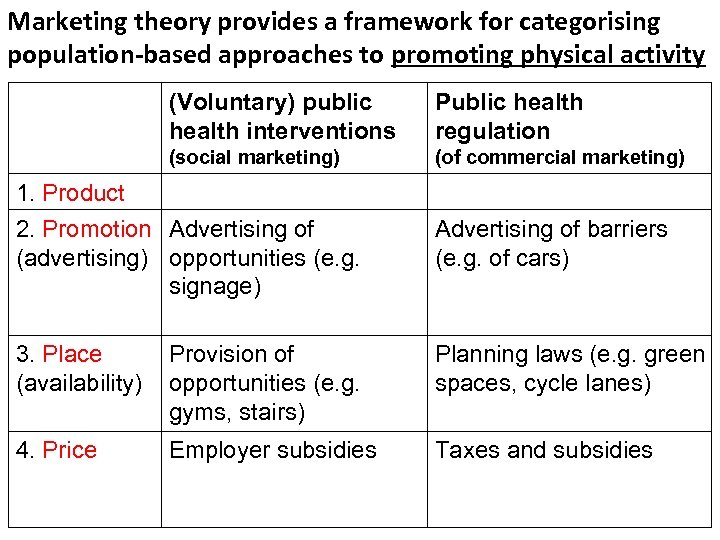
Marketing theory provides a framework for categorising population-based approaches to promoting physical activity (Voluntary) public health interventions Public health regulation (social marketing) (of commercial marketing) 1. Product 2. Promotion Advertising of (advertising) opportunities (e. g. signage) Advertising of barriers (e. g. of cars) 3. Place (availability) Provision of opportunities (e. g. gyms, stairs) Planning laws (e. g. green spaces, cycle lanes) 4. Price Employer subsidies Taxes and subsidies
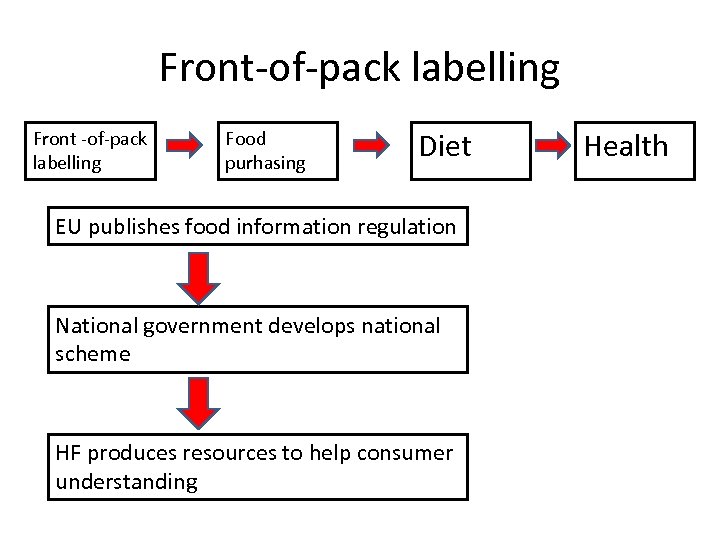
Front-of-pack labelling Front -of-pack labelling Food purhasing Diet EU publishes food information regulation National government develops national scheme HF produces resources to help consumer understanding Health
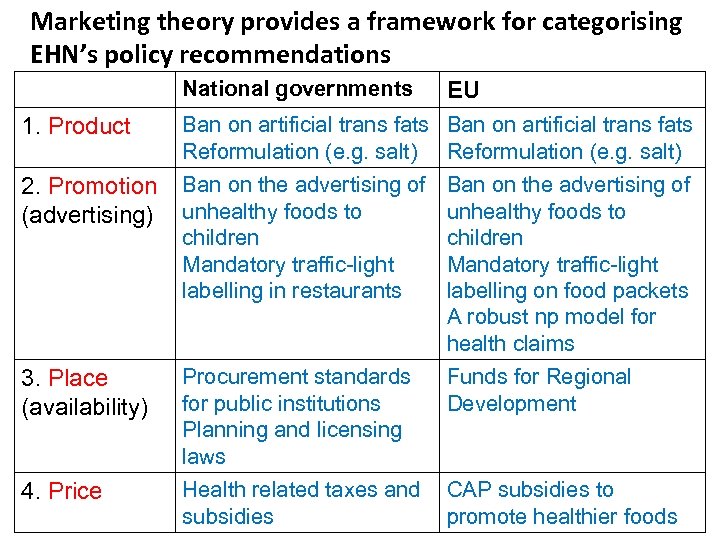
Marketing theory provides a framework for categorising EHN’s policy recommendations National governments EU 1. Product Ban on artificial trans fats Reformulation (e. g. salt) 2. Promotion (advertising) Ban on the advertising of unhealthy foods to children Mandatory traffic-light labelling in restaurants Ban on the advertising of unhealthy foods to children Mandatory traffic-light labelling on food packets A robust np model for health claims 3. Place (availability) Procurement standards for public institutions Planning and licensing laws Funds for Regional Development 4. Price Health related taxes and subsidies CAP subsidies to promote healthier foods
Health-related taxes
Скачать презентацию British Heart Foundation Health Promotion Research Group Goals
09a84fad2aa4cd3b3aa6ae8d780e67ad.ppt