 Скачать презентацию BRITAIN IN TH THE 19 CENTURY Lecture 7
Britain 19th century.ppt
- Количество слайдов: 22



BRITAIN IN TH THE 19 CENTURY Lecture 7
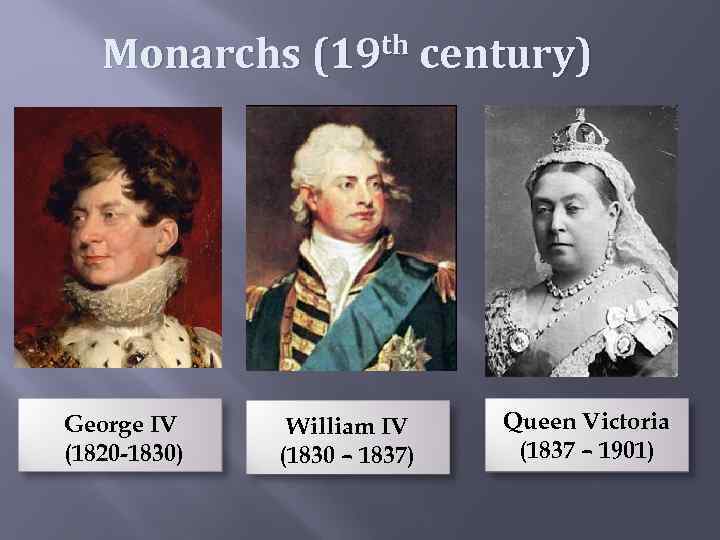
Monarchs (19 th century) George IV (1820 -1830) William IV (1830 – 1837) Queen Victoria (1837 – 1901)
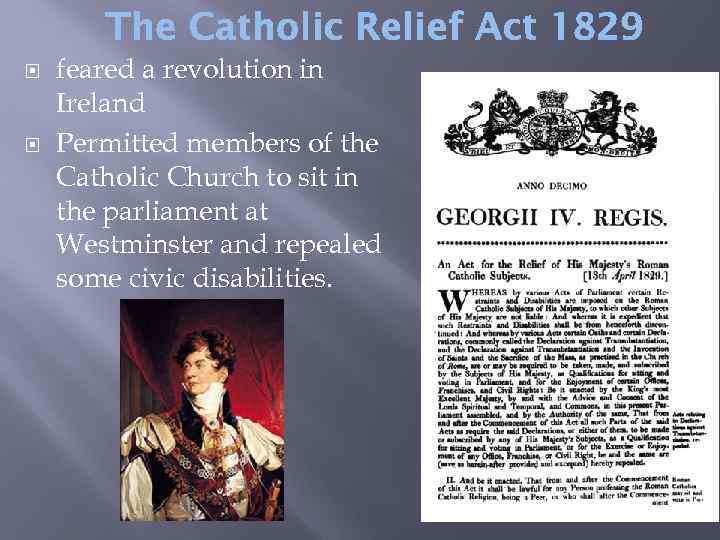
feared a revolution in Ireland Permitted members of the Catholic Church to sit in the parliament at Westminster and repealed some civic disabilities.
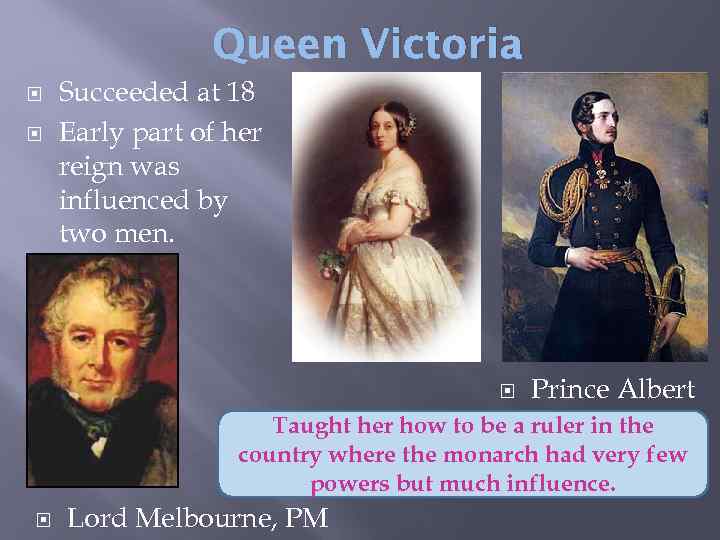
Queen Victoria Succeeded at 18 Early part of her reign was influenced by two men. Prince Albert Taught her how to be a ruler in the country where the monarch had very few powers but much influence. Lord Melbourne, PM
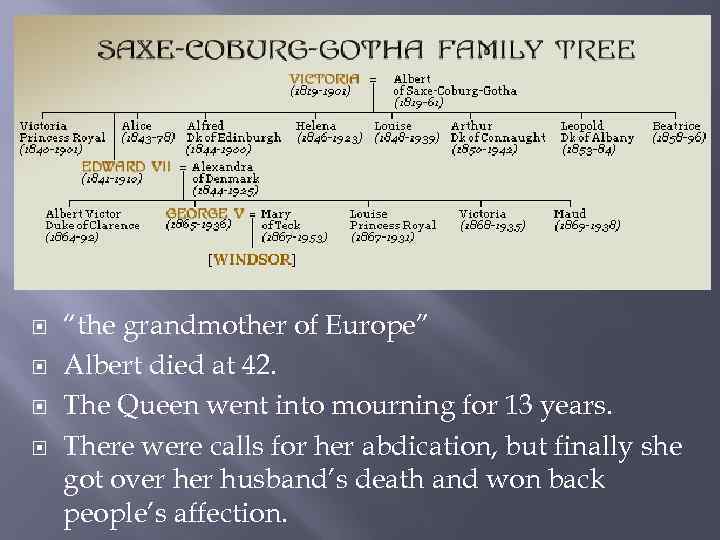
“the grandmother of Europe” Albert died at 42. The Queen went into mourning for 13 years. There were calls for her abdication, but finally she got over husband’s death and won back people’s affection.
Queen Victoria (ruled for 64 years) Great political reforms, power moved away from the sovereign. She succeeded in showing the newly industrialized nation that they needed monarchy as a connection with a glorious history. The monarchy was now quite suddenly out of danger. “Monarchy was never safer than when it had lost its political power” So the concept of monarchy changed. The Queen almost became the symbol of the British Empire. Victoria was the example of family life, moral and religious values.
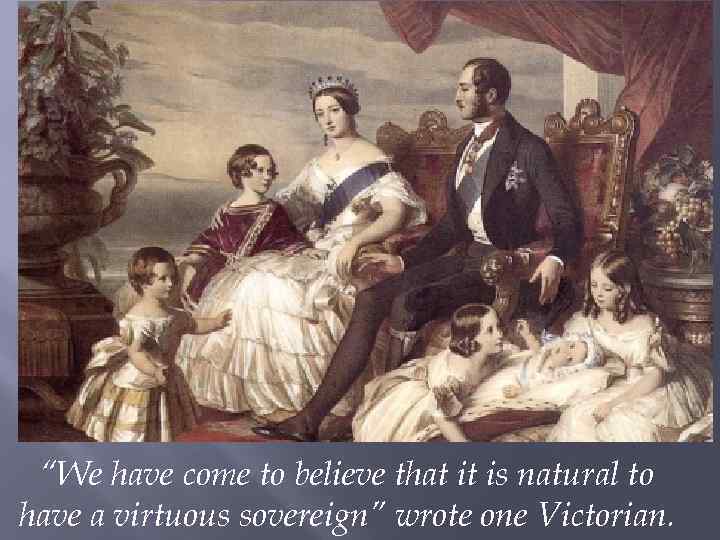
“We have come to believe that it is natural to have a virtuous sovereign” wrote one Victorian.
Major Developments Franchise (the right to vote in public elections) extended throughout the 19 th century. The secret ballot (1872). The Acts of Parliament increased the number of individuals entitled to vote. Broadened the social and economic base of the electorate. The seats in the House of Commons were granted to large cities. Women remained excluded from the franchise
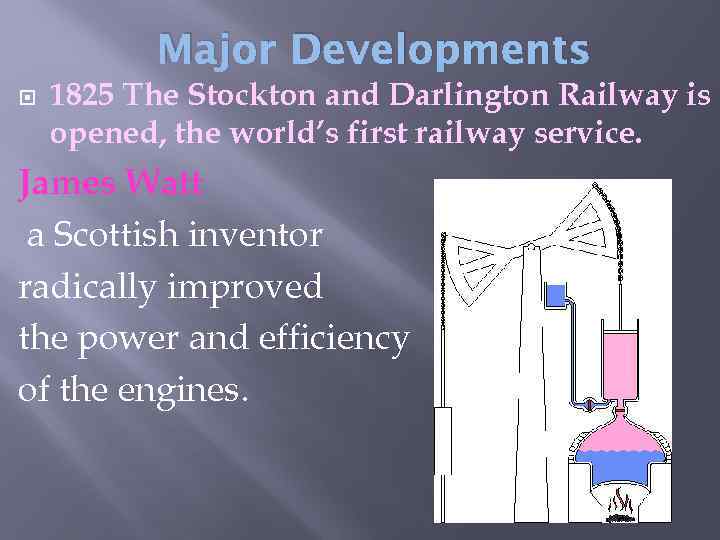
Major Developments 1825 The Stockton and Darlington Railway is opened, the world’s first railway service. James Watt a Scottish inventor radically improved the power and efficiency of the engines.
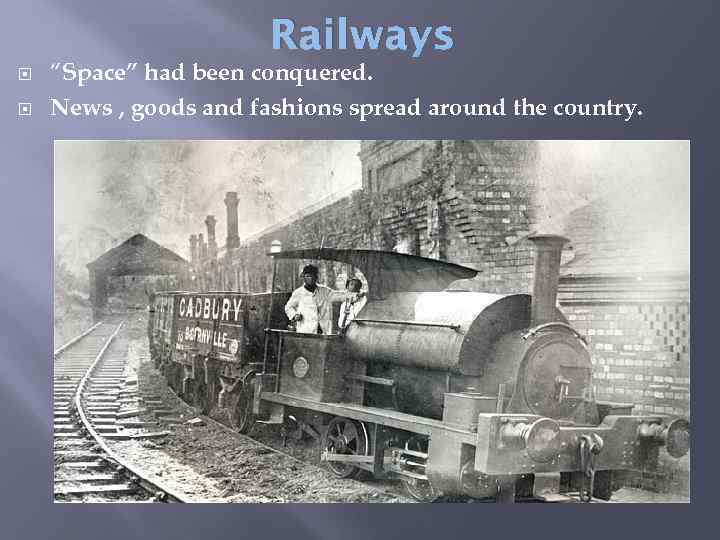
Railways “Space” had been conquered. News , goods and fashions spread around the country.
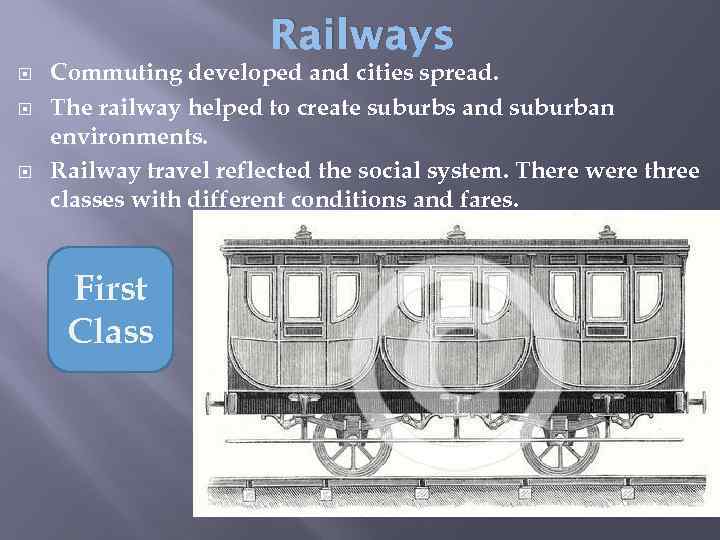
Railways Commuting developed and cities spread. The railway helped to create suburbs and suburban environments. Railway travel reflected the social system. There were three classes with different conditions and fares. First Class
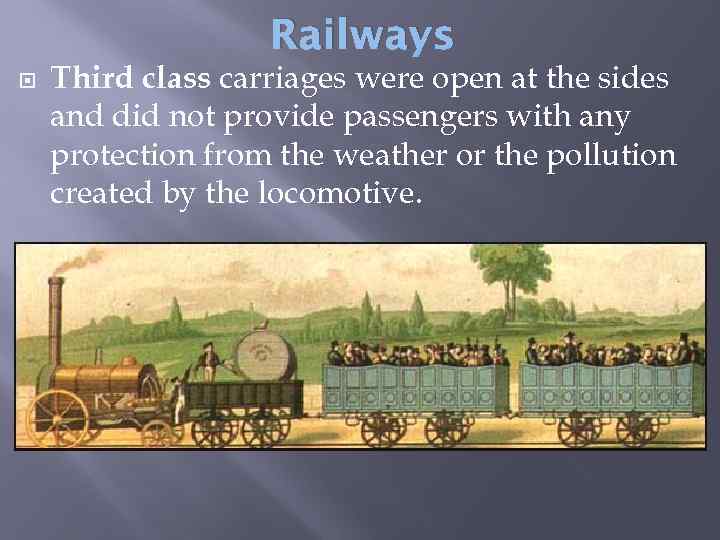
Railways Third class carriages were open at the sides and did not provide passengers with any protection from the weather or the pollution created by the locomotive.
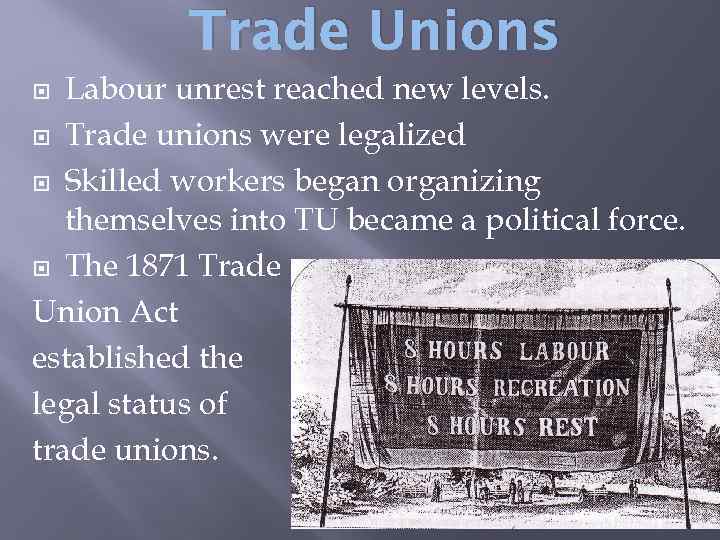
Trade Unions Labour unrest reached new levels. Trade unions were legalized Skilled workers began organizing themselves into TU became a political force. The 1871 Trade Union Act established the legal status of trade unions.
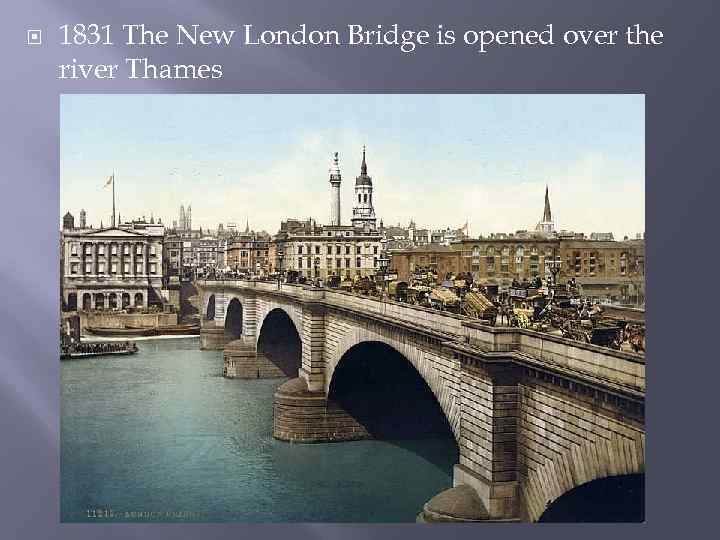
1831 The New London Bridge is opened over the river Thames
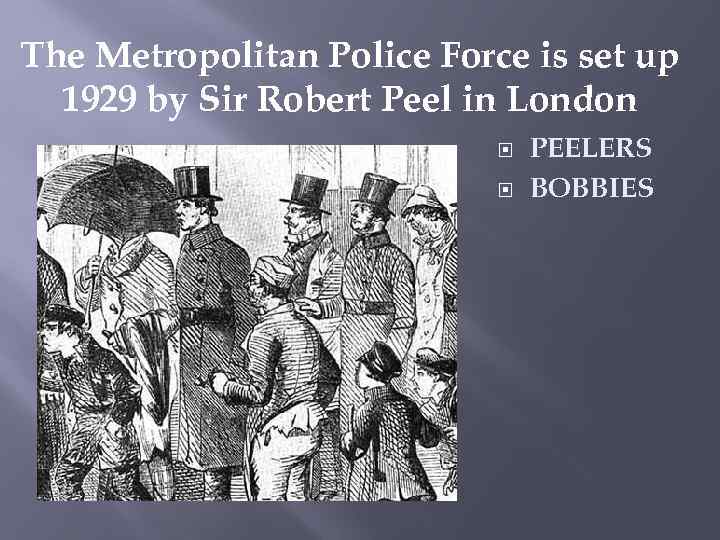
The Metropolitan Police Force is set up 1929 by Sir Robert Peel in London PEELERS BOBBIES
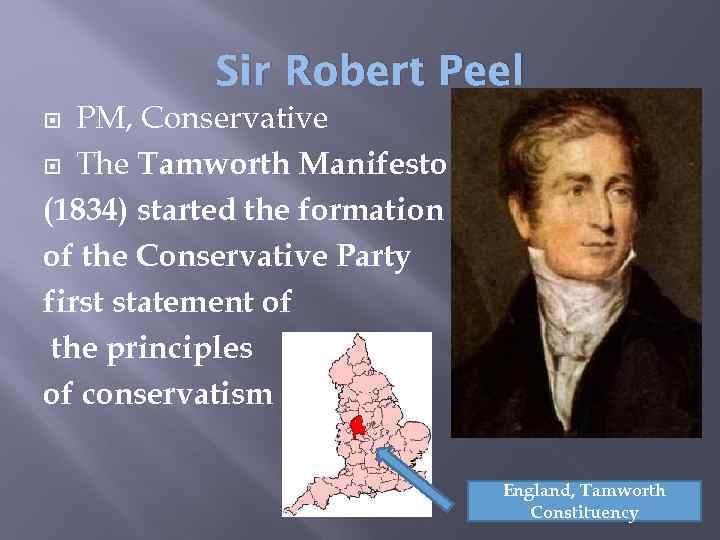
Sir Robert Peel PM, Conservative The Tamworth Manifesto (1834) started the formation of the Conservative Party first statement of the principles of conservatism England, Tamworth Constituency
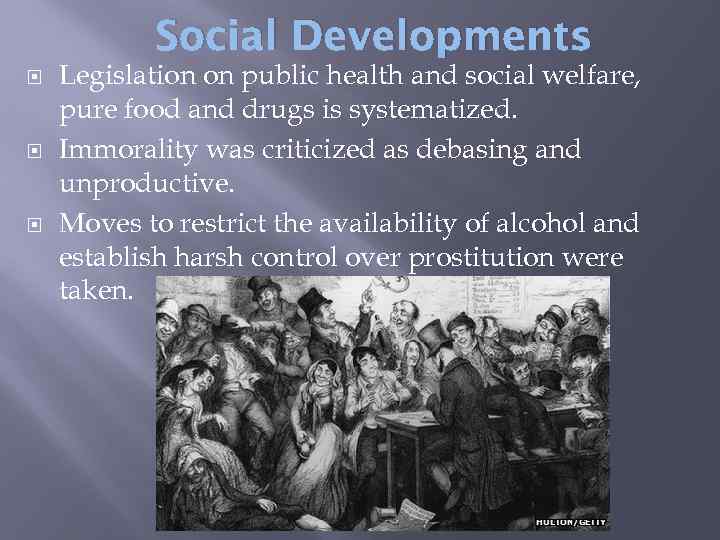
Social Developments Legislation on public health and social welfare, pure food and drugs is systematized. Immorality was criticized as debasing and unproductive. Moves to restrict the availability of alcohol and establish harsh control over prostitution were taken.
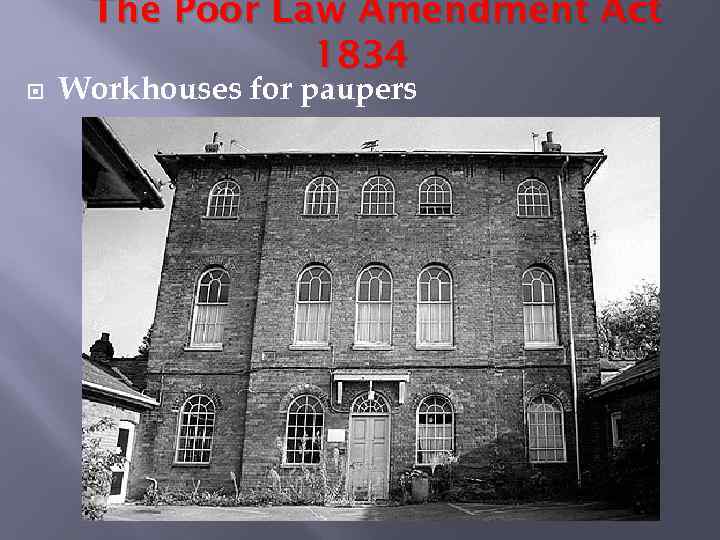
The Poor Law Amendment Act 1834 Workhouses for paupers
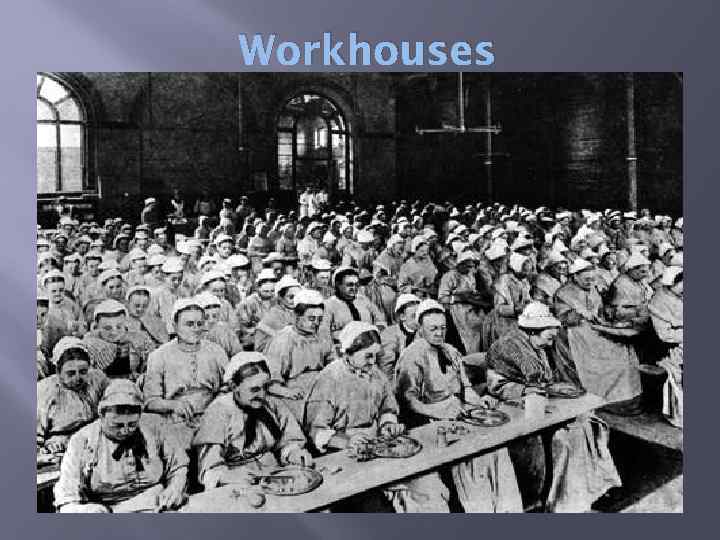
Workhouses
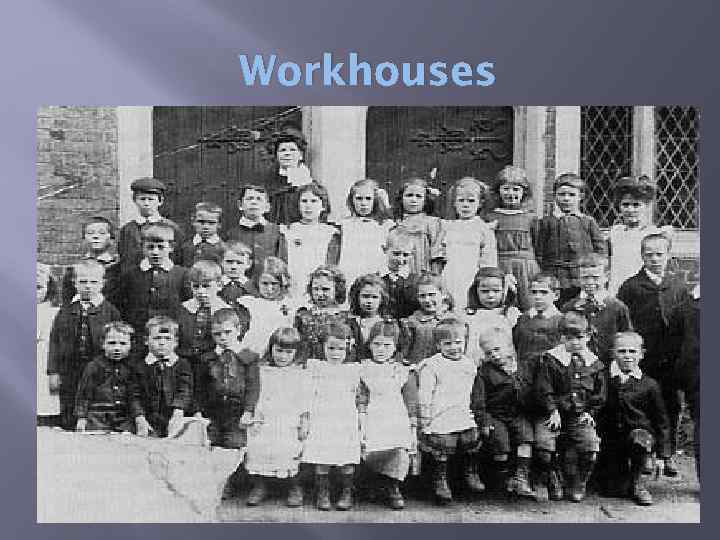
Workhouses
th 19 century 1836 Births, marriages and deaths must be registered by law 1837 Dickens publishes Oliver Twist 1845 Irish Potato Famine 1859 Charles Darwin’s The Origin of the Species 1867 Canada becomes the first independent dominion in the Empire 1870 Primary education is established and the country is divided into school districts
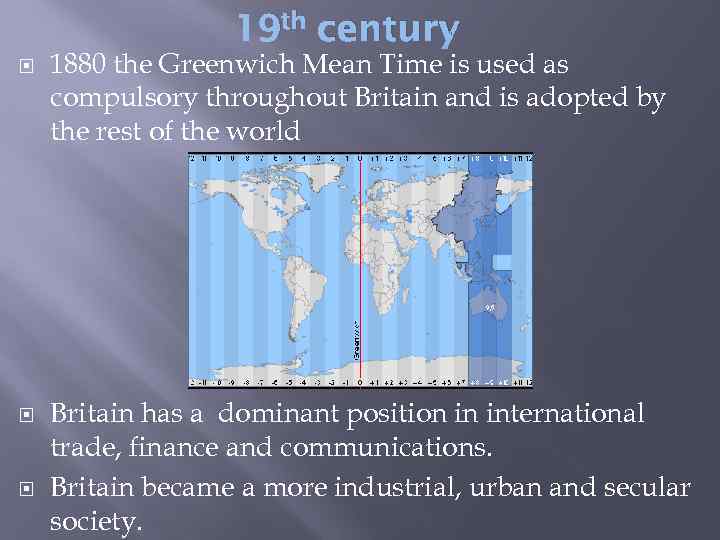
19 th century 1880 the Greenwich Mean Time is used as compulsory throughout Britain and is adopted by the rest of the world Britain has a dominant position in international trade, finance and communications. Britain became a more industrial, urban and secular society.
Скачать презентацию BRITAIN IN TH THE 19 CENTURY Lecture 7
Britain 19th century.ppt