 Скачать презентацию Bringing Water Data Together David R Maidment Center
61bc8616df344f2036742dcb381e5047.ppt
- Количество слайдов: 32



Bringing Water Data Together David R. Maidment Center for Research in Water Resources University of Texas at Austin Texas Water Summit San Antonio Tx, Dec 1, 2007
Bringing Water Data Together • What has happened • What is emerging • What does it mean for Texas
Bringing Water Data Together • What has happened • What is emerging • What does it mean for Texas
National Science Foundation • In recent years, the National Science Foundation has significantly increased its funding of water science – Formation and support of CUAHSI to link universities doing water science – Design of WATERS network for field observation of water phenomena by academics
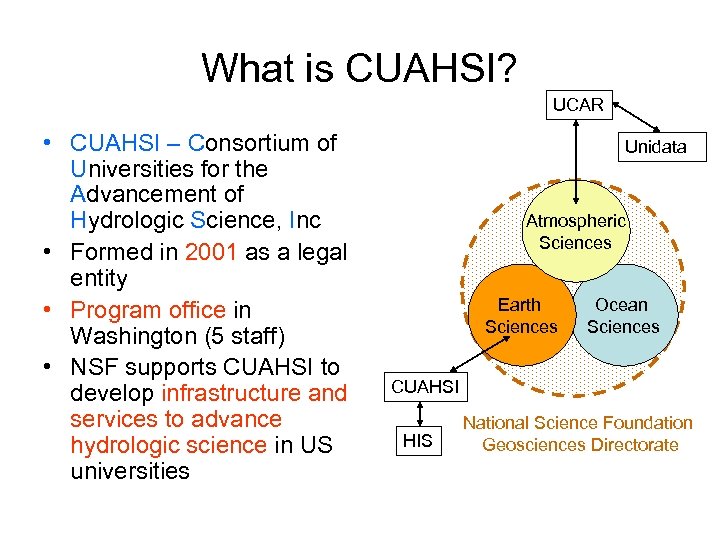
What is CUAHSI? UCAR • CUAHSI – Consortium of Universities for the Advancement of Hydrologic Science, Inc • Formed in 2001 as a legal entity • Program office in Washington (5 staff) • NSF supports CUAHSI to develop infrastructure and services to advance hydrologic science in US universities Unidata Atmospheric Sciences Earth Sciences Ocean Sciences CUAHSI HIS National Science Foundation Geosciences Directorate
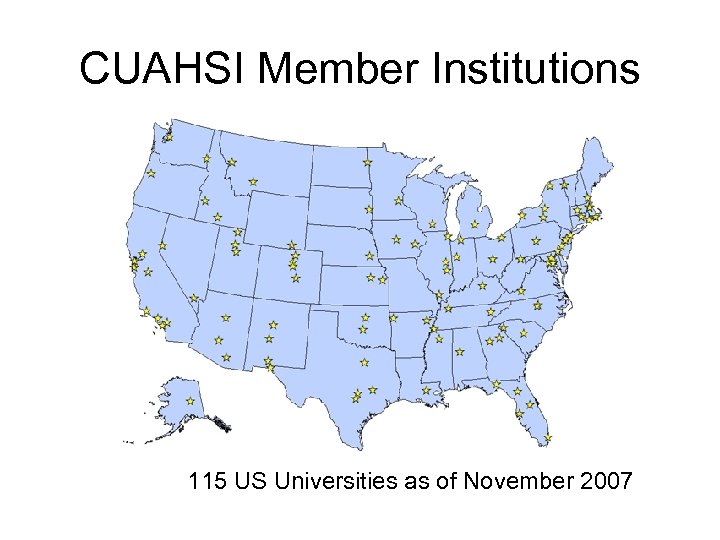
CUAHSI Member Institutions 115 US Universities as of November 2007
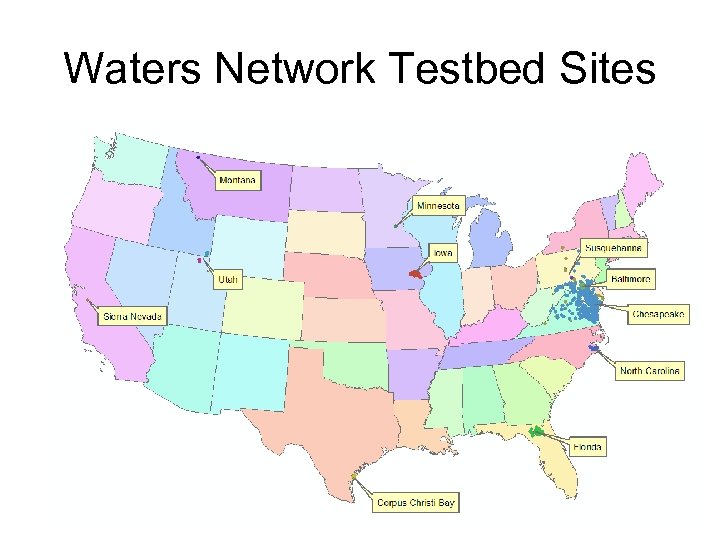
Waters Network Testbed Sites
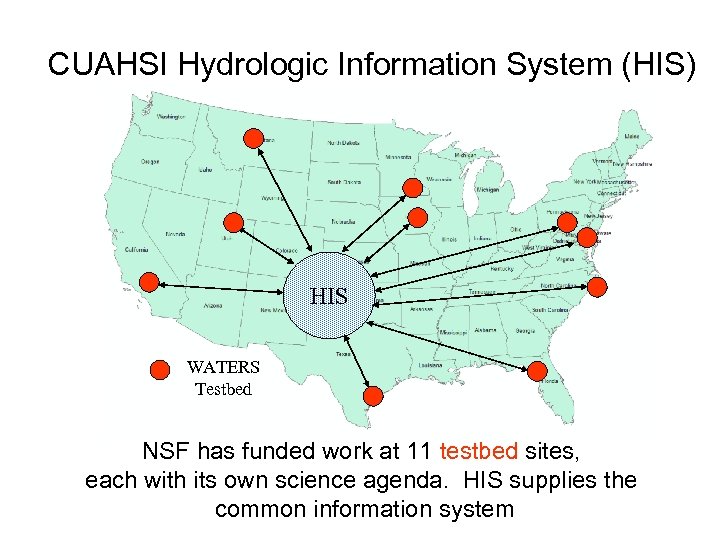
CUAHSI Hydrologic Information System (HIS) HIS WATERS Testbed NSF has funded work at 11 testbed sites, each with its own science agenda. HIS supplies the common information system
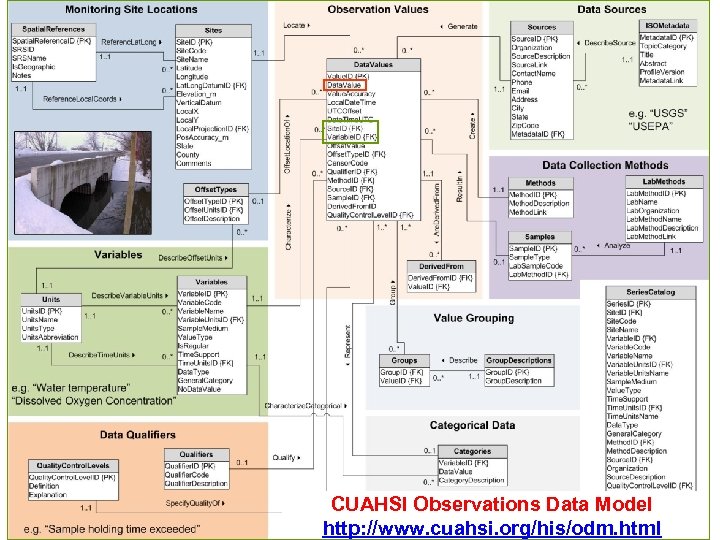
CUAHSI Observations Data Model http: //www. cuahsi. org/his/odm. html
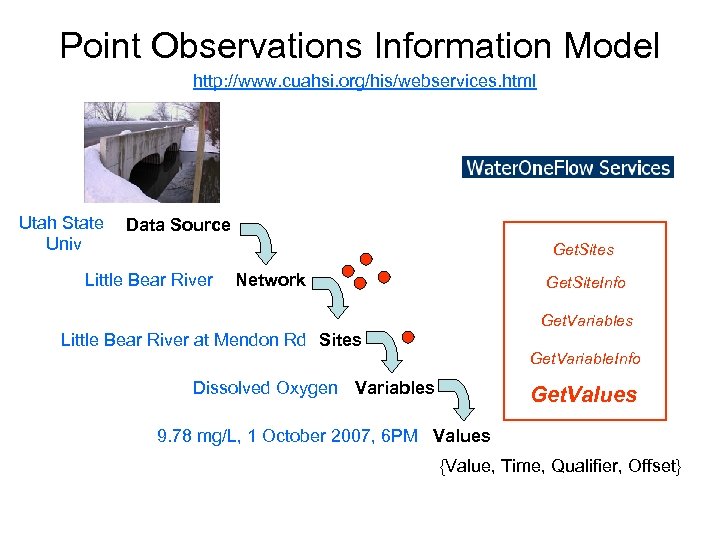
Point Observations Information Model http: //www. cuahsi. org/his/webservices. html Utah State Univ Data Source Get. Sites Little Bear River Network Get. Site. Info Get. Variables Little Bear River at Mendon Rd Sites Get. Variable. Info Dissolved Oxygen Variables Get. Values 9. 78 mg/L, 1 October 2007, 6 PM Values {Value, Time, Qualifier, Offset}
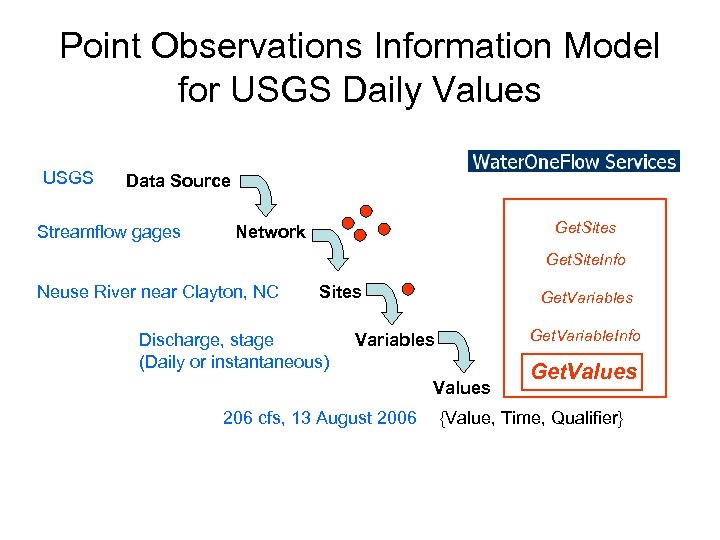
Point Observations Information Model for USGS Daily Values USGS Data Source Streamflow gages Get. Sites Network Get. Site. Info Neuse River near Clayton, NC Sites Discharge, stage (Daily or instantaneous) Get. Variables Get. Variable. Info Variables Values 206 cfs, 13 August 2006 Get. Values {Value, Time, Qualifier}
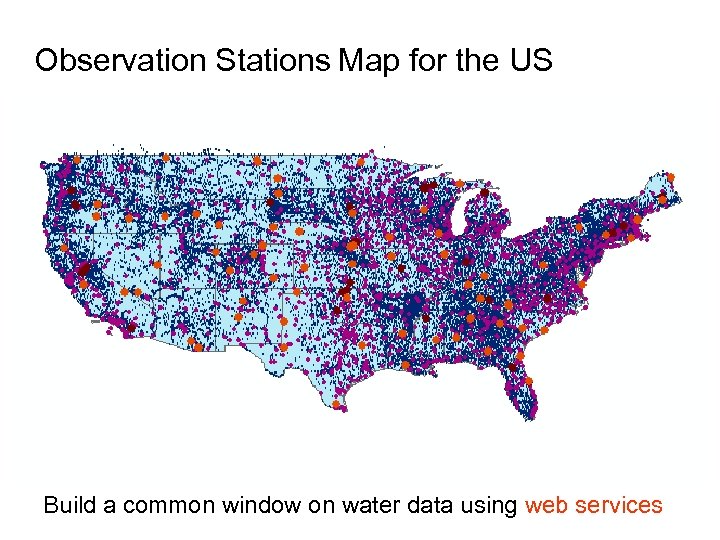
Observation Stations Map for the US Ameriflux Towers (NASA & DOE) NOAA Automated Surface Observing System USGS National Water Information System NOAA Climate Reference Network Build a common window on water data using web services
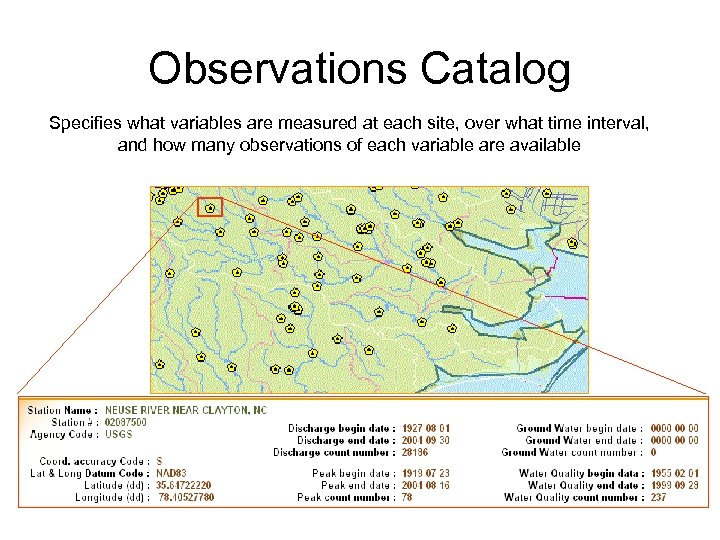
Observations Catalog Specifies what variables are measured at each site, over what time interval, and how many observations of each variable are available
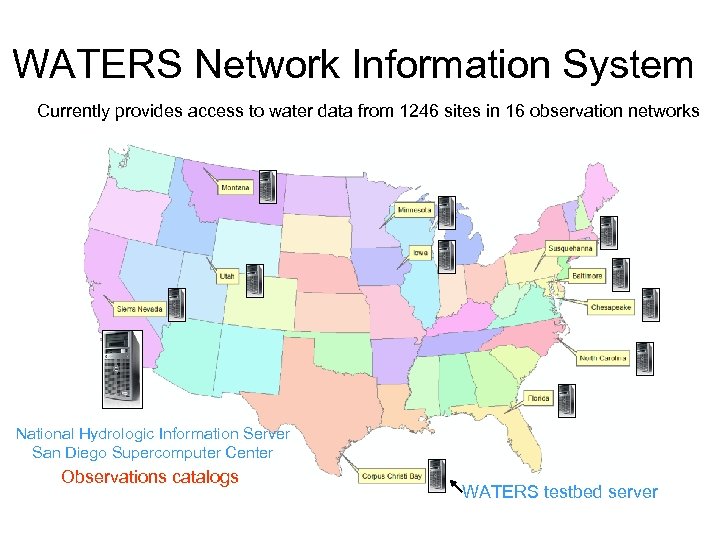
WATERS Network Information System Currently provides access to water data from 1246 sites in 16 observation networks National Hydrologic Information Server San Diego Supercomputer Center Observations catalogs WATERS testbed server
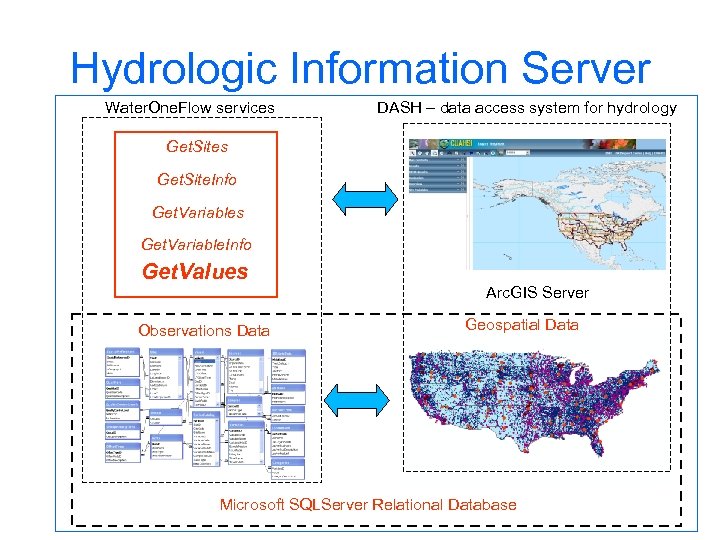
Hydrologic Information Server Water. One. Flow services DASH – data access system for hydrology Get. Sites Get. Site. Info Get. Variables Get. Variable. Info Get. Values Observations Data Arc. GIS Server Geospatial Data Microsoft SQLServer Relational Database
Bringing Water Data Together • What has happened • What is emerging • What does it mean for Texas
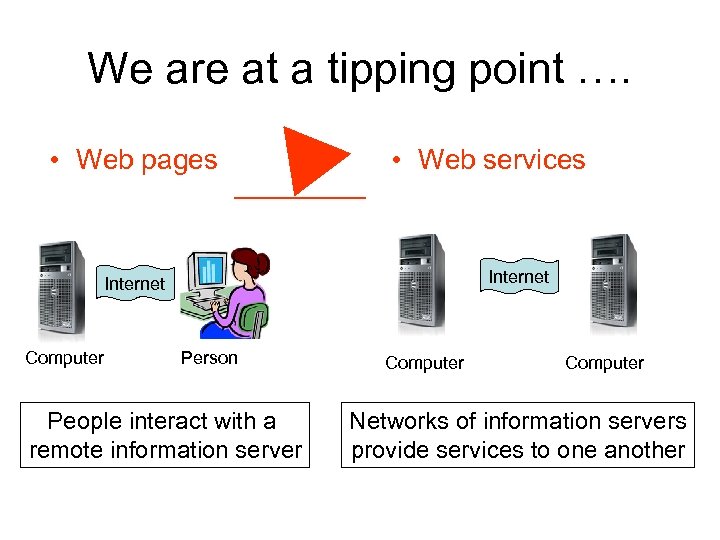
We are at a tipping point …. • Web pages • Web services Internet Computer Person People interact with a remote information server Computer Networks of information servers provide services to one another
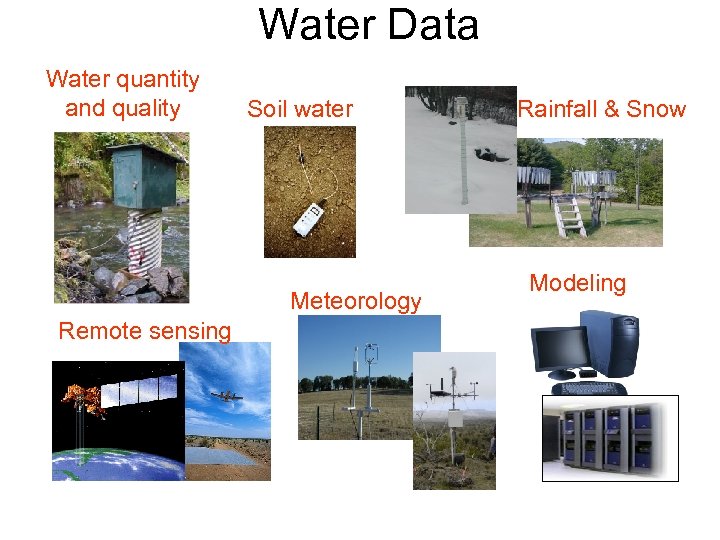
Water Data Water quantity and quality Soil water Meteorology Remote sensing Rainfall & Snow Modeling
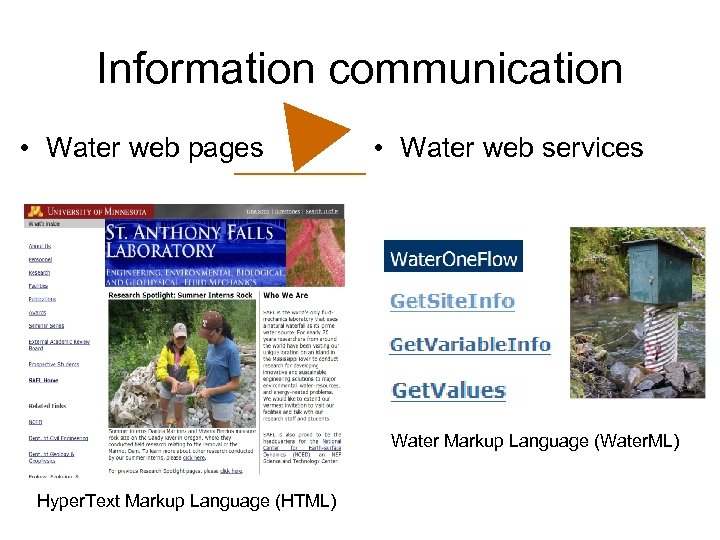
Information communication • Water web pages • Water web services Water Markup Language (Water. ML) Hyper. Text Markup Language (HTML)
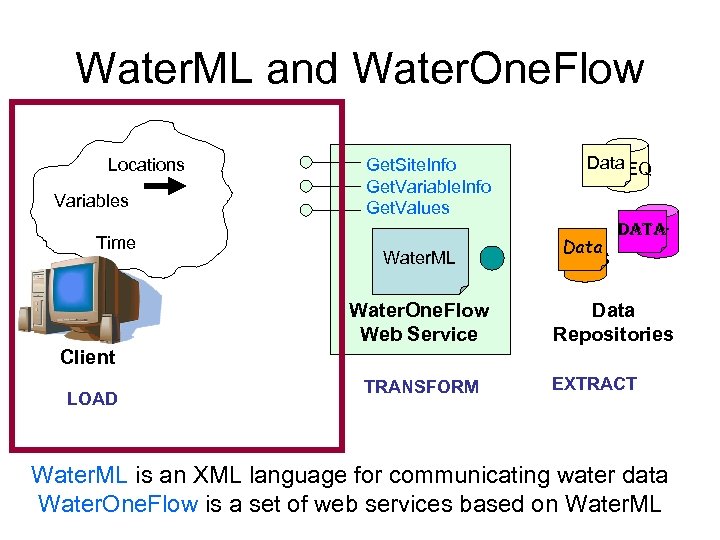
Water. ML and Water. One. Flow Locations Variables Time Get. Site. Info Get. Variable. Info Get. Values Water. ML Water. One. Flow Web Service Data TCEQ Data USGS Data UT Data Repositories Client LOAD TRANSFORM EXTRACT Water. ML is an XML language for communicating water data Water. One. Flow is a set of web services based on Water. ML
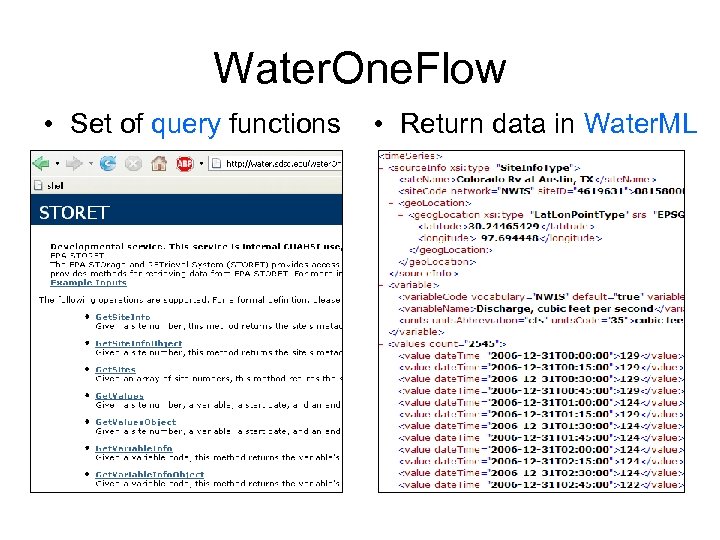
Water. One. Flow • Set of query functions • Return data in Water. ML
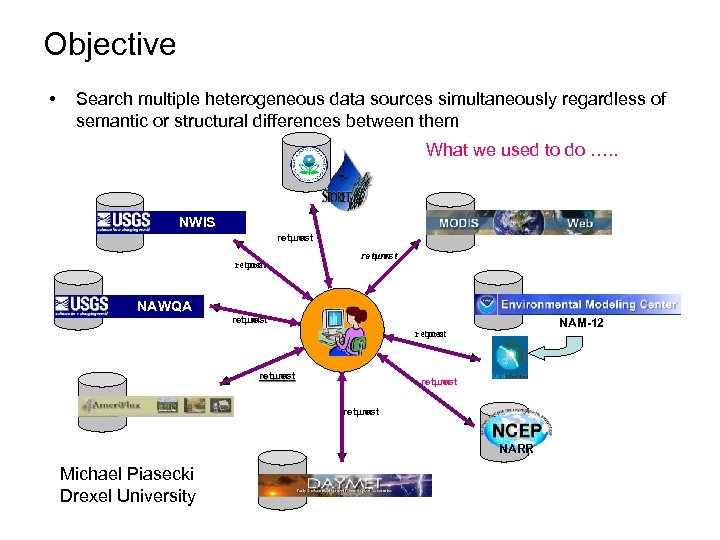
Objective • Search multiple heterogeneous data sources simultaneously regardless of semantic or structural differences between them What we used to do …. . NWIS request return NAWQA request return request NAM-12 request return NARR Michael Piasecki Drexel University
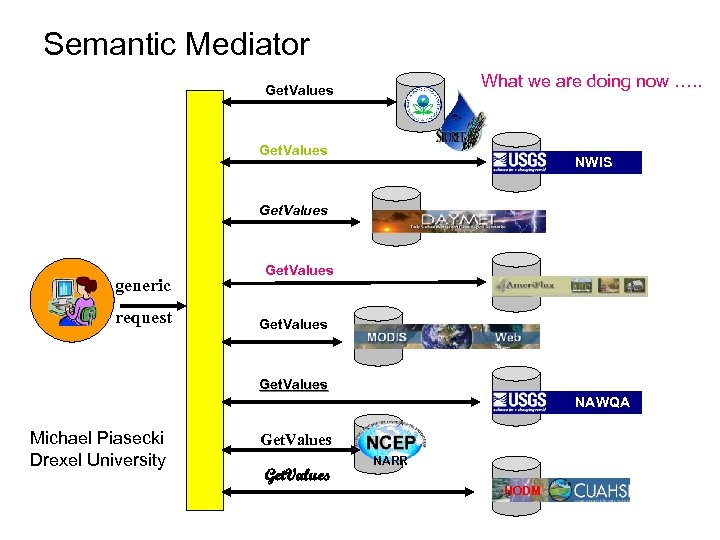
Semantic Mediator What we are doing now …. . Get. Values NWIS Get. Values generic request Get. Values NAWQA Michael Piasecki Drexel University Get. Values NARR HODM
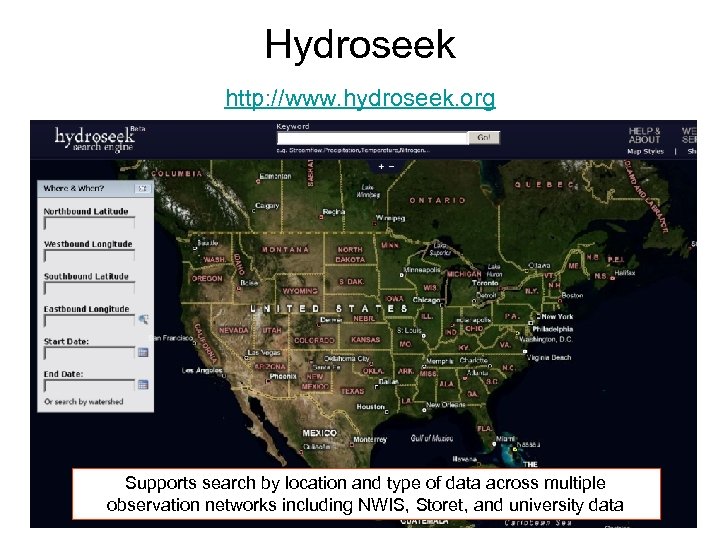
Hydroseek http: //www. hydroseek. org Supports search by location and type of data across multiple observation networks including NWIS, Storet, and university data
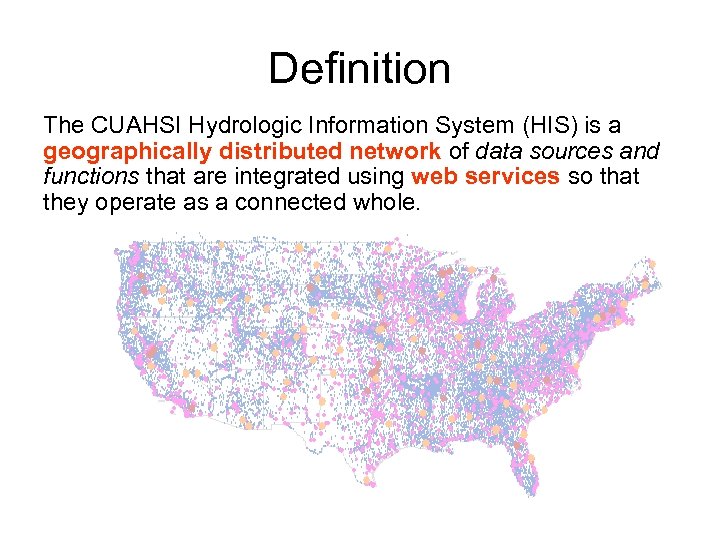
Definition The CUAHSI Hydrologic Information System (HIS) is a geographically distributed network of data sources and functions that are integrated using web services so that they operate as a connected whole.
Bringing Water Data Together • What has happened • What is emerging • What does it mean for Texas
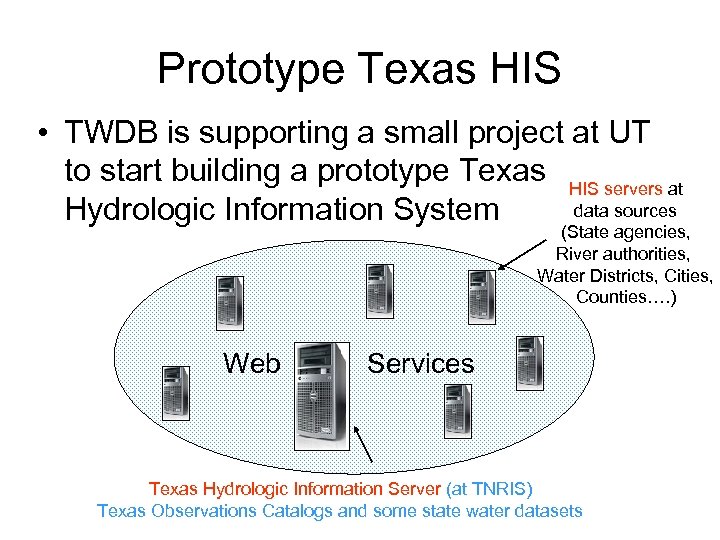
Prototype Texas HIS • TWDB is supporting a small project at UT to start building a prototype Texas HIS servers at data sources Hydrologic Information System (State agencies, River authorities, Water Districts, Cities, Counties…. ) Web Services Texas Hydrologic Information Server (at TNRIS) Texas Observations Catalogs and some state water datasets
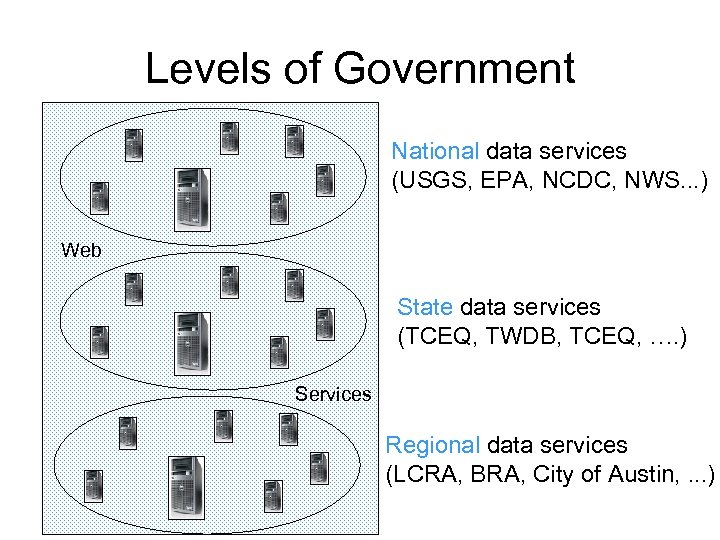
Levels of Government National data services (USGS, EPA, NCDC, NWS. . . ) Web State data services (TCEQ, TWDB, TCEQ, …. ) Services Regional data services (LCRA, BRA, City of Austin, . . . )
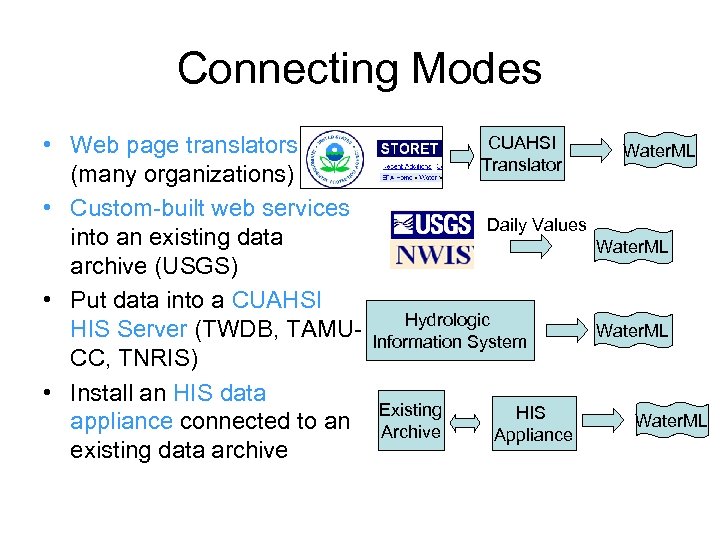
Connecting Modes • Web page translators (many organizations) • Custom-built web services into an existing data archive (USGS) • Put data into a CUAHSI HIS Server (TWDB, TAMUCC, TNRIS) • Install an HIS data appliance connected to an existing data archive CUAHSI Translator Water. ML Daily Values Water. ML Hydrologic Information System Existing Archive HIS Appliance Water. ML
Applications • Rapid, low-cost data integration (flowwater quality-biology) enhances water science • Better water data access for citizens • Real-time emergency management water information network • Environmental flows information system to support Senate Bill 3
Issues • What is “official” data? – Data source must assure quality – Data is published through web services – Data is indexed through Hydro. Seek – Need an “information sharing agreement” between data source and publishing organization • CUAHSI HIS is open source and available free of charge (NSF requirement)
Conclusions • A new web services technology has emerged that can provide access and synthesis of water observations data – At many geographic locations – From many organizations (federal, state, local government, academia) – In a common format – With a common data description For more information, see http: //www. cuahsi. org/his. html
Скачать презентацию Bringing Water Data Together David R Maidment Center
61bc8616df344f2036742dcb381e5047.ppt