 Скачать презентацию BRINGING LANGUAGE TO LIFE Vaughan Jones Friday 9
bb50d7e78e6b1a1a22cc21eb06b7783f.ppt
- Количество слайдов: 27




BRINGING LANGUAGE TO LIFE Vaughan Jones Friday, 9 th November 2012
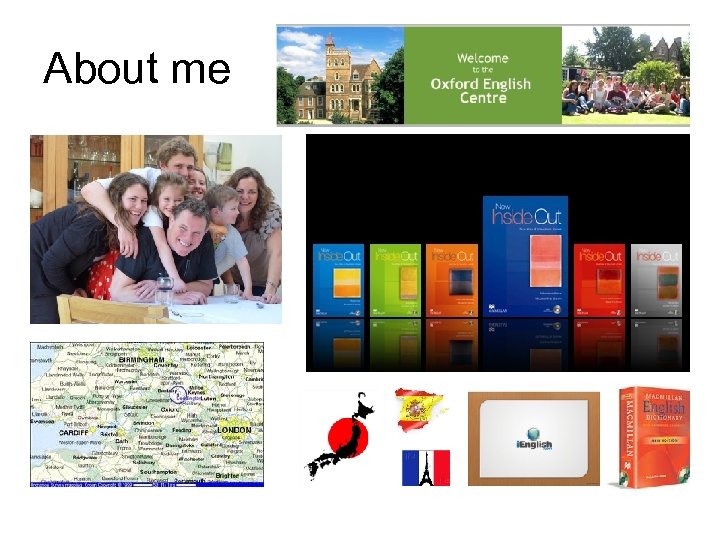
About me

http: //mobro. co/vaughanjones
The three Ms… • Motivation - Engaging content • Memory - Repeated exposure • Meaning - Meaningful practice
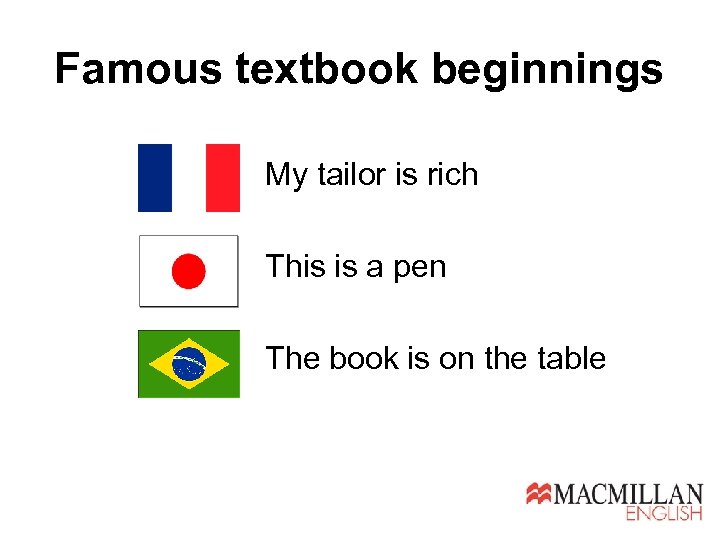
Famous textbook beginnings My tailor is rich This is a pen The book is on the table
Invented examples through the ages • The philosopher pulled the lower jaw of the hen. Henry Sweet 1889 • I have not seen your father’s pen, but I have read the book of your uncle’s gardener. J R Firth 1935 • Colorless green ideas sleep furiously. Noam Chomsky 1957

The Stanford University literary competition It can only be thought of verdure to come, which prompts us in the autumn to buy these dormant white lumps of vegetable matter covered by a brown papery skin, and lovingly to plant them and care for them. It is a marvel to me that under this cover they are labouring unseen at such a rate within to give us the sudden awesome beauty of spring flowering bulbs. While winter reigns the earth reposes but these colourless green ideas sleep furiously.
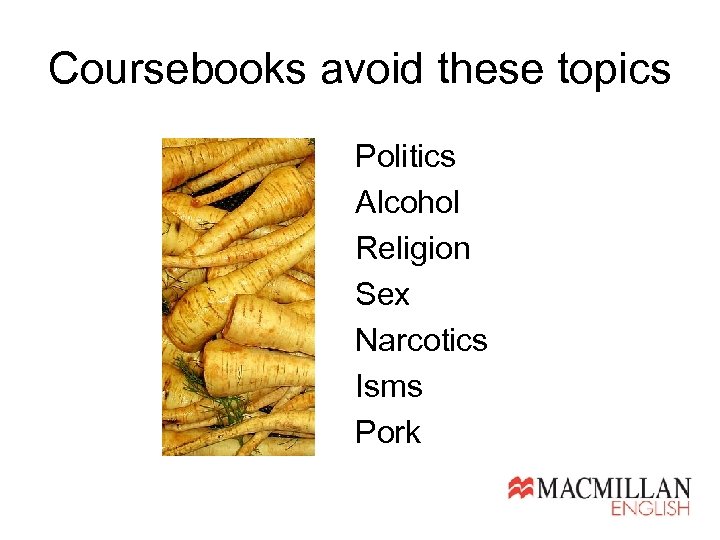
Coursebooks avoid these topics Politics Alcohol Religion Sex Narcotics Isms Pork
Combining Form and Meaning • “The teacher has to contrive a situation in which learners are simultaneously alert to language-as-form and language-asmeaning. ” Peter Skehan 1998 • “Students will best acquire the structures or patterns when they are put into situations that require them to use structures and patterns for some meaningful purpose other than decontextualised or mechanistic practice” Diane Larsen-Freeman 2003 • “The great challenge of teaching, then, is to set up activities which are essentially meaning-focused, but within which a focus on form can be engineered. It is an enormously delicate balancing act. It is what makes teaching an art, not a science. ” Scott Thornbury 2001
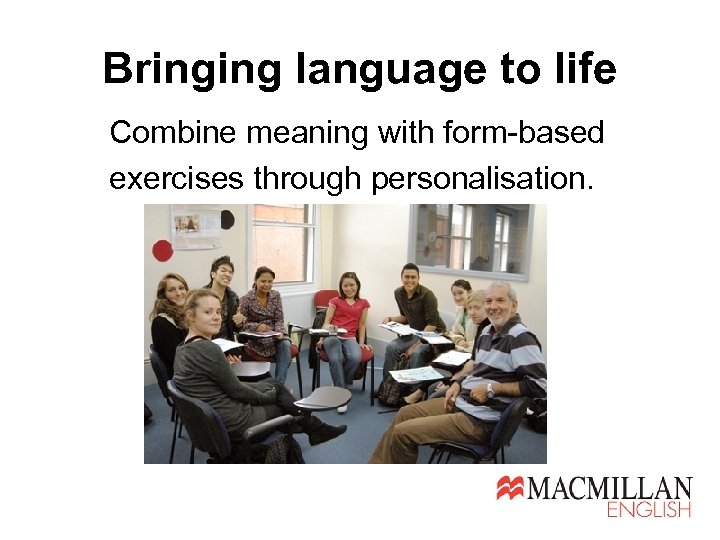
Bringing language to life Combine meaning with form-based exercises through personalisation.
Form-driven. Difficult to personalise… Complete the questions with much or many. a) How ______ petrol is there in the car? b) How ______ cigarettes do you smoke? c) How ______ apples do you want? d) How ______ money do you have? e) How ______ time do you need? f) How ______ fish are there in the sea?
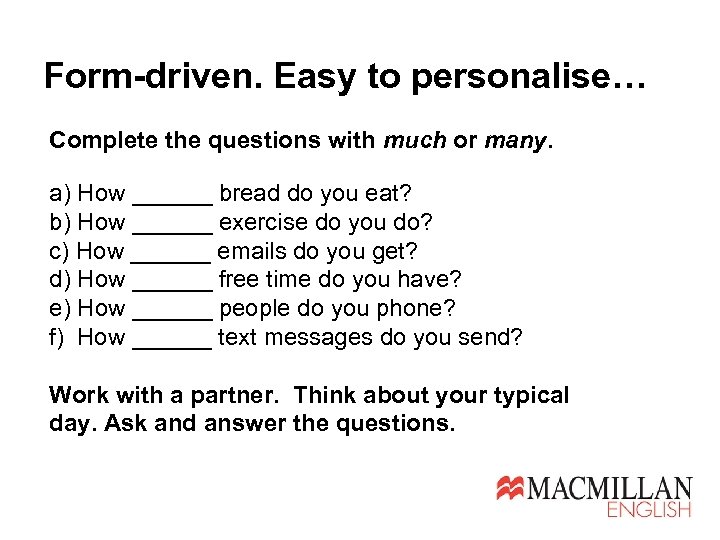
Form-driven. Easy to personalise… Complete the questions with much or many. a) How ______ bread do you eat? b) How ______ exercise do you do? c) How ______ emails do you get? d) How ______ free time do you have? e) How ______ people do you phone? f) How ______ text messages do you send? Work with a partner. Think about your typical day. Ask and answer the questions.
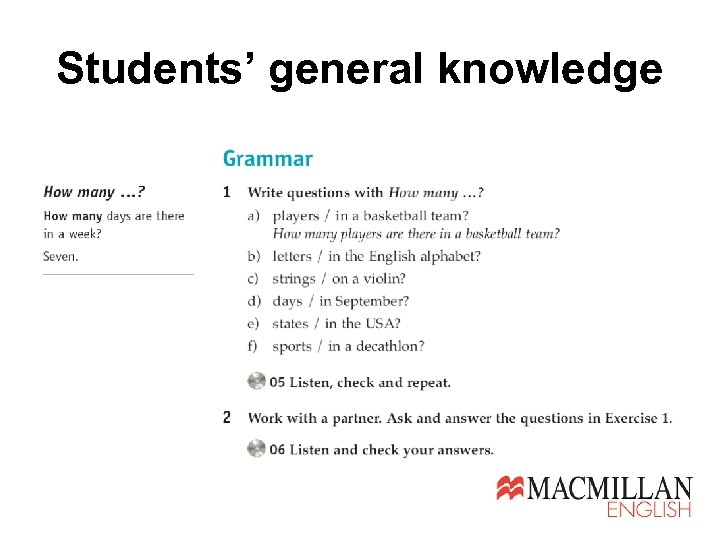
Students’ general knowledge

Vocabulary from a text
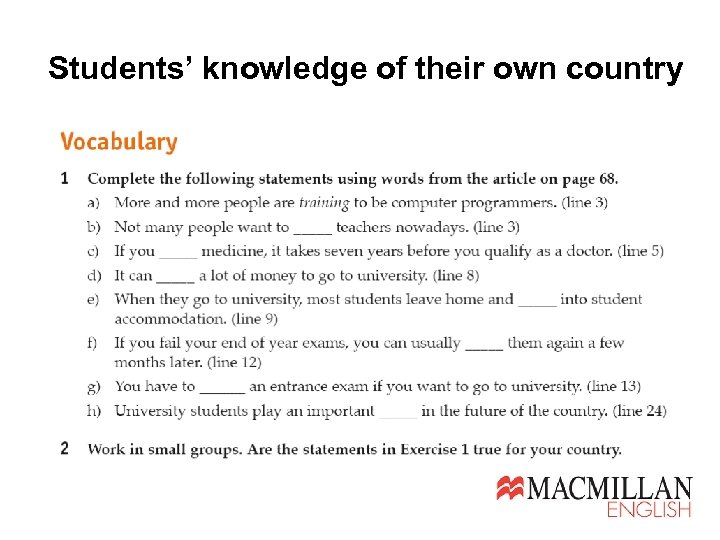
Students’ knowledge of their own country
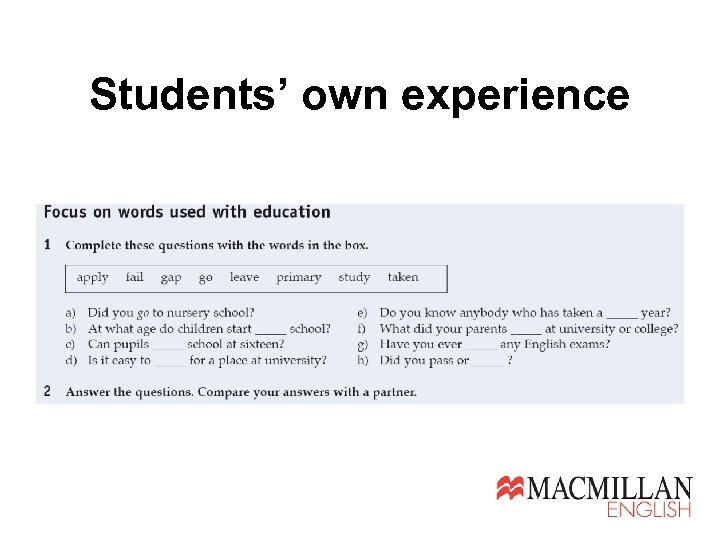
Students’ own experience
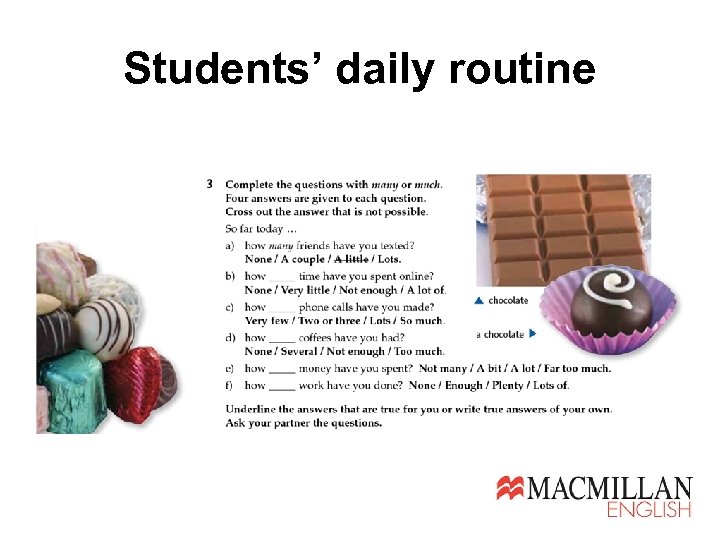
Students’ daily routine
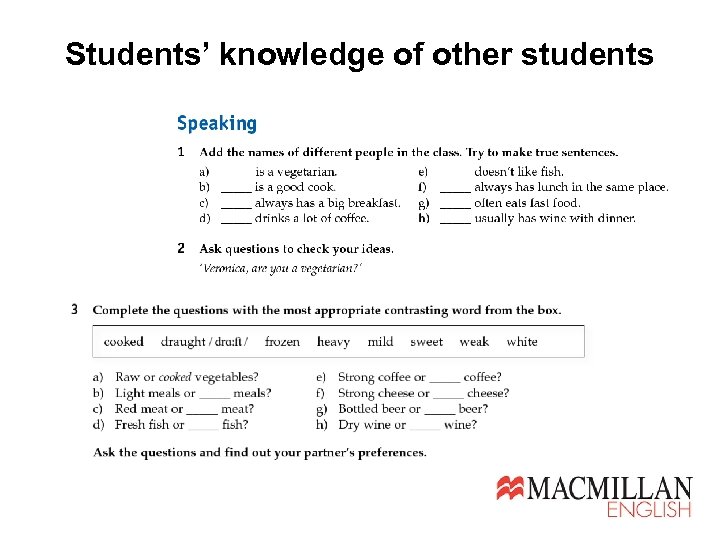
Students’ knowledge of other students
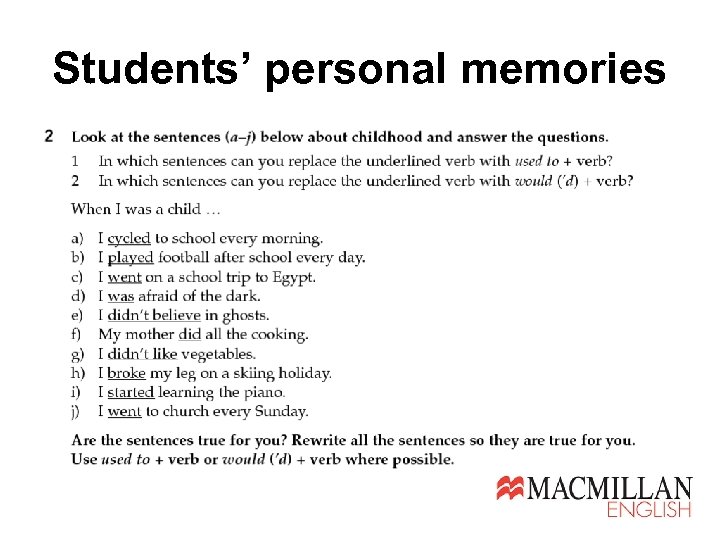
Students’ personal memories
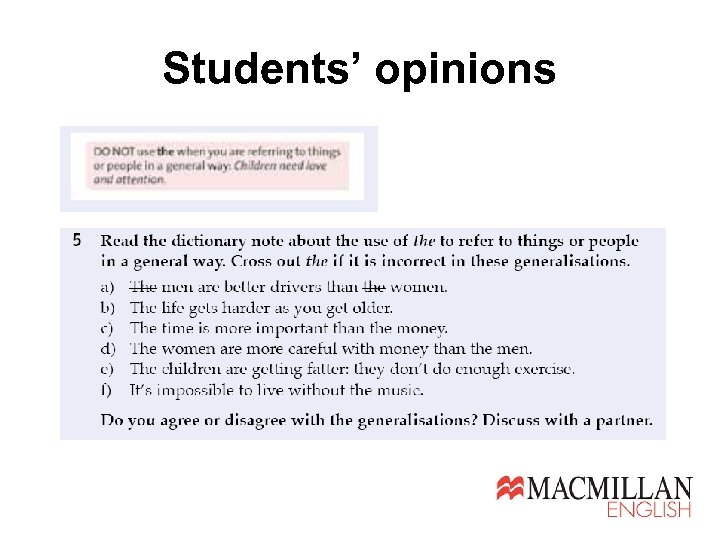
Students’ opinions

Students’ predictions
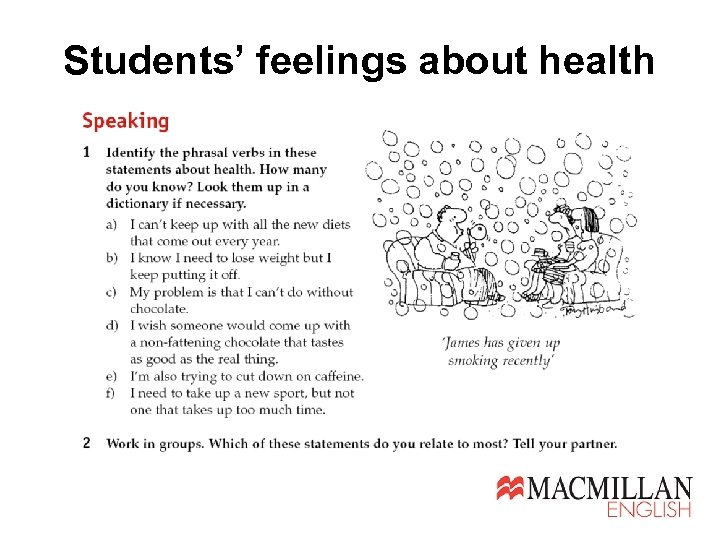
Students’ feelings about health
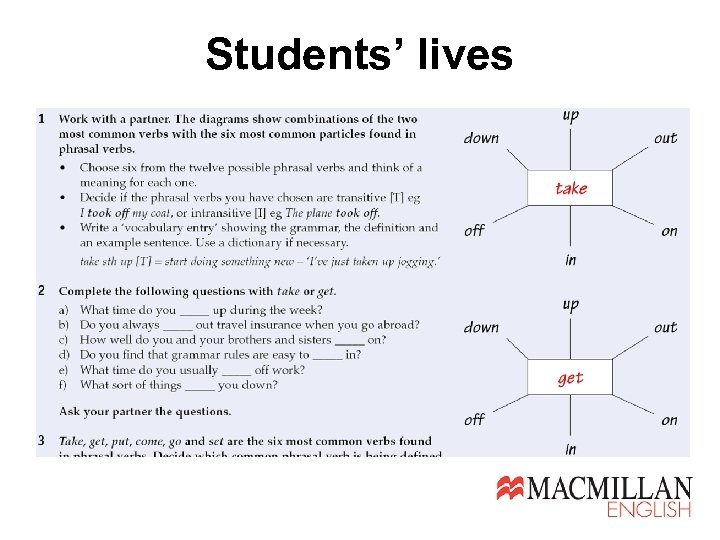
Students’ lives
Bringing language to life… • makes use of the topic they know most about • helps facilitate positive group dynamics • brings humour into the classroom • adds an element of surprise • combines a focus-on-form with a focus-on-meaning • makes language learning memorable
Thank you! Vaughan Jones vaughan@englishlanguagematters. com
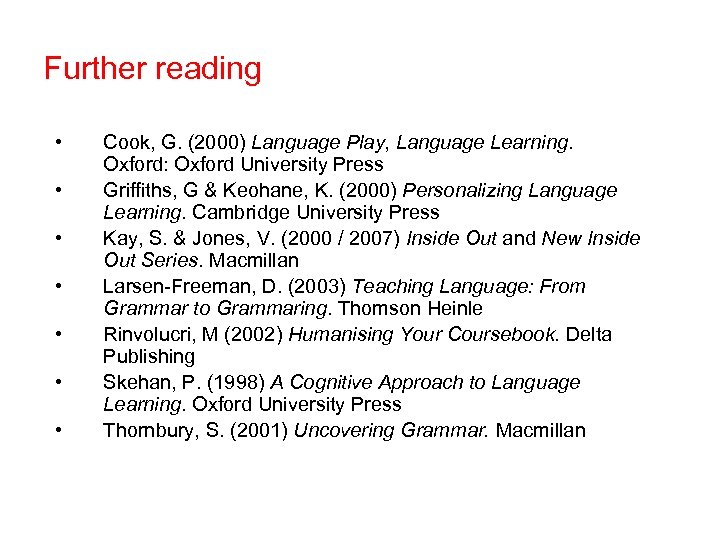
Further reading • • Cook, G. (2000) Language Play, Language Learning. Oxford: Oxford University Press Griffiths, G & Keohane, K. (2000) Personalizing Language Learning. Cambridge University Press Kay, S. & Jones, V. (2000 / 2007) Inside Out and New Inside Out Series. Macmillan Larsen-Freeman, D. (2003) Teaching Language: From Grammar to Grammaring. Thomson Heinle Rinvolucri, M (2002) Humanising Your Coursebook. Delta Publishing Skehan, P. (1998) A Cognitive Approach to Language Learning. Oxford University Press Thornbury, S. (2001) Uncovering Grammar. Macmillan
 Скачать презентацию BRINGING LANGUAGE TO LIFE Vaughan Jones Friday 9
bb50d7e78e6b1a1a22cc21eb06b7783f.ppt