

Brighton Dzhafarova Ekaterina, 56 e-f Geographical Position Brighton

Brighton Dzhafarova Ekaterina, 56 e-f
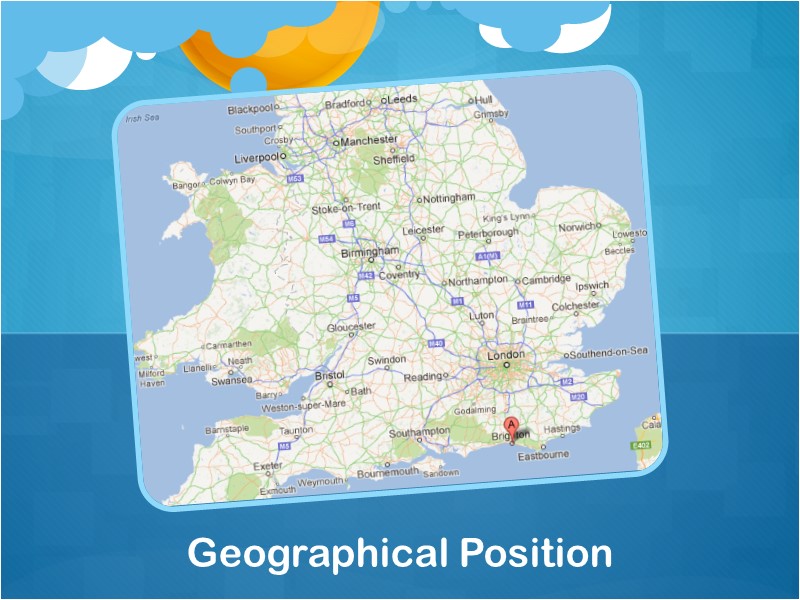
Geographical Position
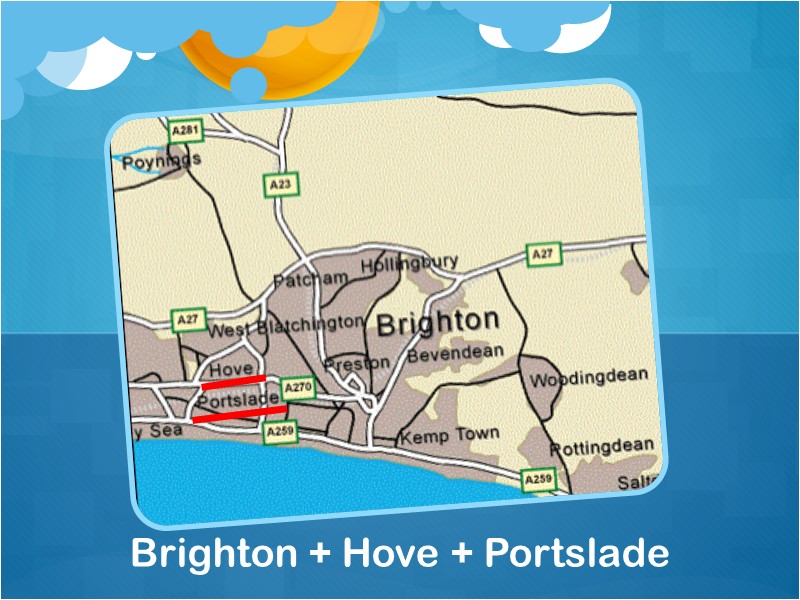
Brighton + Hove + Portslade
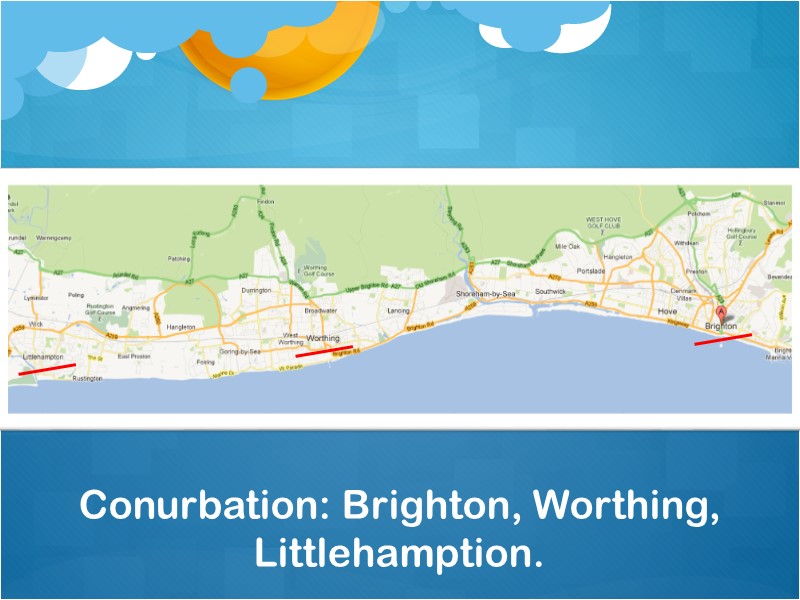
Conurbation: Brighton, Worthing, Littlehamption.

The History of Brighton
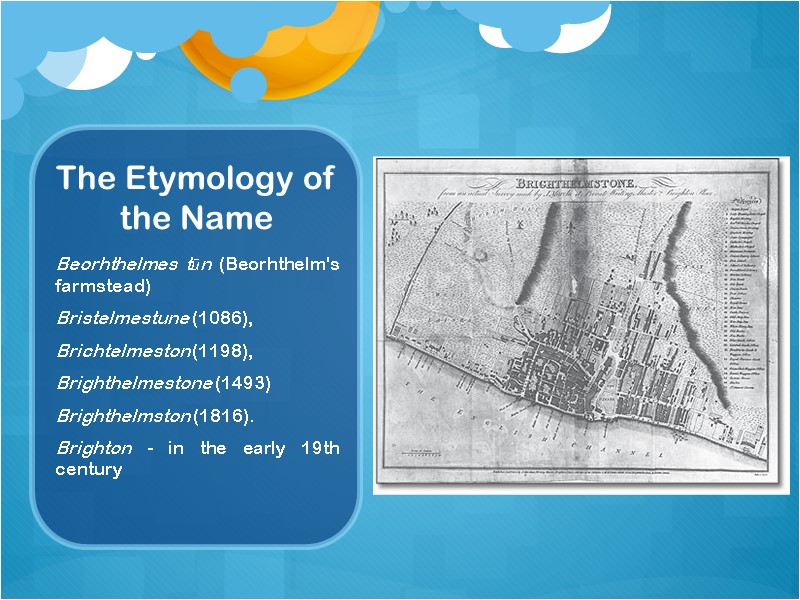
The Etymology of the Name Beorhthelmes tūn (Beorhthelm's farmstead) Bristelmestune (1086), Brichtelmeston (1198), Brighthelmestone (1493) Brighthelmston (1816). Brighton - in the early 19th century
Prehistoric Brighton There are some remnants of causewayed camp (a type of Neolithic settlement in southern Britain, visible as an oval enclosure surrounded by concentric ditches that are crossed by several causeways) inhabited around 2700 BCE
Roman Occupation The Romans built villas throughout Sussex, including a villa at Brighton. A Roman road leads from Shoreham-by-Sea through Hove to Brighton, where it turns and leads north to Hassocks, a Roman industrial centre. No significant Roman settlement has been found in Brighton or Hove.
Roman Occupation However the presence of the Roman roads, the high number of Roman artefacts, and significant changes in geography (due to sedimentation and erosion) could mean that any possible settlement is either buried or may have been washed away by the sea.
The Middle Ages After the Norman conquest, King William the Ist conferred the barony of Lewes to his son-in-law William de Warenne. The Domesday Book of 1086 contains the first documentary evidence of a settlement on the modern site of Brighton. Located in the rape of Lewes, the settlement was made up of three manors, the first being described as Bristelmestune.
The Middle Ages In June 1514, the fishing village (by then known as Brighthelmstone) was burnt to the ground by the French as part of a war (War of the Holy League) By the 1640s Brighthelmstone had a population of over 4,000 and was the largest settlement in Sussex. Its economy was dominated by the fishing industry.
18th century However this period of relative prosperity was followed by a slow decline into the 18th century due to a fall in the demand for fish and sea erosion. The Great Storm of 1703 caused considerable damage to the town.
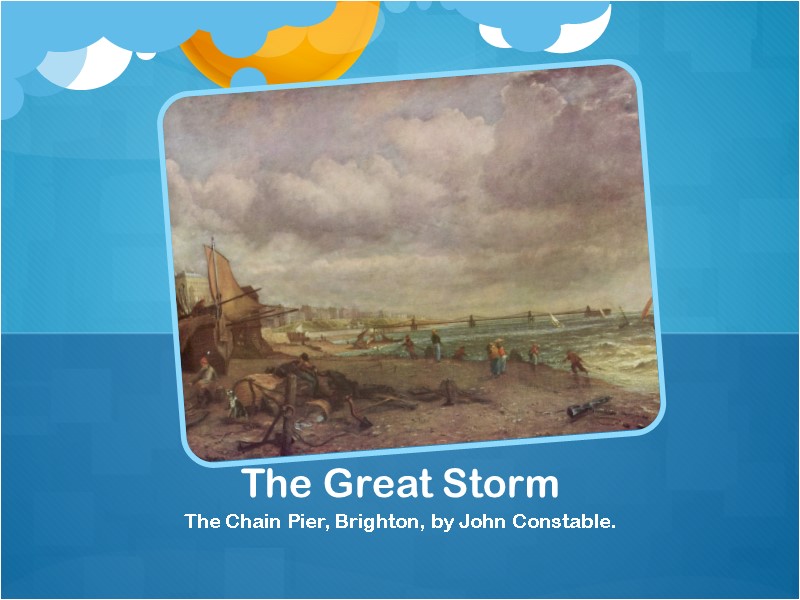
The Chain Pier, Brighton, by John Constable. The Great Storm
18th century During the 1730s, Dr Richard Russell of Lewes began to prescribe the medicinal use of seawater at Brighthelmstone for his patients. He wrote a tract advocating the drinking of seawater and sea bathing in 1750. In 1753 he erected a large house on for his own and patients' accommodation.
18th century In 1758, Dr. John Awsiter, another prominent local doctor, also wrote a paper advocating drinking seawater and seabathing. By 1769 the cornerstone of the Brighton Baths was laid.
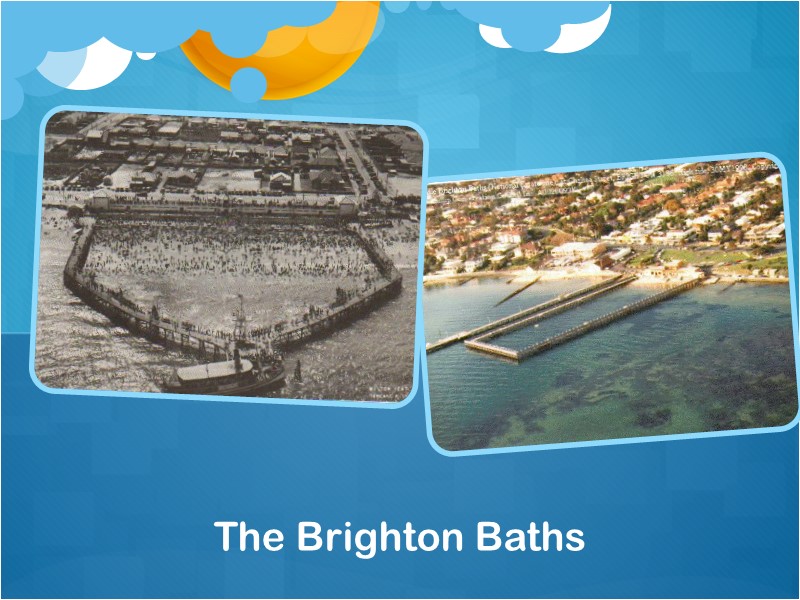
The Brighton Baths
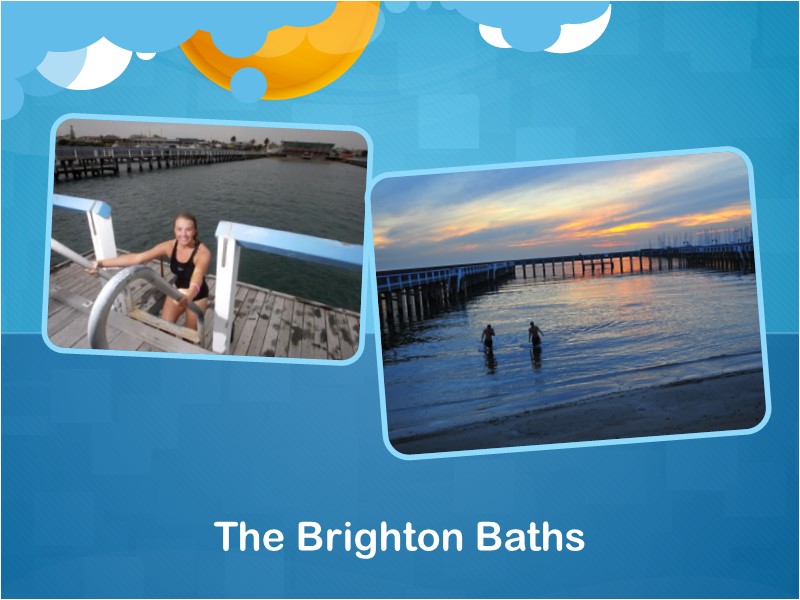
The Brighton Baths
19th century Brighton's popularity with the rich, famous, and royal continued in the 19th century, and saw the building of a number of imposing seafront hotels, including the Bedford Hotel of 1829, the Grand Hotel of 1864, and the Metropole Hotel of 1890.
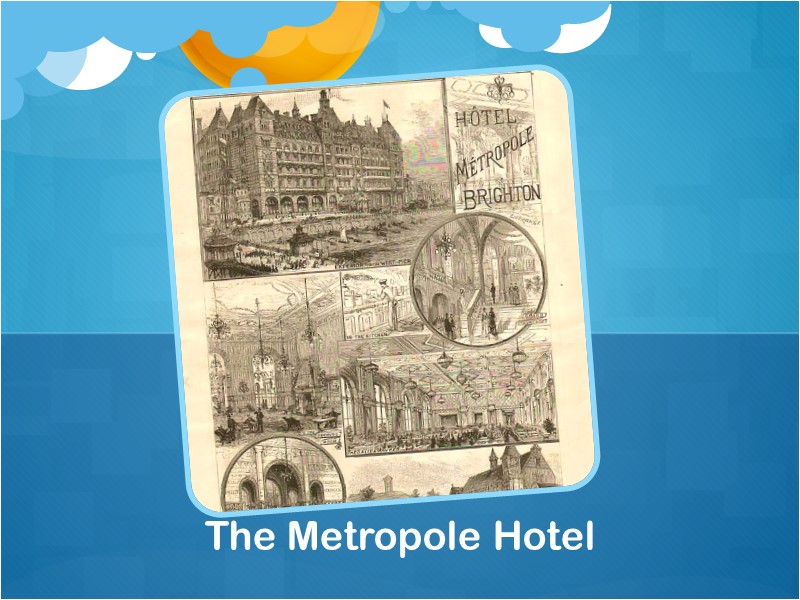
The Metropole Hotel
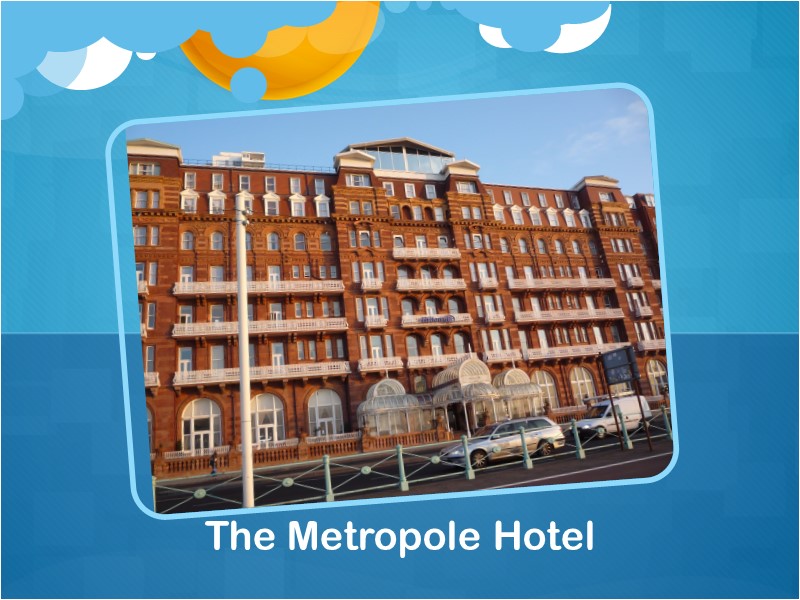
The Metropole Hotel
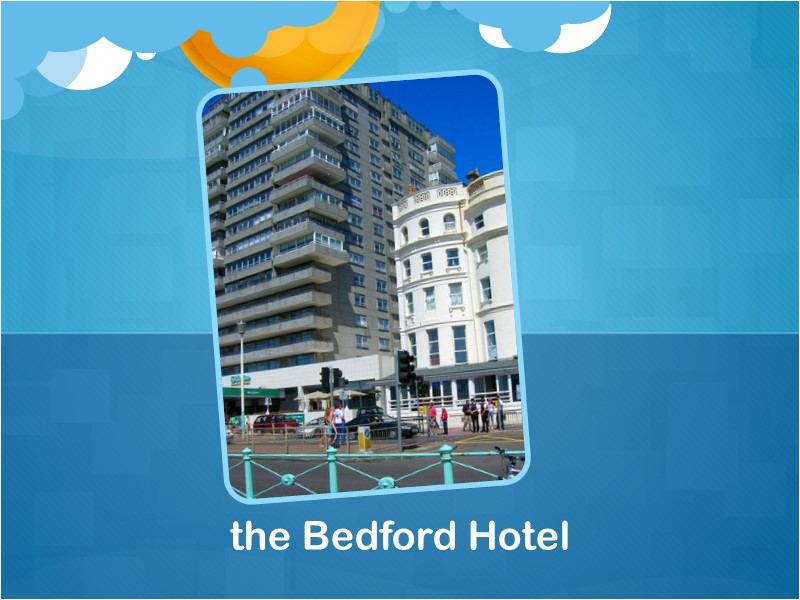
the Bedford Hotel
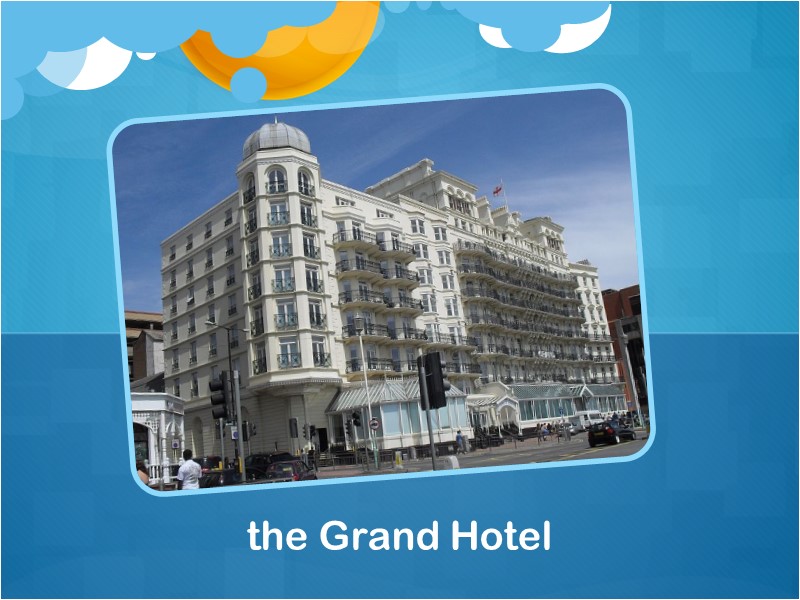
the Grand Hotel
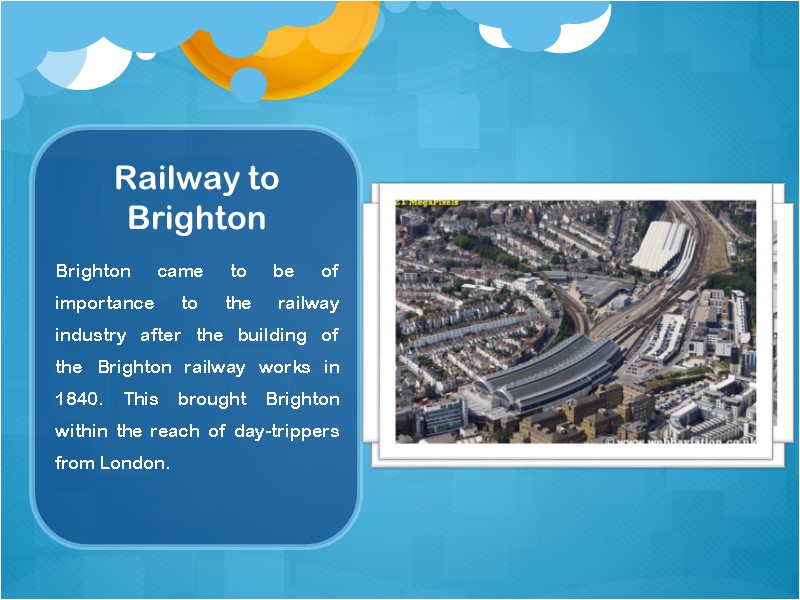
Railway to Brighton Brighton came to be of importance to the railway industry after the building of the Brighton railway works in 1840. This brought Brighton within the reach of day-trippers from London.
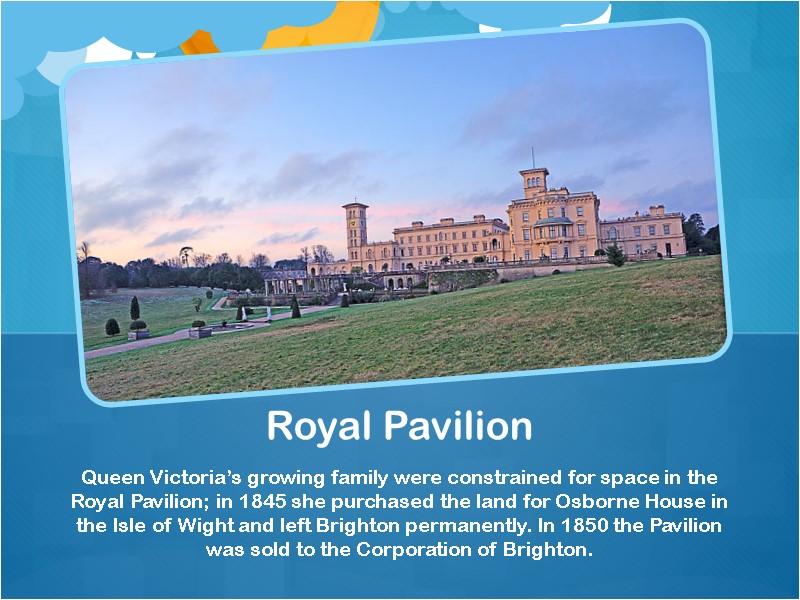
Queen Victoria’s growing family were constrained for space in the Royal Pavilion; in 1845 she purchased the land for Osborne House in the Isle of Wight and left Brighton permanently. In 1850 the Pavilion was sold to the Corporation of Brighton. Royal Pavilion
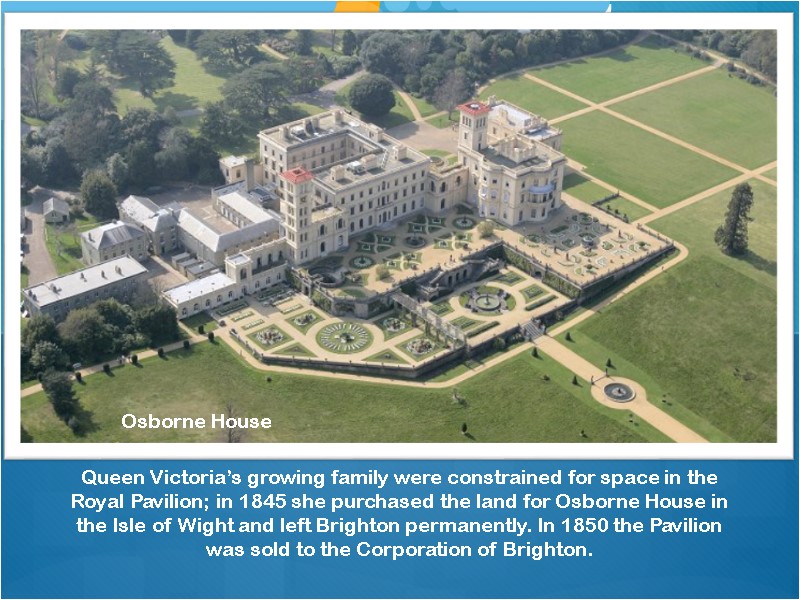
Queen Victoria’s growing family were constrained for space in the Royal Pavilion; in 1845 she purchased the land for Osborne House in the Isle of Wight and left Brighton permanently. In 1850 the Pavilion was sold to the Corporation of Brighton. Royal Pavilion
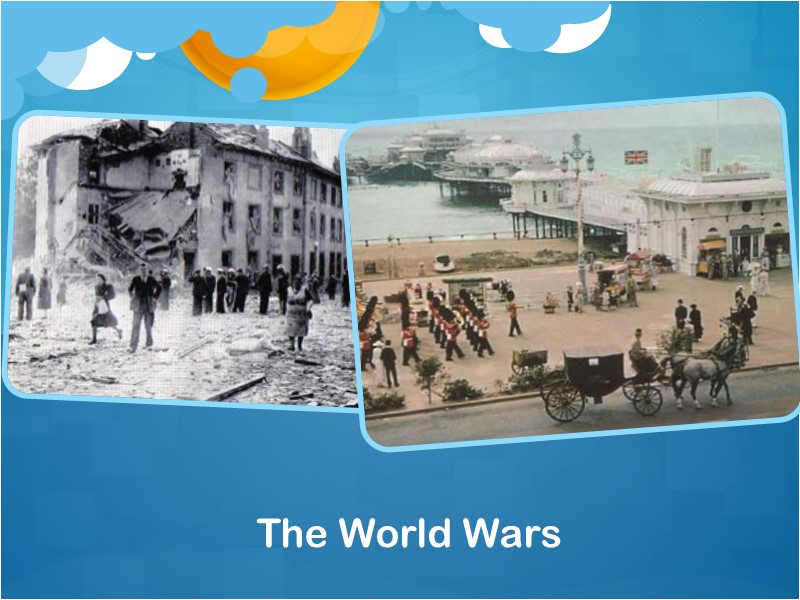
The World Wars

Tourist Attractions
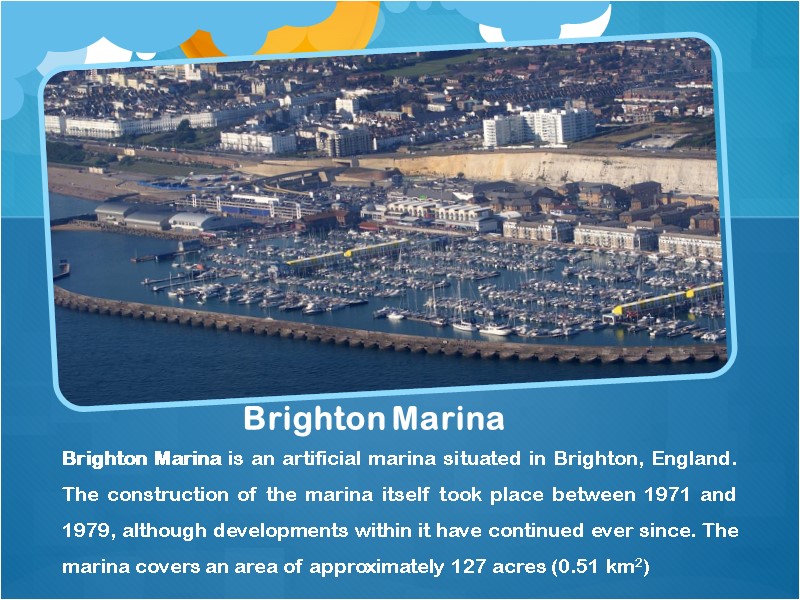
Brighton Marina Brighton Marina is an artificial marina situated in Brighton, England. The construction of the marina itself took place between 1971 and 1979, although developments within it have continued ever since. The marina covers an area of approximately 127 acres (0.51 km2)
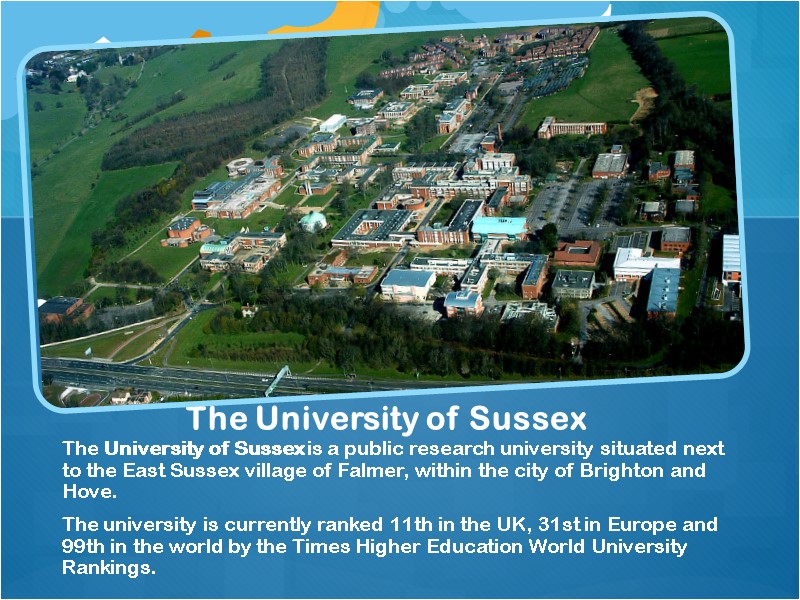
The University of Sussex The University of Sussex is a public research university situated next to the East Sussex village of Falmer, within the city of Brighton and Hove. The university is currently ranked 11th in the UK, 31st in Europe and 99th in the world by the Times Higher Education World University Rankings.
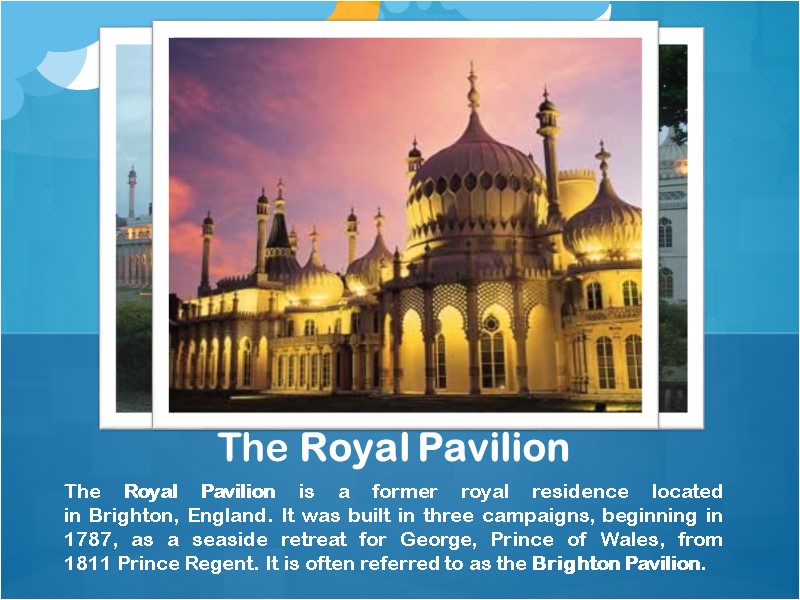
The Royal Pavilion is a former royal residence located in Brighton, England. It was built in three campaigns, beginning in 1787, as a seaside retreat for George, Prince of Wales, from 1811 Prince Regent. It is often referred to as the Brighton Pavilion. The Royal Pavilion
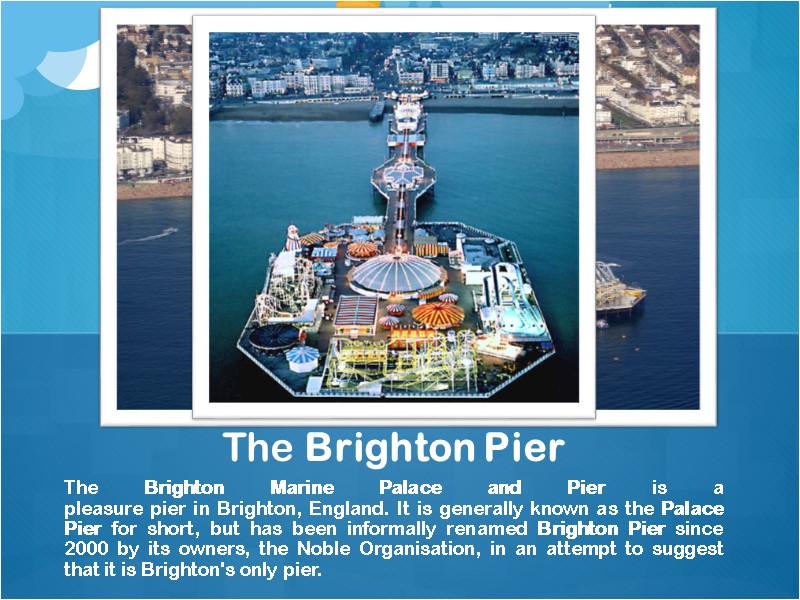
The Brighton Marine Palace and Pier is a pleasure pier in Brighton, England. It is generally known as the Palace Pier for short, but has been informally renamed Brighton Pier since 2000 by its owners, the Noble Organisation, in an attempt to suggest that it is Brighton's only pier. The Brighton Pier

Thank you!
 Скачать презентацию Brighton Dzhafarova Ekaterina, 56 e-f Geographical Position Brighton
37934-brighton.ppt
- Количество слайдов: 32