 Скачать презентацию Bridging The Divide Between Climate Change and Human
a7bcbb623e92c0cd83727415eab1a108.ppt
- Количество слайдов: 38



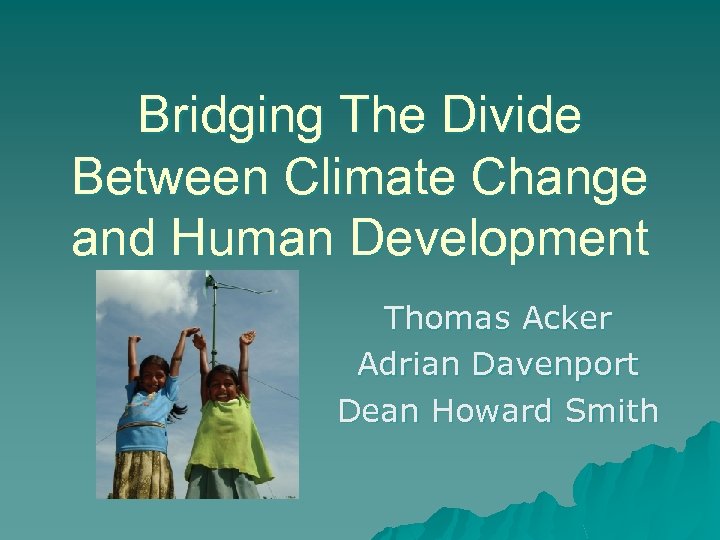
Bridging The Divide Between Climate Change and Human Development Thomas Acker Adrian Davenport Dean Howard Smith
Veerle Vandeweerd UNDP There is a broad global consensus that the severity of the climate change problem will have profound and lasting impacts on human well being and economic development, particularly amongst those countries and communities that have contributed the least to the problem, and have the least capacities to adapt to the adverse impacts of climate change.
IPCC Concerns Many millions more people are projected to be flooded every year due to sea-level rise by the 2080 s. Those denselypopulated and low-lying areas where adaptive capacity is relatively low, and which already face other challenges such as tropical storms or local coastal subsidence, are especially at risk. The numbers affected will be largest in the mega-deltas of Asia and Africa while small islands are especially vulnerable
Africa u By 2020, between 75 and 250 million people are projected to be exposed to an increase of water stress due to climate change. If coupled with increased demand, this will adversely affect livelihoods and exacerbate water-related problems.
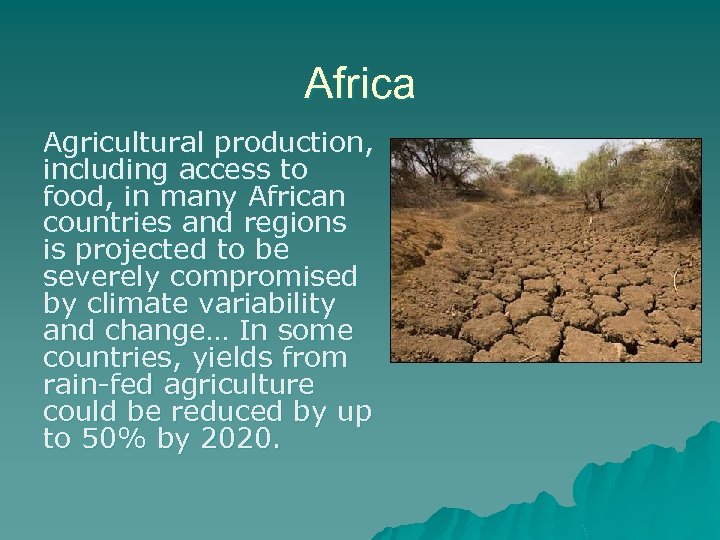
Africa Agricultural production, including access to food, in many African countries and regions is projected to be severely compromised by climate variability and change… In some countries, yields from rain-fed agriculture could be reduced by up to 50% by 2020.
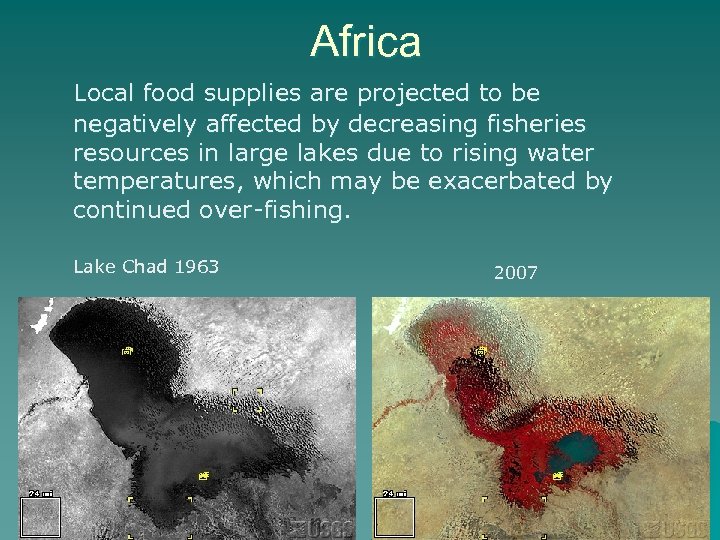
Africa Local food supplies are projected to be negatively affected by decreasing fisheries resources in large lakes due to rising water temperatures, which may be exacerbated by continued over-fishing. Lake Chad 1963 2007
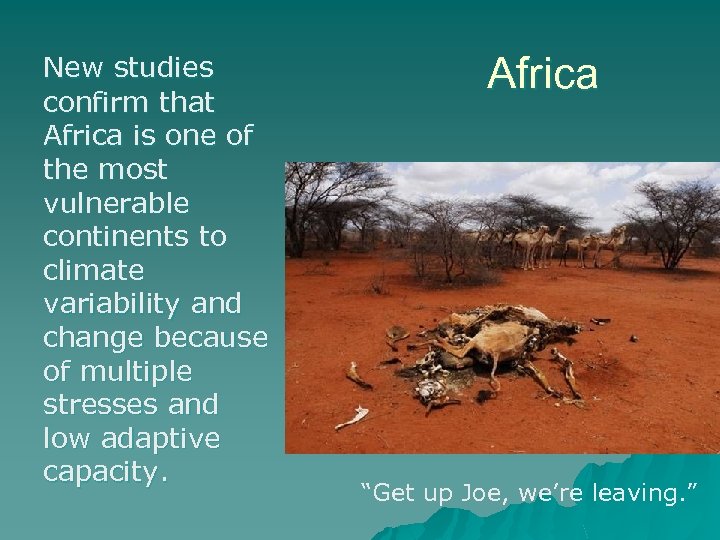
New studies confirm that Africa is one of the most vulnerable continents to climate variability and change because of multiple stresses and low adaptive capacity. Africa “Get up Joe, we’re leaving. ”
dean was leaving This is the project I want to develop Tom, Mason, Neil and others talked me into staying
the global heartache No community with a sense of justice, compassion or respect for basic human rights should accept the current pattern of adaptation. Leaving the world’s poor to sink or swim with their own meagre resources in the face of the threat posed by climate change is morally wrong. We are drifting into a world of ‘adaptation apartheid’. Desmond Tutu
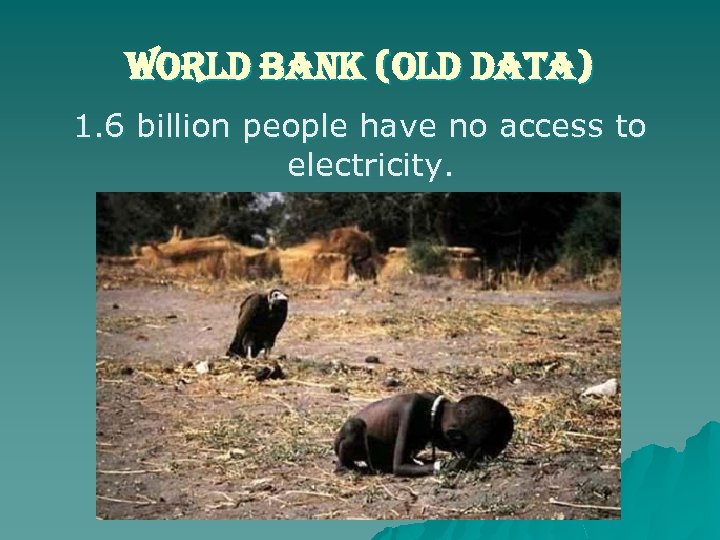
world bank (old data) 1. 6 billion people have no access to electricity.
Bridging the Divide Between Poverty Reduction and Climate Change Through Sustainable and Innovative Energy Technologies SCALING UP SUSTAINABLE ENERGY INNOVATIONS THAT CAN ADDRESS CLIMATE CHANGE CONCERNS AND POVERTY REDUCTION NEEDS December 2009 Dr. Anilla Cherian UNDP
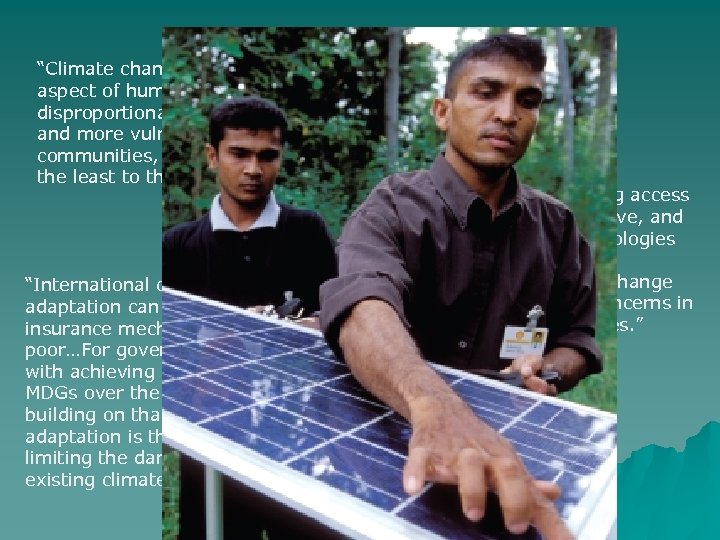
“Climate change will affect every aspect of human life, and disproportionately on those poorer and more vulnerable countries and communities, that have contributed the least to the causes. ” “International cooperation on adaptation can be thought of as an insurance mechanism for the world’s poor…For governments concerned with achieving progress toward the MDGs over the next decade and building on that progress afterwards, adaptation is the only option for limiting the damage caused by existing climate change. ” “Increasing and improving access to cost-effective, innovative, and sustainable energy technologies for the poor is critical for addressing both climate change and poverty reduction concerns in many developing countries. ”
Millennium Development Goals By 2015? u Eradicate extreme poverty and hunger u Achieve universal primary education u Promote gender equality and empower women u Reduce child mortality
Millennium Development Goals u Improve mental health u Combat HIV/AIDS, malaria and other diseases u Ensure environmental stability u Develop a global partnership for development
2010 MDG Report u "It is clear that improvements in the lives of the poor have been unacceptably slow, and some hardwon gains are being eroded by the climate, food and economic crises, " UN Secretary-General Ban Ki-moon
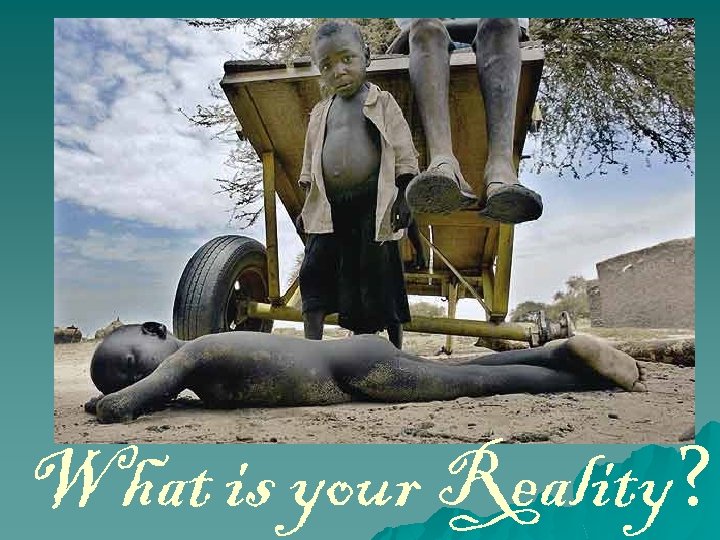
What is your Reality?
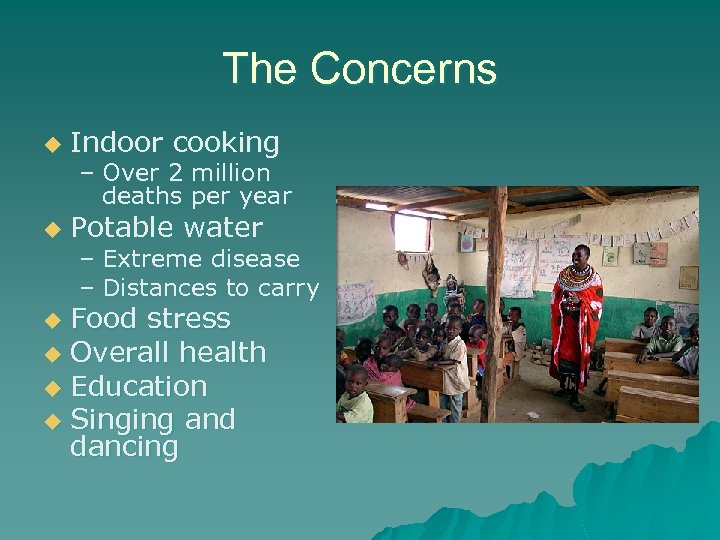
The Concerns u Indoor cooking u Potable water – Over 2 million deaths per year – Extreme disease – Distances to carry Food stress u Overall health u Education u Singing and dancing u
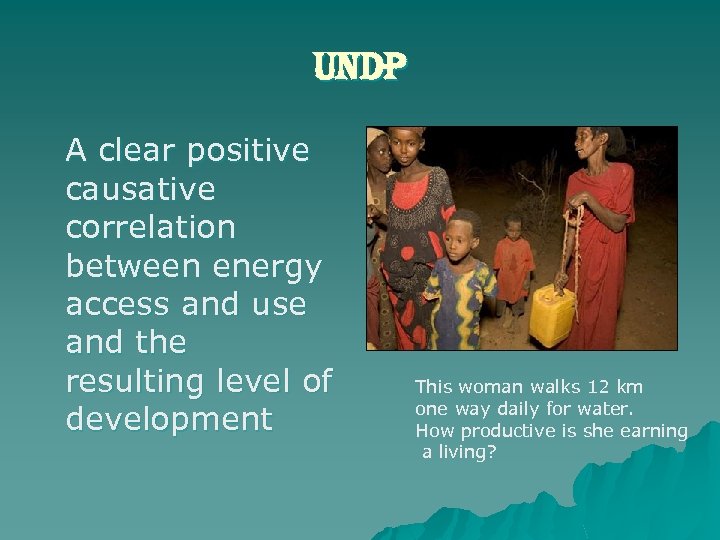
Und. P A clear positive causative correlation between energy access and use and the resulting level of development This woman walks 12 km one way daily for water. How productive is she earning a living?
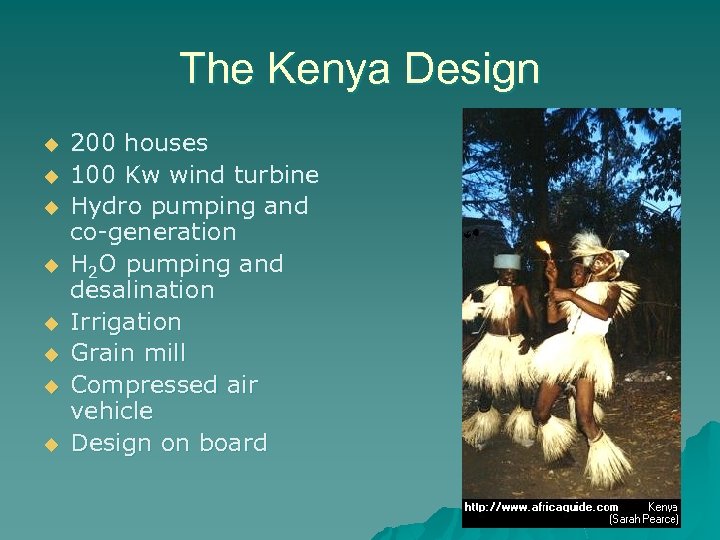
The Kenya Design u u u u 200 houses 100 Kw wind turbine Hydro pumping and co-generation H 2 O pumping and desalination Irrigation Grain mill Compressed air vehicle Design on board
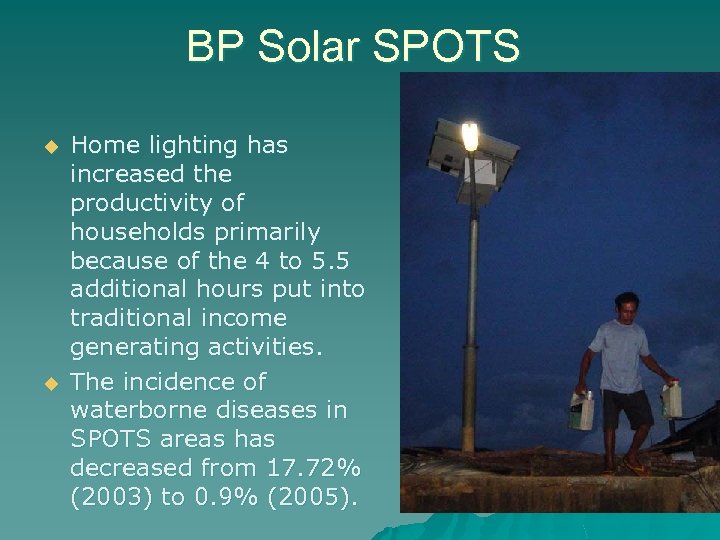
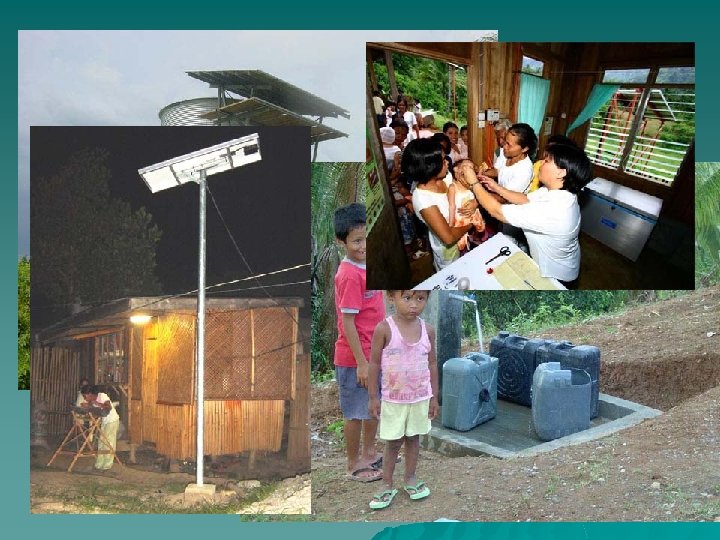
BP Solar SPOTS u u Home lighting has increased the productivity of households primarily because of the 4 to 5. 5 additional hours put into traditional income generating activities. The incidence of waterborne diseases in SPOTS areas has decreased from 17. 72% (2003) to 0. 9% (2005).
The provision of solar powered Street lights have also encouraged vaccine refrigerator for health the expansion of business activities centers has increased the accessibility from within the confines of the of health services. homes to the roadsides. More than 350 “Solar Operators”, of which about 100 are women, have been trained to maintain and repair the systems. More than 80 cooperatives created under SPOTS 1 are generating income from the operation of several businesses. Introduction of electric lighting systems in 80 schools increased educational performance and allowed for adult education in the evening.
Measures of Success u In class exercise u Take 4 minutes u Utility max? u Barbara Ward (1962) – Quote u What does it take to sing and dance?
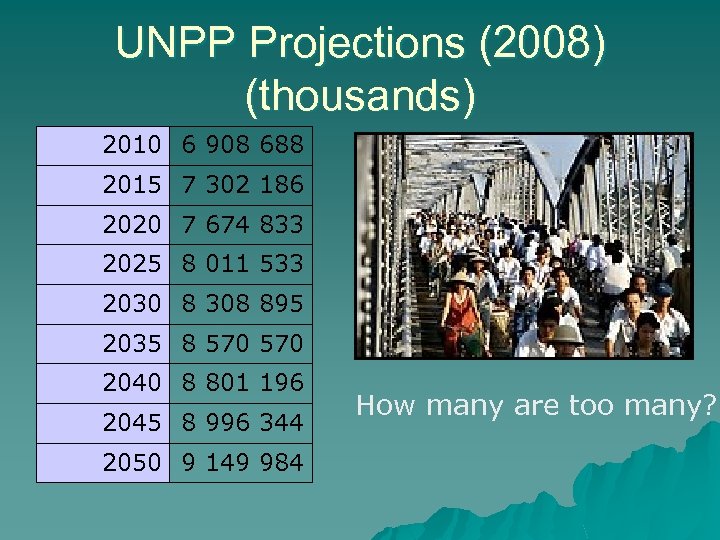
UNPP Projections (2008) (thousands) 2010 6 908 688 2015 7 302 186 2020 7 674 833 2025 8 011 533 2030 8 308 895 2035 8 570 2040 8 801 196 2045 8 996 344 2050 9 149 984 How many are too many?
Obama at Copenhagen We must have financing that helps developing countries adapt, particularly the least-developed and most vulnerable to climate change. America will be a part of fast-start funding that will ramp up to $10 billion in 2012.
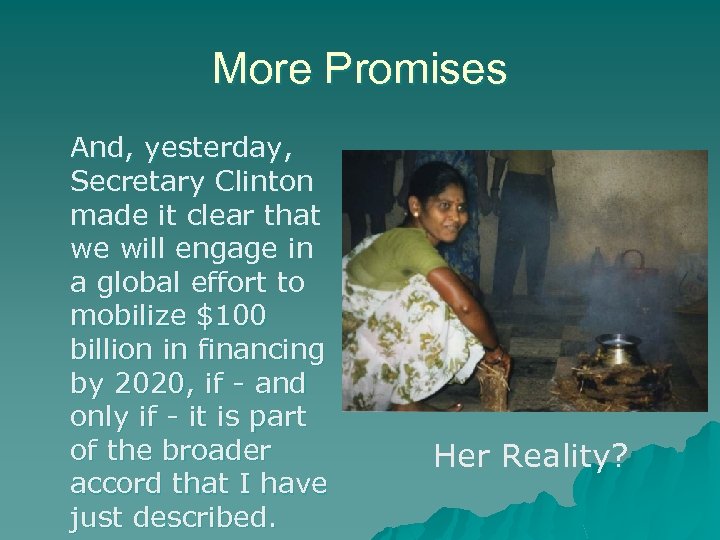
More Promises And, yesterday, Secretary Clinton made it clear that we will engage in a global effort to mobilize $100 billion in financing by 2020, if - and only if - it is part of the broader accord that I have just described. Her Reality?
Can it be Achieved? u Mitigation. Transparency. And financing. It is a clear formula - one that embraces the principle of common but differentiated responses and respective capabilities. And it adds up to a significant accord - one that takes us farther than we have ever gone before as an international community. December 18, 2009, Copenhagen UN Climate Change Conference 2009.
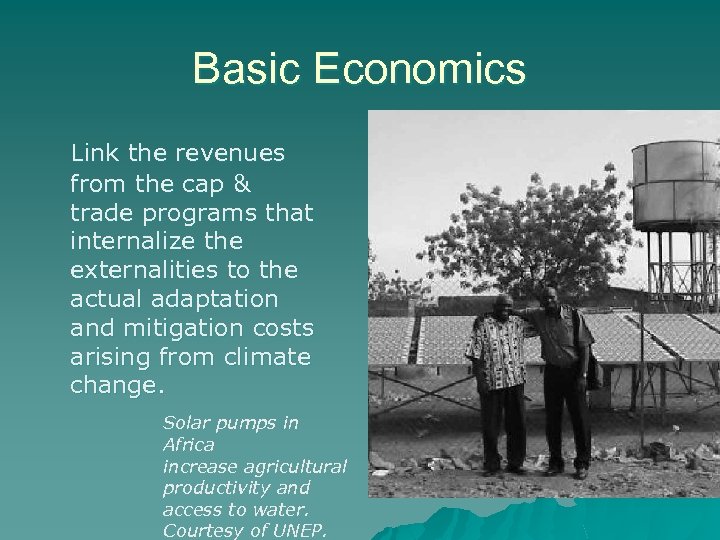
Basic Economics Link the revenues from the cap & trade programs that internalize the externalities to the actual adaptation and mitigation costs arising from climate change. Solar pumps in Africa increase agricultural productivity and access to water. Courtesy of UNEP.
Our Guess Obama meant $100 billion per year ?
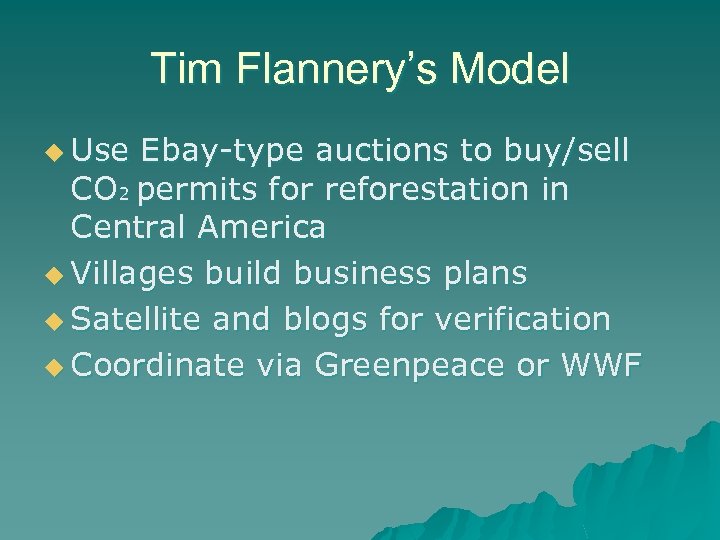
Tim Flannery’s Model u Use Ebay-type auctions to buy/sell CO 2 permits for reforestation in Central America u Villages build business plans u Satellite and blogs for verification u Coordinate via Greenpeace or WWF
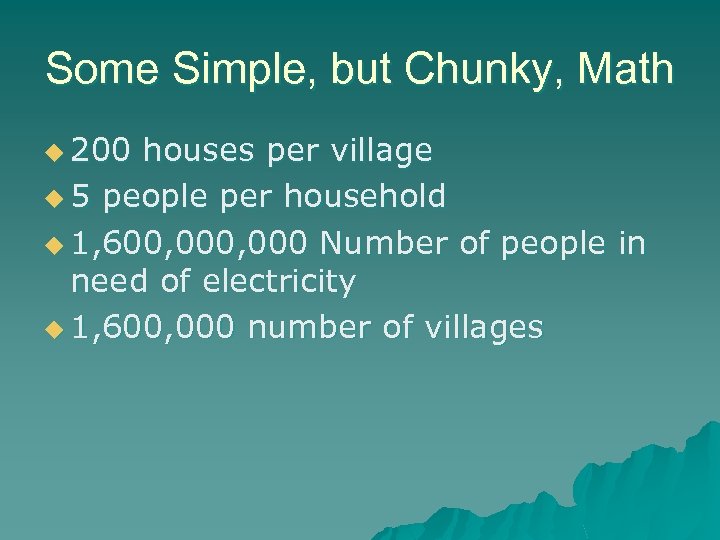
Some Simple, but Chunky, Math u 200 houses per village u 5 people per household u 1, 600, 000 Number of people in need of electricity u 1, 600, 000 number of villages
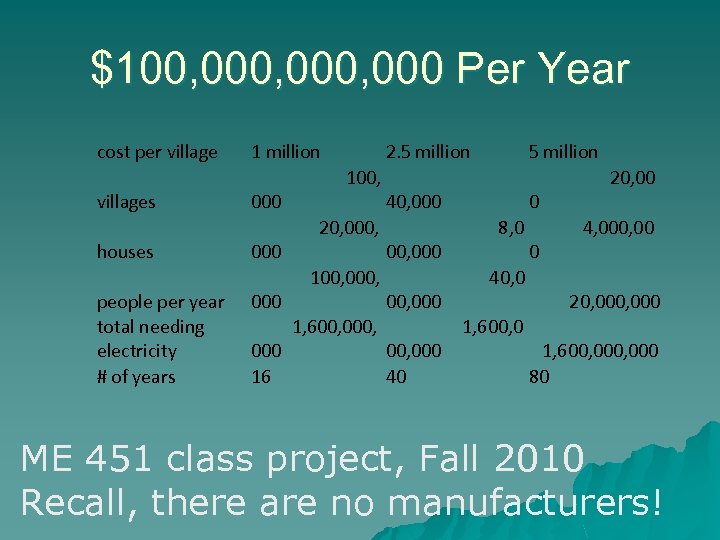
$100, 000, 000 Per Year cost per villages houses people per year total needing electricity # of years 1 million 000 000 16 2. 5 million 100, 20, 000, 100, 000, 1, 600, 000, 5 million 40, 000 00, 000 40 0 8, 0 40, 0 1, 600, 0 0 20, 00 4, 000, 00 20, 000 1, 600, 000 80 ME 451 class project, Fall 2010 Recall, there are no manufacturers!
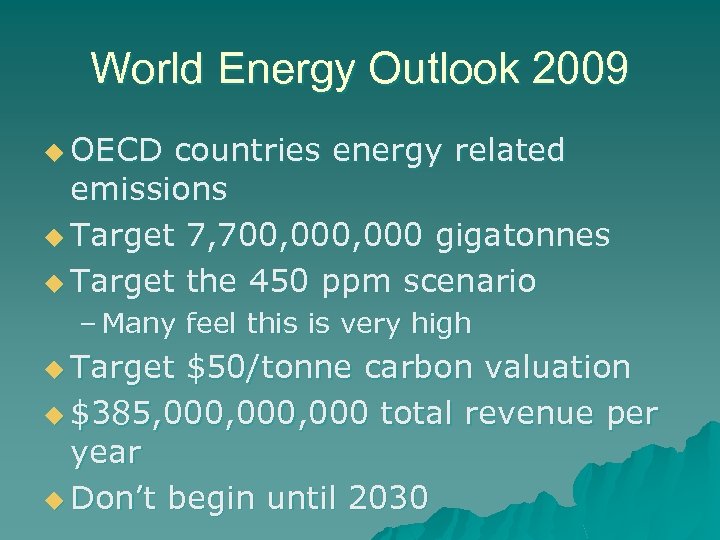
World Energy Outlook 2009 u OECD countries energy related emissions u Target 7, 700, 000 gigatonnes u Target the 450 ppm scenario – Many feel this is very high u Target $50/tonne carbon valuation u $385, 000, 000 total revenue per year u Don’t begin until 2030
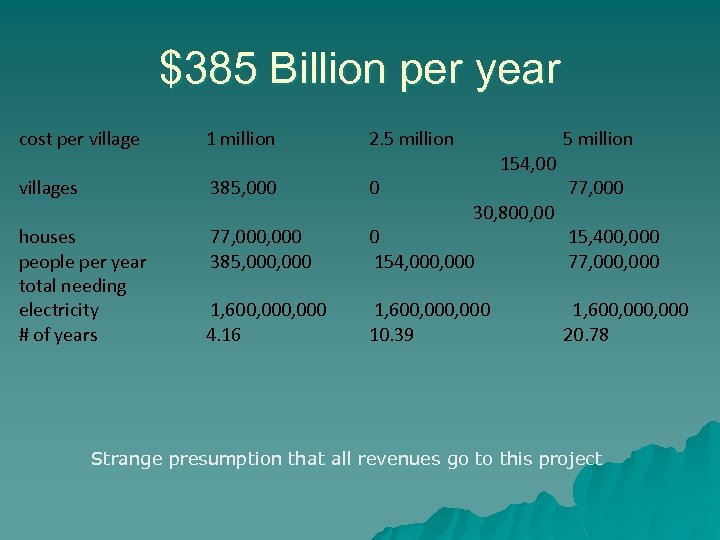
$385 Billion per year cost per villages 1 million 385, 000 houses people per year total needing electricity # of years 2. 5 million 154, 00 0 30, 800, 00 77, 000, 000 385, 000 0 154, 000 15, 400, 000 77, 000 1, 600, 000 4. 16 1, 600, 000 10. 39 1, 600, 000 20. 78 Strange presumption that all revenues go to this project
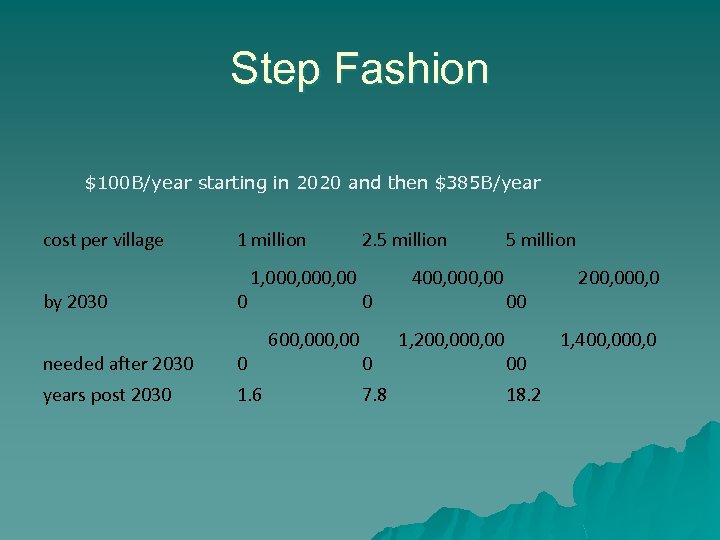
Step Fashion $100 B/year starting in 2020 and then $385 B/year cost per village by 2030 1 million 0 1, 000, 00 needed after 2030 0 years post 2030 1. 6 600, 00 2. 5 million 0 0 7. 8 400, 00 1, 200, 00 5 million 00 00 18. 2 200, 0 1, 400, 0
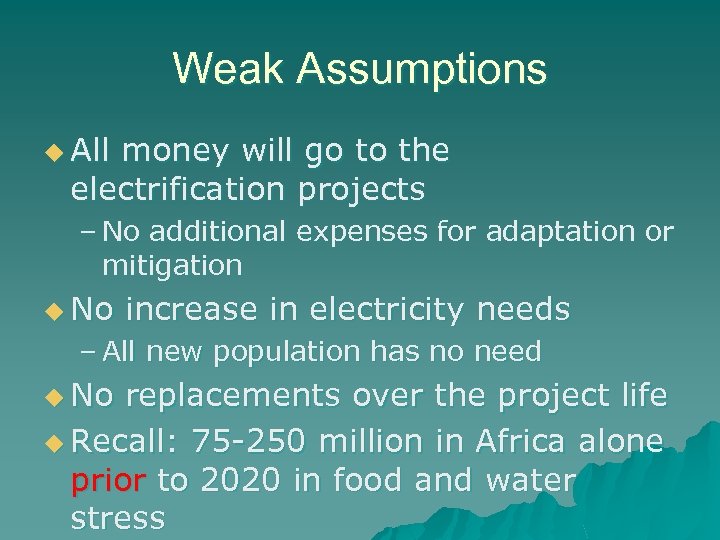
Weak Assumptions u All money will go to the electrification projects – No additional expenses for adaptation or mitigation u No increase in electricity needs – All new population has no need u No replacements over the project life u Recall: 75 -250 million in Africa alone prior to 2020 in food and water stress
Conclusion u Climate change will have serious consequences for those least able to adapt. u COE charges can be used to ameliorate the situation by providing access to clean electricity and energy u The timing simply doesn’t work
Need u As Tim Flannery says “Now or Never. ” For many families: never. u People under water (too much and/or too little) and food stress simply have to move. u Where will they go? u Matt de. Queljoe’s new project u http: //hdr. undp. org/en/reports/glob al/hdr 2009/
Скачать презентацию Bridging The Divide Between Climate Change and Human
a7bcbb623e92c0cd83727415eab1a108.ppt