 Скачать презентацию Brazil s Sovereign Ratings Lisa M Schineller Investment Grade
8d32cd3049d7ca63b3153bb3b8d1c1bd.ppt
- Количество слайдов: 51



Brazil’s Sovereign Ratings: Lisa M. Schineller Investment Grade Director, Sovereign Ratings Standard & Poor’s Permission to reprint or distribute any content from this presentation requires the prior written approval of Standard & Poor’s. Copyright (c) 2006 Standard & Poor’s, a division of The Mc. Graw-Hill Companies, Inc. All rights reserved.

Brazil’s Emerging Economic Power: Now Investment Grade and Why It Matters WILSON CENTER on the Hill Woodrow Wilson International Center for Scholars Brazil Institute Washington, D. C. June 20, 2008 2. Permission to reprint or distribute any content from this presentation requires the prior written approval of Standard & Poor’s.
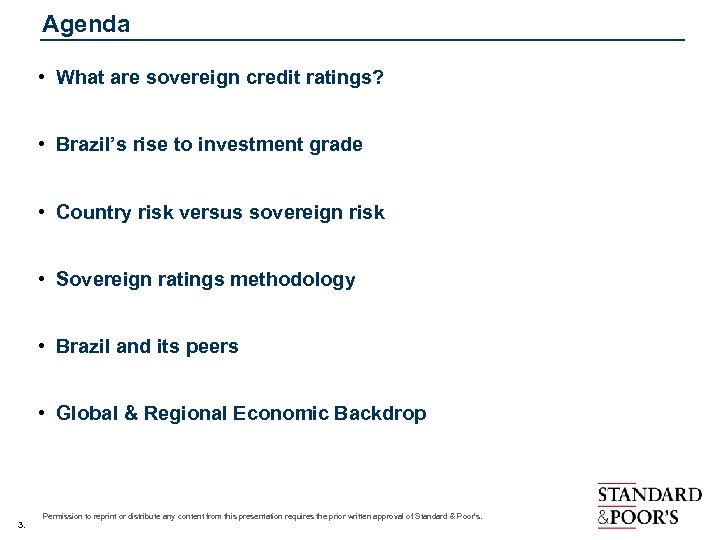
Agenda • What are sovereign credit ratings? • Brazil’s rise to investment grade • Country risk versus sovereign risk • Sovereign ratings methodology • Brazil and its peers • Global & Regional Economic Backdrop 3. Permission to reprint or distribute any content from this presentation requires the prior written approval of Standard & Poor’s.
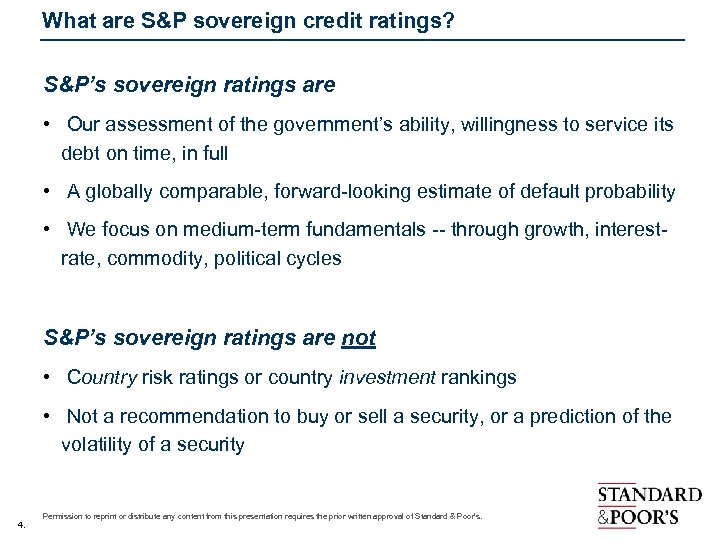
What are S&P sovereign credit ratings? S&P’s sovereign ratings are • Our assessment of the government’s ability, willingness to service its debt on time, in full • A globally comparable, forward-looking estimate of default probability • We focus on medium-term fundamentals -- through growth, interestrate, commodity, political cycles S&P’s sovereign ratings are not • Country risk ratings or country investment rankings • Not a recommendation to buy or sell a security, or a prediction of the volatility of a security 4. Permission to reprint or distribute any content from this presentation requires the prior written approval of Standard & Poor’s.
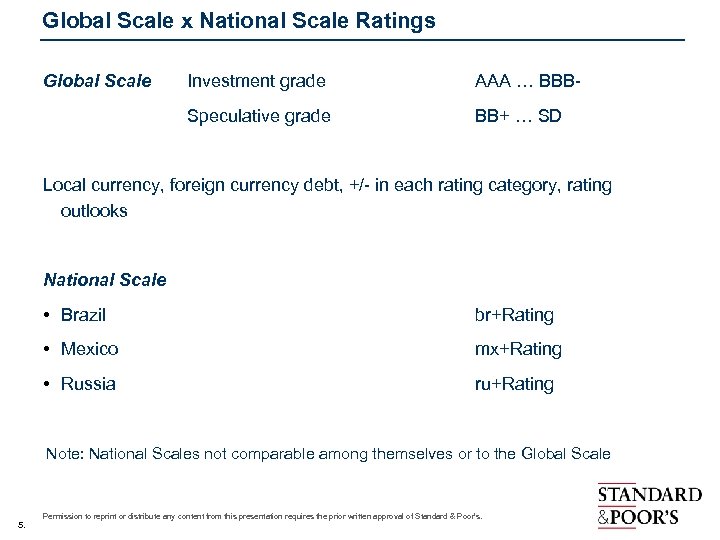
Global Scale x National Scale Ratings Global Scale Investment grade AAA … BBB- Speculative grade BB+ … SD Local currency, foreign currency debt, +/- in each rating category, rating outlooks National Scale • Brazil br+Rating • Mexico mx+Rating • Russia ru+Rating Note: National Scales not comparable among themselves or to the Global Scale 5. Permission to reprint or distribute any content from this presentation requires the prior written approval of Standard & Poor’s.
S&P Sovereign Credit Ratings • 119 rated sovereigns worldwide • 25 rated sovereigns in Latin America & the Caribbean • Ratings are a measure of governments’ relative credit standing vs. each other & other issuers globally 6. Permission to reprint or distribute any content from this presentation requires the prior written approval of Standard & Poor’s.
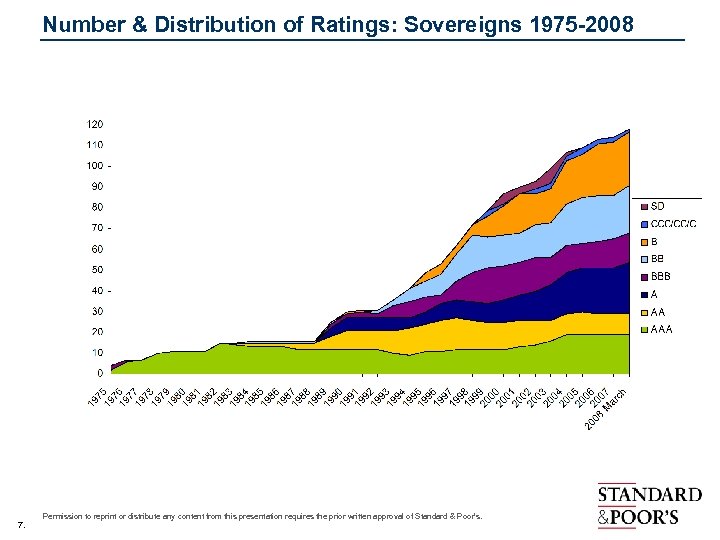
Number & Distribution of Ratings: Sovereigns 1975 -2008 7. Permission to reprint or distribute any content from this presentation requires the prior written approval of Standard & Poor’s.
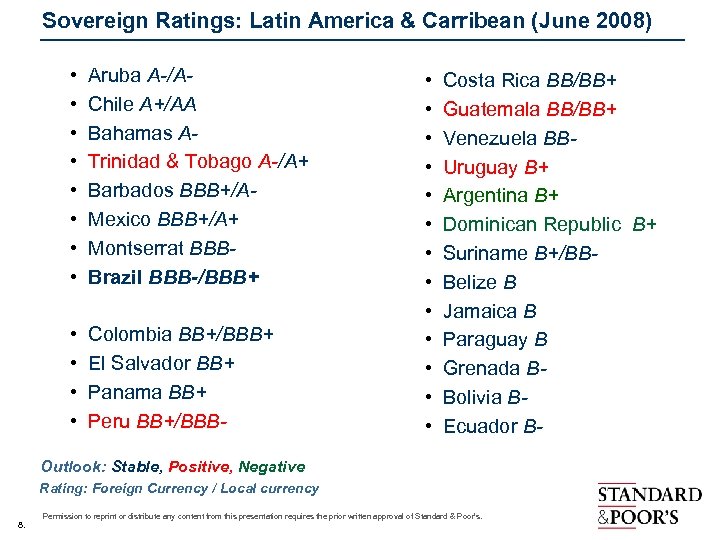
Sovereign Ratings: Latin America & Carribean (June 2008) • • Aruba A-/AChile A+/AA Bahamas ATrinidad & Tobago A-/A+ Barbados BBB+/AMexico BBB+/A+ Montserrat BBBBrazil BBB-/BBB+ • • Colombia BB+/BBB+ El Salvador BB+ Panama BB+ Peru BB+/BBB- • • • • Costa Rica BB/BB+ Guatemala BB/BB+ Venezuela BBUruguay B+ Argentina B+ Dominican Republic B+ Suriname B+/BBBelize B Jamaica B Paraguay B Grenada BBolivia BEcuador B- Outlook: Stable, Positive, Negative Rating: Foreign Currency / Local currency 8. Permission to reprint or distribute any content from this presentation requires the prior written approval of Standard & Poor’s.
Brazil’s credit profile • Eight consecutive positive rating actions beginnning May 2003 • Pragmatic policy committment • Decline in fiscal and external vulnerabilities • Stronger outlook for economic growth • Transformation underway in local capital markets 9. Permission to reprint or distribute any content from this presentation requires the prior written approval of Standard & Poor’s.
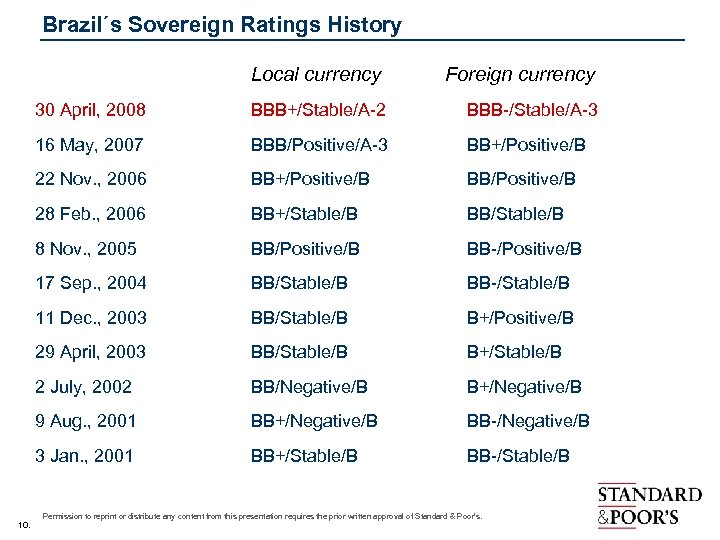
Brazil´s Sovereign Ratings History Local currency 30 April, 2008 BBB+/Stable/A-2 BBB-/Stable/A-3 16 May, 2007 BBB/Positive/A-3 BB+/Positive/B 22 Nov. , 2006 BB+/Positive/B BB/Positive/B 28 Feb. , 2006 BB+/Stable/B BB/Stable/B 8 Nov. , 2005 BB/Positive/B BB-/Positive/B 17 Sep. , 2004 BB/Stable/B BB-/Stable/B 11 Dec. , 2003 BB/Stable/B B+/Positive/B 29 April, 2003 BB/Stable/B B+/Stable/B 2 July, 2002 BB/Negative/B B+/Negative/B 9 Aug. , 2001 BB+/Negative/B BB-/Negative/B 3 Jan. , 2001 10. Foreign currency BB+/Stable/B BB-/Stable/B Permission to reprint or distribute any content from this presentation requires the prior written approval of Standard & Poor’s.
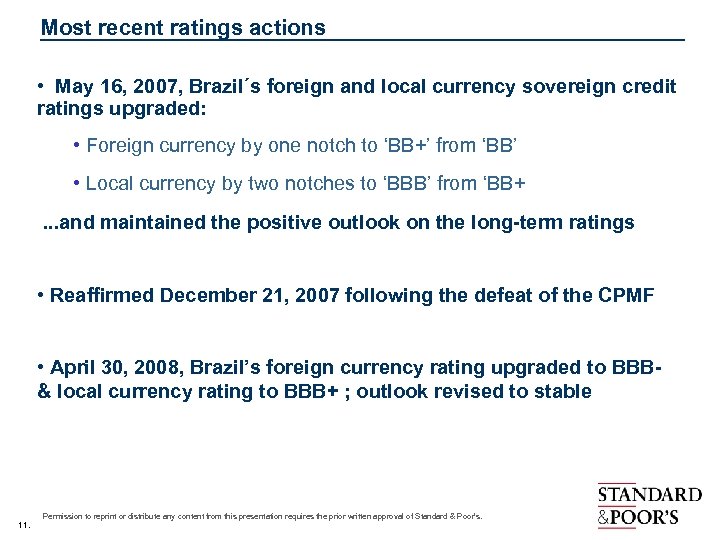
Most recent ratings actions • May 16, 2007, Brazil´s foreign and local currency sovereign credit ratings upgraded: • Foreign currency by one notch to ‘BB+’ from ‘BB’ • Local currency by two notches to ‘BBB’ from ‘BB+ . . . and maintained the positive outlook on the long-term ratings • Reaffirmed December 21, 2007 following the defeat of the CPMF • April 30, 2008, Brazil’s foreign currency rating upgraded to BBB- & local currency rating to BBB+ ; outlook revised to stable 11. Permission to reprint or distribute any content from this presentation requires the prior written approval of Standard & Poor’s.
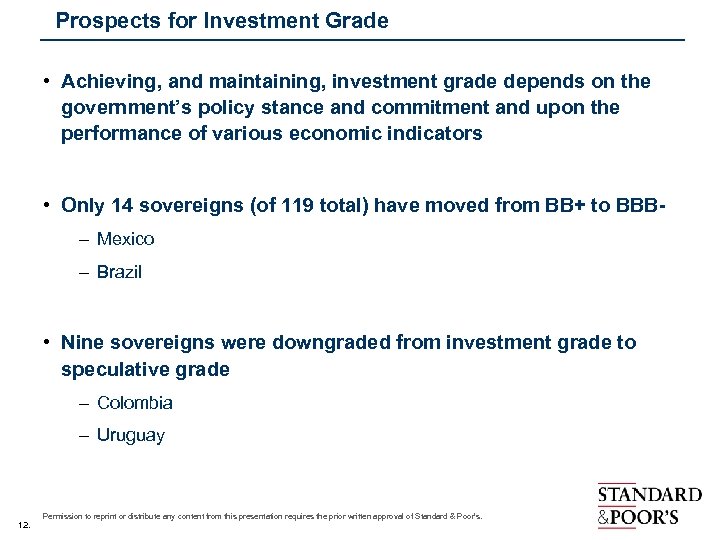
Prospects for Investment Grade • Achieving, and maintaining, investment grade depends on the government’s policy stance and commitment and upon the performance of various economic indicators • Only 14 sovereigns (of 119 total) have moved from BB+ to BBB– Mexico – Brazil • Nine sovereigns were downgraded from investment grade to speculative grade – Colombia – Uruguay 12. Permission to reprint or distribute any content from this presentation requires the prior written approval of Standard & Poor’s.
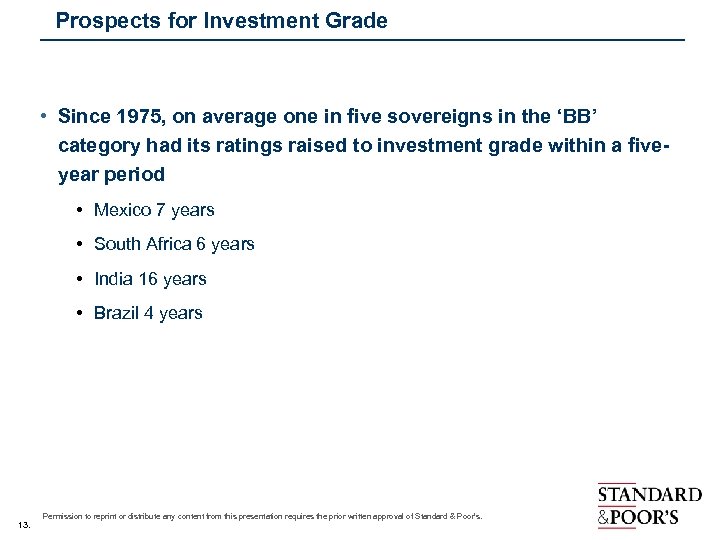
Prospects for Investment Grade • Since 1975, on average one in five sovereigns in the ‘BB’ category had its ratings raised to investment grade within a fiveyear period • Mexico 7 years • South Africa 6 years • India 16 years • Brazil 4 years 13. Permission to reprint or distribute any content from this presentation requires the prior written approval of Standard & Poor’s.
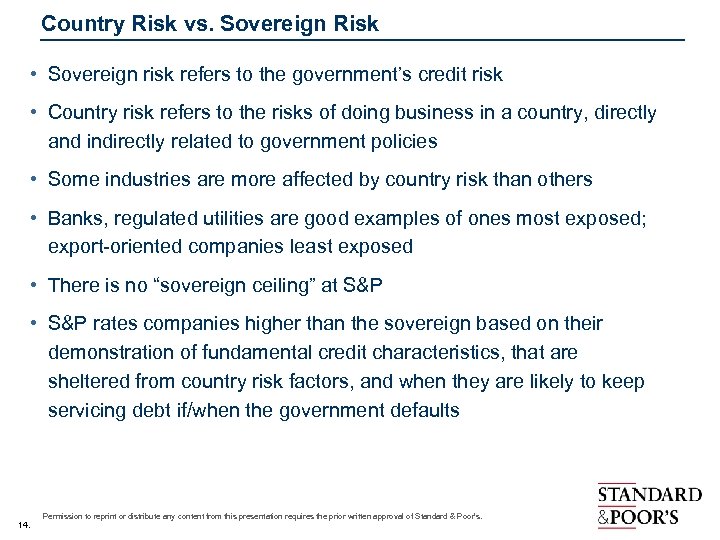
Country Risk vs. Sovereign Risk • Sovereign risk refers to the government’s credit risk • Country risk refers to the risks of doing business in a country, directly and indirectly related to government policies • Some industries are more affected by country risk than others • Banks, regulated utilities are good examples of ones most exposed; export-oriented companies least exposed • There is no “sovereign ceiling” at S&P • S&P rates companies higher than the sovereign based on their demonstration of fundamental credit characteristics, that are sheltered from country risk factors, and when they are likely to keep servicing debt if/when the government defaults 14. Permission to reprint or distribute any content from this presentation requires the prior written approval of Standard & Poor’s.
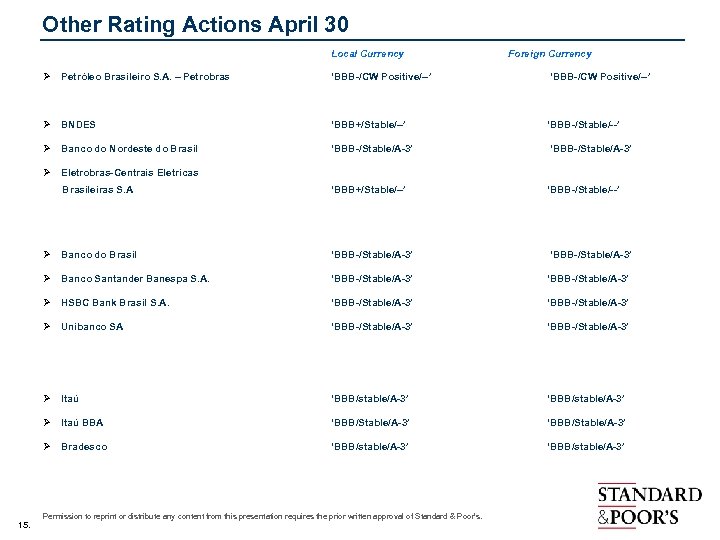
Other Rating Actions April 30 Local Currency Foreign Currency Ø Petróleo Brasileiro S. A. – Petrobras ‘BBB-/CW Positive/--’ Ø BNDES ‘BBB+/Stable/--’ ‘BBB-/Stable/--’ Ø Banco do Nordeste do Brasil ‘BBB-/Stable/A-3’ Brasileiras S. A ‘BBB+/Stable/--’ ‘BBB-/Stable/--’ Ø Banco do Brasil ‘BBB-/Stable/A-3’ Ø Banco Santander Banespa S. A. ‘BBB-/Stable/A-3’ Ø HSBC Bank Brasil S. A. ‘BBB-/Stable/A-3’ Ø Unibanco SA ‘BBB-/Stable/A-3’ Ø Itaú ‘BBB/stable/A-3’ Ø Itaú BBA ‘BBB/Stable/A-3’ Ø Bradesco ‘BBB/stable/A-3’ Ø Eletrobras-Centrais Eletricas 15. ‘BBB/stable/A-3’ ‘BBB/Stable/A-3’ Permission to reprint or distribute any content from this presentation requires the prior written approval of Standard & Poor’s. ‘BBB/stable/A-3’
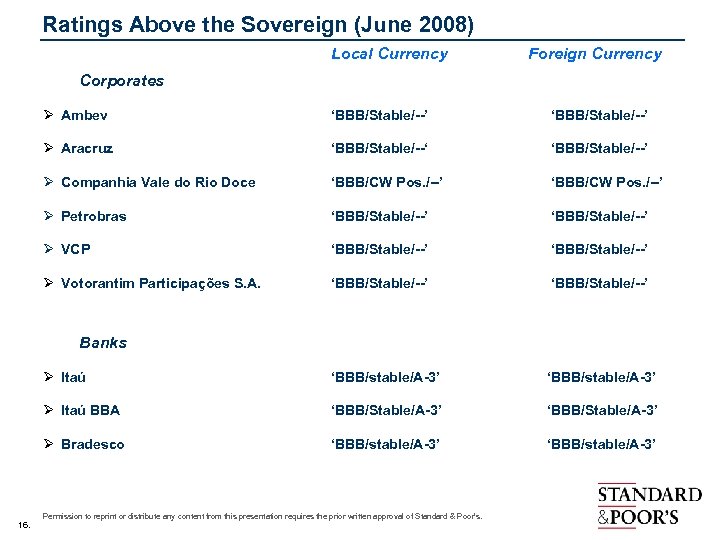
Ratings Above the Sovereign (June 2008) Local Currency Foreign Currency Corporates Ø Ambev ‘BBB/Stable/--’ Ø Aracruz ‘BBB/Stable/--‘ ‘BBB/Stable/--’ Ø Companhia Vale do Rio Doce ‘BBB/CW Pos. /--’ Ø Petrobras ‘BBB/Stable/--’ Ø VCP ‘BBB/Stable/--’ Ø Votorantim Participações S. A. ‘BBB/Stable/--’ Banks Ø Itaú BBA ‘BBB/Stable/A-3’ Ø Bradesco 16. ‘BBB/stable/A-3’ ‘BBB/Stable/A-3’ Permission to reprint or distribute any content from this presentation requires the prior written approval of Standard & Poor’s. ‘BBB/stable/A-3’
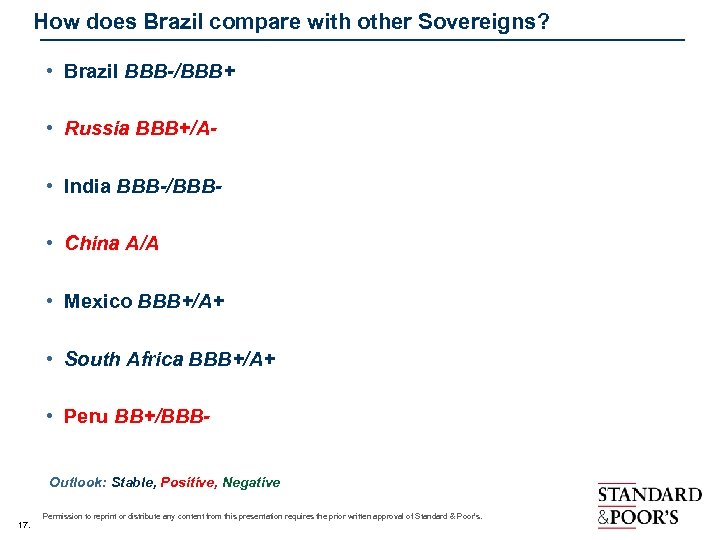
How does Brazil compare with other Sovereigns? • Brazil BBB-/BBB+ • Russia BBB+/A • India BBB-/BBB- • China A/A • Mexico BBB+/A+ • South Africa BBB+/A+ • Peru BB+/BBBOutlook: Stable, Positive, Negative 17. Permission to reprint or distribute any content from this presentation requires the prior written approval of Standard & Poor’s.
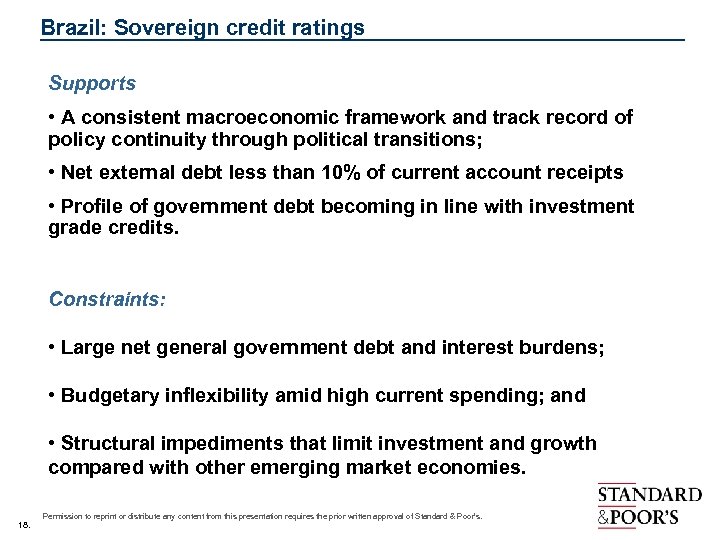
Brazil: Sovereign credit ratings Supports • A consistent macroeconomic framework and track record of policy continuity through political transitions; • Net external debt less than 10% of current account receipts • Profile of government debt becoming in line with investment grade credits. Constraints: • Large net general government debt and interest burdens; • Budgetary inflexibility amid high current spending; and • Structural impediments that limit investment and growth compared with other emerging market economies. 18. Permission to reprint or distribute any content from this presentation requires the prior written approval of Standard & Poor’s.
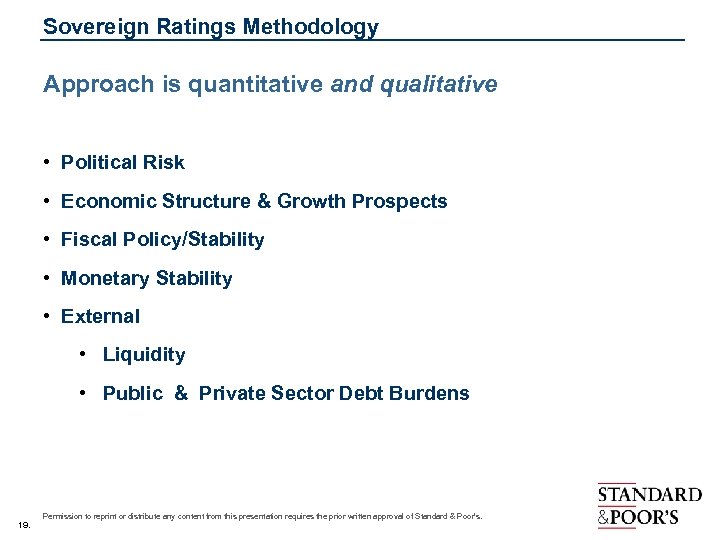
Sovereign Ratings Methodology Approach is quantitative and qualitative • Political Risk • Economic Structure & Growth Prospects • Fiscal Policy/Stability • Monetary Stability • External • Liquidity • Public & Private Sector Debt Burdens 19. Permission to reprint or distribute any content from this presentation requires the prior written approval of Standard & Poor’s.
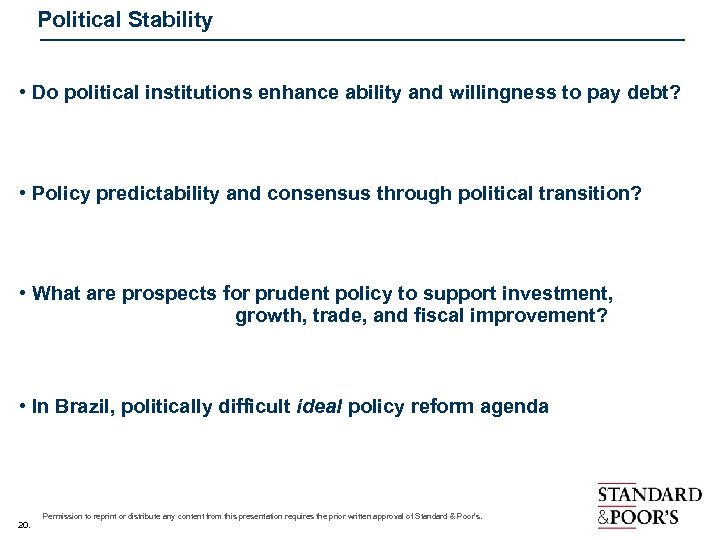
Political Stability • Do political institutions enhance ability and willingness to pay debt? • Policy predictability and consensus through political transition? • What are prospects for prudent policy to support investment, growth, trade, and fiscal improvement? • In Brazil, politically difficult ideal policy reform agenda 20. Permission to reprint or distribute any content from this presentation requires the prior written approval of Standard & Poor’s.
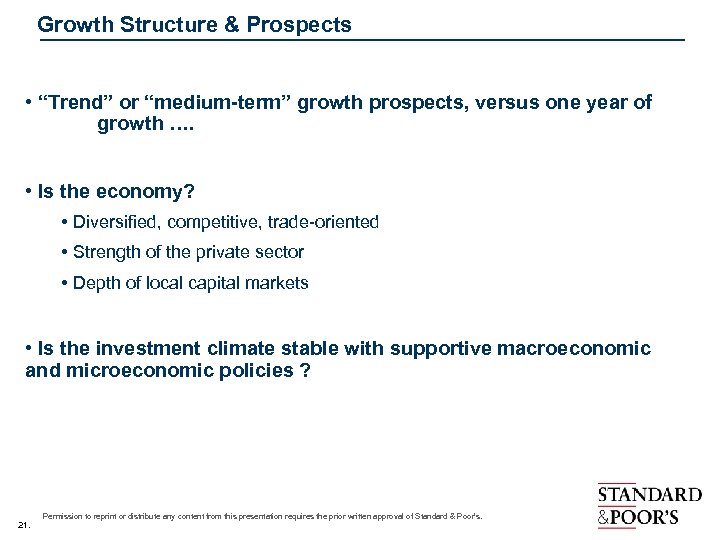
Growth Structure & Prospects • “Trend” or “medium-term” growth prospects, versus one year of growth …. • Is the economy? • Diversified, competitive, trade-oriented • Strength of the private sector • Depth of local capital markets • Is the investment climate stable with supportive macroeconomic and microeconomic policies ? 21. Permission to reprint or distribute any content from this presentation requires the prior written approval of Standard & Poor’s.
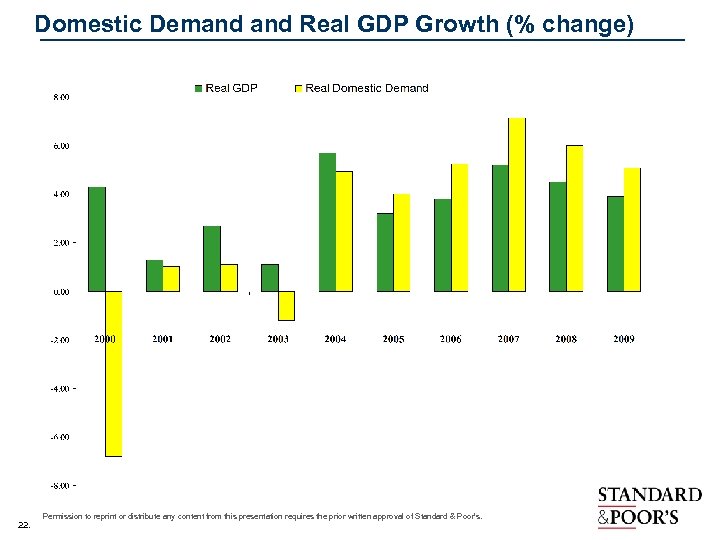
Domestic Demand Real GDP Growth (% change) 22. Permission to reprint or distribute any content from this presentation requires the prior written approval of Standard & Poor’s.
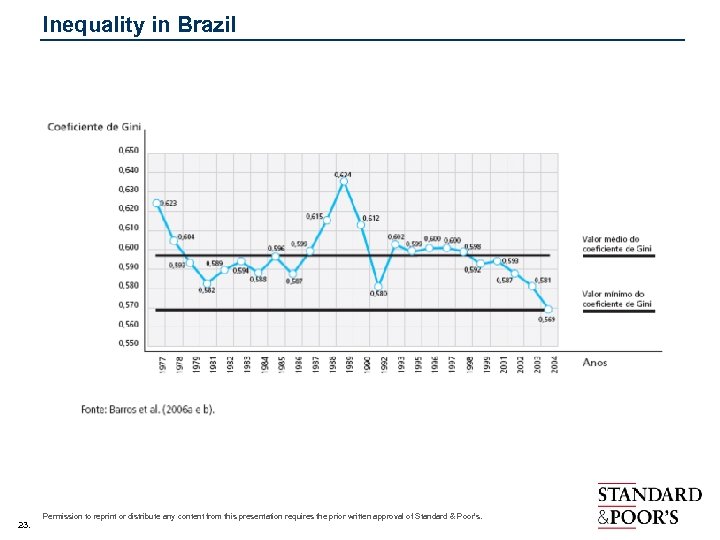
Inequality in Brazil 23. Permission to reprint or distribute any content from this presentation requires the prior written approval of Standard & Poor’s.
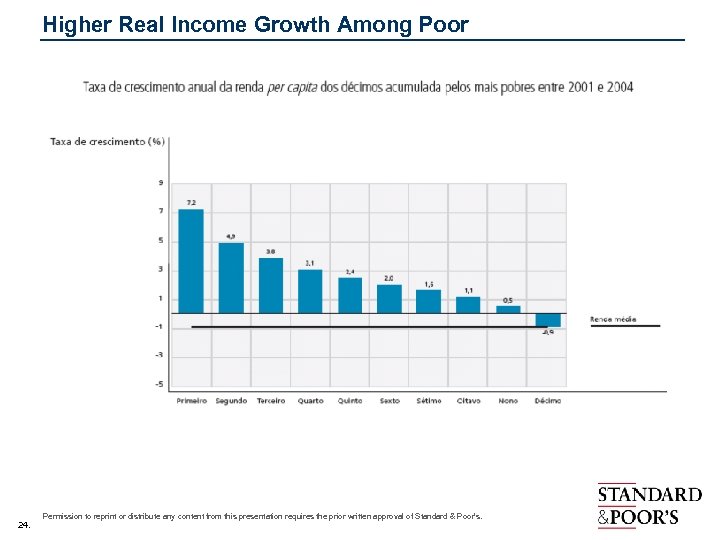
Higher Real Income Growth Among Poor 24. Permission to reprint or distribute any content from this presentation requires the prior written approval of Standard & Poor’s.
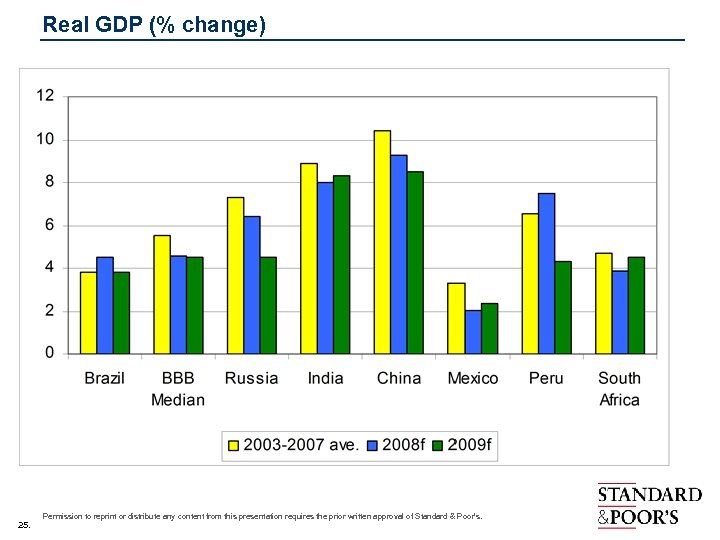
Real GDP (% change) 25. Permission to reprint or distribute any content from this presentation requires the prior written approval of Standard & Poor’s.
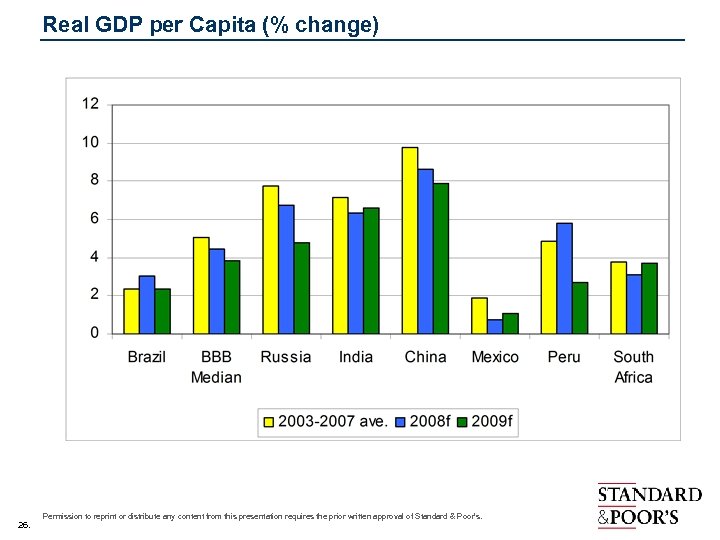
Real GDP per Capita (% change) 26. Permission to reprint or distribute any content from this presentation requires the prior written approval of Standard & Poor’s.
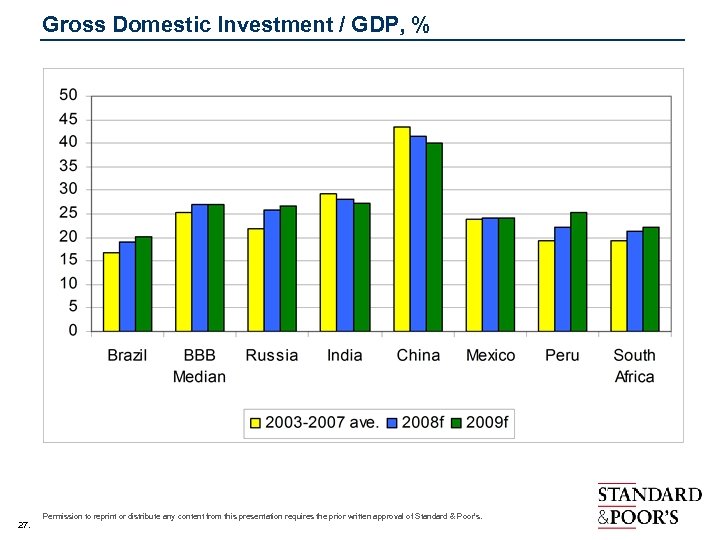
Gross Domestic Investment / GDP, % 27. Permission to reprint or distribute any content from this presentation requires the prior written approval of Standard & Poor’s.
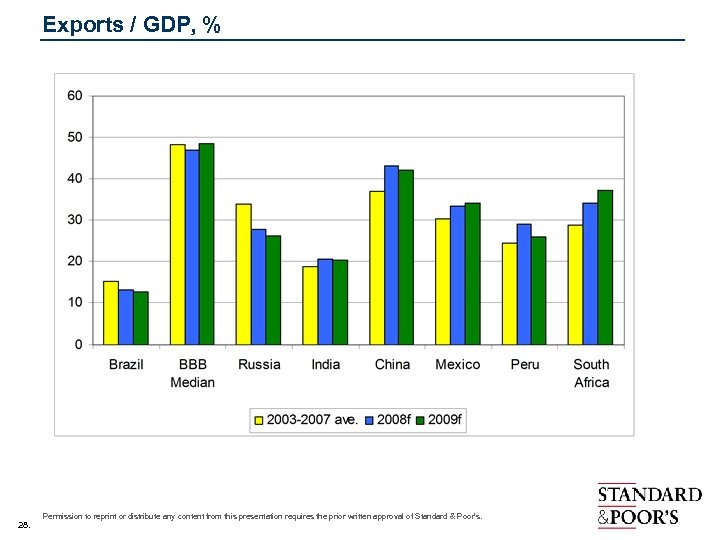
Exports / GDP, % 28. Permission to reprint or distribute any content from this presentation requires the prior written approval of Standard & Poor’s.
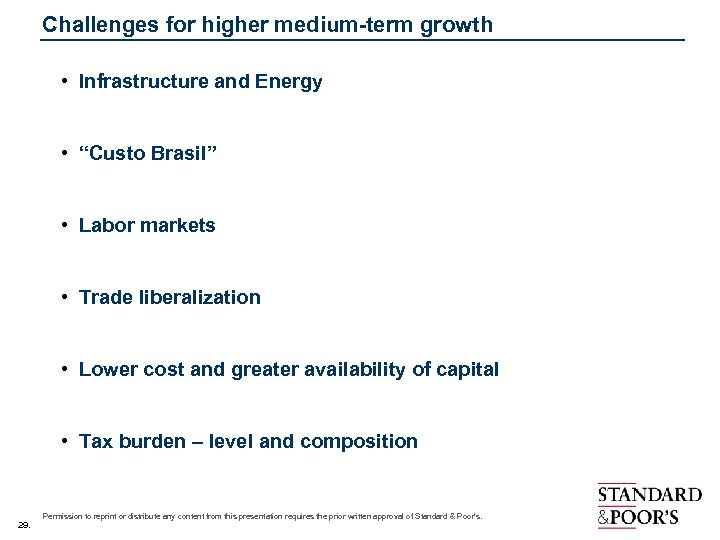
Challenges for higher medium-term growth • Infrastructure and Energy • “Custo Brasil” • Labor markets • Trade liberalization • Lower cost and greater availability of capital • Tax burden – level and composition 29. Permission to reprint or distribute any content from this presentation requires the prior written approval of Standard & Poor’s.
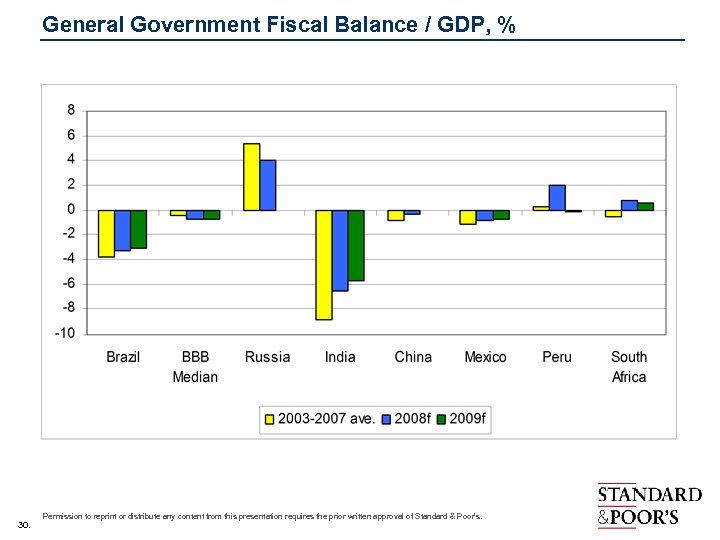
General Government Fiscal Balance / GDP, % 30. Permission to reprint or distribute any content from this presentation requires the prior written approval of Standard & Poor’s.
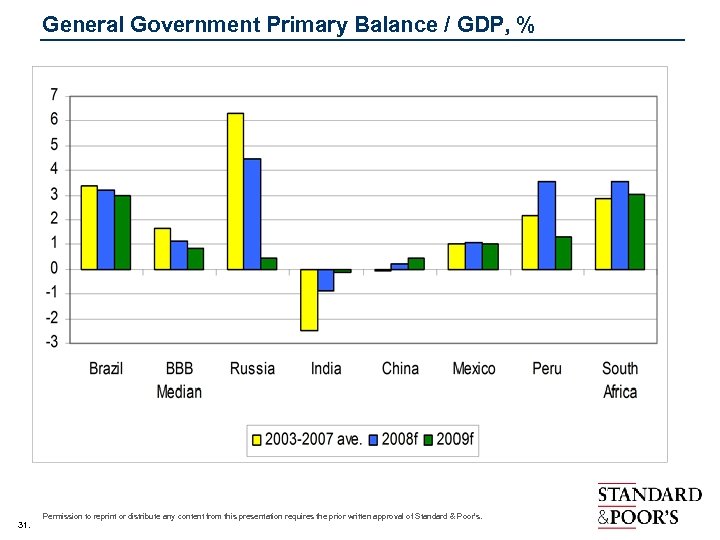
General Government Primary Balance / GDP, % 31. Permission to reprint or distribute any content from this presentation requires the prior written approval of Standard & Poor’s.
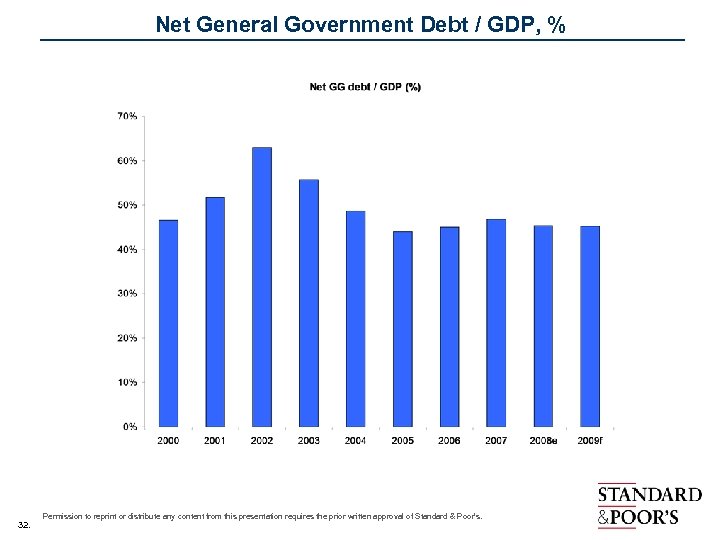
Net General Government Debt / GDP, % 32. Permission to reprint or distribute any content from this presentation requires the prior written approval of Standard & Poor’s.
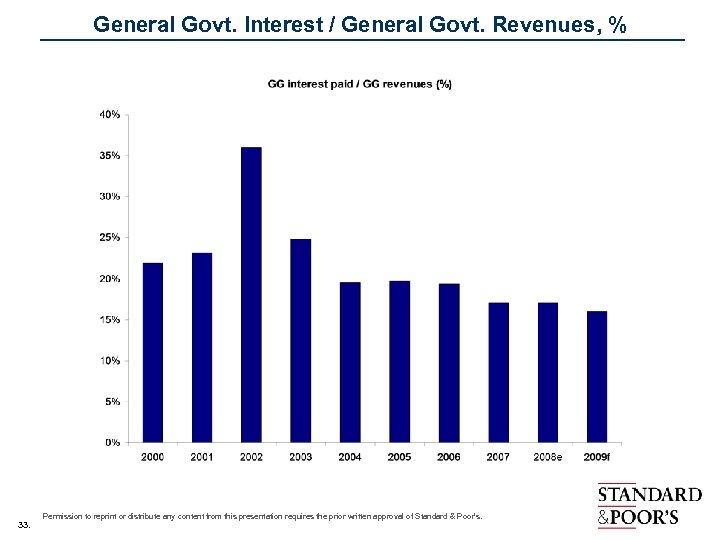
General Govt. Interest / General Govt. Revenues, % 33. Permission to reprint or distribute any content from this presentation requires the prior written approval of Standard & Poor’s.
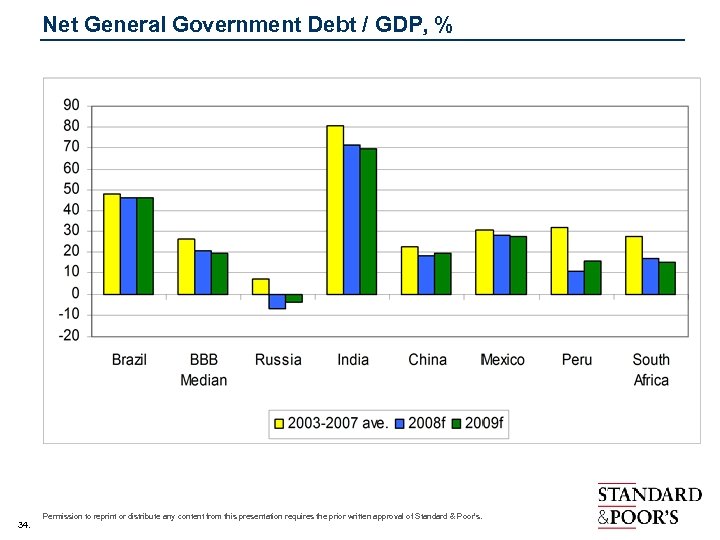
Net General Government Debt / GDP, % 34. Permission to reprint or distribute any content from this presentation requires the prior written approval of Standard & Poor’s.
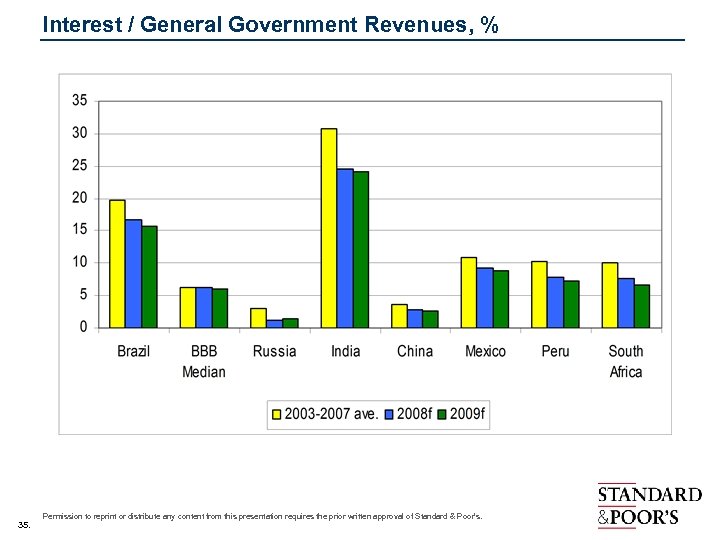
Interest / General Government Revenues, % 35. Permission to reprint or distribute any content from this presentation requires the prior written approval of Standard & Poor’s.
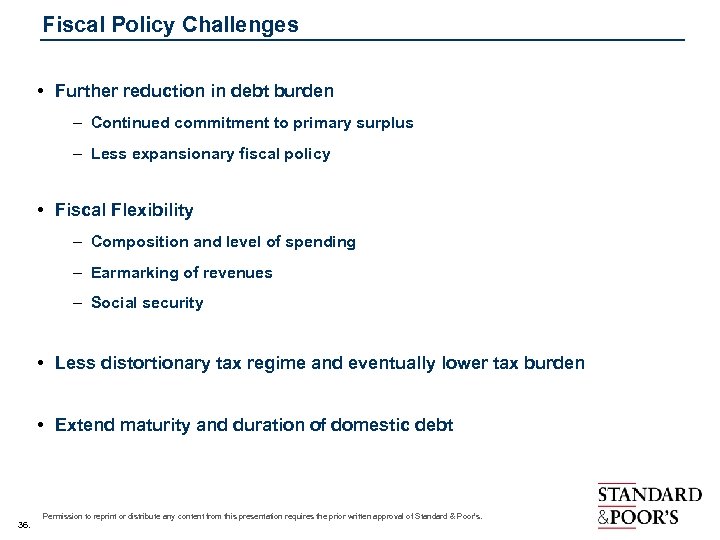
Fiscal Policy Challenges • Further reduction in debt burden – Continued commitment to primary surplus – Less expansionary fiscal policy • Fiscal Flexibility – Composition and level of spending – Earmarking of revenues – Social security • Less distortionary tax regime and eventually lower tax burden • Extend maturity and duration of domestic debt 36. Permission to reprint or distribute any content from this presentation requires the prior written approval of Standard & Poor’s.
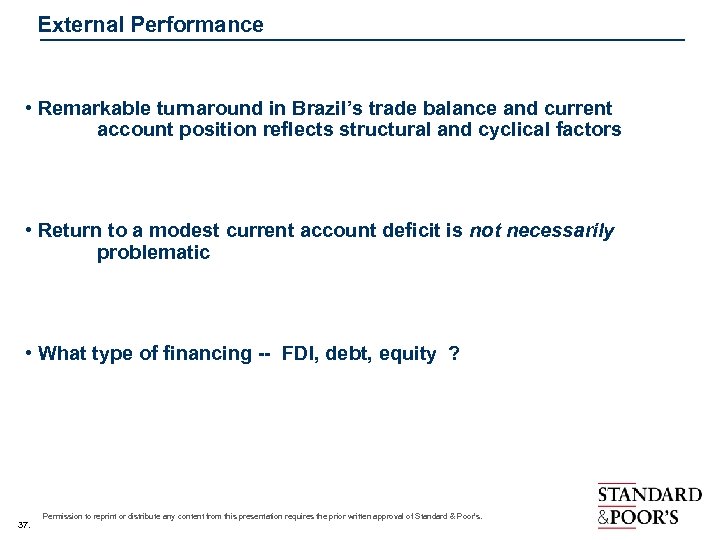
External Performance • Remarkable turnaround in Brazil’s trade balance and current account position reflects structural and cyclical factors • Return to a modest current account deficit is not necessarily problematic • What type of financing -- FDI, debt, equity ? 37. Permission to reprint or distribute any content from this presentation requires the prior written approval of Standard & Poor’s.
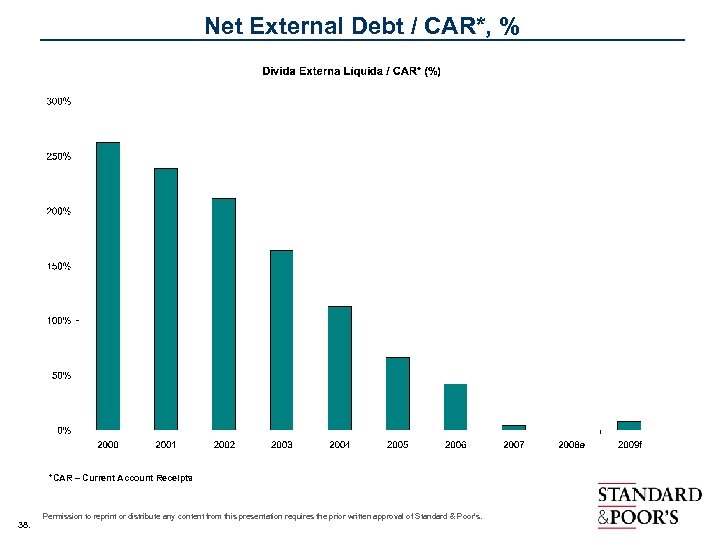
Net External Debt / CAR*, % *CAR – Current Account Receipts 38. Permission to reprint or distribute any content from this presentation requires the prior written approval of Standard & Poor’s.
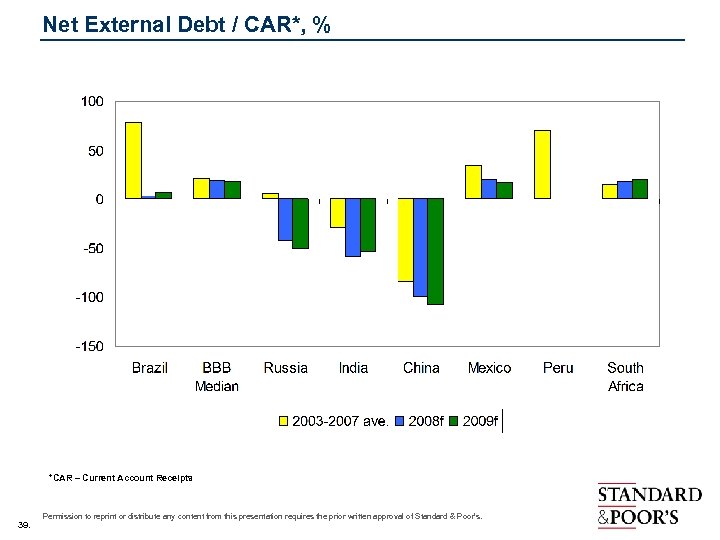
Net External Debt / CAR*, % *CAR – Current Account Receipts 39. Permission to reprint or distribute any content from this presentation requires the prior written approval of Standard & Poor’s.
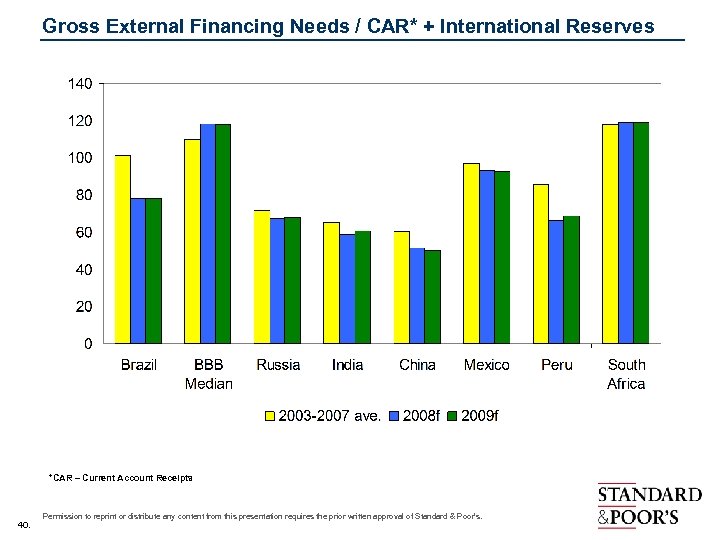
Gross External Financing Needs / CAR* + International Reserves *CAR – Current Account Receipts 40. Permission to reprint or distribute any content from this presentation requires the prior written approval of Standard & Poor’s.
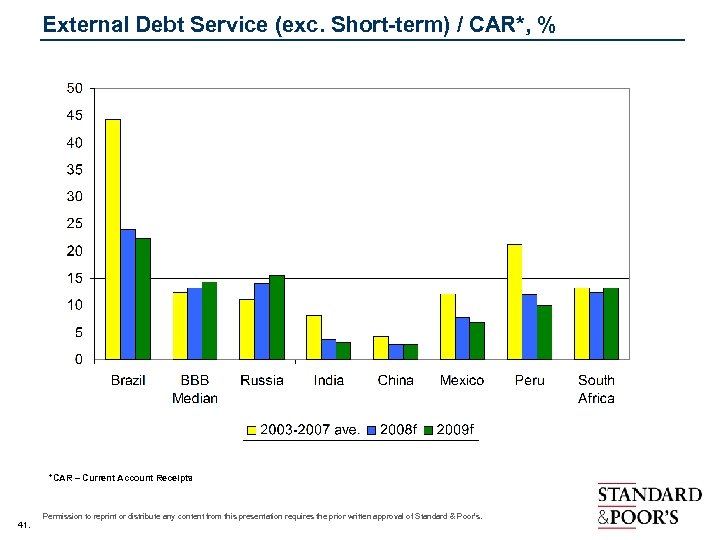
External Debt Service (exc. Short-term) / CAR*, % *CAR – Current Account Receipts 41. Permission to reprint or distribute any content from this presentation requires the prior written approval of Standard & Poor’s.
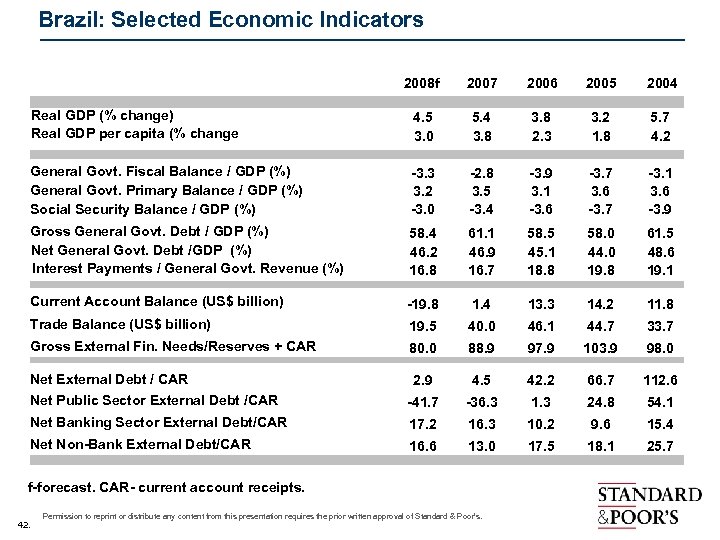
Brazil: Selected Economic Indicators 2008 f 2007 2006 2005 2004 Real GDP (% change) Real GDP per capita (% change 4. 5 3. 0 5. 4 3. 8 2. 3 3. 2 1. 8 5. 7 4. 2 General Govt. Fiscal Balance / GDP (%) General Govt. Primary Balance / GDP (%) Social Security Balance / GDP (%) -3. 3 3. 2 -3. 0 -2. 8 3. 5 -3. 4 -3. 9 3. 1 -3. 6 -3. 7 -3. 1 3. 6 -3. 9 Gross General Govt. Debt / GDP (%) Net General Govt. Debt /GDP (%) Interest Payments / General Govt. Revenue (%) 58. 4 46. 2 16. 8 61. 1 46. 9 16. 7 58. 5 45. 1 18. 8 58. 0 44. 0 19. 8 61. 5 48. 6 19. 1 Current Account Balance (US$ billion) -19. 8 1. 4 13. 3 14. 2 11. 8 Trade Balance (US$ billion) 19. 5 40. 0 46. 1 44. 7 33. 7 Gross External Fin. Needs/Reserves + CAR 80. 0 88. 9 97. 9 103. 9 98. 0 Net External Debt / CAR Net Public Sector External Debt /CAR 2. 9 4. 5 42. 2 66. 7 112. 6 -41. 7 -36. 3 1. 3 24. 8 54. 1 Net Banking Sector External Debt/CAR 17. 2 16. 3 10. 2 9. 6 15. 4 Net Non-Bank External Debt/CAR 16. 6 13. 0 17. 5 18. 1 25. 7 f-forecast. CAR- current account receipts. 42. Permission to reprint or distribute any content from this presentation requires the prior written approval of Standard & Poor’s.
Global & Regional Context 43. Permission to reprint or distribute any content from this presentation requires the prior written approval of Standard & Poor’s.
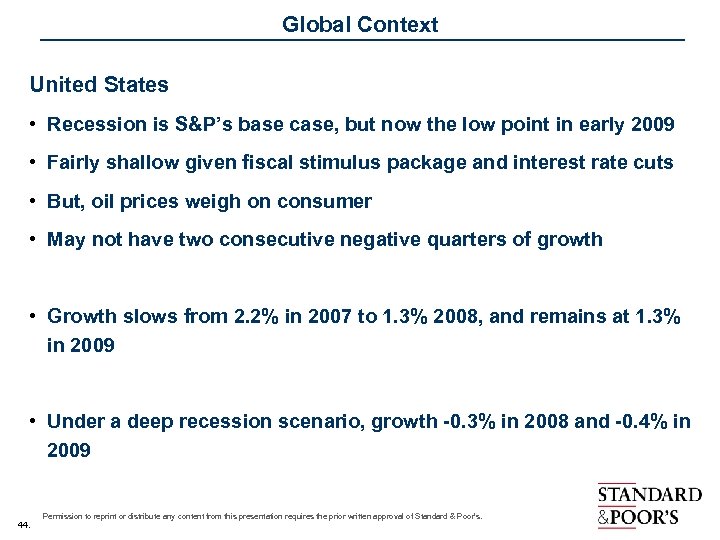
Global Context United States • Recession is S&P’s base case, but now the low point in early 2009 • Fairly shallow given fiscal stimulus package and interest rate cuts • But, oil prices weigh on consumer • May not have two consecutive negative quarters of growth • Growth slows from 2. 2% in 2007 to 1. 3% 2008, and remains at 1. 3% in 2009 • Under a deep recession scenario, growth -0. 3% in 2008 and -0. 4% in 2009 44. Permission to reprint or distribute any content from this presentation requires the prior written approval of Standard & Poor’s.
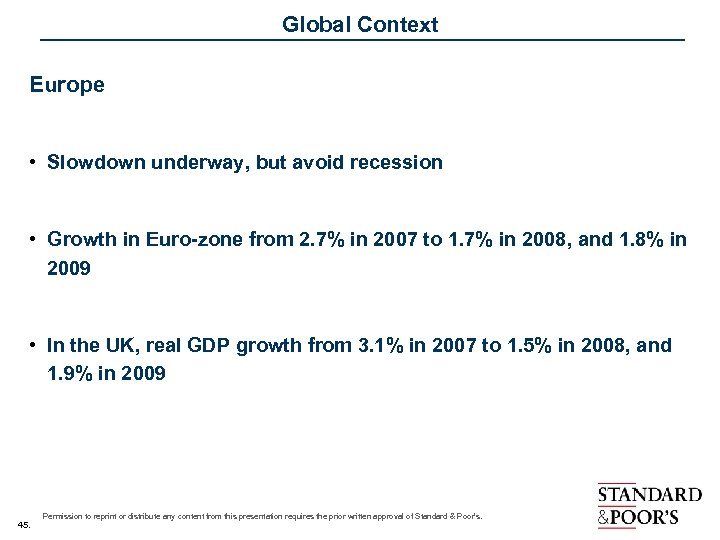
Global Context Europe • Slowdown underway, but avoid recession • Growth in Euro-zone from 2. 7% in 2007 to 1. 7% in 2008, and 1. 8% in 2009 • In the UK, real GDP growth from 3. 1% in 2007 to 1. 5% in 2008, and 1. 9% in 2009 45. Permission to reprint or distribute any content from this presentation requires the prior written approval of Standard & Poor’s.
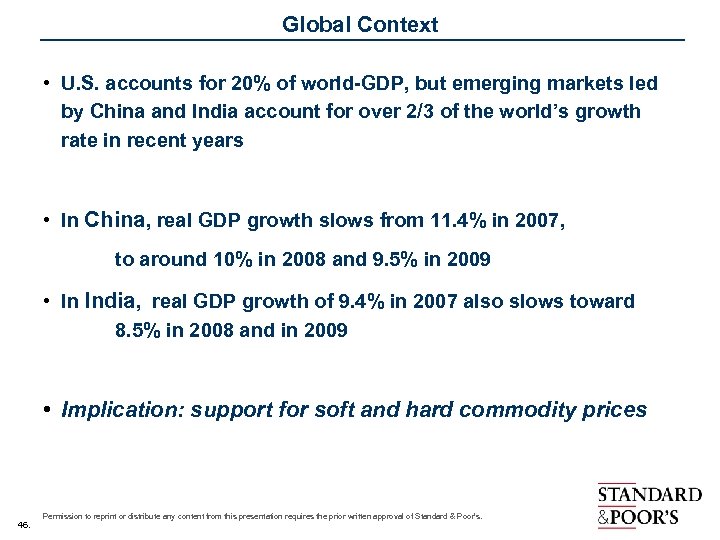
Global Context • U. S. accounts for 20% of world-GDP, but emerging markets led by China and India account for over 2/3 of the world’s growth rate in recent years • In China, real GDP growth slows from 11. 4% in 2007, to around 10% in 2008 and 9. 5% in 2009 • In India, real GDP growth of 9. 4% in 2007 also slows toward 8. 5% in 2008 and in 2009 • Implication: support for soft and hard commodity prices 46. Permission to reprint or distribute any content from this presentation requires the prior written approval of Standard & Poor’s.
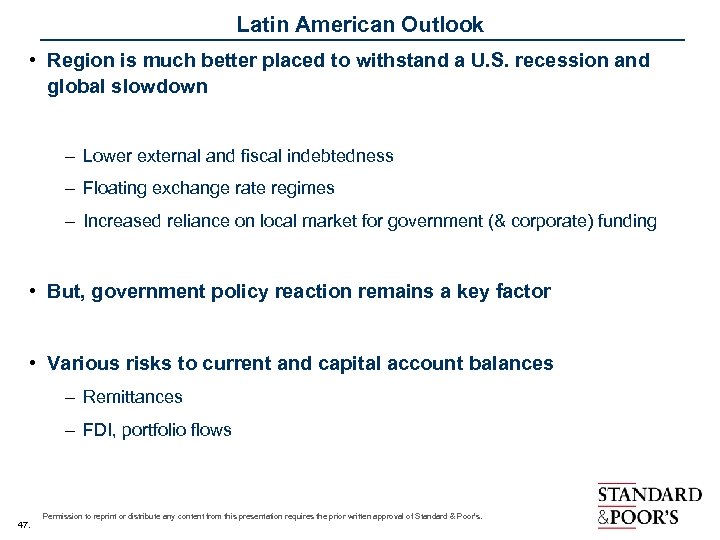
Latin American Outlook • Region is much better placed to withstand a U. S. recession and global slowdown – Lower external and fiscal indebtedness – Floating exchange rate regimes – Increased reliance on local market for government (& corporate) funding • But, government policy reaction remains a key factor • Various risks to current and capital account balances – Remittances – FDI, portfolio flows 47. Permission to reprint or distribute any content from this presentation requires the prior written approval of Standard & Poor’s.
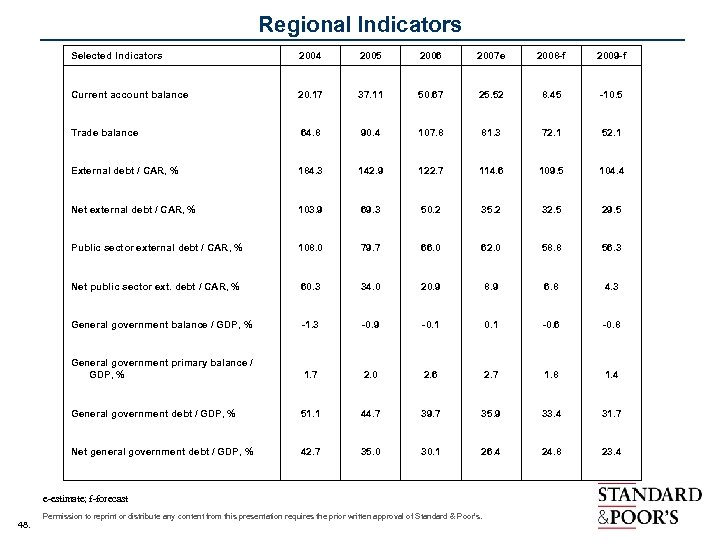
Regional Indicators Selected Indicators Current account balance Trade balance External debt / CAR, % Net external debt / CAR, % Public sector external debt / CAR, % Net public sector ext. debt / CAR, % General government balance / GDP, % General government primary balance / GDP, % General government debt / GDP, % Net general government debt / GDP, % 2004 2005 2006 2007 e 2008 -f 2009 -f 20. 17 37. 11 50. 67 25. 52 8. 45 -10. 5 64. 8 90. 4 107. 8 81. 3 72. 1 52. 1 184. 3 142. 9 122. 7 114. 6 109. 5 104. 4 103. 9 69. 3 50. 2 35. 2 32. 5 29. 5 108. 0 79. 7 66. 0 62. 0 58. 8 56. 3 60. 3 34. 0 20. 9 8. 9 6. 8 4. 3 -1. 3 -0. 9 -0. 1 -0. 6 -0. 8 1. 7 2. 0 2. 6 2. 7 1. 8 1. 4 51. 1 44. 7 39. 7 35. 9 33. 4 31. 7 42. 7 35. 0 30. 1 26. 4 24. 8 23. 4 e-estimate; f-forecast 48. Permission to reprint or distribute any content from this presentation requires the prior written approval of Standard & Poor’s.
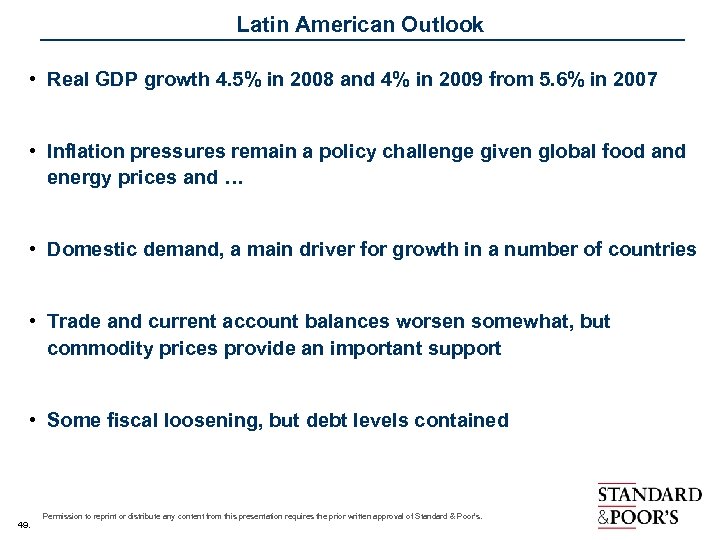
Latin American Outlook • Real GDP growth 4. 5% in 2008 and 4% in 2009 from 5. 6% in 2007 • Inflation pressures remain a policy challenge given global food and energy prices and … • Domestic demand, a main driver for growth in a number of countries • Trade and current account balances worsen somewhat, but commodity prices provide an important support • Some fiscal loosening, but debt levels contained 49. Permission to reprint or distribute any content from this presentation requires the prior written approval of Standard & Poor’s.
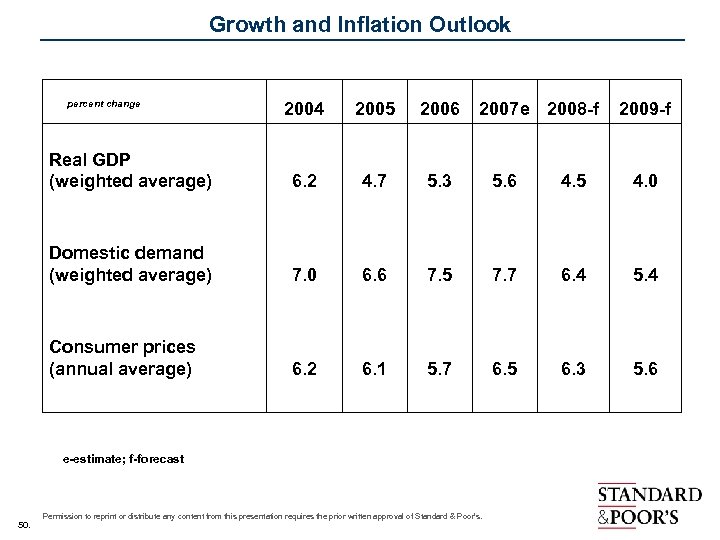
Growth and Inflation Outlook percent change 2004 2005 2006 Real GDP (weighted average) 6. 2 4. 7 5. 3 5. 6 4. 5 4. 0 Domestic demand (weighted average) 7. 0 6. 6 7. 5 7. 7 6. 4 5. 4 Consumer prices (annual average) 6. 2 6. 1 5. 7 6. 5 6. 3 5. 6 2007 e 2008 -f e-estimate; f-forecast 50. Permission to reprint or distribute any content from this presentation requires the prior written approval of Standard & Poor’s. 2009 -f
www. standardandpoors. com Analytic services and products provided by Standard & Poor’s are the result of separate activities designed to preserve the independence and objectivity of each analytic process. Standard & Poor’s has established policies and procedures to maintain the confidentiality of non-public information received during each. Permissionprocess. or distribute any content from this presentation requires the prior written approval of Standard & Poor’s. analytic to reprint 51.
Скачать презентацию Brazil s Sovereign Ratings Lisa M Schineller Investment Grade
8d32cd3049d7ca63b3153bb3b8d1c1bd.ppt