 Скачать презентацию Brazil Economic Opportunities and Challenges Jorge Arbache University
b570a689d426d46ec148bf9e72a9ff2f.ppt
- Количество слайдов: 24



Brazil: Economic Opportunities and Challenges Jorge Arbache University of Brasilia and Brazilian Development Bank - BNDES 11 th Brazil-Taiwan Joint Business Councils Meeting April 5, 2013 Disclaimer: This presentation does not necessarily represent the views of BNDES and its Board of Directors 1
1. Context: Increasingly complex world § Political challenges facing uncertain and complex economic scenarios § Crisis in the Euro zone § Slow recovery in the US and slowdown in China § Slowdown in emerging economies § Geopolitical risks in oil countries § Capital market distortions and uncertainties associated to highly heterodox policies, e. g. QEs § Protectionism on the rise § Risk aversion on the rise § Slowdown in trade, capital flow and FDI 2
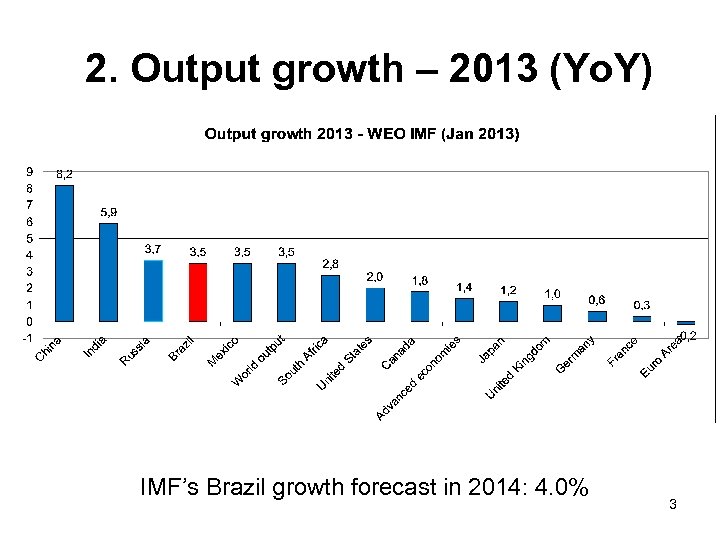
2. Output growth – 2013 (Yo. Y) IMF’s Brazil growth forecast in 2014: 4. 0% 3
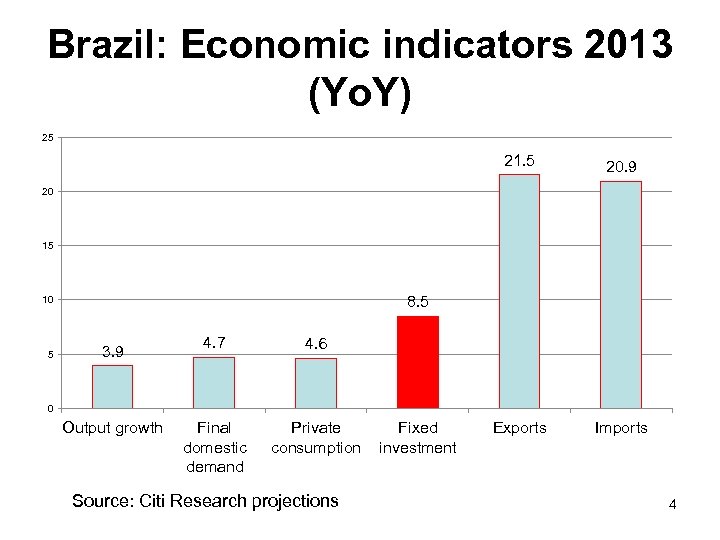
Brazil: Economic indicators 2013 (Yo. Y) 25 21. 5 20. 9 Exports Imports 20 15 8. 5 10 5 3. 9 4. 7 4. 6 Final domestic demand Private consumption 0 Output growth Source: Citi Research projections Fixed investment 4
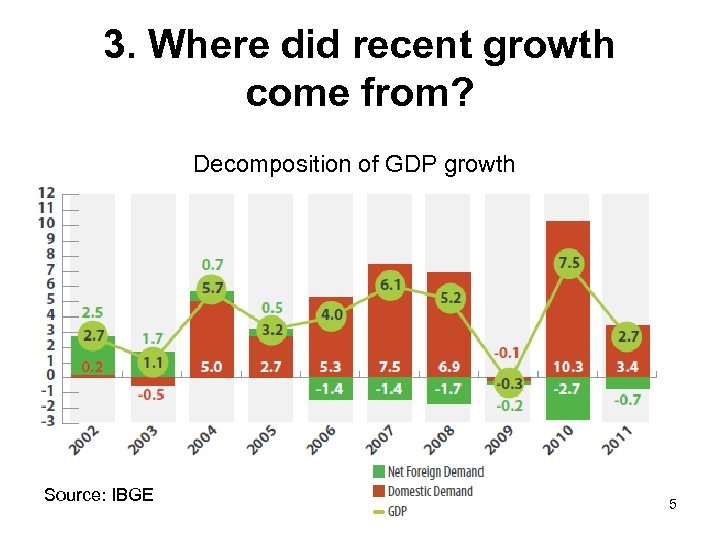
3. Where did recent growth come from? Decomposition of GDP growth Source: IBGE 5
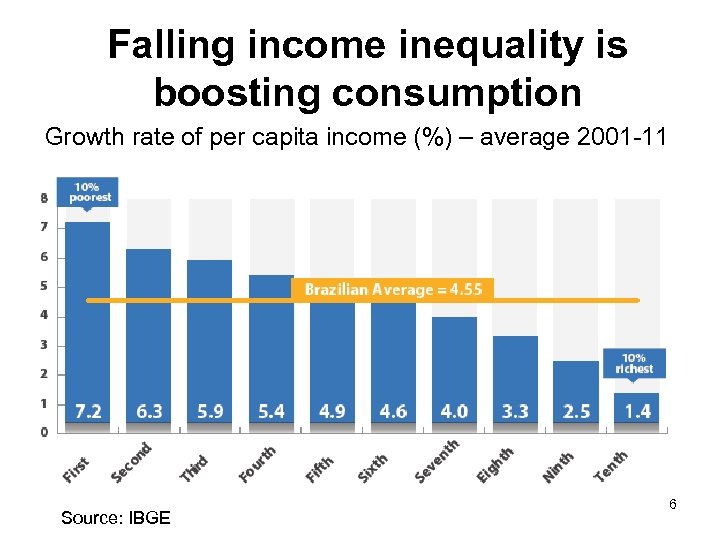
Falling income inequality is boosting consumption Growth rate of per capita income (%) – average 2001 -11 Source: IBGE 6
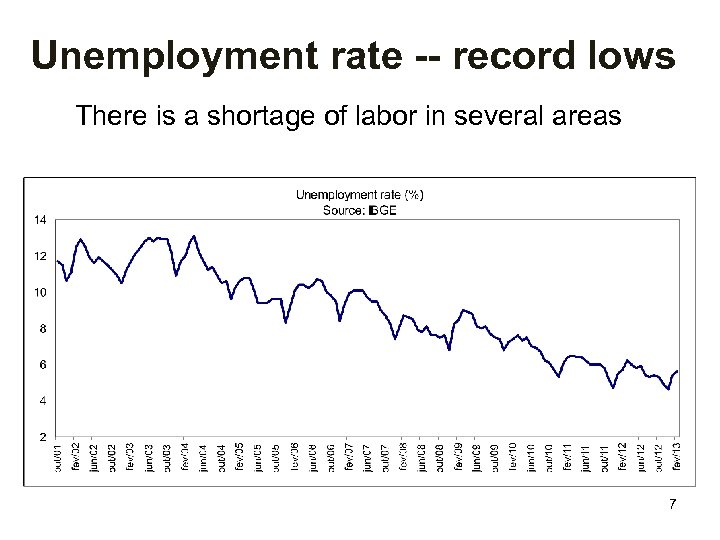
Falling unemployment Unemployment rate -- record lows There is a shortage of labor in several areas 7
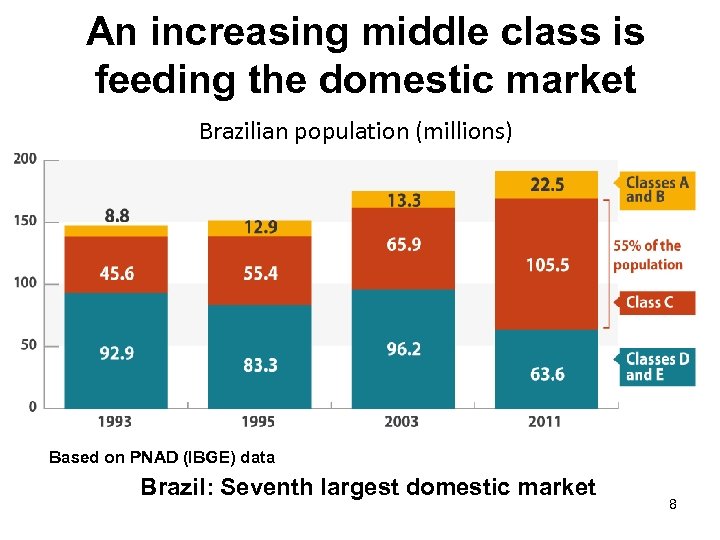
An increasing middle class is feeding the domestic market Brazilian population (millions) Based on PNAD (IBGE) data Brazil: Seventh largest domestic market 8
4. Where will future growth come from? • Growth will be geared by domestic demand, but also by: – Increasing competitiveness – Investments 9
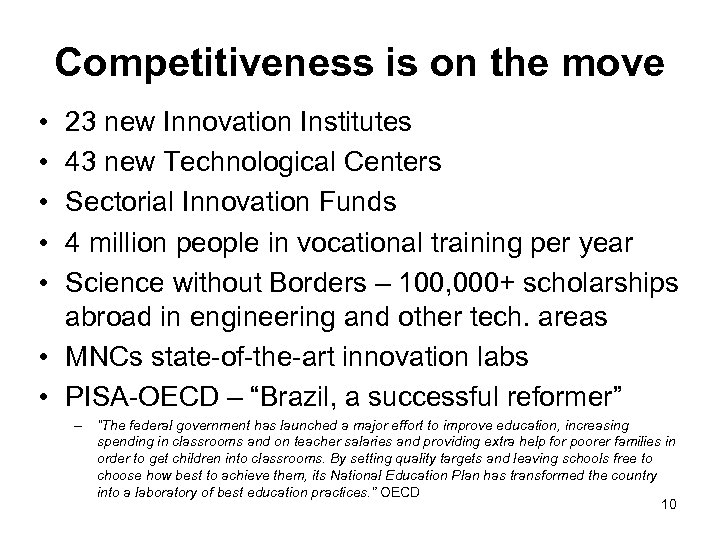
Competitiveness is on the move • • • 23 new Innovation Institutes 43 new Technological Centers Sectorial Innovation Funds 4 million people in vocational training per year Science without Borders – 100, 000+ scholarships abroad in engineering and other tech. areas • MNCs state-of-the-art innovation labs • PISA-OECD – “Brazil, a successful reformer” – “The federal government has launched a major effort to improve education, increasing spending in classrooms and on teacher salaries and providing extra help for poorer families in order to get children into classrooms. By setting quality targets and leaving schools free to choose how best to achieve them, its National Education Plan has transformed the country into a laboratory of best education practices. ” OECD 10
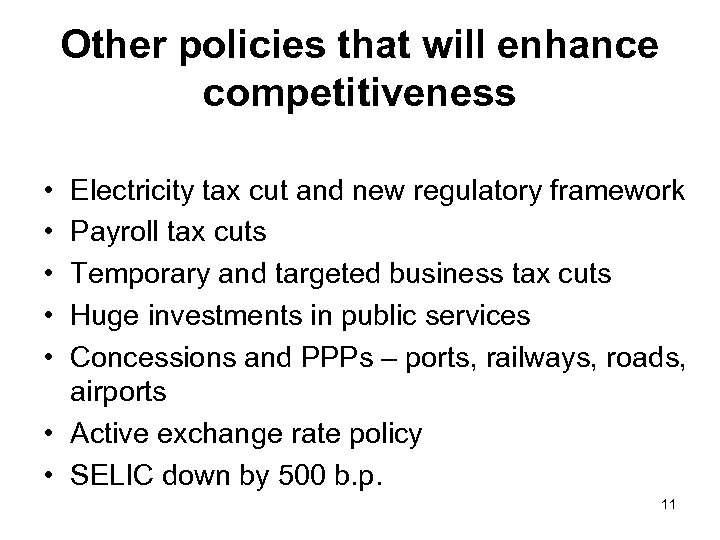
Other policies that will enhance competitiveness • • • Electricity tax cut and new regulatory framework Payroll tax cuts Temporary and targeted business tax cuts Huge investments in public services Concessions and PPPs – ports, railways, roads, airports • Active exchange rate policy • SELIC down by 500 b. p. 11
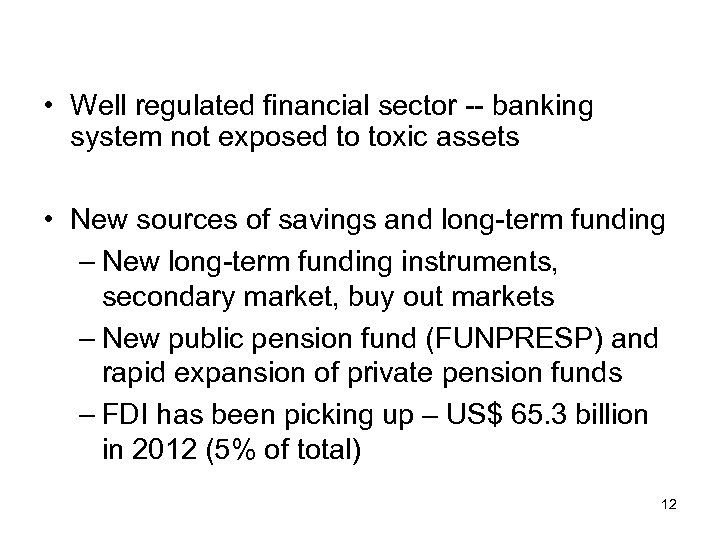
• Well regulated financial sector -- banking system not exposed to toxic assets • New sources of savings and long-term funding – New long-term funding instruments, secondary market, buy out markets – New public pension fund (FUNPRESP) and rapid expansion of private pension funds – FDI has been picking up – US$ 65. 3 billion in 2012 (5% of total) 12
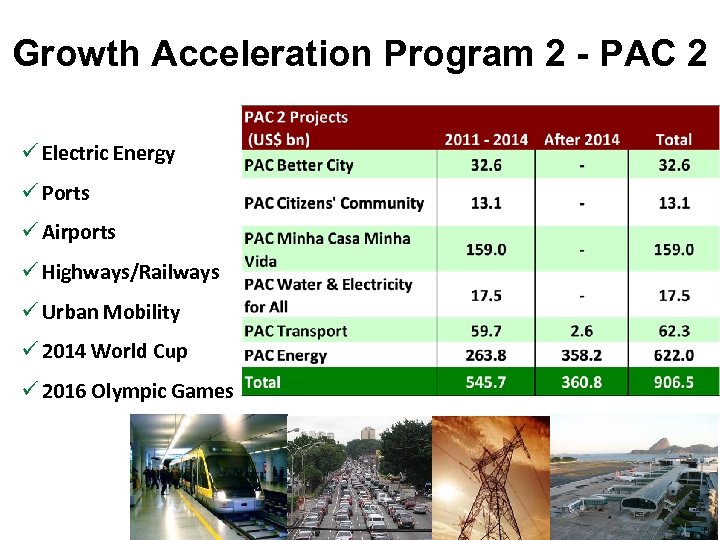
Growth Acceleration Program 2 - PAC 2 ü Electric Energy ü Ports ü Airports ü Highways/Railways ü Urban Mobility ü 2014 World Cup ü 2016 Olympic Games 13
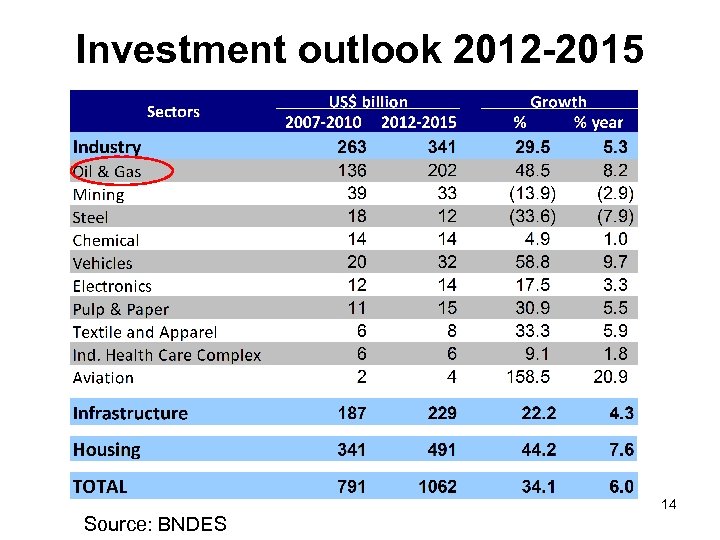
Investment perspectives are firm Investment outlook 2012 -2015 14 Source: BNDES
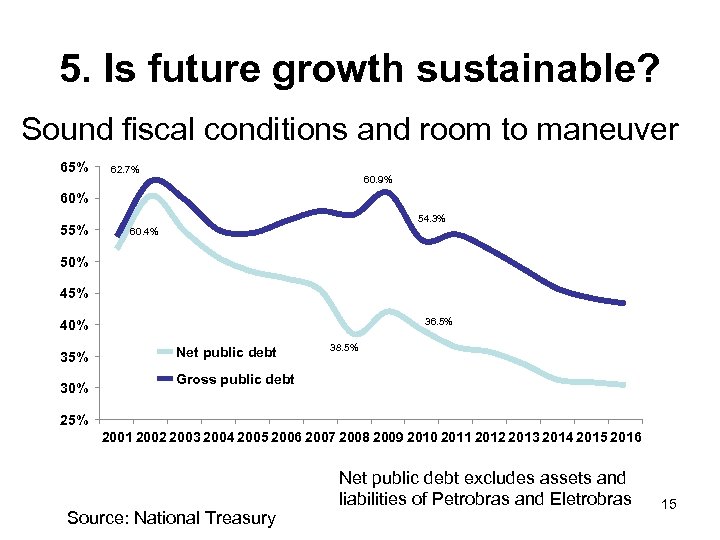
5. Is future growth sustainable? Sound fiscal conditions and room to maneuver 65% 62. 7% 60. 9% 60% 55% 54. 3% 60. 4% 50% 45% 36. 5% 40% 35% 30% Net public debt 38. 5% Gross public debt 25% 2001 2002 2003 2004 2005 2006 2007 2008 2009 2010 2011 2012 2013 2014 2015 2016 Source: National Treasury Net public debt excludes assets and liabilities of Petrobras and Eletrobras 15
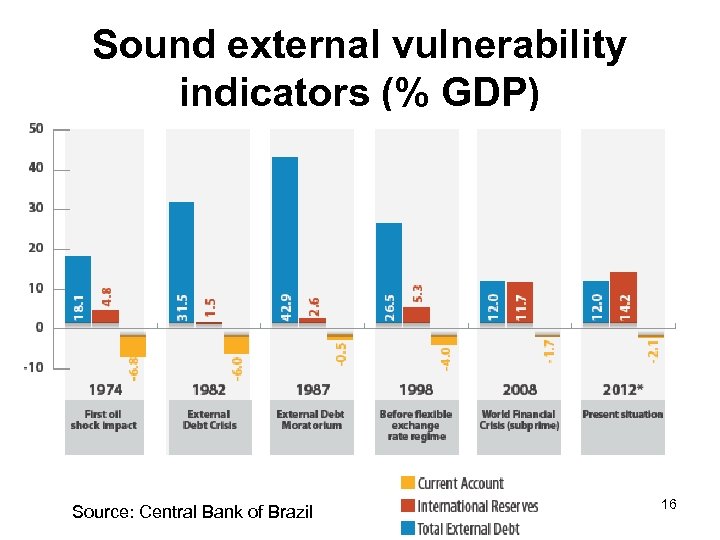
Sound external vulnerability indicators (% GDP) Source: Central Bank of Brazil 16
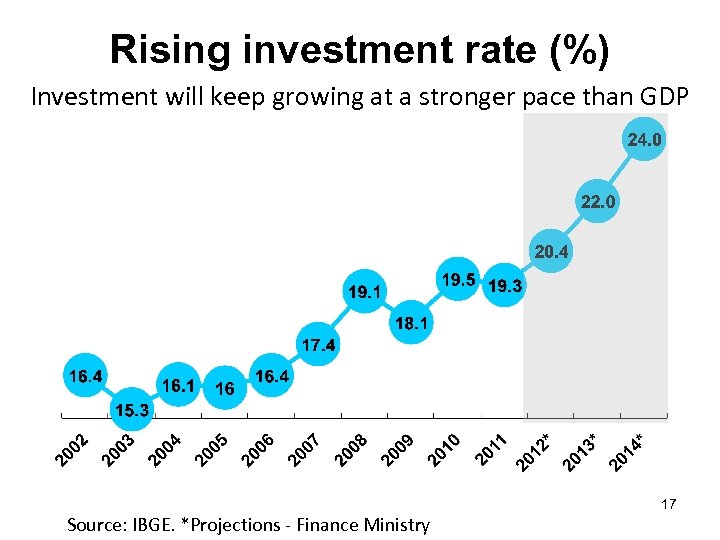
Rising investment rate (%) Investment will keep growing at a stronger pace than GDP Source: IBGE. *Projections - Finance Ministry 17
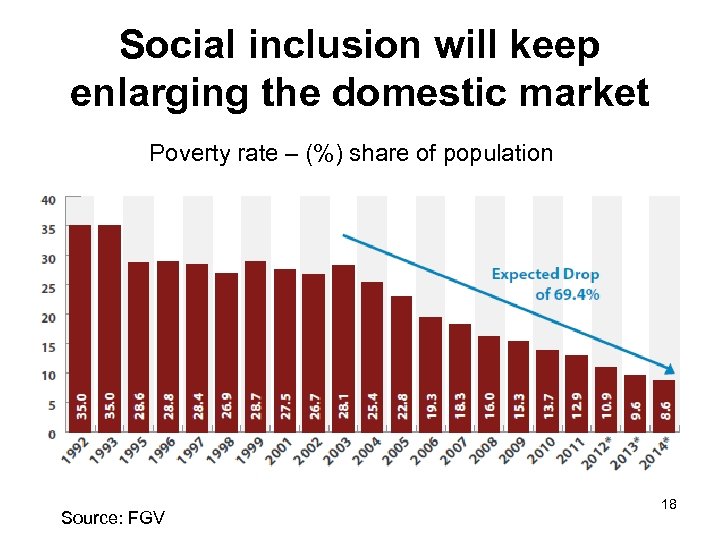
Social inclusion will keep enlarging the domestic market Poverty rate – (%) share of population Source: FGV 18
6. Risks • China slowdown • Stagnation in the US, Europe and Japan • Protectionism, uncertainties and market distortions created by unconventional policies • International credit tightening 19
7. The way forward – challenges and reform agenda • Accelerate labor productivity • Increase savings and investments • Improve competitiveness in manufacturing • Tackle infrastructure bottlenecks • Accelerate the knowledge-based economy 20
• Diversify sources of long-term funding • Foster innovation • Fiscal reform - ICMS (VAT) • Pension reform • Labor legislation reform • Diversify exports and reduce dependency on commodities 21
8. Conclusions • Domestic market will enlarge further • Investments and increasing competitiveness will also drive growth • Expanding investment opportunities in several areas 22
• A bumpy road ahead: poor international environment and uncertainties • But plenty of room for policy activism at the Government disposal • Government is aware of the need to address a reform agenda to foster competitiveness and to foment sustained growth 23

Thank You 24
Скачать презентацию Brazil Economic Opportunities and Challenges Jorge Arbache University
b570a689d426d46ec148bf9e72a9ff2f.ppt